Tag: mobile web

  • Hooq delivers new mobile web experience with google technology

    Hooq delivers new mobile web experience with google technology

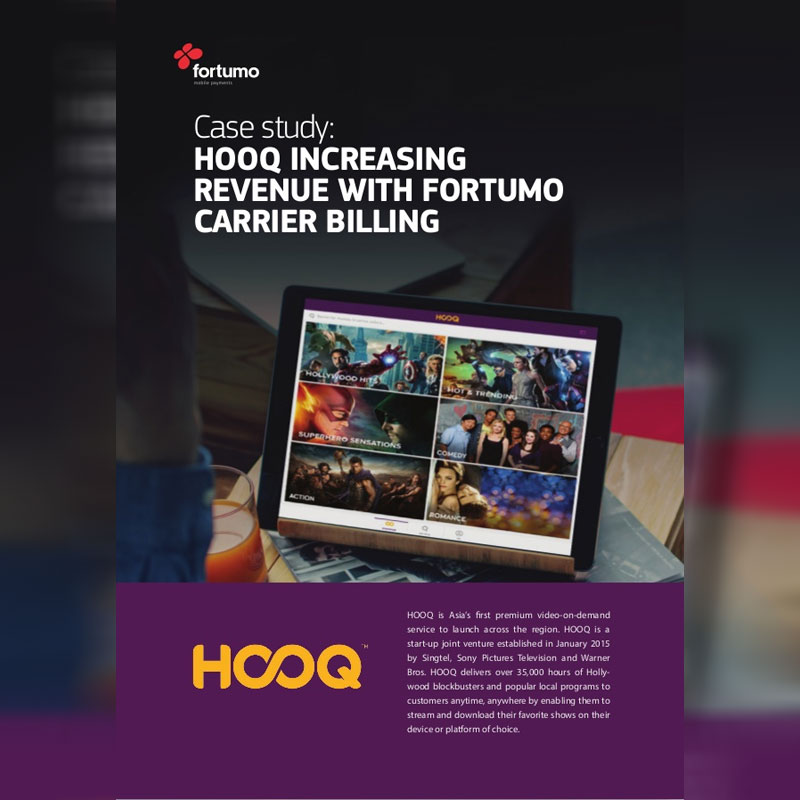
    MUMBAI: HOOQ – the largest Video on Demand service in Southeast Asia – launched an all-new mobile web experience for its customers using PWA – a technology that is championed by Google.  This technology allows HOOQ to deliver an app-like experience on the web and displays seamlessly and identically on all devices, including desktop, mobile and tablet. 

    “HOOQ’s deployment of PWA came on the back of findings that four in five consumers access the internet daily on their smartphones and the usage between apps and websites were about the same.  At the same time, we’ve also learned that more than half of those who came to the app store, interested in HOOQ chose not to download the app largely due to data constraints or storage limits on their device.  This means that having a mobile app will only serve 50% of those mobile users but serving up a pure web experience allows HOOQ to potentially double its reach to mobile users consuming content regardless of their choice of viewing over web or app.” said Michael Fleshman, Chief Technology Officer of HOOQ.

    “The intent of introducing PWA is to deliver a smooth and engaging experience where customers with lower-end devices or low data caps can still enjoy the full HOOQ experience without the need to compromise.  What’s more, we are able to combine the ease of access and reach of the Web together with the immersive experience of a native app for customers to engage with HOOQ; browse the complete catalogue and play content without having to download the app”, Fleshman added.

    HOOQ users can now experience faster load times and smoother interactions even in uncertain network conditions.  With the help of pre-caching, HOOQ’s PWA stays up-to-date, serving the user with the newest premium content upon launch and users can also save HOOQ’s PWA to their home screen; making HOOQ accessible, without the hassle of downloading it from the app stores.

    Smartphone penetration in emerging Asia has been on the rise and in 2017 over 230 million smartphones were sold, according to GFK.  Whilst a 44% year-on-year growth in smartphone penetration provides HOOQ with a ripe opportunity in Southeast Asia, over 60% of these handsets are in the low to mid-range.  This growing base of smartphone users are cognizant of their precious storage space on their phones and are less likely to download an app.  By removing all this friction, more users can now access HOOQ directly from a URL and are able to share it on social media, email, text message etc. and skip the hassle of app downloads from the app store, resulting in a much larger potential user base.

    PWA is now live in all HOOQ markets – the Philippines, Thailand, Indonesia, India and Singapore, where users can enjoy the best of local and Hollywood movies and TV series by simply going to www.hooq.tv.

  • APAC shows highest growth in ad spends over mobile web: Smaato report

    APAC shows highest growth in ad spends over mobile web: Smaato report

    MUMBAI:  Real-time advertising platform Smaato recently released its Global Trends in Mobile Programmatic report, by analysing data from billions of mobile ad impressions served on its exchange during the first half of 2015. As per the report, Asia Pacific countries recorded the highest growth during the first half of 2015 with India growing by 279 per cent followed by Singapore 225 per cent, Indonesia, 142 per cent and Malaysia 126 per cent.

    “Asia Pacific (APAC) showed the most growth during the first half of 2015 vs. the first six months of 2014, with China delivering an astounding 315 per cent increase in growth, India showing a 279 per cent increase in growth and Singapore growing by 225 per cent. More disposable income means bigger and more powerful smartphones; this in turn drives both the publisher/app developer and mobile advertiser ecosystems that rely on Smaato’s platform,” reads the report.

    When it comes to Smaato exchange, the report suggests India takes the second rank in top 10 countries list by supply and ranks third by spending.

    “Rich media and larger ad sizes are becoming increasingly popular in the Asia-Pacific as marketers use more creative and engaging content to get their messages across,” said  Smaato Asia Pacific vice president and general manager Malcolm Wong.

    “The average individual would have about 27 applications on their smartphone (Nielsen 2014), and with a voracious appetite for mobile applications observed in the Asia-Pacific, more advertising budgets could be expected to shift to mobile in future,” added Wong.

    Social apps like Facebook and Twitter could be the driving force behind this surge in mobile web usage. According to a recent report from IAB, 52 per cent of smartphone owners say they tap links in mobile apps that take them to web articles they want to read.

    “The shift to mobile began with the mobile web – and then apps took over,” said Smaato CEO Ragnar Kruse. “Although we can’t say for sure whether we’re looking at a huge comeback of the medium, the fact remains that publishers and advertisers can’t afford to ignore the mobile web. Mobile ad strategies -whether it be the size of ads or the use of rich media – must be created with both app and mobile web usage in mind,” he added.