Tag: mobile TV

  • Orange CEO Sanjiv Ahuja to deliver keynote address as Mobile TV takes centre stage at Mipcom 2006

    Orange CEO Sanjiv Ahuja to deliver keynote address as Mobile TV takes centre stage at Mipcom 2006

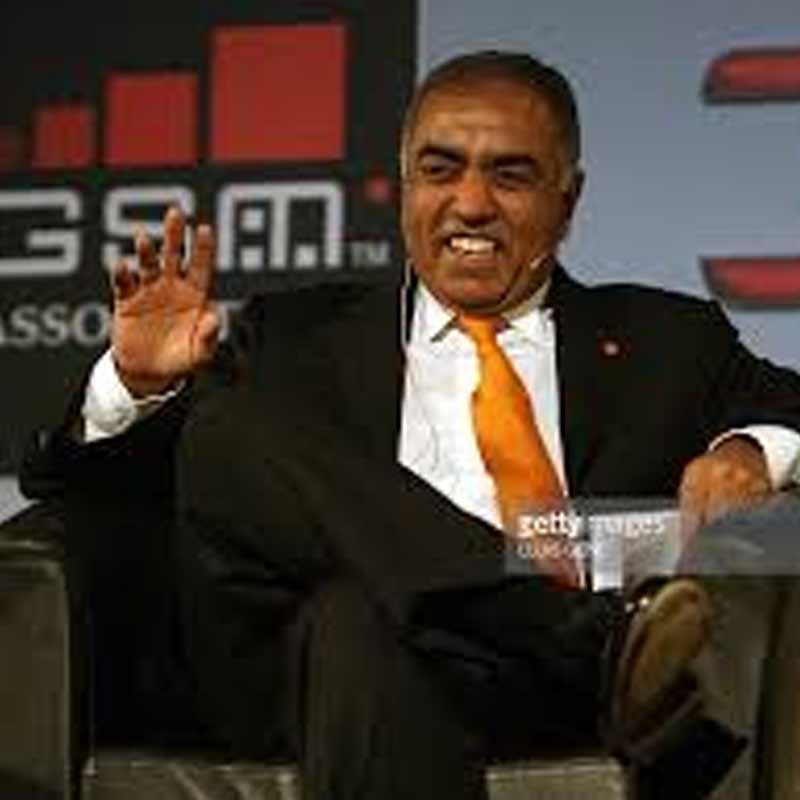
    MUMBAI: Mobile TV is being touted as one of the biggest trends in the world of technology and as the future service to subscribers by telecom operators. Kicking off on 11 October, the Mipcom’s Mobile TV will see an exclusive keynote address given by Europe’s integrated operator Orange CEO Sanjiv Ahuja, and will conclude with Mipcom’s second annual Mobile TV screenings and awards.

    Ahuja will discuss the content initiatives at Orange, a division of France Telecom. and will share his vision of the tremendous potential for mobile entertainment and explore the opportunities offered by mobile broadband in the always-on, anytime, any-place era. He will also outline the most recent initiatives taken by Orange through service and network convergence to provide a pocket-sized entertainment centre, informs an official release. 

    “Orange is evolving into a one-stop-shop for our customers’ communication and entertainment needs. Television and TV content is central to our strategy,” says Ahuja. “I am delighted to have the opportunity of discussing the possibilities of converging technologies with Mipcom delegates. Everything we thought we knew about this industry is changing. With new ways to create, consume and pay for content, only players with open eyes and open minds can win.” 

    Ahuja joined Orange in April 2003 as COO, and was appointed CEO in March 2004. Prior to Orange, he was CEO of California-based technology company, Comstellar Technologies and was president of Telcordia Technologies (formerly Bellcore). Previously, he spent fifteen years at IBM in various executive roles. 

    In addition to Ahuja’s keynote and the Mobile Awards programme, this year’s conference programme entitled Reshaping Media, will feature 30 sessions with over 100 speakers in addition to four other prestigious keynotes, from Disney Media Networks co-chair and president Disney-ABC Television Group Anne Sweeney, Metro-Goldwyn-Mayer Inc. chairman and CEO Harry Sloan, NBC Universal president digital media and market development Beth Comstock and ESPN Inc. president and ABC Sports co-chairman George Bodenheimer.

    An integral part of Mipcom 2006’s mobile focus are the Mobile TV screenings and awards. Cutting-edge made-for-mobile content from around the globe will be showcased during the screenings and the prizes will be awarded in the evening of the same day.

    Last year’s programme attracted 220 entries, from 110 companies and 28 countries. For the second consecutive year, the contest will recognise and reward innovation and creativity in made-for-mobile formats.

    Reed Midem director of television Paul Johnson comments, “Our markets continue to attract the best players in the mobile entertainment industry from all over the world. Our commitment is to help the creative industry move forward on this new medium for entertainment content. Last year’s awards already generated great business opportunities for the companies who entered the competition. We expect a growing and thriving mobile content market, and therefore even more entries this year. And naturally, the Ahuja keynote reflects the importance the mobile industry places on content within their future strategy.”

    The award categories continue to emphasize made for mobile film, TV and animation content and also recognize the growing importance of user generated content. The award categories are: Best original made-for-mobile film or video content; Best repurposed content from existing Film or TV property; Best made-for-mobile TV channel; Best format for interactive mobile TV and best mobile format for user-generated content. In addition to these five categories,there will also be The Jury’s Grand Prize for Innovation, given to the most innovative company. 

    The deadline for entries for the Mobile Awards is 4 September. A pre-screening jury will nominate a selection of projects to be invited to Cannes for the Grand Jury judging on 9 October.

  • Nokia trials Mobile TV in Sweden using DVB-H technology with Teracom

    Nokia trials Mobile TV in Sweden using DVB-H technology with Teracom

    MUMBAI: Nokia has announced a new commercial DVB-H pilot in Stockholm with Teracom in Sweden, wherein it will be supplying the Nokia Mobile Broadcast System 3.0 and Nokia N92 mobile TV devices to the pilot, which will last from October to December 2006 and includes 400 consumers.

    The project is a co-operation between ATG, Boxer, Nokia, Sveriges Radio, Sveriges Television/UR, Telenor and Teracom.

    The pilot participants will be able to watch 14 TV channels and listen to four radio channels in the Stockholm city region, where a network has been built for high quality indoor and outdoor coverage. The objective is to evaluate what Swedish consumers think about commercial broadcast mobile TV.

    ATG, Boxer, Sveriges Radio and Sveriges Television will provide content for the pilot. The test will be delivered using Nokia Mobile Broadcast Solution 3.0, and the pilot participants will use mobile devices from Nokia, the Nokia N92. Teracom will be responsible for the network, the broadcast and operating of the platform.

    “We strongly believe in the capability of the DVB-H technology as well as in the mobile TV service, and we are looking forward to presenting the full potential and interest of broadcast mobile TV in Sweden,” said Nokia Nordic multimedia director Sigurd Leth.

    This is the second mobile TV pilot in Sweden where Nokia is one of the main suppliers of DVB-H technology. Last week, Nokia announced a new contract with TeliaSonera Sweden for a complete DVB-H pilot system, including Nokia Mobile Broadcast System 3.0 and Nokia N92 mobile TV devices, underpinned by Nokia’s hosting and systems integration know-how.

    DVB-H technology complements existing operator networks, optimising capacity and quality. It offers consumers the chance to enjoy high quality terrestrial digital broadcasts along with voice telephony and internet access all in a single device. Broadcast mobile TV will offer new business opportunities for mobile service providers, content and broadcast companies, infrastructure and handset manufacturers as well as technology providers.

    The feedback from different mobile TV pilots has been promising. Results from pilots on broadcast (DVB-H) mobile TV services amongst consumers in Finland, the UK, Spain and France have revealed clear consumer demand for such services as well as important indications over future business models for commercial mobile TV services.

  • 100 million mobile TV broadcast subscribers by 2010: In-Stat study

    100 million mobile TV broadcast subscribers by 2010: In-Stat study

    MUMBAI: Research recently conducted by In-Stat suggest that by 2010 end, mobile TV broadcast subscribers worldwide will reach 102 million, a giant leap from 3.4 million in 2006.

    The market research firm stated that for cellular networks to deliver content that millions want to watch simultaneously requires much greater bandwidth than is currently available, thus, carriers are turning to mobile TV broadcast networks, which have a much lower cost per bit for video delivery.

    According to an official release, recent research by In-Stat found the following:

    – There are positives and negatives to each standard, but each has a vendor eco-system behind it to enable deployment today.
    – 2005 was the year of the first deployments, with ongoing trials in many parts of the world. 
    – Mobile carriers, mobile TV network operators, and content providers will soon be testing business models to determine what mobile phone subscribers are willing to pay to watch and what advertisers are willing to pay to reach them.

    In-Stat analyst Michelle Abraham says, “The greatest challenge for mobile TV broadcast operators is to acquire the spectrum necessary to offer services. Spectrum availability may determine which of four standards is chosen, and also impacts the business case for the deployment of a network.”

    The research, “Mobile TV Broadcasting Now Out of the Gate” covers the worldwide market for mobile TV services. It includes forecasts for mobile broadcast TV subscribers, average revenue by subscriber and revenues by region through 2010. It also contains analysis of competing mobile broadcast technologies and current deployments and trials, adds the release.

    In related research, In-Stat’s January 2005 consumer survey found that over one in eight respondents expressed an interest in purchasing mobile video services even though those services were not yet available. Interest in mobile video outpaced all other applications such as gaming, downloadable music and broadcast music.

    This research is part of In-Stat’s Multimedia Broadband Service, which provides a worldwide, comprehensive perspective of multimedia broadband markets, analyzing cable, video-over-DSL, DBS, and IPTV services, and digital terrestrial broadcast. It examines subscribers, business models, industry agendas and key cross-market combatants, the release adds.

  • Mobile TV is creating a new demographic appeal in the US: Study

    Mobile TV is creating a new demographic appeal in the US: Study

    MUMBAI: Telephia, a measurement information provider to the mobile industry in the US, has announced a research undertaken shows that more than two million, or 1.4 percent, of the US wireless user base subscribed to a mobile video plan during the first quarter of 2006.

    The average U.S. mobile TV subscriber spends $40 a month more on wireless services than non-TV subscribers.

    Telephia president and CEO Sid Gorham says, “Mobile TV represents a huge revenue opportunity for companies in all parts of the communications and entertainment value chain.”

    Telephia research shows that the Hispanic and Black/African-American demographic groups made up 23 and 19 per cent of the mobile TV subscriber base in the US during the first quarter of this year, respectively. This is approximately double the share these groups represent of the broader mobile user population.

    “The early popularity of mobile TV with these groups continues the demographic trend we see in the adoption of all advanced mobile data services. Mobile TV will allow marketers to reach this audience with a wide range of innovative advertising and commerce approaches. To execute successfully on this exciting opportunity, the industry needs detailed research that tracks the evolving behavior and preferences of the mobile TV user. Our clients are particularly interested in using audience measurement data to target advertising and interactive commerce” adds Gorham.

    Telephia, had launched the industry’s first mobile television user panel last month. This longitudinal research panel will provide the mobile industry with detailed measurement of the attitudes and behaviours among the rapidly growing mobile TV audience.

    Telephia will begin by tracking users of the current unicast-based services (e.g. the MobiTV-based offerings on Sprint and Cingular Wireless, and Verizon’s V Cast service). The panel will expand to include subscribers of multicast mobile TV networks when they launch in late 2006 and 2007. Telephia is currently building its panel in the US and the UK and will expand coverage to the rest of Europe and parts of Asia in 2007.

  • MTV launches animated series ‘Wulffmorgenthaler’ on mobile TV

    MTV launches animated series ‘Wulffmorgenthaler’ on mobile TV

    MUMBAI: Created exclusively for MTV Mobile TV, MTV Networks International has launched its made-for-mobile animated series Wulffmorgenthaler inspired by the world famous comic strip of the same name.

    The Wulffmorgenthaler shorts, a coproduction between MTVNI and Mikael Wulff and Anders Morgenthaler.

    Comprising 20 short animations featuring the comical twists of different characters and storylines, it is available on MTVNI’s mobile TV channels and mobile video on demand across Europe, Australia and the US for eight weeks.

    It will be distributed on MTVNI’s broadband services, according to media reports.

    MTVNI has 20 mobile TV channels in 19 countries.

    “Wulffmorgenthaler delivers on our promise to provide audiences with the most original, compelling content on multiple platforms around the world. These edgy animations will offer audiences a new, bite-sized burst of humour and creativity that only MTV can offer,” said MTVNI senior VP digital media Gideon Bierer.

    The Wulffmorgenthaler shorts join MTVNI’s other made-for-mobile productions including Head and Body, produced in partnership with Motorola.

  • Global survey predicts strong future for mobile TV

    Global survey predicts strong future for mobile TV

    MUMBAI: A new report European mobile phone users in early 2006, ‘New Mobile Services – Europe 2006’, from Portio Research, gives a resounding ‘thumbs up’ for mobile TV. Significantly over 50 per cent of those interviewed were interested in mobile TV and were prepared to pay for it, at an average price of €10 Euro per month.

    The key findings:

    • As many as 50 per cent of mobile users are interested in mobile TV and are prepared to pay on average €10 for ‘all you can eat TV’ – the potential market is huge even when based on conservative uptake.

    • Video calling is in its infancy with only 6 per cent of the survey sample having used it already, however over 60% of those interviewed expressed both an interest in using the service and a willingness to pay for it.

    • Mobile advertising is a big turn off for most with over 65 per cent of survey respondents expressing a zero tolerance attitude to what many consider to be spam, or advertising that you have pay for when ‘snacking’ on TV.

    It is clear that mobile TV will create a market for more TV viewing in addition to that at home, delivering the notion of ‘TV snacking’ whilst on the move. News and weather for professionals commuting to work, celebrity gossip and game show updates for the young professional and music videos for teenage fans. Sports aficionados also appear to be keen to grab the latest action whenever they can. All the evidence suggests that even at conservative estimates the market potential is huge, states an official release.

    Video calling whilst still in its infancy obviously holds an attraction for many users particularly the teen market 85 per cent of whom expressed a desire to use video calling in the future. Interestingly pre-paid subscribers were willing to pay more than post paid subscribers per call. Once again the research indicates a very attractive market with the potential for perhaps as many as 400 million Europeans using the service.

    One of the most interesting findings of the survey is consumer attitudes to mobile advertising, with over 65 per cent of those questioned expressing zero tolerance to what many consider to be an unwelcome intrusion into their mobile world. As well as being likened to e-mail spam, advertising was considered particularly unacceptable if it intruded on paid for time watching mobile TV, the release adds.

    The survey undertaken by Portio provides many different insights into mobile user attitudes and trends across all major European markets. Italy and Spain for example turn out to be the mobile content hotspots whilst users in Denmark, France and Russia prefer to use content and services pre-installed on their phones. Men continue to prefer buying online while women prefer to go shopping for real. There is plenty of good news in this report for mobile network operators.

  • Sahara, DD ad sales revenues for England series gross Rs 2 billion

    Sahara, DD ad sales revenues for England series gross Rs 2 billion

    MUMBAI: The first chapter of Nimbus’ boss Harish Thawani’s audacious gamble with the India cricket story is over with a battered English side glad to be back in the cooler climes of Old Blighty and the Indians getting some well deserved rest before they head out to the Caribbean.

    For Thawani however, the rollercoaster he’s been on since his Nimbus Communications swung the telecast rights to India cricket for the next four years with a bank-breaking $ 612.18 million composite bid has barely begun. The India-England tour — the first of ten international series (and four domestic cricket seasons) that constitutes the deal — is over and the calculators are out tallying the revenue numbers.

    Indiantelevision.com’s discussions on the matter with media buyers indicate that the series, which involved three Tests and six ODIs (one was washed out), has generated about Rs 2003 million in ad sales from national broadcaster Doordarshan and Sahara One. Going by these calculations, DD accounted for Rs 987 million while Sahara One mopped up Rs 1016 million.

    But what is of critical importance to Nimbus is really how much it is able to net from this series. Indiantelevision.com estimates show the ad sales revenue picture for this series looking something like this: Nimbus’ Net income from DD is Rs 630 million (deducting 25% share to DD and 15% agency commission) and for Sahara it is Rs 864 million. That makes a total of just under Rs 1500 million ($ 35 million).

    Considering that Nimbus’ bid for the India territory rights was a whopping $ 504.09 million, there’s a huge mountain still that Thawani’s privately held Mumbai sports management company has left to climb to clear the profit threshold.

    THAWANI’S GAMEPLAN

    Having said that, and going by a recent report in Forbes, Thawani is already in the clear on the international territory rights (Nimbus’ bid here broke down as $ 108.09 million). The report says that Nimbus has sold BCCI’s telecast rights internationally for $130 million. The jury’s still out on that one though, with some industry observers calculating that Nimbus could not have made more than $ 89 million from the sale of international rights.

    As for the India part, everything points to Nimbus launching its own sports channel before the end of the year and for this the market expectation is that Thawani will soon be announcing another round of funding for this purpose.

    Thawani claims that investors are currently valuing Nimbus at $400 million to $500 million, which would mean that Nimbus has tripled in valuation terms in less than a year. It was last August that UK-based private equity and venture fund 3i acquired around 33 per cent stake in Nimbus for $45.50 million (approx Rs 1.97 billion).

    In conclusion, what is the downside in this gamble (for Thawani and any investor who wants to buy into his vision) and what could be the upside. That is really what will have guided Thawani in making what still remains a hugely difficult play to pull off. As the head of a broadcast concern told Indiantelevision.com, the current thinking is that there is just no way anyone can make more than $ 550 million from this deal. So at the outset itself, Nimbus is looking at a $ 62 million hit on its investment, or $ 15.5 million per year spread over four years.

    But there is the upside as well, which is that with all the new broadcast delivery platforms that are opening (DTH, IPTV, mobile TV) and if all the constellations of a booming economy, a brilliantly performing team and the kind of possibilities that a young on-the-go populace provide are in consonance, then $ 800 million might well be within reach.

    Before jumping to conclusions either way, it might be worth remembering a certain Kunal Dasgupta and his now well documented masterstroke of a gamble on the ICC cricket rights in 2002 for a then unheard of $ 208 million. There is no one who today does not see the SET India CEO’s bid as a really inspired play.

    A potential loss of $ 62 million versus a best case gain of $ 200 million. Which way the dice falls by the time 2010 comes around will determine whether Thawani is ultimately acknowledged as a visionary or someone whose go for broke gamble went bust. Unsurprisingly, there are many a respected industry stalwart who believe that if anyone can pull this off, it is the fashionably bald head honcho of Nimbus.

  • In the brave new digital world, content could really be king

    In the brave new digital world, content could really be king

    “If content is King and distribution is God, then God save the King!” That was Prasar Bharati CEO KS Sarma speaking at a recent industry seminar.

    In these times of increasing channel influx onto already overloaded analogue cable systems, the distribution God is certainly making the content king do the merry carriage dance. Reminds one of the ever-worsening infrastructural mess that is Mumbai actually, where people are paying more and more for less and worse but with a big difference. Mumbai’s is a story that is looking more hopeless by the day, while in this case there is much optimism about the future.

    True, for the short to medium term, it will be the distribution God in whose hands will lie the fate of the content King. But once the dust has settled on all of this and the new platforms like digital cable, DTH, IPTV and mobile TV have reached critical mass, then it will be content that will hold sway, and how.

    True, for the short to medium term, it will be the distribution God in whose hands will lie the fate of the content King
    _____****_____

    Disney’s ABC network is already pointing one of the ways forward with its new online service of free programming. As part of a two-month-long experiment, Disney-ABC Television Group will be offering ad-supported, full-length episodes of four ABC primetime series online at www.abc.go.com.

    What’s the logic working here? Is ABC getting Get ‘Desperate’ and ‘Lost’ as regards its online strategy. Not at all. It all makes sense if we keep in mind that if there is one place where the dominant culture is to access content for free, it is the Web.

    So if ABC is trying to transpose the “traditional advertising driven network model” onto the Web there is already an inbuilt advantage over television. It is that while the whole TiVo, time-shifting, DVR mentality is now carrying over to the Web, the consumer cannot zap out the ads. And since many of the ads will be interactive, advertisers will be guaranteed even greater value.

    The content creators that stay ahead of the curve and the distribution platform providers most alive to the challenges and opportunities that the digital world offers will be the ones who will reap the benefits
    _____****_____

    Closer to home, companies like Reliance and Airtel expect to start IPTV services by the end of this year. And for a basic package they are promising rates as cheap as your current cable TV charges. No one is trying to say there won’t be teething problems (and knowing the ground realities here, these would probably be pretty severe). In India the biggest problem is going to be unbundling of the so called last mile, which basically means that incumbent operators like BSNL or MTNL should allow other operators to use their copper wires.

    With the imminent arrival of Tata-Sky DTH, Zee’s Dish TV ramping up and the big telecom players aggressively pushing ahead with IPTV and mobile TV, the value of quality content can only go up. We see some sort of shakeout — both on the content as well as the technology side by 2008.

    In the meanwhile, the content creators that stay ahead of the curve and the distribution platform providers most alive to the challenges and opportunities that the digital world offers will be the ones who will reap the benefits.

    There could well be a lesson in this for the cable fraternity too. Market forces could soon make the whole CAS debate irrelevant and the MSOs may well end up “missing the addressability bus”.

    Maybe MSOs should instead be focussing their efforts on attractively packaging and marketing CAS to their direct points to begin with and concurrently convincing their franchisees of the need to get CAS going, government or no government.

    The cable fraternity has a huge first mover advantage vis-?-vis pushing addressability because they own the last mile. Maybe they should as aggressively be chasing market-driven addressability as they are the mandating of CAS. A twin strategy would better cover their bases one would think.

    As for the content game, to quote John Hendricks, chairman of Discovery Communications Inc, from a recent report: “Newly empowered TV consumers will drive networks to improve their offerings, putting a ‘great squeeze’ on ‘marginal quality content’. They’re in control now.”

    Not in India, they’re not. But they will be. Of that nobody need have any doubt.

  • Ericsson to boost mobile TV experience with on-demand services at MipTV

    Ericsson to boost mobile TV experience with on-demand services at MipTV

    MUMBAI: Taking the next evolutionary step in mobile TV, Ericsson will showcase its enhanced program guide for mobile TV at the TV and broadcasting event MipTV/Milia.

    The application integrates television and on-demand mobile television services in one location in one device.

    In an official statement, using the solution, Ericsson will demonstrate how a wide range of TV and on-demand programs can be well structured and easily accessed in one location on the mobile.

    The solution also allows users to easily access stored content for playback, making the mobile TV service even more attractive and personal.

    The enhanced program guide feature provides mobile TV users with comprehensive information on each program, providing users with a rich TV experience.

    Ericsson Mobility World VP Kurt Sillén says that personalization and ease-of-use are essential for mass-market uptake of the service.

    “Adding on-demand TV to the program guide will stimulate consumption and bring new revenues to the whole mobile media industry,” Sillén adds.

    Ericsson Consumer and Enterprise Lab studies show that consumer interest in mobile TV is often based on situation and an attractive option for filling time.

    With on-demand services, users can access recorded programs, yesterday’s highlights and archived material whenever they please. Both TV and on-demand services are necessary to meet the requirements of mobile TV users.

    The enhanced application will be commercially available as part of Ericsson’s Mobile TV and Video solution in the fourth quarter of 2006, informs the release.

    Ericsson provides operators with a true end-to-end solution that utilizes the WCDMA and GSM/EDGE mobile networks for commercial mobile TV and video services.

    Today, existing 3G mobile technology enables service providers to launch high-quality and cost-efficient mobile TV services.

    By the end of 2005, more than 40 operators had commercially launched mobile TV over mobile networks via unicast. As mobile TV becomes a mass-market service, mobile network broadcast technologies, such as MBMS (Multimedia Broadcast Multicast Services) will be added to mobile networks to further boost capacity.

    Ericsson is shaping the future of Mobile and Broadband Internet communications through its continuous technology leadership. Providing innovative solutions in more than 140 countries, Ericsson is helping to create the most powerful communication companies in the world.

  • UK study highlights the need for more innovative TV on mobile phones

    UK study highlights the need for more innovative TV on mobile phones

    MUMBAI: The results of a new study, Mobile TV – Attitudes to Broadcast on Mobile, confirms the need for broadcast and entertainment brands to work harder to tailor their content to mobile phones.

    The qualitative study by Red Bee Media (formerly BBC Broadcast) and digital media research agency, iBurbia, aimed to research consumer attitudes to specially made or tailored mobile content compared to TV streamed to mobile phones.

    The findings suggested that full length programming on mobile is not as popular as made for mobile TV because screen sizes are too small, opportunities to watch full length programmes on-the-go are rare and subjects preferred to watch full-length programming on the TV.

    iBurbia’s Omar Bakhshi says, “We talked with a broad range of people in this study and there was significant interest in concepts that complemented TV viewing with extra and exclusive content on mobile phones. But, the content had to be sufficiently compelling to be worth the effort and there is a fear of billing abuse, meaning that cost needs to be made clear”.

    The results have also suggested that the most effective way to market mobile TV will be using on-screen prompts within related television shows. The most successful mobile TV will also be of the right quality to work on a mobile screen and targeted to a specific audience. Participants in the study found that, on the smallest of mobile screens, any content over three minutes was too long and anything over one pound was too expensive.

    The recent Oxford trials confirmed that there is an appetite for mobile TV, but this research highlights how ‘TV’ for mobile is wildly different from the ‘TV’ of linear broadcasting. New rules for advertising, navigating and entertaining apply. We worked with iBurbia to find out what viewers really want to watch on their mobile phones. Red Bee Media has built a successful business in understanding consumers’ needs in order to create and tailor content and communicaton for multiple platforms and formats.

    Red Bee Media business director new creative content Catriona Tate says, “The results point towards the mobile TV market being driven in the short term by advertiser funded content and mobile video that compliments or promotes TV programmes”.

    The qualitative study was produced by iBurbia in its interactive media research centre in West London. It included six focus groups – two groups made up of people aged 16-25, three 26-40 and one 41-60. One of these groups consisted of ‘gadget’ users (26-40 age group), the rest only having freeview TV at home and mostly using their mobile phones just for calls.

    The subjects were shown content specially made for mobile on mobile handsets that was created by Red Bee Media. The content included a sport clip, comedy clip, one minute mobidrama, advertiser funded programme, interview with football manager and reality TV clip. As a comparison, subjects were also shown a full length High Definition programme on a PSP (portable Play Station) and a Freeview channel streamed live to a mobile phone.A