Tag: mobile TV

  • Broadcast media sector FDI norms see minor tweaks in govt’s fresh announcement

    Broadcast media sector FDI norms see minor tweaks in govt’s fresh announcement

    NEW DELHI: The government of India yesterday issued a comprehensive FDI policy for various sectors where a slight change has been noticed in the media sector from what had already been announced in June 2016. Now, 100 per cent FDI is allowed in cable TV and HITS under automatic route for both digital and non-digital carriage services.

    For those segments of the media where automatic FDI approval is not granted and a government okay is needed, it would now be the nodal ministry — Ministry of Information and Broadcasting (MIB) — that would be responsible for the green signal instead of Commerce Ministry’s Foreign Investment Promotion Board, a division that has been now dismantled as part of government’s bid to make easy doing business in India.

    public://b1_0.jpg

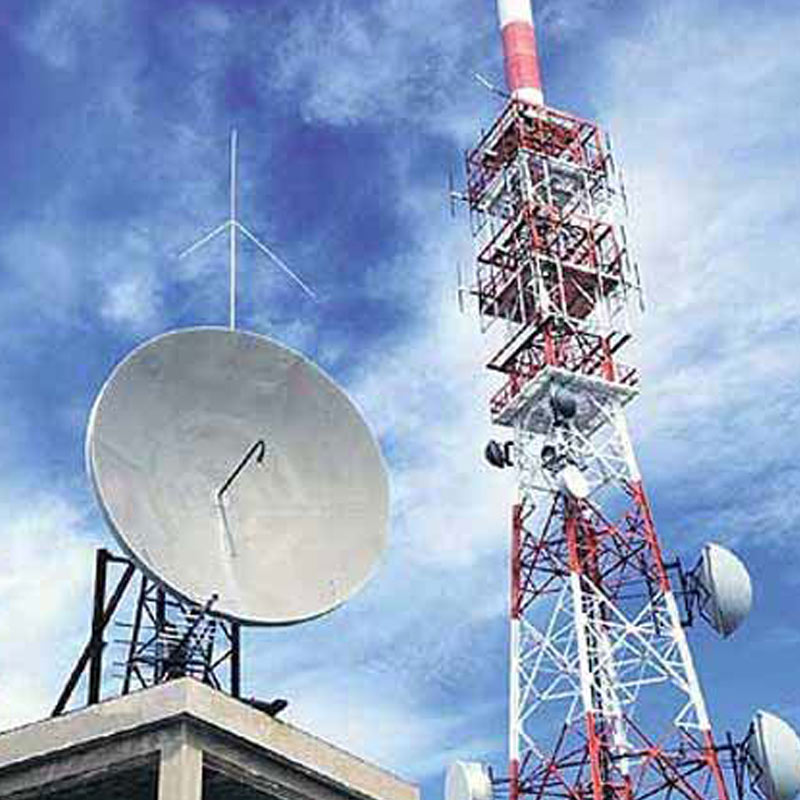
    FDI in broadcast carriage services like teleports, DTH, cable networks (both MSOs and LCOs for DAS and non-DAS areas), mobile TV, headend-in-the-sky broadcasting service (HITS) is 100 per cent under automatic route.

    The foreign investment limit (FDI) in terrestrial broadcasting of FM Radio and up-linking of news and current affairs TV channels remain at 49 per cent subject to government approval. Up-linking and downlinking of non-news and current affairs TV channels continue to be 100 per cent under automatic route.

    public://b2.jpg

    Publishing of newspaper and periodicals dealing with news and current affairs  and publication of Indian editions of foreign magazines dealing with news and current affairs have a 26 per cent FDI limit subject to government approval.

    The head of an MSO company, on condition of anonymity, said it’s slightly confusing as to why it has been stated that 100 per cent FDI is allowed for carriage services like cable TV and HITS in both digital and non-digital areas  under automatic route.

    Though the government is of the opinion that 100 per cent digitization has been achieved in the country, broadcast carriage industry (MSOs and LCOs) insist there analog pockets in the country persist as set-top-boxes are still being seeded in small towns and rural areas.

    The government has also notified — most of it reiteration of earlier policy decision — detailed conditions for the broadcast media and they can be viewed at http://dipp.nic.in/sites/default/files/CFPC_2017_FINAL_RELEASED_28.8.17.pdf:

    ALSO READ:

    Radical changes in FDI regime; Most sectors on automatic FDI route

    I&B Sector brings in over $1.25 billion  FDI between October 2014 and May 2016


  • Wi-fi proliferation, Net Telephony discussion in January

    Wi-fi proliferation, Net Telephony discussion in January

    NEW DELHI: The open house discussion in the capital on the Telecom Regulatory Authority of India’s consultation paper on “Proliferation of Broadband through Public Wi-Fi Networks” which was earlier slated for 20 December has now been rescheduled for 9 January 2017 to get greater participation in view of the importance attached to public Wi-Fi systems.

    The issuance of this paper on 13 July 2016 was followed by reactions and then a workshop in Bengaluru.

    Through a set of 12 questions, the Authority had sought to get the opinion of stakeholders including internet and telecom service providers on how best Wi-fi (an acronym for Wireless Fidelity) can grow in the country.

    At the outset, the regulator had noted that the growth of Internet penetration in India and realisation of its full potential is closely tied to the proliferation of broadband services. “Broadband” is currently defined to mean a data connection that is able to support interactive services, including Internet access, with the capability of a minimum download speed of 512 kbps. It therefore refers to a means of delivering high-speed Internet access services.

    Later, on 16 November, TRAI issued a second paper on model for nation-wide interoperable and scalable wi-fi networks.

    Earlier, TRAI had said it realised the importance of public Wi-Fi networks as complementary to existing landline and cellular mobile infrastructure in improving broadband penetration and adoption of Digital India.

    Meanwhile, TRAI has also scheduled on 12 January 2017 an open house discussion on internet telephony based on its paper of 22 June 2016 issued after noting that unified IP based backbone and the benefits associated with the converged telecom access scenario has enabled service providers to launch more and more converged services such as Internet Telephony, IPTV, Mobile TV etc. In the Consultation Paper, Trai had also pointed out that use of Internet Protocol (IP)-based networks, including the Internet, continues to grow around the world due to the multitude of applications it supports and particularly due to Voice Over IP (VoIP). IP-based networks are capable of providing real-time services such as voice and video telephony as well as non real-time services such as email and are driven by faster Internet connections, widespread take-up in broadband and the emergence of new technologies.

    Also read:

    Public Wi-Fi: TRAI plans to evolve model, releases paper

    Wi-fi proliferation: Discussion on 20 Dec

    TRAI gives 2nd extension to Internet telephony consultation


  • Wi-fi proliferation, Net Telephony discussion in January

    Wi-fi proliferation, Net Telephony discussion in January

    NEW DELHI: The open house discussion in the capital on the Telecom Regulatory Authority of India’s consultation paper on “Proliferation of Broadband through Public Wi-Fi Networks” which was earlier slated for 20 December has now been rescheduled for 9 January 2017 to get greater participation in view of the importance attached to public Wi-Fi systems.

    The issuance of this paper on 13 July 2016 was followed by reactions and then a workshop in Bengaluru.

    Through a set of 12 questions, the Authority had sought to get the opinion of stakeholders including internet and telecom service providers on how best Wi-fi (an acronym for Wireless Fidelity) can grow in the country.

    At the outset, the regulator had noted that the growth of Internet penetration in India and realisation of its full potential is closely tied to the proliferation of broadband services. “Broadband” is currently defined to mean a data connection that is able to support interactive services, including Internet access, with the capability of a minimum download speed of 512 kbps. It therefore refers to a means of delivering high-speed Internet access services.

    Later, on 16 November, TRAI issued a second paper on model for nation-wide interoperable and scalable wi-fi networks.

    Earlier, TRAI had said it realised the importance of public Wi-Fi networks as complementary to existing landline and cellular mobile infrastructure in improving broadband penetration and adoption of Digital India.

    Meanwhile, TRAI has also scheduled on 12 January 2017 an open house discussion on internet telephony based on its paper of 22 June 2016 issued after noting that unified IP based backbone and the benefits associated with the converged telecom access scenario has enabled service providers to launch more and more converged services such as Internet Telephony, IPTV, Mobile TV etc. In the Consultation Paper, Trai had also pointed out that use of Internet Protocol (IP)-based networks, including the Internet, continues to grow around the world due to the multitude of applications it supports and particularly due to Voice Over IP (VoIP). IP-based networks are capable of providing real-time services such as voice and video telephony as well as non real-time services such as email and are driven by faster Internet connections, widespread take-up in broadband and the emergence of new technologies.

    Also read:

    Public Wi-Fi: TRAI plans to evolve model, releases paper

    Wi-fi proliferation: Discussion on 20 Dec

    TRAI gives 2nd extension to Internet telephony consultation


  • TRAI gives 2nd extension to Internet telephony consultation

    TRAI gives 2nd extension to Internet telephony consultation

    NEW DELHI: The Telecom Regulatory Authority of India (TRAI), in a rare break with its own tradition, has given a second extension for stakeholders to respond to its consultation paper on Internet telephony, which discusses converged services like IPTV, mobile TV, etc.

    One extension had been given an extension for responses to come by today but has now said that responses can come by 5 September and counter-comments by 13 September 2016 with a noting that no further extensions would be allowed.

    Noting that unified IP based backbone and the benefits associated with the converged telecom access scenario has enabled service providers to launch more and more converged services such as Internet telephony, IPTV, mobile TV, etc., TRAI has on 22 June 2016 sought to know the format of voice over internet telephony (VoIP) in India.

    In the consultation paper, TRAI has also pointed out that use of Internet Protocol (IP)-based networks, including the Internet, continues to grow around the world due to the multitude of applications it supports and particularly due to VoIP. IP-based networks are capable of providing real-time services such as voice and video telephony as well as non real-time services such as email and are driven by faster Internet connections, widespread take-up in broadband and the emergence of new technologies.

    The terms “IP telephony”, “VoIP”, Internet telephony and other variants often generates confusion as there are many different definitions used by various organizations. Some use them interchangeably, while others give them distinct definitions. Further confusion is caused by using the terms to refer to both the IP-based technologies and the services that are enabled by these technologies.

    Convergence is primarily driven by increasing processing power, high capacity memory storage devices, reduced price, lesser power requirement and miniaturization of the devices. High-speed data transfer is now possible which is necessary for delivering innovative and advanced multimedia applications.

    Recent trends indicate that telecom operators are adopting converged platforms to deliver multimedia rich applications containing voice, video and data.

    The separation of service provisioning and its management from the underlying network infrastructure in packet based networks is further increasing the acceptability of IP based networks. It is now possible to separate provision of service contents, configuration and modification of service attributes regardless of the network catering such service. There has been enough evidence to suggest that in future IP networks will play much important role and may ultimately encourage migration of conventional networks towards Next Generation Networks or an All-IP Network.

  • TRAI gives 2nd extension to Internet telephony consultation

    TRAI gives 2nd extension to Internet telephony consultation

    NEW DELHI: The Telecom Regulatory Authority of India (TRAI), in a rare break with its own tradition, has given a second extension for stakeholders to respond to its consultation paper on Internet telephony, which discusses converged services like IPTV, mobile TV, etc.

    One extension had been given an extension for responses to come by today but has now said that responses can come by 5 September and counter-comments by 13 September 2016 with a noting that no further extensions would be allowed.

    Noting that unified IP based backbone and the benefits associated with the converged telecom access scenario has enabled service providers to launch more and more converged services such as Internet telephony, IPTV, mobile TV, etc., TRAI has on 22 June 2016 sought to know the format of voice over internet telephony (VoIP) in India.

    In the consultation paper, TRAI has also pointed out that use of Internet Protocol (IP)-based networks, including the Internet, continues to grow around the world due to the multitude of applications it supports and particularly due to VoIP. IP-based networks are capable of providing real-time services such as voice and video telephony as well as non real-time services such as email and are driven by faster Internet connections, widespread take-up in broadband and the emergence of new technologies.

    The terms “IP telephony”, “VoIP”, Internet telephony and other variants often generates confusion as there are many different definitions used by various organizations. Some use them interchangeably, while others give them distinct definitions. Further confusion is caused by using the terms to refer to both the IP-based technologies and the services that are enabled by these technologies.

    Convergence is primarily driven by increasing processing power, high capacity memory storage devices, reduced price, lesser power requirement and miniaturization of the devices. High-speed data transfer is now possible which is necessary for delivering innovative and advanced multimedia applications.

    Recent trends indicate that telecom operators are adopting converged platforms to deliver multimedia rich applications containing voice, video and data.

    The separation of service provisioning and its management from the underlying network infrastructure in packet based networks is further increasing the acceptability of IP based networks. It is now possible to separate provision of service contents, configuration and modification of service attributes regardless of the network catering such service. There has been enough evidence to suggest that in future IP networks will play much important role and may ultimately encourage migration of conventional networks towards Next Generation Networks or an All-IP Network.

  • TRAI gives more time on responses to Paper on internet telephony which can affect mobile TV, IPTV

    TRAI gives more time on responses to Paper on internet telephony which can affect mobile TV, IPTV

    NEW DELHI: The Telecom Regulatory Authority of India today decided to give more time to stakeholders to respond to its consultation paper on internet telephony (VoIP).

    The paper had noted that unified IP based backbone and the benefits associated with the converged telecom access scenario has enabled service providers to launch more and more converged services such as Internet Telephony, IPTV, Mobile TV etc.

    TRAI has now asked stakeholders to respond by 22 August 2016 (which is exactly two months after the paper was issued on 22 June 2016) and give countercomments by 5 September 2016.

    The paper has sought to know the format of voice over internet telephony (VoIP) in India.

    The authority has pointed out that use of Internet Protocol (IP)-based networks, including the Internet, continues to grow around the world due to the multitude of applications it supports and particularly due to Voice Over IP (VoIP). IP-based networks are capable of providing real-time services such as voice and video telephony as well as non real-time services such as email and are driven by faster Internet connections, widespread take-up in broadband and the emergence of new technologies.

    The terms “IP Telephony”, “VoIP”, Internet Telephony and other variants often generates confusion as there are many different definitions used by various organizations. Some use them interchangeably while others give them distinct definitions. Further confusion is caused by using the terms to refer to both the IP-based technologies and the services that are enabled by these technologies.

    Convergence is primarily driven by increasing processing power, high capacity memory storage devices, reduced price, lesser power requirement and miniaturization of the devices. High-speed data transfer is now possible which is necessary for delivering innovative and advanced multimedia applications.

    Recent trends indicate that Telecom operators are adopting converged platforms to deliver multimedia rich applications containing voice, video and data.

    The separation of service provisioning and its management from the underlying network infrastructure in packet based networks is further increasing the acceptability of IP based Networks. It is now possible to separate provision of service contents, configuration and modification of service attributes regardless of the network catering such service. There has been enough evidence to suggest that in future IP networks will play much important role and may ultimately encourage migration of conventional networks towards Next Generation Networks or an All IP Network.

    The regulator wants to know what should the additional entry fee, Performance Bank Guarantee (PBG) and Financial Bank Guarantee (FBG) for Internet Service providers be if they are also allowed to provide unrestricted Internet Telephony.

    It says the point of Interconnection for Circuit switched Network for various types of calls is well defined, and should the same be continued for Internet Telephony calls or there is need to change Point of Interconnection for Internet Telephony calls.

    Trai has asked whether accessing of telecom services of the TSP by the subscriber through public Internet (internet access of any other TSP) can be construed as extension of fixed line or mobile services of the TSP.

    It wants to know whether the present ceiling of transit charge needs to be reviewed or it can be continued at the same level.

    The regulation has asked what the termination charge should be when call is terminating into Internet telephony network and whether an Internet telephony subscriber be able to initiate or receive calls from outside the SDCA, or service area, or the country through the public Internet thus providing limited or full mobility to such subscriber.

    Should the last mile for an Internet telephony subscriber be the public Internet irrespective of where the subscriber is currently located as long as the PSTN leg abides by all the interconnection rules and regulations concerning NLDO and ILDO, asks Trai.

    It wants to understand the framework if Number portability is allowed for Internet Telephony numbers.

    In case it is not possible to provide Emergency services through Internet Telephony, will it be enough to inform limitation of Internet Telephony calls in advance to the consumers, asks Trai.
    Since the 1960’s when digital voice communication first emerged, the Public Switched Telephone Network (PSTN) has been supported worldwide as the primary means of voice communication. The PSTN is a connection-oriented, circuit-switched network in which a dedicated channel (or circuit) is established for the duration of a communication. Originally transmitting only analog signals, the PSTN ultimately switched to digital communication, which offered solutions to the attenuation, noise and interference problems inherent in the analog system. The modern PSTN uses Pulse Code Modulation (PCM) to convert all analog signals into digital transmissions at the originating network and reverses the processes in the receiving network.

  • TRAI gives more time on responses to Paper on internet telephony which can affect mobile TV, IPTV

    TRAI gives more time on responses to Paper on internet telephony which can affect mobile TV, IPTV

    NEW DELHI: The Telecom Regulatory Authority of India today decided to give more time to stakeholders to respond to its consultation paper on internet telephony (VoIP).

    The paper had noted that unified IP based backbone and the benefits associated with the converged telecom access scenario has enabled service providers to launch more and more converged services such as Internet Telephony, IPTV, Mobile TV etc.

    TRAI has now asked stakeholders to respond by 22 August 2016 (which is exactly two months after the paper was issued on 22 June 2016) and give countercomments by 5 September 2016.

    The paper has sought to know the format of voice over internet telephony (VoIP) in India.

    The authority has pointed out that use of Internet Protocol (IP)-based networks, including the Internet, continues to grow around the world due to the multitude of applications it supports and particularly due to Voice Over IP (VoIP). IP-based networks are capable of providing real-time services such as voice and video telephony as well as non real-time services such as email and are driven by faster Internet connections, widespread take-up in broadband and the emergence of new technologies.

    The terms “IP Telephony”, “VoIP”, Internet Telephony and other variants often generates confusion as there are many different definitions used by various organizations. Some use them interchangeably while others give them distinct definitions. Further confusion is caused by using the terms to refer to both the IP-based technologies and the services that are enabled by these technologies.

    Convergence is primarily driven by increasing processing power, high capacity memory storage devices, reduced price, lesser power requirement and miniaturization of the devices. High-speed data transfer is now possible which is necessary for delivering innovative and advanced multimedia applications.

    Recent trends indicate that Telecom operators are adopting converged platforms to deliver multimedia rich applications containing voice, video and data.

    The separation of service provisioning and its management from the underlying network infrastructure in packet based networks is further increasing the acceptability of IP based Networks. It is now possible to separate provision of service contents, configuration and modification of service attributes regardless of the network catering such service. There has been enough evidence to suggest that in future IP networks will play much important role and may ultimately encourage migration of conventional networks towards Next Generation Networks or an All IP Network.

    The regulator wants to know what should the additional entry fee, Performance Bank Guarantee (PBG) and Financial Bank Guarantee (FBG) for Internet Service providers be if they are also allowed to provide unrestricted Internet Telephony.

    It says the point of Interconnection for Circuit switched Network for various types of calls is well defined, and should the same be continued for Internet Telephony calls or there is need to change Point of Interconnection for Internet Telephony calls.

    Trai has asked whether accessing of telecom services of the TSP by the subscriber through public Internet (internet access of any other TSP) can be construed as extension of fixed line or mobile services of the TSP.

    It wants to know whether the present ceiling of transit charge needs to be reviewed or it can be continued at the same level.

    The regulation has asked what the termination charge should be when call is terminating into Internet telephony network and whether an Internet telephony subscriber be able to initiate or receive calls from outside the SDCA, or service area, or the country through the public Internet thus providing limited or full mobility to such subscriber.

    Should the last mile for an Internet telephony subscriber be the public Internet irrespective of where the subscriber is currently located as long as the PSTN leg abides by all the interconnection rules and regulations concerning NLDO and ILDO, asks Trai.

    It wants to understand the framework if Number portability is allowed for Internet Telephony numbers.

    In case it is not possible to provide Emergency services through Internet Telephony, will it be enough to inform limitation of Internet Telephony calls in advance to the consumers, asks Trai.
    Since the 1960’s when digital voice communication first emerged, the Public Switched Telephone Network (PSTN) has been supported worldwide as the primary means of voice communication. The PSTN is a connection-oriented, circuit-switched network in which a dedicated channel (or circuit) is established for the duration of a communication. Originally transmitting only analog signals, the PSTN ultimately switched to digital communication, which offered solutions to the attenuation, noise and interference problems inherent in the analog system. The modern PSTN uses Pulse Code Modulation (PCM) to convert all analog signals into digital transmissions at the originating network and reverses the processes in the receiving network.

  • TRAI’s Consultation Paper on VoIP can affect mobile TV, IPTV

    TRAI’s Consultation Paper on VoIP can affect mobile TV, IPTV

    NEW DELHI: Noting that unified IP based backbone and the benefits associated with the converged telecom access scenario has enabled service providers to launch more and more converged services such as Internet Telephony, IPTV, Mobile TV etc., the Telecom Regulatory Authority of India has sought to know the format of voice over internet telephony (VoIP) in India.

    In a Consultation Paper on Internet Telephony, TRAI has also pointed out that use of Internet Protocol (IP)-based networks, including the Internet, continues to grow around the world due to the multitude of applications it supports and particularly due to VoIP. IP-based networks are capable of providing real-time services such as voice and video telephony as well as non real-time services such as email and are driven by faster Internet connections, widespread take-up in broadband and the emergence of new technologies.

    The terms ‘IP Telephony’, ‘VoIP’, Internet Telephony and other variants often generates confusion as there are many different definitions used by various organizations. Some use them interchangeably while others give them distinct definitions. Further confusion is caused by using the terms to refer to both the IP-based technologies and the services that are enabled by these technologies.

    Convergence is primarily driven by increasing processing power, high capacity memory storage devices, reduced price, lesser power requirement and miniaturization of the devices. High-speed data transfer is now possible which is necessary for delivering innovative and advanced multimedia applications.

    Recent trends indicate that Telecom operators are adopting converged platforms to deliver multimedia rich applications containing voice, video and data. The separation of service provisioning and its management from the underlying network infrastructure in packet based networks is further increasing the acceptability of IP based Networks. It is now possible to separate provision of service contents, configuration and modification of service attributes regardless of the network catering such service. There has been enough evidence to suggest that in future IP networks will play much important role and may ultimately encourage migration of conventional networks towards Next Generation Networks or an All IP Network.

    In view of this, the Regulator has posed around fifteen questions asking stakeholders to send in their comments by 21 July 2016 and counter-comments by 4 August 2016.

    The regulator wants to know what should the additional entry fee, Performance Bank Guarantee (PBG) and Financial Bank Guarantee (FBG) for Internet Service providers be if they are also allowed to provide unrestricted Internet Telephony.

    It says the point of Interconnection for Circuit switched Network for various types of calls is well defined, and should the same be continued for Internet Telephony calls or there is need to change Point of Interconnection for Internet Telephony calls.

    TRAI has asked whether accessing of telecom services of the TSP by the subscriber through public Internet (internet access of any other TSP) can be construed as extension of fixed line or mobile services of the TSP.

    It wants to know whether the present ceiling of transit charge needs to be reviewed or it can be continued at the same level.

    The regulation has asked what the termination charge should be when call is terminating into Internet telephony network and whether an Internet telephony subscriber be able to initiate or receive calls from outside the SDCA, or service area, or the country through the public Internet thus providing limited or full mobility to such subscriber.

    Should the last mile for an Internet telephony subscriber be the public Internet irrespective of where the subscriber is currently located as long as the PSTN leg abides by all the interconnection rules and regulations concerning NLDO and ILDO, asks TRAI.

    It wants to understand the framework if number portability is allowed for Internet Telephony numbers.

    In case it is not possible to provide Emergency services through Internet Telephony, will it be enough to inform limitation of Internet Telephony calls in advance to the consumers, asks TRAI.

    Since the 1960’s when digital voice communication first emerged, the Public Switched Telephone Network (PSTN) has been supported worldwide as the primary means of voice communication. The PSTN is a connection-oriented, circuit-switched network in which a dedicated channel (or circuit) is established for the duration of a communication. Originally transmitting only analogue signals, the PSTN ultimately switched to digital communication, which offered solutions to the attenuation, noise and interference problems inherent in the analogue system. The modern PSTN uses Pulse Code Modulation (PCM) to convert all analogue signals into digital transmissions at the originating network and reverses the processes in the receiving network.

  • TRAI’s Consultation Paper on VoIP can affect mobile TV, IPTV

    TRAI’s Consultation Paper on VoIP can affect mobile TV, IPTV

    NEW DELHI: Noting that unified IP based backbone and the benefits associated with the converged telecom access scenario has enabled service providers to launch more and more converged services such as Internet Telephony, IPTV, Mobile TV etc., the Telecom Regulatory Authority of India has sought to know the format of voice over internet telephony (VoIP) in India.

    In a Consultation Paper on Internet Telephony, TRAI has also pointed out that use of Internet Protocol (IP)-based networks, including the Internet, continues to grow around the world due to the multitude of applications it supports and particularly due to VoIP. IP-based networks are capable of providing real-time services such as voice and video telephony as well as non real-time services such as email and are driven by faster Internet connections, widespread take-up in broadband and the emergence of new technologies.

    The terms ‘IP Telephony’, ‘VoIP’, Internet Telephony and other variants often generates confusion as there are many different definitions used by various organizations. Some use them interchangeably while others give them distinct definitions. Further confusion is caused by using the terms to refer to both the IP-based technologies and the services that are enabled by these technologies.

    Convergence is primarily driven by increasing processing power, high capacity memory storage devices, reduced price, lesser power requirement and miniaturization of the devices. High-speed data transfer is now possible which is necessary for delivering innovative and advanced multimedia applications.

    Recent trends indicate that Telecom operators are adopting converged platforms to deliver multimedia rich applications containing voice, video and data. The separation of service provisioning and its management from the underlying network infrastructure in packet based networks is further increasing the acceptability of IP based Networks. It is now possible to separate provision of service contents, configuration and modification of service attributes regardless of the network catering such service. There has been enough evidence to suggest that in future IP networks will play much important role and may ultimately encourage migration of conventional networks towards Next Generation Networks or an All IP Network.

    In view of this, the Regulator has posed around fifteen questions asking stakeholders to send in their comments by 21 July 2016 and counter-comments by 4 August 2016.

    The regulator wants to know what should the additional entry fee, Performance Bank Guarantee (PBG) and Financial Bank Guarantee (FBG) for Internet Service providers be if they are also allowed to provide unrestricted Internet Telephony.

    It says the point of Interconnection for Circuit switched Network for various types of calls is well defined, and should the same be continued for Internet Telephony calls or there is need to change Point of Interconnection for Internet Telephony calls.

    TRAI has asked whether accessing of telecom services of the TSP by the subscriber through public Internet (internet access of any other TSP) can be construed as extension of fixed line or mobile services of the TSP.

    It wants to know whether the present ceiling of transit charge needs to be reviewed or it can be continued at the same level.

    The regulation has asked what the termination charge should be when call is terminating into Internet telephony network and whether an Internet telephony subscriber be able to initiate or receive calls from outside the SDCA, or service area, or the country through the public Internet thus providing limited or full mobility to such subscriber.

    Should the last mile for an Internet telephony subscriber be the public Internet irrespective of where the subscriber is currently located as long as the PSTN leg abides by all the interconnection rules and regulations concerning NLDO and ILDO, asks TRAI.

    It wants to understand the framework if number portability is allowed for Internet Telephony numbers.

    In case it is not possible to provide Emergency services through Internet Telephony, will it be enough to inform limitation of Internet Telephony calls in advance to the consumers, asks TRAI.

    Since the 1960’s when digital voice communication first emerged, the Public Switched Telephone Network (PSTN) has been supported worldwide as the primary means of voice communication. The PSTN is a connection-oriented, circuit-switched network in which a dedicated channel (or circuit) is established for the duration of a communication. Originally transmitting only analogue signals, the PSTN ultimately switched to digital communication, which offered solutions to the attenuation, noise and interference problems inherent in the analogue system. The modern PSTN uses Pulse Code Modulation (PCM) to convert all analogue signals into digital transmissions at the originating network and reverses the processes in the receiving network.

  • Airtel releases a report on the mobile attitude of people in 2013

    Airtel releases a report on the mobile attitude of people in 2013

    MUMBAI: Mobile phones have certainly made our lives very easy. From surfing the details of the favourite celebrities and looking for the chartbusters to downloading wallpapers and popular songs, mobile users are doing everything over the phone.

    And keeping this in mind one of the leading telecommunications company, Bharti Airtel, which has operations in 20 countries across Asia and Africa, released Airtel Mobitude2013 – the 5th edition of the Indian annual survey that captures the mobile attitude of customers highlighting their preferences.

    The report reveals that mobile TV, Bollywood, Hello Tunes, Re 1 entertainment store and gaming ruled customer preferences. Mobile TV witnessed the highest traction this year with a whopping 400 per cent plus jump in viewership over last year. Viewers were glued to entertainment channels most to catch up on all their favorite TV shows and this witnessed an unbeatable traction of over 800 per cent over sports and about 200 per cent over news.

    Bharti Airtel (India) chief marketing officer consumer business, Govind Rajan said in a release: “Today, while the mobile phone is an indispensible 24X7 companion for customers across age groups and geographies, each individual’s preferences and usage requirements differ. Mobitude captures these trends to bring out the true reflection of the customer’s likings and usage habits. The verdict this year has interesting findings of the preferences of more than 194 million customers across the country!”

    Interestingly, the preference of viewers shifted in terms of Bollywood content. In the imagery downloads category, heartthrob Sunny Leone won hearts to top the charts beating Bollywood divas including Katrina Kaif, Deepika Padukone and Priyanka Chopra. Breaking the records of the past five years, the young newbies in the industry dethroned the most popular ‘Khans’. Bold spirited actors – Sunny Leone, Sherlyn Chopra and Poonam Pandey emerged as the most downloaded, surpassing the total downloads of their male counterparts. While Ranbir Kapoor tops charts in the male category in the imagery download, Bollywood’s hottest celebrity Katrina Kaif who topped charts for four consecutive years is out of the top five league. On the other hand, Aamir Khan continued to be out of top 5 for the fourth consecutive year.

    In Hollywood, the beautiful preggies Megan Fox and Drew Barrymore made it to the top downloaded in the female category and unlike their Bollywood counterparts, Hollywood hunks Brad Pitt and Tom Cruise are defying age to top the download charts.

    In terms of songs, Indians preferred romantic songs over the filmy item numbers. Customers are now humming the romantic number Tum Hi Ho of the movie Aashiqui2 making it the most popular download in the Bollywood Hello Tune category. Other songs like Jeene Laga Hoon from Ramaiya Vastavaiya with newbies in lead roles trend more over songs with popular celebrities. Even Priyanka Chopra’s hit international track Exotic was among the most downloaded English songs.

    In the sports category, Sachin Tendulkar ruled charts with a whopping 124 per cent jump in download compared to last year followed by Roger Federer. Our other men in blue – Dhoni and Yuvraj however were bowled out from the Top five league to give way for women power with Serena Williams, Sania Mirza and Saina Nehwal who joined the wagon this year.

    Driven by the popularity of the Airtel Re 1 entertainments store, data usage continues to grow at a fast pace. The number of data users jump 124 per cent from last year and data consumption jumped 220 per cent.