Tag: Mobile technology

  • Mobile internet consumption to hit 28% of media use by 2020: Zenith Report

    Mobile internet consumption to hit 28% of media use by 2020: Zenith Report

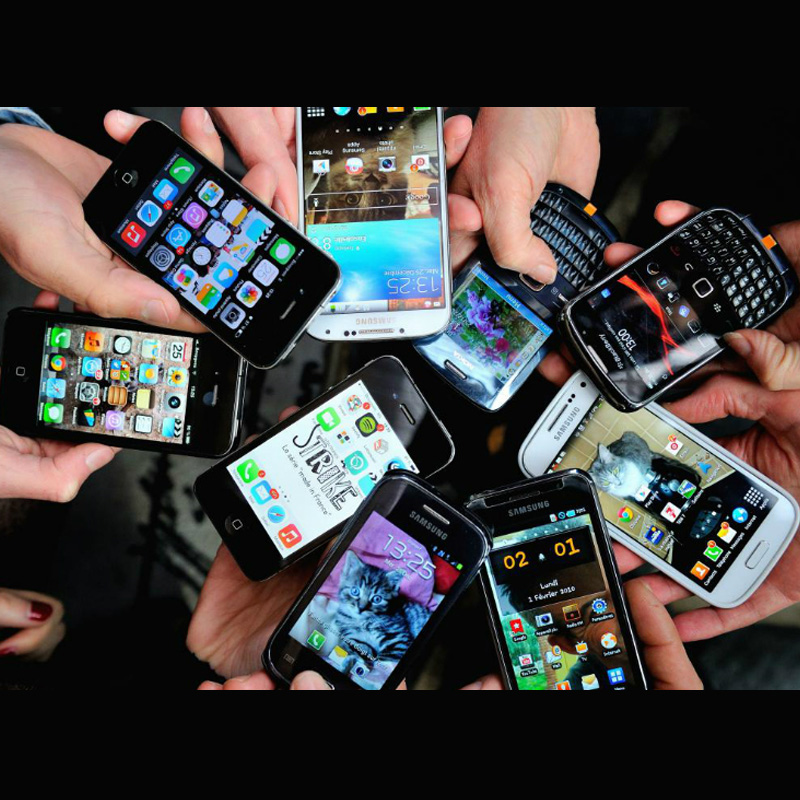
    MUMBAI: The spread of mobile devices and rapid mobile data networks has transformed global media consumption in recent years. A recent report by Zenith Media Consumption Forecasts 2018, reveals that 24 per cent of all media consumption across the world will be mobile this year, up from just five per cent in 2011. The report highlights that by 2020 internet usage will reach 28 per cent, taking share from almost all other media.

    The rise of mobile is also forcing brands to transform the way they plan their communications across media, focusing less on channels and more on consumer mind-set as the distinctions between channels are eroded.

    The report surveys changing patterns of media consumption since 2011 and forecasts how the amount of time people allocate to different media will change between 2018 and 2020, in 63 countries across the world.

    Mobile internet use has eroded the consumption of almost all other media. Newspapers and magazines have lost the most, as between 2011 and 2018 time spent reading them has fallen by 45 per cent for newspapers and 56 per cent for magazines. However, this refers only to time spent reading printed publications. Time spent reading newspapers and magazines online is included in the internet total, and for many publications the time they have gained online more than makes up for the time they have lost from print.

    Zenith’s head of forecasting and director of global intelligence Jonathan Barnard says, “Under traditional definitions, all other media are losing out to the mobile internet. But the truth is that the distinctions between media are becoming less important, and mobile technology offers publishers and brands more opportunities to reach consumers than ever.”

    Television and radio have also lost out, though not on the same scale. The time spent watching television shrank by three per cent between 2011 and 2018, while time spent listening to radio shrank by eight per cent. Again, television channels and radio stations have gained audiences online at the same time as they have lost them offline, but they have faced stiff competition from native digital platforms such as YouTube and Spotify.

    The rise of mobile has blurred the boundaries between different channels: it can be used for entertainment, news, information, research, socialising and communication. For brands it can play the role of building awareness, creating direct responses, allowing one-to-one communication, or generating earned content, depending on how the consumer is using the device, and in particular their mind-set while using it.

    A consumer who is actively searching for a specific information is in a very different mind-set from one who is sharing holiday photos with friends, or leaning back and enjoying a video. Brands need to understand the signals a consumer’s activity provides about their mind-set, and therefore what forms of communication are appropriate.

    Focusing on mind-set also dissolves the distinction between traditional and digital media: it’s more important that a consumer is reading news, than whether they are doing so using a printed newspaper or newspaper websites. People who are watching video content on television sets, laptops or smartphones have much in common, though people watching long-form entertainment can have quite different mind-sets from people scrolling short-form content on social media. Brands need to decide the role each platform plays in their communications strategies, however the consumer happens to access it.

    The rapid expansion of mobile internet use has increased the amount of time the average individual spends consuming media, by giving people access to essentially unlimited content almost everywhere, and at any time of the day. The report estimates that the average person will spend 479 minutes a day consuming media this year, 12 per cent more than in 2011 and will reach 492 minutes a day in 2020.

    Time spent at the cinema actually increased three per cent between 2011 and 2018 as cinema owners have invested in more screens and a better experience for visitors, while studios have marketed their films more effectively at international audiences. On average, though, people spend much less time at the cinema than they do with any other medium.

    Zenith’s global brand president Vittorio Bonori mentions, “Mobile technology is challenging brands to rethink how they communicate with consumers. Brands need to understand both the consumer’s mind-set and where they sit on the consumer journey, to determine how to communicate with them. By using data, ad tech and now artificial intelligence, brands can co-ordinate their communications across media and mind-sets to move them along the consumer journey most effectively.”


  • Flipkart raises $1 billion; to focus on mobile technology

    Flipkart raises $1 billion; to focus on mobile technology

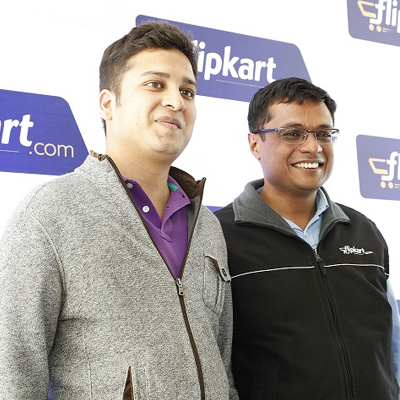
    MUMBAI: Flipkart has raised $1 billion in one of the largest funding rounds for any e-commerce company, globally.


    The round led by existing investors, Tiger Global Management and Naspers, saw Singapore’s sovereign wealth fund, GIC, as the new investor along with existing investors Accel Partners, DST Global, ICONIQ Capital, Morgan Stanley Investment Management and Sofina also participating in the latest financing round.


    The funds will be used to make long-term strategic investments in India, especially in mobile technology.


    “We believe internet will improve the quality of life for millions of Indians, and e- commerce is going to play a huge role in this change. The focus at Flipkart is to continue to make shopping online simpler and more accessible through the use of technology,” said founders Sachin Bansal and Binny Bansal.


    They added, “We have close to 22 million registered users today. We handle five million shipments a month. These numbers were unheard of a few years back and we are excited about the scale we have managed to achieve. But what is even more exciting is the huge opportunity that we still see before us.”


    India has 243 million internet users – and this number continues to grow very fast. By 2020, India will have more than half a billion mobile internet users. The platform will now focus on mobile and technology to take advantage of the massive opportunity.


    The new funding will enable it to step up its investments for innovations in products and technologies, setting it up to become the mobile e-commerce company of the future. It will help the e-retailer further accelerate momentum and build its presence to become a technology powerhouse.


    Over the past few years, Flipkart has led the supply-chain innovation in India. It has focused on making the online shopping experience as seamless as possible: being the first to launch 30 day replacement policy and the first player to run 24×7 customer support at scale in India, In-a-Day guarantee in 50 cities and the subscription service ‘Flipkart First’.


    Flipkart, which recently acquired Myntra, plans to continue investing in training sellers for the marketplace, providing all small  and  medium  entrepreneurs,  manufacturers  and  artisans  a  national  platform  to connect with millions of customers.

  • TCS wins Qualcomm wireless reach Brew application funding

    TCS wins Qualcomm wireless reach Brew application funding

    MUMBAI: Qualcomm, a developer of code division multiple access (CDMA) technology for mobile communications, has announced the selection of winners for its $ 1 million wireless reach Brew application funding program.

    The program challenges developers to create the most innovative Brew public service application in one of five areas: healthcare, education, public safety, governance and the environment.

    The grand prize winner is Tata Consultancy Services (TCS). TCS will receive a grant for $ 100,000 for development of its proposed application. The application development team, led by TCS’ head of advanced technology and applications, Dr Arun Pande, will demonstrate how CDMA networks can help provide specific and useful advice to farmers and spread the benefits of technology deep into rural India at an affordable cost. For the grand prize, Qualcomm will also apply additional funds to put TCS’ proposal into action through a new or existing wireless reach project.

    The other grant recipients include Bandung Institute of Technology, Beijing InfoQuick SinoVoice Speech Technology Corp, BeWell Mobile Technology and University of California, Berkeley.

    “Qualcomm is very proud to recognize these organizations and their creative efforts to develop Brew applications that will serve the public interest,” said Qualcomm CEO Dr Paul Jacobs. “The innovative applications they’ll design hold great potential to enhance the quality of life for all who use them. As mobile broadband services expand into underserved communities, we’re pleased to support these developers in our shared commitment to improve the way people communicate and access information around the world.”

  • RPG Cellucom makes quiet entry with select stores

    RPG Cellucom makes quiet entry with select stores

    MUMBAI: RPG Cellucom, a part of RPG group retail sector has made a quiet entry into the growing mobile and IT products retail market in India.

    An official press release, RPG Cellucom has developed a distinctive retail concept directed at engaging the consumer and expanding their knowledge of mobile technology.

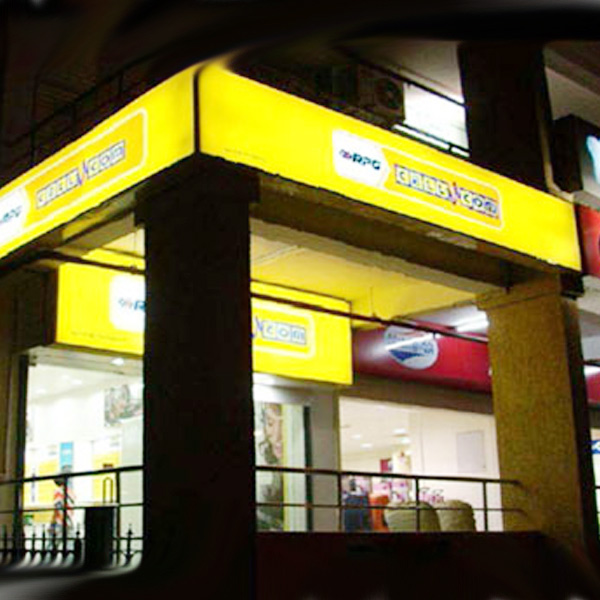
    SRPG Cellucom has also made a quiet entry with the launch of its retail outlet in Gurgaon. The company plans to open over 500 exclusive retail outlets by end 2007.

    The retail outlets will be in stand-alone as well as shop in shop formats. The chain recently opened its first stand-alone outlet in Sahara Mall, Gurgaon and has identified several other properties in the capital to expand the retail chain.

    Through phased expansion, RPG Cellucom aims to cash on the growing mobile and IT products market in India. The company has opened its shop-in-shop format at Shopper’s Stop in Mumbai and Spencer’s in Pune.

    ERPG Cellucom outlets will showcase a wide variety of mobility products in the communication space from leading brands like Nokia, Motorola, Acer, HP, Samsung and Sony Ericsson amongst others.

    The retail outlets will offer customers a wide range of hi-tech and state of the art technology products ranging from mobile phones, laptops, accessories, pen drives and various other IT peripherals. In addition to showcasing these products, RPG Cellucom retail outlets will also offer customers after sales service and exclusive product demonstrations.

    Says RPG Cellucom CEO Sunil Bhagat “RPG Cellucom stores are a one stop shop for all techno-savvy customers. Along with providing the customer with a wide range of IT and communication products from different brands, we also provide them with after sales services and product demos at our exclusive showrooms across the country. So now the customers will not have to run around the city to make choices.”

    Cellucom was set up as an exporter of leading mobile phone brands, with operations in Dubai and East Africa. Today, thanks to the keen attention and rapid response to the customer’s needs, the company has evolved to become one of the largest distributors of digital devices and mobility solutions in the Middle East and Africa region.