Tag: mobile industry

  • India to have a billion unique mobile subscribers by ’20; Delhi talent favourite

    India to have a billion unique mobile subscribers by ’20; Delhi talent favourite

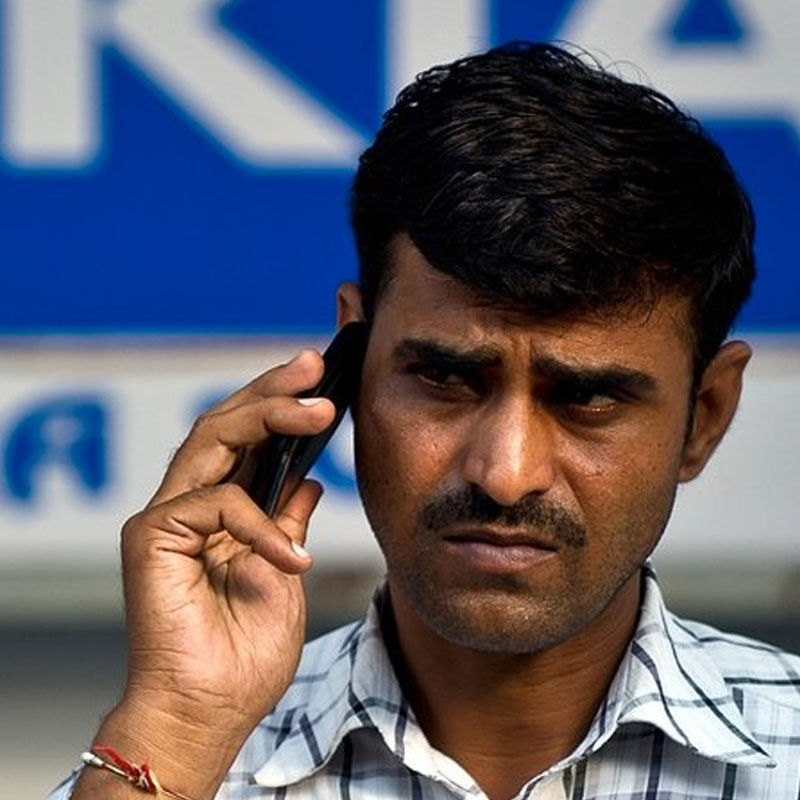
    MUMBAI: The contribution of mobile industry to the country’s gross domestic product (GDP) amounts to approximately US$140 billion (Rs 9,60,783 crore), the Department of Industrial Policy and Promotion and the Department of Telecom recently reported. India’s current GDP employs over four million people. At present, at 6.5 per cent, the government of India has stated that the mobile industry’s contribution is likely to rise to 8.2 per cent by 2020.

    According to the report, India is expected to cross the one billion unique mobile phone subscribers mark by 2020. India will also see an increase in adoption of 4G services with number of 4G connections estimated to grow to 280 million by 2020 from just three million in 2015. Further, the report claimed that the mobile industry is expected to add 800,000 more jobs.

    A survey by human resource (HR) solutions company PeopleStrong suggested that Delhi has emerged as the most preferred region for hiring in telecom and allied sectors. Hiring intent in this sector is expected to increase from 16% in 2016 to 20% in 2017.

    In 2011-12, telecom sector contributed about 2.1 per cent of GDP with revenue of Rs 1,85,930 crore while, due to the increase in revenue next year to Rs 2,07,498 crore, the net contribution came down to 2.07 per cent. The revenue generated by the telecom sector in 2014-15 was Rs 2,42,900 crore, making it a contribution of 1.94 per cent to GDP.

    Vodafone tops the list of investments with Rs 10,299 crore ($1,500.79 million) followed by Videocon International Electronics with Rs 4924 crore ($719.76 million). At third position stands Telenor at $573.15 million followed by Sistema Shyam Teleservices $451.83 million, Bharti Infratel $240.37 million, and Idea Cellular $123.22 million.

    PeopleStrong CEO Pankaj Bansal said Delhi’s emergence for hiring could be attributed to the availability of the engineering and general graduate talent pool in this area or to the fact that many telecom and allied industries are headquartered in Delhi NCR.

  • India to have a billion unique mobile subscribers by ’20; Delhi talent favourite

    India to have a billion unique mobile subscribers by ’20; Delhi talent favourite

    MUMBAI: The contribution of mobile industry to the country’s gross domestic product (GDP) amounts to approximately US$140 billion (Rs 9,60,783 crore), the Department of Industrial Policy and Promotion and the Department of Telecom recently reported. India’s current GDP employs over four million people. At present, at 6.5 per cent, the government of India has stated that the mobile industry’s contribution is likely to rise to 8.2 per cent by 2020.

    According to the report, India is expected to cross the one billion unique mobile phone subscribers mark by 2020. India will also see an increase in adoption of 4G services with number of 4G connections estimated to grow to 280 million by 2020 from just three million in 2015. Further, the report claimed that the mobile industry is expected to add 800,000 more jobs.

    A survey by human resource (HR) solutions company PeopleStrong suggested that Delhi has emerged as the most preferred region for hiring in telecom and allied sectors. Hiring intent in this sector is expected to increase from 16% in 2016 to 20% in 2017.

    In 2011-12, telecom sector contributed about 2.1 per cent of GDP with revenue of Rs 1,85,930 crore while, due to the increase in revenue next year to Rs 2,07,498 crore, the net contribution came down to 2.07 per cent. The revenue generated by the telecom sector in 2014-15 was Rs 2,42,900 crore, making it a contribution of 1.94 per cent to GDP.

    Vodafone tops the list of investments with Rs 10,299 crore ($1,500.79 million) followed by Videocon International Electronics with Rs 4924 crore ($719.76 million). At third position stands Telenor at $573.15 million followed by Sistema Shyam Teleservices $451.83 million, Bharti Infratel $240.37 million, and Idea Cellular $123.22 million.

    PeopleStrong CEO Pankaj Bansal said Delhi’s emergence for hiring could be attributed to the availability of the engineering and general graduate talent pool in this area or to the fact that many telecom and allied industries are headquartered in Delhi NCR.

  • Premium content to drive mobile industry

    Premium content to drive mobile industry

    MUMBAI: Mobile data services are the next wave of growth for the mobile communications industry amid the increasingly saturated subscriber base.

    While messaging will continue to be the main revenue contributor in most emerging and developing mobile data markets, much of the growth potential also lies in premium content. Greater 3G (third generation) coverage and deployment, expanding regional subscriber base, declining cost of advanced multimedia handsets, and the race to secure a continuous stream of content through partnerships are likely to drive growth of mobile data revenues.

    New analysis from global growth consulting company, Frost & Sullivan Asia Pacific Premium Content Market, reveals that the market – covering 13 major Asia-Pac economies – earned revenues of $9.4 billion in 2005 and is estimated to reach $32.9 billion by end-2011.

    Frost & Sullivan industry manager Janice Chong says, “Subscribers in most Asia-Pac countries have strong preference for local content, which creates the impetus for the fast-growing mobile content market. The pace of 3G adoption, to a certain extent, influences the development of premium content applications by providing greater bandwidth and faster data transmission.”

    The Asia Pacific mobile data market is forecast to grow at a CAGR (compound annual growth rate) of 17.9 percent between 2005 and 2011. Messaging revenues still constitute the majority of operator-generated data revenues. In 2005, messaging accounted for approximately 39.6 percent of total operators’ data revenues (excluding revenue share of third-party content providers).

    The total premium content market, which includes both operator and third-party content provider revenues, held 29.5 percent of total mobile data revenues in 2005, and is expected to register a CAGR of 23.2 percent from 2005 to 2011.

    In certain Asia Pacific countries, the revenue share ratio skews in favour of mobile operators. As a result, content providers receive a small revenue split. Moreover, content providers are required to pay hefty royalties for applications to music label companies and associations. These factors have in some ways hindered the growth of the premium content industry in selected countries. While the revenue share model employed in Japan, South Korea and China may seem relatively favourable to content providers, similar business models may not apply to other countries across the region.

    Chong adds, “In markets such as Indonesia and the Philippines, mobile operators typically retain 60 to 70 per cent of the revenue from sale of content, while content providers receive the remaining smaller portion.

    “Content providers in such countries believe that they deserve a larger revenue share considering that the cost of content development is entirely borne by them.”

    This however is inherently characteristic in markets outside of Japan and South Korea, primarily due to the high use of SMS (short messaging services) based applications which contribute to low data traffic usage. The lack of a satisfactory level of revenue from data traffic usage would mean that operators will tend to seek a higher revenue share from content downloads to compensate for the low data traffic revenue.