Tag: Mobile gaming

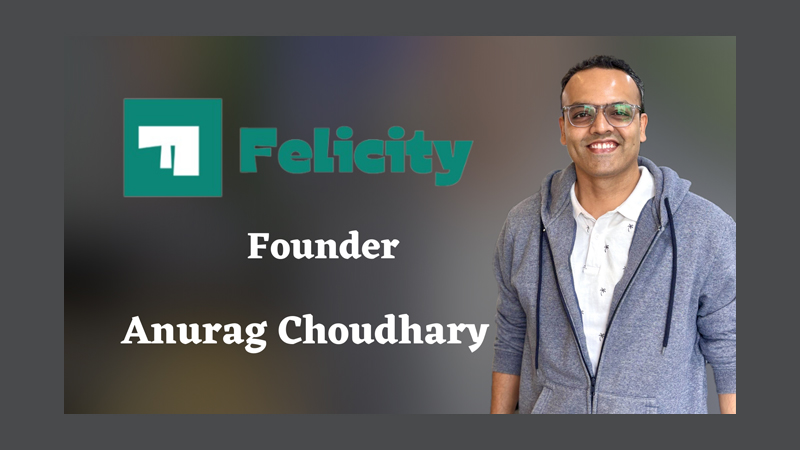
  • “We believe maximising user experience will maximise LTV in the long run:” Felicity Games’ Anurag Choudhary

    “We believe maximising user experience will maximise LTV in the long run:” Felicity Games’ Anurag Choudhary

    Mumbai: In recent years, gaming has evolved from a niche hobby into a mainstream cultural phenomenon, surpassing both the music and movie industries in terms of revenue. This rapid growth is driven by the increasing demand for interactive and immersive experiences, accessible across various platforms, including mobile devices and web browsers. With advancements in technology, the gaming landscape has expanded, offering diverse genres and innovative gameplay mechanics that captivate millions of users worldwide.

    At the forefront of this transformation is Felicity Games, a leading casual game developer and publisher founded in 2023 by serial entrepreneur Anurag Choudhary. Headquartered in Bengaluru, India, Felicity Games embodies the ethos of ‘building from India for the world,’ leveraging the country’s cost and skill advantages to create high-quality, globally appealing games. In under a year, Felicity Games has launched over 10 titles, attracting more than a million monthly users across 14 geographies.

    The company employs a proprietary framework called “Pokhran” to rapidly prototype and test casual games for commercial viability, ensuring only the successful ones are scaled. With standout titles like Seek & Find and Nova Solitaire, Felicity Games has distinguished itself through strategic partnerships with studios and brands, innovative use of AI for user experience enhancement, and a focus on personalizing gameplay to keep players engaged and returning.

    Indiantelevision.com in conversation with Felicity Games’ founder Anurag Choudhary discussed about their genesis, USP, impact of intrusive ads in mobile games, and much more.

    On the inspiration behind establishing Felicity Games and its stand-out point from its competitors

    After a decade in the consumer startup ecosystem, I noticed a growing appetite for interactive media, with gaming leading this trend. Today, gaming is larger than the music and movie industries. We have a unique opportunity in India due to our cost and skill advantages, positioning us to build a multi-million dollar casual gaming business for the world. What sets us apart from competitors is our focus on building a “business of games” rather than just “a game” wherein we test multiple titles for commercial viability, only scaling the successful ones.

    On the key strategies that contributed to the rapid success of Felicity Games

    At Felicity, we leverage the growing ecosystem of Indian indie developers to produce high-quality game prototypes at a fraction of the cost compared to western markets. We commercially test and scale only the successful titles, maximizing revenue by publishing our games across both conventional and unconventional platforms. This risk-adjusted and diversified approach to publishing has helped us get to 1M plus monthly active users within a short span of time.

    On managing the impact of intrusive ads in your mobile games, and ways in which the gaming industry can strike a balance between monetisation and maintaining a positive user experience

    We believe maximising user experience will maximise LTV in the long run. In our games:

    1  Users can opt for a weekly or lifetime pack to go ad-free for a nominal fee.
    2  We regulate ad pressure within the game using AI-driven algorithms, ensuring a better user experience.

    On your proprietary framework “Pokhran” and its help in game development

    Mobile games have a slim two per cent success rate, as numerous metrics must align for commercial viability. At Felicity, we chose to invest in a commercial testing infrastructure called Pokhran before building games. This blend of workflow and tools allows us to:

    – Rapidly generate creative assets: We can set up any game’s storefront and produce impactful static and video creatives within 24 hours.

    – Initiate user acquisition test campaigns: across multiple geographies.

    – Predict LTV (lifetime value) of users based on their early sessions.

    – Calculate geography/campaign-specific ROAS (return on ad spend) for comprehensive evaluation.

    On the strategies that you use to keep players engaged and returning to your games

    There are two big levers that help us keep users returning to our games:

    1  Personalisation of experiences and level difficulty curve.
    2  Fresh content and quests for power users.

    On the reason behind games like Seek & Find and Nova Solitaire standing out in a competitive market

    Both hidden objects and classic Solitaire are genres with a large TAM and awareness. We’ve taken a unique approach to content, user experience and game objectives for both. In Seek & Find, you can discover objects around Pyramids of Giza to magical fairytale lands – maps which you won’t find elsewhere. In Nova Solitaire, one can build a classic car collection by winning different games of Klondike Solitaire – again an industry first.

    On your collaborations with studios and brands enhancing your game development process and market reach

    Our collaboration with studios currently helps us prototype casual games for our core target group faster, increasing the chances of achieving commercial success.

    On cutting-edge technologies or trends that you are currently exploring to keep Felicity Games at the forefront of the industry

    AI has unlocked a whole new set of possibilities for game publishers like us. We’re leveraging it to solve the following problems:

    – Improving our LTV prediction based on users’ gameplay
    – Enhancing personalisation of levels and in-game ads to maximize user experience
    – Creating and altering game assets for new maps and quests (LiveOps)

    On Felicity Games’ plans for the next few years and any upcoming titles or initiatives you can share

    Felicity is currently prototyping games in five genres, with the aim of commercially scaling at least one or two. Over the next few years, our goal is to build a portfolio of four to five titles on mobile gaming, each capable of generating more than $10M in annual revenue. Additionally, we are exploring opportunities in newer distribution avenues such as UGC gaming and VR.

  • Loco becomes the first Indian streaming platform to broadcast FIFA Pinnacle events

    Loco becomes the first Indian streaming platform to broadcast FIFA Pinnacle events

    Mumbai: Game streaming platform Loco on Friday has signed a broadcast agreement with FIFA, football’s international governing body to bring the centrepiece of the FIFA esports experience – FIFAe World Cup 2022, FIFAe Club World Cup 2022 and FIFAe Nations Cup 2022 to fans across India.

    Loco becomes the first and only Indian based game streaming platform to team up with FIFAe. It will localise the streams and broadcast the live streams for the three tournaments, which are set to be aired between 14 and 30 July.

    Loco has also recently signed exclusive streaming deals with other top publishers and game titles in the country, as well as international entrants to the Indian market, holding its position strong as the country’s leading game streaming platform.

    Commenting on the collaboration, Loco founders Anirudh Pandita and Ashwin Suresh said, “eSports has become the most watched category in India, after Indian cricket, and we are really happy to partner with one of the most prestigious organisations in the world, FIFA, to bring together an innovative new category of esports, FIFAe. It is a landmark year because we have the Indian team competing in the FIFAe Nations Cup and we hope they will inspire a generation of new gamers! Loco has broken viewership records with many popular game titles with innovative categories finding a suitable home on the platform, we are confident that we will provide fans an unforgettable experience with FIFAe.”

    In June 2022, history was made when India qualified for the FIFAe Nations Cup 2022. This achievement by the Indian eFootball team of Charanjot Singh, Siddh Chandarana and Saransh Jain, who led India as the country beat Korea Republic and Malaysia in the playoffs, has led to massive excitement both among FIFA fans as well as the wider esports community in the country. To further accelerate awareness in the Indian gaming community and with fans beyond the existing FIFAe community, Loco will be hosting multiple watch parties with the country’s top game streamers.

    The current season of FIFAe, will aggregate all FIFAe competitions under one event, while preserving their respective identities. The three-week long FIFAe finals that kicked-off from 14 July, will go on till 17 July, with the FIFAe World Cup which focuses on the best individual players from across the globe. The qualifiers will battle it out for ultimate fame, and the world’s biggest individual prize in FIFA esports – a whopping prize pool of four crore rupees.

    The second tournament commencing from 20-23 July, will host the FIFAe Club World Cup, which brings together the best clubs in the world to showcase their game-play and compete before a global audience, for a prize pool of Rs 2.4 crore.

    This year’s events will close with the prestigious FIFAe Nations Cup, which will run from 27-30 July. Teams will represent their nation and compete against each other for a total prize pool of Rs 3.2 crore.

  • Short-form gaming platform ONMO targets 50 mn users: Krish Seshadri

    Short-form gaming platform ONMO targets 50 mn users: Krish Seshadri

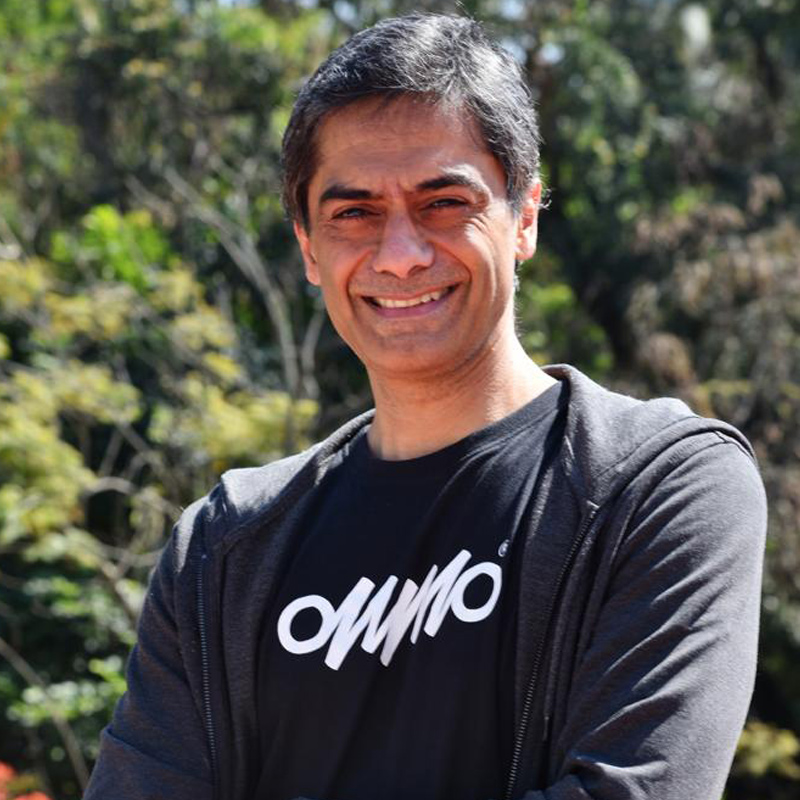
    Mumbai: The confluence of casual gaming and esports is emerging as a potent business model for gaming platforms in India. One such platform ONMO, the gaming platform of listed firm OnMobile Global, is looking to grow its user base from over half a million to 50 million.

    The ONMO platform is a web-based application that can be accessed by any browser by simply typing the URL (uniform resource locator) in the address bar. Any casual gamer can start playing its myriad games that range from 8-ball pool, mini golf to tower crush, sudoku. The key difference is that the gaming experience is designed in such a way that the user won’t spend more than two to three minutes completing the gameplay.

    The quick burst of gameplay offered by the ONMO platform combined with the ability to wager real money (as little as Rs 2 to as much as Rs 20) to compete with other players is the secret sauce in its strategy to engage the gaming community in India.

    The company launched their first brand campaign ‘Just Beat It’ in April conceptualised by Lowe Lintas Bangalore. The film was supported by an influencer-led campaign featuring Tanmay Bhat, Neha Dhupia and Radhika Madan who challenged casual gamers to play on the ONMO platform and beat the records set by them on ONMO’s most popular games.

    According to E&Y, India has a 390 million online gaming community. There are 95 million paying gamers in India and 94 per cent of casual gamers play on the mobile. Esports and casual gaming revenues are estimated at Rs 2,900 crore in 2021 and the propensity for Indian consumers to pay for online games has increased as gaming gains social acceptance. Mobile gaming apps saw a 40 per cent increase in in-app purchases in 2021.

    With over two decades of operating experience, Krish Seshadri has experience leading global businesses across India, Asia-Pacific, USA and Europe. His experience spans building and scaling digital & technology products, businesses and organisations in online gaming, digital content & entertainment, social media platforms, fin-tech, online recruiting & ad-tech.

    An engineering graduate from Stanford University and an MBA from London Business School, where he was a Chevening Scholar, Seshadri has worked across a diverse set of companies. Early in his career, he was at AOL (now Verizon) in a range of leadership roles running product, content, marketing and sales operations in India and the US. He was head of growth and partnerships for Facebook India driving its user base in the country. He led the teams as general manager of Zynga where he built and grew leading social games. He was president of the online mutual fund platform FundsIndia. Before joining ONMO, he was CEO of online recruiter Monster.com.

    Seshadri joined OnMobile Global as CEO in August 2020 and later took on the role of CEO of ONMO in October 2021. His focus is on building the D2C (direct-to-consumer) product leveraging his prior experience at the social gaming platform Zynga.

    In a conversation with Indiantelevision.com, ONMO CEO Krish Seshadri spoke about the gaming platform, its features and functionalities, distribution strategy and growth outlook.

    Edited Excerpts:

    On the gaming platform ONMO

    Over the last two-three years, mobile gaming has become an extension of mobile entertainment. So, it was time for us to move into the adjacent mobile gaming market. We have two-three products in the mobile gaming segment. ONMO is one of the larger products that we’ve been building for a year and which I currently run.

    There are various elements to this product such as social gaming and esports. Mobile esports has become a reliable revenue model that is tried and tested across markets like India and the US. Esports is a big underlying peg of our product. We have also developed cloud-based games for our platform.

    Our focus is not on hosting complete games, rather, we’re more like the TikTok of gaming. Each gameplay lasts for about one minute, two minute or three-minute sessions. Our research shows that the young millennial audience prefers to consume entertainment in bite-sized chunks. There is long-form entertainment in their media consumption but increasingly a lot of content is being consumed in short bursts. The rise of short video platforms like TikTok and Chingari across global markets are evidence of this trend.

    We have a proprietary content management system that ingests content and identifies specific short gaming parts of a game. Those specific moments are then hosted on our platform available to players as challenges.

    ONMO is primarily a B2C (business to consumer) product but we’re also exploring telco partnerships to distribute our games. Currently, there are relationships with 100 telcos around the globe. We don’t develop the games on our platform, instead, we partner with different gaming companies across the world. There are partnerships with over 100 gaming companies. Our platform ingests the games that they have developed. We don’t develop the games per se, we partner with different gaming companies across the globe. We’ve got partnerships with over 100 gaming companies now. We go through the games that they have and put them as these shorter challenges and then host them on our platform.

    On the target market

    Our target audience is primarily casual gamers between the age of 18-35 in India, North America and Europe. In terms of distribution, we have developed a web-based app which means that you just need a mobile phone and a web browser to access our platform. We’re focused on mobile gamers and will likely develop a native app for Android or iOS that would be available on the Play Store or App Store. The advantage of a web-based app is that we can rollout and do testing across global markets without the hassle of permission that is required by the app marketplaces. A user just has to enter their Gmail, Facebook or mobile number and jump straight into the action.

    On the core offerings on the platform

    There are two core offerings on the ONMO platform. First, are the core game formats. Right now, we launched real money cash gaming in two formats for Indian users where they can battle using INR (Indian National Rupee). There is a cash tournament that has a start time and an end time. Any player can join this tournament and be ranked on the leaderboard. There is a distribution of prize money at the end of the tournament.

    Another format is our one-to-one cash battles where a player can challenge another player. The winner takes home the entire prize and the platform keeps a portion of the prize pool as a platform fee.

    We also have a new format that is not available on any other platform. We call it ‘Beat It’ tournaments. In this format, players can beat the highest score of the day for a particular game within 24 hours. The picture of the player gets published on the feed until someone else beats their score. Players keep attempting this again and again as everyone wants to beat the score of the day. This adds a competitive layer to the gameplay that increases engagement and retention. Every research that we’ve come across in casual gaming shows that adding a competitive element to your games greatly improves engagement on the platform. We’ve seen this format of the game grow by 3X quarter-on-quarter.

    The core product is cash tournaments and ‘Beat It’ challenges. Players in India can join and play with each other for cash (in rupees). We’ve also enabled Bitcoin transactions for players outside of India. For global players, enabling crypto payments is an important function because in the gaming community there’s a deluge of virtual tokens and users are habituated to using these tokens to purchase items. We pioneered virtual currencies when I was at Zynga with Zynga tokens. The only difference was that Zynga was a closed network but with crypto, these currencies can be sold and exchanged on an open network. It offers cross-region compatibility. Players across countries can wager against each other using a common token.

    On the platform metrics

    We launched cash battles in a beta format in January-February. We’ve grown to more than half a million monthly active users (MAUs) and we’ll probably double that number very soon. We’re growing at 70 per cent month-on-month and the number of game plays on our platform this quarter versus the last quarter is 3X.

    The business model of ONMO on the B2C side is mainly via our esports model – players wager money for challenges and tournaments. On the B2B (business to business) side, we are exploring a subscription model with our telco partners.

    On the growth strategy

    Our focus from a B2C perspective is primarily on India. By the end of the year, we’ll look at expanding to other geographies in North America and Europe. In five years, we see about 80 per cent of our revenues coming from the US primarily in the B2C area. From a casual gaming perspective, the amount of money esports gamers wage in the US is multiples that of what they wager in India. The sheer throughput on the platform will be higher. India is a great market to start and build a sizable audience base.

    In India, our go-to-market strategy for ONMO is leveraging performance marketing and brand marketing. We have an exclusive distribution partnership with short-form video platform Chingari to access its 100 million plus growing install base. We have an exclusive deal with them as OnMobile Global has invested in Chingari and their gaming channel. This will give us access to 50 million users which is a big number.

    The company launched their first brand campaign ‘Just Beat It’ in April conceptualised by Lowe Lintas Bangalore. The film was supported by an influencer-led campaign featuring Tanmay Bhat, Neha Dhupia and Radhika Madan who challenged casual gamers to play on the ONMO platform and beat the records set by them on ONMO’s most popular games.

  • Mobile Premier League launches Mayhem Studios

    Mobile Premier League launches Mayhem Studios

    Mumbai: Mobile Premier League has launched a gaming studio called Mayhem Studios to develop AAA mobile games for domestic and global markets. Ojas Vipat will lead the studio as CEO.

    “Mayhem Studios aims to harness the strength of India’s talented game developer community and produce high quality games,” said the statement.

    The studio will have a team of professionals in the area of animation, art, cinematics, design, engineering, UI and UX game design and game production.

    “India has the potential to become a gaming hub of the world,” said MPL co-founder and CEO Sai Srinivas. “It is imperative to create requisite infrastructure for making world-class games to help achieve the country’s vision to make the Indian digital gaming sector a world leader. Mayhem Studios launch is our first contribution towards achieving this vision.”

    Mayhem Studios will be based out of Bengaluru and will work on multiple esports and other game titles to meet the demand for gaming in India and other markets.

    “Mayhem Studios will be focused on developing games that all gamers can relate to and enjoy the best-in-class gaming experience,” said Mayhem Studios CEO Ojas Vipat. “Setting up such a state-of-the-art studio is the first major step towards development of many AAA mobile game titles from India for the global markets and we are on the right track.”

  • Netflix acquires Boss Fight Entertainment, its third game studio

    Netflix acquires Boss Fight Entertainment, its third game studio

    Mumbai: Streaming major Netflix has announced the acquisition of Texas-based independent video game developer Boss Fight Entertainment. This is the streamer’s third studio purchase since it revealed the plans to enter the lucrative mobile game market last year.

    The financial terms of the agreement are kept under wraps.

    ALSO READ | Netflix launches first two mobile games in Poland

    Boss Fight Entertainment was founded in 2013 by David Rippy, Bill Jackson, and Scott Winsett. The Boss Fight Entertainment team will continue to operate out of their current studios in Allen (Dallas), Austin, and Seattle.

    “Since we launched mobile games to our members around the world just four months ago, we’ve been expanding our games catalog bit by bit as we build out our in-house creative development team,” said Netflix VP of game studios Amir Rahimi. “Through partnerships with developers around the world, hiring top talent, and acquisitions like this, we hope to build a world-class games studio capable of bringing a wide variety of delightful and deeply engaging original games.”

    “Boss Fight’s mission is to bring simple, beautiful, and fun game experiences to our players wherever they want to play,” said the founders of Boss Fight Entertainment in a joint statement. “Netflix’s commitment to offering ad-free games as part of members’ subscriptions enables game developers like us to focus on creating delightful game play without worrying about monetisation. We couldn’t be more excited to join Netflix at this early stage as we continue doing what we love to do while helping to shape the future of games on Netflix together.”

    Earlier this month, Netflix had announced the purchase of the game studio Next Games and in September it had bought Night School.

  • MX Player records 4.35 billion minutes of gaming in 2021

    MX Player records 4.35 billion minutes of gaming in 2021

    Mumbai: Users spent a total of 4.35 billion minutes gaming on MX Player in 2021, the media company reported, with an average watch time of 56 minutes per day.

    The online gaming industry has seen an upward trend since 2020 on the back of a mobile first phenomenon driven by the lockdown. MX Player launched games on its platform in February 2020 and hosts over 100 hyper casual games that can be played for free.

    MX Player shared that 3.7 billion gameplays were recorded on its platform in the year 2021 with the highest being 16.1 million in a single day. There are more than 8000 game sessions that are completed on the platform every minute.

    Genres

    Casual, Arcade, Survival, Strategy and Action constituted nearly 71 per cent of the total gameplays on the platform. Among these, “Bubble Blast” was India’s most favourite game with over 336 million gameplays. In “MX City Cricket Battle,” more than 80,000 sixes were hit every hour out of the total number of runs scored by the users. Similarly, more than 57,000 missiles were launched every hour during “Boom Knight” game.

    Cities

    As per the report, Bihar topped the list in terms of gameplays and engagement and non-metro user engagement was 20 per cent higher than the metro user’s engagement. Patna, Delhi, Lucknow, Kolkata, Jaipur, Ahmedabad, Hyderabad, Chennai, Pune, and Mumbai were among the top 10 cities that contributed to 66 per cent of the gameplays on the platform.

    Audience

    Nearly 96 per cent playing users were below the age of 35, with 74.3 per cent of them being millennials. And 94 per cent gameplays were from users below the age of 35, with 69.4 per cent of them being millennials. The male to female ratio was 80:20.

  • Netflix acquires video game creator Night School Studio

    Netflix acquires video game creator Night School Studio

    Mumbai: Netflix has made its first big move in expanding its gaming portfolio with the acquisition of Night School Studio. The company has also launched a trio of casual mobile games in select European markets, according to a report by TechCrunch.

    “We’ll continue working with developers around the world and hiring the best talent in the industry to deliver a great collection of exclusive games designed for every kind of gamer and any level of play,” noted Netflix vice president – game development Mike Verdu. “Like our shows and films, these games will all be included as part of your Netflix membership — all with no ads and no in-app purchases.”

    Founded by Sean Krankel and Adam Hines in 2014, video game creator Night School Studio is best known for its critically acclaimed debut game “Oxenfree.”

    “Netflix gives film, TV, and now game makers an unprecedented canvas to create and deliver excellent entertainment to millions of people,” said Night School Studio’s Krankel. “Our explorations in narrative gameplay and Netflix’s track record of supporting diverse storytellers was such a natural pairing. It felt like both teams came to this conclusion instinctively.”

    Netflix has mentioned its plans to enter the gaming industry amidst intense competition in the streaming business with competitors gaining subscribers rapidly. Netflix launched its first gaming title based on the “Stranger Things” franchise in Poland. These titles became available via a ‘Games’ tab within the Netflix app to subscribers.  

    The company launched three casual games including “Shooting Hoops,” “Teeter Up” and “Card Blast” to Netflix members in Italy and Spain. Subscribers from Spain and Italy will gain access to these trio of gaming and the two existing “Stranger Things” titles that have already been released.

    Netflix plans to launch games in other markets including the US in the near future. It began with Poland as an initial test market because the country has an active mobile gaming audience that made it a good fit for early feedback.

  • Dushyant Sapre moves on from Twitter-owned MoPub

    Dushyant Sapre moves on from Twitter-owned MoPub

    Mumbai: Dushyant Sapre, the MD for Japan and Asia Pacific of MoPub has quit the Twitter-owned company after a two-year stint. He was based in Twitter’s Asia Pacific headquarters in Singapore.

    MoPub provides monetisation solutions for mobile app publishers and developers around the globe. Sapre, who joined the platform in September 2019, was responsible for running the Japan, Asia Pacific organisation with a strong focus on the mobile gaming vertical in China, Japan, and Korea.

    Sapre, in a LinkedIn post, said: “A month ago, I made the difficult decision to leave Twitter and MoPub, with today being my last day. It’s been an amazing 2-year journey, with an incredible group of #Tweeps. A couple of quarters into the job, the pandemic inflicted uncertainty wreaked havoc on our lives. I felt extremely fortunate to have been at Twitter: the sense of empowerment and support I got to lead my family, team, and self through the tough times was simply unparalleled and is something I will share with everyone and carry within for life. Thank you, Twitter!”

    Sapre gave an inkling of joining a new venture, without divulging details. “Starting next week, I am embarking on a new challenge: building a new business ground-up from 0 to 1, uprooting and moving to new geography in a few months, unlearning, learning, and proving myself all over again,” he wrote.

    Sapre was previously the managing director for APAC supply and global app partnerships at Criteo, and was a founding leader of the Criteo Singapore office since 2013. Over the past decade, he has advised app developers and digital publishers on maximising monetisation and online retailers on user acquisition and retention.

  • Octro Inc appoints Arup Das as chief technology officer

    Kolkata: Mobile gaming company Octro Inc has announced the appointment of Arup Das as chief technology officer. He will be based in its Delhi-NCR office.

    Das is a seasoned business leader who brings more than 23 years of experience in areas such as ERP, Data Science / Data Engineering, Cloud Computing, and other digital offerings. He most recently served as chief technology officer (CTO) & chief product officer (CPO) at a fintech company, Goals101. His past professional stints also include Aristocrat Technologies, R&D, Cisco, and Nucleus Software.
    Octro Inc CEO Saurabh Aggarwal said, “We are very excited to have Arup on board with us as our CTO. Octro as a company has grown over the last many years and as we embark on our next phase of growth, I am confident that Arup, with his experience and expertise, will be able to contribute to Octro’s growth and enable us to take Octro to the next level. We look forward to working closely with Arup and achieve bigger goals while creating scalable leisure options for the world at large”.

    On his joining, Das said, “The online gaming space has always been exciting to me, and with the recent growth it has witnessed in India & globally, I am even more ecstatic to have an opportunity to work with Octro Inc, a pioneer in this space. I am looking forward to adding value to the organization and be an integral part of Octro’s journey in becoming one of the leading gaming companies worldwide”.

    Das is an MBA (Palmer Scholar) from the Wharton Business School, MS in Computer Vision / Image Processing from the University of Calgary, and a BE in Computer Science (University Gold Medalist) from Jadavpur University.