Tag: mobile-first

  • Broadpeak to showcase mobile-first CDN Solution at Mobile World Congress 2022

    Broadpeak to showcase mobile-first CDN Solution at Mobile World Congress 2022

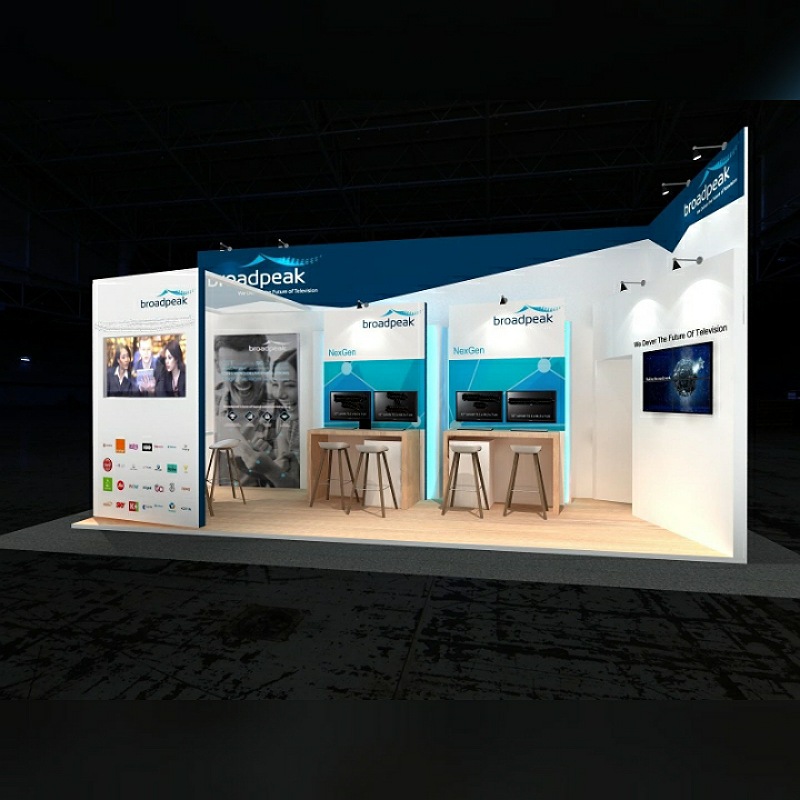
    Mumbai: Broadpeak has announced that it will exhibit the latest content delivery network (CDN) innovations with customers and partners, face to face, at Mobile World Congress 2022. 

    At the show, Broadpeak will highlight its mobile-first CDN solution that optimises video streaming over mobile — in particular, 5G — networks, ensures an exceptional quality of experience (QoE) for subscribers on every screen, and enhances the energy efficiency of streaming, said the c

    Company in a statement.

    “Video consumption on mobile devices has seen explosive growth over the last few years, and service providers need efficient solutions for delivering video services over mobile networks, including 5G,” said Broadpeak CEO Jacques Le Mancq. “Broadpeak is leading the way to the next generation of video streaming with a powerful, environmentally sustainable CDN solution. We look forward to showcasing our expertise in video streaming over 4G and 5G networks at Mobile World Congress.”

    Broadpeak will show advanced functionalities and far-edge cloud capabilities for 5G streaming to help video service providers deliver an outstanding experience to mobile, fixed wireless, and wireline access users, said the statement.

    Demonstrations will include:

    Network-controlled ABR streaming: Broadpeak’s S4Streaming significantly improves video streaming QoE in mobile networks, with network-controlled adaptive bit rate (ABR) streaming technology that handles bandwidth measurement and video segment selection on the server-side. At Mobile World Congress 2022, Broadpeak will showcase how S4Streaming allows operators to take control over video streaming for various use cases, such as mobile traffic peaks, fixed wireless access, and low-latency content.

    Multi-access edge computing (MEC) and deep edge caching: Broadpeak offers far-edge cloud CDN capabilities dedicated to mobile and 5G streaming. At Mobile World Congress, Broadpeak will demo innovative edge caching functionalities, such as 5G and MEC integration, multicast ABR in contribution mode, and edge CDN orchestration (dynamic caching VNF/CNF placement). By streaming video content from the far edge of the mobile and 5G network, service providers can deliver low-latency video streams, reduce congestion, and provide faster startup times, all without rebuffering.

    Maximising the Value of 5G Networks

    Broadpeak’s mobile-first CDN allows service providers to keep costs under control while also maximising the value of their 5G network. With Broadpeak’s solution, communication service providers can increase the value of their 5G CDN by offering a ‘smart pipe’ to third-party service providers for the delivery of direct-to-consumer content with a premium quality of experience. Broadpeak’s solution leverages state-of-the-art open caching, geo-targeted ad insertion, and multicast ABR technologies on display at Mobile World Congress 2022.

    Bringing Energy Efficiency to Streaming

    Broadpeak’s advanced CDN enables service providers to build more environmentally sustainable video delivery networks. With Broadpeak’s sustainable approach to video streaming, service providers can drastically reduce power consumption. Broadpeak’s CDN leverages multicast transmission and platform mutualisation technology (multi-purpose and multi-tenancy), virtualisation (dynamic placement), and power-efficient software/hardware integration.

    Broadpeak will also be part of:

    1. AWS Partner Village, with Broadpeak highlighting how it helps content providers deliver the most engaging streaming experiences on 5G with AWS Wavelength.

    2. Intel’s Front Row Experiences, with Broadpeak showing how its advanced CDN can run on a multipurpose telco edge cloud platform.

  • Flipkart spends 80 percent of its digital marketing budget on mobile: Flipkart Ads business head Prakash Sikaria

    Flipkart spends 80 percent of its digital marketing budget on mobile: Flipkart Ads business head Prakash Sikaria

    MUMBAI: While addressing a session at a marketing conclave in Mumbai, that debated the relevance of mobile marketing and the need to go app first for brands, Flipkart Ads business head Prakash Sikaria shared that the  eCommerce giant spends almost 80 percent of its digital marketing budget on mobile.

    Sikaria’s confidence in the medium stems from the data the eCommerce site has gathered as an advertising and eCommerce platform that tracks its consumers’ usage behaviour on multiple screens.

    When posed with the question ‘is mobile a minor or a major screen’ Sikaria simply asked, ‘Is that even a  debate’. To back his astonishment at the topic of debate, Sikaria shared that for a eCommerce company such as Flipkart going mobile first was only natural, given that more and more of the site’s consumers are switching to spending more time on their smartphones.

    “Just to put things in perspective, 3 hrs of mobile in India is equatable to 92 mins of television, which is in turn equatable to 31 minutes of  desktop usage by viewers. What we see as a consumption pattern for several businesses mobile is the only screen in India, and going forward a large proportion of the time spent on any medium by consumers would be on mobile,” Sikaria shared, highlighting how India is unique in its mobile friendliness.

    Sharing some data the eCommerce platform has gathered from its own consumer research and data and analysis of consumer behaviour on the platform, around 50 per cent of the time spent on mobile is used for communication.  According to the consumer pattern gathered from traffic on Flipkart’s mobile app and its  web usage analysis, Sikaria inferred that usually customers try the mobile app first, and once they are convinced with the services and have grown loyalty towards the brand, they move to web. This places mobile marketing as the supreme most important requirement for a brand that functions mostly digitally, as it introduces the service to new consumers.

    “We have also noticed that across metrics there is better customer engagement and better customer experience on mobile from how much time consumers spend on the site per visit, to how many successful transactions they complete per visit,” Sikaria shared.

    As per Sikaria, once the user has jumped the hurdle of downloading the app the engagement is far higher on mobile than on other medium like desktop, provided the app is designed conveniently for them. That is the reason every ecommerce site, every travel startup or web based business wants their app to by in everyone’s phones.

    It is to be noted that between the four to five major eCommerce players in the country, television media raised about Rs 1,200 crores in advertising revenue in a single quarter, albeit it was before Diwali last year.

    Now with a key player such as Flipkart thinking mobile first, should television advertisement slot seller be worried about the smaller screen stealing away the advertisers which are native to the medium? 

  • Flipkart spends 80 percent of its digital marketing budget on mobile: Flipkart Ads business head Prakash Sikaria

    Flipkart spends 80 percent of its digital marketing budget on mobile: Flipkart Ads business head Prakash Sikaria

    MUMBAI: While addressing a session at a marketing conclave in Mumbai, that debated the relevance of mobile marketing and the need to go app first for brands, Flipkart Ads business head Prakash Sikaria shared that the  eCommerce giant spends almost 80 percent of its digital marketing budget on mobile.

    Sikaria’s confidence in the medium stems from the data the eCommerce site has gathered as an advertising and eCommerce platform that tracks its consumers’ usage behaviour on multiple screens.

    When posed with the question ‘is mobile a minor or a major screen’ Sikaria simply asked, ‘Is that even a  debate’. To back his astonishment at the topic of debate, Sikaria shared that for a eCommerce company such as Flipkart going mobile first was only natural, given that more and more of the site’s consumers are switching to spending more time on their smartphones.

    “Just to put things in perspective, 3 hrs of mobile in India is equatable to 92 mins of television, which is in turn equatable to 31 minutes of  desktop usage by viewers. What we see as a consumption pattern for several businesses mobile is the only screen in India, and going forward a large proportion of the time spent on any medium by consumers would be on mobile,” Sikaria shared, highlighting how India is unique in its mobile friendliness.

    Sharing some data the eCommerce platform has gathered from its own consumer research and data and analysis of consumer behaviour on the platform, around 50 per cent of the time spent on mobile is used for communication.  According to the consumer pattern gathered from traffic on Flipkart’s mobile app and its  web usage analysis, Sikaria inferred that usually customers try the mobile app first, and once they are convinced with the services and have grown loyalty towards the brand, they move to web. This places mobile marketing as the supreme most important requirement for a brand that functions mostly digitally, as it introduces the service to new consumers.

    “We have also noticed that across metrics there is better customer engagement and better customer experience on mobile from how much time consumers spend on the site per visit, to how many successful transactions they complete per visit,” Sikaria shared.

    As per Sikaria, once the user has jumped the hurdle of downloading the app the engagement is far higher on mobile than on other medium like desktop, provided the app is designed conveniently for them. That is the reason every ecommerce site, every travel startup or web based business wants their app to by in everyone’s phones.

    It is to be noted that between the four to five major eCommerce players in the country, television media raised about Rs 1,200 crores in advertising revenue in a single quarter, albeit it was before Diwali last year.

    Now with a key player such as Flipkart thinking mobile first, should television advertisement slot seller be worried about the smaller screen stealing away the advertisers which are native to the medium? 

  • Viacom18’s digital plan is about ‘mobile first’

    Viacom18’s digital plan is about ‘mobile first’

    MUMBAI: As the world, including the television industry, moves to digital, ways are being found to capture and engage audiences on multiple screens. Viacom18, the JV between Viacom International and TV18, the subsidiary of Network18, is also thinking digital to get a hold of audiences when they skim online.


    Its nine channels – Colors, Rishtey, Nick Jr, Nick, Sonic, MTV, Vh1, Comedy Central and MTV Indies – form the network’s broadcast side.


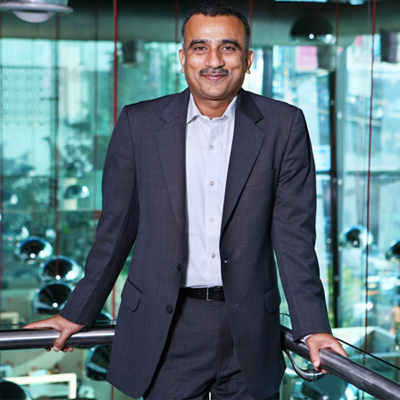
    Viacom18 group CEO Sudhanshu Vats sees digital as an accompaniment to television viewing. “In India digital is at a very nascent stage. In the US, over the years, TV viewership has remained the same or inched up a little. It is consumption in the digital space that has grown and the same trend will be seen in India,” he says. While India boasts of a 1.2 billion population seated in 250 million homes, the number of TV homes is just about 160 million. “This gap of 90 million means that there will always be room for classic TV content as well,” adds Vats.


    Much of this digital contribution currently comes from urban India but Vats says that data shows a reasonable amount of rural India also utilising the digital medium. As per him, traffic coming from PCs and laptops is an urban phenomenon while rural India is more hooked to the mobile.


    Its flagship channel, Colors, boasts of 414,000 followers on Twitter, thanks to its extensive thrust on the social media platform. It is way ahead of competition on both Twitter as well as Facebook. It also has commendable followers for its non-fiction properties such as Bigg Boss and Jhalak Dikhkhla Jaa.


    In terms of content exclusive to digital, Viacom18’s MTV has experimented a lot with webisodes of which a few have never appeared on television. Now the focus is on creating content that suits the smaller screens. “We need to revisit how best to customise content for the small screen from the way it is shot as well as the duration. What are these short stories? Do they invite to action or a combination of narrative and time span, etc. When you say mobile first, it is what you will do for this screen first that matters,” points out Vats.


    Vats agrees that the business model for monetisation of TV content is superior to digital, which is still in an evolution phase. So the need of the hour is to understand how to target multiple screens. “As transportation develops in India, ‘snacking’ will gain shape.  Digital will offer more snacking content and less long-form. The minute you have the option of watching stuff on a bigger screen you will, but on the other hand, you will snack. Also, the current online content stream is low on quality and high on price. We are exploring avenues in the mobile space to change that for the better,” he explains.


    However, Viacom18 is also focused on increasing traffic to its channel websites rather than to its Youtube page. Colors diverted traffic to its official website rather than its Youtube page for people who wanted to watch Comedy Nights With Kapil. “We had to focus on where people were viewing Comedy Nights With Kapil, and direct it to where we want them to view it. So we figured having a smaller section on YouTube and baiting them from there to the Colors website made more sense in this case,” explains  Vats.  


    He also says that digital is a lot about windowing. “What is running live on television, when is going to be linear in that sense on digital – simultaneous or windowed later – and what is the monetisation plan for each of them. If you want to watch it in the linear format, then it may be subscription based. If you want to watch it later, it might be a combination of subscription and advertising,” concludes Vats.


  • Timesaverz.com raises a seed round from leading angel and seed investors

    Timesaverz.com raises a seed round from leading angel and seed investors

    MUMBAI: Timesaverz, a GSF Accelerator company, is a “mobile first” marketplace that connects home service seekers with home service providers. It has secured a seed round of financing from a group of leading angel investors led Neville Taraporewalla, Senior Industry Leader in Consumer Internet, and by Rajesh Sawhney, Founder of GSF Accelerator and the GSF Superangels platform. The other investors include AshishJhalani (Founder at eTailing India), Nitesh Kripalani (ex-Digital Business Head at Sony Entertainment) and leading GSF Superangels like Dinesh Agarwal, Founder of Indiamart and Nish Bhutani, COO of Saffronart.


    Co-Founded by Debadutta Upadhyaya & Lovnish Bhatia in April 2013, the Timesaverz.com platform has built a strong network of 500 plus service partners over the last 15 months of operations.Each service partnergoes through a rigorous process before enlisting with the Timesaverz network, this includes – a thorough background check, verification of skill-sets and polishing of soft-skills. This network of skilled agents across Mumbai helps time-stressed Mumbaikars outsource their home service requirements in the area of cleaning tasks, handymen jobs, appliances repairs and errands coordination.


    It’s a very simple process.All the user has to do is – visit www.timesaverz.com online or through a mobile device, choose the task that needs to get done, select the date and time they want the job to be completed and pay up. Timesaverz then uses its proprietaryalgorithms to assign the right service partner to complete the job. Quality service delivery on time is ensured through LIVE tracking of the entire process from job request to job completion and feedback gathering through mobility solutions.


    Says Rajesh Sawhney, Founder of GSF Accelerator and GSF Superangels, “Timesaverz is a mobile first company. It is a unique mobile marketplace which combines “uberification of services” with a deep understanding of the needs and dynamics of Indian household. The seasoned leadership team of Timesaverz has curated a strong network of service partners and have built a scalable model of service delivery.


    Says Debadutta Upadhyaya (Nominated as one of the top 30 women entrepreneurs in the country by sumHR),  “Over the last 15 months, the Timesaverzteam has established a business around organizing a disorganized home services market through mobile technology intervention.At 33% repeat customers month on month and 10x revenue growth trend vis-?-vis’ last year, the business is now poised for ahuge growth. Not only that, the social impact of this model has seen job creation and supplementary income for individual skilled workers. The current fundraising will be used to expand into other cities and strengthen our mobile-first vision.”


    Although a new concept in Indian context, this genre of business has seen some robust funding in the developed markets in the likes of Thumbtack, Handy (previously Handybook) and Taskrabbit