Tag: mobile broadband

  • Airtel Digital TV revenues, op profits rise in Q2 FY 2018

    Airtel Digital TV revenues, op profits rise in Q2 FY 2018

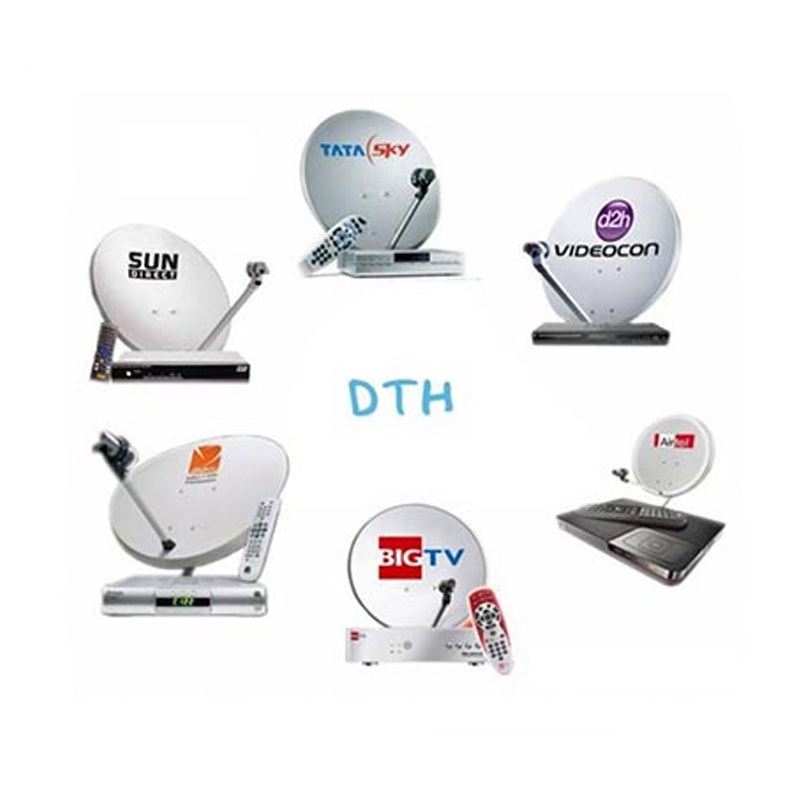
    BENGALURU: Airtel Digital TV services (Airtel DTH), the DTH segment of Indian telecom major Bharti Airtel Limited (Airtel), saw revenue grow 10 percent for the quarter ended 30 September 2017 (Q2-18, current quarter) as compared to the corresponding year ago quarter (Q2-17, year ago quarter). The segment’s EBIDTA for Q2-18 increased 16 percent as compared to the year ago quarter (y-o-y).  Over time, Airtel DTH segment’s contribution to Airtel India revenue has grown to about 6 percent.

    Airtel DTH revenue in the current quarter increased to Rs 9,639 million from Rs 8,545 million, while EBIDTA increased to Rs 3,517 million in Q2-18 from Rs 3,030 million. EBIT increased by a massive 76 percent y-o-y to Rs 1,230 million from Rs 699 million. The company’s capex investments to Airtel DTH in Q2-18 increased 26 percent y-o-y to Rs 3,191 million from Rs 2,541 million, while cumulative investments in the segment increased 9 percent to Rs 75,435 million from Rs 69,453 million.

    Airtel DTH subscriber matrices

    Airtel DTH subscriber base grew by 207,000 to 13.521 million in Q2-18 from 13.314 million in the immediate trailing quarter (Q1-18). In Q2-17, Airtel DTH had a subscriber base of 12.405 million. Average revenue per user (ARPU) in Q2-18 increased to Rs 233 in Q2-18 from Rs 228 in Q1-18 and Rs 232 in Q2-18. The segment had a higher customer churn in  the current quarter at 1.4 percent as compared to 0.9 percent in the immediate trailing quarter and 0.9 percent in the corresponding year ago quarter.

    Overall, Airtel revenues for Q2-18 at Rs 246,520 million declined by 11 percent y-o-y primarily from Rs 246,520 million. Airtel India revenues declined 14.3 percent y-o-y to Rs 168,183 million  from Rs 196,149 led by mobile drop of 16.8 percent y-o-y. The company says that the mobile market continues to experience value erosion and financial stress led by competitive pressures.

    Mobile data traffic has grown fourfold to 784 billion MB in the quarter as compared to 178 billion MB in the corresponding quarter of last year. Mobile broadband customers increased by 33.6 percent to 55.2 million from 41.3 million in the corresponding quarter of last year.

    Airtel’s profit after tax in Q2-18 declined to less than half at Rs 12,990 million from Rs 27,350 million in the corresponding year ago quarter. Net income declined to less than a fourth in the current quarter at Rs 3,430 million from Rs 14,610 million in Q2-17.

    Airtel MD and CEO India & South Asia Gopal Vittal said, “The financial stress in the industry continues due to double digit revenue decline and will be further accentuated by the reduction in IUC rates in the next quarter. This will eventually force operator consolidation and exits as we have witnessed in the recent past. Airtel remains committed to its goal of increasing revenue market share in this competitive environment by providing superior customer experience and strategically investing behind building more data capacities.”

  • India: 40 per cent smartphone users stream live videos; leads in new subs

    India: 40 per cent smartphone users stream live videos; leads in new subs

    MUMBAI: There is a rise of 5G networks and consumers subscribing to the network. By 2022, there will be a growth in mobile broadband to 6.1 billion unique subscribers. Forecasting the trends in telecom sector across the world, Ericsson Mobility Report has pointed out that approximately half a billion users will be connected to 5G networks by 2022.

    North America (NA) will dominate the industry with nearly 25 per cent of 5G subscriptions in 2022. Asia Pacific will fall next with about 10 per cent of the share.

    The Middle East and Africa will shift from predominantly GSM/EDGE only to approximately 80 percent of users being connected to WCDMA/HSPA and LTE. The report further points out that the mobile subscriber base is estimated to scale 6.8 billion with over 95 per cent people being connected to 4G or 5G networks.

    Ericsson chief strategy officer and technology officer Ulf Ewaldsson opined that almost 90 per cent of smartphone subscriptions are on 3G and 4G networks today, and standardised 5G networks are expected to be available in 2020. He further added that 5G would help automation, IoT and big data.

    The world added 84 million new mobile subscriptions during the third quarter of 2016 with India leading regarding net additions with 15 million, with China closely following with 14 million new mobile subscribers.

    The report points out that the mobile video traffic will grow 50 per cent every year through 2022, accounting for about 75 per cent of all the mobile data traffic. Social media traffic will be the second type of traffic that will dominate the mobile traffic growing 39 per cent each year.

    As for as live streaming is concerned, two in every five smartphone users are interested in live streaming apps in India and other high-growth countries like Brazil, Indonesia and Oman. The reports suggest that the figure dropping to one in every five smartphone users in the United States of America.

    Along with 5G and Mobile Broadband, IoT will also see significant growth, with approximately 29 billion devices connected to the internet, out of which 18 billion of the devices relating to IoT.

  • India: 40 per cent smartphone users stream live videos; leads in new subs

    India: 40 per cent smartphone users stream live videos; leads in new subs

    MUMBAI: There is a rise of 5G networks and consumers subscribing to the network. By 2022, there will be a growth in mobile broadband to 6.1 billion unique subscribers. Forecasting the trends in telecom sector across the world, Ericsson Mobility Report has pointed out that approximately half a billion users will be connected to 5G networks by 2022.

    North America (NA) will dominate the industry with nearly 25 per cent of 5G subscriptions in 2022. Asia Pacific will fall next with about 10 per cent of the share.

    The Middle East and Africa will shift from predominantly GSM/EDGE only to approximately 80 percent of users being connected to WCDMA/HSPA and LTE. The report further points out that the mobile subscriber base is estimated to scale 6.8 billion with over 95 per cent people being connected to 4G or 5G networks.

    Ericsson chief strategy officer and technology officer Ulf Ewaldsson opined that almost 90 per cent of smartphone subscriptions are on 3G and 4G networks today, and standardised 5G networks are expected to be available in 2020. He further added that 5G would help automation, IoT and big data.

    The world added 84 million new mobile subscriptions during the third quarter of 2016 with India leading regarding net additions with 15 million, with China closely following with 14 million new mobile subscribers.

    The report points out that the mobile video traffic will grow 50 per cent every year through 2022, accounting for about 75 per cent of all the mobile data traffic. Social media traffic will be the second type of traffic that will dominate the mobile traffic growing 39 per cent each year.

    As for as live streaming is concerned, two in every five smartphone users are interested in live streaming apps in India and other high-growth countries like Brazil, Indonesia and Oman. The reports suggest that the figure dropping to one in every five smartphone users in the United States of America.

    Along with 5G and Mobile Broadband, IoT will also see significant growth, with approximately 29 billion devices connected to the internet, out of which 18 billion of the devices relating to IoT.

  • MPA forecasts Asia Pacific online video opportunity at US$35 billion by 2021

    MPA forecasts Asia Pacific online video opportunity at US$35 billion by 2021

    MUMBAI: According to a report by Media Partners Asia (MPA), Asia Pacific online video revenue is expected to reach US$35 billion by 2021, an average annual growth of 22 per cent from US$13 billion in 2016.

    China will remain the largest market, accounting for 76 per cent of Asia Pacific online video revenue by 2021. Japan, Australia, Korea and India will also be significant, in aggregate accounting for 17 per cent of regional online video revenue by 2021. 

    The report, entitled Asia Pacific Online Video Distribution, covers 14 markets, tracking the growth of advertising and subscription-based online video, as well as mobile and fixed broadband.

    Commenting on the report findings, MPA executive director Vivek Couto said, “The growth of broadband, combined with slow but progressive change in content licensing, is driving demand for online video services. However, the distribution of driver local content online is modest, especially outside of China, India and Korea. This is evident in Southeast Asia, where broadband penetration is growing rapidly but from a low base in most markets. Telecom operators in these markets are investing in broadband networks and integrating with online video platforms to help drive subscriptions. This allows online video operators to utilize carrier billing, overcoming market limitations in payment infrastructure. It’s a bet to drive online video consumption in the short term and ARPUs in the long term.”

    Online video advertising accounted for less than 15 per cent of Asia Pacific digital ad spend in 2015. This share will grow to 22 per cent by 2021. Online video ad sales will reach approximately US$22 billion by 2021 versus US$9 billion in 2016, a 19 per cent CAGR. China will represent more than 70 per cent of the online video advertising pie by 2021.

    In the online subscription video-on-demand (SVOD) segment, MPA expects total paying customers to grow from 177 million by 2016 to 360 million by 2021, with China contributing the majority. SVOD revenue will reach US$13 billion by 2021, a 28 per cent CAGR from US$3.7 billion in 2016.

    China will again contribute the majority, representing more than 80 per cent by 2021. The Southeast Asia SVOD opportunity will grow rapidly but from a low base, representing about US$200 million in revenue by 2021.

    Asia Pacific fixed broadband subs will reach 345 million in 2016, and grow to 425 million by 2021. Average broadband household penetration will grow from 35 per cent in 2016 to 41 percent in 2021. Mobile broadband will reach 79 per cent of the Asia Pacific population by 2021, versus 46 per cent in 2016.

  • MPA forecasts Asia Pacific online video opportunity at US$35 billion by 2021

    MPA forecasts Asia Pacific online video opportunity at US$35 billion by 2021

    MUMBAI: According to a report by Media Partners Asia (MPA), Asia Pacific online video revenue is expected to reach US$35 billion by 2021, an average annual growth of 22 per cent from US$13 billion in 2016.

    China will remain the largest market, accounting for 76 per cent of Asia Pacific online video revenue by 2021. Japan, Australia, Korea and India will also be significant, in aggregate accounting for 17 per cent of regional online video revenue by 2021. 

    The report, entitled Asia Pacific Online Video Distribution, covers 14 markets, tracking the growth of advertising and subscription-based online video, as well as mobile and fixed broadband.

    Commenting on the report findings, MPA executive director Vivek Couto said, “The growth of broadband, combined with slow but progressive change in content licensing, is driving demand for online video services. However, the distribution of driver local content online is modest, especially outside of China, India and Korea. This is evident in Southeast Asia, where broadband penetration is growing rapidly but from a low base in most markets. Telecom operators in these markets are investing in broadband networks and integrating with online video platforms to help drive subscriptions. This allows online video operators to utilize carrier billing, overcoming market limitations in payment infrastructure. It’s a bet to drive online video consumption in the short term and ARPUs in the long term.”

    Online video advertising accounted for less than 15 per cent of Asia Pacific digital ad spend in 2015. This share will grow to 22 per cent by 2021. Online video ad sales will reach approximately US$22 billion by 2021 versus US$9 billion in 2016, a 19 per cent CAGR. China will represent more than 70 per cent of the online video advertising pie by 2021.

    In the online subscription video-on-demand (SVOD) segment, MPA expects total paying customers to grow from 177 million by 2016 to 360 million by 2021, with China contributing the majority. SVOD revenue will reach US$13 billion by 2021, a 28 per cent CAGR from US$3.7 billion in 2016.

    China will again contribute the majority, representing more than 80 per cent by 2021. The Southeast Asia SVOD opportunity will grow rapidly but from a low base, representing about US$200 million in revenue by 2021.

    Asia Pacific fixed broadband subs will reach 345 million in 2016, and grow to 425 million by 2021. Average broadband household penetration will grow from 35 per cent in 2016 to 41 percent in 2021. Mobile broadband will reach 79 per cent of the Asia Pacific population by 2021, versus 46 per cent in 2016.

  • Growth in mobile broadband spurs internet use in August

    Growth in mobile broadband spurs internet use in August

    NEW DELHI: There was a sizeable increase in the number of broadband subscribers to 74.31 million by August-end as compared to 70.81 million subscribers by July-end, thus showing a monthly growth of 4.95 per cent.
     
    The largest growth rate in broadband was in the mobile devices users (phones and dongles) which went up by 6.29 per cent from 55.34 million to 58.82 million. The growth in fixed wireless subscribers (Wi-Fi, Wi-Max, Point-to-Point Radio & VSAT) was 2.75 per cent from 430,000 to 440,000. The growth in wired subscribers was a mere 0.06 per cent from 15.04 million to 15.05 million.
     
    The top five wired broadband service providers at the end of August were BSNL (9.97million), Bharti Airtel (1.39 million), Mahanagar Telephone Nigam (1.13 million), Beam Telecom (0.40 million) and YOU Broadband (0.41 million).
     
    The top five wireless broadband service providers at August-end were Bharti Airtel (15.14 million), Vodafone (12.51 million), Idea Cellular (9.85 million), BSNL (8.35 million) and Reliance Communications Group (6.53 million).


  • 2.7 billion will be using internet by the end of 2013: UN

    2.7 billion will be using internet by the end of 2013: UN

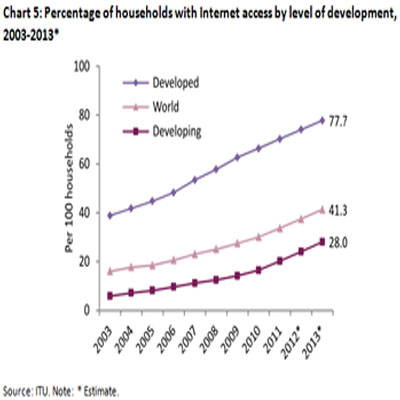
    NEW DELHI: The United Nations has said that 2.7 billion people will be connected on cyber space by the end of the year, making about 40 per cent of the total population of the world.


    The International Telegraphic Union also said 90 per cent of the people who are deprived of a presence on cyber space belong to the developing world.


    Mobile subscription was estimated to reach 6.8 billion equating the amount of people that live on planet earth.


    The report also said mobile broadband is now more affordable than fixed broadband.


    The report ranks 157 countries for their efforts to improve ICT access, use and skills in their countries.

  • Over 500 million mobile broadband users by 2010: Strategy Analytics

    Over 500 million mobile broadband users by 2010: Strategy Analytics

    MUMBAI: New alternative technologies will contribute just six percent of the forecast 500 million mobile broadband users globally by 2010, according to research firm Strategy Analytics.

    Despite all the hype surrounding alternative technologies like WiMAX, it is iterations of existing technologies which will dominate the mobile broadband arena in the short term, said the research firm.

    Technologies such as mobile WiMAX and UMTS TDD will lead the alternative technology camp, but enhancements to existing technologies, including HSPA and EV-DO Revision A+ will comprise the bulk of the market and are where the money lies in the short-term, asserts an official release.

    Strategy Analytics senior industry analyst Sara Harris said, “We’re not likely to see technologies like mobile WiMAX or indeed, anything else, really take off until the next decade. However, HSPA and EV-DO will be more than acceptable for most users, giving them the speed and flexibility they want to use their fixed Internet applications on the move.”