Tag: mobile advertising

  • VDO.AI report outlines 2025 publisher profitability strategies

    VDO.AI report outlines 2025 publisher profitability strategies

    MUMBAI: What’s next for digital publishers navigating the turbulent AdTech seas?

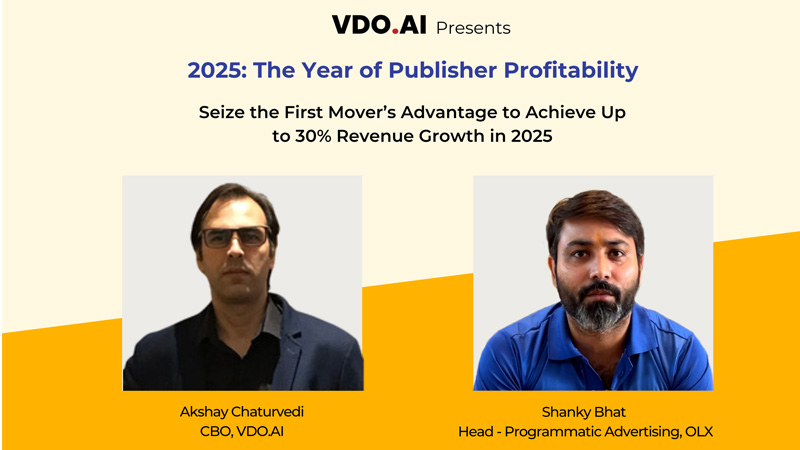
    VDO.AI, a global AdTech powerhouse, has released its much-anticipated “2025: The Year of Publisher Profitability” report, packed with actionable insights to help publishers scale revenue in the face of industry challenges. If you thought the digital ad landscape couldn’t get any trickier, think again—this report doesn’t just highlight the hurdles but lays out the tools to leap over them.

    Did you know mobile advertising accounted for over 60 per cent of digital ad revenue in 2024, hitting a jaw-dropping $400 billion? In 2025, this figure is projected to grow even more, with native ads stealing the show. With advanced targeting and contextual alignment, native ads are expected to deliver 15-20 per cent higher revenue growth. For publishers, this isn’t just a trend; it’s a revenue revolution.

    Want to know the secret sauce for better profitability in 2025? The report points to premium ad formats like video and native ads as game-changers. Rewarded ads—those interactive, opt-in ads that users love—are set to drive a 30 per cent revenue increase alongside an 18 per cent jump in eCPM.

    What about interstitial ads? Brace yourself. With improved strategies and placements, these full-screen gems could make up more than 70 per cent of ad revenue in 2025. Are you ready to take your ad strategy up a notch?

    Despite the usual mid-year dips, VDO.AI forecasts a 20 per cent year-over-year increase in global ad spend for Q1 2025. By Q4, this figure is expected to climb to a stellar 23 per cent. The big question is: are publishers equipped to ride this wave of growth?

    VDO.AI chief business officer Akshay Chaturvedi puts it best, “2025 ushers in a transformative era for publishers, demanding resilience and strategic evolution. This report provides actionable insights to navigate CPM challenges, optimise premium ad formats, and build quality partnerships. By aligning monetisation with engagement and embracing innovation, publishers can discover new growth opportunities and achieve sustained profitability, setting a benchmark for success in digital advertising.”

    OLX head of programmatic advertising, Shanky Bhat chimed in with high praise for interstitial ads, “Interstitial ads have emerged as a top performer for OLX, delivering higher CPMs and revenue impact compared to other formats. With VDO.AI’s expertise, we overcame initial challenges with in-app integrations and now enjoy seamless ad placements. Their consistent results and collaborative approach make them a trusted partner, driving substantial revenue growth and positioning OLX for continued success.”

    The report doesn’t stop at trends; it’s a masterclass in digital advertising strategy. Among its key insights:

    . Video formats like in-stream and out-stream will continue leading revenue charts with improved engagement metrics.

    . Capitalising on seasonal ad surges is crucial, with tailored strategies for each quarter.

    . Choosing the right technology and forming premium SSP/DSP partnerships will be critical for transparency, performance, and competitive CPMs.

    VDO.AI’s report proves that success in digital advertising is about embracing innovation, investing in quality partnerships, and being bold with your strategies. Publishers who adapt will not just survive but thrive in 2025’s challenging landscape.

    If you’re a publisher looking to future-proof your strategies, this report isn’t optional reading—it’s your 2025 survival guide. Ready to dive into a transformative year for AdTech?


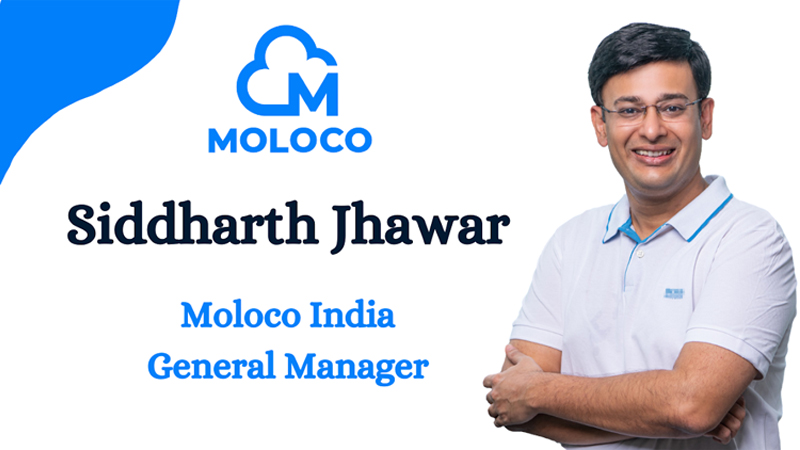
  • “Bad ads are spam but good ads are content”: Moloco India’s Siddharth Jhawar

    “Bad ads are spam but good ads are content”: Moloco India’s Siddharth Jhawar

    Mumbai: Ad personalisation isn’t just about tailored ads, it’s about transforming them into engaging content for enhanced user experience. Moloco, a multinational adtech company pioneering machine learning, is at the forefront of this revolution. In a strategic partnership with Viacom18 and JioCinema, Moloco’s advanced capabilities are reshaping the landscape of Indian advertising.

    From combating ad fraud to leveraging 5G for programmatic innovation, Moloco is driving tangible results for advertisers while prioritising user privacy. With success stories like Zupee’s 5x growth and significant user jumps for Rummytime, Moloco’s vision for India extends beyond market growth—it’s about fostering innovation and empowering businesses to thrive in a dynamic digital ecosystem.

    Indiantelevision.com caught up with Moloco India general manager Siddharth Jhawar to talk about growing concerns about ad fraud and privacy in the Indian market, the future of programmatic advertising in India, and much more…

    Edited Excerpts:

    On Moloco addressing growing concerns about ad fraud and privacy in the Indian market

    We believe that complete transparency, constant vigilance, & working with trusted partners are critical to ensuring that advertisers and customers are protected from fraud and privacy concerns.

    Moloco ads reports advertising spends to the most granular level, which empowers advertisers to pressure-test the quality of their traffic for any suspicious activity. For instance, we capture timestamp data and then analyze whether the time taken between viewing an ad, clicking on it, installing an app, and making a purchase are coherent with expected customer behaviour. It certainly helps if an advertiser works only with reputed channels, because it minimizes the risk of fraudulent activity.

    First-party data is critical for a machine learning engine to become intelligent in identifying high-value users of an advertiser. Hence it becomes even more important to adopt the highest standards of safety and privacy to help companies grow while ensuring their customers’ privacy.

    On Moloco envisioning the future of programmatic advertising in India, with the advent of 5G

    Moloco ads processes seven million requests per second. We take 14 milliseconds to make a deep neural network prediction. Building this kind of infrastructure has taken us more than a decade, and it helps that network speeds are improving. The advent of 5G will support the nature of innovation that we do in terms of speed and efficiency of computational infrastructure.

    On Moloco’s approach to ad personalisation and its impact on user experience

    Bad ads are spam but good ads are content. If an ad can be hyper-personalised to a user and their context, it improves the customer experience and also gives better returns to an advertiser.

    The trends we see today are that customers want great but inexpensive service without being bombarded with ads, advertisers want maximum returns on every rupee spent, and platforms want to grow fast while also being profitable. Personalized ads address these needs by enhancing the customer experience, delivering measurable outcomes to advertisers, and boosting advertising revenue for platforms. But this is easier said than done. There are almost five billion internet users in the world today. We can not expect any two customers to be exactly the same. But when the scale is massive, 1-1 targeting becomes computationally tough. This is when companies need world-class machine learning systems to support them. Moloco uses machine learning that works on an advertiser’s first-party data and helps them show hyper-personalised ads to users while also optimising bid prices and probabilities in real-time – that is tough, but when done right, can be valuable to both advertisers and customers.

    On the strategies that Moloco employs to effectively integrate in-game and mobile advertising for maximum engagement

    Showing relevant and hyper-personalised ads to a user on a gaming app improves their engagement levels on the app. India’s gaming industry makes about one-fifth of its revenue from in-app advertising, and this trend is expected to grow further.

    On Moloco’s approach to operational machine learning and its significance in optimising ad campaigns

    Operational machine learning is special in four ways – it is autonomous, it involves real-time predictions, it can work at massive scale, and it is highly adaptable to the context. While machine learning and artificial intelligence have become household terms now, building an operational machine learning system at scale is a problem that very few companies in the world have effectively cracked.

    We use this operational machine learning system to train on an app’s first party data, identify high-value users, and efficiently bid for them on the open internet – this helps the app acquire more high-value users which can grow their revenue and profitability.

    On Moloco’s partnership with Viacom18 and JioCinema exemplifying its commitment to revolutionising the ecosystem in India

    Viacom18 is building one of the largest streaming platforms in the world and we are proud to be their ad-tech partners. The platform has immense scale and saw 32 million concurrent users during IPL 2023 – we use Moloco’s machine learning and ad-serving capabilities to serve relevant ads at astronomical scale on JioCinema.

    On any success stories or case studies where Moloco’s solutions have driven tangible results for advertisers in India

    Within a matter of 18 months, we have created a measurable impact on several industries and digital platforms in India. Moloco ads works with nine of the ten largest gaming apps in India and we have driven high-quality user growth for them. Our partner Zupee attained 5x growth and 3x return on ads spend targets using our ML engine. Rummytime from the Gameskraft group saw a significant jump in their high-value users. We also used our monetisation solution for CityMall to help them build an in-house advertising business and increase ROAS by 900 per cent. There are over 40 apps who have benefited from Moloco’s machine learning in India.

    On Moloco’s plan to further expand its footprint and partnerships in the Indian market moving forward

    India is a unique region for Moloco. Not only is the India market a small yet fast-growing region, India is also emerging as an innovation hub of Moloco. The entrepreneurial activity and scale in India make it an exciting place to develop machine learning products. For this reason, we are also building a global engineering centre in Bangalore, so that we can build products in India that can be scaled to the rest of the world.

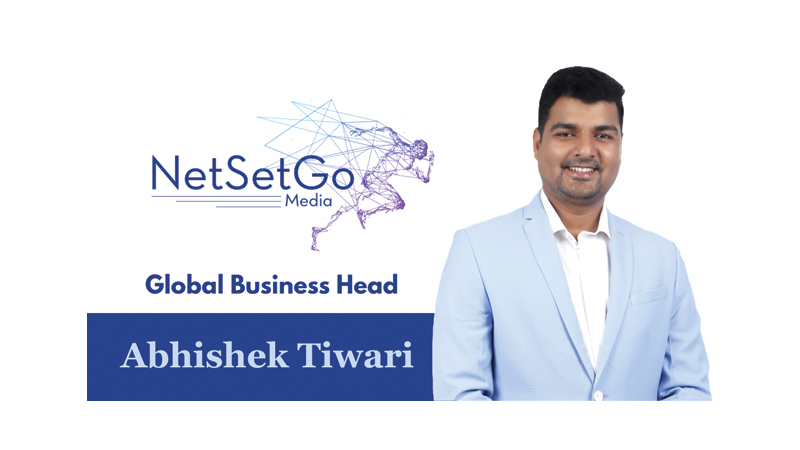
  • “NetSetGo wants to grow and help more people worldwide by entering new markets”: Abhishek Tiwari

    “NetSetGo wants to grow and help more people worldwide by entering new markets”: Abhishek Tiwari

    Mumbai: The mobile advertising landscape is evolving at a rapid pace, with companies like NetSetGo Media leading the charge in reshaping digital marketing strategies. By prioritising client-centric approaches, harnessing data-backed recommendations, and integrating innovative AI technologies, NetSetGo is revolutionizing how brands connect with their audiences. Through direct partnerships with major media houses and a commitment to delivering maximum ROI, NetSetGo is setting new standards in targeted brand promotion, ensuring impactful results in an ever-changing digital realm.

    Indiantelevision.com caught up with NetSetGo Media global business head Abhishek Tiwari to gain insights on the company’s stand-out aspect, notable recent achievements, NetSetGo reshaping the landscape of mobile advertising and much more…

    Edited Excerpts:

    On NetSetGo Media differentiating itself from other mobile advertising companies

    NetSetGo Media sets itself apart from other mobile advertising companies through its client-centric approach and commitment to realistic expectations. Our main focus is on data-backed recommendation which helps us to get the best results. We believe in underpromising and over-delivering which builds lasting relationships with our clients. Also, we are continuously working towards making our services better by coming up with more creative ideas, whether it is in product development, implementing new solution strategies, or building direct partnerships. This way, we’re always ahead of the game when it comes to digital marketing.

    On the direct partnerships that NetSetGo has established with major media houses

    NetSetGo Media has forged direct partnerships with key players in the media industry, spanning major publishers across mobile and web platforms. Notable partners include Times Internet, Asianet, Dailyhunt/Josh, Sharechat Moj, and others. Moreover, we collaborate with Managed DSPs like Moloco, Liftoff, and personally, among others, to ensure access to premium ad inventory and advanced targeting capabilities. Additionally, our tie-ups with major BFSI marketplaces enable us to leverage their first-party data for targeted email and SMS marketing campaigns, driving superior performance for our clients.

    On notable recent achievements or milestones that NetSetGo has reached

    NetSetGo Media has recently achieved significant milestones, including the establishment of exclusive client relationships built on exceptional service, transparent performance, and ongoing trust. Our recent launch of an in-house programmatic platform distinguishes us from competitors, enhancing our capabilities and service offerings. Additionally, our expansion plans into LATAM, MENA, and SEA regions signify our growing global presence and commitment to serving clients on an international scale.

    On NetSetGo ensuring maximum ROI for its clients

    NetSetGo ensures maximum ROI for its clients through a combination of experience, data-backed recommendations, and versatile offerings. With five years of experience working with notable clients across various categories, we leverage our learnings to plan media effectively. We utilize several tools to target the right users at the right place and time. Our versatile offerings, including ad network/affiliate activities, Programmatic buying, and expertise with Google and META platforms, enable us to provide holistic solutions, driving maximum ROI by leveraging a combination of platforms and tactics.

    On NetSetGo reshaping the landscape of mobile advertising

    At NetSetGo Media, we have strategically changed the landscape of mobile advertising by turning our focus to a client-centric approach. Being transparent about what we do and using cool technology. We use data-backed recommendations and build trust through realistic expectations which helps our clients get better results. Our in-house programmatic platform, powered by AI has made online advertising way better and more accurate. Plus, we work directly with major media houses and publishers which enables us to access premium ad inventory that gets great results for our clients. Overall NetSetGo’s dedication to creativity and innovation has set us apart as a top choice in the mobile advertising industry.

    On the innovative strategies that NetSetGo is employing to stay ahead in digital platform management

    NetSetGo is committed to innovation in digital platform management. Beyond our recently launched programmatic tool, we’re expanding into various categories, recognizing the future importance of first-party data acquisition post the Google Sandbox release, now slated for 2025. Our imminent launch of websites and apps targeting diverse user bases, focusing on BFSI, automotive, and real estate sectors, underscores our proactive approach. Despite the scale of this initiative, our product team is dedicated to crafting unique offerings to set us apart. Additionally, we’re poised to tap into the rapidly growing esports category, ensuring we remain at the forefront of digital platform management.

    On the trends that you foresee shaping the future of mobile advertising, and how is NetSetGo adapting

    In the future, ads are going to be personalised just for you, thanks to AI and machine learning technologies. NetSetGo is also keeping up with this trend and integrating AI into our solutions to enhance targeting, optimization, and audience segmentation to make sure that our client’s ads reach out to the right target audience at the right time with maximum impact. Also, we are paying attention to the first part of data collection and respecting privacy by following the rules. In this way, NetSetGo is proactively addressing these trends by implementing strategies for acquiring and utilizing data responsibly.

    On incorporating AI into your solutions

    We have a special in-house programmatic tool that integrates AI technology to make digital ads better. Our program does things like automated bidding, ad placement, optimization, and audience segmentation. It’s like a super smart assistant for buying and selling ads online. By using data and algorithms, it makes the whole process more efficient and accurate. And don’t worry, it’s not taking jobs away from people. Instead, this technology accelerates the advertising process enabling us to deliver our work better, get impactful results, and target campaigns while maximising ROI for our clients.

    On NetSetGo’s plans for expansion, growth, and upcoming projects

    NetSetGo wants to grow and help more people worldwide by entering new markets. We are planning to start working in Latin America, The Middle East, and Southeast Asia. We are aiming to establish strategic partnerships with companies to achieve great results that will better serve clients internationally. Plus, we are effectively working toward enhancing our technological capabilities, especially in AI and machine learning to deliver more advanced and efficient advertising solutions. We have some cool projects lined up like app and website creation for BFSI, automobile, real estate sectors, and even video games.

  • Mobile games are the next big advertising frontier: GreedyGame’s Arpit Jain

    Mobile games are the next big advertising frontier: GreedyGame’s Arpit Jain

    NEW DELHI: Digital entertainment formats have become hugely popular across India, with the Covid2019 pandemic further accelerating the shift to online modes of pleasurable pastime. One of the prime beneficiaries has been the mobile gaming ecosystem. It is already amongst the top five globally and as per Statista, will be worth about $2.4 billion in 2020, up from $600 million in 2017. However, despite the marvellous growth it has been witnessing, there is still a lot of grey-space to be filled when it comes to advertising revenues. That’s where GreedyGame comes into the picture. Headquartered in Bengaluru, GreedyGame is a mobile-first native ads platform that helps app and game publishers monetise better and help acquire genuine users globally. 

    Founded by IIT Ropar alumnus Arpit Jain in October 2013, GreedyGame is solving the fundamental problem for mobile publishers and advertisers – how to run ads without disrupting the user experience.  

    With the backing of renowned investor institutions such as Times Internet and angel investors including Ankit Nagori from Curefit, Sujeet Kumar from Udaan, Ravi Garikipati from Davinta, Anuj Choudhary from Aalgro, etc, GreedyGame has been growing 100 per cent YoY since its inception in 2013, and has reportedly clocked more than 4X in this FY. It is currently helping more than 200 app/game publishers to monetise higher and acquire quality users across the globe, including Dream11. 

    Jain tells Indiantelevision.com, “We started GreedyGame with a mission to empower mobile developers to develop world-changing apps and build the most engaging games without constantly worrying about revenue. Hence, we created an end-to-end implementation, mediation and optimisation platform for ads.”

    With its unique software development kit (SDK), GreedyGame enables app developers to run native ad units customised for their app experiences. It also helps app and game publishers increase their users globally by helping them with the right user acquisition strategies and optimising their campaigns on multiple mediums including Google and Facebook ads.

    “Our strategy is simple, to first study the app in order to understand better and come up with an app-specific monetisation strategy. GreedyGame SDK, which is enabled with the ‘smart refresh’ feature, picks the best model for app monetisation customising to the developer’s needs. Our AI-enabled recommendation of dynamic ad unit templates also helps publishers of all sizes to implement native ads effortlessly. The cross-format support enables developers to try a variety of ad formats like banner, interstitial and native in single ad space and modify the ad format as they like. We help publishers implement native ads in their apps in a hassle-free manner, making sure that their revenues are optimised, without any policy violations, and also keeping the users happy,” he elaborates. 

    GreedyGame also has a dedicated team of marketers who run Google, Facebook, and other media campaigns for app publishers. “Currently, we are managing 50+ publishers Google Ad accounts. We are able to generate approximately three million+ installs at an optimum CPI,” he adds. 

    Jain notes that the Covid2019 pandemic has further created a flourishing environment for online and mobile gaming ecosystem and that has pushed more and more brands to utilise the space for advertising. 

    “Online gaming, primarily on mobile devices, has become massively popular in India. 50 per cent of mobile app users play games, second only to social media and communications apps in terms of time spent. During the months of lockdown, people spent significantly more time on their phones and there was a surge in the downloads of popular games such as Ludo King, PUBG, etc. If we look at the data, taking an example of IPL-related gaming apps, 88 per cent of audience profiles were playing on these apps during the recent IPL season. So, when the user base is that huge it definitely is something that lures the advertisers. Brands have started working on independent budgets for capturing gaming users and big brands like Oppo, Flipkart, Amazon are increasingly opting for mobile advertising considering the reach,” he shares.

    Jain illustrates this with an example: streaming giant Netflix recently claimed that Fortnite, a popular multiplayer shooter game, is a bigger competitor than rival streaming platforms like HBO in the US. “Big brands like Cadbury, Tesco, Heineken, Flipkart, Amazon etc believe that it is easy and the ROI in gaming ads is higher. Brands like Unilever, Coca-Cola, and Ford invest heavily in mobile gaming, and many of the early-adopting brands look at mobile gaming as the new social media in terms of the opportunity to engage with consumers at scale. Molson Coors is another example of a brand advertiser that has been ramping its media investment in gaming and e-sports for many of its most popular brands like Miller Lite and Coors Lite.”

    Today, ads are a major source of revenue for game publishers as only 0.25 per cent of total users pay for IAPs (In-App Purchases) in India, remarks Jain. “Rewarded ads are the biggest ad revenue-generating format in games. India is among the lowest eCPM (effective cost per thousand impressions) countries in the world, so LTVs are very low. Hence, the user base needs to be high to make sustainable revenues from ads and games need to generate organic traffic. Most successful games are localised – for example Ludo, cricket, card games etc – which is why they get organic traffic and are able to generate sustainable revenues.”

    He believes that there await a plethora of opportunities in the in-game advertising industry and he is willing to capitalise on that, helping the publishers and advertisers alike to generate maximum ROI.

    “GreedyGame intends to work with app/game publishers who are making money via ads and maximise their revenue through our SDK. Our plan is to become the market leader in the genre of mobile-first advertising through native ad formats. We aim to work with 1000+ publishers by the end of next year,” he signs off. 

  • Q2-16: Twitter revenue up 19.8 percent

    Q2-16: Twitter revenue up 19.8 percent

    BENGALURU: Twitter Inc., (Twitter) reported 19.8 percent year-over-year (y-o-y) growth in total revenue for the quarter ended 30 June 2016 (Q2-16, current quarter) as compared to the corresponding year ago quarter. The social media player reported total revenue of $601.96 million in Q2-16 as compared to $502.38 million in Q2-15. US revenue totalled $360.68 million, an increase of 12.3 percent y-o-y as compared to $321.19 million. International revenue totalled $241.28 million, a y-o-y increase of 33.2 percent from $181.19 million.

    Ad revenue in the current quarter increased 18.2 percent y-o-y to $534.52 million as compared to $452.29 million in Q2-15. Mobile advertising revenue was 89 percent of total advertising revenue. US advertising revenue increased 9.4 percent y-o-y to $313 million from $286 million. International advertising revenue increased 33.7 percent y-o-y to $266 million from $166 million. Total ad engagements grew 226 percent y-o-y, driven by the adoption of auto-play video and increased ad load. The average cost per engagement fell 64 per y-o-y, primarily due to the shift to auto-play video says the company.

    Twitter’s Data licensing and other revenue totalled $67.43 million, a y-o-y increase of 34.6 percent as compared to $ 50.11 million..

    Adjusted EBIDTA in Q2-16 increased 45.3 percent to $174.60 million from $120.19 million in Q2-15. Non-GAAP net income was 91.5 percent higher at $92.93 million as compared to $48.52 million in Q2-15. The current quarter’s GAAP net loss was lower at $107.22 as compared to $136.66 million in the corresponding year ago quarter.

    Average monthly uses (MAU)

    Average monthly users (MAU) increased 3 percent y-o-y to 330 million in Q2-16 from 304 million in Q4-16 and increased 1 percent quarter-over-quarter (q-o-q) from 310 million. Average US MAUs were 66 million for Q2-16, up 1 percent y-o-y and compared to 65 million in the previous quarter. Average international MAUs were 247 million for Q2-16, up 4 percent y-o-y and compared to 245 million in the previous quarter. Mobile MAUs represented 82 percent of total MAUs

    Company Speak

    “We’ve made a lot of progress on our priorities this quarter,” said Twitter CEO Jack Dorsey. “We are confident in our product roadmap, and we are seeing the direct benefit of our recent product changes in increased engagement and usage. We remain focused on improving our service to make it fast, simple and easy to use, like the ability to watch live-streaming video events unfold and the commentary around them.”

    “This quarter we saw year-over-year and sequential growth in both monthly active and daily active usage,” said Twitter CFO Anthony Noto. “We continue to believe that, with disciplined execution against our priorities, we can drive sustained engagement and audience growth over time. We also have exciting momentum with live-streaming video initiatives underway. We’re partnering with the providers of the world’s most popular live content to bring more and more of those events onto Twitter to provide a unique and compelling consumer experience.”

  • Q2-16: Twitter revenue up 19.8 percent

    Q2-16: Twitter revenue up 19.8 percent

    BENGALURU: Twitter Inc., (Twitter) reported 19.8 percent year-over-year (y-o-y) growth in total revenue for the quarter ended 30 June 2016 (Q2-16, current quarter) as compared to the corresponding year ago quarter. The social media player reported total revenue of $601.96 million in Q2-16 as compared to $502.38 million in Q2-15. US revenue totalled $360.68 million, an increase of 12.3 percent y-o-y as compared to $321.19 million. International revenue totalled $241.28 million, a y-o-y increase of 33.2 percent from $181.19 million.

    Ad revenue in the current quarter increased 18.2 percent y-o-y to $534.52 million as compared to $452.29 million in Q2-15. Mobile advertising revenue was 89 percent of total advertising revenue. US advertising revenue increased 9.4 percent y-o-y to $313 million from $286 million. International advertising revenue increased 33.7 percent y-o-y to $266 million from $166 million. Total ad engagements grew 226 percent y-o-y, driven by the adoption of auto-play video and increased ad load. The average cost per engagement fell 64 per y-o-y, primarily due to the shift to auto-play video says the company.

    Twitter’s Data licensing and other revenue totalled $67.43 million, a y-o-y increase of 34.6 percent as compared to $ 50.11 million..

    Adjusted EBIDTA in Q2-16 increased 45.3 percent to $174.60 million from $120.19 million in Q2-15. Non-GAAP net income was 91.5 percent higher at $92.93 million as compared to $48.52 million in Q2-15. The current quarter’s GAAP net loss was lower at $107.22 as compared to $136.66 million in the corresponding year ago quarter.

    Average monthly uses (MAU)

    Average monthly users (MAU) increased 3 percent y-o-y to 330 million in Q2-16 from 304 million in Q4-16 and increased 1 percent quarter-over-quarter (q-o-q) from 310 million. Average US MAUs were 66 million for Q2-16, up 1 percent y-o-y and compared to 65 million in the previous quarter. Average international MAUs were 247 million for Q2-16, up 4 percent y-o-y and compared to 245 million in the previous quarter. Mobile MAUs represented 82 percent of total MAUs

    Company Speak

    “We’ve made a lot of progress on our priorities this quarter,” said Twitter CEO Jack Dorsey. “We are confident in our product roadmap, and we are seeing the direct benefit of our recent product changes in increased engagement and usage. We remain focused on improving our service to make it fast, simple and easy to use, like the ability to watch live-streaming video events unfold and the commentary around them.”

    “This quarter we saw year-over-year and sequential growth in both monthly active and daily active usage,” said Twitter CFO Anthony Noto. “We continue to believe that, with disciplined execution against our priorities, we can drive sustained engagement and audience growth over time. We also have exciting momentum with live-streaming video initiatives underway. We’re partnering with the providers of the world’s most popular live content to bring more and more of those events onto Twitter to provide a unique and compelling consumer experience.”

  • POKKT has appointed  Kaye Quema as associate vice president, APAC

    POKKT has appointed Kaye Quema as associate vice president, APAC

    MUMBAI: POKKT (Pocket), Mobile video advertising platform operating in India and South East Asia that focuses on video ads within mobile games, is further strengthening its foothold in South East Asian region by bringing digital solutions advertising expert Kaye Quema on board as Associate Vice President, APAC.

    She will be responsible for delivering scale in mobile and video advertising and will be reporting to the founder & CEO Rohit Sharma.

    Speaking about her appointment, Sharma said, “POKKT has established itself as the leading Ad platform when it comes to brand advertising within Mobile Games. Kaye, with her multi-market experience in the region and previous success in pioneering digital advertising in these economies, will help POKKT further strengthen and enhance its position in the market.”

    With over 9 years of experience in Ad Sales and Operations, Kaye joins POKKT as Associate Vice President, APAC region. POKKT has offices and sales teams in Indonesia, Thailand, Singapore, Vietnam & Philippines and Kaye’s appointment will accelerate POKKT’s rapid expansion in the SEA markets significantly going forward.

    Kaye too expressed her excitement for her new role. “POKKT, with its differentiated product offering, has been able to provide innovative mobile ad solutions via In-App and In-Gaming platform – which is now at massive reach. Pokkt is well ahead of the game and there is nothing more exciting than being part of a company that is the authority of this unique product and fortifying its importance in mobile first strategies,” she added.

    The focus is shifting towards video advertising in these mobile first markets and POKKT offers a huge opportunity to brands to reach out to targeted audiences within Gaming Apps. Based in Singapore, Kaye brings with her, regional experience in the digital advertising industry to the table.

  • POKKT has appointed  Kaye Quema as associate vice president, APAC

    POKKT has appointed Kaye Quema as associate vice president, APAC

    MUMBAI: POKKT (Pocket), Mobile video advertising platform operating in India and South East Asia that focuses on video ads within mobile games, is further strengthening its foothold in South East Asian region by bringing digital solutions advertising expert Kaye Quema on board as Associate Vice President, APAC.

    She will be responsible for delivering scale in mobile and video advertising and will be reporting to the founder & CEO Rohit Sharma.

    Speaking about her appointment, Sharma said, “POKKT has established itself as the leading Ad platform when it comes to brand advertising within Mobile Games. Kaye, with her multi-market experience in the region and previous success in pioneering digital advertising in these economies, will help POKKT further strengthen and enhance its position in the market.”

    With over 9 years of experience in Ad Sales and Operations, Kaye joins POKKT as Associate Vice President, APAC region. POKKT has offices and sales teams in Indonesia, Thailand, Singapore, Vietnam & Philippines and Kaye’s appointment will accelerate POKKT’s rapid expansion in the SEA markets significantly going forward.

    Kaye too expressed her excitement for her new role. “POKKT, with its differentiated product offering, has been able to provide innovative mobile ad solutions via In-App and In-Gaming platform – which is now at massive reach. Pokkt is well ahead of the game and there is nothing more exciting than being part of a company that is the authority of this unique product and fortifying its importance in mobile first strategies,” she added.

    The focus is shifting towards video advertising in these mobile first markets and POKKT offers a huge opportunity to brands to reach out to targeted audiences within Gaming Apps. Based in Singapore, Kaye brings with her, regional experience in the digital advertising industry to the table.

  • India among top three data consuming countries in APAC

    India among top three data consuming countries in APAC

    NEW DELHI: Around 77 per cent of internet users in India can access the web via a mobile device. In fact, smartphone use in the Asia Pacific region continues to grow at a pace on par with the rest of the world, with page-view volume on mobile websites and apps approaching global averages.


    According to the APAC State of Mobile Advertising report from Opera Mediaworks in partnership with the Mobile Marketing Association, India, Indonesia, Vietnam and the Philippines, countries which Opera refers to as the “P4” (Power 4) sub-region has seen a dramatic 545 per cent increase in smartphone adoption since 2013, making it one of the fastest growing sub-regions in the world.


    The findings in the report are based on Q2 2015 data from 400 million unique users on the Opera Mediaworks platform.


    The P4 countries represent less than half (43 per cent) of the population of Asia, account for less than 30 per cent of regional internet users – and yet over 76 per cent of these users access the internet via mobile.


    Mobile growth can largely be attributed to the rapid adoption of Android devices. In the second quarter, the Android operating system took the no. 1 position in market share of impressions served to mobile devices, accounting for more than 60 per cent of traffic in APAC and over 55 per cent in India.


    There is high demand for and rapid adoption of mobile video-ad units across the region. The ratio of video-ad impressions served in India is 0.68:1, which is higher than the average across Asia.


    “India remains one of the most exciting markets in Asia when it comes to smartphone adoption and rapid shift of consumers to make mobile as primary screen. Mobile advertising, on the other hand, is highly underrepresented in India and there is massive opportunity for advertisers to connect with the prime prospects, deliver rich and meaningful experiences at a time and place when it matters the most,” said Opera Mediaworks MD Asia Vikas Gulati.


    Key highlights from the State of Mobile Advertising report:


    Demographics and behavior of the average mobile users in India:


    .  Male users dominate across the region; in India, 9 out of 10 mobile users are male.  

    .  Indian users are overwhelmingly young; the average user age is under 23. Also, 50 per cent are between 18-23 years old.  

    .  The most visited mobile sites and apps by users in P4 region are in the Social Networking category. However, Indian users are more drawn to sites and apps that serve music, video, media & entertainment content followed by technology content.  

    The top three countries in the P4 region in terms of data consumption are Vietnam, Indonesia and India. The average data consumption in these countries respectively is around 90, 65 and 60 MB per month.


    Revenue winners and emerging mobile ad formats:


    .  Business, Finance & Investing publishers fared well, accounting for a whopping 42 per cent of revenue paid to mobile publishers across the P4 region.  

    .  In India, Social Networking sites and apps provided the highest number of impressions for advertisers, followed by News & Information and Sports category. However, the highest eCPMs were earned by News & Information publishers.  

    .  The impressions of advertising on Communication Services is much higher than global average by and as much as 15x higher for revenue.


    “Opera Mediaworks represents almost 50 per cent of audience share of the market in India. We are making significant investments to grow the ecosystem, share insights on consumer behaviour and trends in mobile content consumption to help marketers better leverage the mobile opportunity,” Gulati added.


    “Collaborating with members of the mobile marketing ecosystem has always been the key to building knowledge and capabilities amongst this the region’s marketers, and the MMA is very excited to partner with Opera Mediaworks on their State of the Mobile Advertising Report. We believe marketers in Asia are best positioned to be leaders in global mobile innovation, building campaigns that harness the potential of the medium and the mobile audience. Opera’s stunning data proves that the future of mobile lies in Asia,” said Mobile Marketing Association APAC managing director Rohit Dadwal.

  • Predictions: 2015 will see a spurt in the usage of digital media solutions

    Predictions: 2015 will see a spurt in the usage of digital media solutions

    Digital media has metamorphosed the whole advertisement industry, creating constant ripples in the market. Advertisers have started employing digital media to fulfill all their advertising needs as this has emerged as the best way to reach their target audience. Smart phone usage has increased manifold and hence, it has become the ideal option for advertisers to use them as a source to promote the products and services of companies.   With consumers becoming more app-driven and gadget-savvy, brands have begun to advertise themselves on the mobile platform for the ease and convenience of their patrons. The year 2014 witnessed phenomenal growth in the digital media segment and 2015 will also observe the same trend owing to the escalating use of digital media platforms like smartphones and related applications by consumers.


    As far as 2014 goes, the usage of mobile applications has increased tremendously hence companies invested hugely in developing innovative and user-friendly apps. Usage and sharing of digital content inflated substantially, leading to the development of an industry that specifically focuses on production and distribution of such content.   With digital advertising videos gaining popularity, companies started allocating a considerable budget for the same but limited it to a single player.  On the other hand, the conventional digital display media like banners saw a decline in interest and video, native (performance) and content platforms witnessed considerable growth, influencing a major chunk of the market.


    The year 2015 is sure to observe programmatic buying that people have been talking about. This will take over most of the display spends. Therefore, technology driven agency trading desks and consolidated programmatic buying by clients will experience an upsurge. In the digital ecosystem, programmatic buying simply refers to a broad spectrum of technologies that assist the buying, placement and optimisation of advertising. People usually get confused with this technical jargon. In layman’s terms, it means buying of any advertisement that gets processed through machines.


    Besides programmatic buying, 2015 will see a spurt in the usage of digital media solutions by companies. Mobile advertising will achieve a significant breakthrough, influencing and transforming the sphere of advertising to an extent where advertisements on smart phones will surpass any other kind of promotion on digital media. The umpteen advantages offered by mobile advertising like increased consumer engagement with the company, increasing traffic to web pages and reaching customers on the go make it a lucrative mode of advertising for marketers.


    Digital media advertising is here to stay as it helps advertisers attract the right audience. From elevating brand visibility to delivering the digital ads to the target audience, digital media embodies various online advertisements that are devised in conjunction with the needs and demands of the market. 


    The emergence of digital media has brought waves in the advertising sphere, resulting in companies embracing online and digital media solutions for all their marketing needs. In accordance with an observation made recently, the Indian telecom network is growing marvelously due to its high population and development potential. This proves that mobile advertising which is a form of digital advertising has a bright future in the country. 


    (These are purely personal views of SVG Media co-founder and CEO Manish Vij and indiantelevision.com does not necessarily subscribe to these views.)