Tag: MNC

  • What are the Common Myths About the Tax Benefits of NPS?

    What are the Common Myths About the Tax Benefits of NPS?

    The National Pension System (NPS) is a retirement savings instrument that offers attractive tax benefits to encourage people to save for their golden years. However, there are many myths surrounding the actual tax benefits you can avail of with NPS. This confuses and stops people from availing of a financially beneficial offering. In this article, we will bust some common myths about the tax perks of investing in NPS. Understanding the realities will help you make an informed decision about using NPS as a tax-saving tool.

    Myth 1: NPS Tax Benefits are Just Like Other Investments

    NPS offers additional, exclusive tax benefits that most other tax-saving investments do not. Under Section 80C, you can claim a deduction up to ₹1.5 lakhs for NPS contributions, just like other options such as PPF, ELSS, etc. However, NPS offers further deductions:

    ●    Section 80CCD(1B): An extra ₹50,000 deduction, over and above the 80C limit  
    ●    Section 80CCD(2): Up to 14% (new regime) is deductible from employer contributions

    This is a key difference from other tax-saving investments. Under 80CCD(2), employer NPS contributions up to 14% of basic pay become deductible from taxable salary. No other investment gives salaried individuals this triple tax benefit—80C, 80CCD(1B) and 80CCD(2).

    Myth 2: NPS Withdrawals are Fully Taxable

    At age 18, the child’s NPS account transitions to a standard NPS account. At exit (typically age 60), up to 60% of the corpus can be withdrawn tax-free as a lump sum, while at least 40% must be used to purchase an annuity, the income from which is taxable. If the corpus is below ₹2.5 lakh, it can be fully withdrawn tax-free.

    Compare this to PPF, EPF or VPF, where your accumulations and withdrawals are tax-free only until you retire. Post retirement, interest earnings exceeding ₹50,000 per annum are subject to tax. NPS scores over other retirement schemes here by making 60% of the corpus tax-free irrespective of the holding period or quantum withdrawn.

    Myth 3: You Lose Tax Benefits if You Exit Early

    This myth stems from partial knowledge. While an early NPS exit does limit the lump sum withdrawal percentage, it does not take back the tax benefits already availed on contributions. For instance, exiting before 60 years only allows withdrawals up to 20% of the corpus instead of 60%. However, all contributions for which you claimed tax deductions will not be added to your income in the year of withdrawal.

    The taxman may not ask you to return or nullify deductions enjoyed in previous years. The only impact is that your withdrawals get restricted if you exit before the maturity period of 60 years. So, while early exit impacts liquidity, it does not reverse previously claimed NPS tax benefits.

    Myth 4: NPS Benefits Only High-Income Groups

    NPS tax benefits are meant for all individuals who pay income tax, irrespective of their salary brackets. For instance, even fixed-income senior citizens can open an NPS account and reduce their tax outgo by ₹50,000 through section 80CCD(1B) deductions.

    Similarly, employees across MNCs and SMEs – from blue to white collar roles – can claim NPS tax benefits under 80CCD(2) on employer contributions. The only criterion is that you should have some tax liability to offset through these deductions. So while HNIs may gain more in absolute rupee terms, NPS tax advantages are very much relevant for middle-income groups too.

    Myth 5: Lock-in Defeats Flexibility for Tax Planning

    NPS indeed comes with longer lock-in requirements than ELSS, PPF, or ULIPs. However, one must evaluate this from a retirement planning perspective. NPS aims to create a pension corpus and hence, places withdrawal limits. However, this does not make it inflexible.

    NPS allows partial withdrawals of up to 25% of own contributions before maturity for specific expenses like children’s education/marriage, or buying residential property. You can plan your withdrawals for these crucial life goals. Additionally, you can withdraw the entire corpus if you are diagnosed with any specified critical illness.

    So, while NPS discourages random withdrawals, it does account for critical liquidity needs. Partial withdrawals can be used for tax planning while the rest of the corpus remains invested for retirement.

    Conclusion

    NPS is fundamentally meant for retirement planning, not just tax savings. The lock-in period and withdrawal rules promote disciplined long-term investing. At the same time, exclusive tax benefits make NPS very attractive. Instead of getting swayed by superficial myths, evaluate NPS objectively for its dual advantage – tax efficiency coupled with wealth creation for your golden years. Use it strategically along with other tax-saving options to maximise deductions and secure your financial future.

    FAQs

    1. Is it good to invest in NPS for tax benefits?  
    Yes, NPS is great for tax savings. Under Sections 80CCD(1) and 80CCD(1B), you can save up to ₹2 lakh, plus extra deductions for employer contributions under Section 80CCD(2).

    2. Is NPS 100% tax-free?  
    No, NPS is not fully tax-free. After age 60, 60% of your withdrawal is tax-free, but the remaining 40% used for annuity payments is taxed based on your income slab.

    3. Can I claim both 80C and 80CCD?  
    Yes, you can claim both. Section 80CCD(1) is part of the ₹1.5 lakh 80C limit, but Section 80CCD(1B) gives an extra ₹50,000 deduction, and 80CCD(2) covers employer contributions.

    4. Can I exit from NPS after 1 year?  
    Yes, you can exit early, but there are restrictions on how much you can withdraw. Staying longer helps your money grow and keeps your tax benefits intact.

    5. What happens to 40% of the NPS amount after death?  
    If you pass away, your nominee can withdraw the entire NPS corpus, including the 40% annuity portion, as a lump sum, tax-free, or use it to buy an annuity.  
     

  • Balance-sheet, impact, fun is the mantra; Raghav Bahl & Ronnie Screwvala

    Balance-sheet, impact, fun is the mantra; Raghav Bahl & Ronnie Screwvala

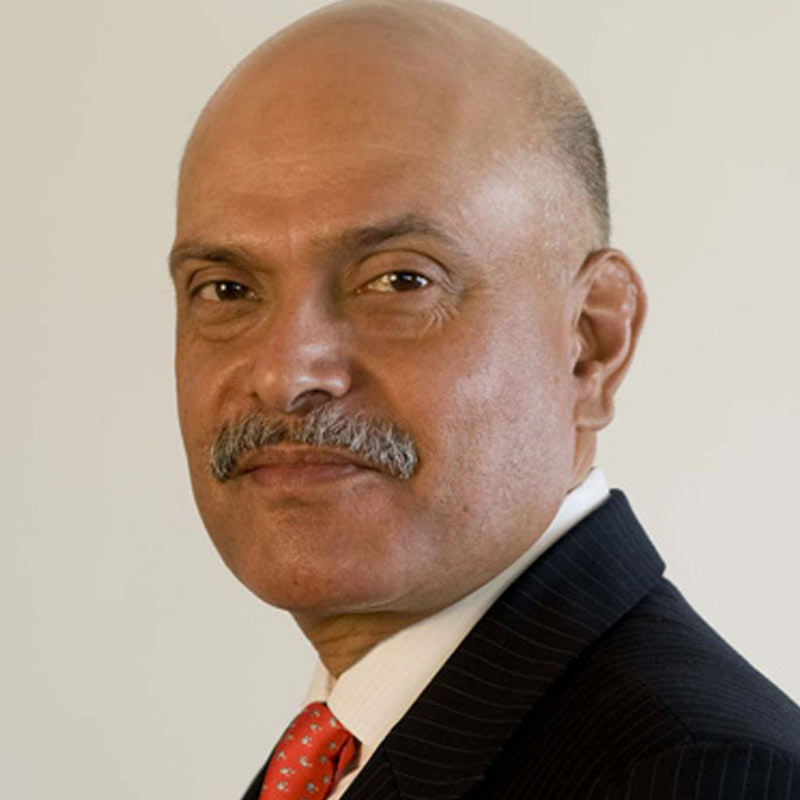
    MUMBAI: At the IAA Knowledge Series held at ITC Maratha in Mumbai today were the two successful entrepreneurs Raghav Bahl and Ronnie Screwvala. Bahl is known for pioneering TV news in India – along with NDTV’s Prannoy Roy – whereas Screwvala (a serial entrepreneur ) is known for building a robust TV and film business which was acquired by Disney in India. Both shared the tale of their journey in the media business. The duo shared their business secrets for young budding entrepreneurs. They also opened up about their plans of their new trysts with media.

    Bahl began by saying that his new business venture The Quint was not here to reinvent any business models like he did with CNBC TV18 by creating the business news genre. “We have to bring disruption through superior and quality content. We started CNBC TV18 11 and the revenue line was Rs 4-5 crore. Today, the business news market is worth Rs 400 crore. As equity knowledge goes deeper, investors will come in. The USP has to be content. We have to be independent and the editorial issues have to be edgier and bolder. That’s a big thing.”

    “We crossed paths and swords during the launch of the UTV-Bloomberg channel and when the UTV ticker went out through CNBC channel,” adds Ronnie Screwvala.

    Both known for their gutsy moves of launching several channels, Bahl pointed out that CNN-IBN and Colors are the two things he made big bet son, while Screwvala is of the opinion that Bindass was a risky decision that he took.

    With digital booming in India and emergence of several platforms for content consumption, broadcasters, multinationals and Indian non-media start-ups entering the OTT/VOD space. Screwavala was of the opinion that MNC’s like Netflix and Amazon have figured out that India is a local market and expensive series will not be successful.

    “At the core of this is whether the consumer is willing to pay? This will again bring back to the advertising economy or the fee economy. It is not a venture capital game but advertising where it’s always going to be cost-minus. So, that’s the real disruption which will again only happen by the people who really want to shake up this market.”

    The two of them accepted the fact that payment gateways are essential make-or-break tools for these services.

    “There are too many different businesses. What I think is, you cannot mix content business with OTT business. You have to decide whether you want to be in the content game or in the distribution game. Netflix, according to me, is an exception which proves it. It will have to figure out whether it is a content company else they can end up in the same confusion as Yahoo. If you can build a compelling proposition for a consumer, then everything will follow,” explained Bahl.

    But, did we not want to know more of the duo’s impatience and gutsy decisions? Certainly, yes. Explaining the exit Bahl said, according to the regulations, a partner needs to have 51 per cent equity in a business which is not something entrepreneurs are open to as it means giving up control. “I was not allowed to not dilute it further. The regulations are very first-generation thing. It was either diluting ourselves or exiting.”

    “Exits cannot be timed. You cannot rewind the clock whether in media or in life. I have no regrets. It is as exhilarating now as it was when I started UTV,” added Screwvala.

    Witnessing several ups and downs in the business, both of them shared their success mantras for young entrepreneurs, Bahl said, “Just go by your balance-sheet. Do not go beyond it. Young entrepreneurs should not get seduced by the media. You guys have not become superstars until you do not have a strong balance-sheet. Be resistant to changing times because it’s not a sexy, glamorous field to be in but very stressful.”

    “You build what you want to build and stay constant about it and your vision. Today’s ecosystem is forcing you to grow a little bit horizontal, but do not go by what investors want. If you are not curious, then this is not the space for you,” concluded Screwvala.

  • Balance-sheet, impact, fun is the mantra; Raghav Bahl & Ronnie Screwvala

    Balance-sheet, impact, fun is the mantra; Raghav Bahl & Ronnie Screwvala

    MUMBAI: At the IAA Knowledge Series held at ITC Maratha in Mumbai today were the two successful entrepreneurs Raghav Bahl and Ronnie Screwvala. Bahl is known for pioneering TV news in India – along with NDTV’s Prannoy Roy – whereas Screwvala (a serial entrepreneur ) is known for building a robust TV and film business which was acquired by Disney in India. Both shared the tale of their journey in the media business. The duo shared their business secrets for young budding entrepreneurs. They also opened up about their plans of their new trysts with media.

    Bahl began by saying that his new business venture The Quint was not here to reinvent any business models like he did with CNBC TV18 by creating the business news genre. “We have to bring disruption through superior and quality content. We started CNBC TV18 11 and the revenue line was Rs 4-5 crore. Today, the business news market is worth Rs 400 crore. As equity knowledge goes deeper, investors will come in. The USP has to be content. We have to be independent and the editorial issues have to be edgier and bolder. That’s a big thing.”

    “We crossed paths and swords during the launch of the UTV-Bloomberg channel and when the UTV ticker went out through CNBC channel,” adds Ronnie Screwvala.

    Both known for their gutsy moves of launching several channels, Bahl pointed out that CNN-IBN and Colors are the two things he made big bet son, while Screwvala is of the opinion that Bindass was a risky decision that he took.

    With digital booming in India and emergence of several platforms for content consumption, broadcasters, multinationals and Indian non-media start-ups entering the OTT/VOD space. Screwavala was of the opinion that MNC’s like Netflix and Amazon have figured out that India is a local market and expensive series will not be successful.

    “At the core of this is whether the consumer is willing to pay? This will again bring back to the advertising economy or the fee economy. It is not a venture capital game but advertising where it’s always going to be cost-minus. So, that’s the real disruption which will again only happen by the people who really want to shake up this market.”

    The two of them accepted the fact that payment gateways are essential make-or-break tools for these services.

    “There are too many different businesses. What I think is, you cannot mix content business with OTT business. You have to decide whether you want to be in the content game or in the distribution game. Netflix, according to me, is an exception which proves it. It will have to figure out whether it is a content company else they can end up in the same confusion as Yahoo. If you can build a compelling proposition for a consumer, then everything will follow,” explained Bahl.

    But, did we not want to know more of the duo’s impatience and gutsy decisions? Certainly, yes. Explaining the exit Bahl said, according to the regulations, a partner needs to have 51 per cent equity in a business which is not something entrepreneurs are open to as it means giving up control. “I was not allowed to not dilute it further. The regulations are very first-generation thing. It was either diluting ourselves or exiting.”

    “Exits cannot be timed. You cannot rewind the clock whether in media or in life. I have no regrets. It is as exhilarating now as it was when I started UTV,” added Screwvala.

    Witnessing several ups and downs in the business, both of them shared their success mantras for young entrepreneurs, Bahl said, “Just go by your balance-sheet. Do not go beyond it. Young entrepreneurs should not get seduced by the media. You guys have not become superstars until you do not have a strong balance-sheet. Be resistant to changing times because it’s not a sexy, glamorous field to be in but very stressful.”

    “You build what you want to build and stay constant about it and your vision. Today’s ecosystem is forcing you to grow a little bit horizontal, but do not go by what investors want. If you are not curious, then this is not the space for you,” concluded Screwvala.

  • SES and MNC sky vision sign capacity deal for DTH market growth

    SES and MNC sky vision sign capacity deal for DTH market growth

    MUMBAI: SES and MNC Sky Vision, Indonesia‘s premier satellite Pay-TV provider with its well-known brand, Indovision, has announced an agreement to provide capacity on the SES-7 satellite to support Indovision‘s future Chinese-language direct-to-home (DTH) package.

    The multi-transponder and multi-year deal provides Indovision with access to the Ku-band capacity aboard SES-7 at the prime orbital location of 108.2 degrees east. Indovision intends to offer more than a dozen Chinese language channels using the capacity, which would allow Indovision to reach a niche audience segment in Indonesia‘s fast-growing pay-DTH market, beyond its current base of more than 2 million subscribers. Use of the capacity by Indovision is subject to regulatory approval.

    Rudy Tanoesoedibjo, CEO of MNC Sky Vision, said, “We see continued growth in the pay-DTH market in Indonesia and are delighted to be able to leverage SES‘ global network and deep industry expertise to broadcast more content to meet the diverse needs of our subscribers in Indonesia.”

    “The increasing maturity of the Indonesian pay-DTH market requires pay-TV operators to react swiftly in meeting the demands of different audience segments, as Indovision has done with the new Chinese-language pay-DTH offering. We are pleased to be the satellite operator of choice for Indovision and look forward to supporting Indovision‘s fast and robust growth strategy in this important market,” said SES sr. VP commercial Asia-Pacific and Middle East Deepak Mathur.

  • NDTV Q2 net loss from news biz widens as rev falls

    NDTV Q2 net loss from news biz widens as rev falls

    MUMBAI: NDTV‘s net loss from news business has widened 30 per cent to Rs 152.5 million for the fiscal second quarter as revenue from operations fell. The news broadcaster had posted a net loss of Rs 107 million in the same quarter of the previous fiscal.

    NDTV‘s revenue for the quarter fell 5.23 per cent to Rs 784.5 million from Rs 822.3 million during the same period last year.

    The company‘s expenditure decreased marginally to Rs 959.3 million from Rs 982.8 million in the year ago period even as employee cost increased 7.29 per cent to Rs 307 million on group wide cost and resource optimisation exercise during the quarter.

    The company‘s operating and administrative expenses rose 20 per cent to Rs 252.6 million during the quarter.

    Income from exceptional items rose to Rs 55.3 million from Rs 29 million in the corresponding quarter of the trailing fiscal.

    Exceptional items during the quarter include gain on sale of investment in Metro Nation Chennai (MNC). NDTV said the gain in standalone results is Rs 44.3 million.

    NDTV and its JV partner Kasturi and Sons Limited (KSL) had on 20 August entered into a Share Purchase Agreement with Educational Trustee Company Private Limited for the sale of 100 per cent of their respective stakes in Metro Nation Chennai Television Limited (MNC).

    On a consolidated basis, NDTV narrowed its consolidated net loss for the quarter to Rs 165.1 million from Rs 223.1 million. The company‘s revenue stood at Rs 1.01 billion, down from Rs 1.05 billion, even as expenses widened to Rs 1.33 billion from Rs 1.29 billion. NDTV said the provision for doubtful debts relating to the shutdown of the channel Hindi GEC Imagine made in the previous year now reversed in the consolidated results amounting to Rs 11 million.

  • Bang in the Middle expands operations in US

    Bang in the Middle expands operations in US

    MUMBAI: Reversing the trend of global agencies launching in India, newly formed independent agency Bang in the Middle launched operations in USA with offices in Chicago and New York to start with.

    The USA operations will be led by Saira Mohan who will assume the post of president Bang in the Middle USA. Mohan has been a super model and has experience in the field of advertising and marketing of fashion, luxury and design.

    The USA outfit of the Indian agency will help the growing ambitions of many mainstream brands that are not owned by MNCs but want to expand their ambit and enter India. It will also help its clients like iYogi and Veen Waters to establish their brand in US.

    Bang in the Middle is already in conversation with a few brands in US, and some leading communication and professionals to bring them on board. Through its suite of offerings that span design, branding and digital marketing, this is Bang in the Middle‘s first international foray into establishing itself as a mainstream global creative media company.

    Mohan said, “I am excited to partner this incredibly talented team in India and open up the opportunities in US for brands from India and open up Indian markets for brands in US. I have been in the world of branding and design for over a decade and I intend to fully bring that experience on table for all our current and potential clients.”

    “We have been clear from the start that we won‘t be a single country operation. This is the next step in our evolution and we aren‘t going to stop here. We are exploring some more opportunities in Asia and Europe, and we hope to expand into those markets. It‘s time to demonstrate a brand new way of doing business, and what a better moment than India‘s Independence Day to announce this” said Bang in the Middle managing partner Prathap Suthan.

    Bang in the Middle managing partner and CSO Naresh Gupta said, “We currently have a very eclectic bunch of clients who require our services in more markets than just US. We have launched campaigns in US, Europe and Middle East already for our clients, and are about to launch some more for our brands. In today‘s hyperconnected world you need to be present in everywhere where opportunity is, and for us USA is a vast opportunity.”

    Bang in the Middle‘s clients include iYogi, Veen Waters, Hawktrack from Knoxx Global, Dulux Paints, Vimal, and BigFlix.