Tag: MMTV

  • Vidnet 2024: The new content tangle

    Vidnet 2024: The new content tangle

    Mumbai: The OTT business in India is buzzing with new streamers, niche, and language offerings. However, early players are struggling as heavy content spending isn’t matching revenues, and India-specific low pricing hasn’t spurred subscriptions. Growth has plateaued as consumers return to post-COVID normalcy, preferring to binge occasionally.

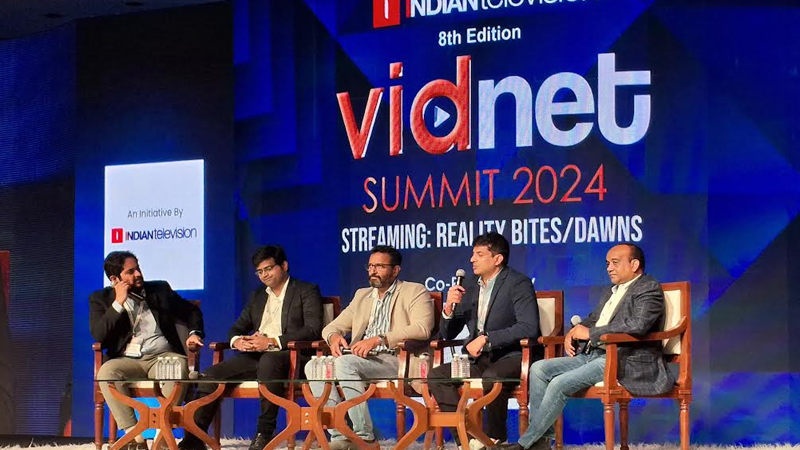
    Adding to the churn is the shift towards AVOD by giants like JioCinema, offering premium events like cricket for free, with Disney+Hotstar following suit. This has strained streaming bottom lines. The rise of FAST channels is also causing industry jitters. Vidnet explores the future of the streaming ecosystem.  The Vidnet 2024 is being held on 19 July 2024, at Hotel Sahara Star, Mumbai.

    This panel explored the evolving content landscape with constant changes in production and distribution. The new 30-plus episode format on OTT shows (TV++) is seen as a game changer, while premium originals (6-10 episodes) remain popular among urban audiences. Increasing platforms and aggregators are expanding content reach and footprint. Audio content is also making significant strides. How can these strategies be assimilated to create an effective content platform?

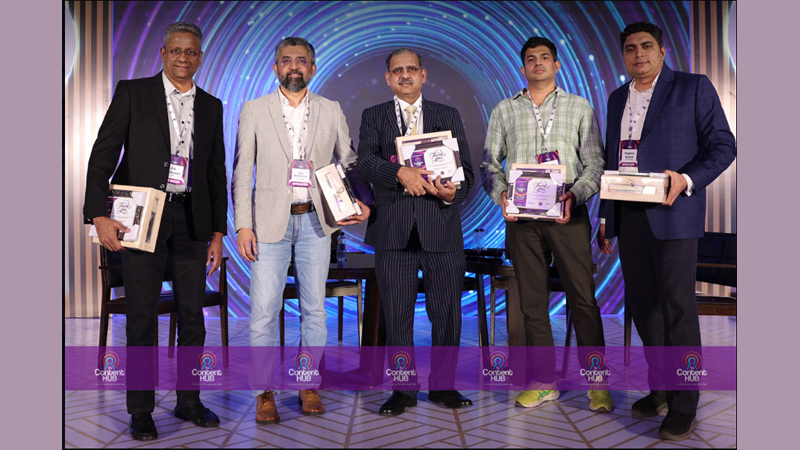
    The session was chaired by Boston Consulting Group managing director & partner Akshay Kohli. It included the following panelists: Shemaroo Entertainment COO-digital, Saurav Srivastava, MMTV head of digital & OTT Sathyajith Nair, Klassroom CEO Dhruv Javeri and Chana JOR, V Hunt Digital Media director & CEO Pratap Jain.

    Emphasising the dual nature of content in the global digital landscape, Saurabh Srivastava said, “Good content can be language agnostic and appeal globally, but it also has a soul tied to local culture and nuances. Both will coexist, with some stories resonating universally and others deeply rooted in specific cultural and linguistic contexts.”

    Sathyajith Nair underscored the importance of genuine content that connects with audiences on a personal level and said: “Content should be genuine, focusing on its trueness rather than catering to a specific audience. Our strategy ensures that shows reach a Pan India audience by targeting promotions to individual tastes, as evidenced by a recent show reaching 98 per cent of PIN codes in India.”

    By staying true to the essence of the content, creators can achieve widespread reach and resonance across diverse regions.

    Talking about educational content, Dhruv Javeri shed light on the distinct approach required for academic and extracurricular content. Javeri said, “In education, content creation starts differently. We have two types: academic content, defined by board standards, and extracurricular content. For academics, we write stories from the provided content and visualize them. The focus is on innovative pedagogies to enhance learning, aligned with the new education framework.”

    Highlighting the strategy of creating exclusive content to captivate and retain users, Pratap Jain said, “Creating exclusive content is key to engaging and retaining users, as opposed to relying on content available on multiple platforms. By casting new talents and producing fresh, simple content, we stand out in the market, similar to the appeal of popular YouTube videos.”

  • TCH 2024: One Nation: Diverse Voices

    TCH 2024: One Nation: Diverse Voices

    Mumbai: Exploring the shift from regional to national content, this synopsis delves into the trends and challenges. It navigates the transformation, analyzing industry dynamics, emerging trends, and the hurdles faced. From preserving regional variation to adapting to a broader audience, it examines the multifaceted journey of regional content evolving into a national narrative. In what ways do the emerging trends and challenges influence the dynamics of the entertainment industry during this transition? How can creators navigate these changes effectively? What strategic approaches can content creators adopt to strike a balance between maintaining regional identity and fostering a cohesive national narrative in their work? How can the transition from ‘regional’ to ‘national content’ impact cultural diversity within the entertainment industry, and what measures can be taken to ensure the preservation of regional variation?

    In a rapidly evolving media landscape, seasoned industry professionals have offered valuable insights into the transformation of content consumption and production. The session was chaired by Ernst and Young partner Raghav Anand, MMTV chief executive officer P.R. Satheesh, Sony Marathi business head Ajay Bhalwankar, PTC Network chairman & MD Rabindra Narayan, Shemaroo Entertainment COO, Digital, Saurabh Srivastava esteemed voices in the field, have articulated their perspectives on the burgeoning shift towards globalised content.

    Rabindra Narayan emphasised the dissolution of regional boundaries in content consumption, attributing it to the accessibility facilitated by global platforms and connectivity options. He predicts a future where language barriers will fade, citing the potential of technology to clone and adapt voices, thus enabling seamless localization across languages.

    Saurabh highlighted the democratisation of content creation in the digital era, underscoring its empowerment and revenue potential, particularly in linguistically diverse markets like India. He emphasizes the value of culturally rooted storytelling in filling gaps in content supply, with technology enabling effective monetization, especially through OTT platforms.

    Ajay Bhalwan sheds light on the evolving landscape of Hindi and regional language content, noting a significant shift where a substantial portion of content on Hindi film channels originates from regional languages. He accentuates the importance of language in enhancing authenticity and audience engagement, exemplified by the strong resonance of Marathi content in Maharashtra.

    PR Satheesh underscored the paramount importance of content quality in driving viewership and transcending language barriers. Drawing parallels with the global popularity of Korean dramas, he advocates for leveraging technology, including AI and real-time translations, to enhance content creation and distribution.

    These insightful perspectives collectively echoed the industry’s adaptation to a globalised content landscape, where technology catalyzes innovation and accessibility. As content continues to evolve, these experts offered valuable guidance on navigating the dynamic media landscape and maximizing the impact of storytelling in diverse markets worldwide.

  • PR Satheesh elevated as CEO of MMTV

    PR Satheesh elevated as CEO of MMTV

    Mumbai: Malayala Manorama Television (MMTV) has elevated PR Satheesh to the role of chief executive officer. He was previously the chief operating officer and has been associated with the media organisation since July 2014.

    MMTV is a Malayalam news and infotainment channel catering to audiences in Kerala. 

    An alumnus of Guru Nanak College Madras, Satheesh is a media veteran with three decades of experience under his belt across print, TV, digital/mobile, and shopper marketing. He has been associated with publications such as Deccan Chronicle and The Asian Age, and broadcasters like Zee Telefilms and Zee Sports. 

    He has also had stints at Barterbiz, TAG Media, and TELiBrahma. He has worked in roles across the country including Mumbai, Delhi, Chennai, Bangalore, and Kochi.

  • Malayalam GECs resume shooting, hopeful of ad recovery by Onam

    Malayalam GECs resume shooting, hopeful of ad recovery by Onam

    NEW DELHI: After months of standstill, GECs across some states have been permitted to resume indoor shooting of serials with strict guidelines. Regional channels are slowly treading the path to normalcy, Malayalam GECs being one. 

    Malayala Manorama Television COO Satheesh PR shares, “Traditionally, most Malayalam fiction has been indoors. There are some arrangements through the government-owned Chitranjali studios to enable outdoor shoot in a controlled environment and we have a large studio floor of our own which will be put to use for non-fiction with all the guidelines being followed.

    "MMTv has been fortunate to have been managing a profitable business with a fairly decent-sized team. While the entire industry is facing a cash crunch, I don't think the channel's focus being regional might alter the issue.” 

    Zee Keralam too has resumed indoor and outdoor shootings of its programmes and serials from 1 June onwards, strictly adhering to Covid2019 protocols. The shooting is with minimal technicians and crew members following social distancing, wearing masks, gloves, shields and frequently sanitising their hands. The floors of the shooting studio will also be disinfected before and after the shoot.

    Zee Keralam business head Santosh J Nair  says that the shooting unit has been downsized and the channel is giving priority to the safety of its team members. 

    “Zee Keralam's shoots are happening with limited number of crew members (25 people), as permitted by the government. There is a daily temperature check for everybody and all members present on the shoot are compulsorily wearing masks throughout. Even the artistes remove their masks only for the specific shot. We try and finish the shoot with as less takes as possible to ensure banking of episodes and we bank as much footage as possible within the day,” he explains.

    Surya TV has also resumed shooting with 20 people on set. Surya TV business head Reghu Ramachandran shares, “Surya TV is adhering to all government guidelines and having lesser people on the set has not affected the output in any manner.”

    Ramachandran adds that  from the content point of view, it is not going to make any kind of adjustment in the quality of the content. "The content will remain intact. Our only aim will be to improve our  revenue share. As far as Surya is concerned, our ratings have gone up and it has become no two. That way our revenues should shoot up rather than coming down. We are also gearing up for some new launches next month and possibly by August, we will have some new properties up and running."

    Flowers TV managing director R Sreekandan Nair shares that as a network, it has always focussed on developing in-house content. “Format shows have been our forte for a long time. So, now it will be indoor shooting with limited resources, continuing to develop innovative content to surprise and satisfy our viewers' appetite,” he mentions. 

    Nair says that the methodology of programming and ad sales will change considerably. "Human interactions will be minimal and in this scenario, developing and nurturing business relationships will be a challenge. The comeback strategy for Flowers is simple – focusing on our strength, which is highly-engaging non-fiction content,” Nair further adds.

    Madison Media chief buying officer Vinay Hegde says that the lockdown forced production shutdown, leading to a dearth of original content and hence, GECs had no option but to resort to repeats. 

    "This, along with the shift in viewership to news, made things worse for GECs, where both viewership and ad rates took a beating. Some GECs used their movie libraries to try and retain viewership to whatever extent possible, though it didn’t help in attracting revenues. Y-O-Y GECs saw their revenues down by more than 80 per cent, due to low inventory sales and discounts," he says.

    Satheesh shares that MMTv is witnessing greater traction in advertisers' demand in June for both news and GEC as it prepares for Onam in August.

    After a two-month break, the serials of Zee Keralam started airing with new content. The seven serials that were already running successfully in the channel went on-air from 1 June. Nair reveals that the channel is seeing an increase in the numbers of advertisers thanks to the ease in lockdown.

    The Media Ant co-founder Samir Chaudhary says, “Media Ant has experienced a drop of about 30 per cent in the Malayalam GEC business post-Covid2019. In June, there has been an increase in inquiries but has not translated to business yet.”

    Flowers COO Anil Ayroor adds, "We can't change what has happened in the past viz floods, slowdown etc.  But we are very hopeful about the future. It is only a matter of time before the market becomes conducive and advertisers throng back to channels. As much as the media wants advertisers, the vice versa is also true and advertising is the only way to increase sales. And with the biggest festival in Kerala, Onam, coming in August, Kerala will be in a better position to bounce back to normalcy.”

    Maitri advertising managing director Raju Menon says that some of the universities, schools, colleges, jewellery brands, real estate and umbrella brands have started advertising again since the ease of lockdown. Umbrella brands are aggressively advertising on GECS due to heavy rains.

    Flowers senior vice president of sales and marketing Anil Devan reveals that due to the lockdown, a lot of businesses are under stress as the entire supply chain has been disrupted and advertisers don’t see a reason to advertise if it doesn’t translate into sales. So, it has impacted the entire media industry and Flowers is no exception.

    He shares that special packages had been rolled out in order to lure advertisers.  "Now with our original content coming back, we are gradually getting there. Also, what matters to advertisers are the BARC numbers," he explains.  

    Adding to this, Hegde says optimistically, "Changes in plans are already indicating that GECs will be back in demand as originals start coming back and week 22 (BARC) already shows the viewership starting to shift back to GECs. Originals will only make this more consistent. Channels estimate that they would be back to at least 60-65 per cent levels of pre-Covid2019 ad revenue by June end itself."

  • OTT release won’t disrupt cinema ecosystem, theatres to rebound

    OTT release won’t disrupt cinema ecosystem, theatres to rebound

    MUMBAI: The Advertising Club Bangalore recently organised a webinar ‘The Future of Cinema’ that delved into various aspects of the cinema business and how the industry will deal with this pandemic. The webinar had Friday Films founder producer actor Vijay Babu, MMTV COO PR Satheesh, Interactive Television founder Ajay Mehta, Qu be Cinema CEO Harsh Rohatgi as panellists and the discussion was moderated by Wavemaker South VP Kishan Kumar.

    Amidst this pandemic, Babu announced that his film Sufiyum Sujathayum, which has Jayasurya and Aditi Rao Hydari in lead roles, will premiere in Amazon Prime Video. Babu was praised and criticised for his decision.

    “The last few days have been the toughest period of my life. I had to answer questions from various parts of the industry. Because it is the first film that directly went to an OTT release. We make thousands of movies. Since the birth of the Indian film industry, this is the first time that we have been in lockdown. According to multiple reports, loss to the Indian film industry could be between Rs 1500 to 2500 crore,” Babu said.

    According to him, during this lockdown period, between various languages, there must be 400 to 500 movies that might have completed their shoot or are in some stages of production. This means the money has been invested already. 

    “In my case, the film was completed in January. I was expecting to release the movie during Ramzan. And also every movie has a shelf life. Even if the cinemas are open in September or October there will be a lot of issues that we will face. How to bring back audiences to the theatre is the biggest issue. Will a big-banner movie or a leading actor be able to bring back audiences to the cinemas? Most certainly the answer is no. There will be a wait-and-watch situation,” he added.

    Rohatgi said that India released 1700 to 1800 movies last year out of which 1600 were local productions. Roughly 40 to 50 movies are waiting for release once the lockdown is lifted, which will create a rush. There will also be limited inventories in theatres. These inventories will be taken by big-budget movies once the theatres are opened. Seats will be sold for a larger number of weeks. He points out that this will create challenges for small and big-budget producers. In this case, even if 10 to 15 movies are released on OTT platforms, it should not be a problem for the cinema ecosystem.

    How do you maintain balance between satellite and OTT? Is the acquisition strategy going to change and what are the inventory challenges? These questions were raised by Kumar.

    Satheesh adds, “Theatrical experience is not going to go away. As far as our strategy is concerned we have been looking at broadcast plus OTT and the opportunities are now rising. Vijay Babu’s point of releasing first on OTT doesn’t mean that he will not go to theatres again. There is always an audience for theatre, OTT and television. Also, challenges are always going to be there; some producers might take a different route but it is not necessary that all will do the same thing. Everyone will have a different strategy.”

    Mehta said that in India OOH entertainment options are very less. The role of cinema is very prominent. He mentioned that if you look at US’s data for the last ten years one of the top grossers are franchise films. It includes superhero films, animation movies; these movies need larger-than-life cinematic experience. OTT and television can be substitutes for some of the content, but larger-than-life movies need cinematic experience. He concluded by saying that franchise films will continue to thrive.

  • Miss Malini Entertainment’s digital play with first long form video content

    Miss Malini Entertainment’s digital play with first long form video content

    MUMBAI: With data becoming cheaper and more affordable, Indian market saw a high jump in online video consumption. Millennial audience is especially craving for more digital video despite the emergence of several OTT players.

    MissMalini.com which started as a hobby blog by Malini Agarwal is currently a go-to-digital destination for Bollywood, fashion and lifestyle. It has now started a new innings in the digital video space. The in-house production The Girl Tribe is the first long-form show under new “MMTV” (MissMalini TV) banner. The 12-episode series is an extension of “Malini’s Girl Tribe”, a Facebook community where women of all ages participate in meaningful interactions.  Starting the journey with The Girl Tribe Miss Malini Entertainment is developing several new MMTV properties which will range in length anywhere from 5-20 minutes.

    In an interaction with Indiantelevision.com, Miss Malini Entertainment CEO Nowshad Rizwanullah spoke about their first venture, how they are marketing the show and future plans for long-form content production plan.

    While almost all of the digital platforms collaborate with brands for video content, you have produced The Girl Tribe independent of marketers. What’s the reason behind that?

    We love working with brands and regularly create content in collaboration with some great advertising partners. Sponsors not only generate revenue, but the funding they provide also allows producers like us to invest more into the show to make it bigger and better for our viewers. However, when a brand partner is involved, it can also impact messaging and creative control. The Girl Tribe is a deeply personal show for us, and one that comes from our convictions as a team and our values as a company that women in India need a safe space and platform to speak their truths. Given the timely nature of the show, we did receive significant advertiser interest but we took an early call to make our first season an independent production. This has allowed us to create the show entirely per our vision, without compromise on the message, which for us is our most important priority. It also helps us experiment more freely to try and determine how we can most effectively get the message out, and as you can see from this current season our episodes have been getting stronger and stronger over time. That said, there are many socially conscious brands in the market today and provided there is authentic alignment with our goals for this show, we are open to adding brand partners for future seasons to allow us to invest more in the show and take its message to wider audiences.

    What has been the initial response to the show? Can you tell us the viewership pattern from your own data measurement?

    We’ve been very happy with the show’s response till date. While we viewed season one as just the first step in a larger, long term movement, the response from our audience, guests, fans and the industry at large has been so positive that we have accelerated our plans for the property. To give you a sense of numbers, the first five episodes have already reached over 10 million people, generating more than 2.5 million views and half a million engagements. The comments and discussions on the episodes, in particular, are especially heartening, as we are seeing people sharing very thoughtful and detailed opinions indicating the show is really striking a chord. What is also very interesting is that the show is reaching a wide audience. While the largest consumption is from women 25-34 (~45 per cent), the 35-44 age group is sizeable as well (25 per cent). And about 15 per cent of our viewership is 45-65+. This kind of diversity is quite rare in today’s digital video space.

    Was it your in-house production? How big was the production team? How much have you invested in this project?

    Yes, this show was completely conceived and executed in-house. Even the set is based in our own brand new in-house studio. The complete production team including creative and production, numbers between 15-20 people including temporary resources. We don’t disclose production costs but suffice it to say we are producing this first season very cost effectively which leaves a lot of scope for expansion now that we have a successful proof of concept.

    Going forward, do you have any plan for other long-form content production this year?

    Yes! The Girl Tribe is the first long-form show we have created under our new “MMTV” (MissMalini TV) banner. We have several new MMTV properties under development and we will be filling out the library on a regular schedule. These will range in length anywhere from 5-20 minutes, both fiction and non-fiction, and will bring life to the themes and topics our audiences already love from our other formats. Outside MMTV, we have already produced five different seasons of terrestrial television content over the last several years, and have ongoing discussions for new upcoming shows.

    Has this series increased the number of viewers on your site?

    The Girl Tribe is a Facebook and YouTube property, and if you watch the show you will see that we have specifically stayed away from plugging our other content or assets there. This comes back to the reason we have not taken on any brand sponsors this season – because the message comes first. That said, we have seen a nice increase in our video viewership and subscriber metrics, and we ran a related campaign called #ItEndWithMe on our website on 18 July that tied together our various activities in support for the themes of the show which also received strong participation and attention.

    What’s your marketing strategy? How do you plan to promote the show?

    Once again, you have to be careful about how you market a show like this. We were very clear that our first priority was to create meaningful conversation and engagement around topics that are severely underrepresented and go unacknowledged. We didn’t want to cheapen or dilute that message by embarking on an overly aggrandised marketing push that would overshadow the show itself. Perception-wise there’s a fine line between promoting important issues versus promoting yourself and we didn’t want there to be any confusion on this, even though we obviously have the marketing machinery behind us to go very wide. Therefore we have mostly prioritised word-of-mouth marketing and have let our actions and intentions speak for themselves. We are doing some light PR around the show, and of course, we will not turn down any outside interest to learn more and spread the word. Future seasons will get a larger push now that we have established the show’s credibility. But for this season we wanted the show to be powered by the voices of those who felt a connection to the show’s mission, wanted to be a part of its success or were just moved enough to share and engage as a vote of confidence.

  • MMTV launches Malayalam channel Mazhavil Manorama in HD

    MMTV launches Malayalam channel Mazhavil Manorama in HD

    MUMBAI: Malayala Manorama Group’s television network MMTV has launched the High Definition (HD) version of its Malayalam entertainment channel Mazhavil Manorama.


    With this, launch, MMTV now has a bouquet of four channels namely Manorama News, Mazhavil Manorama, Mazhavil Manorama HD and Mazhavil International for the Gulf region.


    With a strong content mix, Mazhavil Manorama HD’s FPC will currently be the same as the Standard Definition (SD) channel comprising reality shows, weekend mix, soaps.