Tag: ML

  • Mad Influence launches Xley – a marketplace for creators and brands

    Mad Influence launches Xley – a marketplace for creators and brands

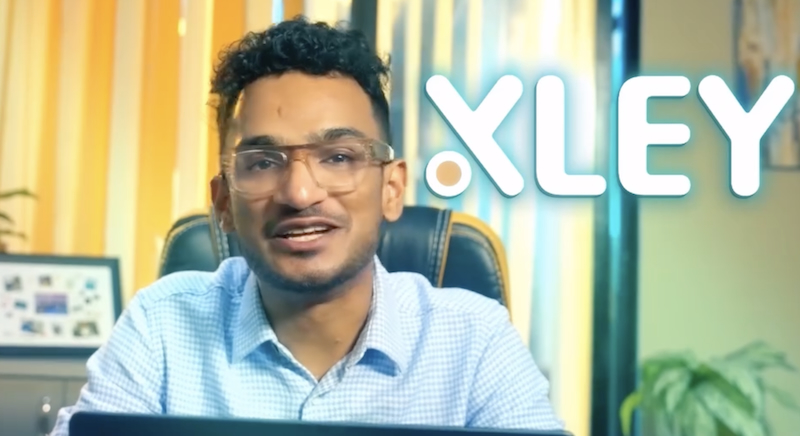
    MUMBAI: Another influencer marketplace which claims to simplify life for creators and advertisers has been announced. Called Xley (pronounced zilley) it’s coming from the Mad group, which is the parent company of influencer marketing agency Mad Infuence.  

    An invite only market place, it claims to use AI and ML to simplify, optimise and elevate brand creator collaborations. It has access to about 200 million creators across YouTube, Instagram and Tiktok, in more than 54 languages, 10,000 cities ad 150 countries.

    The platform is claimed to have three core pillars: advance audience insights, extensive creator discover tools, and comprehensive campaign management and performance tracking.

    Xley’s key features are claimed to include creator discovery, utilising over 25 advanced filters for demographics, language, niche, and audience interests; ML-powered insights for campaign analysis and performance tracking; an effortless management dashboard to plan, execute, and monitor campaigns; scalability to suit various campaign needs; and data-driven decisions through advanced analytics to maximise ROI and refine marketing strategies

    “Xley is more than just a marketplace; it’s a movement to empower creators,” Mad Influencer and Xley founder Gautam Madhavan, “It’s  a platform that reimagines the creator economy.”

    “Our vision was to create a platform that not only offers real-time analytics of social profiles but also simplifies and automates end-to-end campaign management in one cohesive space. As development progressed, it became evident that Xley’s capabilities extended far beyond initial expectations – enabling a broader user base, optimising efficiency, and empowering content creators with enhanced visibility and streamlined brand partnerships. By significantly reducing manual workloads, accelerating timelines, and improving ROI, Xley stands as a transformative solution, redefining how brands and creators collaborate globally,” added Xley head of strategy Aman Narula.

    For brands, Xley  automates manual processes like creator vetting and campaign tracking, improves ROI through data-driven insights, and extends global reach by connecting with creators across diverse languages and regions. Creators benefit from global visibility, access to aligned campaign opportunities, the ability to build long-term partnerships, a centralised hub for managing campaign-related activities, business analytics, revenue tracking, and effective campaign management with faster approvals and reduced downtime.

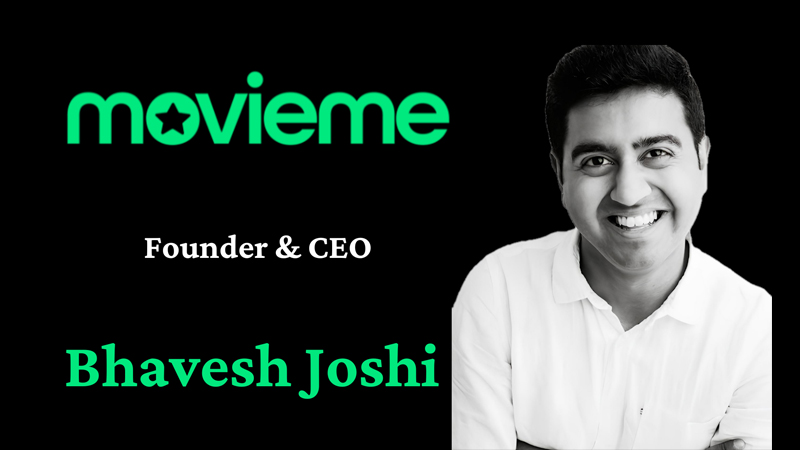
  • AI’s future in content discovery promises more intuitive and immersive entertainment: MovieMe’s Bhavesh Joshi

    AI’s future in content discovery promises more intuitive and immersive entertainment: MovieMe’s Bhavesh Joshi

    Mumbai: Navigating the vast sea of entertainment options can be overwhelming, with countless choices often making it hard to find content that truly resonates. MovieMe addresses this challenge with a groundbreaking approach to content discovery.

    Founded by Bhavesh Joshi, a film enthusiast with a background from the UK’s National Film and Television School, MovieMe harnesses machine learning to deliver hyper-personalised recommendations, making it easier for users to find content that truly resonates with their unique tastes. MovieMe is reshaping how we interact with cinema and television by offering features like ‘Scenes’ and ‘real-money game’.

    Indiantelevision.com’s Arth Chakraborty caught up with MovieMe founder and CEO Bhavesh Joshi to delve deeper into their offerings, future trends and more.

    Edited Excerpts:

    On the inspiration behind MovieMe, and the ways in which it is disrupting the traditional entertainment landscape

    The inspiration for MovieMe stemmed from my deep love for cinema and the realisation that, despite the abundance of content available today, many viewers still struggle to find films and shows that truly resonate with them. I wanted to bridge this gap by creating a platform that does not just recommend what’s popular, but what aligns with each user’s unique tastes and preferences. MovieMe is disrupting the traditional entertainment landscape by leveraging machine learning to offer hyper-personalised recommendations. We are moving away from a one-size-fits-all approach, giving users a curated experience that feels tailor-made just for them, which I believe is the future of content consumption. We are also extremely focused on enhancing the cinematic experience for audiences, giving them new tools and ways in which to interact with their favourite content, and celebrate their love for cinema.

    On MovieMe’s AI-driven recommendation system working to personalise user experiences

    MovieMe’s AI and ML-driven recommendation system is built on sophisticated algorithms that analyse a wide array of data—from a user’s viewing history and interactions on the platform to broader trends in content consumption, and over a thousand data points of movies (story arc, character development, plot tropes, etc.). By continuously learning from user behaviour, our system evolves to provide more accurate and relevant suggestions over time. It’s not just about recommending what’s trending; it’s about understanding the nuances of each user’s preferences and providing them with options they might not have discovered on their own.

    On ways in which MovieMe has transformed content discovery for its users

    One of the most gratifying aspects of MovieMe is hearing from users who have discovered hidden gems they would have otherwise missed. For instance, we’ve had users who primarily watched mainstream Hollywood films but, through our recommendations, found themselves exploring indie and international cinema that they ended up loving. Another example is our ‘Scenes’ feature, where users can discover movies based on short scenes or clips they enjoy, which has opened up a new dimension of content discovery, making the experience both personal and emotionally engaging.

    On the role that machine learning plays in understanding user preferences and predicting trends on MovieMe

    Machine learning is at the core of MovieMe’s ability to understand user preferences and predict trends. By processing vast amounts of data—from individual user habits to broader viewing patterns—we can anticipate what content will resonate with different audience segments. This allows us to not only recommend existing content but also provide insights into emerging trends that could shape future viewing habits. Our machine-learning models constantly evolve, ensuring that MovieMe remains ahead of the curve in predicting what our users want to watch next.

    On MovieMe ensuring data security while providing personalised recommendations

    Data security is a top priority for MovieMe. We employ robust encryption protocols and data anonymisation techniques to ensure that user information is protected at all times. Additionally, we are transparent with our users about how their data is used to enhance their experience. We believe that maintaining user trust is crucial, which is why we have implemented strict policies to safeguard privacy while still delivering the personalised recommendations that our users value.

    On MovieMe adapting to the cultural trends that are currently shaping the entertainment industry

    MovieMe is deeply attuned to the cultural trends shaping the entertainment industry, from the rise of diverse storytelling to the growing demand for localised content. We have incorporated these trends into our recommendation algorithms, ensuring that users are introduced to a wide range of voices and perspectives. Additionally, our platform is constantly updated to reflect the latest in entertainment, whether that’s emerging genres, the resurgence of certain formats, or shifts in how content is consumed.

    On MovieMe’s unique features like ‘Scenes’ and ‘real-money game’ and its impact on user engagement

    Our ‘Scenes’ feature allows users to explore movies based on short scenes or clips of content that resonate with them—whether it’s a thrilling chase sequence or a heartfelt conversation. The idea is to offer a new form of content discovery and allow users to discover content that truly strikes a chord with them. Of course, it also functions as an endless repository of bite-sized content, great for watching stuff in those little in-between moments when you don’t have time to watch full episodes or movies. This feature has significantly enhanced user engagement by offering a new way to connect with content on a deeper level.

    The ‘real-money game’ – or forecast game, as we call it – is another innovative addition where users can predict box office earnings and win cash prizes. This gamified experience adds a layer of excitement and drives engagement by integrating users into the entertainment ecosystem in a more interactive way. It also helps us generate valuable data points about audience expectations around different movie titles and their genres, cast members, production teams, etc. These data can then help industry professionals make informed decisions about various components of their future releases, including production, marketing, and distribution.

    On envisioning the future of AI in content discovery and entertainment, and MovieMe’s future plans for innovation in this space

    The future of AI in content discovery is incredibly promising, with the potential to make entertainment experiences even more intuitive and immersive. At MovieMe, we’re exploring new ways to leverage AI to enhance personalisation, including more advanced predictive analytics and real-time recommendations based on mood or social context. We are also looking at how AI can be used to create more interactive and dynamic content experiences. Our goal is to continue pushing the boundaries of what’s possible in content discovery, making MovieMe not just a recommendation engine, but a comprehensive entertainment companion that evolves with its users.

  • “AI is poised to revolutionise video editing and visual effects:” Workflowlabs’ Sunil Gangappa

    “AI is poised to revolutionise video editing and visual effects:” Workflowlabs’ Sunil Gangappa

    Mumbai: In the dynamic world of media and entertainment, staying ahead means embracing cutting-edge technology. Workflowlabs, with its expert engineering team boasting decades of experience, leads the way in innovation. Their solutions are designed to tackle the unique challenges of the industry, offering products like the Fusion Asset Management System for seamless media organization, Nitro Video Servers for top-tier video performance, Newsflow Media Gathering System for efficient news production, and the versatile Cobalt Transcoder for flawless media conversion. Workflow Labs is redefining productivity and efficiency, ensuring media professionals can deliver exceptional content with ease.

    Indiantelevision.com in conversation with Workflowlabs co-founder Sunil Gangappa delved into a range of discussions from their experience at CabSat Dubai and Broadcast Asia to the evolving needs of Indian broadcasters and more…

    Edited Excerpts:

    On your experience at CabSat Dubai and Broadcast Asia in Singapore this year

    At Cabsat and Broadcast Asia, Workflow labs garnered significant interest from visitors. The standout feature was the Workflowlabs Fusion AI module, which accelerates automated media enrichment. Its seamless integration and efficiency captivated attendees, making it a highlight of the event.

    On Workflow Labs, including its various offerings for the media and entertainment ecosystem, the factors behind its success, and the reactions of global majors to this success.

    Workflowlabs has rapidly gained traction, serving customers across multiple countries in South East Asia and the MENA region. Our success is attributed to our comprehensive media lifecycle management, which covers ingest, automation, media management, and archival processes.

    By providing end-to-end solutions, Workflowlabs ensures seamless handling of media content from acquisition to preservation. Our commitment to excellence and efficiency resonates with clients, making us a trusted partner in the industry.

    On the major advancements that you see in technology for the media & entertainment ecosystem in the next three years

    The convergence of AI, machine learning, and cloud technologies is set to revolutionise the media industry. This pivotal moment represents a significant shift in overall technology, and Workflowlabs is thrilled to be at the forefront of this transformation.

    Our commitment lies in embracing AI within our solutions. By harnessing the power of artificial intelligence, we aim to deliver cutting-edge solutions that optimize every facet of media management. From content ingest to seamless automation, intelligent media management, and efficient archival processes, Workflowlabs is dedicated to elevating industry standards.

    On the other applications that you have seen or predicted could be automated with AI in the media & entertainment industry, with generative AI, AI dubbing, AI anchors making rounds in the media & entertainment ecosystem

    AI is poised to revolutionise video editing and visual effects. In the past, artists’ creativity was constrained by technology, but now, with AI, they can bring their exact visions to life.

    On the evolving needs of Indian broadcasters, particularly in news and live sports workflows, and the ways you are meeting those demands

    In the past, advertisements were primarily limited to linear TV. However, with the rise of OTT platforms and web applications, television now offers multiple avenues for content monetisation. Workflowlabs provides an extensive ad replacement solution that caters to these evolving needs.

    On the challenges that you see the media & entertainment industry faces and how can your company help overcome those challenges

    The exponential growth in media content production, coupled with the escalating risk of malware attacks, presents significant challenges in managing and securing media assets. Workflowlabs aims to be a leader in media management and archival solutions, placing a strong emphasis on security.

  • India excels in Cloud, AI, and ML: 85 per cent of Indian businesses use cloud providers for analytics: Experian Study

    India excels in Cloud, AI, and ML: 85 per cent of Indian businesses use cloud providers for analytics: Experian Study

    Mumbai: India demonstrates remarkable resilience in the face of a challenging global landscape, according to the World Bank. Robust domestic demand, public infrastructure investments and the strengthening of the financial sector collectively contribute to India’s performance. As a testament to this resilience, a staggering 77 per cent of business leaders surveyed maintain a positive outlook for the upcoming year. These findings emerge from a comprehensive study conducted by forrester consulting commissioned by Experian, a global information services leader. The study also explores the profound impact of AI on analytics, risk assessment and customer experience. Notably, India demonstrates impressive AI and Machine Learning (ML), adoption rates, reaching 49 per cent in customer service and 40 per cent in identity verification.

    The study highlights India’s leadership in the EMEA and APAC regions, with 85 per cent of surveyed Indian businesses using external cloud providers for analytics. India’s adoption outpaces countries like Germany (66 per cent), New Zealand (per cent), and Spain (58 per cent), solidifying its position as a front-runner in cloud, AI, and ML utilisation.

    Role of AI in mitigating top risks:

    The report delves into the transformative potential of AI, the biggest risk priorities, and underscores how AI plays a pivotal role in fortifying resilience. Data privacy (59 per cent) and cybersecurity (53 per cent) emerge as the top risk concerns for the upcoming year, followed by ESG risk (47 per cent) and credit risk (41 per cent).

    Effectively mitigating these risks depends on improving the predictiveness of models and unlocking value from a wide variety of data sources. In this regard AI, particularly ML stands out as an instrumental tool with immense potential.

    Data integration and cloud investments drive AI success:

    Achieving AI success requires large volumes of data and the right data infrastructure. Despite an increase in new data sources, the biggest data-related challenge (for 48 per cent of respondents) pertains to the difficulty in effectively sharing data at a large scale while ensuring trust and security. As a result, 86 per cent of business leaders are prioritising investments in new data sources to better understand risk and affordability.

    The research shows that the biggest analytics-related challenge for nearly half of respondents (55 per cent) is the ability to seamlessly connect different data assets in a data warehouse that can adequately support AI/ML use cases. To address this issue, 86 per cent are prioritising investments in cloud technology for seamless data integration with 63 per cent agreeing that externally hosted cloud services are the best way to avoid data silos and aggregate data sources.

    Unlocking AI’s potential: productivity and efficiency enhancements:

    There are multiple ways in which AI can improve productivity, efficiency, and service delivery. Many organisations are actively exploring AI use cases, with a diverse range of possibilities, including enhanced underwriting with ML-based models, proactive and early identification of vulnerable customers, improved fraud prevention and faster customer service. More than half (65 per cent) of those already using AI find that their productivity gains have offset the initial cost – a clear indication of positive ROI from AI adoption.

    Experian managing director Saikrishnan said, “AI is currently leading the way in identifying innovative approaches to unlock the power of data, revolutionising business operations and elevating customer experience. As businesses engage with increasingly intricate decisions, AI plays a pivotal role in optimising the efficiency and effectiveness of business processes. Embracing the enduring role of AI becomes imperative, providing unparalleled insights for precise decision-making, particularly in critical areas such as risk management and fraud prevention. Simultaneously, it ushers in a new era of operational efficiency through automation, ultimately elevating the customer experience to new heights.”

    “AI/ML has increasingly emerged as a pivotal catalyst in combating new fraud challenges, automating credit risk processes, and leverage alternative data. AI is rapidly transitioning from a choice to a necessity, driving improved business performance and fostering inclusive financial growth,” he further added.

    Adding to it, Experian CEO, EMEA & APAC Malin Holmberg said, “While AI is driving innovation and enhancing analytical performance, it is critical to ensure this technology is used in a responsible and ethical way. It is reassuring that 61 per cent of our respondents have a comprehensive AI risk management program in place and are actively addressing unintentional bias through fully transparent and explainable AI. Businesses that embrace this technology will find themselves at an advantage as they unlock new growth opportunities through process efficiency and greater automation,”

  • Partha Sinha & the art of monetisation at The ToI

    Partha Sinha & the art of monetisation at The ToI

    NEW DELHI: As the government imposed strict lockdown restrictions for close to three months, the print industry was one of the worst-hit. If various reports are to be believed, they lost around 60-80 per cent of their revenues. A lot of them shut down editions, most of them let go of their employees, shaved salaries, and almost all of them dealt with a painful period where their resources just bled.

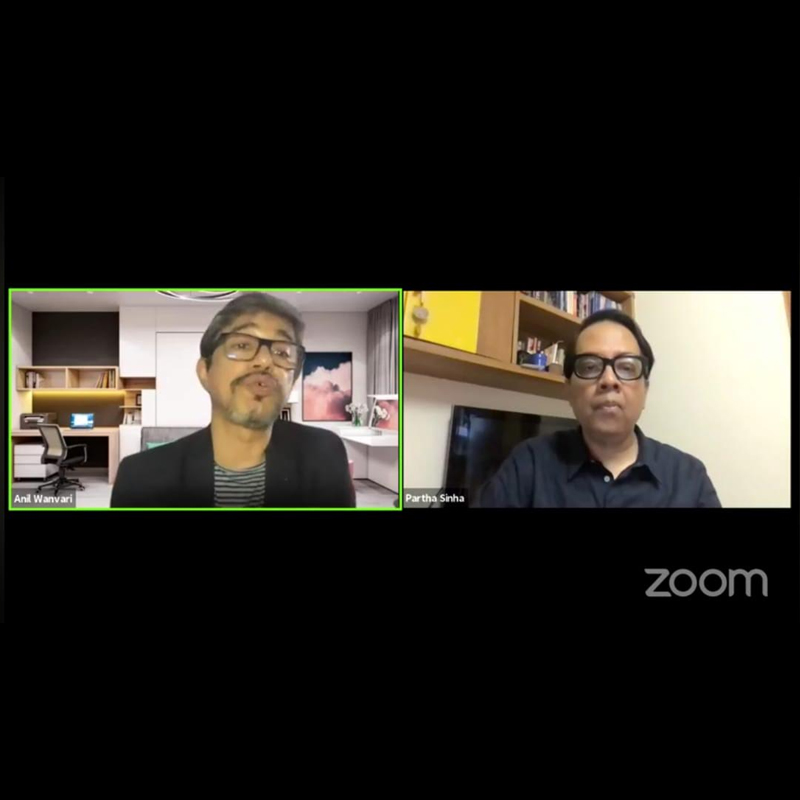
    However, as the world starts getting back to normal and a new world order sets in, the print industry is looking forward to a better tomorrow, lined up with new opportunities and relevancy, Bennet Coleman & Co Ltd (BCCL)  president–responses Partha Sinha shared in a virtual fireside chat with Indiantelevision.com founder, CEO, and editor-in-chief Anil Wanvari. On Monday evening, the duo sat across screens to discuss the impact of Covid2019 on print and the way ahead for the industry. 

    Sinha noted that the print industry has already reached a 70 per cent recovery in terms of the number of copies being delivered. “I think in some markets it has gone up to 90 per cent because, in the south or states like Kolkata, there was never a massive problem of circulation. Cities like Delhi, Mumbai, and a few more in the north were hit badly and I guess it has revived now, not just for us but for all the players.”

    He indicated that it is a good sign for the industry and debugs the myth that print will shut down. “For three to four months, our main concern was consumer demand that was severely impacted. But coming out of it so quickly is absolutely brilliant.”

    So, was it a knee-jerk reaction on the part of the industry to shut down some of the editions and let go of a number of employees, or as some of the unions say, an excuse, Wanvari questioned. 

    “I don’t think it was a knee-jerk reaction or an excuse. Even it was not for Covid2019 and something else would have happened, you would have got a consultant like McKinsey or BCG and asked them to optimise, right? This optimisation tells you if there is any cost reduction required and how can you improve profitability. Honestly speaking, as much as it's being talked about but it's quite a routine activity. Every organisation has optimised; when you find a new revenue opportunity, you hire people and if you find a revenue opportunity drying up, you optimise. I think this is a regular organization life cycle,” Sinha cleared the air. 

    So, what does the future of print seems like to him as digital and other mediums take centre stage? 

    Sinha insisted that there can’t be any substitute for the content that print generates and therefore the medium will stay here, but it might take just a slightly different role going ahead.  

    “I want to debug the myth that digital can replace or surpass print, or TV is a challenge to print. What is happening with both these mediums is that they are creating fragmented opinions, which lack credibility for the source and even for the brands. The news on television is so polarised, that it is sickening now. And obviously, if fake news becomes the business model, the credibility is hampered. Therefore, no amount of user-generated content or no amount of hair pulling on the camera will be able to substitute the credibility that print offers. Journalism will always remain about how deep you go, how sincere you are  and whether you are you're taking all the points of views,” Sinha elaborated. 

    He added that the role of print, going ahead, will move on from being a medium of discovery of product to being involved in its purchase by the customer too because of the credibility associated with the medium. He cited the instance of a real estate developer Casa Gold out of Chennai. It sold 120 apartments during the peak of Covid over four days. The Times of India Chennai response team managed everything from the webinar, to virtual expo, to get the potential buyers to take part in the virtual display of the advertisements to front page jackets of the physical newspapers.

    Sinha revealed that print media plays a big role in cultural marketing. "Cultural marketing works by creating truth and opinion and rallying people around the truth and opinion or finding emergent truth and opinion in society and making it bigger,” he explained. “Many branded efforts have almost become culture: Lead India, Teach India, Lead India led to Anna Hazare and the birth of AAP. Print can create a better narrative than any other medium. Another example is organ donation which has been driven by the Times of India.. The Times of India is the only way to create a culture with the affluent.

    “With so much fragmentation, there is a lack of credibility in the domain now. Due to fake news being so prevalent, print has started playing a significant role in building credibility and a path to purchase. The advantage of the printed word is it doesn't come with a picture. Therefore, you are forced to use your brain, you're forced to use your opinion. And that's how culture gets created. The beauty of culture creation is that eventually  brands will pay a premium to be closer to culture. Everything else is just a matter of discount because that's why the most popular method of advertising on the internet is programmatic led,” he shared. 

    He highlighted that cultural authority is the biggest asset a brand can ever own, because with that comes credibility. “These are the things that print media have to start thinking about, some like the New York Times has already done so,” he pointed out.

    Further, to help the brands gain the maximum out of the exposure and credibility that print offers Bennet and Coleman has come up with a pricing engine, which is based on artificial intelligence and machine learning. It can make an umpteen number of parameters and churn out a very specific notation for the time, helping the brands understand the right channels and the right strategy to advertise. “We are backing culture creation with data and analytics and have huge amount of data analysis,” he revealed.

    Sinha highlighted that all the assets of the Times of India group are brought into play while offering solutions to clients, whether its digital or TV or print or the social handles of these. “Thanks to the fact that we have all these assets, we can bring in 20 of our group assets or 30 of them,” he disclosed. “Let me also tell you we are open to look at assets outside the group to provide solutions to clients.”

    Times have indeed changed things at The Times. As many clients and marketers say, the change has happened for the better. 

  • Airtel-AWS partner to offer cloud services to M&E firms

    Airtel-AWS partner to offer cloud services to M&E firms

    MUMBAI: It’s hoping to take Indian companies further into the cloud. Telco Bharati Airtel has signed a multi-year, strategic collaborateon agreement with Amazon Web Services (AWS.) to deliver a comprehensive set of innovative cloud solutions to large enterprise and small and medium enterprise (SME) customers in India. The duo will offer industry-specific solutions to customers across different sectors including banking and financial services, manufacturing, IT/ITeS, and media and entertainment.

    Airtel serves over 2500 large enterprises and more than a million emerging businesses and companies with an integrated product portfolio, including Airtel Cloud, a multi-cloud product and solutions business.

    Airtel Cloud will build an AWS Cloud Practice supported by AWS Professional Services, as well as develop differentiated Airtel Cloud products and capabilities leveraging AWS services, Airtel’s data center capabilities and its network and telecom offerings. Airtel customers will benefit from an integrated sales, consulting, and support approach from both companies and improved security, scalability, and cloud management capabilities.

    Airtel Cloud will offer customers a range of AWS services including Windows on AWS, SAP on AWS, VMware Cloud on AWS, database migration, and security and risk governance solutions. In addition, it  will leverage AWS’s innovation and transformation services across analytics, data warehousing, internet of things (IoT), and machine learning (ML) to help customers adopt new services and migrate to the cloud from legacy infrastructures.

    “At Airtel, our endeavour is to enable enterprise customers to stay focused on their core businesses while we drive end-to-end digital transformation for them. As part of their cloud adoption journey, enterprises are looking for agility, faster migration from legacy systems, and want to work with trusted partners who have the experience and depth in doing this. This collaboration brings AWS, the world’s leading cloud platform, together with Airtel’s deep reach and proven expertise in handling network, data centers, security, and cloud as an intergrated solution,” said Bharti Airtel CIO & head-cloud and security business Harmeen Mehta.

    Additionally, Airtel leverages AWS services for development of its digital applications. Airtel is also an AWS Direct Connect Delivery Partner. AWS Direct Connect is a cloud service solution that makes it easy to establish a dedicated network connection from a customer’s premises to AWS, providing customers with increased bandwidth throughput, consistent network performance, and private connectivity.

    “I am delighted with the expansion of our relationship with Airtel. Indian companies are using the cloud to innovate, and in order to operate at an increased scale and speed. Many need partners like irtel, with deep cloud expertise and an industry-focused approach to support them,” said Amazon Internet Services president commercial business, India & south Asia Puneet Chandok. “This collaboration gives customers a single point of contact when dealing with complex migrations or custom-built solutions. Airtel has demonstrated a strong commitment to our shared customers, and we look forward to continue working with them to bring innovative solutions to market.”

  • Media HR Summit deep dives into emerging trends, work culture & HR tech

    Media HR Summit deep dives into emerging trends, work culture & HR tech

    MUMBAI: Indiantelevision.com hosted the first-ever Media HR Summit in partnership with ZEE in Mumbai on 26 June at The Westin. The day-long conference concluded with some insightful discussions around how corporate and HR leaders are steering media companies into the future on the back of good teams, HR analytics, diversity and inclusivity at the workplace.

    The conference was divided into four sessions, three fireside chats and three presentations related to work culture, emerging trends in HR, employee engagement models, future-focused people strategies, changing nature of employment amid the rapid changes in the media and entertainment industry.

    Indiantelevision.com founder, CEO and editor-in-chief Anil Wanvari set the tone for the day with his welcome note. He argued that the media and entertainment industry has never been full of so many opportunities. At the same time, he added that it is facing challenges in terms of talent acquisition and retention. Wanvari pointed out that the human resources department has never been given the due it deserves, highlighting the key reason behind the summit.

    Following the welcome address, Indiantelevision.com CEO moderated a session titled “Responding to megatrends”. MullenLowe Lintas group HR director Heather Saville Gupta, Reliance Entertainment’s Big Synergy CEO Rajiv Bakshi, Madison World executive director Lara Balsara Vajifdar, Reliance Broadcast Network Ltd CEO Abraham Thomas participated in the panel discussion.

    During the hour-long panel discussion, the point about the media industry getting younger emerged as a key theme. All the panellists agreed that companies need personalised communication for millennial employees. However, as older generations also work at these companies, making a value proposition for all the age groups was deduced as a challenge. Moreover, speakers stated that. with the rapid change, HR has moved beyond a soft skill or a backend process. On the other hand, digital transformation is also affecting the sector and data is becoming more important day by day.

    The next item on the agenda was a fireside between Shemaroo Entertainment Ltd director Jai Maroo and Wanvari. Shemaroo has been an excellent example of evolving over the years with new entrepreneurial ideas. While the company is going through a rigorous change, Maroo mentioned key winning traits every company needs to follow – putting people first including employee, vendor, clients; the ability to reinvent when needed; seeing where the company is standing at the ecosystem, value chain. While it has unleashed a 5x transformation plan, getting the HR team aligned with that is a key challenge.

    That was followed by another interesting fireside chat between Discovery Communications India South Asia managing director Megha Tata and Wanvari. Tata who has been one of the few women leaders in the media and entertainment industry outlined the reasons as to why women find it hard to shatter the glass ceiling. She noted that the ecosystem may not have been supportive of women who are rising through the ranks. The veteran media executive added that women also give up halfway through their journey due to various reasons.

    Moderated by KPMG India people and change associate director Ajay Venkatesh, the next session revolved around a very compelling topic – building a great team. ABC Consultants FMCG, Internet, Media, and Development Sector director Deepika Ramani, Balaji Telefilms Ltd group head HR Ashish Pinto, Jagran Group head HR Sagorika Kantharia, VATS Consulting founder Vikas Vats, and Saregama India Ltd general manager HR Sonalika Johri took part in the discussion.

    The speakers articulated how different strokes should be used for different folks while hiring. All the experts also agreed that agility and an analytical bent are having a big impact on business. However, companies also need to look at how they use the analytics, the panel said. While digital transformation is already happening, cross-scaling talent is also important, concluded by the speakers.

    The conference further continued with a presentation by Publicis head HR Nikhil Natekar on “Future focused people strategies”. He spoke about cultural evolution, diversity inclusion, skill-based hiring and growth path for Gen Y who are going to be future leaders. He then sat down for a chat with She means Business content creator and workshop facilitator Dipika Singh.

    VATS Consulting’s Vikas Vats presented his thoughts on 'Future of Indian HR in the Digital Age'. He highlighted that there are times when HRs need to work like CEOs. He also added that while using technology is important, focusing on people is more important.

    The events of the day progressed with the session “Tackling the tech leap” moderated by HR Sampark founder and national president Ashish Banka. Reinova Biz director HR Shubham Tripathi, Dentsu Aegis Network South Asia head HR business partner Sunil Seth, Associate Professor at Department of Applied Psychology, University of Mumbai Vivek Belhekar, Consultant Analytics Rajesh Save participated in the panel. The panelists agreed that adopting and adapting technologies is very important. While HR was late to join the party of analytics, now both AI and ML have emerged as key requirements for the HR industry too. AI is now taking an active role in both hiring and firing. Belhekar and Save then gave a presentation on Artificial Intelligence in Human Resources.

    The day ended with a compelling session on “Diversity, equity, and inclusion”. Part of the panel were Voices of Inclusion author Deepa Shankar, Mondelez International diversity and inclusion lead (independent consultant) Priyadarshini Gupta, NeoSeven Solutions global HR expert Monika Navandar, with D&I evangelist and founder and MD–Vividhataa, diversity hiring consultants Ratanprabha Sable moderating the session. While diversity is not a big issue in the media industry, inclusion is a big piece that is being worked around, the speakers said. The experts agreed that the media industry needs to be inclusive at little things. Moreover, the industry should also look at creating job opportunities for disabled people, acid attack victims, and mental health patients was an important point that was voiced during the session that kept the audience hooked on till the very end.

  • Has advertising finally begun to embrace AI?

    Has advertising finally begun to embrace AI?

    MUMBAI: Artificial intelligence (AI), a tool that uses logic to mimic the human brain, has been the buzzword in the advertising industry for quite some time now. 

    AI was founded as an academic discipline in the year 1956, and in the years since, the technology has experienced several waves of optimism, followed by disappointment and the loss of funding (known as an AI winter), thereafter by new approaches and success.

    People often tend to use the term AI interchangeably with machine learning (ML), but they are completely different tools. While AI is the broad concept of teaching machines with data to do things in an efficient way, ML is the technique of using algorithms to process data, learn from insights and make predictions that train AI. As Wunderman AI’s global leader Robbee Minicola rightly says, “You can have machine learning without AI, but you can’t have AI without machine learning.”

    With the implementation of AI in advertising and marketing, brands can discover the price at which networks are willing to pay for an impression and identify the optimum times of data to serve an ad for target consumers.

    public://IKEA.jpg

    AI’s potential for improving campaign effectiveness is only just being unearthed with a limited understanding of impact. AI-driven elements like image and voice recognition on smartphones, algorithm-based viewing suggestions for Netflix and Google’s real language analysis in search are now gaining mainstream status. It is believed that AI will soon become indispensable in advertising. 

    The concept of ‘technological singularity’, in which machines become better at developing themselves, is a reality but human intervention will always be required. Isobar executive vice president Gopa Kumar doesn’t believe in giving everything to automation and AI as it is an indispensable part of the future media ecosystem.

    According to Adobe’s 2018 Digital Trends report, top-performing companies globally are more than twice as likely to be using AI for marketing (28 per cent vs 12 per cent). The report also found that less than one in five global respondents said their companies are pushing forward with AI and nearly half of respondents said their organisation has inconsistent integration between technologies.

    Although advanced and matured markets like the US, UK, China and Japan have been early adopters of the technology, India is catching up at a fast pace because of its risk-taking ability. Programmatic platforms and advertising are the first kind of AI intervention in advertising and is increasingly becoming more and more pervasive. 

    It is still early days for AI in India as compared to the western world in understanding and implanting these technologies. Havas Media Group India MD Mohit Joshi believes that the adoption of technologies is already happening, however, reaching the US level of adoption will require the clients to be equally convinced and more importantly give them some ‘use case’ success stories. 

    Programmatic advertising will contribute to more than 60 per cent of advertising in the next two years in India which is the currently world average.

    Isobar India EVP Gopa Kumar thinks that AI in India is still at a very nascent stage and in media it is just being initiated. He adds that though it will take a while to be the prime choice, but once it does, its adoption will be widespread and then the usage of AI in advertising will be across platforms and mediums. 

    In India, sectors like BFSI, e-commerce and FMCG have been able to make the most of artificial intelligence, big data analysis and machine learning to have better connect with consumers and enhanced consumer experience. But there’s a lot to learn from the daddies like IKEA and Alibaba.

    public://alss.jpg

    Since AI is an expensive tool and hiring an agency for it is often expensive, advertisers today are looking at building their own in-house AI capacities. With benefits including improved consumer engagement through personalisation, leaner marketing operations and cost savings on ad serving, the return on investment (RoI) prospects are rather appealing for advertisers. What it does require is a heavy initial investment in hardware and software for data collection and processing and acquiring the right talent.

    Dentsu Aegis Network chief data officer Gautam Mehra admits that AI is not a magic sauce and it will not change the brand’s RoI overnight and clients (brands) need to understand their business challenges before they plan on investing in these technologies. “The primary challenge for any advertiser is how do you know which data to go after and how do you bring that data into your warehouse (cloud or physical) and maintain that data warehouse to give data insights. Brands need to trust data and have a data driven culture in the organisation,” he adds. 

    Not all advertisers may understand the technicality of AI and the automation of basic data processes and the implementation of integrated analytics. This is precisely where advertising agencies can help their clients, both as trusted advisers and execution partners.

    The lack of good media infrastructure is a barrier to better implementation of AI in India. Our challenge is how do we make AI actionable because our other mediums are not evolved enough and we don’t have programmatic OOH or digital OOH except at airports. Mehra asks how do we bring about a real time change in media when our media itself is not programmatic? While India’s radio is still terrestrial, a majority of set-top boxes for television are not trackable and, therefore, there is reliance on BARC data. 

    India is still a data-starved market and AI works only on data. Joshi concludes that the biggest challenge for India will be getting the right talent, as we need great data scientists and the best of them ignore the media space.

    While India is on its way to becoming AI-ready, some major players including Vodafone, Myntra, Flipkart, HSBC Bank and SBI Bank have started putting in the effort to adopt the technology.

    Also Read :

    The Glitch to leverage GroupM data to reach rural India

    2017 – The year of long-format ads

    How iProspect’s Vivek Bhargava foresaw a digital future two decades ago

    Talent retention is key, says Mindshare’s Prasanth Kumar