Tag: Mizoram

  • Battle for the States

    Battle for the States

    MUMBAI: As the 5 states of Delhi, Madhya Pradesh, Chhattisgarh, Rajasthan and Mizoram go to elections in November-December, CNN-IBN & IBN7, in partnership with THE WEEK, bring to you the most incisive and definitive pre-election survey in these states, conducted by the Centre for the Study of Developing Societies (CSDS).

    Amidst the tough multi-party competition and hectic campaigning in these states, the survey will give the viewers a head start on the likely outcome of the Assembly elections; delving into seat projections, sensing the mood of the voters in key constituencies and discussing the biggest factors and issues that are going to impact the results.

    With a formidable team of journalists, joined by the best political experts in the country, the survey aims to give its viewers the sharpest and most precise analysis of the elections.
    Rajdeep Sardesai, Editor-in-Chief, CNN-IBN, IBN7 and IBN-Lokmat, said, “The pre-poll study is an attempt to sense the mood of the voters and determine how this will impact the overall constitution of the respective State Assemblies. Once again, we are pleased to partner with THE WEEK in this endeavour.”

    Ashutosh, Managing Editor, IBN7 said, “In the run-up to the State Assembly elections, this pre-poll study is an initiative to reach out to voters, understand their issues and how their decision will impact the electoral outcomes in these 5 key poll-bound states.”

    Philip Mathew, Managing Editor, THE WEEK, said, “We are glad to partner with CNN-IBN & IBN7 in conducting this pre-poll survey. As usual, it is our endeavour to give our readers the most thorough insights into the current political and social scenarios in the poll-bound states.”
    To know the findings of this study, tune into ‘Election Tracker’ on CNN-IBN and ‘Mera Vote Meri Sarkar – Agar Abhi Chunav Hon Toh’ on IBN7, from Mon, Oct 28 to Thu, Oct 31 at 8pm.

    You can also read the detailed results and analysis of the survey in the issue of THE WEEK, hitting stands on Nov 1, 2013.

  • Election Commission to allot time to five state assemblies for poll broadcast on DD, AIR

    Election Commission to allot time to five state assemblies for poll broadcast on DD, AIR

    NEW DELHI: All India Radio and Doordarshan, which provides a platform to political parties for their poll broadcasts before election, will also organise panel discussions or debates at the Kendras/Stations for the forthcoming elections, for the state assemblies of Rajasthan, Madhya Pradesh, Chhattisgarh, Mizoram and the National Capital Territory of Delhi.


    The eligible party can nominate one representative for this programme, but only the Election Commission of India will approve the names of coordinators for the panel discussion and debates in consultation with the Prasar Bharati Corporation.


    The Commission, in the previous years, has worked out a schedule to provide different time slots for poll broadcasts to different parties.


    Only the ‘national parties’ and ‘recognised state parties’ will be eligible to avail the facility of the broadcast and telecast time.


    A base time of 45 minutes will be given to each party uniformly on the Regional Kendras  of  Doordarshan network and All India Radio network in the States/UT of Rajasthan, Madhya Pradesh, Chhattisgarh, Mizoram and NCT of Delhi. The additional time to be allotted to the parties has been decided on the basis of the poll performance of the parties in the last assembly election. The facilities will be available at the Regional Kendra of the All India Radio and Doordarshan in the states and then will be relayed by other stations within the states.


    In a single session of broadcast, no party will be allotted more than 15 minutes.


    The period of broadcast and telecast will be between the last days of filing the nominations and will end two days prior to the date of the poll. However, there will be no telecast or broadcast during the 48 hours before the polls close, as per specific provisions of the Representation of People Act, 1951.


    Prasar Bharati, in consultation with the Commission, will decide the actual date and time for broadcast and telecast. This will be subject to the broad technical constraints governing the actual time of transmission available with the Doordarshan and All India Radio.


    The guidelines prescribed by the Commission for telecast and broadcast will be strictly followed. The parties will be required to submit transcripts and recording in advance. The parties can get this recorded at their own cost in studios that meets the technical standards prescribed by Prasar Bharati, or at the Doordarshan/All India Radio Kendras.


    Alternatively, they can have these recorded in the studios of Doordarshan and All India Radio by advance requests. In such cases, the recordings may be done at the State Capital and at timings indicated by Doordarshan/All India Radio.


    Time Vouchers will be available in the denomination of five minutes with one voucher having time allotment from one to four minutes. The parties will be free to combine them suitably.


    Introduced for the first time for the Lok Sabha elections in 1998, the scheme of free broadcasts was extended by the Commission to the State Assemblies held after 1998 and General Elections to the Lok Sabha in 1999, 2004 and 2009.


    With the amendments in the Representation of People Act 1951, “Election and Other Related Laws (Amendment) Act, 2003”, and the rules notified in that, equitable time sharing for campaigning by recognised political parties on electronic media now has statutory basis.


    In exercise of the powers conferred by clause (a) of the Explanation below section 39A of the Representation of People Act, 1951, the Central Government has notified all such broadcasting media that are owned or controlled or financed wholly or substantially by funds provided to them by the Central Government, as the electronic media for the purposes of that section. Therefore, the Commission has decided to extend the said scheme of equitable time sharing on electronic media through Prasar Bharati Corporation to the ensuing General Elections to the State Legislative Assemblies.

  • Election Commission mandates poll-related behaviour of media before state polls

    Election Commission mandates poll-related behaviour of media before state polls

    NEW DELHI: With elections to five states on the anvil, the Election Commission has prohibited conduct of Exit polls and dissemination of their results in the hour fixed for commencement of polls in the first phase and half hour after the time fixed for close of poll for the last phase in all the States, as also stated in Section 126A of the Representation of Peoples Act 1951.


    The Commission has clarified that there have been violations in the past of Section 126 of the Act which prohibits displaying any election matter by means of television or similar apparatus, during the period of 48 hours ending with the hour fixed for conclusion of poll in a constituency. There are allegations sometimes during elections of violation of the provisions of the above Section 126 by TV channels in the telecast of their panel discussions/debates and other news and current affairs programmes.


    “Election matter” has been defined in that Section as any matter intended or calculated to influence or affect the result of an election. Violation of the aforesaid provisions of Section 126 is punishable with imprisonment upto a period of two years, or with fine or both.


    Elections in November and December are being held for Chhattisgarh, Madhya Pradesh, Mizoram, Rajasthan, and Delhi.


    A mechanism has been laid out with three-tier Media certification and Monitoring Committees (MCMC) at District, State and Election Commission level to deal with the menace of paid news, it said. Revised comprehensive instruction on ‘Paid News’ has been issued on 27 August 2012 and is available on the Commission’s Website. Necessary instructions have been issued to the CEOs of the poll going states to ensure briefing of political parties and Media in the districts about ‘Paid News’ and the mechanism to check ‘Paid News’. Representatives of Political Parties and Media Organizations of poll going states have also been briefed at Election Commission. The MCMCs of all states have been trained to do their job.


    The Commission has reiterated that the TV/Radio channels and cable networks should ensure that the contents of the programme telecast/broadcast/displayed by them during the period of 48 hours referred to in Section 126 do not contain any material, including views/appeals by panelists/participants that may be construed as promoting/prejudicing the prospect of any particular party or candidate(s) or influencing/affecting the result of the election.


    During the period not covered by Section 126 or Section 126A, concerned TV/Radio/Cable/FM channels are free to approach the state/district/local authorities for necessary permission for conducting any broadcast related events which must also conform to the provisions of the model code of conduct and the programme code laid down by the Information and Broadcasting Ministry under the Cable TV Networks (Regulation) Act 1995 with regard to decency, maintenance of communal harmony, etc.


    The Commission said they are also required to stay within the provisions of Commission’s guidelines dated 27th August, 2012 regarding paid news and related matters. Concerned Chief Electoral Officer/District Election Officer will take into account all relevant aspects including the law and order situation while extending such permission.


    It drew attention of the media to guidelines issued by Press Council of India to follow for observance during the election:


    (i) It will be the duty of the Press to give objective reports about elections and the candidates. The newspapers are not expected to indulge in unhealthy election campaigns, exaggerated reports about any candidate/party or incident during the elections. In practice, two or three closely contesting candidates attract all the media attention. While reporting on the actual campaign, a newspaper may not leave out any important point raised by a candidate and make an attack on his or her opponent.


    (ii) Election campaign along communal or caste lines is banned under the election rules. Hence, the Press should eschew reports, which tend to promote feelings of enmity or hatred between people on the ground of religion, race, caste, community or language.


    (iii) The Press should refrain from publishing false or critical statements in regard to the personal character and conduct of any candidate or in relation to the candidature or withdrawal of any candidate or his candidature, to prejudice the prospects of that candidate in the elections. The Press shall not publish unverified allegations against any candidate/party.


    (iv) The Press shall not accept any kind of inducement, financial or otherwise, to project a candidate/party. It shall not accept hospitality or other facilities offered to them by or on behalf of any candidate/party.


    (v) The Press is not expected to indulge in canvassing of a particular candidate/party. If it does, it shall allow the right of reply to the other candidate/party.


    (vi) The Press shall not accept/publish any advertisement at the cost of public exchequer regarding achievements of a party/government in power.
    (vii) The Press shall observe all the directions/orders/instructions of the Election Commission/Returning Officers or Chief Electoral Officer issued from time to time.
  • DD on studio upgradation drive

    DD on studio upgradation drive

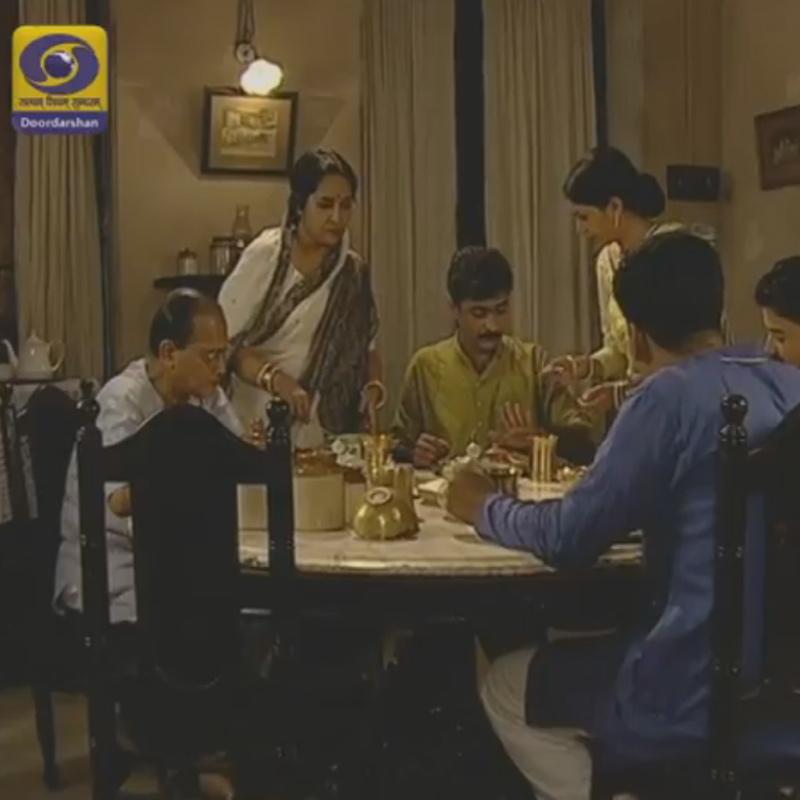
    New Delhi: A total of 39 studio centres in the country have been taken up for full digitization as part of the ongoing scheme of digitization of Doordarshan’s Network, Parliament has been informed.

    State of the art digital equipment would therefore be made available at the studio centres in the north east states on a par with other similar studio centres in the country.

    Of these 39, eleven are in the north east states: three in Assam, two in Meghalaya, and one each in Arunachal Pradesh, Manipur, Mizoram, Nagaland, Sikkim and Tripura. The others are: five in Uttar Pradesh; two each in Chhatisgarh, Jharkhand, Madhya Pradesh, Maharashtra, Odisha, and West Bengal; and one each in Andhra Pradesh, Bihar, Goa, Gujarat, Himachal Pradesh, Jammu and Kashmir, Karnataka, Kerala, Andaman and Nicobar Islands, Chandigarh and Puducherry.

    Five Digital Satellite News Gathering Units (DSNG) have also been provided at Guwahati to cater to the coverage requirements of north east states. DSNG Units are deployed at different places in north east states as per coverage requirements. As part of the ongoing schemes, four additional DSNG Units for North East States are envisaged to be procured.

    Meanwhile, Prasar Bharati sources said upgradation/modernization which includes induction of new technologies, replacement of old aging equipment and augmentation/upgradation facilities of all Doordarshan Kendras including those located in north-east region is a continuous process and schemes in this regard are formulated and implemented from time to time.

    The sources said that for the north east region there is a dedicated 24×7 North East Channel, besides Kendras in North East like DDK Guwahati, DDK Aizwal, DDK Gangtok, DDK Tura, DDK Shillong , DDK Silchar, DDK Dibrugarh, DDK Itanagar, DDK Agartala, DDK Kohima and DDK Imphal which telecast programmes in their respective regional languages.

  • Animal Planet looks at Bamboo Flowers

    Animal Planet looks at Bamboo Flowers

    MUMBAI: Animal Planet will air the show When The Bamboo Flowers. Normally a vital and versatile plant for villagers in northeast India, bamboo sets off cycles of famine and plague once every 48 years – a rare, yet ruinous occurrence for the local human population.

    For rats, however, it’s a feast for the ages – a colossal feeding that has beset the region for centuries leaving thousands of ravenous rats and widespread human deprivation in its wake. The show airs on 12 November at 9 pm and on 15 November at 8 pm

    The show brings Animal Planet viewers to Mizoram, a rugged hill state in northeast India. It has been 48 years since the bamboo last flowered and villagers are anxiously preparing for the impending invasion. The strange phenomenon of the flowering of the bamboo is unique to northeast India, which is home to vast plantations of the tree-like plant.

    After the massive cyclical flowering, the bamboo plants produce large amounts of seeds – a good food source for rats, which quadruple their reproduction rate while feeding. The explosion of the rat population results in quick exhaustion of the seeds, leading thousands of rodents to turn to standing crops of the agricultural villages. The result is a widespread famine and, more often than not, plague.

    Back in 1958, famine led to nearly two decades of insurgency in the region and tens of thousands of people perished. Now, in 2006, the bamboo is flowering again and Animal Planet visits the villagers as they prepare for inevitable catastrophe, hoping this time that the outcome is different.