Tag: MIT

  • Lodha hires a design-minded property boss

    Lodha hires a design-minded property boss

    MUMBAI: Lodha group has hired Anubhav Gupta as chief executive of its retail business. The appointment, which took effect in September, brings a property veteran with an unusual pedigree: Gupta is as comfortable talking sustainability metrics as he is flogging luxury flats.

    Gupta spent a decade at Godrej Properties, where he rose to run the Vikhroli project, the company’s flagship mixed-use development in Mumbai. At his peak, he was responsible for just under half of Godrej Properties’ profit after tax—a hefty chunk for one executive to carry. He also wore multiple hats as chief sustainability officer and founder of the company’s in-house design studio, which churned out award-winning products across 170m square feet of real estate in 12 cities.

    Before Lodha, Gupta spent 16 months as chief operating officer at DLF, heading the property giant’s ultra-luxury business. His earlier career reads like a global tour: he taught urban design at MIT and the Wentworth Institute of Technology in Boston, worked as an urban planner for the Chicago Transit Authority, and held senior roles at architectural practices RTKL and RMJM in London and Hong Kong.

    Gupta is a fellow of the Royal Institution of Chartered Surveyors and was named among Asia’s 40 leading designers under 40 by Perspective Global. His work at Godrej earned plaudits for blending design thinking with agile innovation, a buzzword-heavy approach that nonetheless delivered results.

    At Lodha, his brief is to oversee the developer’s retail operations—a natural extension for a man who built his reputation on mixed-use projects. Whether he can replicate his Godrej success in a new setting remains to be seen. But Lodha is clearly betting that a design-savvy executive with a track record in profitability is worth the gamble.

  • Smart city initiatives in APAC to improve quality of life: DAN & MIT

    Smart city initiatives in APAC to improve quality of life: DAN & MIT

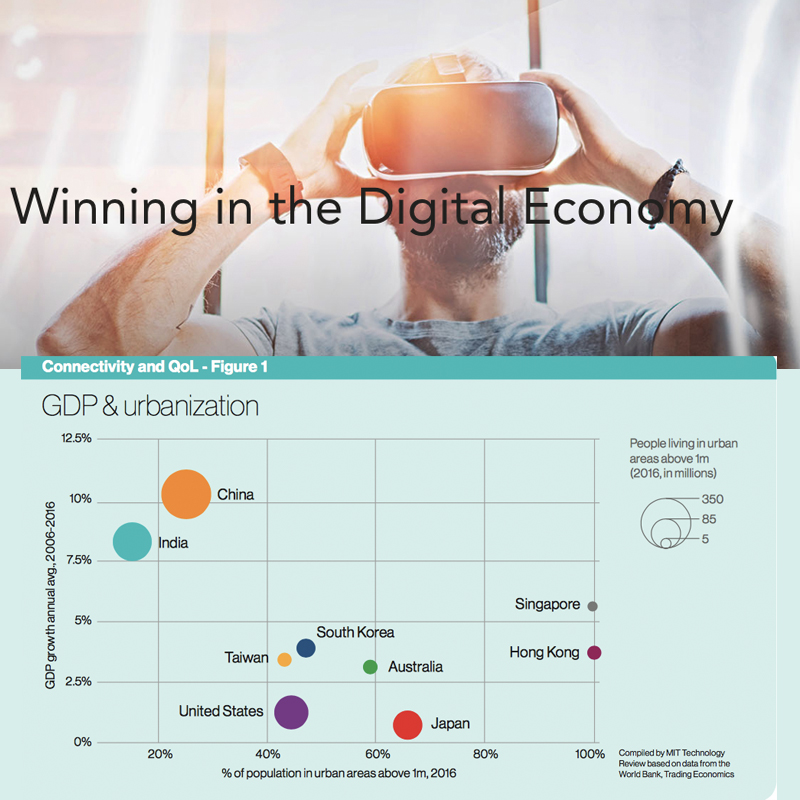
    MUMBAI: Dentsu Aegis Network has launched a new white paper examining the progress of Asia Pacific’s smart cities, including local deep-dives into eight key markets in the region. In its third year, this series on Asia Pacific’s digital disruption aims to deliver thought leadership to arm Dentsu Aegis Network and its agency brands’ clients and partners with the insight they need to succeed in the digital economy.

    In collaboration with MIT Technology Review, the report argues that increasingly, smart city initiatives in Asia Pacific are being developed and driven to improve quality of life for the region’s citizens and consumers, to manage cities’ growth sustainably, and to maintain their global competitiveness.

    The paper titled “Connectivity and QoL : How digital consumer habits and ubiquitous technology are driving smart city development in Asia Pacific” – consolidates extensive in-market research and nearly two-dozen in-depth interviews with key industry players from India, Singapore, Hong Kong, China, Taiwan, South Korea, Japan, and Australia.

    Dentsu Aegis Network Asia Pacific CEO Nick Waters said, “Asia Pacific has enjoyed robust economic expansion in recent years, with cities at the heart of this growth. With development comes challenges, but cities in the region are transforming these challenges into opportunities with the help of technology and innovation. Smart cities in Asia Pacific are quickly becoming pilot markets for the digital economy.

    “The white paper helps us understand what drives the development of smart cities in Asia Pacific, how businesses can leverage them to develop digital economy solutions and how we can contribute to make these cities more viable, livable and sustainable,” Nick added.

     The report found two key factors that distinguish Asia Pacific’s smart city efforts from other regions around the globe. Governments and businesses are more willing to invest in experimental models that exploit new technologies, business models, and urban planning design. For example, the development of new ‘greenfield’ smart cities from scratch such as South Korea’s Songdo International Business District, Japan’s Fujisawa Sustainable Smart Town, Hong Kong’s Smart City @ Kowloon East, and others.

    Asia Pacific also has a unique approach in its efforts to engage private sector players in developing smart cities. More collaboration has emerged between the government and the region’s leading technology firms – China’s Alibaba, India’s Reliance Communications, Japan’s Panasonic, and others – to deliver smart city projects.

    MIT Technology Review CEO and Publisher Elizabeth Bramson-Boudreau explains, “While no two Asia Pacific markets have the exact same mix of smart city strategies or assets, we have found that nearly all such projects attempt to use smart cities to serve two goals simultaneously: address immediate infrastructure or service delivery challenges while ‘future-proofing’ their economies against threats looming on the horizon.”

    The paper also outlines six common themes of Asia Pacific’s successful smart city initiatives, including: leveraging cloud technology; creating ‘open’ and accessible ecosystems, and through this harnessing the power of startup ecosystems; consumer-driven application development; mixing ‘greenfield’ and ‘brownfield’ smart city experiments; IoT and sensor-based platforms; and cashless economies.

    Dentsu Aegis Network chairman and CEO South Asia Ashish Bhasin said, “India is currently moving towards massive urbanisation. Consequently, its need for building smart cities is immediate when compared to many other countries. Home to one of the most populated and diverse demographics in the world, India witnesses the migration of 20-30 people every minute from rural regions to urban cities. Yes, India is a complex country and therefore, its infrastructural challenges are huge but so are the opportunities. We have a large consumer base, we are well-connected and mobile-enabled. And these elements will act as huge enablers to create our smart cities and introduce economic transformation.”

  • WPP, AwesomenessTV & Verizon invest in Hispanic digital network Mitu

    WPP, AwesomenessTV & Verizon invest in Hispanic digital network Mitu

    MUMBAI: Mitú – an online Hispanic-focused digital content creator and media company catering to young Latino audiences in the US and Latin America – has raised a sum of $27 million from WPP Digital, DreamWorks Animation’s AwesomenessTV and Verizon Ventures in a round of Series C funding.


    With this the company’s total funding till date is now $43 million. The company’s existing investor Upfront Ventures also participated in this fresh round. 


    Mitú’s clients include America Movil, Kia, MillerCoors, NBCUniversal and Procter & Gamble. Mitú was founded in 2012 and is based in Santa Monica with offices in Mexico and Colombia. It employs around 120 people.


    Mitú creates and distributes original content as well as producing branded entertainment on behalf of its clients. Mitú’s technology enables it to efficiently analyze its Latino audience’s consumption of content across social media, thus providing it with a feedback loop for the company to continually create viral content. Mitú has over two billion global monthly views across all platforms in the US, as well as Mexico, Brazil and other Latin American countries.


    WPP Digital’s minority interest acquisition in Mitú, continues WPP’s strategy of investing in regions and sectors such as digital.


    Mitú founder and CEO Roy Burstin said, “Latinos represent 24 per cent of millennials in the US. That’s why we think of this demo not as a niche but as a part of the mainstream. Mitú’s content brings a distinct point of view that appeals broadly to young, mobile audiences. Brands want to reach these young consumers but accessing them through traditional channels has proved elusive. Mitú has reach where others have struggled.”


    WPP chief digital officer Scott Spirit added, “This investment fits perfectly with WPP’s strategy of investing in digital, content and fast-growth markets, such as countries in Latin America, and demographics, such as US Hispanic youth. Clients are trying to reach audiences where they organically spend their time. With young audiences, you need to reach them online and this investment in Mitú is a great vehicle for clients of WPP companies to accomplish that.”