Tag: Misleading Ads

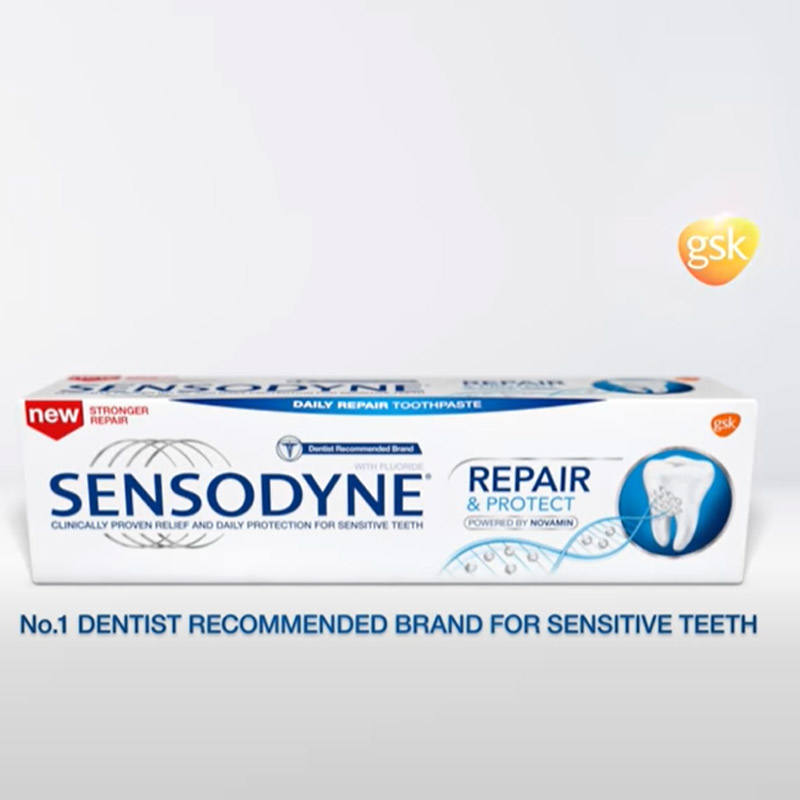
  • Sensodyne slammed by CCPA for misleading ads, fined Rs 10 lakh

    Sensodyne slammed by CCPA for misleading ads, fined Rs 10 lakh

    Mumbai: The Central Consumer Protection Authority (CCPA) has taken umbrage at GlaxoSmithKline-owned toothpaste brand Sensodyne for misleading advertisement. The consumer protection body has ordered discontinuation of these advertisements within seven days, according to an official statement.

    Additionally, the association imposed a penalty of Rs 10 lakh on Sensodyne’s manufacturer. The CCPA said the company did not produce any cogent study or material to substantiate claims made in the advertisements or indicate any worldwide prominence of Sensodyne products.

    After examination of the response submitted by the company, CCPA observed that the two market surveys submitted by the company in support of its claims ‘Recommended by dentists worldwide’ and ‘World’s No 1 sensitivity toothpaste’ made in the advertisements were conducted only with dentists in India.

    “No cogent study or material were submitted by the company to substantiate the claims made in the advertisements or indicate any worldwide prominence of Sensodyne products. Thus, the claims were observed to be bereft of any reason or justification,” the statement said.

    The central body initiated suo-moto action against the advertisements, running on various social media platforms and television, that showed dentists practising outside India (in the UK) endorsing the use of Sensodyne products — namely Sensodyne Rapid Relief and Sensodyne Fresh Gel — for protection against teeth sensitivity.

    Earlier on 9 February, the Authority had also directed GlaxoSmithKline (GSK) Consumer Healthcare to discontinue advertisement of Sensodyne products, which show endorsement by foreign dentists.

  • ASCI unveils paid service to help endorsers evade misleading claims in ads

    ASCI unveils paid service to help endorsers evade misleading claims in ads

    Mumbai: Brand endorsers can now avail of paid advisory service from the Advertising Standards Council of India (ASCI) to avoid making misleading claims in advertisements, the self-regulatory body of the advertising industry announced. ASCI has launched the ‘Endorser Due Diligence’ service in order to help endorsers follow the ASCI code and abide by the rules laid down in the Consumer Protection Act (2019), which places an obligation on them to undertake due diligence for advertisements they appear in.

    “Endorsers, particularly celebrities, have a huge fan following and they enjoy the trust of millions of consumers,” said ASCI chairman Subhash Kamath. “There is, therefore, a direct moral and now, legal responsibility that they bear to ensure that they do not make representations in ads that could be considered misleading. ASCI has always required celebrities to be mindful of what they endorse in advertisements, and now the law too requires them to do due diligence in this regard.”

    The service will offer ASCI’s expertise in advertising assessment, including technical claims that are part of the advertisement, for an added fee. ASCI has established a panel of experts, from over 20 disciplines, ranging from advertising regulation and legal, ayurveda, microbiology, electronics, market research, nutrition, dentistry, product formulations, financial services, and so on. The panel will assess the representations, statements, and claims in the advertisement from a consumer and technical perspective, examine the evidence in support of the claim where necessary, and thereby help the endorser conduct their due diligence.

    The advertisements can be sent to ASCI at any stage, including pre-production. This ensures that the endorser can do their independent due diligence before the advertisement is produced, said the statement.

    The Consumer Protection Act, 2019 provides for the imposition of fines or even prohibiting the endorser of a false or misleading advertisement from making an endorsement of any product or service for a period, which may extend to one year. However, the act also provides for a waiver of such penalties or suspension if the endorsers have exercised due diligence to verify the claims made in any advertisement endorsed by them.

    “Endorsers may not always be experts when it comes to the products they push and the claims they make,” said ASCI secretary-general Manisha Kapoor. “The law makes endorsers liable for the advertisements they appear in, hence Endorser Due Diligence becomes a critical need. ASCI’s service that is speedy, confidential, and based on the assessment of a multi-disciplinary panel can help endorsers do their due diligence in a timely and comprehensive manner, ensuring that consumers are not misled and that the endorser too, fulfills their legal obligations.”

    Around 50 per cent of endorsements in India feature celebrities compared to around 20 per cent in the US, according to Duff & Phelps’ ‘Celebrity Brand Valuation Report.’ The same report puts the overall brand value of the top 20 endorsers of 2020 in India at an estimated $1 billion. The TAM AdEx report on celebrity endorsement says that overall, more than 25 per cent of advertisements telecast on TV in 2021 were endorsed by celebrities, of these more than 85 per cent were endorsed by film stars.

    Similar to the Advertising Advice service offered by ASCI, Endorser Due Diligence will be confidential and non-binding and will be issued in the name of the endorser, the organisation said. 

  • ASCI cracks down on false claims in education ads

    ASCI cracks down on false claims in education ads

    MUMBAI: The Advertising Standards Council of India (ASCI) has cracked down on advertisements from the education sector which made misleading and false claims. During August and September, the regulatory body noticed a sharp rise in advertisements fielded by educational institutes which tried to pass off fake claims and upheld complaints against 101 such ads.   

    Claims such as top of their field, ranking no.1, 100 per cent job placements, best institute, 100 per cent passing rate, were the most used red flag terms that violated ASCI’s code. One online learning app claimed to be the best and pioneer of live online classes. Many educational institutions didn’t have substantial data and surveys to support the claims they were making and the Consumer Complaints Council (CCC) of ASCI recommended that these advertisements be declared misleading.

    In the health sector, with advertisers are trying to leverage consumers’ fears and insecurities amid the Covid2019 pandemic, ASCI cracked the whip on 59 ads which falsely claimed to cure or prevent the infection. Working together and synergizing efforts with the ministry of AYUSH, ASCI has constantly been working towards eliminating such false claims for consumer protection.

    The self-regulatory body also looked into non-healthcare advertisements, wherein a company contended that their paint protected home owners from germs, a clothing company claimed to kill 99 per cent germs, while another professed their fabric was anti-Corona. There was even an instance of a sweet confectioner claiming their sweets could combat COVID 19 and improve the immune system. There was a grocery chain that said they would refund their full grocery bill if their customer tested positive for Covid2019 within 24 hours of shopping at their store. These advertisers were told to modify such claims or withdraw their advertisements.

    There were some interesting cases flagged in the finance and investment sector too. ASCI received a unique direct complaint from a consumer regarding a campaign TVC run by a leading loan company. The TVC had people covering their mouth only till their nose with the mask. The CCC concluded that such advertisements misuse the Covid2019 situation and upheld the complaint.

    ASCI also upheld misleading ad claims made on various digital platforms like Instagram, Twitter and Facebook. Many such claims were taken up by ASCI suo motu.

    Overall, ASCI looked into complaints against 317 advertisements during August-September period, of these 64 were promptly withdrawn by advertisers on the council’s intervention. Of the remaining 253, complaints against 221 advertisements were upheld.

    ASCI secretary general  Manisha Kapoor said: “ASCI, is now in its 35th year since inception. COVID-19 related claims as well as misleading education claims continued to dominate the kind of complaints we received at ASCI during this period. The independent consumer complaints council (CCC), which comprises members of civil society as well as industry, jointly view such advertisements and adjudicate. The CCC goes deep into understanding the underlying complaint and the advertiser response and justification before an opinion is given. ASCI’s only goal is to promote responsible advertising which safeguards consumers.”

  • Complaints against misleading ads rose by 50% in 2017

    Complaints against misleading ads rose by 50% in 2017

    MUMBAI: The number of cases registered with regard to misleading advertisements has been on the rise. Grievance against Misleading Advertisements is a separate portal by the Department of Consumer Affairs to dispose of such complaints.

    Over the last three years, there has been a steady rise in the number of cases registered. In 2015, the launch year, there were 641 cases that shot up to 2032 the next year. Last year, 2017, saw a whopping 3302 cases being submitted to the portal.

    The departments had entered into a memorandum of understanding with the Advertising Standards Council of India (ASCI), a self-governing body, to process misleading ads in the print and electronic media, which will be received on the portal.

    In a reply to a question asked in the parliament, Minister of State for Information and Broadcasting (MIB) Rajyavardhan Rathore said that there was no pre-censorship done for TV channels but all broadcasters needed to abide by advertising rules set by the Cable TV Act and also could not telecast ads found violating ASCI’s codes.

    Also Read;

    Healthcare products lead in ASCI norms breach, 143 complaints upheld

    Ad spend on connected TV globally slated to grow in 2018

  • Over 250 complaints of misleading ads about AYUSH products since Jan 2015

    NEW DELHI: The Advertising Standards Council of India (ASCI) referred 263 complaints of allegedly AYUSH products related advertisements to the Consumer Affairs Ministry since January 2015, including seven advertisements of herbal medicines in 2016.

    The AYUSH Ministry itself received 79 complaints in the year 2014 about advertisements and misleading claims allegedly of herbal and AYUSH products.

    Such complaints of 381 advertisements are also registered online till 16 March 2017 in the Grievances against Misleading Advertisements (GAMA) portal maintained by the Ministry of Consumer Affairs, Food & Public Distribution.

    Giving this information in Parliament, AYUSH Minister Shripad Yesso Naik said that it was pertinent that the proof of safety and effectiveness as required for issuing license to manufacture Ayurvedic, Siddha or Unani medicine is prescribed in the guidelines under Rule 158-B of the Drugs & Cosmetics Rules 1945, which can either be based on textual rationale from the authoritative books listed in the First Schedule to the Drugs & Cosmetics Act or published literature; and if no such evidence of effectiveness of the drug is available, it needs to be generated by conducting the pilot study.

    He said that in an effort to check the veracity of misleading advertisements of AYUSH products, the Central Government had issued directives to the State Governments for appointing gazetted officers for monitoring of advertisements of such drugs. Complaints of misleading advertisements of medicines are forwarded to the concerned State Licensing Authorities for action in accordance with the provisions of Drugs & Cosmetics Act, 1940 and Rules thereunder and Drugs & Magic Remedies (Objectionable Advertisements) Act, 1954 and Rules thereunder. States have reported action taken against the defaulters.

    The AYUSH Ministry also signed a memorandum of understanding with ASCI on 20th January 2017 to undertake monitoring of the misleading AYUSH –related advertisements appearing in print and TV media and bring the instances of improper advertisements to the notice of the State Regulatory Authorities for taking necessary action.

  • ASCI launches mobile app to curb misleading ads

    ASCI launches mobile app to curb misleading ads

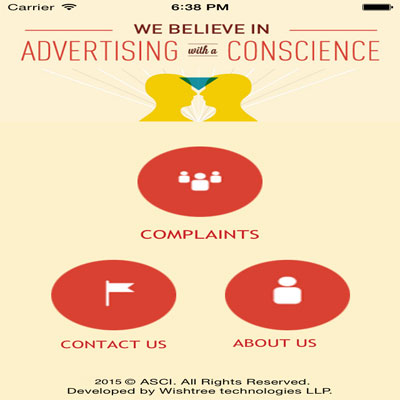
    MUMBAI: Continuing with its mission to address misleading advertisements, Advertising Standard Council of India (ASCI) has launched India’s first consumer complaint mobile App – ASCIonline, to provide consumer complaint services on a mobile phone besides providing the facility online. The mobile app is currently available on Android and iOS.

     
    ASCI chairman Narendra Ambwani said, “One of the goals of ASCI is to provide convenient access for lodging complaint and hence this launch of mobile app. Today mobiles devices are more widely used compared to desktops. With growing use of smart phones consumers want apps to put power of doing transactions in their pocket. ASCIonline mobile app is consumer friendly and can be freely downloaded. It will be very useful as one can track the status of the complaints which he or she registered on our portal with the help of the app.”

    Some of the key features of the app are as follows: 


    1)    Lodge complaint: Lodge complaints by simply providing advertisement details and objection. Users can also attach the files like image or video or YouTube link of that advertisement.


    2)    History: Check the history of all previously registered complaints with the latest status and all other details.


    3)    Complaint Tracking: Simply track the status of the complaints by providing the tracking code of the complaint.


    4)    Manage profile: Manage profile and contact details.


    5)    Push Notifications: Receive the automatic push notifications when status of your complaint gets changed.


    6)    Accessibility: It’s always on and connected.