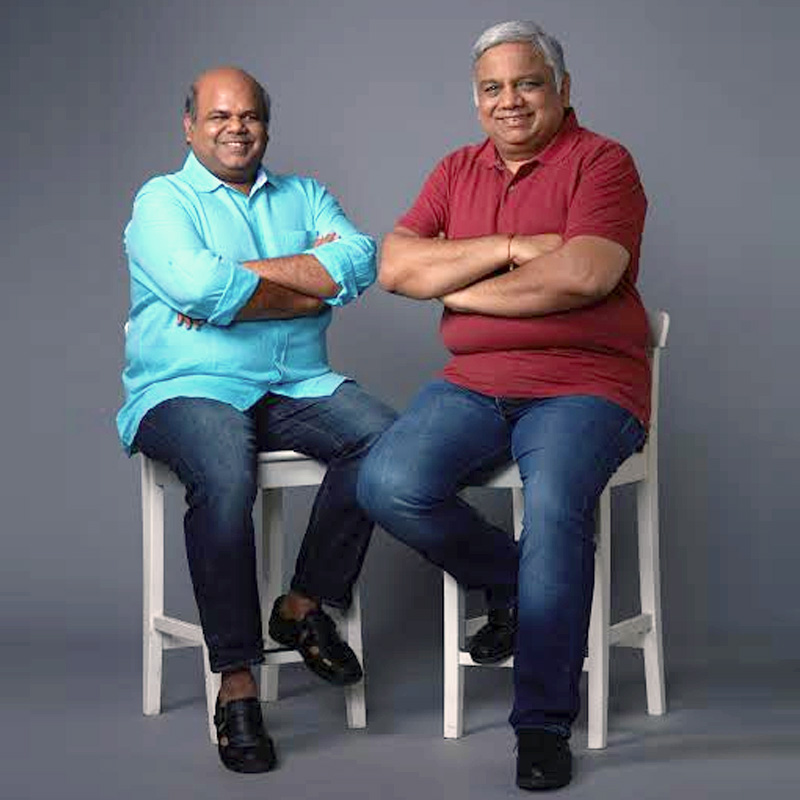
MUMBAI: Mirum, the borderless agency from the WPP network is on a venture to transform the digital marketing scenario of India into an experience-led domain led by great technological interventions. Earlier known as Social Wavelength, before WPP acquired it in 2014, the agency, under the astute leadership of founders and joint CEOs Hareesh Tibrewala and Sanjay Mehta is going leaps and bounds to make the Indian marketing campaigns stand at par with the global models.
Tibrewala and Mehta, who make 40 per cent of the revenue from global clients, tell Indiantelevision.com that global clients are just a year ahead of us in terms of their requirements from the digital marketing agencies.
Hareesh Tibrewala elaborates, “The focus on digital in India is still as a marketing medium whereas our global clients are using it to build more customer experiences. They have moved from ‘digital marketing’ to see ‘digital as a solution provider’. What it means is that you are looking at the consumer through the lens of every brand touchpoint and seek where you can add value. Complete customer experience is the focus.”
Sanjay Mehta adds, “The difference this makes for us as an agency is that we are now looking at building full-fledged business solutions for the companies and not just one another creative campaign. We have a far more critical role to play. For example, the Mirum team in the US has created a product, which can retrofit in older cars to give them features like modern smart cars, for a telecom company.”
He continues, “When you are playing such a big role as an integral part of the client’s business, you get more respect. You work directly with the CEOs and not just the brand managers and that also changes the way we (as agency partners) feel about our own work. It is good to feel that we are contributing to a larger solution.”
Tibrewala and Mehta added that both the type of work and revenues from the western markets are better than what Indian clientele offers.
Tibrewala says, “The difference is because of a few reasons. One is that we get better margins from markets abroad than in India, as they pay in dollars. Also, there the project terms are longer. For example, if we are working on a technology project, it might go on for a year or maybe two. It again boils down to the fundamental difference of digital marketing and digital solution provider approach that the clients have towards the agencies. The engagement levels are better there.”
Mehta also shares similar views as he notes, “It is the whole rupee-dollar denomination difference that creates gaps in the revenue. Also, it depends on how much time you are taking in creating a digital asset. In the west, they are looking for that digital asset to move for several years. There the number of clients willing to invest in such digital properties are more and they invest more.”
However, Mehta notes that Indian clients will take just a little time to bridge this gap in creativity. “The Indian client is evolving. Earlier the gap was bigger, but Indians are just a year behind their western counterparts. With technology, the world has shrunk and now the Indian clients have more exposure to where the world is going. There are quick learning and faster adoption. The kind of input that digital is giving into their business is definitely becoming more critical. So, the kind of work now Indian clients are expecting is improving significantly. In the past 2-3 years, it has grown much faster than you would expect.”
Tibrewala adds, “The revenue gap, I feel, will bridge quickly. One of the reasons being global brands’ big investment in India. Plus there are certain sectors, for example, financial services, which are going completely digital-driven. Also, the Indian CMO is very literate now. They come with a lot of talent and understanding of the digital domain. Lots of companies, in fact, have created the chief digital officer profiles within the system.”
Concurrently, Mehta feels while the CMOs of today are younger and are more willing to invest in technologies and work with agencies in creating path-breaking all-round solution-providing campaigns than just creative campaigns, it is quite complicated for them to get the budget approval from the management.
He says, “If you may see five years back, there was little hesitation that Indian companies showed while adopting digital technologies. The reason was that people running marketing in these organisations saw digital as something that they did not know and they were apprehensive of taking the steps in this direction. Now, the CMOs are much younger and they know digital. With the workforce and clients becoming younger, the acceptance of digital technologies is much easier.”
Mehta further adds, “Having said that, we also have to look at the role of CMO from just being the head of marketing to someone who also has to report to the management board. There is still a little baggage that they feel while working with these boards in terms of how you get the budgets across.”
Citing the example of JW Marriott Hotels, which has worked tremendously well in utilising technology to create better customer experiences, Mehta says that an Indian CMO might also have the aspiration to do something on a similar scale but it comes at a higher price. “The aspiration is there, the interest is there but the budgets don’t flow at that pace. Large budgets are not easy to get sanctioned.”
He clears that getting marketing budgets into digital is no longer a problem as it was a few years back, but companies are still hesitant in using transformational level budgets. Some of the reasons, he mentions, behind this lag is the legacy thought process of the management boards and lack of good Indian examples.
“It is not as if we need thousands of crores for that. It is just a technology investment. So money is not the issue but belief and conviction are. If a CMO who was working with Rs 10-20 crore worth of budget asks for hundreds of crore suddenly, obviously, doubts will creep in,” Mehta points out.
Mehta says that change is surely happening since some early-adopter brands are creating path-breaking stuff. “It just requires two or three really good examples to happen in the industry and the rest will surely follow as they just can’t not do this. It is a matter of survival.”
Apart from this, the agency is now also trying to expand in the specialised verticals space, starting with the healthcare sector which has been somewhat laggard in adopting digital technology. But they can’t afford to not be present on digital now.