Tag: Miraj

  • Akash Cinema returns as Miraj opens luxe 3-screen multiplex in Delhi

    Akash Cinema returns as Miraj opens luxe 3-screen multiplex in Delhi

    DELHI: From 1987 to 2016, Akash Cinema lit up North Delhi’s weekends with whistles, popcorn, and paisa-vasool drama. Now, the beloved single-screen theatre has found its second act and it’s dressed to impress. Miraj Cinemas, India’s third-largest multiplex chain, has launched a plush new property at the historic Akash Cinema Complex in Azadpur, reviving an icon while upgrading it with modern flair.

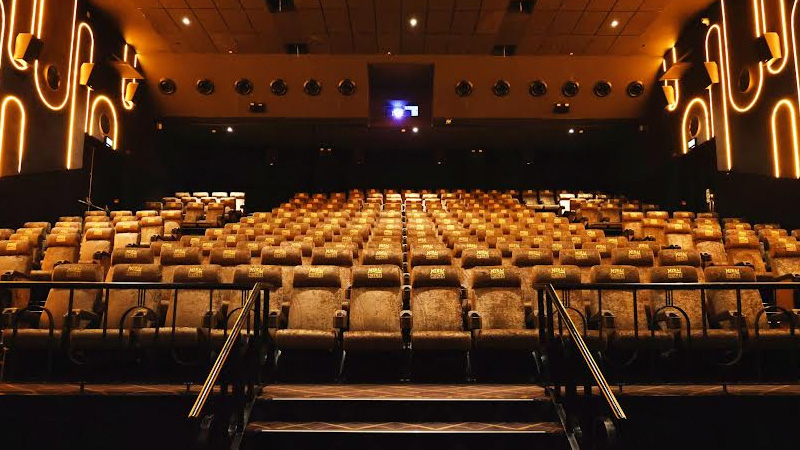
    The newly unveiled three-screen multiplex is a tribute to the venue’s glorious past and a leap into cinema’s luxe future. With a total of 427 seats across three screens (Audi 1 – 239 seats, Audi 2 – 94, Audi 3 – 94), the Azadpur location is fitted with 2K digital projection, Dolby surround sound, and immersive 3D tech. Say goodbye to neck strain and cramped knees hello to wide-cushioned seats, plush legroom, and unblocked views.

    “This isn’t just a multiplex, it’s a tribute to a venue where countless film memories were made,” said Miraj Entertainment Ltd managing director Bhuvanesh Mendiratta. “We’re incredibly proud to give the iconic Akash Cinema a new lease of life. Azadpur now has a destination that’s deeply nostalgic yet boldly future-ready.”

    Indeed, stepping into the new Miraj Cinemas Azadpur is like walking onto a movie set. Art Deco patterns, ambient lighting, and marble flooring set the tone, while stylish wall textures and a glowy ceiling elevate the experience. Even the restrooms are a design statement sleek, spotless, and modern. The cosy lobby lounge doubles up as a photo-op zone, perfect for pre-show selfies and starry-eyed anticipation.

    And for those who judge a cinema by its snacks (as they should), the revamped Akash delivers blockbuster bites. The venue features two curated F&B zones, Chef’s Corner and Pop Corner.

    At Chef’s Corner, it’s all about flavour-forward street bites and gourmet plates: think paneer tikka wraps, loaded cheese fries, dim sums, and grilled delights, all cooked fresh in a live kitchen setup. Meanwhile, Pop Corner brings the classics buttery popcorn, crispy nachos, chilled sodas, and Miraj combo deals. All food is prepared in-house by a team of chefs, maintaining the high standard Miraj is now known for.

    This marks Miraj’s fourth multiplex in Delhi, expanding its footprint in the capital while staying rooted in cinematic heritage.

    “We’ve taken great care to preserve the legacy while crafting a space that delivers on luxury, technology, and hospitality,” added Mendiratta.

    Whether you’re headed for a weekend blockbuster, a late-night binge, or a romantic movie date, this cinema has you covered technically, visually, and gastronomically.

    Bookings are open on Miraj Cinemas’ website and mobile app, but if you’re thinking of walking in expect more than just a film. Expect a revival. Expect a cinematic escape. Expect Akash 2.0.

    Because at Miraj Azadpur, nostalgia has had a glow-up and it’s ready for its close-up.

  • Cinema advertising begins to take centre stage

    Cinema advertising begins to take centre stage

    MUMBAI: No movie today is played in the cinema without some ads being slotted before it starts and in the interval. This means more brands get a chance to showcase their products and services as advertisers see movie theatres as a great venue because they have an immediate captive audience that is ready to view their message.

    Today, more brands are using in-cinema advertising in order to reach their targeted audience, which is usually undistracted by their smartphones and social media in the theatre.

    Around six years ago, China had approximately 9000 cinema screens but today they have 40,000 screens. Similarly, in India, major cinema chains like INOX, Miraj, PVR, Carnival, Cinepolis are growing their presence rapidly and are looking at setting up at least 1000 cinema screens in the fiscal year 2018-19. Today, high-end luxurious residential properties have also started putting up their own cinema theatre as a part of their complex offering.

    According to the latest report by GroupM’s cinema advertising arm Interactive TV, there is a clear upward trend of urban Indians who prefer to watch a movie in theatres. The study found out that 57 per cent of the audience prefers to watch a movie in the theatre at least once in six months. The report also highlights the fact that 71 per cent of these audiences are between the age group of 15 to 24. This means gala time for most brands.

    public://cover_3.jpg

    An increase in footfall resulted in a 20 per cent growth in cinema advertising in 2017 and the GroupM report suggests that 50 per cent of the movie goers were willing to consume advertisements before the start of the movie and during the interval. Furthermore, consumers usually tend to reach the movie hall 15 minutes prior to the showtime and that allows brands enough time with branding opportunities. Carnival Cinemas CMO Dina Mukherjee says, “Earlier the interval time was 10 mins which was a short popcorn break but now it is at an average of 30-35 (before the movie + interval time). Although it is an irritating factor for the viewer, the number of advertisers have increased and most of them have a 30 second spot.”

    FMCG, consumer durables, financial sector have been the major investors for longest time in cinema advertising. Advertisements of Life Insurance, Mutual funds, Chirag Din shirts, Forest Essentials and the much remembered Vicco products have been around for the longest time. But today, newer brands are willing to come on board for screen advertising. We now also see ads by Amazon Prime and Swiggy in the theatres which are fairly new category entrants in India. But a majority of brands are still reluctant to invest in the medium. Dina Mukherjee believes that brands need to be made aware of cinema advertising’s merit and what it brings to the table, primarily for newer industries that are coming up. “Cinema advertising is not an expensive medium as opposed to print on television. It falls within the category of radio and OOH.”

    Since the medium does not have an official measurement system, Carnival Cinemas has launched its own measurement tool in order to help the advertisers get the optimum result on their investment where they can choose to pay per seat, a concept similar to CPC (cost per client) that is watching the ad. In this case, the advertiser doesn’t have to worry whether the movie was a hit or a flop.

    The medium, which currently has only 1-2 per cent of total ad spends by brands, is projected to grow at 20-25 per cent in the next five years. Currently, riding at a Rs 600 crore market, in-cinema advertising is slated to grow at a double digit growth in the next few years. Today cinema advertising has various touch points that include screen advertising, kiosk, promoter activity, food and beverage counter, restrooms, exit walls and seat branding. Going forward, innovation and experiential marketing will be key drivers to enhance in-cinema advertising experience.

    On the flip side, the cost to advertise at a movie theatre is high, especially for a small business. Since small advertisers don’t have the budget to run a full fledged ad, they have to run a slide or kiosk in the cinema. Another major drawback of the medium is that alert people may arrive late to skip the initial ad playing round.

    public://cinema.jpg

    With blockbuster movies like Baahubali, Padmavat, Udta Punjab, Airlift among others that have crossed the Rs 100 crore mark, audience footfall for such movies enables brands to bet big on cinema advertising.

    ALSO READ:

    Martin Sorrell on how WPP is combating ad world slowdown

    2018 will be a year of video campaigns: WATConsult’s Rajiv Dhingra

    Godrej aims to make its Locks synonymous with safety

    Is India ready for the impact of AI on marketing?


  • Paytm moves aggressively into movie ticketing

    Paytm moves aggressively into movie ticketing

    MUMBAI: Paytm reported more than a lakh movie tickets, reflecting the huge potential of the online movie ticketing industry in India. This significant milestone has been crossed by Paytm within four months of launch of the movie ticketing business. In a massive effort to encourage digital payments in India, the company’s foray into the entertainment space has been warmly welcomed by the movie industry across the value chain comprising exhibitors, distributors and production houses. Leveraging Paytm’s existing ecosystem of over 130 million users, Paytm has set itself aggressive numbers in the months ahead.

    One of the key reasons for the significant initial success of Paytm in the movie-ticketing domain has been the Pan India availability of movie screens on its platform. Currently, Paytm has over 2250 screens for which tickets can be booked online. This number will increase to 3000 screens in the coming months. Paytm’s list of tie-ups in the movie industry includes PVR, Cinepolis, Inox, Wave, Miraj, MovieTime, Gold Cinemas and multiple other chains & single screen theatres.

    Speaking on this, Paytm VP Renu Setti said, “In just about four months since the launch of movie ticketing, Paytm is well on its way to become the country’s favorite mode of booking movie tickets. We are very pleased at the encouraging response to our efforts to serve the millions of movie lovers in India. Paytm will also bring offline single screens on its platform over a period of time. This will take the reach of Paytm deeper and further in this space, and also aid the theater owners in filling up seats.”

  • Paytm moves aggressively into movie ticketing

    Paytm moves aggressively into movie ticketing

    MUMBAI: Paytm reported more than a lakh movie tickets, reflecting the huge potential of the online movie ticketing industry in India. This significant milestone has been crossed by Paytm within four months of launch of the movie ticketing business. In a massive effort to encourage digital payments in India, the company’s foray into the entertainment space has been warmly welcomed by the movie industry across the value chain comprising exhibitors, distributors and production houses. Leveraging Paytm’s existing ecosystem of over 130 million users, Paytm has set itself aggressive numbers in the months ahead.

    One of the key reasons for the significant initial success of Paytm in the movie-ticketing domain has been the Pan India availability of movie screens on its platform. Currently, Paytm has over 2250 screens for which tickets can be booked online. This number will increase to 3000 screens in the coming months. Paytm’s list of tie-ups in the movie industry includes PVR, Cinepolis, Inox, Wave, Miraj, MovieTime, Gold Cinemas and multiple other chains & single screen theatres.

    Speaking on this, Paytm VP Renu Setti said, “In just about four months since the launch of movie ticketing, Paytm is well on its way to become the country’s favorite mode of booking movie tickets. We are very pleased at the encouraging response to our efforts to serve the millions of movie lovers in India. Paytm will also bring offline single screens on its platform over a period of time. This will take the reach of Paytm deeper and further in this space, and also aid the theater owners in filling up seats.”