Tag: Mipcom

  • MIPCOM: Zee presents scripted, unscripted series

    MIPCOM: Zee presents scripted, unscripted series

    MUMBAI: Zee Entertainment Enterprises Limited (ZEEL) announced its slate of six new and current formats for MIPCOM for licensing and development. For the first time, screening sessions will be held in the Zee Bollyworld Preview Theatre located at ZEE’s booth # P1-K51.

    Sunita Uchil, recently promoted to chief business officer, international ad sales, global syndication and production, said, “Zee has a rich history of developing and producing programs with universal themes that are adaptable to all regions of the world. We are looking forward to hosting buyers and showcasing our new formats, as well as the popular dance-based reality show ‘Dance India Dance’, at our Zee Bollyworld Preview Theatre. In other words, Zee Bollyworld promises a truly edge-of-the-seat experience at MIPCOM 2016”.

    Zee’s unscripted formats include India’s original dance reality show, Dance India Dance, in which contestants are judged by leading Bollywood choreographers on their dance skills. Launching its sixth
    season later this year, there have been numerous spinoffs of the format, a Singapore edition, as well as a local production in Thailand. Moksha is a brand-new game show requiring strategy, luck and
    skill.

    Zee’s scripted formats include: Phantasmagoria is a series of 12 wickedly twisted short stories. The story centers on an inconspicuous pawnshop in the corner of a decrepit by lane. Each tale brings about a series of illusions, apparitions and deception based on the elements that are uniquely characteristic of each sign of the zodiac. The Eclipse Harvest is a high-octane crime series about the NYPD Organized Crime Control Bureau. The son of a decorated officer in the Narcotics Division and the son of a drug lord each set out to eclipse their respective fathers of their glory. The mothers of the young men narrate the stories of how their lives are taken away by circumstances and how they are paradoxically connected.

    Two additional scripted formats are all-time favorites in the comedy genre are Hum Paanch (Five Is A Crowd) and Kareena Kareena.

    Zee Entertainment Enterprises Limited is one of India’s leading television media and entertainment companies. It is amongst the largest producers and aggregators of Hindi programming in the world, with an extensive library housing over 222,000 hours of television content.

  • MIPCOM: Zee presents scripted, unscripted series

    MIPCOM: Zee presents scripted, unscripted series

    MUMBAI: Zee Entertainment Enterprises Limited (ZEEL) announced its slate of six new and current formats for MIPCOM for licensing and development. For the first time, screening sessions will be held in the Zee Bollyworld Preview Theatre located at ZEE’s booth # P1-K51.

    Sunita Uchil, recently promoted to chief business officer, international ad sales, global syndication and production, said, “Zee has a rich history of developing and producing programs with universal themes that are adaptable to all regions of the world. We are looking forward to hosting buyers and showcasing our new formats, as well as the popular dance-based reality show ‘Dance India Dance’, at our Zee Bollyworld Preview Theatre. In other words, Zee Bollyworld promises a truly edge-of-the-seat experience at MIPCOM 2016”.

    Zee’s unscripted formats include India’s original dance reality show, Dance India Dance, in which contestants are judged by leading Bollywood choreographers on their dance skills. Launching its sixth
    season later this year, there have been numerous spinoffs of the format, a Singapore edition, as well as a local production in Thailand. Moksha is a brand-new game show requiring strategy, luck and
    skill.

    Zee’s scripted formats include: Phantasmagoria is a series of 12 wickedly twisted short stories. The story centers on an inconspicuous pawnshop in the corner of a decrepit by lane. Each tale brings about a series of illusions, apparitions and deception based on the elements that are uniquely characteristic of each sign of the zodiac. The Eclipse Harvest is a high-octane crime series about the NYPD Organized Crime Control Bureau. The son of a decorated officer in the Narcotics Division and the son of a drug lord each set out to eclipse their respective fathers of their glory. The mothers of the young men narrate the stories of how their lives are taken away by circumstances and how they are paradoxically connected.

    Two additional scripted formats are all-time favorites in the comedy genre are Hum Paanch (Five Is A Crowd) and Kareena Kareena.

    Zee Entertainment Enterprises Limited is one of India’s leading television media and entertainment companies. It is amongst the largest producers and aggregators of Hindi programming in the world, with an extensive library housing over 222,000 hours of television content.

  • MIP China Hangzhou to be held in May next year

    MIP China Hangzhou to be held in May next year

    PARIS: Reed MIDEM, the organiser of MIPTV/MIPCOM, has launched MIP China Hangzhou, the first ever MIP in China. The new event is designed to foster content development between Chinese and international production companies, as well as provide an intensive educational forum for Chinese media professionals to learn more about international TV markets and trends.

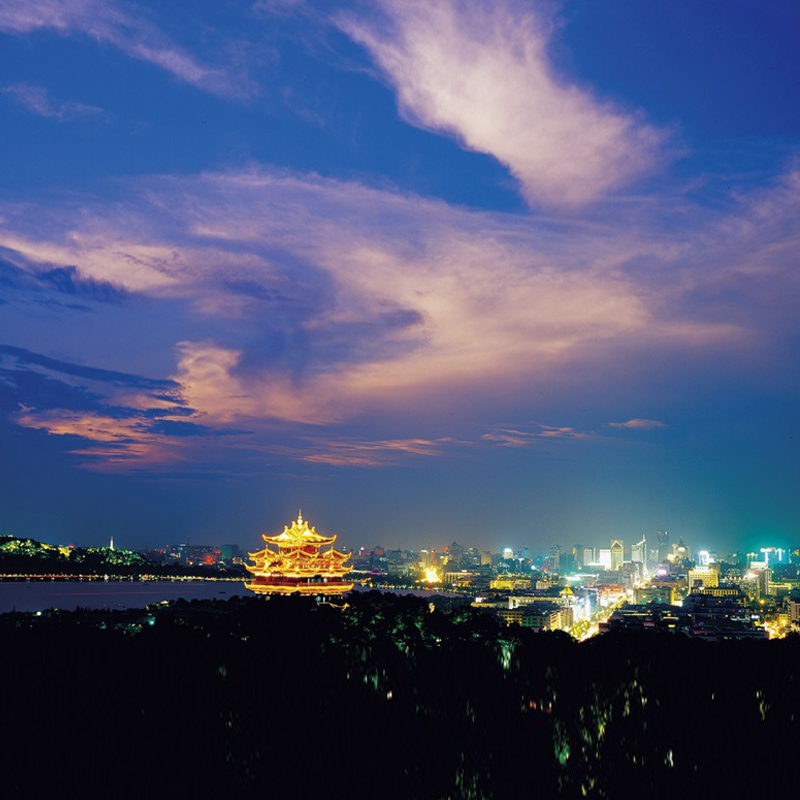
    MIP China Hangzhou will run May 23-25, 2017, in Hangzhou, the lakeside city that hosted the G20 Summit in September 2016.

    MIP China Hangzhou is organised in partnership with China Media Management Inc (CMM-I), the official representative for MIPTV/MIPCOM in China, and Zhejiang MegaMedia, organiser of the Zhejiang Provincial pavilion at the MIP markets in Cannes.

    MIP China Hangzhou will combine two formats into one event. The Partnership Forum will bring together leading executives from up to 40 international television production and distribution companies with 40 senior level Chinese media executives for pre-scheduled, 1-to-1 meetings devoted to forging partnerships for global content development and production.

    The attendees of the Partnership Forum will also have the opportunity to visit production studios based in and around Hangzhou – a major production and media centre in China that is home to companies such as Alibaba, Huace TV & Film.

    The second element of the event will be a gold-standard professional training conference to share best practices in creating international TV and online hits, international distribution, and to explore content development in new entertainment sectors such as Online Video and Virtual Reality. 150 delegates are expected to attend the conference.

    “MIP China Hangzhou will provide a much-needed platform for international programme professionals to meet with their counterparts from companies throughout China,” notes Dong Yue, Hangzhou mayor’s representative.

    “Cross-border content development is more than ever a strategic choice for entertainment production companies looking to capture local and global audiences,” adds Reed MIDEM chief executive Paul Zilk.

    Founded in 1963, Reed MIDEM is an organiser of professional, international markets that are essential business platforms for key players in the sectors concerned. Reed MIDEM is a division of Reed Exhibitions, the world’s leading event organiser, with over 500 events in 43 countries.

  • MIP China Hangzhou to be held in May next year

    MIP China Hangzhou to be held in May next year

    PARIS: Reed MIDEM, the organiser of MIPTV/MIPCOM, has launched MIP China Hangzhou, the first ever MIP in China. The new event is designed to foster content development between Chinese and international production companies, as well as provide an intensive educational forum for Chinese media professionals to learn more about international TV markets and trends.

    MIP China Hangzhou will run May 23-25, 2017, in Hangzhou, the lakeside city that hosted the G20 Summit in September 2016.

    MIP China Hangzhou is organised in partnership with China Media Management Inc (CMM-I), the official representative for MIPTV/MIPCOM in China, and Zhejiang MegaMedia, organiser of the Zhejiang Provincial pavilion at the MIP markets in Cannes.

    MIP China Hangzhou will combine two formats into one event. The Partnership Forum will bring together leading executives from up to 40 international television production and distribution companies with 40 senior level Chinese media executives for pre-scheduled, 1-to-1 meetings devoted to forging partnerships for global content development and production.

    The attendees of the Partnership Forum will also have the opportunity to visit production studios based in and around Hangzhou – a major production and media centre in China that is home to companies such as Alibaba, Huace TV & Film.

    The second element of the event will be a gold-standard professional training conference to share best practices in creating international TV and online hits, international distribution, and to explore content development in new entertainment sectors such as Online Video and Virtual Reality. 150 delegates are expected to attend the conference.

    “MIP China Hangzhou will provide a much-needed platform for international programme professionals to meet with their counterparts from companies throughout China,” notes Dong Yue, Hangzhou mayor’s representative.

    “Cross-border content development is more than ever a strategic choice for entertainment production companies looking to capture local and global audiences,” adds Reed MIDEM chief executive Paul Zilk.

    Founded in 1963, Reed MIDEM is an organiser of professional, international markets that are essential business platforms for key players in the sectors concerned. Reed MIDEM is a division of Reed Exhibitions, the world’s leading event organiser, with over 500 events in 43 countries.

  • Rangrez Films and the fine art of making TV food shows

    Rangrez Films and the fine art of making TV food shows

    MUMBAI: Step into Ashraf Abbas’ and Nidhi Tuli’s Rangrez Films’ and foodlooking’s studio-floor-cum-offices in Morya Classic building in Mumbai’s Andheri suburb, and you can gauge that a lot of thought has been put into the design. The office strikes you because of its open space, the clean lines, old wooden furniture, single seater cubicles 10 feet above the floor, each housing an FCP edit suite.

    On another floor what greets you is an ingeniously designed kitchen set with a window leading outside to the leafy exterior, lights rigged from the ceiling, scores of cups, saucers, ladles, spoons, pots and kettles with exotic designs, cameras, lenses, dishes, and bowls – all immaculately placed.  

    You feel you have been transported to a studio in a European location, not in a crowded office building in a bustling Mumbai suburb.

    “I have designed every inch of this office and studio,” says Ashraf, with a shy-yet-full of-pride toothed grin. “I am a carpenter. I scoured Chor Bazar (the flea market) in Mumbai, picked up wood and made the office in the exact image I wanted. I am very keen about getting the detailing right.”

    Ashraf is not just a carpenter, both he and his wife are absolute foodies – a habit they developed early on their career when they spent their time backpacking across India filming documentaries. And they are also the two individuals behind the award-winning production house Rangrez Films.

    public://Rangrez office.jpg

    The husband and wife duo are simply consumed with the passion to create quality content, so much so that often times profits are sacrificed totally at the altar of creating world class content.

    “We focus on the right content and its right presentation. To give justice to the content we are creating is our responsibility,” says Nidhi.

    “We are almost always making very slender margins, sometimes none at all,” shrugs Ashraf, adding matter-of-factly. “I am pretty anal about getting it right, to the standards I have set.”

    (Even as they are loathe to reveal any turnover figures, estimates are that the company notches up double digit crore in revenue annually.)

    The duo set up Rangrez Films in 2008. But throughout their journey they have been quite fixated on a couple of key areas while filming: the look and the composition of each frame. “We do not create our products, keeping TV in mind, we make it for the subject,” points out Nidhi. Hence, they take a lot of pains to make their sets look beautiful while creating and lighting them and also behind the framing of each shot. Whether they are filming a food show or a docu-drama, each shot is discussed threadbare with the director of photography.

    “It has to look beautiful and has to have the wow factor,” says Ashraf. “It has to look like a feature film production.”

    And it is this razor sharp focus on making each scene look beautiful that makes Rangrez’s  food productions stand out.“Food has to look exquisite,” says Ashraf. “And everyone of our productions has to feel right.”

    Hence, when Epic Television CEO Mahesh Samat and his creative head Ravina Kohli were looking for a studio to produce a food show for their high on production values channel in 2013, who did they approach? Well, it was indeed Rangrez Films.

    Ashraf and Nidhi suggested that the show could be on the history of Indian food. The Epic and Rangrez teams brainstormed and came up with the idea that the show could include food as made in kitchens of Indian maharajas and erstwhile kings over the centuries.

    Thus was born one of the shows the duo takes deep pride in: Raja Rasoi aur Anya Kahaniya . Both Ashraf and Nidhi deeply researched different kinds of food that emerged from palace kitchens and they showcased them on the show with a narrative story telling of the entire journey.

    “It was the best way to treat the subject,” confesses Ashraf. “Indian royalty is the custodian of ancient culinary traditions. “

    Samat had informally and unintentionally given a pat on the back to Rangrez when he had told indiantelevision.com a couple of years ago that the channel was working with TV producers who were “master craftsmen.”

    In the same year, Samat and Ravina commissioned Asraf and Nidhi to produce a series on Indian spies titled Adrishya, with each episode documenting a single spy. 13 iconic Indian spies right from the times of the Mahabharata to post-independence India had their lives unravel on screen in an absorbing and well shot narrative.

    public://Art Room Production Still.jpg

    Epic once again commissioned Rangrez Films for another production entitled The Great Escape – about the greatest escapes ever made into India or by Indians.

    “For the first time on television we told the story of the escape of His Holiness the Dalai Lama from Tibet into India in 1959 and the brave story of Rezang La’s escape from Indo China was 1962. In many ways this is our biggest production, because these are all individual films and shot on a very large canvas,” exalt Ashraf and Nidhi.

    Ravina explains why she keeps going back to the duo. Says she: “The production quality is very high. Extremely dedicated and sincere team, they make no compromise on the content they create. Even though they exactly know what they want, they are very good collaborators. they understand what the channel wants and deliver a high quality production. Abbas and Nidhi are gifted with a visual sense.”

    Rangrez’s production slate, while not expansive like other GEC producers, is  nonetheless impressive. It has produced shows for Living Foodz, ZeeQ and Fox Life.  Among its ZeeQ  programmes figure Teenovation, Engineer This, and Art Room. For Teenovation, Ashraf and Nidhi and team scoured the length and breath of the rural heartlands to uncover unique inventions from young innovators.  And they showcased them on the show.

    Khaata Rahe Mera Dil is a travel and street food show that the company produced for FoodFood in 2011. Then, Vickypedia with chef Vickey Ratnani is a Living Foodz commission, while Serve it like Sarah was produced for FoxLife. Featuring Sarah Todd (a former Masterchef Australia contestan) it tracks her as she discovers her new home Goa through its food and people.

    Zee Entertainment Enterprises’ Subhadarshi Tripathi has also repeated them for several seasons of when he headed ZeeQ and is now working with them at Living Foodz and the Living Network where he is the chief content officer.  Says he: “The work quality of Rangrez is commendable. There are other people also who deliver quality, what stands out with them are other factors from commitment to delivery time, everything falls in place. The team is extremely hard working, that’s what gives them superiority.”

    Ashraf confesses that the obsession to make the creative product look good – not just good, actually gorgeous – comes courtesy the nine years he spent making ad films and TV commercials for demanding brands like Maruti Suzuki, Honda, Toyota, Gul Oil, and Reliance among many others in the mid-nineties. He worked as an executive producer, production designer, then as creative director for Mumbai-based Lock, Stock and Barrel Films.

    Even as Ashraf was honing the craft of TVC making, wife Nidhi was capturing subjects that interested her in documentaries and even being recognized for them. She helmed the much acclaimed documentary film, Ladies Special in 2003 which won the John Abraham National Award two years later, and the George Ragot love the train award at the Cine Rail Paris in 2009. Nidhi has other acclaimed films to her credit: Art In Exile, TIPA, Of Friendship films and swords,  The Saint of Chitrakoot, and The Saroj Khan Story (yes the choreographer). The last was awarded the best documentary featurette at the Fiji Film Festival in 2013.

    Ashraf points out that Nidhi is the key script and content person at Rangrez and works with all the writers and also directs key projects for the company. Rangrez has a core team of eight to 10 professionals, including producers, researchers and post producers. “Because of our documentary training our crew sizes have always been small,” says Ashraf.

    He has been a producer almost all his life. But he had a dalliance with being part of a broadcasting venture when chef-entrepreneur Sanjeev Kapoor’s office called him in early 2010.  “I met them and found out that they were going to launch a 24×7 food channel and they were looking for the core team,” he recollects with a smile. “Since I had no prior experience in broadcast, it took them nine meetings/interviews (with different people) to decide on me. I guess it was my pure passion for food and interest in the subject that got me selected.”

    He went on to join the channel, which was branded FoodFood as a creative director.  “What we managed to do at FoodFood and we take a lot of pride in, is that we gave a brand new look to instructional cooking shows,” he once again interjects. I designed kitchen sets which were realistic and inline with the personality of our chefs/cooks. Kitchens are  always an extension of the homemakers personality. And so I personally handpicked each and every item on every set we made. And that made all the difference, that year we won the award for the best cooking show and also the packaging of the channel was awarded. “

    Today, Ashraf and Nidhi are bringing all the cumulative experience to bear as they are going about building their own homegrown in-house funded venture foodlooking, which seeks to set up a food-oriented digital programming platform with some unique shows.

    The tagline of foodlooking is: learn, buy, cook.  “It will allow the viewer to immerse himself with the cooking experience like never before, providing him with instructional videos, recipes, and DIY guides,” explains Ashraf.  The tagline of foodlooking is: learn, buy, cook.

    Filming and testing has been going on for it for the past year – some 400 clips have been shot so far. Around 50 hours of content has been filmed in 4K and three shows are on the floors right now.  Some 250 to 300 hours of food content is expected to be canned.

    The idea according to Ashraf is to fund it through internal accruals for the next year before reaching out to outside investors or partners.  The launch date for foodlooking has been set for end this year.  

    Even as foodlooking is being cooked, Rangrez and he are continuing with their pitches for other shows to keep the home fires burning. Ashraf’s visits to markets such as MipCom and MipTV in Cannes over the past two years where he has had held meetings with other producers in other countries and global food television majors such as the Food Network has got them interested in working with him. A commission or a co-production is on the anvil, sooner, than later.

    public://FOODLooking Set.jpg

    Meanwhile back home, the kitchen in the foodlooking workplace more often than not turns into a playground. Ashraf, Nidhi and the team of 10 key professionals, including DOP Ankit Trived, production & operations head Akash Thakkar tinker around, experimenting and creating cuisines with expert chefs.  Which will then make it on to one of the programmes on television or onto their digital platform.  And as Ashraf says when “the office has free time, they end up baking a cake.”
  • Rangrez Films and the fine art of making TV food shows

    Rangrez Films and the fine art of making TV food shows

    MUMBAI: Step into Ashraf Abbas’ and Nidhi Tuli’s Rangrez Films’ and foodlooking’s studio-floor-cum-offices in Morya Classic building in Mumbai’s Andheri suburb, and you can gauge that a lot of thought has been put into the design. The office strikes you because of its open space, the clean lines, old wooden furniture, single seater cubicles 10 feet above the floor, each housing an FCP edit suite.

    On another floor what greets you is an ingeniously designed kitchen set with a window leading outside to the leafy exterior, lights rigged from the ceiling, scores of cups, saucers, ladles, spoons, pots and kettles with exotic designs, cameras, lenses, dishes, and bowls – all immaculately placed.  

    You feel you have been transported to a studio in a European location, not in a crowded office building in a bustling Mumbai suburb.

    “I have designed every inch of this office and studio,” says Ashraf, with a shy-yet-full of-pride toothed grin. “I am a carpenter. I scoured Chor Bazar (the flea market) in Mumbai, picked up wood and made the office in the exact image I wanted. I am very keen about getting the detailing right.”

    Ashraf is not just a carpenter, both he and his wife are absolute foodies – a habit they developed early on their career when they spent their time backpacking across India filming documentaries. And they are also the two individuals behind the award-winning production house Rangrez Films.

    public://Rangrez office.jpg

    The husband and wife duo are simply consumed with the passion to create quality content, so much so that often times profits are sacrificed totally at the altar of creating world class content.

    “We focus on the right content and its right presentation. To give justice to the content we are creating is our responsibility,” says Nidhi.

    “We are almost always making very slender margins, sometimes none at all,” shrugs Ashraf, adding matter-of-factly. “I am pretty anal about getting it right, to the standards I have set.”

    (Even as they are loathe to reveal any turnover figures, estimates are that the company notches up double digit crore in revenue annually.)

    The duo set up Rangrez Films in 2008. But throughout their journey they have been quite fixated on a couple of key areas while filming: the look and the composition of each frame. “We do not create our products, keeping TV in mind, we make it for the subject,” points out Nidhi. Hence, they take a lot of pains to make their sets look beautiful while creating and lighting them and also behind the framing of each shot. Whether they are filming a food show or a docu-drama, each shot is discussed threadbare with the director of photography.

    “It has to look beautiful and has to have the wow factor,” says Ashraf. “It has to look like a feature film production.”

    And it is this razor sharp focus on making each scene look beautiful that makes Rangrez’s  food productions stand out.“Food has to look exquisite,” says Ashraf. “And everyone of our productions has to feel right.”

    Hence, when Epic Television CEO Mahesh Samat and his creative head Ravina Kohli were looking for a studio to produce a food show for their high on production values channel in 2013, who did they approach? Well, it was indeed Rangrez Films.

    Ashraf and Nidhi suggested that the show could be on the history of Indian food. The Epic and Rangrez teams brainstormed and came up with the idea that the show could include food as made in kitchens of Indian maharajas and erstwhile kings over the centuries.

    Thus was born one of the shows the duo takes deep pride in: Raja Rasoi aur Anya Kahaniya . Both Ashraf and Nidhi deeply researched different kinds of food that emerged from palace kitchens and they showcased them on the show with a narrative story telling of the entire journey.

    “It was the best way to treat the subject,” confesses Ashraf. “Indian royalty is the custodian of ancient culinary traditions. “

    Samat had informally and unintentionally given a pat on the back to Rangrez when he had told indiantelevision.com a couple of years ago that the channel was working with TV producers who were “master craftsmen.”

    In the same year, Samat and Ravina commissioned Asraf and Nidhi to produce a series on Indian spies titled Adrishya, with each episode documenting a single spy. 13 iconic Indian spies right from the times of the Mahabharata to post-independence India had their lives unravel on screen in an absorbing and well shot narrative.

    public://Art Room Production Still.jpg

    Epic once again commissioned Rangrez Films for another production entitled The Great Escape – about the greatest escapes ever made into India or by Indians.

    “For the first time on television we told the story of the escape of His Holiness the Dalai Lama from Tibet into India in 1959 and the brave story of Rezang La’s escape from Indo China was 1962. In many ways this is our biggest production, because these are all individual films and shot on a very large canvas,” exalt Ashraf and Nidhi.

    Ravina explains why she keeps going back to the duo. Says she: “The production quality is very high. Extremely dedicated and sincere team, they make no compromise on the content they create. Even though they exactly know what they want, they are very good collaborators. they understand what the channel wants and deliver a high quality production. Abbas and Nidhi are gifted with a visual sense.”

    Rangrez’s production slate, while not expansive like other GEC producers, is  nonetheless impressive. It has produced shows for Living Foodz, ZeeQ and Fox Life.  Among its ZeeQ  programmes figure Teenovation, Engineer This, and Art Room. For Teenovation, Ashraf and Nidhi and team scoured the length and breath of the rural heartlands to uncover unique inventions from young innovators.  And they showcased them on the show.

    Khaata Rahe Mera Dil is a travel and street food show that the company produced for FoodFood in 2011. Then, Vickypedia with chef Vickey Ratnani is a Living Foodz commission, while Serve it like Sarah was produced for FoxLife. Featuring Sarah Todd (a former Masterchef Australia contestan) it tracks her as she discovers her new home Goa through its food and people.

    Zee Entertainment Enterprises’ Subhadarshi Tripathi has also repeated them for several seasons of when he headed ZeeQ and is now working with them at Living Foodz and the Living Network where he is the chief content officer.  Says he: “The work quality of Rangrez is commendable. There are other people also who deliver quality, what stands out with them are other factors from commitment to delivery time, everything falls in place. The team is extremely hard working, that’s what gives them superiority.”

    Ashraf confesses that the obsession to make the creative product look good – not just good, actually gorgeous – comes courtesy the nine years he spent making ad films and TV commercials for demanding brands like Maruti Suzuki, Honda, Toyota, Gul Oil, and Reliance among many others in the mid-nineties. He worked as an executive producer, production designer, then as creative director for Mumbai-based Lock, Stock and Barrel Films.

    Even as Ashraf was honing the craft of TVC making, wife Nidhi was capturing subjects that interested her in documentaries and even being recognized for them. She helmed the much acclaimed documentary film, Ladies Special in 2003 which won the John Abraham National Award two years later, and the George Ragot love the train award at the Cine Rail Paris in 2009. Nidhi has other acclaimed films to her credit: Art In Exile, TIPA, Of Friendship films and swords,  The Saint of Chitrakoot, and The Saroj Khan Story (yes the choreographer). The last was awarded the best documentary featurette at the Fiji Film Festival in 2013.

    Ashraf points out that Nidhi is the key script and content person at Rangrez and works with all the writers and also directs key projects for the company. Rangrez has a core team of eight to 10 professionals, including producers, researchers and post producers. “Because of our documentary training our crew sizes have always been small,” says Ashraf.

    He has been a producer almost all his life. But he had a dalliance with being part of a broadcasting venture when chef-entrepreneur Sanjeev Kapoor’s office called him in early 2010.  “I met them and found out that they were going to launch a 24×7 food channel and they were looking for the core team,” he recollects with a smile. “Since I had no prior experience in broadcast, it took them nine meetings/interviews (with different people) to decide on me. I guess it was my pure passion for food and interest in the subject that got me selected.”

    He went on to join the channel, which was branded FoodFood as a creative director.  “What we managed to do at FoodFood and we take a lot of pride in, is that we gave a brand new look to instructional cooking shows,” he once again interjects. I designed kitchen sets which were realistic and inline with the personality of our chefs/cooks. Kitchens are  always an extension of the homemakers personality. And so I personally handpicked each and every item on every set we made. And that made all the difference, that year we won the award for the best cooking show and also the packaging of the channel was awarded. “

    Today, Ashraf and Nidhi are bringing all the cumulative experience to bear as they are going about building their own homegrown in-house funded venture foodlooking, which seeks to set up a food-oriented digital programming platform with some unique shows.

    The tagline of foodlooking is: learn, buy, cook.  “It will allow the viewer to immerse himself with the cooking experience like never before, providing him with instructional videos, recipes, and DIY guides,” explains Ashraf.  The tagline of foodlooking is: learn, buy, cook.

    Filming and testing has been going on for it for the past year – some 400 clips have been shot so far. Around 50 hours of content has been filmed in 4K and three shows are on the floors right now.  Some 250 to 300 hours of food content is expected to be canned.

    The idea according to Ashraf is to fund it through internal accruals for the next year before reaching out to outside investors or partners.  The launch date for foodlooking has been set for end this year.  

    Even as foodlooking is being cooked, Rangrez and he are continuing with their pitches for other shows to keep the home fires burning. Ashraf’s visits to markets such as MipCom and MipTV in Cannes over the past two years where he has had held meetings with other producers in other countries and global food television majors such as the Food Network has got them interested in working with him. A commission or a co-production is on the anvil, sooner, than later.

    public://FOODLooking Set.jpg

    Meanwhile back home, the kitchen in the foodlooking workplace more often than not turns into a playground. Ashraf, Nidhi and the team of 10 key professionals, including DOP Ankit Trived, production & operations head Akash Thakkar tinker around, experimenting and creating cuisines with expert chefs.  Which will then make it on to one of the programmes on television or onto their digital platform.  And as Ashraf says when “the office has free time, they end up baking a cake.”
  • Nice terror attack, Cannes and the Palais des Festivals

    Nice terror attack, Cannes and the Palais des Festivals

    The date: 14 July. The location: The Taj Mahal Hotel in Mumbai’s Colaba area. French consul general Yves Perrin plays host to businessmen, politicians, artistes, entertainment professionals, journalists like he does every year on Bastille Day to celebrate France’s National Day. Wine, champagne, and a mouth watering menu of French cuisine is rustled up by the Taj’s chefs and served to those who have a linkage with France. That’s of course after the customary playing of the French national anthem and the speech by the honorary counsel general. The evening proceeds well and late into the night as guests mingle and enjoy each other’s company.

    Some 4,000-odd miles away in the picturesque city of Nice in the south of France, the entire Palais des Anglais is choc-a-bloc with general members of the public. The mood is celebratory. The bright summer sky, and the azure blue sea, are what the French Riviera town is known and has drawn tens of thousands of tourists during the holiday period.

    The local Nice government has planned an evening of fireworks and music to celebrate France’s National Day. Tourists and locals have been looking forward to an evening of revelry and gaiety. The main street is cordoned off courtesy the roadblocks that have been erected. Young couples with their children in prams, some with their elderly parents, kids with their parents, groups of young are lounging about, walking around relaxed.

    Suddenly, a white truck comes down the crowded road, swaying from side to side, driven at 40-50 miles per hour in a zig-zag motion and bodies start to fly. A scramble starts as word gets around further down the Promenade that a killer is on the loose. In the meanwhile, scores are hit by the white truck; some die on the spot; some are critically injured.

    In a matter of a few more minutes, the police shoot and kill the driver of the truck. Before that, however, the manic truck has inflicted maximum damage. On the street lie mangled, broken, twisted bodies, bleeding.

    Celebration has turned to shock. 84 people die, 10 children, and many more are hospitalized, critically injured.

    The horror of that attack spreads across the world. A must-visit tourist destination, Nice has been relatively safe for years and is the gateway to Cannes, which houses the Palais des Festivals. A majority of the world’s biggest and most famous exhibitions and festivals are held in the building– the Lions, the Film Festival, Mipcom, MipTV, Midem, Toys, Mipim and many others. Nice airport is where everybody lands and takes a cab or a bus to Cannes.

    About 300 film professionals from India, Pakistan, Sri Lanka and Bangladesh attend the Cannes Film Festival, another 100-odd ad & marketing executives the Cannes Lions, and about 400 attend the TV and music markets – Mipcom, Mip TV and Midem every year.

    Cannes is where Indian broadcast, film, animation, production and music executives go to do business, buying and selling content, signing co-production and syndication deals. And have been doing so for many years.

    Should they continue visiting it now? Is it safe enough?

    Indeed, it is as safe as Mumbai’s Taj Mahal Hotel where France’s National Day celebrations were held on the same ill-fated evening. One can’t forget that a few years ago, the Taj Mahal Hotel itself was the target of a terrorist attack which left hundreds dead. Did we stop visiting the Taj Mahal Hotel?

    Visitors to Cannes and its exhibitions can be assured that France is going to step up its security to maximum. An additional 10,000 soldiers have been deployed on its streets. A state of emergency has been extended by another three months. Border controls are being strengthened. Because Nice has been hit, it is going to get heightened security attention. Ditto with Cannes .

    Expect visa formalities for those wanting to visit Schengen nations to get stricter (so please apply for your visas early; don’t make last minute applications). Expect airport security to be more vigilant. Already for the past six months visitors to Nice have had to go through an additional immigration check at the airport even if they have made their entry into Europe from another country.

    Additionally, even the administrators of the towns of Nice and Cannes are going to take strong security measures to build confidence and really keep visitors safe. One has to only go back to the measures that the Palais des Festivals took after the 911 attacks, with body scans and X-ray machines. Queues used to be pretty long then.

    Reed Midem is also going put its best behind making Mipcom –which is the next big event slated to take place from 15-20 October in Cannes – safer for attendees. And it has been known take extreme measures to support its clients. Like refunding money to clients who were afflicted by the floods during the festival last year. Like contributing to the Cannes city to help it in its rehabilitation.

    Most agree that the only way to keep at bay those who want to damage nations and their people is to stay resolute and continue to do business as usual. Let us translate that into action.

    (Anil Wanvari is the founder, editor in chief of the Indiantelevision.com group and also the India, Pakistan, Sri Lanka, Bangladesh representative of Reed Midem’s Mipcom, MipTV, Midem and Mipim markets)

  • Nice terror attack, Cannes and the Palais des Festivals

    Nice terror attack, Cannes and the Palais des Festivals

    The date: 14 July. The location: The Taj Mahal Hotel in Mumbai’s Colaba area. French consul general Yves Perrin plays host to businessmen, politicians, artistes, entertainment professionals, journalists like he does every year on Bastille Day to celebrate France’s National Day. Wine, champagne, and a mouth watering menu of French cuisine is rustled up by the Taj’s chefs and served to those who have a linkage with France. That’s of course after the customary playing of the French national anthem and the speech by the honorary counsel general. The evening proceeds well and late into the night as guests mingle and enjoy each other’s company.

    Some 4,000-odd miles away in the picturesque city of Nice in the south of France, the entire Palais des Anglais is choc-a-bloc with general members of the public. The mood is celebratory. The bright summer sky, and the azure blue sea, are what the French Riviera town is known and has drawn tens of thousands of tourists during the holiday period.

    The local Nice government has planned an evening of fireworks and music to celebrate France’s National Day. Tourists and locals have been looking forward to an evening of revelry and gaiety. The main street is cordoned off courtesy the roadblocks that have been erected. Young couples with their children in prams, some with their elderly parents, kids with their parents, groups of young are lounging about, walking around relaxed.

    Suddenly, a white truck comes down the crowded road, swaying from side to side, driven at 40-50 miles per hour in a zig-zag motion and bodies start to fly. A scramble starts as word gets around further down the Promenade that a killer is on the loose. In the meanwhile, scores are hit by the white truck; some die on the spot; some are critically injured.

    In a matter of a few more minutes, the police shoot and kill the driver of the truck. Before that, however, the manic truck has inflicted maximum damage. On the street lie mangled, broken, twisted bodies, bleeding.

    Celebration has turned to shock. 84 people die, 10 children, and many more are hospitalized, critically injured.

    The horror of that attack spreads across the world. A must-visit tourist destination, Nice has been relatively safe for years and is the gateway to Cannes, which houses the Palais des Festivals. A majority of the world’s biggest and most famous exhibitions and festivals are held in the building– the Lions, the Film Festival, Mipcom, MipTV, Midem, Toys, Mipim and many others. Nice airport is where everybody lands and takes a cab or a bus to Cannes.

    About 300 film professionals from India, Pakistan, Sri Lanka and Bangladesh attend the Cannes Film Festival, another 100-odd ad & marketing executives the Cannes Lions, and about 400 attend the TV and music markets – Mipcom, Mip TV and Midem every year.

    Cannes is where Indian broadcast, film, animation, production and music executives go to do business, buying and selling content, signing co-production and syndication deals. And have been doing so for many years.

    Should they continue visiting it now? Is it safe enough?

    Indeed, it is as safe as Mumbai’s Taj Mahal Hotel where France’s National Day celebrations were held on the same ill-fated evening. One can’t forget that a few years ago, the Taj Mahal Hotel itself was the target of a terrorist attack which left hundreds dead. Did we stop visiting the Taj Mahal Hotel?

    Visitors to Cannes and its exhibitions can be assured that France is going to step up its security to maximum. An additional 10,000 soldiers have been deployed on its streets. A state of emergency has been extended by another three months. Border controls are being strengthened. Because Nice has been hit, it is going to get heightened security attention. Ditto with Cannes .

    Expect visa formalities for those wanting to visit Schengen nations to get stricter (so please apply for your visas early; don’t make last minute applications). Expect airport security to be more vigilant. Already for the past six months visitors to Nice have had to go through an additional immigration check at the airport even if they have made their entry into Europe from another country.

    Additionally, even the administrators of the towns of Nice and Cannes are going to take strong security measures to build confidence and really keep visitors safe. One has to only go back to the measures that the Palais des Festivals took after the 911 attacks, with body scans and X-ray machines. Queues used to be pretty long then.

    Reed Midem is also going put its best behind making Mipcom –which is the next big event slated to take place from 15-20 October in Cannes – safer for attendees. And it has been known take extreme measures to support its clients. Like refunding money to clients who were afflicted by the floods during the festival last year. Like contributing to the Cannes city to help it in its rehabilitation.

    Most agree that the only way to keep at bay those who want to damage nations and their people is to stay resolute and continue to do business as usual. Let us translate that into action.

    (Anil Wanvari is the founder, editor in chief of the Indiantelevision.com group and also the India, Pakistan, Sri Lanka, Bangladesh representative of Reed Midem’s Mipcom, MipTV, Midem and Mipim markets)

  • Aastha, Swami Ramdev’s HD TV plans

    Aastha, Swami Ramdev’s HD TV plans

    MUMBAI: Most spiritual and devotional channels operating in India have a bagful of problems: limited revenues, low production budgets, which have led to very poor production values for their shows. Programmes and shows are shot with standard definition cameras with cheap sets as backdrops.

    This, at a time, when most of television land is moving to high definition and a select few towards 4k high dynamic range productions – both of which give better quality video – which can play out better on HD and 4K sets, making for a near realistic viewing experience.

    Swami Ramdev and Acharaya Balkrishna’s Patanjali Ayurveda has been giving FMCG multinationals in India a bit of a headache by eating away at their market shares in several product categories.

    Now the yoga guru-turned-entrepreneur is hoping to capture global audiences with his brand of yoga keeping in mind prime minister Narendra Modi’s penchant for it.

    Aastha – as is known to many – is among the leaders in the spiritual television space in India. And it is a channel that is part of Swami Ramdev’s empire.

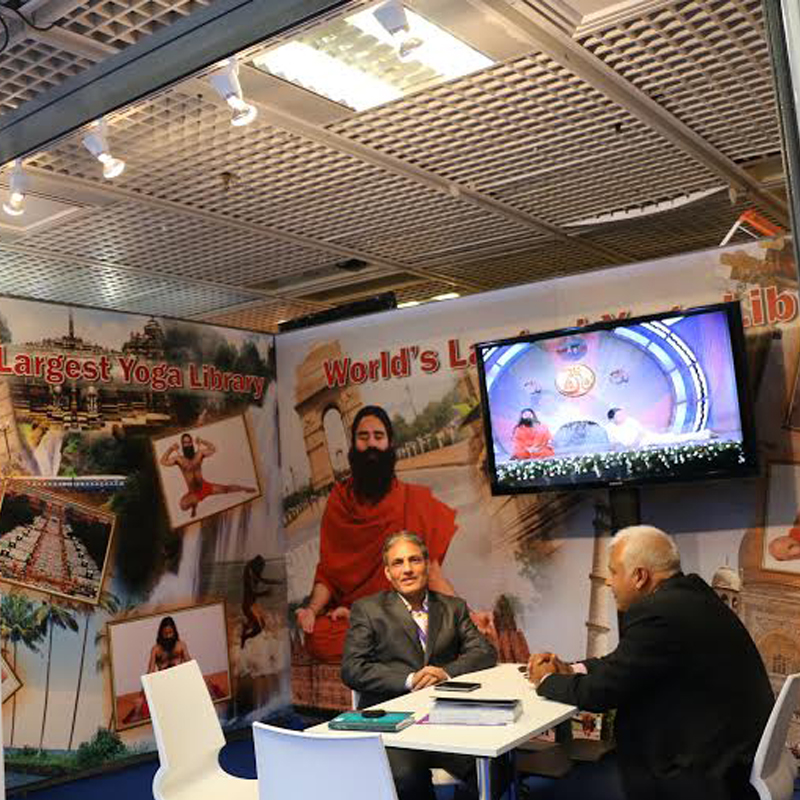
    Over the past year or so, an HD revolution has been taking place silently in Noida where Aastha TV’s studios, playout and uplinking hub are located. Swami Ramdev has pumped in more than Rs 50 lakh into infrastructure – including 10-12 Sony PMW 200 cameras and post production facilities – which has helped facilitate production of programmes featuring him in high definition.

    Two multi-camera teams have been trailing the yoga guru filming him at gatherings, camps and seminars where he has led his disciples in asanas. Almost 700 hours of Yoga have been filmed in HD so far.

    “We wanted to upgrade and keep pace with technology,” says Aastha Broadcasting Network CEO Pramod Joshi. “We were producing and transmitting in SD which has limited demand in international markets.”

    Joshi acknowledges that the shift to HD came at the urging of Reed Midem’s India, Pakistan, Bangladesh and Sri Lanka representative Anil Wanvari (also the founder of the indiantelevision.com group) when the company exhibited at annual trade show MipCom in Cannes, France.

    He points out that there here are no plans to roll out a HD channel for now, since the focus is on building a library first with Swami Ramdev’s yoga practice. Simultaneously, the channel’s programmers have been giving a nudge to other prime gurus who have taken slots on Aastha to upgrade their productions.

    “We know there is a lot of demand for Indian spirituality and yoga worldwide,” points out Joshi. “With this step up in quality, we believe many more networks will want our programming. We are also open to dubbing the content in other local languages.”

    Currently, Zee International airs programmes featuring Swami Ramdev practising and teaching yoga at his camps. Enquiries from other overseas networks have been coming in.

    In addition to yogic exercise and spiritual TV shows, Joshi says that Aastha is also looking at filming spiritual tourism documentaries by partnering with different state tourism boards. “There is a lot of India interest and these documentaries will go a long way in helping both Indian and international visitors understand India’s diverse belief systems and places of spiritual worship better and from a regional perspective.”

    Finally, Aastha, like other Indian networks which are looking at licensing and syndication revenues, is hopeful that its HD production will find cachet with international buyers. “Swamiji is known worldwide,” he says. “That’s to our advantage. We hope in the next year or so, licensing and syndication of our content will scale up. “

    When it does, Astha’s investment in HD will start paying off.

  • Aastha, Swami Ramdev’s HD TV plans

    Aastha, Swami Ramdev’s HD TV plans

    MUMBAI: Most spiritual and devotional channels operating in India have a bagful of problems: limited revenues, low production budgets, which have led to very poor production values for their shows. Programmes and shows are shot with standard definition cameras with cheap sets as backdrops.

    This, at a time, when most of television land is moving to high definition and a select few towards 4k high dynamic range productions – both of which give better quality video – which can play out better on HD and 4K sets, making for a near realistic viewing experience.

    Swami Ramdev and Acharaya Balkrishna’s Patanjali Ayurveda has been giving FMCG multinationals in India a bit of a headache by eating away at their market shares in several product categories.

    Now the yoga guru-turned-entrepreneur is hoping to capture global audiences with his brand of yoga keeping in mind prime minister Narendra Modi’s penchant for it.

    Aastha – as is known to many – is among the leaders in the spiritual television space in India. And it is a channel that is part of Swami Ramdev’s empire.

    Over the past year or so, an HD revolution has been taking place silently in Noida where Aastha TV’s studios, playout and uplinking hub are located. Swami Ramdev has pumped in more than Rs 50 lakh into infrastructure – including 10-12 Sony PMW 200 cameras and post production facilities – which has helped facilitate production of programmes featuring him in high definition.

    Two multi-camera teams have been trailing the yoga guru filming him at gatherings, camps and seminars where he has led his disciples in asanas. Almost 700 hours of Yoga have been filmed in HD so far.

    “We wanted to upgrade and keep pace with technology,” says Aastha Broadcasting Network CEO Pramod Joshi. “We were producing and transmitting in SD which has limited demand in international markets.”

    Joshi acknowledges that the shift to HD came at the urging of Reed Midem’s India, Pakistan, Bangladesh and Sri Lanka representative Anil Wanvari (also the founder of the indiantelevision.com group) when the company exhibited at annual trade show MipCom in Cannes, France.

    He points out that there here are no plans to roll out a HD channel for now, since the focus is on building a library first with Swami Ramdev’s yoga practice. Simultaneously, the channel’s programmers have been giving a nudge to other prime gurus who have taken slots on Aastha to upgrade their productions.

    “We know there is a lot of demand for Indian spirituality and yoga worldwide,” points out Joshi. “With this step up in quality, we believe many more networks will want our programming. We are also open to dubbing the content in other local languages.”

    Currently, Zee International airs programmes featuring Swami Ramdev practising and teaching yoga at his camps. Enquiries from other overseas networks have been coming in.

    In addition to yogic exercise and spiritual TV shows, Joshi says that Aastha is also looking at filming spiritual tourism documentaries by partnering with different state tourism boards. “There is a lot of India interest and these documentaries will go a long way in helping both Indian and international visitors understand India’s diverse belief systems and places of spiritual worship better and from a regional perspective.”

    Finally, Aastha, like other Indian networks which are looking at licensing and syndication revenues, is hopeful that its HD production will find cachet with international buyers. “Swamiji is known worldwide,” he says. “That’s to our advantage. We hope in the next year or so, licensing and syndication of our content will scale up. “

    When it does, Astha’s investment in HD will start paying off.