Tag: Mipcom

  • At Zee, we dont believe in growth without profitability : Punit Goenka MD & CEO Zeel

    At Zee, we dont believe in growth without profitability : Punit Goenka MD & CEO Zeel

    Mipcom is the biggest event for all those in the broadcast industry. But this years Mipcom was even more special. For the first time in the history of Mipcom, an Indian addressed the gathering as a key note speaker. Present today was Zeel MD and CEO Punit Goenka, who elaborated on Zee, the changing Indian broadcast industry and the role of digitisation and the growth of new media.

    Digitisation is one big opportunity that everyone is looking at. It will also impact the advertising market positively. If you look at the advertising market; the growth in the past five years has been roughly nine per cent and television has been growing at 15 to 16 per cent. The advertising industry will see a great boost whether it is captured on traditional media or new media.

    Zee Entertainment Television was started in 1992 with just two hours of programming scheduled at that point of time; today we have 34 channels in India, 29 on a global basis.
    Our journey outside India started in 1995 so the international business is now 18 years old, but truly, the international business started only a few years back. In the first 15 years, we concentrated on the Indian diaspora.

    In the international market, to start with, we picked up the Middle East, Russia and Malaysia, where our content is re-purposed and re-formatted to suit the local audience. Our goal is to reach one billion audiences by 2020, thereby taking Zee to the top ten channels. These markets have a lot of connection with India, especially on the Bollywood side.


    Opportunities ahead of digitisation in India


    In the traditional analogue market, there was huge piracy, approximately 70 per cent. So a broadcaster like Zee did not get its fair share of valuation. This will change with digitisation.

    The second opportunity is that India is still the cheapest content market. The ARPUs that the consumers pay is $ 3 per month for almost 200 channels. I feel this number will go up to $ 10-12 with digitisation. So the opportunity is two-fold.

    Digitisation is one big opportunity that everyone is looking at. It will also impact the advertising market positively. If you look at the advertising market; the growth in the past five years has been roughly nine per cent and television has been growing at 15 to 16 per cent. The advertising industry will see a great boost whether it is captured on traditional media or new media.

    Another development taking shape in India is the new measuring body called Broadcast Audience Research Council (BARC). The advertisers, broadcasters and agencies have come together to form this measurement system. Currently, the sample size in India is less than 10,000 homes, which in the next five years will go up to 100,000 sample households. This again will prove beneficial for advertisers who can find the right consumers.


    The profit mantra…


    Revenue growth is first and profitability comes in later. But at Zee, we have always followed the mantra that growth without profitability is not good. So according to us, any investment on a sustained basis that does not give a 20-25 per cent return on the capital invested is a bad investment. So when the Indian broadcast industry operates at an average of seven to eight per cent, Zee operates at a healthy 25 per cent plus.


    Viewer segmentation…


    Going forward, both digitisation and the need of advertisers will lead to further segmentation. Also, fragmentation is the order of the day. We are continually developing more content and more products to further segment the audience and grow and reach the billion mark.

    As long as there are consumers at the end of it; yes, we will move to the second screen. In India, the concept of second screen is at an early stage. It is largely the same content that is being reformatted. For example a show which is 40 minutes on traditional media, is shortened to 15 minutes for the small screen or second screen. There have been some investments specifically for this content, largely to get the youth. But, this is still at an early stage. 


    Content creation…


    We have a strong internal team working towards ideation and content creation for shows. India is traditionally known for importing formats, Zee was the first one to develop local formats in India. A lot of credit goes to the in-house team, but the credit also goes to the execution department, because investing in formats is not easy, it is expensive and the returns come in only after three or four years. So we have to continuously innovate in terms of our content and formats. The taste changes and so we have to adapt to the changing needs.


    Criteria for choosing international partners…


    The first thing we see is if my partner shares the same passion and vision. The world today is moving towards more co-operation than competition. We are actually collaborating with our competitors to see how we can mutually create content. So we have partnered with our key competitors in India. So as long as the industry grows, a company like Zee will grow.


    Indian talent pool…


    India has a dearth of talent in this industry and this is because there are no specialised schools to train people. We at Zee recruit fresh talent every year and put them through rigorous training through institutes that we have partnered with. We have created an environment where people are given the right to decide and build a culture of entrepreneurship. And therefore they take ownership which leads to positive results. I have been talking to schools as well to see if a programme can be created to develop this pool.


    Attrition rate in the Indian broadcast industry…


    Being a traded organisation, we can give equity stock options to people and that has worked for us. Currently, almost three per cent of the company is owned by the people and this combined with the environment that we create helps us keep the attrition rate as low as possible. In India, people are still moving within the Indian broadcast industry. We are not really seeing too many attritions happening from Indian companies to international markets, but the day isnt far.


    Moving towards second screen…


    As long as there are consumers at the end of it; yes, we will move to the second screen. In India, the concept of second screen is at an early stage. It is largely the same content that is being reformatted. For example a show which is 40 minutes on traditional media, is shortened to 15 minutes for the small screen or second screen. There have been some investments specifically for this content, largely to get the youth. But, this is still at an early stage. As a content creator, we will catch up soon. We were the first in the country to launch a Video on Demand service on mobile called Ditto TV, under a subscription model. Today we have 200,000 subscribers for it. I think the biggest hindrance is lack of a good broadband service. As the infrastructure improves, in the next three to five years, we will grow in this segment as well.

  • At Zee, we dont believe in growth without profitability

    At Zee, we dont believe in growth without profitability

    Mipcom is the biggest event for all those in the broadcast industry. But this years Mipcom was even more special. For the first time in the history of Mipcom, an Indian addressed the gathering as a key note speaker. Present today was Zeel MD and CEO Puneet Goenka, who elaborated on Zee, the changing Indian broadcast industry and the role of digitisation and the growth of new media.

    Digitisation is one big opportunity that everyone is looking at. It will also impact the advertising market positively. If you look at the advertising market; the growth in the past five years has been roughly nine per cent and television has been growing at 15 to 16 per cent. The advertising industry will see a great boost whether it is captured on traditional media or new media.

    Zee Entertainment Television was started in 1992 with just two hours of programming scheduled at that point of time; today we have 34 channels in India, 29 on a global basis.
    Our journey outside India started in 1995 so the international business is now 18 years old, but truly, the international business started only a few years back. In the first 15 years, we concentrated on the Indian diaspora.

    In the international market, to start with, we picked up the Middle East, Russia and Malaysia, where our content is re-purposed and re-formatted to suit the local audience. Our goal is to reach one billion audiences by 2020, thereby taking Zee to the top ten channels. These markets have a lot of connection with India, especially on the Bollywood side.

    Opportunities ahead of digitisation in India

    In the traditional analogue market, there was huge piracy, approximately 70 per cent. So a broadcaster like Zee did not get its fair share of valuation. This will change with digitisation.

    The second opportunity is that India is still the cheapest content market. The ARPUs that the consumers pay is $ 3 per month for almost 200 channels. I feel this number will go up to $ 10-12 with digitisation. So the opportunity is two-fold.

    Digitisation is one big opportunity that everyone is looking at. It will also impact the advertising market positively. If you look at the advertising market; the growth in the past five years has been roughly nine per cent and television has been growing at 15 to 16 per cent. The advertising industry will see a great boost whether it is captured on traditional media or new media.

    Another development taking shape in India is the new measuring body called Broadcast Audience Research Council (BARC). The advertisers, broadcasters and agencies have come together to form this measurement system. Currently, the sample size in India is less than 10,000 homes, which in the next five years will go up to 100,000 sample households. This again will prove beneficial for advertisers who can find the right consumers.

    The profit mantra…

    Revenue growth is first and profitability comes in later. But at Zee, we have always followed the mantra that growth without profitability is not good. So according to us, any investment on a sustained basis that does not give a 20-25 per cent return on the capital invested is a bad investment. So when the Indian broadcast industry operates at an average of seven to eight per cent, Zee operates at a healthy 25 per cent plus.

    Viewer segmentation…

    Going forward, both digitisation and the need of advertisers will lead to further segmentation. Also, fragmentation is the order of the day. We are continually developing more content and more products to further segment the audience and grow and reach the billion mark.

    As long as there are consumers at the end of it; yes, we will move to the second screen. In India, the concept of second screen is at an early stage. It is largely the same content that is being reformatted. For example a show which is 40 minutes on traditional media, is shortened to 15 minutes for the small screen or second screen. There have been some investments specifically for this content, largely to get the youth. But, this is still at an early stage. 

    Content creation…

    We have a strong internal team working towards ideation and content creation for shows. India is traditionally known for importing formats, Zee was the first one to develop local formats in India. A lot of credit goes to the in-house team, but the credit also goes to the execution department, because investing in formats is not easy, it is expensive and the returns come in only after three or four years. So we have to continuously innovate in terms of our content and formats. The taste changes and so we have to adapt to the changing needs.

    Criteria for choosing international partners…

    The first thing we see is if my partner shares the same passion and vision. The world today is moving towards more co-operation than competition. We are actually collaborating with our competitors to see how we can mutually create content. So we have partnered with our key competitors in India. So as long as the industry grows, a company like Zee will grow.

    Indian talent pool…

    India has a dearth of talent in this industry and this is because there are no specialised schools to train people. We at Zee recruit fresh talent every year and put them through rigorous training through institutes that we have partnered with. We have created an environment where people are given the right to decide and build a culture of entrepreneurship. And therefore they take ownership which leads to positive results. I have been talking to schools as well to see if a programme can be created to develop this pool.

    Attrition rate in the Indian broadcast industry…

    Being a traded organisation, we can give equity stock options to people and that has worked for us. Currently, almost three per cent of the company is owned by the people and this combined with the environment that we create helps us keep the attrition rate as low as possible. In India, people are still moving within the Indian broadcast industry. We are not really seeing too many attritions happening from Indian companies to international markets, but the day isnt far.

    Moving towards second screen…

    As long as there are consumers at the end of it; yes, we will move to the second screen. In India, the concept of second screen is at an early stage. It is largely the same content that is being reformatted. For example a show which is 40 minutes on traditional media, is shortened to 15 minutes for the small screen or second screen. There have been some investments specifically for this content, largely to get the youth. But, this is still at an early stage. As a content creator, we will catch up soon. We were the first in the country to launch a Video on Demand service on mobile called Ditto TV, under a subscription model. Today we have 200,000 subscribers for it. I think the biggest hindrance is lack of a good broadband service. As the infrastructure improves, in the next three to five years, we will grow in this segment as well.

  • Its a full plate for IndiaCast/Viacom18

    Its a full plate for IndiaCast/Viacom18

    CANNES: It’s been a fruitful first day at Mipcom for IndiaCast/Viacom 18 (booth number 10.3, level 1), which met up with nearly 43 buyers from markets including France, Indonesia, Russia, Switzerland, Australia, Brazil and Jordon to name a few.

    The group expects to meet at least 120 companies from across the globe over the next three days of Mipcom.

    IndiaCast group COO Gaurav Gandhi says: “We have 15,000 hours of content in our library across the group and we add more than 2,000 hours of fresh programming each year.”

    The biggest draw according to Gandhi is: “Scripts of our famous drama series like Uttaran and Madhubala. That apart, formats like Roadies, Splitsvilla and Crunch aired on MTV are also in demand.”

    IndiaCast/Viacom18 has on offer about 40 shows including Na Ana Iss Des Lado, Ballika Vadhu and Comedy Nights with Kapil as also regional channel content and around 40 Bollywood films.

    “Mipcom is a good place for connecting with potential buyers from many smaller markets that we don’t have offices in or otherwise would never be able to reach out to. The discussions & negotiations begin here. It needs to be naturally followed up for things to materialise,” says Gandhi.

    The group is looking to monetise all its intellectual properties to the hilt. “For example Japan has a huge market for clips and looks for buying clips of many of our shows. East Europe wants drama series dubbed in their language. Africa wants script rights…” informs Gandhi.

    And yes, Colors’ recently launched series 24 is another property the group is betting on. “As regards 24, we are in the final stages of closing the deal with Pakistan,” reveals Gandhi.

    Apart from selling content, the group is also looking at acquiring content for its various channels. “We need to be sensitive towards what we choose. It should connect with our audiences. We are looking at acquiring family drama content and also non-fiction shows,” rounds off Viacom18 executive VP strategy and business development Anuj Poddar.  

  • Wheres the party tonight?

    Wheres the party tonight?

    CANNES: After a frenetic day one at Mipcom, replete with 23 conferences plus sessions and nearly 30 meetings per booth of the hundreds spanning the Palais, participants were still left with enough and more energy to party the night away.

    Indeed, the opening night bash, organised in collaboration with The Argentine National Film Board (INCAA), was a memorable affair.

    Almost everyone in the street outside was headed to the party.

    With Argentina being this year’s ‘Country of Honour’, everything – right from the waiters to the performers – had a distinct Argentinian flavour to it.

    A more-than-full house, some of the guests spilled over to the lawns of the Palais, nursing their drinks and engaged in animated conversation.

    For those who came wearing their dancing shoes, the after party continued at Carlton Beach, well into the wee hours of the next day. With slight showers, a cool breeze, scintillating music, overflowing booze and scrumptious food, it proved to be a real stress buster.

    Again, this was just one of the many parties happening at Carlton Beach around the same time; the Fox and Disney bashes prominent among them.

    With three more days to go, the partying looks set to get harder…

  • Mipcom 2013: Bigger and Better

    Mipcom 2013: Bigger and Better

    CANNES: If you thought 1,200 participants at Mip Junior was big, think again. 

    We’re talking 13,000 participants from 100 countries; 4,400 buyers with 40 sessions and keynotes; 1,700 exhibitors across five exhibition floors; and approximately 100 Indian companies with their biggest formats. Mipcom 2013 is finally here and how!

    Starting 7 October at the resplendent Palais des Festivals in Cannes, the four-day fest will see some of the biggest content deals being sealed. The Indian contingent will see Star TV with its biggest format Mahabharat and Zee TV with its new offering Buddha among others. Events to watch out for include the key note address by Zeel MD and CEO Puneet Goenka along with Dreamworks Animation CEO Jeffrey Katzenberg.

    So what’s the Mipcom allure really? For one, launching and selling programmes and expanding sales to new platforms. Second, discovering and acquiring the newest and best content in every genre and platform. Third, finding co-production partners and new international channels to enrich offerings and last but not the least, expanding industry knowledge, understanding trends and discovering new business models.

    And while Cannes gears up to welcome a host of participants from around the world, indiantelevision.com preps up to keep you up-to-speed with what’s happening out there…

  • Buyers treated to Koffee with Karan

    Buyers treated to Koffee with Karan

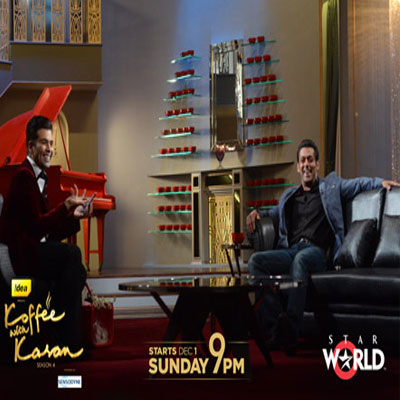
    CANNES: Barely has Mipcom 2013 taken off and Star India seems to have sprung a huge surprise on buyers gathered at Cannes.

    It’s Koffee with Karan, being served hot and fresh at the world’s largest content fest before it returns to screens back home.

    That’s not all. The network is equipped with a host of other series and thousands of films from its library, and is particularly betting big on the epic saga – Mahabharat – which is already on air on Star Plus since 16 September.

    Star India’s ammo includes the thriller series Savdhan India and Humne Li Hai…Shapath from sister channel Life OK’s portfolio as well as Arjun which is currently being telecast on the network.

    Star India vice president Ashutosh Mordekar exults: “While we are looking at selling the Mahabharat format to countries which look at it as mythology, there is also a huge chunk of countries which think of it as a costume drama coming from India and are interested.”

    So Star India also plans to position Mahabharat, a la Korean costume dramas that are very popular with global audiences.

    “We are looking at tapping central and eastern Europe, Russia and the CIS region. We are hoping for a good Mipcom this year,” says Mordekar.

    Having succeeded in selling Life OK’s Devo Ke Dev… Mahadev to Mauritius and Eastern Europe, the network is looking at expanding the market base of the hit series.

    Nach Baliye, India’s Dancing Super Star and Channel V’s teenage crime series Gumrah are among the other show formats the network is looking to license this year. Star India will also hunt for new formats for Life OK as well as its new channel Star World Premier HD.

    About the propensity for Video on Demand (VoD), Mordekar says: “In India too, there is a huge shift from linear TV to non-linear and to VOD and we are also looking at creating content to occupy that space. We are coming up with branches to fulfill the VOD need of our viewers.”

    So while it’s early days at Mipcom, indiantelevision.com will keep a watch out for deals cracked in markets the channel plans to tap.

  • Its Mipcom time again

    Its Mipcom time again

    CANNES: Frenzy marks Nice Airport as staff is in a tearing hurry to attend to the 1,200-odd delegates who’ve flown in from 60 countries across the globe to participate in the world’s largest content fair.

    Indeed, the city of Cannes is draped in finery as it gears up to host Mipcom 2013 and Mip Junior – the biggest event(s) in the television trade.

    Flagging off the extravaganza on 5 October at the Carlton is Mip Junior; a two-day content sale market-cum-conference whose focus is children’s content.

    A significant precursor to Mipcom, Mip Junior sees influential international buyers, sellers and producers of kids’ programmes converge to present, screen, license, discover and acquire the latest content. A platform that aims to offer maximum exposure to all participating companies, while focussing on new opportunities, business models and challenges facing the creative world, Mip Junior is a huge draw. Statistics-wise, 520 buyers, 44,000 screenings, 1,000 programmes and 700 companies certainly make it a not-to-be-missed event.

    This year, the who’s who of the animation industry will be in attendance, both their ongoing and upcoming shows in tow. So while, there will be Unicorn Black with Burka Avenger and Marvista Entertainment with Digimon and Power Rangers, they will share space with say a Kumanta Animation Studios that is bringing its all new Miles and Stones to Mip Junior.

    What’s more, a special workshop will be held on the first day to offer insights to producers and distributors as to how to make the most of the mainstream online platform.

    Day One of the 2013 edition will also see the return of the international competition for newest projects created for children. In the race are Being Zeth by Source Animation, India; Goris the Gorilla by Split, Brazil & Gong, Chile; Koouka by Aldebaran Distribution and Vallaround, Italy; Nelly and Nora by Geronimo, Ireland and The Little Train Choo Choo by JM Animation, Korea.

    Add to all this, participants will get an opportunity to understand and unveil new trends in kids’ content in Russia. Not to mention, Argentina, the country of honour this year, will be partnering with the Argentine National Film Board to showcase original animation, live action and digital series produced by independent Argentina-based producers.

    In case you thought a day of showcasing, networking, buying and selling was it, no way… Reed Midem hosts a night party to present Argentina as this year’s country of honour. So, time to get your LBD and dancing shoes out…

  • Star gears up for MIPCOM

    Star gears up for MIPCOM

    MIPCOM is where the ‘stars’ align for business. And so it is that Star India will be participating for the eighth consecutive time at MIPCOM this year, armed to its teeth with content including Hindi and regional programs.

    There’s no undermining how important MIPCOM is, even for an established entity such as Star India, whose programs have takers not only in India but all over the world. Star India vice president Ashutosh Mordekar puts it well saying: “MIPCOM is the biggest aggregation of content buyers and sellers across the globe. It provides a platform to showcase our content to buyers across the world.”

    Ashutosh Mordekar believes the market provides an opportunity to meet and transact with new as well as existing clients

    Mordekar also believes the market provides an opportunity to meet and transact with new as well as existing clients.

    Star will be focussing on markets like Central and Eastern Europe, Russia and CIS region and Central Asia.

    Coming to what’s new from the Star stable, Mordekar says: “Star is showcasing the epic Mahabharat which is the most expensive show coming from India. The show is already garnering interest across Asia and Europe, and buyers have already indicated their interest.”

    Explaining why Indian content is very well accepted in global markets, he reasons: “The world is currently opening up to Indian content in a big way. Indian content is at present just breaking out. We are at the end of stage one, where the content has been sampled in various countries through initial foothold deals and the success of these shows has created a huge interest in fresh content coming from India.”

    While it is generally felt that the production value of Indian content has gone up in recent times, is it really up-to-speed with international standards? “Yes! The last couple of years have seen a huge leap in the production value of our shows. Be it HD, Dolby 5.1 Sound etc. – the production values today are comparable to the best in the world,” quips Mordekar.

    About the platforms the network plans to target at MIPCOM, he says: “We are going to be in discussions for exploiting our content on IPTV, mobile, VOD (Voice on demand) or free-to-air platforms.”

    Optimistic about the results of participation, Mordekar is looking forward to this year’s fest.

  • Times TV: Scans Cannes for English flicks

    Times TV: Scans Cannes for English flicks

    With the recent introduction of Romedy Now to its existing portfolio of channels, the Times Television Network (TTN) will be exploring new content opportunities for its channels Movies Now and the newbie at this year’s MIPCOM.

    Set to take place in Cannes’ eponymous Palais des Festivals off the Boulevard de la Croisette between 7 and 10 October 2013, MipCom is expected to be the biggest since several years, and it appears as though the entertainment ecosystem seems to have shrugged off the economic woes that have been making news headlines in several countries worldwide.

    The scale has tilted from being a buyers’ market to a sellers’ market over the last few years stresses Ajay Trigunayat

    For TTN’s English entertainment channels CEO Ajay Trigunayat, this would be his tenth year at Cannes. Having represented Zee from 2002 to 2006 and TTN (Movies Now) from 2010-12, this year, Trigunayat will be scouting for content to be shown on Romedy Now, TTN’s newly launched romance and comedy channel.

    “I’ll be looking for movies and series and if there is something interesting, then I will have a look at that as well,” says Trigunayat, adding, “The scale has tilted from being a buyers’ market to a sellers’ market over the last few years.”

    While a cross-section of genres like romance, comedy, action, thriller and horror would be under his scrutiny, he isn’t too keen on drama movies. “We don’t buy drama because it does not have too much of traction with Indian audiences,” he emphasises. 

    For TTN, MIPCOM is more about meeting people and getting to know them on a personal level. According to Trigunayat, it’s a catalyst for meetings to happen while real deals happen later on.

    He is looking forward to meeting biggies like Fox, Warner Bros, and Regency and see what they have in store for them from this year’s releases. On the subject of budgets, he says a substantial amount of money (higher double digit crores) is kept aside for acquisitions, the discussions for which begin or end as deals at MIPCOM.

    He gives an example of how discussions were initiated with Monarchy, the production side of Regency, last year, and more than 100 titles were bought from them. He points out that his team is sticking to big titles and from major studios worldwide and Latin American films are not part of his slate as their quality and sensibilities don’t appeal to Indian viewers. 

  • BBC Worldwide announces its Mipcom factual slate

    MUMBAI: BBC Worldwide has announced its first pre-sales of Brazil with Michael Palin to a raft of broadcasters, ahead of next month‘s television trade event Mipcom 2012 in Cannes, France.

    The travel documentary has been licensed to ABC (Australia), RTL Pay (Germany), VRT (Belgium), Czech TV, Media Entertainment‘s pan-Eastern European feed, the VPRO (Holland), Yle (Finland), RÚV (Iceland), NRK (Norway) and RTV (Slovenia).

    Also on BBC Worldwide‘s factual slate for Mipcom is Nigellissima, to be launched by Nigella Lawson in Cannes. During her first ever visit to Mipcom, Nigella will unveil her take on Italian cooking, inspired by a period spent living in Florence.

    BBC Worldwide‘s Director of Factual Mark Reynolds said, “Michael is a distinguished broadcaster with fans all over the world, so we expect these sales to be the first of many. Similarly, Nigella‘s programmes have a proven global appeal, and it‘s a real thrill to have her joining us at MIPCOM. These two top-quality titles are great examples of the range in our factual slate.”

    Other BBC Worldwide titles new for Mipcom cover science, natural history, lifestyle and factual entertainment. New documentary ‘Space Dive‘ follows elite base-jumper Felix Baumgartner as he attempts freefalling from 125,000 feet – the biggest leap ever taken. In ‘Wonders Of Life‘, Professor Brian Cox explains how a few fundamental laws gave birth to all life in the universe, and another landmark science series, Generation Earth, uses state-of-the-art visuals to showcase the extraordinary engineering feats that have transformed the Earth.

    The latest title from the BBC‘s acclaimed Natural History Unit is ‘Wild Arabia‘, examining Arabia‘s landscapes and colourful creatures, and the remarkable people who have made the Arabian Peninsula their home. Buyers can also check out factual entertainment offering ‘Chef Race‘ from Jamie Oliver‘s Fresh One Productions, in which 16 chefs, eight Brits and eight Americans journey across the US, tackling culinary challenges along the way.