Tag: MIPCOM 2014

  • ‘Got Talent’ continues its global domination with ‘Mongolia’s Got Talent’

    ‘Got Talent’ continues its global domination with ‘Mongolia’s Got Talent’

    MUMBAI: The international rollout of the world’s most successful TV format “Got Talent”, took another landmark step today as Syco Entertainment and FremantleMedia announced the commission of Mongolia’s Got Talent by Mongol TV. The news comes after Got Talent creator Simon Cowell’s recent MIPCOM 2014 Keynote session in which he joked about Mongolia being one of the last regions in the world where Got Talent didn’t have a presence. The multi-season deal will see Mongol TV broadcast the first local version of the format in 2015.

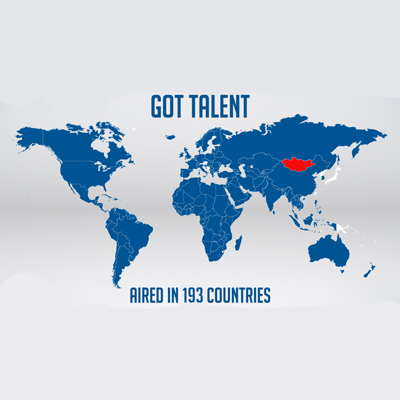
    The Guinness World Record-breaking franchise co-produced by Cowell’s Syco Entertainment and FremantleMedia continues its rein as the Most Successful Reality Television Format in history as it travels further around the world with the new version bringing the total number of local versions across Europe, Asia Pacific, the Middle-East, Africa and the Americas to 67 and the total countries in the world to air a version of the format to 193* (see map).

    As well as creating a local version of the format, Mongol TV will acquire season 8 of the ever successful Britain’s Got Talent. These deals were brokered by Haryaty Rahman, VP Sales and Distribution, Asia, FremantleMedia International. The UK version of the show continues to be the UK’s biggest entertainment show and in 2014 the Britain’s Got Talent finale on ITV exceeded 12 million viewers for 7th year in a row!


    Simon Cowell said “Mongolia is one of the last countries in the world to have Got Talent on air so I’m absolutely delighted Mongol TV will be making the show next year. So thank you and Congratulations Mongolia!”

    Cecile Frot-Coutaz, CEO, FremantleMedia added: “Got Talent has become a World Record breaking format because it combines extraordinary acts with great storytelling, capable of transcending geographic boundaries, language and culture. We’re looking forward to working with Mongol TV next year to create a local version of the show, which will – I’m sure – uncover an array of hidden talents from this part of the globe.”

    Nomin Chinbat, CEO of Mongol TV, said “When I heard Simon Cowell at MIPCOM saying that Got Talent had to be in Mongolia, I immediately decided to rise up to the challenge. Mongolians are great entertainers and this format is a great fit for Mongol TV. I now challenge Simon to join us in Ulaanbaatar in September when we launch the series!”

    Got Talent is watched by an estimated 500 million people worldwide has accumulated over 6 billion lifetime views on YouTube. In 2014, the franchise rolled out in six new markets: Afghanistan, Azerbaijan, Cambodia, Iceland, Mexico and Myanmar.


  • Carriage fee on a rise again?

    Carriage fee on a rise again?

    MUMBAI: Delayed digitisation of phase III and phase IV areas have marred the hopes of broadcasters, multi-system operators (MSOs) and the local cable operators (LCOs) alike. With implementation of digitisation in phase I and II, while broadcasters were enjoying the reduced carriage fees, MSOs were hoping for better on-ground collections with increasing transparency. But all this has taken a U-turn with the Ministry of Information and Broadcasting announcing 2016 as the year when India will be fully digitised.

    The MSOs who have invested heavily for digitising phase I and II markets are still waiting for reaping the benefits of it. And now even the broadcasters who saw some reduction in carriage fees (industry sources peg it between 10 per cent to 30 per cent) during the first two phases have gone back to basics.

    If one has to go by the Media Partners Asia (MPA) report, the cable TV industry has seen a 14 per cent jump in carriage fees. The reason for the jump in carriage fee could be many. Here are a few reasons which we understand could be playing a role in the changed carriage fee pattern:

    1)    Delayed digitisation: The MSOs have already invested heavily in phase I and II and have also borrowed money for phase III and IV markets. Now with the government announcing the final dates for digitisation as 2015 for phase III and 2016 for phase IV, MSOs fear that the LCOs will not increase their collections from the ground.

    2)    Low ARPUs: Even in phase I and II areas, the ARPU hasn’t gone up as expected by the MSOs. And so they haven’t been able to recover the money they had invested.

    3)     New channel launches: Broadcasters launching new channels need greater reach and visibility and so pay more in order to get carried by the platform and also to ensure that it is available to all the subscribers of the platform. This in turn sets a benchmark for the other players also.

    4)    Lack of transparency: Even though one of the aims of digitisation was bringing in transparency and addressability, both haven’t happened as yet. The cable operators have not been able to get the consumer application forms filled and thus, are still unaware of the choice of consumer. Also, there is still under declaration of consumers. 

    “This is true especially for news channels, niche channels and the new channels that have been recently launched. While the existing channels have not seen any hike in carriage fees, broadcasters that launched new channels in the different genres, right from GECs to regional to music and movies have seen a jump in carriage fees, which ranges from 15-25 per cent,” says a distribution head on condition of anonymity.

    Another source close to the development agrees and says, “Yes! The carriage fee for broadcasters launching new channels have gone up. This can be anywhere between 20-25 per cent, depending on the distribution strategy of the broadcaster and the visibility it is looking for.”

    Many in the industry blame the new channel launches for the increase in the carriage fee. “While for the news channels the carriage fee had seen a drop by 10-15 per cent, the new channels that are being launched every now and then, sets a different benchmark. Since broadcasters want better reach for their new channels, they pay huge sums as carriage fee to MSOs and this affects the news channels as well,” says a news broadcaster.

    Even at the recently concluded MIPCOM 2014, Colors CEO Raj Nayak during a panel discussion had stressed that there needs to be complete implementation of digitisation. “While in the phase I of digitisation, the carriage fees had come down by 20 per cent, it has now gone back to square one and this is a dangerous trend,” he had then said.

    Viacom18 group CEO Sudhanshu Vats feels no different. In his recent interaction with Indiantelevision.com he had said, “Carriage, rather than continually coming down, has begun to rise again in recent months.”

    According to India TV chairman and editor-in-chief Rajat Sharma, when digitisation kickstarted, news broadcasters expected consumers to get better quality channels and carriage fees to disappear. “For the MSOs, it is the carriage fee from the news channels that helps them sustain, since they pay the GECs huge sums for getting their programming on their platform,” opines Sharma.

    Unlike the expectations by many, carriage fees haven’t yet been abolished.  “When phase I of digitisation was implemented, carriage fees did come down in terms of what was being paid in the four metros. The national level MSOs saw the benefits of digitisation and passed on some of that benefit to broadcasters. However, with phase II, it hasn’t happened. On the contrary they are going up and extortionist demands are being made again. Perhaps because in other parts of the country the MSOs are in partnership with local or regional players who do not want to let go of carriage fees even though that was meant to be a natural outcome of digitisation,” informs NDTV executive vice chairperson KVL Narayan Rao.

    Rao further adds, “It is impossible for news broadcasters to withstand payment of high carriage fees. Other components of digitisation like buoyant and fair subscription revenues, have not kicked in either. Something needs to be done about these aspects immediately. Carriage fees in particular have to be rationalised.” Rao also pegs the carriage fee increase between 10-30 per cent.

    As for Focus Network group CEO Neeraj Sanan, carriage fee revenues for MSOs are likely to reduce. “However the carriage paid by a broadcaster to an MSO, will increase post first year of DAS due to aggregation at MSO level and the ever increasing number of channels,” he adds.

    Even the MSOs agree that the carriage fee has seen an upward trend. “This is true mostly for the new channel launches. Broadcasters want better reach for their new channels and are ready to pay more carriage fee for those channels. The new channels are seeing a hike in carriage fee by about 20-25 per cent,” concludes the MSO.

  • MIPCOM 2014: What do buyers want in 4K?

    MIPCOM 2014: What do buyers want in 4K?

    MUMBAI: 4K is on everyone’s mind. Even when Indian direct to home (DTH) players, Videocon d2h and Tata Sky launched their 4K set top boxes (STBs), everyone questioned if there was enough content available in 4K. The same was discussed even at the just concluded MIPCOM 2014 at Cannes in the session ‘What do buyers want in 4K?’


    The session which saw Sky Deutschland EVP programming Gary Davey, France Télévisions director of future media Eric Scherer, Atlantic Productions director of operations Ruth Sessions and Red Bull Media House head of commercial distribution Bernhard Hafenscher speaking on the issue which was moderated by journalist & industry consultant Chris Forrester.


    Talking about the general prospect for 4K in the world, Davey said that a platform like Sky Deutschland is excited about the sea change that content is set to witness. “We will be very active on 4K. While we haven’t decided a launch date as yet, we are committed to it,” said Davey.


    What is interesting is that the take-up for 4K has outperformed even high definition (HD). So, is it the broadcasting push, the industry push or the consumer pull? Said Davey, “According to me, people just love the idea of big screen viewing with higher resolution.”


    For Sessions, content creators today are telling stories for multiple platforms and so a lot of them are filming it in 4K. Atlantic Productions has been filming in 4K for the past four years. “We have always been hungry for resolution and I believe in future proofing. So for the right projects, where we thought that stories that we are saying today will be relevant for the next 10-15 years, we film in 4K,” said Sessions adding that stories benefit when told in 4K.


    Television today has the risk of being over passed by new barbarians-Netflix and by millennial kids. “France TV too, have decided to test with 4K,” added Scherer.


    During the discussion, one thing which came out clearly was that it is sports and sports events which will be most important in 4K. “People can become a part of the sport, when they watch it in 4K. Once the market grows, we will have a lot of content in 4K,” said Hafenscher.


    The other content created in 4K will include high end documentary movies and arts content. “You have to pick the projects for 4K. It needs to mean something and add value,” informed Davey.

    In 3D and 4K quality, there is a lot of information in every shot. “There is so much going on in the image, because of the depth,” said Sessions.


    While content creators are excited about filming in 4K, the extremely high production cost is what keeps them on their toes. “The cost depends on the category of the content. It is expensive, but not multiple of costs. The cost increases also because of multiple use of cameras,” informed Scherer.


    So will 4K percolate to broadcasters? “It will take a little longer than people expect. For a long time, we will be cherry picking the content in 4K. In fact all the promise that ultra HD had made has not been realised as yet,” informed Davey.


    According to the panel, in the next five years, the world could see two-three 4K channels, which would start as special events and then move to a full-fledged channel.


  • Twitter to launch ‘Twitter TV Ratings’ worldwide

    Twitter to launch ‘Twitter TV Ratings’ worldwide

    CANNES: It is a big development for broadcasters around the globe. Social networking site Twitter had earlier this year launched ‘Twitter TV Ratings’ in the US. The network will slowly launch it in the UK, Italy and Australia.


    “We will be rolling it out across the world,” said Twitter researcher Anjali Midha during a presentation in Cannes at the ongoing MIPCOM 2014.


    With this, the Twitter team wants to put the power of Twitter in the hands of the broadcasters, so that they know how the programmes are doing day after day or week after week and to also find out the subsequent reach from that activity. “The reason we know that reach is important is because we see that Twitter really drives live ratings,” added Midha. 


    Twitter helps broadcasters know about live viewing as well as week after week viewing. “Twitter is conversational, it is live, it is public, it is the global town square. The audience takes the show and makes it their own, it is distributed, it permeates the entire culture,” said Twitter TV creative lead Fred Graver.


    Throwing some statistics, Graver said that Twitter conversations are shared with 271 million users, 78 per cent of whom are on mobile and “we process 500 million tweets a day, which is 60,000 tweets a second,” he informed.  


    According to him, 95 per cent of public conversation happens on Twitter. What’s interesting is that 70 per cent of tweets are created and consumed during the broadcast of a show. “People who see those tweets when it is live, say they want to watch the programme, either then or later online. We are amazed by the way our partners adapt the platform,” he added.


    He further went on to give examples of broadcasters who are using Twitter. “In the past one week, we have seen Channel 7 putting tweets inside promotions, Channel 1 in Russia putting hashtags and handles in news broadcast. There is a live musical jukebox in India that is powered by Twitter.”


    The key to the social media platform is data, which proves the value of audience and how they are valuable to advertisers. In the session on ‘TVxTwitter’, another point that was touched was money. “A lot of the money is drifting away to digital from TV. It is a fact. Twitter has devised an ‘Amplify’ programme that helps broadcasters capture the money by capturing the conversation on Twitter,” he said.


    Talking of partnership, Twitter UK’s head of broadcast partnerships Dan Biddle said that Twitter is the ‘water cooler conversations’ that won’t wait till the next day. He also delved on how producers could make the second screen important to their brand as the first screen. “Take the content and tweet. You give people the tweet that they hoped they had tweeted. It is not only about the share, it is also about the reach,” informed Biddle.  


    Biddle gave ways of reaching out to the audience:


    Use Hashtags: these are the moments, they are the campfire around which we tell stories. Every time you put a hashtag, people tweet more.


    Use @handles: That’s your presence and relationship on Twitter, that’s the voice that you have which talks to the audience.


    Interactions: How do you make followers? How do you turn the hashtags into something more? It is important that you reward conversations on Twitter.


    “We don’t see as many @handle’s as we see hashtags, which is strange. @handle is the voice of you, your show and it is the voice that can connect even after your show is over,” he said.

    According to Biddle, the first screen is the first screen only for one week, till the time the show is on air. For the rest of the time, it is the mobile, the second screen, which becomes important.  So let people know you are on Twitter and the trick to that is it you let people know that you are there, put it out on shows, during advertising,” he added.  


    Twitter is a part of your digital strategy.  “While it is the heart of digital strategy, there is more to it. It can help you drive audiences to SVOD, OTT, where ever you want,” he informed.

    According to Twitter officials, they find the best results when they work with their partners from the beginning.


    Midha who spoke on the data, started off by giving the one big phenomena, that the impressions were shifting to Twitter during live moments. “The World Cup Brazil 2014 saw 33 per cent increase in tweets and 85 per cent increase in impressions.  The audience has shifted to Twitter while the content is on TV,” she said.


    Talking of the US primetime market, Midha said that roughly 3/4th of all programming, now includes either a hashtag or some sort of tweet or voting mechanism. “That’s quite a lot.” This apart, on an average five integrations happen during a single telecast. But the big question is: Does this work? “It does work. And we are getting early results,” she said confidently.


    Citing example of the US reality show, Anjali said that the actual tweets per minute when the broadcaster introduces the hashtag, sees a 20 per cent lift in tweets as against when the audiences organically create it. She pointed out that 66 per cent of people prefer to see TV tweets from official show accounts.


    An important finding is that for a lot of people, actors and the cast are the most preferred source for news from TV. “Live tweeting from casts sees 64 per cent lift in total conversation volumes, while from show account it sees a hike of 7 per cent,” she informed.


    The session also delved on how broadcasters can monetise content through Twitter Amplify. “It is a partnership between Twitter, content and advertisers,” said Twitter Amplify international head Marie Sornin.


    Explaining how it functions, Sornin said that as TV broadcasters tweet some content, that tweet gets distributed to followers. The advertiser gives its ad to the broadcaster to integrate with the content. The broadcaster pays Twitter to distribute the message to a targeted audience. “So the advertiser pays to the content creator and the content creator pays Twitter to distribute the message,” she informed adding that Twitter Amplify leads to monetisation, more participation and engagement.


  • FreemantleMedia Latin America partners with 360Powwow

    FreemantleMedia Latin America partners with 360Powwow

    CANNES: FremantleMedia Latin America (FMLA) announced a new strategic partnership with media and Entertainment Company, 360Powwow to develop original Spanish-language content for the Latin American market.


    The deal will see FMLA further strengthen its pan-regional production activity and co-create a mix of titles across the lifestyle, entertainment and high-end scripted genres. FremantleMedia will retain the global distribution rights across both format and finished tape products.
     
    As part of the partnership, FMLA will continue FremantleMedia’s long-standing relationship with globally-renowned fashion expert, creative director of Marie Claire, and Project Runway judge, Nina Garcia, who will work alongside FMLA and Powwow 360 on fashion genre content via an exclusive development agreement.
     
    FremantleMedia Latin America CEO Adrian Santucho believes that its goal is to develop new content using Powwow’s culture-transcending talents and its executive team expertise. “A partnership between FremantleMedia Latin America and Powwow creates an exciting opportunity to offer innovative content for the US Hispanic and Latin American markets.”
     
    Powwow CEO Daniel Gutman added: “The strategic alliance with FremantleMedia Latin America is in line with our mission to develop the best quality content with the most talented people in our industry.”


  • MIPCOM 2014: Star India eyes newer formats, greater reach

    MIPCOM 2014: Star India eyes newer formats, greater reach

    CANNES: It is a meeting place for the content industry across the globe. And this is precisely what the seven member team of Star India is doing in Cannes, at the ongoing MIPCOM 2014. The network, which includes Hindi general entertainment channels: Star Plus and Life OK as well as its movie cluster: Star Movies, Star Movies Action, Star Gold, and Movies OK is having a busy MIPCOM.


    While a three member team is here selling its content, which ranges from drama to mythology, a four member team: two each for GECs and movie channels is looking to buy formats that can be adapted for the Indian audiences, both fiction and non-fiction.


    Uncountable meetings have kept the seven member team busy on both day one and day two of the market, which will be here till 16 October, the last day of MIPCOM 2014.


    On sale is the entire cluster of shows from both Star Plus and Life OK. But what is being pushed more is Yeh Hai Mohabbatein, Ek Hasina Thi, Saraswatichandra and Mahabharat, apart from its other hit shows, including the just launched Airlines, Nisha Aur Uske Cousins and the biggest hit on Life OK, Mahadev.


    While the GEC cluster is looking at the entire world market for both selling and buying shows and formats, the English movie cluster is focusing on Hollywood movies.


    The number one channel in the Hindi GEC space, as per the TAM TV ratings, is also of key importance to 21st Century Fox co-chief operating officer James Murdoch.  “The business in India has been doing great. We are the number one network there. If we continue to innovate and lead in India, it will prove to be a game changer for us,” he had said during his keynote, here in Cannes.

  • Audiences watch less TV as they grow younger, says Maker Studios CEO Ynon Kreiz

    Audiences watch less TV as they grow younger, says Maker Studios CEO Ynon Kreiz

    CANNES: Maker Studios CEO Ynon Kreiz is noticing the emergence of short format content. “This side of business is growing at double digits,” he said during his keynote at the ongoing MIPCOM 2014.


    According to Kreiz, consumption habits are changing. “There is a massive shift from linear to online,” he added. Citing a survey, he said that while 12-24 year olds watch one third less linear TV than adults aged between 25 and 49, it is less than half of what adults aged 50-65 watch.“It’s not that they watch more as they grow older, but that they watch less as they grow younger,” said Kreiz.


    Talking about Maker’s acquisition by Disney he said, “Disney being the number one company of the world and Maker being the largest short form company, we both had to do something to remain relevant. So for Disney, this gives an opportunity to extend their business to short form, while for us, this gives the opportunity to move to traditional media.”


    The reach of Maker Studios and Disney taken together is third only to Google and Facebook.


    “The current generation of kids hasn’t grown up with TV, the way we did. Kids control what they want to watch, where, why and how. Against this, there is a demographic which is hard to find,” he added.


    Millennial kids watch 50 per cent more video online as compared to others. So the big question is how do they reach them? Said Kreiz, “When we say short form, it is a different medium in which you make, monetise, consume and market content. There is a difference in movies and TV and TV and short form.”


    Talking about the duration of the short formats he said, “If you take the top 100 properties in the US, right from Google to Netflix to Amazon etc, the average duration of content is 4 minutes. And this doesn’t include mobile, this is just desktop.”


    According to a study conducted by Netflix, almost 90 per cent of Netflix content consumed on mobile is 10 minutes of duration. “Maker specialises in the genre, which started off as a group that wanted to build the DNA of a media company that understood content in short form and that’s what separates the company from the rest,” he opined.


    Kreiz feels that Maker inspires expressions, while also entertaining global audiences. “We enable global brands to engage with the millennial audience,” he added.   


    Maker currently has 55,000 creators in more than 100 countries. “It’s a large network of people creating content. But we put great emphasis on quality of content. We get 10,000 to 15,000 people who want to join the network, of which we take 100 people every day,” he said.


    According to Kreiz, what makes their work exciting is that they are inventing a new medium. “Everyone in the company is a Maker. With Disney we can accelerate growth and become mainstream,” he expressed hopefully.


    Talking about advertisement, he said, “In some cases the CPM we get is higher than TV. But this is a nascent industry. We are in the business of monetising advertising inventory. The growth is in double digits and a lot of credit for this goes to YouTube.”


    As per Kreiz, advertisers are now moving 10-25 per cent of the TV advertising budgets to digital. “We can monetise in several ways which could be through ad integration, branded entertainment amongst others. We have created our own platform to bring a market place which brings the advertisers and makers together.”


    While everyone is running behind the millennials, they are running behind content. The challenge for most of the platforms is to remain relevant. “With Disney, we feel we are at a good place to achieve it,” concluded Kreiz.  

  • Being a lean aggressive company has helped us, says Sony’s Steve Mosko

    Being a lean aggressive company has helped us, says Sony’s Steve Mosko

    CANNES: Right from the hit series Breaking Bad to the new show on the block, Outlander, Sony has been in the middle of it all. And taking the centre stage for the first master keynote at MIPCOM 2014 was Sony Pictures Television president Steve Mosko.  


    He set the right tone for his keynopte by saying, “Our buyers have doubled due to the digital feed.” With business spanning around TV channels, production and distribution, where does he fit? Answered Mosko, “When people think of Sony, they think of multi-platform. On TV we have found that our independence has helped us in the US. People say, you cannot exist as a standalone. We have 30 original shows on air with 14 networks.       Internationally being a lean aggressive company has helped us.”


    Mosko believes that a number of great ideas come from the smart creative development people. “World is becoming consolidated and this also increases work in order to put everything together,” he opined.


    Delving on piracy he said that while one cannot control piracy but can minimise it. “We have done a couple of things to minimise it. So we have instilled tight controls, where we do the dubbing, subtitling et or a show.”


    Sony, from a business solution point of view, is working with its partners across to ensure that the shows are aired closer to the US telecast dates. “We cannot limit pirates, we just have to minimise it,” he added.


    Mosko during his keynote also spoke about selling shows to new digital buyers globally. “Added competition makes everyone better. We have seen our buyers double around the globe, in the past five years,” he said.


    Mentioning the growth of Netflix he said, “The platform has gone from zero to where it is today. Media companies are observant of what is happening in the US, for us, all this given us more buyers and makes us more creative.”


    He is firm believer of the fact that it is the content that drives platforms. Talking about Sony Pictures within Sony he said, “There has never been a time when different parts of the company have worked so closely. Within the company we are working closely to maximise the business.”


    Sony Pictures currently is doing big budget TV shows on playstation “and the budget is equal to what we are doing on cable TV. We have been working towards making the model work,” he informed.


    Mosko said that everyone takes pride in being in the TV business. “TV experience is great now. Sony is making investments in 4K to enhance quality of content. This goes a long way to convince people to be in the TV business,” he said.


    During his keynote, he pointed out that tax benefits to shoot in different countries act as a great booster.


    Talking about the millennial kids, he said that they are not obliged to watch content when they are told to watch. “There is more opportunity to watch content today,” he said, adding that TV viewing is going up because of the great content.

  • “Star India will prove to be a game changer for us”: James Murdoch

    “Star India will prove to be a game changer for us”: James Murdoch

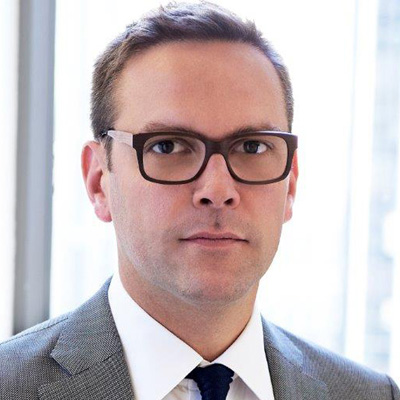
    CANNES: 21st Century Fox co-chief operating officer James Murdoch has lots of hopes from Star India. During his keynote on day one of the ongoing MIPCOM 2014, he said, “If we continue to innovate and lead in India, it will prove to be a game changer for us. It is the number one network in India.” He further stressed that the India business is really doing well for them and so was Sky in the UK.


    Murdoch believes in giving freedom and creating a company which backs talent. “At 21st Century Fox, we aspire to be one of the biggest homes for creativity and storytelling. We want to be a place where we can attract some of the best talent and encourage them to take risks, when they can’t take it anywhere else,” stressed Murdoch.


    21st Century Fox which is in different businesses, right from television to movies to cable and satellite, believes that the main business at the end of the day is of digital video and about story telling. “A lot of barriers in different lines of our business is breaking down. The challenges in terms of strategies and customer behaviour is similar from place to place and business to business,” he added.


    The biggest media giant believes in giving its executives and talent the freedom to think and create. “The culture that we are creating is that right from Mumbai to LA, the executives should have the confidence for risk taking and do great story telling,” he said. The company believes in empowering people to do great business.


    Murdoch laid a lot of emphasis on taking risks. “Larger companies have the ability to take risks. We learn lessons along the way. As a company we have made investments in challenging businesses. We are trying to create a culture where people understand that it is better to take risks, even if you get it wrong, at least you have tried. Great successes come from great risks. We have a culture where we do not get traumatised with failures.  We want to be a place where people feel that they can be backed,” he announced.


    He feels that all of Fox’s business is of risk. “Investing in original programming is the biggest risk we take, as investing in original programming means delaying some profits for the company,” he said while giving example of Simpsons, which they made and then acquired for cable syndication in the US. “When we took the step, we didn’t know how customers would react to it.”


    “These are the sort of risks one needs to take. I love the moment in the business when you say, ‘Holy Cow, we did it!’” he stressed.


    The son of media baron Rupert Murdoch, also spoke about the Shine and Endemol joint venture. “We saw opportunity in merging with Endemol. This is a business which will benefit from scale, breadth and diversity of creativity. Both Shine and Endemol have a great future.”


    Murdoch feels that in a creative business, one cannot over-synergise. “You have to allow people to run their own show.”


    According to Murdoch, consolidation in infrastructure business of cable and television has begun. “The upstream business will see further consolidation. People will seek to invest more in programming, because they see value in it,” he said.


    He also touched upon the most talked about collaboration between Time Warner Cable and 21st Century Fox, which did not take place.  “We had thought that the combination could be exciting. It was an opportunity at a moment in time. Given the nature of these things, we didn’t want to get into things like hostile takeovers and so moved out.”


    The company will soon be completing the merger of its three Sky businesses in Europe: UK, Germany and Italy. So why merge the three, he said, “Each one of them in their lifecycle has done really well. There are a lot of common things they do. We feel that together there is a huge opportunity to accelerate the business. Also with this they can create great stories. In Europe there is great opportunity for studio business.”


    According to Murdoch, consumers like bundling, because that drives down prices and consumption up. “People will bundle things in different ways and the stack will be re-ordered. Subscription TV is alive and kicking, and it is changing, driven by competition,” he said.


    He is happy when customers surprise him. “We need to create authenticity in the content. Customers are being better served today.”


    He concluded by saying, “TV industry has been very progressive and we need to be pacesetter.”

  • MIPCOM 2014: Discovery Italia and Xilam Seal an output deal in Italy

    MIPCOM 2014: Discovery Italia and Xilam Seal an output deal in Italy

    CANNES: Building on the rapid success of brand animated series such as Oggy and the Cockroaches and The Daltons on K2 (the Discovery Italia free-to-air channel targeting kids 4-14 filled with action, adventure and pure entertainment) Award-winning French animation studio Xilam and Discovery Italia have signed an Output deal for the upcoming years.

     
    In a move to strengthen Discovery Italia’s animated comedy line-up and secure access to Xilam’s unique expertise in the field, this comprehensive trade agreement includes 14 series, ie a volume of 450 half-hour programs. In short:
     
    –       250 half hours from Xilam’s library, including Oggy and The cockroaches, The Daltons, Space Goofs, etc.
    –       120 half-hours of series currently in production, including Hubert and Takako, Zig and Sharko (season 2), The Daltons (season 2), etc.
    –       80 half hours, i.e. 3 new series to be produced by Xilam in 2015-2016.

     
    “Building a partnership with Xilam was unavoidable. They are the masters of animated comedies and K2 in the reign of fun,” said Discovery Italia programming and content acquisition director Loredana Di Domenico.

    Xilam founder and president Marc du Pontavice believes that signing deal with Discovery kids is important since K2 is a tremendous job giving exposure to Xilam’s series and this cooperation is going to bring more and more fans to its brand titles.