Tag: Ministry of Information & Broadcasting

  • MIB has no data on OTTs; not under regulation: Minister

    MIB has no data on OTTs; not under regulation: Minister

    NEW DELHI: The government on Thursday while admitting it has no official data relating to OTT industry, including number of players and subscribers, said the Ministry of Information and Broadcasting (MIB) doesn’t regulate internet-based video services.

    “MIB does not regulate paid streaming and video-on-demand services provided over the internet. However, there are enough safeguards available under the Information Technology Act, 2000, which is administered by Ministry of Electronics and Information Technology (MEITY), for content appearing on paid streaming and video-on-demand services,” MIB junior minister Rajyavardhan Rathore informed Indian Parliament’s Lower House or Lok Sabha. 

    The government stand is significant because increasingly voices of criticism were being heard from the conservative section of society questioning edgy content on OTT platforms that technically don’t have to follow any content code like done by linear TV, which also broadly follows guidelines on content as enumerated in the Cable TV Act 1997, apart from imposing self-regulations administered by industry bodies like NBA and IBF.

    With original shows and serials on OTT platforms operating in India increasing by the day — egged on by global and domestic players like Netflix, Amazon, Hotstar, VOOT and Arre  — the fledgling industry segment has given content producers a platform where out-of-the-box themes are being tested and tried.

    According to Rathore, who was answering a series of questions on the country’s OTT services, there were no official figures available with the ministry.

    However, MIB quoted Frost & Sullivan to state it is estimated there were around 70 million unique connected viewers of which 1.3 million were paid video subscribers.

    While not directly stating whether the government proposed any content regulations for OTT platforms, Rathore clarified that IT Ministry was empowered to block and/or censure content and its distributors on several grounds, including those relating to security of the country, foreign relations and pornography.

    As of now OTT platforms in India could breathe easy as regulator TRAI, too, has not issued any guideline relating to OTT content preferring to restrict its diktat on the telecoms side of net neutrality. Still, many OTT platforms, some of which are digital extensions of traditional TV services owned by big broadcasting companies, prefer to do self-censorship on edgy content in shows like the Game of Thrones.

    ALSO READ:

    TRAI releases recommendations on net neutrality 

    Regional OTT content more than just catch-up TV    

    Can OTT players leverage market opportunities & rationalize rising content costs?

  • Comment: War on online video piracy, which matters, is here for India to fight

    Comment: War on online video piracy, which matters, is here for India to fight

    “There’s only one war that matters. And it is here”.

    So reads the caption of HBO’s official trailer for the blockbuster sixth episode of ‘Game of Thrones’ season seven that is scheduled to be aired next week. Even as Daenerys Targaryen’s Unsullied Army took up position outside the walls of King’s Landing, the online leaks of the TV series continued with unfazed pirates threatening not only to up the ransom figures, but also breach more episodes—Khalessi and dragons, notwithstanding.

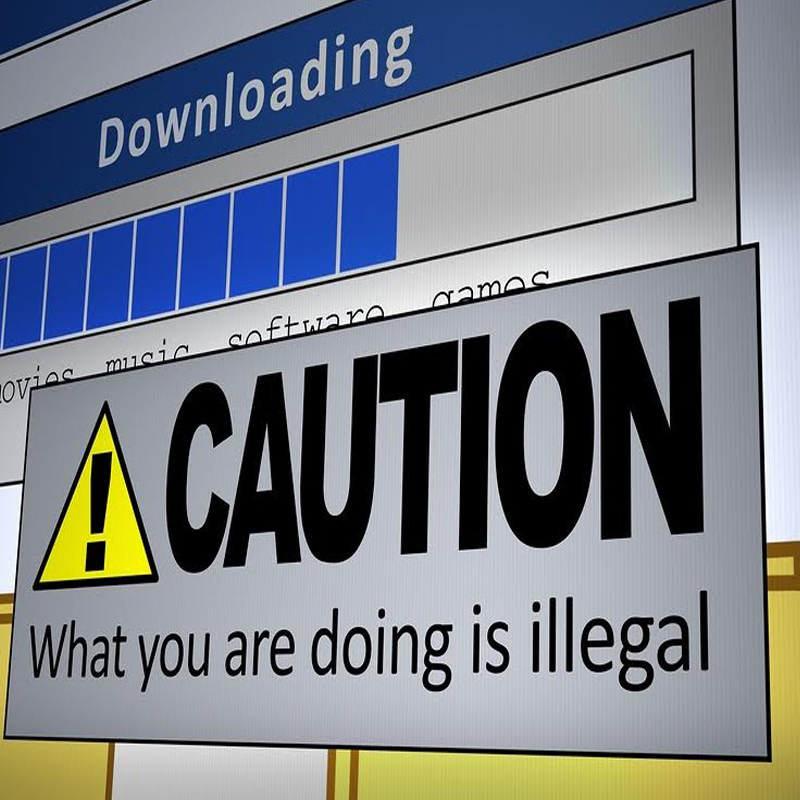
    But the caption of the trailer does resonate with the Indian media and entertainment (M&E) industry as well as the government and policy-makers. The war that matters – the battle against online pirates — is certainly here and worth fighting for.

    As the online video market grows around the globe, India being no exception, so has the fear of online piracy and loss of revenues to content owners.

    The leak of an episode of GOT that recently happened in India, courtesy Prime Focus Tech, Indian host broadcaster Star India’s technology vendor, brought to the fore that the menace is closer home and will grow in coming days. And it happened just in the week – or after Hotstar – started a high decibel media campaign  urging  viewers to stop downloading torrents and go for originals on the streaming VOD service. The comnsumer – it seemed – was cocking a snook at its suggestions, though the leak happened through its vendor-partner. 

    Earlier, it was primarily the Indian film industry that was battling online pirates through John Doe court orders and blocking of some websites. But now, it seems, the whole entertainment industry needs to come together with policy makers to put up a joint front against piracy. More importantly, admission of the fact that the scourge has arrived on Indian shores and will spread in the coming years more aggressively, will only help drive anti-piracy initiatives.

    It’s not that initiatives against piracy are not taking place, but they are individual acts. “There are various industry bodies operating in the M&E sector in India and since there can’t be divergent views on tackling piracy, it’s high time a single coalition is formed by all industry stakeholders in partnership with government, which will help align business interests in a common mission,” said Viacom18 Media group general counsel and company secretary Sujeet Jain, one of the industry execs at the forefront in the fight against piracy.

    Why the fight against online piracy is imperative and India must start taking counter measures to safeguard against revenue losses?

    Sample some figures. Singapore-based market research firm Media Partners Asia (MPA) recently estimated that the Indian online video industry generated approximately $ 230 million in total sales in 2016 and could reach approximately $340 million in 2017. Online video revenues, including net advertising and subscription fees, will grow at a 21 per cent CAGR across the Apac region between 2017 and 2022, climbing from US$17.6 billion in 2017 to US$46 billion by 2022, MPA reported.

    Data revenues across fixed and mobile networks in Apac will reach $318 billion by 2022 and average mobile broadband penetration will reach 73 per cent per capita by 2022 versus 59 per cent in 2017, with some of the biggest growth coming from India, Indonesia, the Philippines, Thailand and Vietnam.

    Indian regulator TRAI’s figures state till May-June this year India had 282 million wireless and 18.33 million wired broadband subs.

    While acknowledging the potential of the Indian online video market and its weaknesses for breaches, a TV exec, on the condition of anonymity, pointed out that lack of cohesion and unity is stopping various industry associations to come together under one umbrella for anti-piracy activities. The need for finances to keep such an initiative afloat is an impediment too.

    For example, a body called Copyright Force was announced last year with much fanfare with few Indian and foreign industry associations promising to collaborate on anti-piracy measures. But, recently a senior government official in the Ministry of Commerce, which oversees IPR-related policy-making, told indiantelevision.com that he had not heard about Copyright Force, but some individual media companies were in regular touch.

    Writing a blog on the need to uphold IPR, Viacom18’s Jain very aptly had pointed out programs such as Digital Bharat may not achieve the  desired results if online piracy is not curbed as IPR enforcement for the M&E industry was no less important than IP assets emerging from innovations and R&D from other sectors and for India to be globally successful, it must ensure safeguards against IPR breaches.

    While the government admits India is a big and complex market, officials also point out efforts are on to evolve an ecosystem where IPR is respected  and online piracy is arrested, if not totally demolished as even more developed markets are finding it difficult to plug such loopholes – leakage of GOT episodes from various parts of the globe being an example.

    A senior government official also told indiantelevision.com that the Commerce Ministry is in touch with organizations like the Ministry of Information and Broadcasting, Ministry of Electronics and IT and Ministry of Law to amend some of the existing relevant legislations (The Cinematograph Act, 1952, the IT Act and the Copyright Act, for instance) to update them in the modern context.
     
    However, the government also expects the Indian M&E industry and related industry associations to give it exhaustive and cohesive feedbacks and suggestions to help framing of futuristic legislations to fight piracy and uphold sanctity of IPRs. Probably, such a united approach is not coming forth from the industry, even while piecemeal suggestions are being given to the government.    

    That raises another question: how is the issue of IPR piracy is being sought to be addressed in other parts of the world?

    The UK has PIPCU or the Police Intellectual Property Crime Unit, which is funded by the Intellectual Property Office and run by the City of London Police to combat this criminality, with a special focus on offences committed online. Australia has a controversial, but stringent law against piracy. In Asia, various countries have different standards, but collaborate with media associations like Hong Kong-based CASBAA to crack down on pirates through jointly funded legal recourse and high-pitch anti-awareness campaigns.

    In June this year, 30 global content creators and on-demand entertainment companies launched an industry coalition called Alliance for Creativity and Entertainment (ACE) dedicated to protecting the dynamic legal market for creative content and reducing online piracy.The worldwide members of ACE include Amazon, AMC Networks, BBC Worldwide, Bell Canada and Bell Media, Canal+ Group, CBS Corporation, Foxtel, Grupo Globo, HBO, Hulu, Lionsgate, MGM, Millennium Media, NBCUniversal, Netflix, Paramount Pictures, Sky, Sony Pictures Entertainment, Studio Babelsberg, STX Entertainment, Twentieth Century Fox, Univision Communications Inc., Village Roadshow, The Walt Disney Company and Warner Bros Entertainment Inc with Star India being the lone Indian member.

    A spokesperson of ACE told indiantelevision.com that though it’d welcome more Indian companies (apart from Star), it has no India-specific initiative on its agenda at the moment. One wonders why not? Certainly ACE with its money and influencing power – some of its supporters do have large business exposure in the Indian market – can contribute a lot in terms of international practices that could help the Commerce Ministry in framing and pushing more effective anti-piracy measures; the existence and contribution of TIPCU or Telengana Intellectual Property Crime Unit or Maharashtra’s online Cyber  crime division, notwithstanding.

    If, according to MPA, India, Japan, Australia, Korea and Taiwan will emerge as the markets (apart from market leader China) with the most scale in online video revenues and distribution, can the pirates be far behind back home?

    Jain conservatively estimated large and medium sized pirate networks in India can generate between $2-6 million per annum, but another Indian M&E industry exec said the loss due to piracy could be in high double digit millions of dollars. Incidentally, the Indian government doesn’t have a figure of revenue losses due to online piracy. If it has, that figure hasn’t been made public.

    So, if there’s one war that the Indian M&E industry and the government need to take cognizance of – it’s already here – it could very well be the fight against online piracy.

    Certainly, piracy cannot be bandied as an achievement of the government’s much touted Make In India and/or Made In India programmes.

    ALSO READ :

    Indian online video to grow to US 1.6 bn at 35 percent CAGR by 2022

    MPA forecasts Asia Pacific online video opportunity at US$35 billion by 2021

    FICCI Frames ’17: Maharashtra to form IP crime unit to fight online piracy

    Online pirates beware, Copyright Force on way
  • TV content: Madras HC seeks Centre’s clarification on regulatory mechanism

    TV content: Madras HC seeks Centre’s clarification on regulatory mechanism

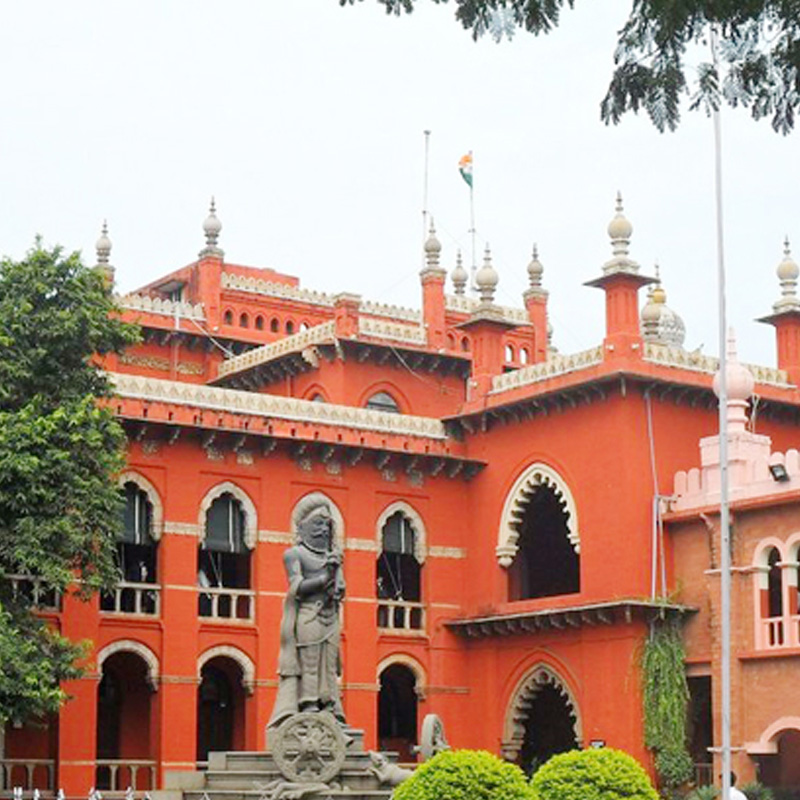
    NEW DELHI: Joining issues with a petition presently being heard by the Supreme Court on a similar matter, the Madras High Court yesterday directed the federal government to clarify on the existing regulatory setup governing contents aired by television channels in India.

    The first bench comprising Chief Justice Indira Banerjee and Justice M Sunder gave this direction to assistant solicitor general Su Srinivasan, who appeared for the central government, during the hearing of a public interest litigation (PIL) to stop telecast of Tamil reality show ‘Bigg Boss’, hosted by actor Kamal Haasan on Vijay TV, part of Star India, according to a report filed by PTI from Chennai.

    The matter has been posted for further hearing on August 18, 2017.

    Earlier, senior counsel P S Raman, who appeared on behalf of the actor and anchor of the TV show, submitted that there were two bodies to regulate the channels. One was the Broadcasting Content Complaints Council (BCCC), a self-regulatory body headed by a retired Supreme Court judge and the other was ministry of information and broadcasting (MIB), the PTI report quoted Raman as telling the local high court.

    BCCC is a self-regulatory body set up by the Indian Broadcasting Foundation, an industry organisation that has a large number of TV channels as its members. Though there’s no formal content regulatory body in India on the lines of American FCC or the UK’s Ofcom or Singapore’s MDA, IBF’s self regulatory body takes up complaints relating to TV content. Separately, the content code, part of India’s Cable TV Act (enforced by MIB) outlines broad guidelines for TV content.

    The PTI report stated that petitioner Saravanan has alleged that in the reality show Haasan played with emotions and behaviour of female contestants, which he termed vulgar and obscene. He further submitted that to protect Tamil culture and tradition and in the interest and welfare of the general public, the telecast of the show must be stalled immediately.

    “The dress code and behaviour of female contestants on the show are very vulgar and obscene making my family members and me uncomfortable in watching the programme. Also, the reference to ‘cheri’ (slum) behavior, made by a participant to describe the behaviour of another contestant, greatly hurt downtrodden people,” the petitioner said.

    Meanwhile, the Supreme Court is hearing a similar case and has enquired from the central government whether it has a proper mechanism in place to regulate TV content.

    Outgoing film certification (CBFC) chief Pahlaj Nihalani, dubbed nationalist and ultra-conservative by a section of content producers and audience alike, in a media interview had urged the government to extend CBFC’s jurisdiction to oversee television shows too.

    ALSO READ:

    Govt formalising TV & radio complaints’ redressal mechanism

    SC to MIB: Get mechanism to deal with complaints on TV, radio shows

    Awarded adman Prasoon Joshi is new CBFC chief, Pahlaj Nihalani exits

  • Telangana govt. wishes to own satellite to air TV channels

    NEW DELHI: Now, an Indian state wants to own a satellite and broadcast TV channels espousing Indian values. The Telangana government would like to have its own satellite in orbit to telecast (TV) channels with good content, state IT minister K T Rama Rao said in Hyderabad on Wednesday.

    Speaking after the launch of T-SAT network of two television channels (Vidya and Nipuna) of the state government, which telecast content on distance learning, agriculture extension, rural development, tele-medicine and e-governance, the minister, as quoted by a PTI report from Hyderabad, said, “Today, we are broadcasting two channels by using satellite technology. But, eventually the goal is…not today… we should have our own special satellite in the orbit.” 

    The state government can telecast good content by having some channels at a time when the negative impact of western culture is being seen in the society, he said as per the news agency report.

    public://Telangana-Map-Home-Page.png

    “Through that satellite, if necessary, not two, but the state government would work actively (on) some 10 to 12 channels. Today, we see the developments in society. We see the impact of western culture. We can do many types of programmes on behalf of the government,” Rao said, recalling that India’s space agency ISRO had recently launched a record 104 satellites in a single mission.

    Educational content used to be telecast under the brand name of ‘Mana TV’ in undivided Andhra Pradesh, but the state government sought to expand its programming, Rao said, adding that the newly launched channels aim to offer content in different areas, including health and agriculture, for the benefit of the masses, the minister added.

    Such assertions once again highlight why TRAI’s suggestions on media ownership and barring government and government-backed bodies from getting into business of broadcasting and cable TV distribution should be adopted at the earliest by the Ministry of Information and Broadcasting. Or else, soon every state in India may want to `own’ satellites, TV channels and then get into distribution, thus creating potential local monopolies, an industry observer opined.

    Sector regulator TRAI’s exhaustive set of recommendations on media ownership, issued and updated from time to time and last made in 2014, can be found here http://www.trai.gov.in/release-publication/recommendation.

    ALSO READ:

    TRAI releases recommendations on media ownership

  • Pratidin Time clarifies that News Time Assam is recepient of MIB ban for a day

    Pratidin Time clarifies that News Time Assam is recepient of MIB ban for a day

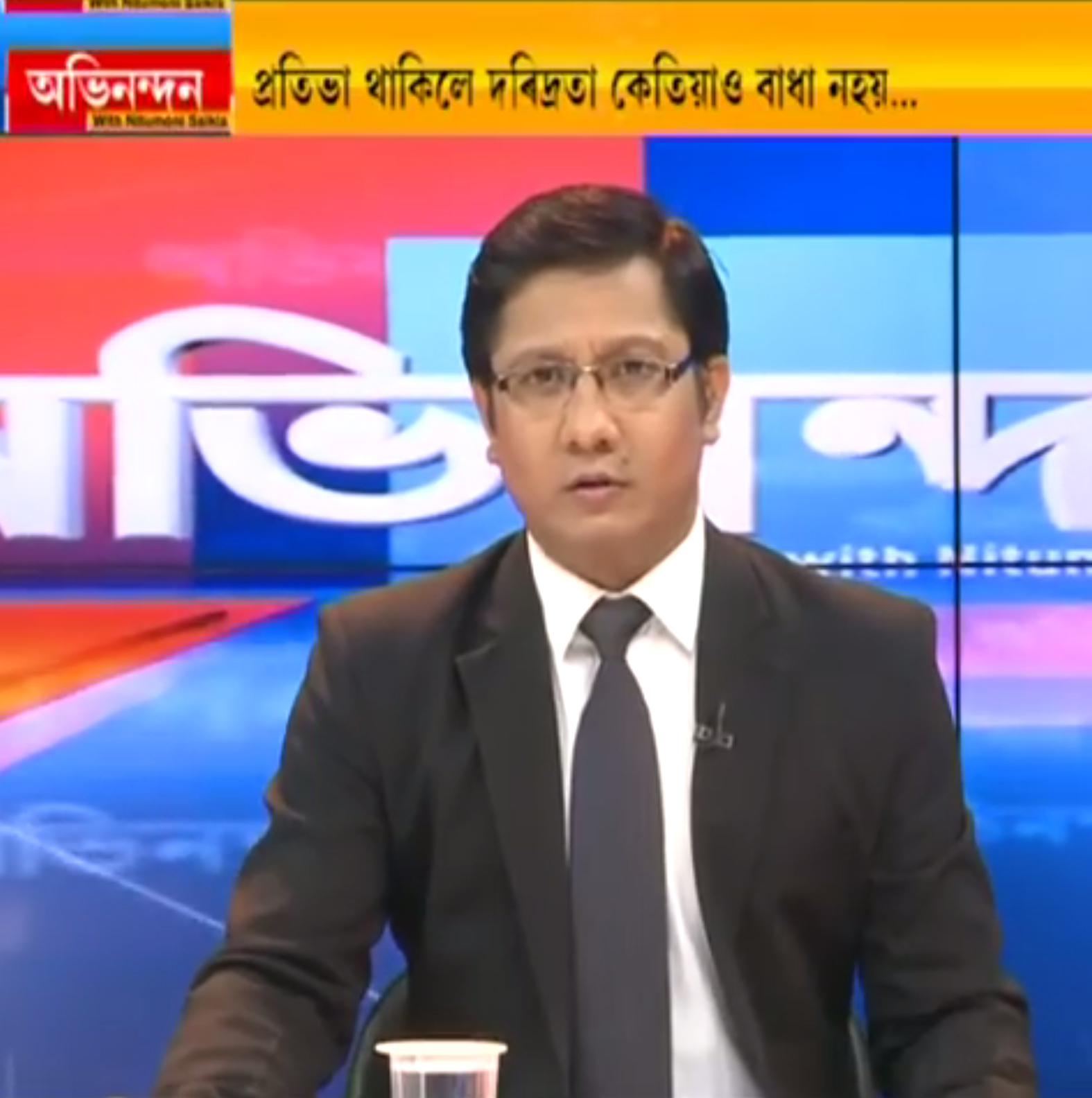
    MUMBAI: Guwahahti-based Yash TV Entertainment has clarified that its channel Pratidin Time is not the one which has been asked to go off the air on 9 November by the information & Broadcasting ministry (MIB) for gross violations of the content code.

    Indiantelevision.com received an email message from Pratidin Time general manager Gaurav Goswami saying that “both channels are running successful on air as can be seen on the MIB list. But it is News Time Assam which has met with the MIB disapproval.”

    The facts now: Yash TV Entertainment is a part of the Pratidin group founder Jayanta Baruah and his family, which own Assamese daily Asomiya Pratidin, Sadin, a weekly tabloid and a women’s monthly magazine Nandini.

    News Time Assam is actually owned by the Kolkata-based Brand Value Communications but is run by the Guwahati-based UB Photo Group. The channel’s content producer Utpal Baruah told The Hindustan Times that the channel would be switched off on 9 November. “The channel has not being doing well. Hopefully, the free publicity will help us bring in investors,” he told the newspaper.

    Utpal Baruah clarified that the Pratidin group had acquired the assets of News Time Assam last year, which later went on to launch its own channel Pratidin Time. However, the channel licence continued to be with Brand Value Communications, which later leased it to him.

    Baruah additionally told The Hindustan Times that while the channel had been hauled up for three violations one of the violations was under the watch of the Pratidin group and the I&B punishment relates to that period.

    An Assam based media observer clarified that “the confusion has arisen because Pratidin Time had on its Twitter and Wikipedia pages announced that News Time Assam was being renamed as Pratidiin Time. When the deal did not go through, corrections were not issued to all concerned, hence the misunderstanding that it was Pratidin Time which was being given correctional punishment by the MIB.”

  • Pratidin Time clarifies that News Time Assam is recepient of MIB ban for a day

    Pratidin Time clarifies that News Time Assam is recepient of MIB ban for a day

    MUMBAI: Guwahahti-based Yash TV Entertainment has clarified that its channel Pratidin Time is not the one which has been asked to go off the air on 9 November by the information & Broadcasting ministry (MIB) for gross violations of the content code.

    Indiantelevision.com received an email message from Pratidin Time general manager Gaurav Goswami saying that “both channels are running successful on air as can be seen on the MIB list. But it is News Time Assam which has met with the MIB disapproval.”

    The facts now: Yash TV Entertainment is a part of the Pratidin group founder Jayanta Baruah and his family, which own Assamese daily Asomiya Pratidin, Sadin, a weekly tabloid and a women’s monthly magazine Nandini.

    News Time Assam is actually owned by the Kolkata-based Brand Value Communications but is run by the Guwahati-based UB Photo Group. The channel’s content producer Utpal Baruah told The Hindustan Times that the channel would be switched off on 9 November. “The channel has not being doing well. Hopefully, the free publicity will help us bring in investors,” he told the newspaper.

    Utpal Baruah clarified that the Pratidin group had acquired the assets of News Time Assam last year, which later went on to launch its own channel Pratidin Time. However, the channel licence continued to be with Brand Value Communications, which later leased it to him.

    Baruah additionally told The Hindustan Times that while the channel had been hauled up for three violations one of the violations was under the watch of the Pratidin group and the I&B punishment relates to that period.

    An Assam based media observer clarified that “the confusion has arisen because Pratidin Time had on its Twitter and Wikipedia pages announced that News Time Assam was being renamed as Pratidiin Time. When the deal did not go through, corrections were not issued to all concerned, hence the misunderstanding that it was Pratidin Time which was being given correctional punishment by the MIB.”

  • MIB puts  NDTV India ban on hold until further notice

    MIB puts NDTV India ban on hold until further notice

    MUMBAI: The twists and turns in l’affaire NDTV continue.  The ministry of information and broadcasting (MIB) late in the evening today issued another order stated that its earlier diktat banning Hindi TV news channel NDTV India for a day on 9 November 2016 is to be held in “abeyance until further orders.”  What this means is that NDTV need not pull the plug on its Hindi news channel for a day for violations during its coverage of  the Pathankot terrorist attack earlier this year.

    The reason the MIB has stated is that NDTV has made a representation to it , which it is currently examining. And until it does so fully, the earlier order prohibiting transmission or retransmission of NDTV India under the Cable TV Networks Regulation Act is on hold.

    Earlier today, the NDTV management approached the Supreme Court challenging the MIB’s directive.

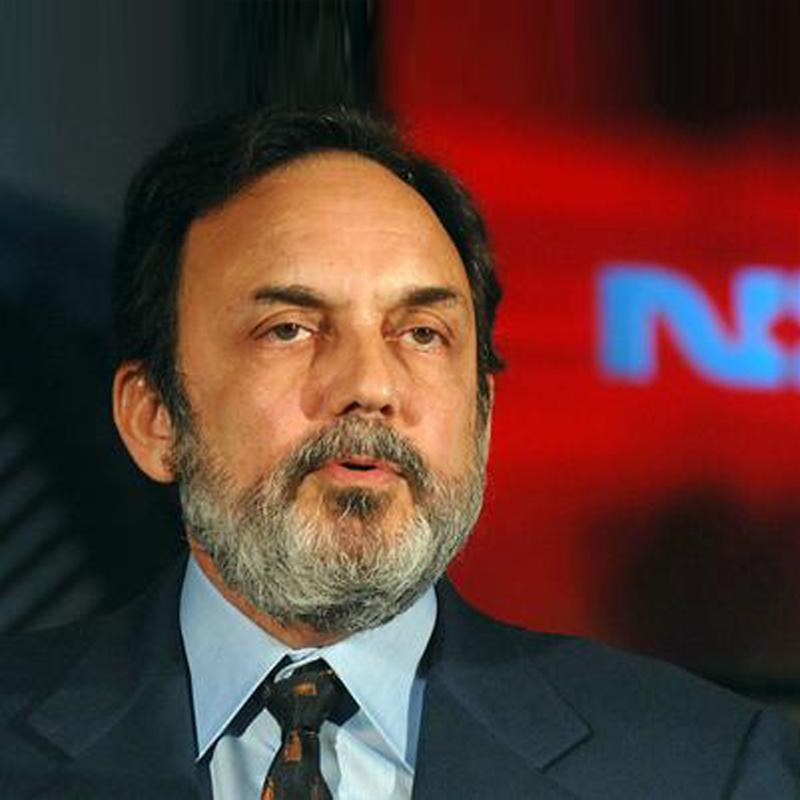
    And NDTV co-founder and executive chairperson Prannoy Roy met with I&B minister Venkaiah Naidu later in the day exhorting him that his channel’s views on it had perhaps not been fully and adequately appreciated.  Roy also wanted the decision to be reviewed. Following this, a new order was issued by the MIB putting its earlier order on hold.

     “Clearly the Modi government and the MIB have both faced a lot of political heat on account of the ban. It probably had not idea how much of verbal artillery fire it would face from the fourth estate when it took its step to ban NDTV India,” says a media observer. “It’s good that the MIB is taking it as it comes and has retracted its order temporarily until it examines NDTV’s stand. At least it will be able to say it gave the network a chance to make its representation and redeem itself in the public’s eyes which is stating that harsh days are ahead for the media. That the era of the Indira Gandhi emergency is upon us.”

    Earlier today Zee group chairman and BJP MP  Subhash Chandra had said that the actions against NDTV were in order and that instead of a day long ban, a lifelong ban against it should be issued. He also added that even the Indian courts would not overrule the MIB verdict as it had threatened Indian security with its reportage.

    Also Read:

    NDTV challenges I&B Ministry order in Supreme Court

    NDTV India has been singled out: NBA

    Govt hands NDTV India 24-hr ban for breach of content code

  • MIB puts  NDTV India ban on hold until further notice

    MIB puts NDTV India ban on hold until further notice

    MUMBAI: The twists and turns in l’affaire NDTV continue.  The ministry of information and broadcasting (MIB) late in the evening today issued another order stated that its earlier diktat banning Hindi TV news channel NDTV India for a day on 9 November 2016 is to be held in “abeyance until further orders.”  What this means is that NDTV need not pull the plug on its Hindi news channel for a day for violations during its coverage of  the Pathankot terrorist attack earlier this year.

    The reason the MIB has stated is that NDTV has made a representation to it , which it is currently examining. And until it does so fully, the earlier order prohibiting transmission or retransmission of NDTV India under the Cable TV Networks Regulation Act is on hold.

    Earlier today, the NDTV management approached the Supreme Court challenging the MIB’s directive.

    And NDTV co-founder and executive chairperson Prannoy Roy met with I&B minister Venkaiah Naidu later in the day exhorting him that his channel’s views on it had perhaps not been fully and adequately appreciated.  Roy also wanted the decision to be reviewed. Following this, a new order was issued by the MIB putting its earlier order on hold.

     “Clearly the Modi government and the MIB have both faced a lot of political heat on account of the ban. It probably had not idea how much of verbal artillery fire it would face from the fourth estate when it took its step to ban NDTV India,” says a media observer. “It’s good that the MIB is taking it as it comes and has retracted its order temporarily until it examines NDTV’s stand. At least it will be able to say it gave the network a chance to make its representation and redeem itself in the public’s eyes which is stating that harsh days are ahead for the media. That the era of the Indira Gandhi emergency is upon us.”

    Earlier today Zee group chairman and BJP MP  Subhash Chandra had said that the actions against NDTV were in order and that instead of a day long ban, a lifelong ban against it should be issued. He also added that even the Indian courts would not overrule the MIB verdict as it had threatened Indian security with its reportage.

    Also Read:

    NDTV challenges I&B Ministry order in Supreme Court

    NDTV India has been singled out: NBA

    Govt hands NDTV India 24-hr ban for breach of content code

  • NDTV challenges I&B Ministry order in Supreme Court

    NDTV challenges I&B Ministry order in Supreme Court

    MUMBAI: NDTV has challenged in the Supreme Court the I&B Ministry’s order of one-day ban on its Hindi news channel NDTV India. The Ministry of Information & Broadcasting (MIB) had directed NDTV India to go off air for 24 hours from 9 November 2016 00:01 hrs as a penalty for showing strategically-sensitive information while covering the Pathankot military operation in January this year.

    In response, the company argued that it was not the only channel that disclosed the information for which it is being penalised. NDTV has petitioned the Supreme Court challenging the order.

    In a BSE filing, the news network said that it has filed a writ petition before the Supreme Court, inter-alia, challenging the constitutional validity of the said order, and the provisions of law pursuant to which the said order has purportedly been passed.

    The Editors Guild of India, the Broadcast Editors Association (BEA), the News Broadcasters Association (NBA) and several influential personalities such as Rajdeep Sardesai, Sagarika Ghose, Rana Ayyub, Rahul Kanwal, Praveen Swami, and journalists from the channel — Ravish Kumar, etc have shown solidarity towards the channel and have come up in full support against the government’s order. They have demanded its immediate revocation.

    Others such as Zee group chairman Dr Subhash Chandra have said that the government is being soft on NDTV and that the ban should be for a lifetime for daring to carry reports which could harm the country’s security. He additionally said on twitter that if the channel dares to go to court to challenge the ban, its appeal will be rejected.

    The blackout of NDTV India comes at a crucial time when the news channels, apart from covering the current affairs, will be providing extensive coverage of the US Presidential Elections 2016.

  • NDTV challenges I&B Ministry order in Supreme Court

    NDTV challenges I&B Ministry order in Supreme Court

    MUMBAI: NDTV has challenged in the Supreme Court the I&B Ministry’s order of one-day ban on its Hindi news channel NDTV India. The Ministry of Information & Broadcasting (MIB) had directed NDTV India to go off air for 24 hours from 9 November 2016 00:01 hrs as a penalty for showing strategically-sensitive information while covering the Pathankot military operation in January this year.

    In response, the company argued that it was not the only channel that disclosed the information for which it is being penalised. NDTV has petitioned the Supreme Court challenging the order.

    In a BSE filing, the news network said that it has filed a writ petition before the Supreme Court, inter-alia, challenging the constitutional validity of the said order, and the provisions of law pursuant to which the said order has purportedly been passed.

    The Editors Guild of India, the Broadcast Editors Association (BEA), the News Broadcasters Association (NBA) and several influential personalities such as Rajdeep Sardesai, Sagarika Ghose, Rana Ayyub, Rahul Kanwal, Praveen Swami, and journalists from the channel — Ravish Kumar, etc have shown solidarity towards the channel and have come up in full support against the government’s order. They have demanded its immediate revocation.

    Others such as Zee group chairman Dr Subhash Chandra have said that the government is being soft on NDTV and that the ban should be for a lifetime for daring to carry reports which could harm the country’s security. He additionally said on twitter that if the channel dares to go to court to challenge the ban, its appeal will be rejected.

    The blackout of NDTV India comes at a crucial time when the news channels, apart from covering the current affairs, will be providing extensive coverage of the US Presidential Elections 2016.