Tag: Ministry of Information and Broadcasting

  • Apurva Chandra appointed as Secretary, I&B ministry

    Apurva Chandra appointed as Secretary, I&B ministry

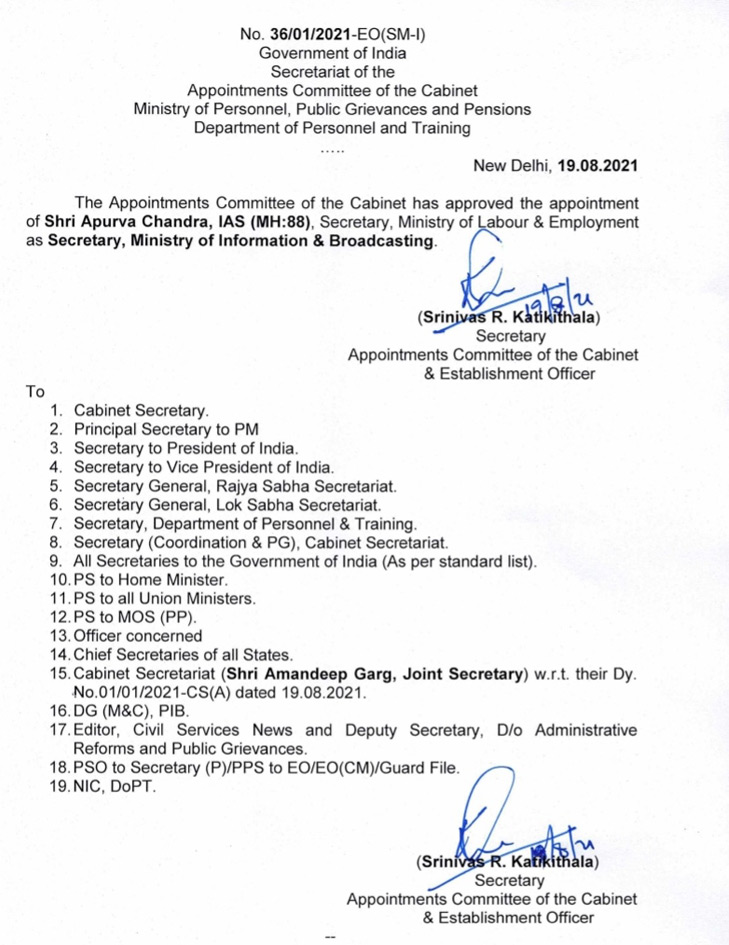
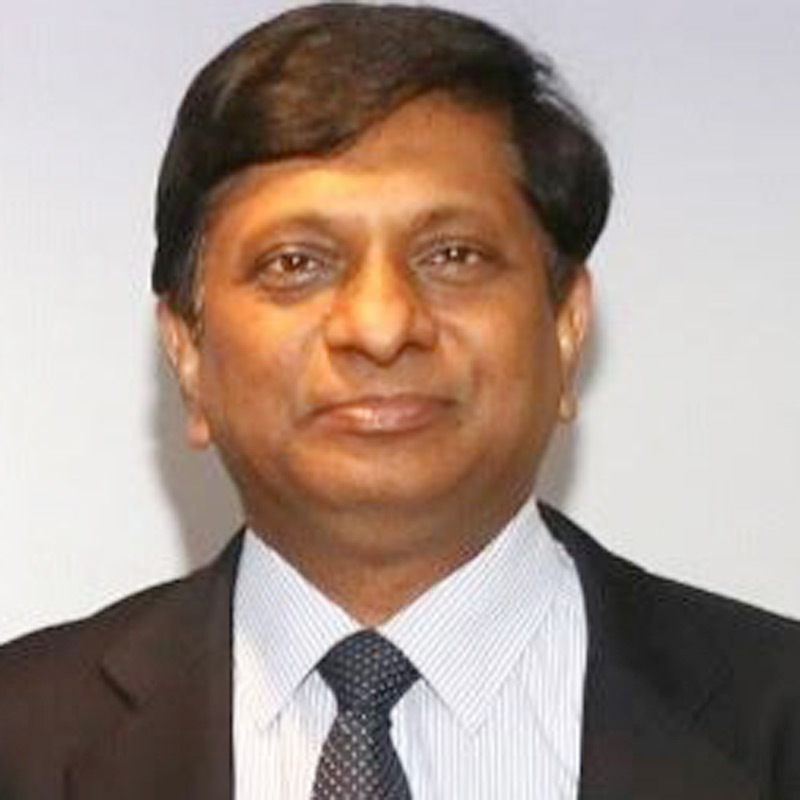
    New Delhi : The Union Cabinet on Thursday appointed Apurva Chandra as secretary, ministry of information and broadcasting (I&B).

    Chandra was previously holding the charge of secretary, ministry of labour & employment. The appointment was cleared by the appointment committee of the Cabinet.

    Chandra belongs to the 1988 batch of the Indian Administrative Service (IAS) of the Maharashtra cadre. He has spent more than seven years in the ministry of petroleum and natural gas and four years as principal secretary ( industries) in the Maharashtra government. In 2017, he joined as the special director general (acquisition) in the ministry of defence with the mandate of strengthening the Indian Armed Forces by expediting the acquisition process.

    Last year in October, he took over the charge of secretary, ministry of labour and employment. He was also elected as the chairperson of the Governing Body of the International Labour Organisation (ILO) for the period October 2020- June 2021, a position of international repute.

  • Need immediate resumption of viewership ratings: NBF to Anurag Thakur

    Need immediate resumption of viewership ratings: NBF to Anurag Thakur

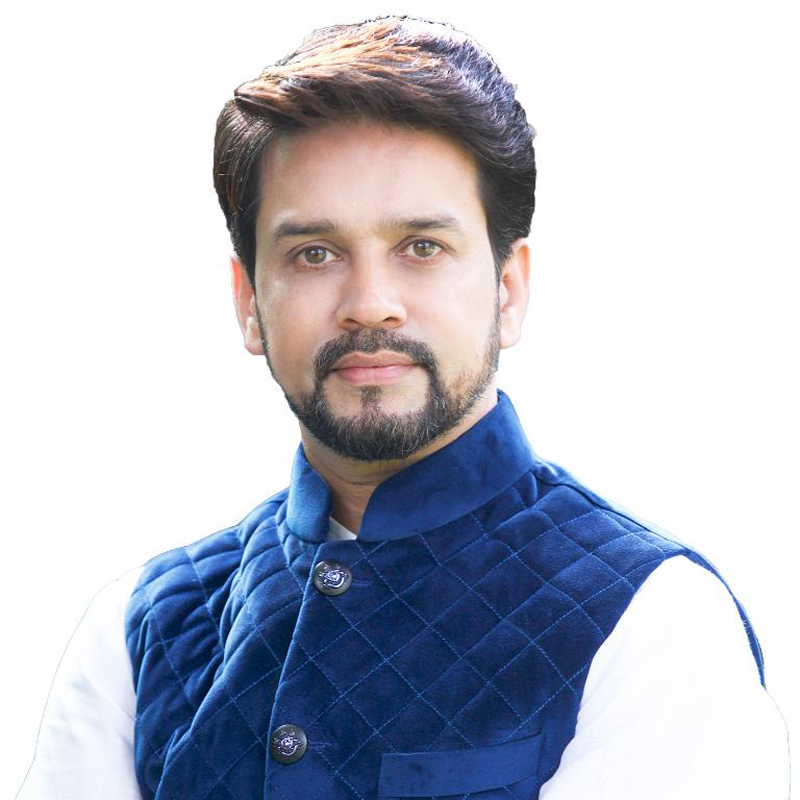
    Mumbai: Governing board members and senior member broadcasters of News Broadcasters Federation (NBF) met with the minister of information and broadcasting, Anurag Thakur, on Tuesday.

    During the meeting, members of NBF highlighted the need for the immediate resumption of viewership ratings for the news genre. The ratings “have been unilaterally paused and have severely impacted the sustainability of news channels”, they said. 

    The new broadcast body apprised the I&B minister of key issues facing the news industry, recent growth and trends in the broadcasting sector, and challenges faced by news broadcasters in recent times.

    “It was a pleasure to meet and exchange views with the NBF governing board led by Arnab Goswami,” said Anurag Thakur. “It was a productive exchange of views and I look forward to engaging with the NBF on issues regarding news broadcasting and the role of news broadcasting in strengthening our democracy,” he added.

    The NBF governing board informed the minister about key initiatives undertaken by the body to provide greater representation to channels broadcasting in various languages and on further steps to strengthen regulation among member channels.

    The NBF delegation included Republic Media Network, editor-in-chief, Arnab Goswami; TV9 News Network, CEO, Barun Das; Prag News, founder/MD, Sanjive Narain; Pride East Entertainment, chairperson/MD, Riniki Bhuyan Sarma; ITV Network founder/promoter, Kartikeya Sharma; Fourth Dimension, CEO, Shankar Bala; TV9 Bharatvarsh, news director, Hemant Sharma; News Nation, editor-in-chief, Manoj Gairola; MHOne, chairperson, Mahendra Bhatla; Newsfirst Kannada, business head, Divaakar S; NBF and Eshita, secretary-general, and associate for policy and regulations of NBF, R Jai Krishna.

    “The meeting of NBF members with the Minister was a wonderful opportunity to apprise him about the steps we have taken to build India’s largest federation of news broadcasters,” said NBF president Arnab Goswami. “The Minister has heard our views and concerns in detail and we look forward to working with the Ministry of Information and Broadcasting to make the news broadcasting sector even stronger.”

    Shankar Bala called the meeting “path-breaking” and said, “We have particularly stated that it is essential to release the viewership ratings for news channels, which were unilaterally stopped. The resumption of the publication of news ratings will ensure fair play and measurement-driven competitive news industry.”

    “The highly competitive news TV genre certainly needs a level-playing field for new promising players both in the national arena and regional markets. We felt extremely assured after our meeting today,” said Barun Das.

    “As a team, NBF put forth the problems we tend to face and the ways in which we want to raise and address our concerns. At least, we can go forward and help regional industries survive, like ours. The minister gave us a patient hearing and we are very grateful to the Ministry. We are now looking forward to the future and ways as to how we can progress together,” said Riniki Bhuyan Sarma.

    “The minister heard out all the matters raised by various members of the NBF. I would like to thank the minister for hearing the viewpoints of all news channels from across India and from regional channels as well,” said Kartikeya Sharma.

  • I&B ministry imposes additional penalties for violation of programme code

    I&B ministry imposes additional penalties for violation of programme code

    Mumbai: The minister of information and broadcasting, Anurag Thakur has informed the Rajya Sabha that there have been 37 instances between March 2005 and June 2021 where broadcasters were prohibited the transmission and re-transmission of a channel for a specified time period, or permission to downlink the channel was cancelled, due to violation of the programme code.

    The information and broadcasting minister was asked to give the status of Cable TV Networks Amendment (Regulation) Bill, 2020 which proposed to increase the penalties for violation of the Programme Code. He was also asked whether the government had imposed a monetary penalty or prohibited the transmission of a channel under the relevant provisions of the Cable TV Networks Amendment (Regulation) Act for violation of the Programme Code.

    “No monetary penalty has been imposed for the violation of Programme Code,” noted Thakur.

    The programme code comes under the Cable TV Networks (Regulation) Act, 1995 and Cable Television Networks Rules, 1994 contains broad guidelines related to content broadcast on private television channels.

    The matter of violation of the programme code and advertising code has been addressed by amending the rules vide government gazette notification number G.S.R. 416(E) on 17 June so as to include a complaint redressal mechanism by the broadcaster which prescribes the specific actions that can be taken by the central government for such violations.

    As per the amendments, if the government is satisfied that the programme of any channel is not in conformity with the programme code, it may, after giving an opportunity of hearing to the cable operator, and by an order in writing, prohibit the transmission or re-transmission of any such channel or programme in accordance with the provisions of section 20 of the Act.

    The rules provide for a three-tiered complaint redressal mechanism; Level I self-regulation by the broadcaster, level II self-regulation by self-regulating bodies of the broadcasters, and level III oversight mechanism by the central government.  

    The I&B minister had previously informed the Parliament on Friday that the government took action against 126 violations of the programme code between 2018 and 2021.

  • I&B ministry acted against 126 violations of Programme Code in last 3 years

    I&B ministry acted against 126 violations of Programme Code in last 3 years

    Mumbai: During 2018 to 2021, the Government took action against 126 cases of violation of Programme Code laid down in the Cable Television Networks (CTN) Rules, 1994 framed under Cable Television Networks Act, 1995. The action with respect to cases was taken by issuance of advisories, warnings, apology scroll orders, and off-air orders, said the ministry on Friday.

    “Government has an institutional mechanism for taking action in respect of private TV channels which are found to violate the Programme Code. The I&B ministry also issues advisories from time to time to private satellite TV channels for adhering to the Programme Code,” said the minister of information and broadcasting, Anurag Thakur in the ongoing monsoon session of the Parliament.

    The minister was responding to a query put forth in the Lok Sabha on whether the Government has taken cognizance of high decibel, sensationalist and slanderous news programmes/debates being hosted on Indian news channels. The Government was asked whether it has received complaints against news channels for violating the broadcasting guidelines and broadcasting fake news, hate and divisive agenda during the last three years.

    The Government was also asked whether it is planning to initiate any code of conduct or broad guidelines for the debates that happen on electronic media and the time by which final decision is likely to be taken in this regard.

    The Programme Code contains broad guidelines related to content broadcast on private television channels.

    The guidelines also provide that no programme should contain anything obscene, defamatory, deliberate, false and suggestive innuendos, and half-truths, and should not criticise malign or slander any individual in person or certain groups, segments of social, public and moral life of the country.

    The Rules provide for a three-level complaint redressal mechanism; Level I by the broadcaster, Level II by the self-regulating bodies of the broadcasters; and Level III by oversight mechanism of the Central Government.

  • I&B ministry may adopt TV rating committee’s recommendations : Anurag Thakur

    I&B ministry may adopt TV rating committee’s recommendations : Anurag Thakur

    New Delhi:  The ministry of information and broadcasting (I&B) has analysed and evaluated the recommendations made by the committee led by Prasar Bharti chief executive officer Shashi Shekhar Vempati to review the current guidelines on TV rating agencies in India.

    The newly inducted I&B minister Anurag Thakur told the Lok Sabha on Friday, that the recommendations will be incorporated into the existing TV rating guidelines wherever required. “The recommendations have been analysed and evaluated vis-à-vis their being translated, if required, into the existing guidelines where-ever required,” said Thakur while responding to a question on the action-taken report of the said committee.

    The union minister said the existing guidelines have provisions like methodology for audience measurement, panel selection, viewing platform secrecy and privacy, data analysis, transparency etc. which are essential for a transparent and accountable rating system in India.

    The guidelines, inter-alia, prescribe that the panel homes shall be drawn from the pool of households selected through an establishment survey. The procedure adopted for selection and rotation of the panel homes shall be made transparent. Further, the panel size shall be increased in a graded manner and has to remain representative of all TV households in the country.

    The guidelines also prescribe that the rating agency shall publish the detailed methodology on its website. These parameters have been included in the existing guidelines to ensure transparency and representative collection of panel homes.

    “Based on the recommendations of the Committee headed by CEO, Prasar Bharati along with recommendations of TRAI, the present guidelines have been analysed / evaluated vis-à-vis strengthening of transparency / panel homes and other parameters,” the minister told the Parliament.

    The TV rating system in India came under scanner when in October 2020, the Mumbai police claimed in a press briefing that they had unearthed a case of manipulation of TRPs and found some incriminating evidence. The police said the accused were allegedly bribing households with BARC bar-o-meters installed to keep a particular channel running, leading to several arrests. In light of the controversy, BARC had temporarily suspended publishing of weekly data for news channels.

  • MIB seeks public comments on the draft Cinematograph (Amendment) Bill 2021

    New Delhi: The government has sought public comments on the draft Cinematograph (Amendment) Bill 2021 which proposes to penalise film piracy with a jail term and empower the Centre to order re-certification of an already certified film in case of complaints.

    The general public can send their comments on the draft bill by 2 July.

    “The ministry of information and broadcasting proposes to introduce the Cinematograph (Amendment) Bill, 2021 which will make the process of sanctioning of films for exhibition more effective, in tune with the changed times and curb the menace of piracy,” it said in a statement.

    Age-based film certification

    Among the proposed changes, there are provisions relating to certification of films under ‘unrestricted public exhibition’ category which are proposed to be amended so as to further sub-divide the existing UA category into age-based categories – U/A 7+, U/A 13+ and U/A 16+.

    The draft also adds a provision to grant revisionary powers to the government on account of violation of Section 5B (1) (principles for guidance in certifying films) of the Act. “Since the provisions of Section 5B(1) are derived from Article 19(2) of the Constitution and are non-negotiable, it is also proposed in the Draft Bill to add a proviso to sub-section (1) of section 6 to the effect that on receipt of any references by the Central Government in respect of a film certified for public exhibition, on account of violation of Section 5B(1) of the Act, the Central Government may, if it considers it necessary so to do, direct the chairman of the Board to re-examine the film,” said the ministry.

    Prohibition of unauthorized recording

    The release of pirated versions of films on the internet, causes huge losses to the film industry and government exchequer. “In most cases, illegal duplication in cinema halls is the originating point of piracy. At present, there are no enabling provisions to check film piracy in the Cinematograph Act, 1952 making it necessary to have a provision in the Act to check film piracy,” said the ministry in a press statement.

    The draft bill proposes to insert section 6AA which prohibits unauthorised recording, according to which, no person shall, without the written authorization of the author, be permitted to use any audio-visual recording device in a place to knowingly make or transmit or attempt to make or transmit or abet the making or transmission of a copy of a film or a part thereof.

    “If any person contravenes the provisions of section 6AA, he shall be punishable with imprisonment for a term which shall not be less than three months but which may extend to three years and with a fine which shall not be less than Rs three lakh but which may extend to five percent of the audited gross production cost or with both,” it added.

    The Cinematograph (Amendment) Bill, 2019

    The government had introduced the Cinematograph (Amendment) Bill, 2019 in the Rajya Sabha in February, 2019 to impose strict penalties against unauthorised duplication of films in cinema halls. The draft Bill prohibited a person from using a recording device to make a copy of a film, without authorisation and made it a punishable crime with an imprisonment of up to three years and a fine of up to Rs 10 lakh, or both.

    Later, the standing committee on information technology (2019-20) presented its report on the Cinematograph (Amendment) Bill, 2019 in the Rajya Sabha and Lok Sabha on 16 March 2020.

    “The observations and recommendations made by the committee in the report have been examined and it is proposed to suitably revise the clauses in the Cinematograph (Amendment) Bill, 2019 based on the recommendations,” said the ministry.

    The comments may be submitted at the following email address: dhanpreet.kaur@ips.gov.in
  • MIB asks GECs to promote Covid helplines

    Mumbai: The union ministry of information and broadcasting (I&B) asked general entertainment channels (GECs) to promote six central government Covid helpline numbers. The country is battling with its worst-ever health crisis, with over 2,500 people succumbing to the infection daily.

    “The private general entertainment (non-news) TV channels are advised to promote awareness of these six national level helpline numbers by way of a ticker or such (other) appropriate ways as they may consider, at periodical intervals,” the I&B ministry said in its recent advisory.

    It has asked channels to promote national helpline numbers that include the union ministry for health and family welfare (1075), women and child development ministry (1098), and the national institute of mental health and neuro-sciences for psychological support (08046110007).

    Apart from these three major helplines,it has also sought to promote other helpline numbers that include, the AYUSH COVID-19 counselling number (14443), the MyGovWhatsApp help desk (9013151515), and that of the union ministry of social justice and empowerment for senior citizens (14567).

    In its advisory, the I&B ministry noted that the second wave of the coronavirus in India was showing signs of slowing down, even as the number of fresh cases was still on the higher side. On Friday, the country recorded as many as 1,34,000 new cases. The advisory also lauded private channels for complementing government efforts to fight the Covid pandemic by creating awareness regarding the infection.

  • Cabinet approves merger of four film units with NFDC

    Cabinet approves merger of four film units with NFDC

    NEW DELHI: The government has given its nod to the merger of four of its film media units with the national film development corporation (NFDC).

    The decision was taken in the Cabinet meeting chaired by PM Narendra Modi on Wednesday. As part of the plan, the four units namely films division, directorate of film festivals, national film archives of India, and children’s film society, India will now operate under the NFDC, which will then carry out all the activities hitherto performed by them.

    While this will lead to rationalisation of infrastructure and manpower, the government highlighted that interests of employees of all the concerned media units will be fully taken care of and no employees will be retrenched. A transaction advisor and legal advisor will be appointed to advise on the transfer of assets and employees, and to oversee all aspects of operationalisation of the merger.

    “There was a lot of duplication in activities and there was a need to bring synergy. However, all the work which is currently underway at each of the units will remain in progress. Our aim is to ensure good films reach masses,” said Union information and broadcasting minister Prakash Javadekar post the meeting.

    India is one of the largest film producers in the world with an industry led by the private sector. Over 3,000 films are produced every year. After the merger, all promotion, production and preservation of film content will come under one management.

    The films division, a subordinate office of the ministry of information and broadcasting, is among the oldest of the four media units. It was formed in 1948 to produce documentaries and news magazines for publicity of government programmes and cinematic record of Indian history.

    Formed in 1964, the national film archives is mainly responsible for acquiring and preserving Indian cinematic heritage, and the directorate of film festivals, set up in 1973, focuses on promoting Indian films and cultural exchange. The children’s film society, India is however, an autonomous organisation formed under the Societies Act in 1955 to specifically provide children and young people value-based entertainment through the medium of films.

    All the four media units will now operate as one unit under the NFDC – the central public sector undertaking  which was formed in 1975 for planning and promoting an organised, efficient and integrated development of the Indian film industry. “The vision of the new entity will be to ensure balanced and focused development of Indian cinema in all its genres – feature films, including films/content for the OTT platforms, children's content, animation, short films and documentaries,” stated the government.

  • Government announces SOPs to restart film, TV, OTT production

    Government announces SOPs to restart film, TV, OTT production

    MUMBAI: It’s all systems go for TV, film and OTT originals’ productions in India. Minister of information and broadcasting Prakash Javadekar today announced the release of standard operating procedures for productions to recommence. Tweeting the announcement Javadekar said, “The general principles behind the SOP will help create a safe working environment for cast and crew in the industry.”

    Amongst the measures the MIB has proposed include:

    ·      Minimum cast and crew to be engaged on sets during shoots.

    ·      Resting and stay over facilities to be provided.

    ·      Staggered call and packup times for production units having multiple production locations.

    ·      Older, pregnant, and comorbid technicians and artistes take extra precautions and preferable not be exposed to front line work requiring direct contact with the public.

    ·      Mandatory wearing of masks by all crew excepting the actors facing the camera for a scene.

    ·      Installation of Aarogya Setu app will be advised to be downloaded and used by all.

    ·      Exit and entry signs

    ·      Special markings to ensure social distancing is maintained at six feet for all during every stage of the film making process.

    ·      Visitors and audiences are barred from sets.

    ·      PPEs for make up technicians as well as hair stylist. Wigs and make up kits to not be shared. As far as possible, actors should do their own makeup.

    ·      Rubber gloves for all working with shared equipment on sets.

    ·      Minimise the use of props, sanitise them, if essential.

    ·      Lapel mikes to be avoided and not share. Direct physical contact with the diaphragms of mikes to be avoided.

    ·      A Covid supervisor to be appointed for each production.

    ·      Permissions to be taken from local authorities.

    The announcement of the SOPs for media production should come as a relief for India’s film studios, ad film and TV and digital originals producers. The sector has for a large part been held back from producing for the past five months, leading to losses running into thousands of crore.

    For a detailed list of the SOPs, click here.


  • I&B ministry grants registration to 15 new MSOs in July

    I&B ministry grants registration to 15 new MSOs in July

    NEW DELHI: The ministry of information and broadcasting (MIB) has granted registration to 15 new multi-system operators (MSOs) in the month of July. As per data released by the MIB, the total number of registered MSOs now stands at 1679 as on 3 August 2020.

    MIB issued six MSOs in the month of March, two in April, six in May and four in registrations in June (till 24 June). A total of 48 MSOs have been granted registration in 2020 until now. There are two provisionally registered MSOs now.

    All the granted registrations are valid for a period of 10 years. The name of the companies that were added in the registration list in the two month includes Bharta Cable Network,  Maa Jagdamba Network,  Shiva Cable Communications,  Moka Malleshara Cable Network, New Skynet Digital Services, Vijaynagara Cable Network,  MS Digital Cable Network,  Induandmahadev Broadband, World Phone Infrastructure Services, Shri Vitthal Rukmini Cable Net Service, 4k Digital Communications Pvt Ltd.; Balaji Cable Network, Multicast Communication and Distribution Limited, Rohin Connect and Yupptv Digital India Pvt Ltd.

    The ministry has cancelled three MSO applications in July 2020.