Tag: Ministry of Information and Broadcasting

  • IT panel recommends MIB to restructure PCI to cover all types of media

    IT panel recommends MIB to restructure PCI to cover all types of media

    Mumbai: Parliament’s standing committee on communications and information technology, headed by Congress leader Shashi Tharoor has recommended the ministry of information and broadcasting (MIB) to set up a media council on the lines of the Press Council of India (PCI), with statutory powers over print, television and digital media platforms.

    The recommendation was part of the ‘Ethical Standards in Media Coverage’ report which expresses concerns regarding the limited efficacy of existing regulatory bodies like the PCI and the News Broadcasting and Digital Standards Authority (NBDSA) in enforcing their decisions. This has led to the fourth estate “gradually losing its credibility and integrity.”

    The report noted that while the PCI – a statutory body governing the print media – may entertain complaints and is empowered to warn, admonish or censure newspapers, news agencies, the editor or the journalist concerned, it does not have the power to enforce compliance. Its advisories are not enforceable in a court of law.

    Similarly, while the NBDSA (a self-regulatory body for news broadcasting), has the power to fine, its jurisdiction extends to only those organisations that choose to be members of the News Broadcasters and Digital Association. Compliance with its orders is also voluntary.

    Suggesting restructuring the PCI to cover all types of media, the panel said, “In view of the above, the Committee has opined that the MIB should explore the possibility of establishing a wider Media Council encompassing not just the print media but the electronic and digital media as well, and equip it with statutory powers to enforce its orders where required.”

    The committee also recommended that pending a decision on the council, the ministry should look into the possibility of expanding the regulatory framework to monitor e-newspapers.

  • MIB to implement TRP committee recommendations and bring back news ratings soon: Anurag Thakur

    MIB to implement TRP committee recommendations and bring back news ratings soon: Anurag Thakur

    Mumbai: The union minister of information and broadcasting Anurag Thakur has said that the I&B ministry will ensure that the recommendations in the TRP committee’s report are implemented swiftly and news channels ratings are brought back to give relief to news broadcasters.

    The minister was addressing the News18 India Chaupal summit held on 1-2 December. In conversation with News18 Hindi managing editor Amish Devgan, he said that broadcasters’ associations have shared their comments on the report within the given deadline.

    The I&B ministry had reached out to broadcasters in November seeking their comments on the report by 30 November. The 39-page report highlights 20 recommendations to restore faith in the integrity of the TV rating system in India. The TRP committee was formed in response to the TRP scam that broke out in October last year where three TV channels were named by Mumbai Police for allegedly tampering with rating data.

    The recommendations were aimed towards strengthening corporate governance at Broadcast Audience Research Council (Barc) India which is the premier TV audience measurement company in the country. There were also recommendations pertaining to the technical, technological, and regulatory aspects of the TV measurement system like the use of return path data (RPD), instituting a regulatory mechanism for media rating agencies, adopting an open data ecosystem, and moving towards a hybrid audience measurement.

    The four-member committee included IIT Kanpur professor of the statistics department of mathematics and statistics Dr Shalabh, C-DOT executive director Dr Rajkumar Upadhyay and Decision Sciences Centre for Public Policy professor Pulak Ghosh and led by chairperson and Prasar Bharati chief executive officer Shashi Shekhar Vempati.

  • MIB gives an extension to broadcasters on TV rating committee’s report

    MIB gives an extension to broadcasters on TV rating committee’s report

    Mumbai: The ministry of information and broadcasting (MIB) has granted an extension on the deadline seeking comments from broadcasters on the report on ‘Guidelines for TV Rating Agencies in India’ till 30 November.

    Major broadcasting associations including the Indian Broadcasting and Digital Foundation (IBDF), News Broadcasters Association (NBA), and News Broadcasters Federation (NBF) have received the report.

    The MIB had reached out to broadcasters earlier in the month seeking their comments by 17 November on the report. The report was submitted by a committee instituted by MIB on 4 November 2020 and led by Prasar Bharati chief executive officer Shashi Shekhar Vempati. The committee submitted its 39-page report in January.

    Govt committee seeks to set up a specialised regulator for media ratings in India

    The comprehensive report highlights 20 recommendations of the committee to restore faith in the integrity of the TV rating system in India. The committee was formed in response to the TRP scam that broke out in October last year where three TV channels were named by Mumbai Police for allegedly tampering with rating data.

    As reported previously by Indiantelevision.com, the recommendations made by the committee in their report were aimed towards strengthening corporate governance at Broadcast Audience Research Council (Barc) India which is the premier TV audience measurement company in the country. There were also recommendations pertaining to the technical aspects of the TV measurement system like the use of return-path data (RPD), instituting a regulatory mechanism for media rating agencies, adopting an open data ecosystem, and moving towards hybrid audience measurement.

    The four-member committee included IIT Kanpur professor of the statistics department of mathematics and statistics Dr Shalabh, C-DOT executive director Dr Rajkumar Upadhyay and Decision Sciences Centre for Public Policy professor Pulak Ghosh.

  • Govt committee seeks to set up a specialised regulator for media ratings in India

    Govt committee seeks to set up a specialised regulator for media ratings in India

    Mumbai: The committee on TRP ratings formed by the government has pushed for the formation of multiple rating agencies in competition to Barc India, and recommended creating a specialised regulator to oversee all of them.

    The 39-page report submitted by the committee early this year has recently been shared with Broadcast Audience Research Council (Barc) India and other broadcasters to take the discussions forward. The committee led by Prasar Bharti CEO Shashi Shekhar Vempati was constituted last year in the aftermath of the TRP scam in Mumbai.

    According to the report, the regulation of multiple rating agencies should be a specialised function that requires a suitable regulator and cited Securities and Exchange Board of India (SEBI) in regulating credit rating agencies and Media Ratings Council in the United States as successful examples. As per the committee, the regulator can look at end-to-end regulation of audience measurement in India and also provide for an Appellate Authority to redress grievances and mediate disputes between stakeholders and rating agencies with appropriate powers.

    The committee to review the ‘Guidelines on TV Rating Agencies in India’ had made a total of 20 recommendations to the ministry of information and broadcasting (i&b) that includes both immediate and long-term measures that need to be taken to restore faith in the integrity of TV rating system in view of emerging technology trends and market dynamics.

    Most of the recommendations made by the committee in their report accessed by Indiantelevision.com are aimed at strengthening corporate governance at Barc India at the board level. The recommendations have also laid down specific measures to bring independent oversight of Barc India, mandate the use of return-path data, increase the competitiveness in the TV rating space, and put in place a specialised regulatory mechanism for media rating agencies in India.

    It felt that industry stakeholders must come to a consensus over acceptable business practices to ensure faith in ratings. It also recommended that the government may consider temporarily suspending its license to Barc India until it and stakeholder bodies have complied with directives issued by MIB.

    After consultation with stakeholders such as Barc India, MDPL, Zappr Media, Nielsen India, and Tata Sky AMS, the committee had issued several specific and sweeping recommendations on the technical aspects of TV rating measurement in India.

    It found that there was a broad consensus among industry stakeholders in favour of leveraging return data capabilities. However, apart from Barc and a few platforms, there was a lack of ubiquity in approach or consistency in investment in RPD by platforms.

    It also recommended that RPD should be made mandatory for set-top-boxes (STBs) deployed by distributed platform operators (DPOs). “The increasing convergence between STBs and smart media devices and in view of the emergence of hybrid boxes capable of both CAS compliant linear TV viewing and internet streaming-based OT, the committee sees fewer technical barriers to enable RPD capabilities within households” it noted.

    Adding further, it said, “Smartphone-based apps are capable of interacting with such hybrid boxes paving the way for additional avenues of RPD data capture and relay.”

    The collection of viewership data by DPOs is to be governed by privacy norms prescribed by the government/regulator. The sale of such data by DPOs should be governed by guidelines for TV rating systems. A joint industry working group with representation from all relevant stakeholders and independent experts may be set up to specify norms for an industry-wide RPD mandate, according to the report.   

    The report noted that crowdsourcing approaches could be economical alternatives to RPD and should be open to rating agencies to enrich panel-based measurement. However, it noted that owing to the nascent stage of innovations in cloud-based computing and artificial intelligence and the small pool of talent and expertise with an understanding of TV ratings and media audience measurement domain in India, any integration of crowdsourced data is best left to the discretion of stakeholders.

    Another interesting recommendation by the committee for the imperative is to adopt an open data ecosystem. It drew on the experience of similar data efforts in domains such as digital payments (UPI, India stack) and account aggregator system for credit rating (Sahamati), noting that algorithms and raw datasets should be made available to academics and independent researchers to analyse, validate and enrich.

    The committee observed the global shift towards hybrid audience measurement spanning multiple channels (TV+digital) and the rapid technology innovation hastening this shift. It stated that guidelines prescribed by MIB should not be a barrier to the emergence of more efficient business models that are in pace with global trends and local market dynamics.

    Led by Prasar Bharati CEO Shashi Shekhar Vempati, the four-member team also included – IIT Kanpur, professor of statistics, department of mathematics and statistics, Dr Shalabh; C-DOT executive director Dr Rajkumar Upadhyay; Decision Sciences Centre for Public Policy professor Pulak Ghosh.

    The television rating system in India had come under scanner in October 2020 when Mumbai Police claimed in a press briefing that they have probed a case of manipulation of TRPs and found some incriminating evidence. The police said the accused were allegedly bribing the households to keep a particular channel running, leading to several arrests. Three news channels, Republic TV, Fakt Marathi, and Box Cinema were named in an alleged TRP tampering scam. BARC had also temporarily suspended the publishing of weekly data for news channels, which remains in limbo till date.
  • Trai may relax criteria to set up satellite earth station gateways

    Trai may relax criteria to set up satellite earth station gateways

    Mumbai: The Telecom Regulatory Authority of India (Trai) is expected to release a consultation paper on licensing and framework of satellite earth station gateways, said Trai chairman PD Vaghela, according to a report by PTI.

    The regulator is also planning a consultation paper on developing a comprehensive, single window, online common portal, having inter-departmental linkages for transfer of application and information for parallel processing.  

    Vaghela was addressing a virtual event organised by the newly formed Indian Space Association on Monday.  

    Currently, only service licences are permitted to set up earth stations and Trai believes that there is a need to allow multiple stakeholders to set up earth stations which will attract investment and increase satellite capacities.

    According to the report by PTI, Vaghela emphasised the need for the convergence of laws and governance to address the rapid technological convergence happening in the communications and space sector. Trai will form inter-departmental linkages between the telecom department, ministry of information and broadcasting, and department of space, to create a common online portal that will be engaged in granting approval, permission, allocation, renewal, cancellation, and revocation as well as facilitate transfer of application and information for parallel processing

  • Rajat Sharma elected as president of NBDA

    Rajat Sharma elected as president of NBDA

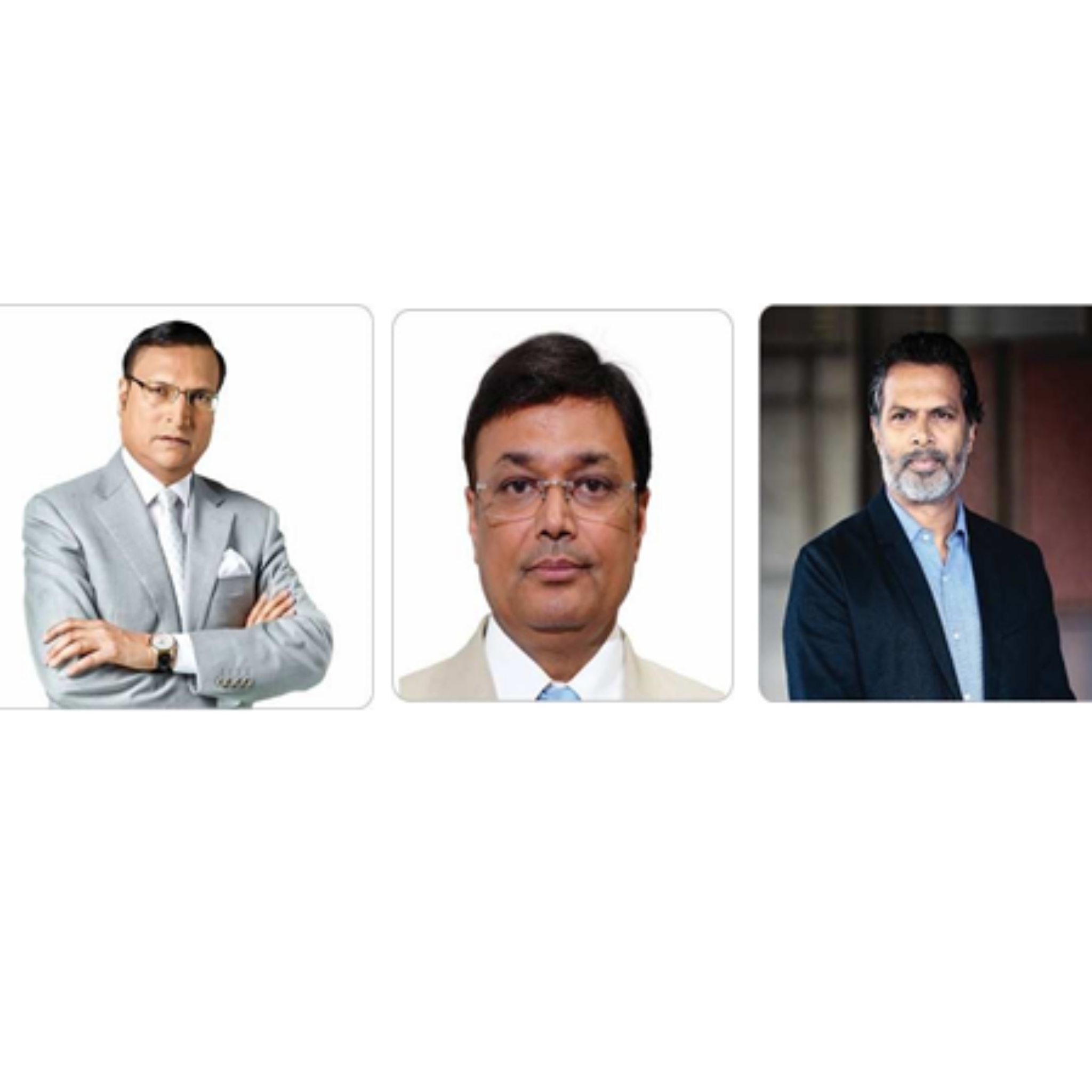
    Mumbai: The News Broadcasters and Digital Association (NBDA) has elected Rajat Sharma as president at a meeting held on Monday. The board also elected ABP Network chief executive officer Avinash Pandey as vice president and Times Network managing director and chief executive officer MK Anand as honorary treasurer for the year 2021-22.

    The other members on the NBDA board include News24 Broadcast India chairperson-cum-managing director Anuradha Prasad Shukla; Mathrubhumi Printing and Publishing managing director MV Shreyams Kumar; TV18 broadcast managing director Rahul Joshi; Eenadu Television director I Venkat; TV Today Network vice-chairperson and managing director Kalli Purie; New Delhi Television editorial director Sonia Singh, and Zee Media chief executive officer – cluster 1 Sudhir Chaudhary.

    Formerly known as the News Broadcasters Association, the industry body had renamed itself after it decided to bring digital media news broadcasters within the membership of the association. The members at the EGM unanimously passed the modification in the name of the association and amendments to the memorandum and articles of association.

    “I am glad to inform the members that the ministry of corporate affairs, government of India have approved the new name and the amendments to the memorandum and articles of association,” said Rajat Sharma in a statement.

    The ministry of electronics and information technology notified the Information Technology (Intermediary Guidelines and Digital Media Ethics Code) Rules, 2021 (IT rules), thereby bringing digital media, including OTT platforms, digital news broadcasters, and news aggregators, for the first time, within the ambit of government supervision.

    The IT rules which have been framed to regulate digital media, not only lay down a code of ethics to be complied by digital news broadcasters but also establishes a three-tier grievance redressal mechanism to ensure observance of the same.

    Similarly, the ministry of information and broadcasting also notified the Cable Television Networks (Amendment) Rules, 2021(Cable Amendment Rules) to establish a three-tier complaint redressal structure to ensure observance of the Programme Code and Advertisement Code under the Cable Television Networks (Regulation) Act, 1995 and the Cable Television Networks Rules, 1994.

    “NBDA has challenged the constitutionality of both the IT rules and cable amendment rules in the Kerala high court on various grounds including on the grounds that the rules give the government authorities excessive powers to unreasonably and impermissibly restrict the freedom of speech and expression of the media under Article 19 (1)(a) of the Constitution. Interim orders were granted in favour of NBDA in both matters,” observed Sharma. 

    Despite several months having passed, the Broadcast Audience Research Council (Barc) ratings have not been restored as yet. “The NBDA board and Barc have had several rounds of discussions to ensure that reliable, credible, tamper-free data is made available to the news broadcasters,” said Sharma. 

  • Yes Bank seeks removal of current directors of Dish TV

    Yes Bank seeks removal of current directors of Dish TV

    New Delhi: YES Bank, which holds 25.63 per cent stake in Dish TV India Ltd has sought the removal of the current directors and managing director of the direct-to-home service provider. The bank has recently issued a special notice asking the company to put its proposal to vote at Dish TV’s upcoming annual 33rd general meeting to be held on 27 September.

    “The present board of directors of the Company (“Board”) has approved a rights issue process, pending objections raised with the Board by the Bank time and again, solely to dilute the shareholding of the Bank and to prejudice the interests of inter alia the Bank which is the single largest shareholder of the Company as of date,” it said in its notice.

    Yes Bank has sought the removal of Rashmi Aggarwal, Shankar Aggarwal, Bhagwan Das Narang, and Ashok Mathai Kurien as directors, along with Jawahar Lal Goel as managing director of the company under Section 169 of the Companies Act, 2013. “Moreover, consequent to such removal, Goel shall cease to be the chairperson of the Company with effect from the date of this meeting,” the notice read.

    According to the bank, the Board “is not acting in line with good corporate governance standards and is not a fair representation of the incumbent significant shareholders of the Company” which hold about 45 per cent shareholding in the Company.

    “The Board is purportedly acting at the behest of certain minority shareholders holding merely six per cent of the shares in the Company. This is reflected from the fact that even though the Bank, vide various letters issued to the Board, asked the Board to desist from approving/conducting the proposed capital raising exercise by way of rights issue, the Board, without consulting the significant shareholders of the Company, went ahead to make a press announcement dated 28 May, 2021 regarding its intention to proceed with a Rs 1000 Cr. rights issue,” read the notice.

    According to the bank, the Board has “completely side-lined the multiple requests of the Bank to reconstitute the Board, inter alia, by appointment of the nominee directors.”

    In its notice, Yes Bank has also proposed to reconstitute the board with – Yes Bank senior group president and general counsel Sanjay Nambiar, Yes Bank, country head, stressed asset management, Akash Suri, former KPMG executive Viiav Bhatt, litigation counsel Haripriya Padmanabhan,  Wipro’s IT business former Co-CEO Girish Paranjape, independent management consultant Narayan Vasudeo Prabhutendulkar and Arvind Nachaya.

    Dish TV has responded to the notice, stating that the proposed new directors could be appointed only after obtaining approvals from the ministry of information and broadcasting. and other requisite approvals for appointment of new directors, within the statutory timelines.

  • DTH operators report sharp drop in subscribers in Jan-March: TRAI

    DTH operators report sharp drop in subscribers in Jan-March: TRAI

    Mumbai: The total number of active DTH subscribers declined to 69.57 million at the end of March 2021 from 70.99 million at the end of December 2020, as per the Telecom Regulatory Authority of India (TRAI). This is in addition to the subscribers of DD Free Dish (DTH service of Doordarshan).

    The share of leading DTH players stood at Tata Sky (33.3 per cent), Dish TV India (24.09 per cent), Bharti Telemedia (25.54 per cent), and Sun Direct TV (17.07 per cent).

    A total of 901 satellite TV channels have been permitted by the ministry of information and broadcasting (MIB) out of which 327 are pay-TV channels. There are 235 SD channels and 92 HD channels. All the other channels permitted by MIB may be considered free-to-air channels.

    There are 1726 MSOs registered with MIB out of which only 12 MSOs and one HITS operator have a subscriber base greater than one million. Siti Networks had 8.2 million subscribers followed by GTPL Hathway at 7.7 million, Hathway Digital at 5.6 million, Den Networks at 4.5 million, Thamizhaga Cable TV Communication at 3.5 million, Kerala Communicators Cable at 3.05 million, Tamil Nadu Arasu Cable at 2.9 million, Fastway Transmissions 2.2 million, NXT Digital (HITS) at 2.05 million, KAL Cable at 2.02 million, VK Digital at 1.7 million, Asianet Digital Network at 1.2 million and NXT Digital (Cable TV) at 1.1 million.

    There are 366 private FM radio channels in 105 cities with 30 private FM radio broadcasters. Odisha Television Ltd, has ceased the operation of its single FM radio station in the city of Rourkela, Odisha. The advertising revenue reported by FM radio broadcasters is Rs 321.52 crore as against Rs 323.01 crore in the previous quarter.

    There are 324 operational community radio stations up from 315 in the previous quarter.

  • MIB officially recognises self-regulatory body under NBF

    MIB officially recognises self-regulatory body under NBF

    Mumbai: The ministry of information and broadcasting (MIB) has officially recognised the News Broadcasters Federation’s (NBF) self-regulatory body Professional News Broadcasters Standards Authority (PNBSA). NBF claims it is the first and only news broadcasters’ self-regulatory body to get the status.

    The PNBSA has been formally registered as a self-regulatory body under the new amendments in the Cable Television Network Act.

    “The NBF’s self-regulatory body’s emergence as the sole body to meet all criteria to be granted validation by the Union of India and be the only recognised body regulating the news media sector as on-date once again reiterates the commitment of the largest news broadcasters’ body to the fundamentals of transparency, accountability and strong self-regulation,” said a press statement.

    “The PNBSA is set to build a robust system with the highest standards of transparency and accountability,” it added.

    “I want to thank all the members of the governing body of the NBF who have worked with me towards making this happen,” said NBF, president, Arnab Goswami. “The media has a pivotal role in strengthening our democracy and taking it to even greater heights. Strengthening the framework of the self-regulation of the media is a big step in that direction. And that’s exactly what the NBF has been working round the clock towards.”

    “The NBF prides itself on its democratic structure and roots across the country. Different languages, dynamic formats and varied audiences, but what binds the NBF is our commitment in coming together to strengthen the media pillar of Indian democracy. We look forward to working with the ministry of information and broadcasting to further strengthen self-regulation in our media,” Goswami added.

    “We are privileged to be the first officially recognised self-regulatory body to be registered for TV news broadcasters,” said NBF, secretary-general, R. Jai Krishna. “We are grateful to the ministry of information and broadcasting and our members for reposing trust and faith. We ensure that we will take the news broadcasting of the country to great milestones with our democratic structure, excellence in self-regulation, and bringing the truth and reflections to the doorsteps across the country in maximum languages.”

    The NBF channels presently include 24News, Alamai Sahara, CVR English, CVR Health, CVR NEWS, DA News Plus, DY365, Gulistan News, IBC24, IND 24, India News Gujarat, India News Haryana, India News Hindi, India News MPCG, India News Punjabi, India News Rajasthan, India News UP, Khabar Fast, MHOne, NEWS9, News First Kannada, News Live, News Nation, NewsX, North East Live, North East News, OTV, Prag News, Puthiyathalaimurai, Republic Bangla, Republic Bharat, Republic TV, Sahara Samay, Samay Bihar, Samay Maharashtra, Samay MPCG, Samay Rajasthan, Samay UP, TV5 Kannada, TV5 Telugu, TV9 Bharatvarsh, TV9 Gujarati, TV9 Kannada, TV9 Marathi, TV9 Telugu, and V6.