Tag: Ministry of Information and Broadcasting

  • MIB mandates IN-SPACe authorisation for use of foreign satellite capacity in broadcasting services

    MIB mandates IN-SPACe authorisation for use of foreign satellite capacity in broadcasting services

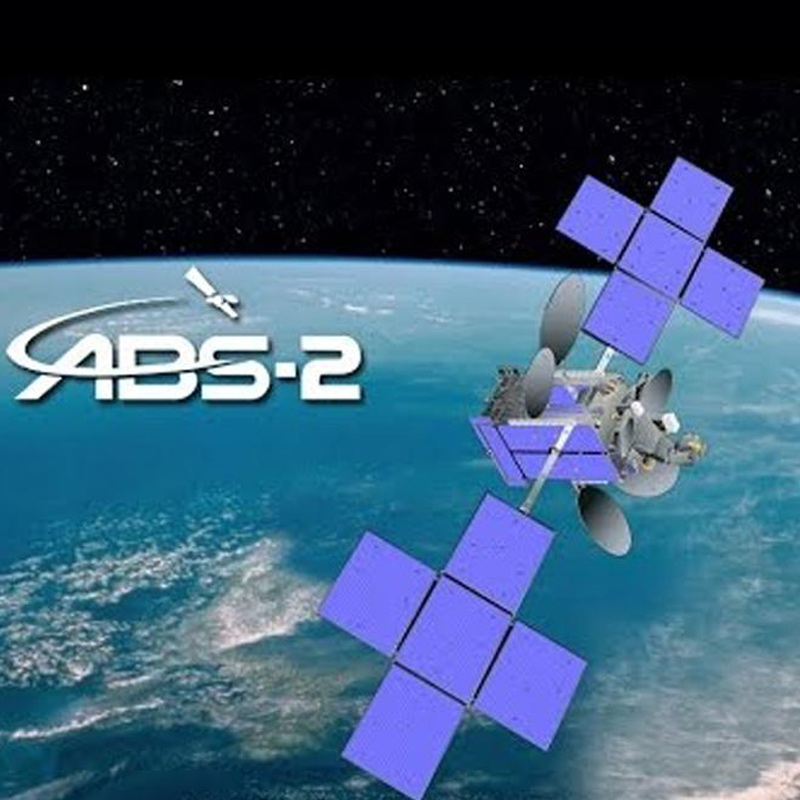
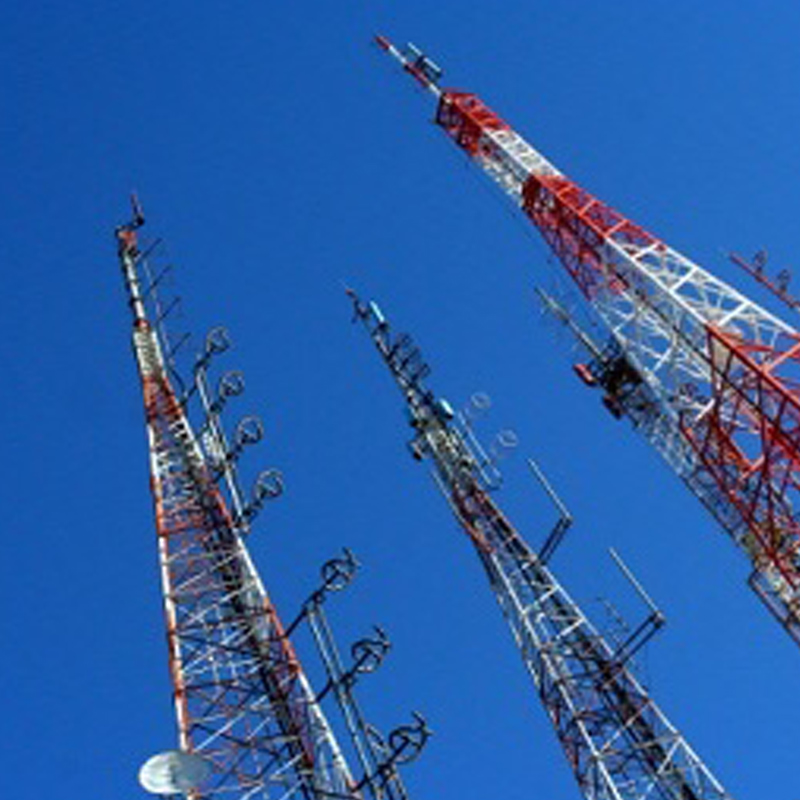
    Mumbai: The Ministry of Information and Broadcasting (MIB) has issued a directive to satellite TV channels and teleport operators to obtain authorization from the government-backed Indian National Space Promotion and Authorisation Centre (IN-SPACe) for using foreign satellite capacity for broadcasting services.

    In an advisory dated 10 July, the MIB stated that existing arrangements for using capacity in C, Ku, or Ka frequency bands from foreign satellite operators can be extended until 31 March 2025.

    “Starting from April 1, 2025, only IN-SPACe authorized non-Indian Geostationary Orbit (GSO) satellites and/or Non-Geostationary Satellite Orbit (NGSO) satellite constellations will be permitted to provide their capacity for space-based communication and broadcast services in India,” the advisory states.

    The ministry mentioned further that applications for authorisation must be submitted through the IN-SPACe website by an Indian entity, which could be an Indian subsidiary, a joint venture/collaboration, or an authorized dealer/representative of the foreign satellite operator in India.

    NewSpace India has leased transponder capacity in C, Ku, and extended C bands from both Indian and foreign satellites.

    As of March 2023, the Department of Space reported that 18 communication satellites were operating over India, equipped with communication transponders in C-band, Extended C-band, Ku-band, Ka/Ku band, and S-band.

    About 70 transponders in Ku-band and High Throughput Satellite (HTS) capacity of 1.6 GHz were leased from international satellite operators, while an additional 40 transponders in C-band were directly leased by broadcasters for TV uplinking.

  • National Broadcast Policy 2024 unveils blueprint for broadcasting sector advancement

    National Broadcast Policy 2024 unveils blueprint for broadcasting sector advancement

    Mumbai: The Telecom Regulatory Authority of India (TRAI) has recently put forth recommendations for shaping the ‘National Broadcasting Policy-2024’ aimed at establishing a robust broadcasting ecosystem. The policy sets out a comprehensive roadmap for the next decade, with a focused strategy for the upcoming five years.

    The policy seeks to promote resilient, adaptable, and technologically agile infrastructure that encourages research and development, technological innovation, and local manufacturing. It also strives to create a fair competitive environment, enhance ease of doing business and drive economic growth by ensuring widespread access to broadcasting services.

    “The National Broadcasting Policy-2024 aims to build a strong broadcasting ecosystem by fostering growth-oriented policies and regulations supported by data-driven governance,” stated TRAI.

    One of the key goals is to position India as a global ‘Uplinking Hub’ for television channels, attracting investments, generating employment and promoting skill development. Additionally, the policy focuses on fostering quality content production and distribution across television, radio, and OTT platforms, while promoting Indian content both domestically and internationally.

    In July 2023, the Ministry of Information and Broadcasting (MIB) requested TRAI’s insights under Section 11 of the TRAI Act, 1997, to aid in formulating this policy. Following a preliminary consultation paper in September 2023, TRAI released the formal consultation paper on ‘Inputs for formulation of National Broadcasting Policy-2024’ on 2 April. Feedback was gathered from 42 stakeholders, including service providers, organizations, industry associations, consumer advocacy groups and individuals.

    Indiantelevision.com reached out to Media Care Brand Solutions director Yasin Hamidani where he provided his perspective on the policy.

    He stated that, “The National Broadcasting Policy 2024, with TRAI’s recommendations for a transparent and credible audience measurement and rating system for television, radio, and OTT services, offers several significant advantages. On the positive side, this initiative will enhance the accuracy and reliability of audience data, fostering trust among broadcasters, advertisers, and consumers.

    A transparent system will enable fair competition, encouraging innovation and quality content creation tailored to audience preferences. It will also ensure that smaller and emerging players have a fair chance to compete, potentially diversifying the media landscape.

    However, there are potential challenges to consider. Implementing a new measurement system requires substantial investment in technology and infrastructure, which could be a financial burden for some stakeholders. Additionally, there is a risk of resistance from established players accustomed to the existing system. Ensuring the security and privacy of audience data is another critical concern, as any breaches could undermine trust in the system.

    Despite these challenges, the overall impact of the NBP 2024 is poised to be transformative, driving the broadcasting sector towards greater accountability, inclusivity, and alignment with evolving technological advancements,” he concluded. 

  • ASCI clarifies on recent news report about Self Declaration Certificate

    ASCI clarifies on recent news report about Self Declaration Certificate

    Mumbai: The Advertising Standards Council of India (ASCI) has emphasized that broadcasters and advertisers must obtain a self-declaration certificate (SDC) before releasing any new advertisements. Starting from 18 June, all new ads can only be aired if they have the SDC, as required by the Supreme Court and notified by the Ministry of Information and Broadcasting (MIB).

    The Indian Society of Advertisers (ISA), the Indian Broadcasting and Digital Foundation (IBDF), and the Indian Newspaper Society (INS) have collectively requested that the Ministry of Information and Broadcasting (MIB) delay the implementation of the SDC mandate to allow the industry sufficient time to comply with the new regulatory requirements.

    In a letter to the MIB, the INS suggested that the SDC mechanism should be restricted to medical advertisements since the SC case specifically addresses misleading medical ads. Advertisers will be required to generate SDCs via the Broadcast Seva portal for TV and radio ads and through the Press Council of India (PCI) portal for print and digital ads.

    The ISA has also called for a postponement of the SDC mechanism, citing concerns over asset confidentiality as ad materials uploaded on the Broadcast Seva and PCI websites will be publicly accessible. Additionally, both websites frequently experience technical issues, potentially causing delays in generating the SDCs.

    Despite these concerns, the MIB reiterated during a stakeholder meeting on 11 June that the SDC mandate for all new advertisements across TV, digital, print, and radio will come into effect on 18 June, in accordance with the Supreme Court directive.

    ASCI has requested its members to report any difficulties they encounter in implementing the SDC mandate, so it can compile these issues and present them to the MIB for further consideration.

  • MIB to convene with Netflix, Disney, Amazon, Google and Meta on broadcast regulations

    MIB to convene with Netflix, Disney, Amazon, Google and Meta on broadcast regulations

    Mumbai: The Ministry of Information and Broadcasting (MIB) has summoned the nation’s leading OTT platforms, including Netflix, Disney, Amazon, along with tech giants Google and Meta, for a meeting on 14 June to discuss new broadcast service regulations.

    Stakeholders are worried that the bill’s provisions for official certification and regulatory committees could stifle artistic freedom. It calls for the creation of content evaluation committees with members from various social groups to review and approve shows before their release.

    While films in Indian cinemas are currently reviewed and certified by a government-appointed board, streamed content does not undergo this process.

  • MIB stands firm on self-declaration mandate for ads amid industry opposition

    MIB stands firm on self-declaration mandate for ads amid industry opposition

    Mumbai: Ministry of Information and Broadcasting (MIB) convened a meeting with industry stakeholders to discuss the Supreme Court’s recent mandate. The Court’s order stipulates that advertisers and advertising agencies must submit a self-declaration certificate prior to publishing ads across TV, print, digital, and radio platforms.

    During the meeting, ministry officials emphasized the mandatory nature of this requirement and affirmed that there would be no changes or delays to the June 18 implementation date. They assured stakeholders of their cooperation but did not entertain any feedback or suggestions for postponement.

    Industry leaders voiced their dissatisfaction, arguing that policymakers should have engaged with them before enforcing the mandate. They believe their input could have helped address practical concerns associated with the plan.

    Observers note that the MIB’s approach highlights a significant oversight in the implementation process of the order.

    According to the Supreme Court directive, every advertiser must submit a self-declaration certificate, signed by an authorized representative, before broadcasting or publishing any advertisement on TV channels, print, or digital media. This certificate must be submitted through the Broadcast Seva Portal of the Ministry of Information and Broadcasting (MIB) prior to the telecast of any advertisement on TV channels.

  • Sanjay Jaju appointed as the New I&B secretary

    Sanjay Jaju appointed as the New I&B secretary

    Mumbai : In the recent development, the information and broadcasting department announced its new secretary recently. Senior bureaucrat Sanjay Jaju has been appointed as new information and broadcasting secretary.

    A Jaju is a 1992 batch of IAS ( Indian Administrative Service) of the Telangana cadre. The appointment committee of the cabinet ( ACC) has approved Apurva Chandra as the health secretary as part of the reshuffle program on Saturday.

    Besides them, eight other senior officers have been appointed in different central government departments and anti corruption ombudsman Lokpal.

  • I&B ministry stops broadcast and distribution of Mangalam and Whistle TV

    I&B ministry stops broadcast and distribution of Mangalam and Whistle TV

    Mumbai: The ministry of information and broadcasting vide its order dated 26 October whereby the broadcast of the channels Mangalam and Whistle TV permitted M/s. G.N. Infomedia is prohibited for a period of 30 days w.e.f under the extant policy guidelines for downlinking of private satellite TV channels in India, 2011.

    According to Rule 6(6) of the Cable Television Network Rules 1994, no cable operator shall carry or include in his cable service any television broadcast or channel that has not been registered by the central government for viewing within the territory of India.

    In a letter dated, 27 October 2010, MIB granted permission to M/S. GN Infomedia to uplink and downlink a news & current affairs TV channel, namely ‘Mangalam’ and a non-news and current affairs TV channel, namely ‘Whistle TV’ for a period of 10 years. The permission granted to G. N. Infomedia has already expired on 26 October 2020.

    “In light of the foregoing, all MSOs/LCOs are directed not to carry the above-mentioned channel on their network during its prohibition period,” MIB stated. “Failure to do so will result in appropriate/suitable action being initiated against the defaulter(s) in accordance with the relevant clause(s) of the Cable Television Network (Regulation) Act, 1995 and rules framed thereunder.”

    The company, in response to the SCN’s vide letter dated 19 January 2022 sought an extension of time.

    Accordingly, the company was informed to apply for a 10-year renewal by 28 February 2022. However, the company did not apply within the prescribed time frame. Therefore, another SCN dated 14 March 2022 was issued to the company.

    The company, in response to the letter dated 28 March 2022 again sought an extension of time. Accordingly, the company was informed to apply for a 10-year renewal by 31 July 2022 but the company, in response to SCN, has again sought an extension of time.

    The company that got the permission renewed was required to apply for the same six months prior to the date of expiry of the permission period. However, the company has still not applied for a 10-year renewal for its two channels despite a considerable lapse of time.

    The company has therefore violated clauses 5.4 & 5.8 of the uplinking guidelines, 2011.

    Clause 5.4 of uplinking guidelines 2011, provides that “The Company shall furnish such information as may be required by the ministry of information & broadcasting, from time to time.”

    “The company shall ensure its continued eligibility as applicable throughout the period of permission and adhere to all the terms and conditions of the permission, failing which the company will be liable for a penalty as specified,” according to clause 5.8 of uplinking guidelines 2011.

    The TV channel Whistle TV is non-operational. Therefore, there is no provision in the uplinking guidelines that permits the channel to remain non-operational. Therefore, the company has violated clause 5.8 of the uplinking guidelines, 2011.

    Further action will be taken for a period of 30 days with the direction to the company to pay outstanding dues and fulfil regulatory compliance, failing which further action will be taken.

    However, if the company applies for a 10-year renewal for the two channels and takes necessary steps to remove the other violations of the policy guidelines for uplinking of TV channels in 2011, during the period of prohibition, the permission to the channel may be considered for restoration.

  • MIB orders central ministries, state governments to exit broadcast business

    MIB orders central ministries, state governments to exit broadcast business

    Mumbai: The ministry of information and broadcasting (MIB) has issued an advisory which asks any ministry/department of the central and state/UT governments and entities related to them to exit the broadcasting business by 31 December 2023.

    If the ministries of the central government, state/UT governments, and entities related to them are already broadcasting their content, it must be done through Prasar Bharati, through appropriate agreements between Prasar Bharati and the concerned central, state, and union governments. The advisory will affect the Tamil Nadu and Andhra Pradesh state governments, which operate in the content distribution space.

    The advisory will mean the withdrawal of Tamil Nadu and Andhra Pradesh state governments from the content distribution space. The Tamil Nadu government owns and operates a cable distribution company called Arasu Cable TV  while the Andhra Pradesh government runs the AP Fibernet service, which has a triple-play offering of IPTV, internet, and telephony. The Tamil Nadu government also operates an educational channel ‘Kalvi Tholaikkatchi’.

    The Telecom Regulatory Authority of India (Trai) had made recommendations on “issues relating to the entry of certain entities into broadcasting and distribution activities” dated 12 November 2008, 28 December 2012, and 22 January 2015. Its recommendations dated 28 December 2012 have been accepted by the MIB and the ministry of law and justice.

  • MIB advises digital publishers, private channels against broadcast of online betting ads

    MIB advises digital publishers, private channels against broadcast of online betting ads

    Mumbai : The Ministry of Information and Broadcasting ( MIB) has advised digital media publishers, OTT platforms and private TV channels to refrain from broadcasting advertisements of online betting platforms and/or their surrogate news websites or any such product/service depicting these platforms in a surrogate manner. 

    The Ministry has observed that promotional content and advertisements of betting platforms are still visible on certain news platforms and OTT platforms. 

    The online advertisement intermediaries have also been advised not to target such advertisements towards the Indian audience. 

    The circular said ,”The advisory had been issued for the reason that betting and gambling is prohibited in most parts of the country, and pose significant financial and socio-economic risk for the consumers, especially youth and children. Accordingly, the promotion of offline or online betting/gambling through advertisements is not advised in larger public interest.”

    The ministry also observed that some online offshore betting platforms have started using news websites as a surrogate product to advertise betting platforms on digital media.

    “Betting and gambling is an illegal activity in most parts of India. In accordance with the Paragraph 9 of the Guidelines for Prevention of Misleading Advertisements and Endorsements for Misleading Advertisements 2022 under the Consumer Protection Act, 2019, it has been 
    observed that since betting and gambling is illegal, advertisements of online offshore betting and gambling platforms are prohibited,” the note said.

    The ministry reminded that according to the Information Technology (Intermediary Guidelines and Digital Media Ethics Code) Rules 2021,  advertisements of betting platforms, being an illegal activity, can not be shown on digital media.

    “In respect of the advertisements of the surrogate news websites operated by the online betting platforms, it may be mentioned that the logos of the concerned news websites are strikingly similar to the betting platform”, the note said.

    The concerned betting platforms and the corresponding news websites are also not registered with any legal authority under Indian laws. “Accordingly. the online offshore betting platforms appear to be promoting betting and gambling under the garb of news as surrogate advertising.”

    The Department of Consumer Affairs has also informed that online betting platforms have been advertising themselves as professional sports blogs, sports news websites, etc. while providing an indicative list of online betting platforms which are using news for surrogate advertising. 

    “The provisions of the Guidelines for Prevention of Misleading  Advertisements and Endorsements for Misleading Advertisements 2022 under the Consumer Protection Act, 2019 read with the Information Technology (Intermediary Guidelines and Digital Media Ethics Code) Rules 2021, it is informed that advertisements of concerned news websites, which are infact surrogate advertisements for online offshore betting platforms, do not appear to 
    be in strict conformity with these laws,” the ministry said.

  • MIB issues operational guidelines for DTH broadcasting services in lndia

    MIB issues operational guidelines for DTH broadcasting services in lndia

    Mumbai: The ministry of information and broadcasting (MIB) on Friday issued operational guidelines for obtaining a licence for providing direct-to-home (DTH) broadcasting services in India. The ministry stated that these guidelines have been issued in accordance with the modified DTH guidelines released on 30 December, 2020.

    As per the notice, these guidelines provide the operational framework with respect to the payment of licence fees, platform services (PS) channels, and sharing of infrastructure by DTH operators.

    The policies outline the timetable for the quarterly payment of the licence fee by DTH operators.

    Regarding platform service (PS) channels, the guidelines provide the definition of “platform services” and establish the norms for the DTH operators in running these services, which inter alia include that:

        The total number of PS channels permitted per operator is limited to five per cent of the total channel carriage capacity.

        All PS must carry a caption as “platform services” to distinguish them from the linear channels.

        The content of the PS is to be exclusive to the platform and is not to be shared directly or indirectly with any other distribution platform operator.

        All PS channels are to be placed together under the genre “platform services” in the Electronic Programme Guide (EPG) along with their maximum retail price and option for activation/deactivation of PS as per the applicable orders/directions/regulations of Trai.

    The operational rules for the DTH operator’s infrastructure sharing set forth the framework within which the sharing may be regulated, the processes for accountability and compliance, and the specific obligations of the parties to the sharing.

    These operational instructions are in force as of the order’s issuance date, which is 16 September, 2022.