Tag: Ministry of Information and Broadcasting

  • Assamese news channel Pratidin Time banned for one day once again

    Assamese news channel Pratidin Time banned for one day once again

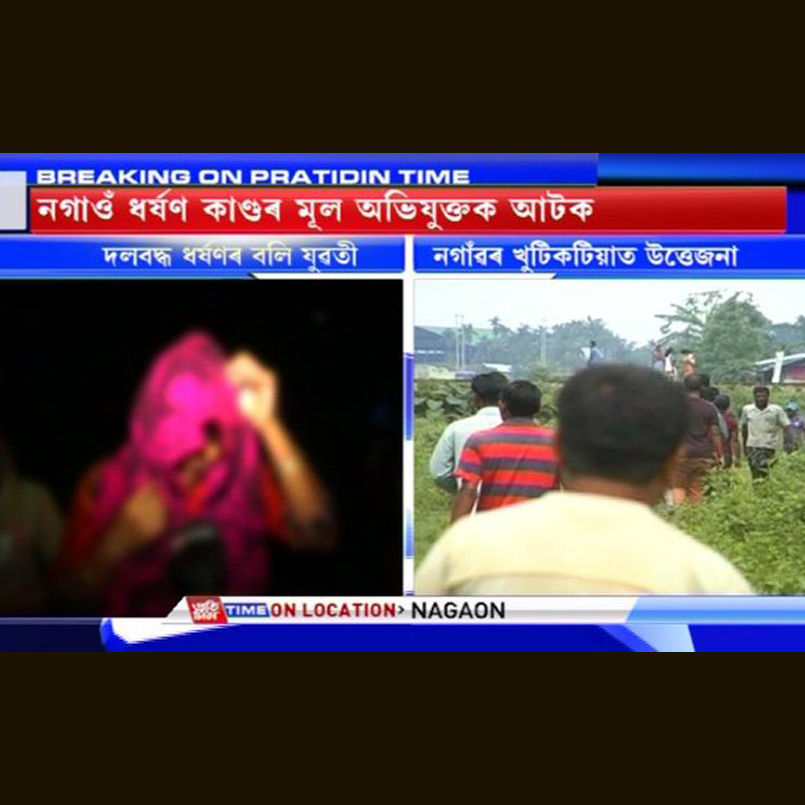
    MUMBAI: The Indian government continues with its caning of TV news channels. After NDTV India, it is now the turn of Pratidin Time or News Time Assam to be told to go off air on the powers-that-be’s favourite date 9 November for gross and multiple programming code violations. Pratidin Time has been accused of revealing the identity of a minor victim, showing images of mutilated bodies, and making derogatory statements about women in shows.

    The violation that has been gravely objected to is the one relating to a minor boy for which the day-long ban is being issued. The ministry of information and broadcasting (MIB) issued an order dated 2 November saying that the channel revealed the identity of a minor who was brutally tortured while working as a domestic servant, thus compromising his privacy and dignity and  exposing him to harm and stigma.

    A high level inter-ministerial committee (IMC) took the decision to compel the channel to turn off its signals for a day after hearing its defence.

    The MIB says that Pratidin Time has time and again being showing images of bodies of dead victims. It has also not being complying with earlier MIB orders which asked it to  apologize for airing a show which appeared to be derogatory towards women.

    The MIB in its current order has stated that Pratidin Time that all the three cases will be covered under the one day ban. It has further explained that under the Cable TV Networks (Regulation) Act, it “orders to prohibit the transmission or retransmission of News Time Assam TV channel for one day on any platform throughout India with effect from 00:01 hours on 9th November, 2016 till 00:01 hours on 10th November, 2016.”

    This is not the first time that Pratidin Time (News Time Assam) has been asked to pull the plug. It, along with another channel DY 365, was asked to go off air on 30 July 2014 in another case.

    http://www.indiantelevision.com/television/tv-channels/news-broadcasting/dy-365-news-time-assam-tv-transmission-banned-for-one-day-for-showing-programmes-denigrating-women-140725

    Then in August 2015 it was slammed on social media as well when it carried a clip on its YouTube channel, criticizing “scantily clad women” calling them a summer time nuisance that went against local culture in Assam. The uproar that followed forced it to pull down its video, but petitions have been filed against it, asking it to to report responsibly.

    Launched on 25 December 2010 as News Time Assam by the Kolkata based Brand Value Communications under the Rose Valley Grop, it was acquired by the Pratidim group in 2015 and rebranded as Pratidin Time.

  • Assamese news channel Pratidin Time banned for one day once again

    Assamese news channel Pratidin Time banned for one day once again

    MUMBAI: The Indian government continues with its caning of TV news channels. After NDTV India, it is now the turn of Pratidin Time or News Time Assam to be told to go off air on the powers-that-be’s favourite date 9 November for gross and multiple programming code violations. Pratidin Time has been accused of revealing the identity of a minor victim, showing images of mutilated bodies, and making derogatory statements about women in shows.

    The violation that has been gravely objected to is the one relating to a minor boy for which the day-long ban is being issued. The ministry of information and broadcasting (MIB) issued an order dated 2 November saying that the channel revealed the identity of a minor who was brutally tortured while working as a domestic servant, thus compromising his privacy and dignity and  exposing him to harm and stigma.

    A high level inter-ministerial committee (IMC) took the decision to compel the channel to turn off its signals for a day after hearing its defence.

    The MIB says that Pratidin Time has time and again being showing images of bodies of dead victims. It has also not being complying with earlier MIB orders which asked it to  apologize for airing a show which appeared to be derogatory towards women.

    The MIB in its current order has stated that Pratidin Time that all the three cases will be covered under the one day ban. It has further explained that under the Cable TV Networks (Regulation) Act, it “orders to prohibit the transmission or retransmission of News Time Assam TV channel for one day on any platform throughout India with effect from 00:01 hours on 9th November, 2016 till 00:01 hours on 10th November, 2016.”

    This is not the first time that Pratidin Time (News Time Assam) has been asked to pull the plug. It, along with another channel DY 365, was asked to go off air on 30 July 2014 in another case.

    http://www.indiantelevision.com/television/tv-channels/news-broadcasting/dy-365-news-time-assam-tv-transmission-banned-for-one-day-for-showing-programmes-denigrating-women-140725

    Then in August 2015 it was slammed on social media as well when it carried a clip on its YouTube channel, criticizing “scantily clad women” calling them a summer time nuisance that went against local culture in Assam. The uproar that followed forced it to pull down its video, but petitions have been filed against it, asking it to to report responsibly.

    Launched on 25 December 2010 as News Time Assam by the Kolkata based Brand Value Communications under the Rose Valley Grop, it was acquired by the Pratidim group in 2015 and rebranded as Pratidin Time.

  • Govt hands NDTV India 24-hr ban for breach of content code

    Govt hands NDTV India 24-hr ban for breach of content code

    MUMBAI: In what is being viewed in certain quarters as an assault on media freedom reminiscent of Rajiv Gandhi government’s bid to gag media in late 1980s, the Prannoy Roy and family-controlled NDTV India, has been directed by the government to go off air for 24 hours from 9 November 2016 as a penalty for breaching telecast norms related to security issues.

    NDTV is exploring all options against this 24-hour ban with opinion split on the issue. While a section of views on social media supported the government action, many who part of the Indian media criticised it saying it reminded them of Indira Gandhi-imposed Emergency in India in 1977.

    Confirming the recent development, Ministry of Information and Broadcasting (MIB) sources said that Hindi news channel NDTV India has been accused of airing images and revealing information regarding defence locations while covering the Pathankot terrorist attack a few months back. The sources added that NDTV India was given a chance by an inter-ministerial committee (IMC) of the government to put forth its viewpoint on the allegations and was found wanting.

    Indiantelevision.com made futile attempts to get in touch with NDTV for independent reactions, including newly-anointed group CEO KVL Narayan Rao and his predecessor Vikram Chandra.
    However, in a statement put out by NDTV on its website (http://www.ndtv.com/communication/ndtv-statement-on-order-against-our-hindi-channel-ndtv-india-1621155), the company said, “The order of the MIB has been received. It is shocking that NDTV has been singled out in this manner. Every channel and newspaper had similar coverage. In fact NDTV’s coverage was particularly balanced. After the dark days of the Emergency when the press was fettered, it is extraordinary that NDTV is being proceeded against in this manner. NDTV is examining all options in this matter.”

    The IMC, the government sources said, was earlier in favour of handing out a one-month ban, which was diluted to 24 hours later.
    The matter pertains to the coverage of Pathankot defence areas after a terrorist attack in January this year. The IMC has blamed NDTV India of providing on-air information about ammunition stockpiled in the airbase, fighter-planes, rocket-launchers, fuel-tanks, etc. The committee felt that such crucial information could have been readily picked by up by hostile nations and could have compromised lives of civilians and defence personnel.

    The committee has also mentioned that the channel appeared to give out the exact locations of terrorists on air, thus compromising counter offensives by India.
    In its reply, the channel said that it was a case of subjective interpretation and most of the information they had put out was already in public domain in print, electronic and social media.

    A section of Indian media reacted strongly against such a government move.

    “Govt pulling TV news channels off air is a dangerous trend. Don’t want sarkari babus deciding what content they like and what they don’t,” India Today (TV) and Aaj Tak Managing Editor Rahul Kanwal tweeted.

    A former NDTV star and presently with India Today group, Rajdeep Sardesai, said in a series of tweets, “One of India’s most sober and responsible channels NDTV India to be banned for a day by I and B ministry. NDTV today, who tomorrow? Media should be accountable, scrutinised, but with transparency and not selectively.”


    Shekhar Gupta, former editor of the Indian Express Group and presently anchoring a digital news venture, said in a tweet, “What’s shocking is lack of protest/outrage. Reprehensible, somebody in Ind(ia) having power to ban news channels as in Pak(istan). Tom(orrow), it’ll be print.”


    Meanwhile in an another development, the NBSA (News Broadcasting Standards Authority), the self-regulatory body of news channels under the News Broadcasters’ Association ( NBA) late last month asked NDTV, the English news channel,  to air an apology covering for showing an incorrect map of India

    The letter from NBA to NDTV stated the complaint was studied and the channel was directed to run an apology (full screen) prior to 9 pm on 5 November.

    While  NBA refused to comment on this matter, it is learnt that MIB had forwarded to NBSA complaints received by it from people, especially by one person who had taken up this issue on social media in a big way.

  • Govt hands NDTV India 24-hr ban for breach of content code

    Govt hands NDTV India 24-hr ban for breach of content code

    MUMBAI: In what is being viewed in certain quarters as an assault on media freedom reminiscent of Rajiv Gandhi government’s bid to gag media in late 1980s, the Prannoy Roy and family-controlled NDTV India, has been directed by the government to go off air for 24 hours from 9 November 2016 as a penalty for breaching telecast norms related to security issues.

    NDTV is exploring all options against this 24-hour ban with opinion split on the issue. While a section of views on social media supported the government action, many who part of the Indian media criticised it saying it reminded them of Indira Gandhi-imposed Emergency in India in 1977.

    Confirming the recent development, Ministry of Information and Broadcasting (MIB) sources said that Hindi news channel NDTV India has been accused of airing images and revealing information regarding defence locations while covering the Pathankot terrorist attack a few months back. The sources added that NDTV India was given a chance by an inter-ministerial committee (IMC) of the government to put forth its viewpoint on the allegations and was found wanting.

    Indiantelevision.com made futile attempts to get in touch with NDTV for independent reactions, including newly-anointed group CEO KVL Narayan Rao and his predecessor Vikram Chandra.
    However, in a statement put out by NDTV on its website (http://www.ndtv.com/communication/ndtv-statement-on-order-against-our-hindi-channel-ndtv-india-1621155), the company said, “The order of the MIB has been received. It is shocking that NDTV has been singled out in this manner. Every channel and newspaper had similar coverage. In fact NDTV’s coverage was particularly balanced. After the dark days of the Emergency when the press was fettered, it is extraordinary that NDTV is being proceeded against in this manner. NDTV is examining all options in this matter.”

    The IMC, the government sources said, was earlier in favour of handing out a one-month ban, which was diluted to 24 hours later.
    The matter pertains to the coverage of Pathankot defence areas after a terrorist attack in January this year. The IMC has blamed NDTV India of providing on-air information about ammunition stockpiled in the airbase, fighter-planes, rocket-launchers, fuel-tanks, etc. The committee felt that such crucial information could have been readily picked by up by hostile nations and could have compromised lives of civilians and defence personnel.

    The committee has also mentioned that the channel appeared to give out the exact locations of terrorists on air, thus compromising counter offensives by India.
    In its reply, the channel said that it was a case of subjective interpretation and most of the information they had put out was already in public domain in print, electronic and social media.

    A section of Indian media reacted strongly against such a government move.

    “Govt pulling TV news channels off air is a dangerous trend. Don’t want sarkari babus deciding what content they like and what they don’t,” India Today (TV) and Aaj Tak Managing Editor Rahul Kanwal tweeted.

    A former NDTV star and presently with India Today group, Rajdeep Sardesai, said in a series of tweets, “One of India’s most sober and responsible channels NDTV India to be banned for a day by I and B ministry. NDTV today, who tomorrow? Media should be accountable, scrutinised, but with transparency and not selectively.”


    Shekhar Gupta, former editor of the Indian Express Group and presently anchoring a digital news venture, said in a tweet, “What’s shocking is lack of protest/outrage. Reprehensible, somebody in Ind(ia) having power to ban news channels as in Pak(istan). Tom(orrow), it’ll be print.”


    Meanwhile in an another development, the NBSA (News Broadcasting Standards Authority), the self-regulatory body of news channels under the News Broadcasters’ Association ( NBA) late last month asked NDTV, the English news channel,  to air an apology covering for showing an incorrect map of India

    The letter from NBA to NDTV stated the complaint was studied and the channel was directed to run an apology (full screen) prior to 9 pm on 5 November.

    While  NBA refused to comment on this matter, it is learnt that MIB had forwarded to NBSA complaints received by it from people, especially by one person who had taken up this issue on social media in a big way.

  • MIB favours self-regulation, TRAI says some regulation mandatory

    MIB favours self-regulation, TRAI says some regulation mandatory

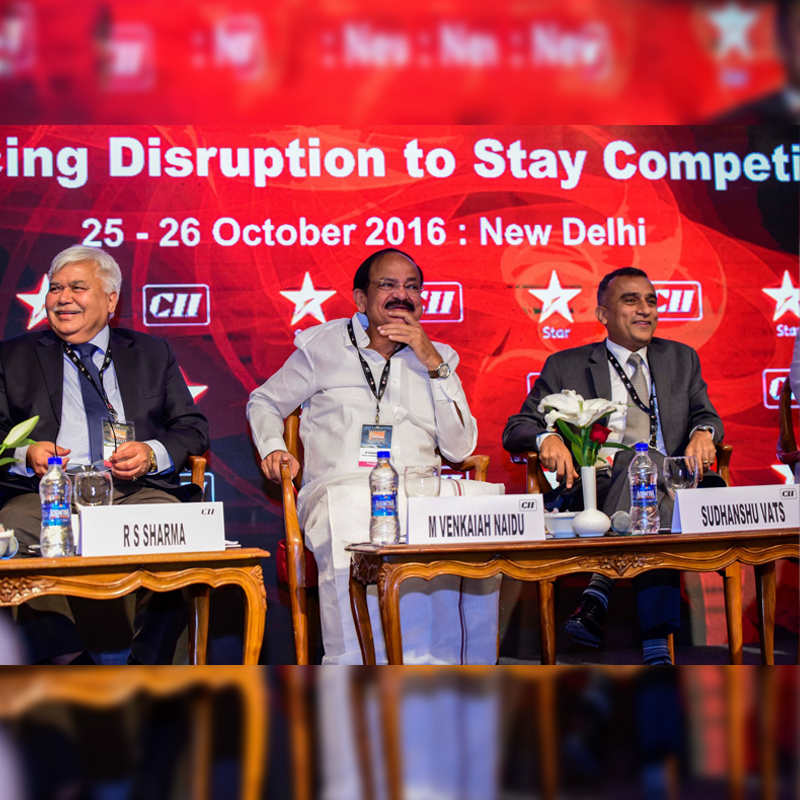
    NEW DELHI: Even as he favoured the idea of self-regulation in the media, Minister for Information and Broadcasting (MIB) M Venkaiah Naidu stressed that “regulation should not become strangulation” and added the government wants to be a facilitator for creating a good business environment for the media and entertainment (M&E) sector.

    Delivering the keynote address at the inaugural session of 5th edition of CII-organised `Big Picture Summit’ at New Delhi here yesterday Naidu said that digital and mobile tools have been leading to paradigm shifts in the M&E sector and the growth of varied platforms such as 4G, broadband, mobile technologies and digital media has enabled the sector to move towards “convergence across platforms and content”.

    According to the Minister, 500 million mobile phones were expected in India by 2020 and music streaming had grown from 49 per cent to 61 per cent in just one year with video on demand gaining popularity as number of internet connections had grown to 81 million of which 41 million used local languages. “The entertainment industry was today capable of creating five billion jobs a year,” he said.

    Referring to the broadcast segment, the MIB Minister said Indian television was very vibrant and exciting, which is exemplified in the over 800 TV channels licensed by the government.

    Dwelling on some initiatives taken by the government to boost the M&E sector, Naidu said that foreign direct investment norms had been liberalized further earlier in the year with an aim to help the industry grow. Similarly, the Minister said, the radio category too has shown impressive growth and the third Phase of auctions of Radio FM licenses was expected to bring in $390 million.

    While he was impressed with the growth achieved by cinema — India produced more films than any other country in the world — Naidu took note of a big problem of less number of screens in the country and that Indian cinema had a share of less than one per cent in world cinema.

    Expressing his concerns on the growth of the media, the Minister highlighted that there were some problems that had been inherited by this government and that those would take some time to be resolved as he plans to hold separate meetings with all stakeholders.

    TRAI Says Regulatory Framework Necessary For Big M&E Sector

    While MIB made a case for self-regulation, Telecom Regulatory Authority of India Chairman R S Sharma said some regulatory framework was necessary for such a large media sector, but regulations should be non-discriminatory, transparent, ensure quality and empower the consumer.

    Speaking at the inaugural session, along with the Minister and industry representatives, Sharma said India was a very cost-effective market where the average mobile recharge was just Rs 10. As connectivity had to be cost-effective and price-sensitive, cable television can be used to provide broadband connectivity as well.

    Holding forth on audience measurement, Sharma said there was still scope for better audience measurement systems as it was important to let the consumer decide what he wanted.
    As TRAI has a recommendatory role in the broadcast sector, except the carriage part where its recommendations can be implemented by it, Sharma also highlighted that several set of recommendations by the regulator on a variety of issues were pending at the Ministry concerned.

    Viacom18 Group CEO Sudhanshu Vats’ On Disruption & Competition

    Amongst the pantheon of Indian gods and goddesses, the Trinity of  Brahma, Vishnu and Shiv hold a special place as they ensure the world, as we know it, goes through a cycle of creation, preservation and destruction to continue growing and surviving. Is this also true for a business sector? Yes!

    Dwelling on the theme of the two-day media conference, ‘Embracing Disruption to Stay Competitive’, Sudhanshu Vats, Chairman of National Committee on Media & Entertainment, CII and Group CEO, Viacom18, said if the cycle, as highlighted in the Indian Trinity or to some extent in economist Schumpeter’s theory of creative destruction, is not followed by businesses (including those in the M&E sector), it’d be disrupted

    “Our systems discourage destruction. In our minds we have this notion that the word ‘destruction’ itself is wrong. But if you look back, our belief system has always emphasised on the need to destroy. If we don’t destroy, then we will be disrupted,” Vats said setting the tone for the Big Picture Summit and emphasizing the need for a well-balanced mix of all three — creators, preservers and destroyers.

    Vats went on to give some examples of the Big Picture Summit’s theme of disruption or reinvention to stay relevant and competitive, which are as follows:

    –    It’s a theme that explains how the sport of cricket reinvented itself 8 years ago to create a completely new avatar (called the IPL) that is arguably it’s most lucrative and successful one till date.

    –    It’s a theme that explains how a new Hindi GEC called Colors launched in 2008 and became number 1 in just 9 months of launch.

    –    It’s a theme that probably explains how a government owned distribution platform known as DD FreeDish revolutionized the world of Indian television so much so that it is a topic of conversation in the boardroom of every M&E organization.

    –    It’s a theme that explains how a show idea rejected by MTV, led to the creation of one of India’s most iconic YouTube channels: The Viral Fever.

    –    It’s also a theme that explains why a telco called AT&T is expected to close a deal to acquire a media conglomerate called Time Warner in what is amongst this year’s biggest acquisitions.  “Of course, I’d like to see this as ‘convergence in action’,” explained Vats.

    Dwelling on some industry vital stats — based on knowledge partner Boston Consulting Group’s yearly report for the event — Vats said the M&E industry’s size had been pegged at approximately Rs. 13, 000,00 million, almost one per cent of the Indian GDP with a direct employment base of half a million.

    “If we look at indirect employment, the number will multiply several times over. If we look at employment in sectors in which we have a multiplier effect, say telecom, tourism, sports and so on, and we are looking at a much larger base. If we have to, say, double in size (and this is not impossible)… then there are three fundamental truths that we need to prepare for. Bear in mind, that none of these can be leveraged if we fear ‘destruction’. Each of these truths has significant implications for us,” Vats elucidated.

    Vats also dwelt on several issues ranging from the need to develop direct-to-consumer offerings, importance of listening to suggestions and ideas, benefits of discovering new talents and embracing technology and data as a friend and not foe, apart from several other issues, including the need to put aside squabbles amongst stakeholders in the M&E sector.

    However, not the one to every shy away from making a factual statement, even though it may sound contentious, Vats aptly said the M&E sector was amongst the biggest stars of the PM Modi’s  `Make in India’ programme. “In the last two years, India has seen 35 new smart-phone factories, with a production capacity of 18 million devices per month and employment to 37,000 Indians. While the focus here – at least in the popular context- is on telecom handset manufacturing, think what is the use of the smart-phone with a 5-inch screen if you don’t have video content? I have no qualms in stating that our industry will play the biggest role in the 4G revolution that this country is about to witness,” he concluded.
     

  • MIB favours self-regulation, TRAI says some regulation mandatory

    MIB favours self-regulation, TRAI says some regulation mandatory

    NEW DELHI: Even as he favoured the idea of self-regulation in the media, Minister for Information and Broadcasting (MIB) M Venkaiah Naidu stressed that “regulation should not become strangulation” and added the government wants to be a facilitator for creating a good business environment for the media and entertainment (M&E) sector.

    Delivering the keynote address at the inaugural session of 5th edition of CII-organised `Big Picture Summit’ at New Delhi here yesterday Naidu said that digital and mobile tools have been leading to paradigm shifts in the M&E sector and the growth of varied platforms such as 4G, broadband, mobile technologies and digital media has enabled the sector to move towards “convergence across platforms and content”.

    According to the Minister, 500 million mobile phones were expected in India by 2020 and music streaming had grown from 49 per cent to 61 per cent in just one year with video on demand gaining popularity as number of internet connections had grown to 81 million of which 41 million used local languages. “The entertainment industry was today capable of creating five billion jobs a year,” he said.

    Referring to the broadcast segment, the MIB Minister said Indian television was very vibrant and exciting, which is exemplified in the over 800 TV channels licensed by the government.

    Dwelling on some initiatives taken by the government to boost the M&E sector, Naidu said that foreign direct investment norms had been liberalized further earlier in the year with an aim to help the industry grow. Similarly, the Minister said, the radio category too has shown impressive growth and the third Phase of auctions of Radio FM licenses was expected to bring in $390 million.

    While he was impressed with the growth achieved by cinema — India produced more films than any other country in the world — Naidu took note of a big problem of less number of screens in the country and that Indian cinema had a share of less than one per cent in world cinema.

    Expressing his concerns on the growth of the media, the Minister highlighted that there were some problems that had been inherited by this government and that those would take some time to be resolved as he plans to hold separate meetings with all stakeholders.

    TRAI Says Regulatory Framework Necessary For Big M&E Sector

    While MIB made a case for self-regulation, Telecom Regulatory Authority of India Chairman R S Sharma said some regulatory framework was necessary for such a large media sector, but regulations should be non-discriminatory, transparent, ensure quality and empower the consumer.

    Speaking at the inaugural session, along with the Minister and industry representatives, Sharma said India was a very cost-effective market where the average mobile recharge was just Rs 10. As connectivity had to be cost-effective and price-sensitive, cable television can be used to provide broadband connectivity as well.

    Holding forth on audience measurement, Sharma said there was still scope for better audience measurement systems as it was important to let the consumer decide what he wanted.
    As TRAI has a recommendatory role in the broadcast sector, except the carriage part where its recommendations can be implemented by it, Sharma also highlighted that several set of recommendations by the regulator on a variety of issues were pending at the Ministry concerned.

    Viacom18 Group CEO Sudhanshu Vats’ On Disruption & Competition

    Amongst the pantheon of Indian gods and goddesses, the Trinity of  Brahma, Vishnu and Shiv hold a special place as they ensure the world, as we know it, goes through a cycle of creation, preservation and destruction to continue growing and surviving. Is this also true for a business sector? Yes!

    Dwelling on the theme of the two-day media conference, ‘Embracing Disruption to Stay Competitive’, Sudhanshu Vats, Chairman of National Committee on Media & Entertainment, CII and Group CEO, Viacom18, said if the cycle, as highlighted in the Indian Trinity or to some extent in economist Schumpeter’s theory of creative destruction, is not followed by businesses (including those in the M&E sector), it’d be disrupted

    “Our systems discourage destruction. In our minds we have this notion that the word ‘destruction’ itself is wrong. But if you look back, our belief system has always emphasised on the need to destroy. If we don’t destroy, then we will be disrupted,” Vats said setting the tone for the Big Picture Summit and emphasizing the need for a well-balanced mix of all three — creators, preservers and destroyers.

    Vats went on to give some examples of the Big Picture Summit’s theme of disruption or reinvention to stay relevant and competitive, which are as follows:

    –    It’s a theme that explains how the sport of cricket reinvented itself 8 years ago to create a completely new avatar (called the IPL) that is arguably it’s most lucrative and successful one till date.

    –    It’s a theme that explains how a new Hindi GEC called Colors launched in 2008 and became number 1 in just 9 months of launch.

    –    It’s a theme that probably explains how a government owned distribution platform known as DD FreeDish revolutionized the world of Indian television so much so that it is a topic of conversation in the boardroom of every M&E organization.

    –    It’s a theme that explains how a show idea rejected by MTV, led to the creation of one of India’s most iconic YouTube channels: The Viral Fever.

    –    It’s also a theme that explains why a telco called AT&T is expected to close a deal to acquire a media conglomerate called Time Warner in what is amongst this year’s biggest acquisitions.  “Of course, I’d like to see this as ‘convergence in action’,” explained Vats.

    Dwelling on some industry vital stats — based on knowledge partner Boston Consulting Group’s yearly report for the event — Vats said the M&E industry’s size had been pegged at approximately Rs. 13, 000,00 million, almost one per cent of the Indian GDP with a direct employment base of half a million.

    “If we look at indirect employment, the number will multiply several times over. If we look at employment in sectors in which we have a multiplier effect, say telecom, tourism, sports and so on, and we are looking at a much larger base. If we have to, say, double in size (and this is not impossible)… then there are three fundamental truths that we need to prepare for. Bear in mind, that none of these can be leveraged if we fear ‘destruction’. Each of these truths has significant implications for us,” Vats elucidated.

    Vats also dwelt on several issues ranging from the need to develop direct-to-consumer offerings, importance of listening to suggestions and ideas, benefits of discovering new talents and embracing technology and data as a friend and not foe, apart from several other issues, including the need to put aside squabbles amongst stakeholders in the M&E sector.

    However, not the one to every shy away from making a factual statement, even though it may sound contentious, Vats aptly said the M&E sector was amongst the biggest stars of the PM Modi’s  `Make in India’ programme. “In the last two years, India has seen 35 new smart-phone factories, with a production capacity of 18 million devices per month and employment to 37,000 Indians. While the focus here – at least in the popular context- is on telecom handset manufacturing, think what is the use of the smart-phone with a 5-inch screen if you don’t have video content? I have no qualms in stating that our industry will play the biggest role in the 4G revolution that this country is about to witness,” he concluded.
     

  • Govt. accepts Jawhar Sircar’s request for early retirement

    Govt. accepts Jawhar Sircar’s request for early retirement

    NEW DELHI: A media-savvy chief executive of Prasar Bharati Jawhar Sircar used the social media to announce yesterday that the Indian government has accepted his resignation from the pubcaster and acceded to his request for an early retirement.

    Sircar was originally to complete his term as the Indian pubcaster’s chief executive and attain superannuation first quarter of 2017.

    On a quiet Sunday, when most Indians were getting ready for a new season of Big Boss later in the evening having watched Indian cricket team romp home to victory over Black Caps in a 50-over game in Dharamshala, Sircar used Facebook to announce that the government had formally cleared the way for his early ride into the sunset.

    “Time to quit, after eventful 41.5 years in IAS (Indian Administrative Service) and beyond. Central Govt (government) has accepted my resignation. Done enough: no more govt or private jobs. Free man, finally. Only books !” Sircar posted on his FB page Sunday evening in his usual flamboyant style.

    public://Untitled-3_8.jpg

    Interestingly, it was another September weekend — Saturday to be specific — when Sircar had used FB to state and clarify he wanted to quit Prasar Bharati before his tenure ended officially and alluded to a time-frame too. “Since news is out today…I hope to be back in Kolkata by NOV(ember),” he had then said on social media.

    Sircar, who took office mid-February 2012 has been at odds, at times, with Ministry of Information and Broadcasting (MIB), including Ministers, and even the Prasar Bharati Board. Still, he had told indiantelevision.com in September when contacted that MIB and Prasar Bharati Board were “in sync and supportive.”

    Sircar, who took early retirement as Secretary, Ministry of Culture, to take up the challenging job of chief executive of Prasar Bharati, which manages All India Radio and Doordarshan, is an expert in art and culture and has lectured on the issues in India and abroad.

    ALSO READ:

    Jawhar Sircar sets 12-point action plan before early retirement

    Prasar Bharati CEO Jawhar Sircar officially seeks early retirement

    Prasar Bharati’s monopolistic-era mind-set has to change: CEO Jawhar Sircar

  • Govt. accepts Jawhar Sircar’s request for early retirement

    Govt. accepts Jawhar Sircar’s request for early retirement

    NEW DELHI: A media-savvy chief executive of Prasar Bharati Jawhar Sircar used the social media to announce yesterday that the Indian government has accepted his resignation from the pubcaster and acceded to his request for an early retirement.

    Sircar was originally to complete his term as the Indian pubcaster’s chief executive and attain superannuation first quarter of 2017.

    On a quiet Sunday, when most Indians were getting ready for a new season of Big Boss later in the evening having watched Indian cricket team romp home to victory over Black Caps in a 50-over game in Dharamshala, Sircar used Facebook to announce that the government had formally cleared the way for his early ride into the sunset.

    “Time to quit, after eventful 41.5 years in IAS (Indian Administrative Service) and beyond. Central Govt (government) has accepted my resignation. Done enough: no more govt or private jobs. Free man, finally. Only books !” Sircar posted on his FB page Sunday evening in his usual flamboyant style.

    public://Untitled-3_8.jpg

    Interestingly, it was another September weekend — Saturday to be specific — when Sircar had used FB to state and clarify he wanted to quit Prasar Bharati before his tenure ended officially and alluded to a time-frame too. “Since news is out today…I hope to be back in Kolkata by NOV(ember),” he had then said on social media.

    Sircar, who took office mid-February 2012 has been at odds, at times, with Ministry of Information and Broadcasting (MIB), including Ministers, and even the Prasar Bharati Board. Still, he had told indiantelevision.com in September when contacted that MIB and Prasar Bharati Board were “in sync and supportive.”

    Sircar, who took early retirement as Secretary, Ministry of Culture, to take up the challenging job of chief executive of Prasar Bharati, which manages All India Radio and Doordarshan, is an expert in art and culture and has lectured on the issues in India and abroad.

    ALSO READ:

    Jawhar Sircar sets 12-point action plan before early retirement

    Prasar Bharati CEO Jawhar Sircar officially seeks early retirement

    Prasar Bharati’s monopolistic-era mind-set has to change: CEO Jawhar Sircar

  • MIB, TRAI to examine DAS Phase III interconnect issues

    MIB, TRAI to examine DAS Phase III interconnect issues

    NEW DELHI: Multi-system operators and local cable operators were yesterday assured by senior officials of the Ministry of Information and Broadcasting (MIB) and the Telecom Regulatory Authority of India  (TRAI) that contentious issues relating to interconnect agreements of Phase III of digitisation would be resolved.

    In a meeting held under the chairmanship of MIB additional secretary Jayashree Mukherjee, the MSOs and LCOs presented problems being faced by them.

    Primarily, the issues arise in the areas switching from analogue to digital addressable system and where the MSOs and LCOs have to sign fresh interconnect agreements with broadcasters.

    In the last meeting of the DAS Task Force on 31 August 2016, it was stated that the broadcasters should request the MSOs with whom they have interconnect agreements but who have not applied for MSO registration whether they were interested to work as an MSO in DAS-notified area failing which they would not be able to act as an MSO after the cut-off date.

    MIB was told that there are around 6,000 MSOs operating in the country, but only about 1,300 had applied for the MSO registration.

    The Indian Broadcasting Foundation (IBF) representative was requested to ensure that similar action is taken by all members of the organisation and also that a list of member-boradcasters with their e-mail addresses is sent so that MIB  could also write to them.

    ALSO READ:

    What really happened at the 16th DAS Task Force meeting

    TRAI may moot MRP for bouquet TV channels; no price cap on unbundled premium products

  • MIB, TRAI to examine DAS Phase III interconnect issues

    MIB, TRAI to examine DAS Phase III interconnect issues

    NEW DELHI: Multi-system operators and local cable operators were yesterday assured by senior officials of the Ministry of Information and Broadcasting (MIB) and the Telecom Regulatory Authority of India  (TRAI) that contentious issues relating to interconnect agreements of Phase III of digitisation would be resolved.

    In a meeting held under the chairmanship of MIB additional secretary Jayashree Mukherjee, the MSOs and LCOs presented problems being faced by them.

    Primarily, the issues arise in the areas switching from analogue to digital addressable system and where the MSOs and LCOs have to sign fresh interconnect agreements with broadcasters.

    In the last meeting of the DAS Task Force on 31 August 2016, it was stated that the broadcasters should request the MSOs with whom they have interconnect agreements but who have not applied for MSO registration whether they were interested to work as an MSO in DAS-notified area failing which they would not be able to act as an MSO after the cut-off date.

    MIB was told that there are around 6,000 MSOs operating in the country, but only about 1,300 had applied for the MSO registration.

    The Indian Broadcasting Foundation (IBF) representative was requested to ensure that similar action is taken by all members of the organisation and also that a list of member-boradcasters with their e-mail addresses is sent so that MIB  could also write to them.

    ALSO READ:

    What really happened at the 16th DAS Task Force meeting

    TRAI may moot MRP for bouquet TV channels; no price cap on unbundled premium products