Tag: Ministry of Information and Broadcasting

  • MIB’s Ajay Mittal allays media industry fears, paints positive picture

    MUMBAI: Ministry of Information and Broadcasting (MIB) secretary Ajay Mittal today expressed faith in the strength of Indian institutions to withstand the challenges in the Indian media sector that have arisen out of fringe elements at play.

    Pointing out that MIB and the other government departments have taken several positive initiatives for the upliftment of the Indian media and entertainment sector, Mittal said, “Have faith in the strength of the Indian Constitution and various institutions to take on the challenges created by fringe groups (on creative freedom).”

    His comments on informal and fringe censorship issues came about as they were raised by Star India Chairman and CEO and Ficci Entertainment & Media Committee chairman Uday Shankar in his theme address earlier. Shankar criticized the fringe elements trying to bring about parallel censorships and media curbs in a modern India and which was detrimental to realizing the dream of Digital India.

    Mittal, who was delivering the Inaugural Address at the 18th edition of the Ficci-Frames 2017 here, said that while the country’s rich traditions have ample scope to provide base for varied content, it’s time for distribution and monetization of content to step in and take industry’s growth to the next level.

    The Indian M&E sector’s CAGR of 14.3 per cent by 2020 would be “almost double the growth” of global trends, Mittal reeled out some figures in his address, saying that the government is fully aware of the importance of the digital media that has shown a growth of 35 per cent.

    The secretary also pointed out that to further ease doing business in India, the government has created a separate category of visas for foreigners under ‘film visa’ so more films, etc could be shot in India.

    Dwelling on IPR and taxation issues, two vexed matters of the media industry, Mittal said that the government’s endeavor was to work with various stakeholders so IPR could be adequately and effectively protected. “Apart from IPR, we have also held discussions with various State governments on tax matters,” he added.

    As part of MIB initiatives, Mittal listed out work on digitization, radio FM, incentivizing film production, streamlining government support for print medium, amongst many other achievements, firmly adding that the government’s effort to “liberalize” media industry “cannot be denied.”

  • Ensure full use of funds for schemes, house panel tells MIB

    NEW DELHI: The Ministry of Information and Broadcasting (MIB) needs to “make earnest efforts to bring improvement in their overall performance and ensure full utilization of funds provided for various schemes”, a Parliamentary Committee has said.

    The Parliamentary Standing Committee on Information Technology, which also examines issues relating to MIB has said that it “would like to be specifically apprised of the improvement effected as a result of policy shift in allocation of funds in the current year”.

    The committee which examined the demands for grants for the year 2017-18 noted that this was particularly important “considering the fact that the Ministry is mandated to have a wide outreach to various sections of society”.

    It noted that as far as utilisation for the year 2016-17 is concerned, the actual expenditure of the Ministry stands at Rs 539.04 billion till 6 February 2017 as against the revised estimates of Rs 860 billion. Thus, the committee noted that, while on the one hand, the Ministry is unable to utilise the budgetary allocations, it has cited want of funds as reason for slow pace of implementation of the Plan schemes.

    The Budget (2017-18) of the Ministry shows that an amount of Rs 440.9 billion has been allocated to the Ministry that is 5.96 per cent higher than the last year’s budget allocation of Rs 408.363 billion.

    With the abolition of plan and non-plan classification from financial year 2017-18, the allocation has been made under revenue and capital section, which is further classified into three categories, namely, (a) establishment expenditure of the Centre, (b) central sector schemes and (c) other central expenditure, including those in central public sector enterprises and autonomous bodies.

    Out of the budgetary allocation of Rs 440.9 billion during the year 2017-18, Rs 495.74 billion has been earmarked for establishment expenditure of the centre; Rs 840 billion is for central sector schemes and Rs 307.326 billion is for other central expenditure, including those in central public sector enterprises and autonomous bodies.

    There is a change in the Internal and Extra Budgetary Resource (IEBR) for new development scheme of Prasar Bharati approved by the erstwhile Planning Commission (now revamped as Niti Ayog) for the Twelfth Plan Period (2012-2017).

    The sectoral allocation of the Ministry shows that Rs 4.53 billion has been allocated to the broadcasting sector of which Rs 4.3 billion is meant for Prasar Bharati. An allocation of Rs 1.8 billion has been made to information sector, which is less than the RE allocation of Rs. 2.5638 billion made in the last year.

    This year the government intends to spend a total amount of Rs 2.07 billion on film sector, up from Rs 1.4148 billion last year. There are three schemes for which the allocation has been increased substantially:

    1: The budgetary allocation has been increased from Rs 70 million in budget estimates 2016-17 to Rs 220 million in BE 2017-18, under the sub-scheme “infrastructure development in Satyajit Ray Film and Television Institute of India” of the scheme “infrastructure development programme relating to film sector”.

    2: The budgetary allocation has been increased from Rs 51 million in BE 2016-17 to Rs 600 million in BE 2017-18 under the scheme of setting up a Centre of Excellence for Animation, Gaming and VFX (Main Secretariat)” and

    3: The budgetary allocation has been increased from Rs 300 million in BE 2016-17 to Rs 500 million in BE 2017-18 under the Scheme of “National Film Heritage Mission” to restore and preserve India’s rich cinematic resources.

  • MIB petitioned on pre-censorship of period cinematic content

    NEW DELHI: If a fringe group from Rajasthan has its way, then period cinematic dramas may face pre-censorship, which sooner or later could also lead to government interventions for TV content that still doesn’t face much content regulations and pre-screening vetting.

    Rajasthan’s Karni Sena wants pre- censorship of period films and plans to approach the Ministry of Information and Broadcasting (MIB) in this regard. It had recently protested against Sanjay Leela Bhansali’s period film `Padmavati’ accusing him of presenting “distorted facts”, according to a PTI report.

    “We are asking the I&B ministry about the pre-censorship of historic films. We are also hoping for some support from producer and director associations and in fact they are ready to give their support,” the PTI report quoted Karni Sena chief Lokendra Singh Kalvi as stating.

    Karni Sena had stalled the shooting of the Ranveer Singh-Deepika Padukone starrer by vandalising the set at the Jaigarh Fort in Jaipur in the northern state of Rajasthan and also assaulted director Bhansali. The acts weren’t strongly condemned by either the State or the Central governments and MIB minister M. Venkaiah Naidu had made some vague statements about freedom of expression in seemingly limp support of the film industry.

    “Our demands have been fulfilled by them (the film-makers of `Padmavati’). They have promised that they won’t show any kind of personal rapport between the actors in the movie (Rajput queen Padmavati and the then Muslim ruler in Delhi Allauddin Khilji),” Kalvi told PTI.

    According to the report, Kalvi said his group will also try to hold discussion over pre-screening of all historic films to journalists and historians so there was “no distortion of history.”

    TV and film industry observers opined that if the government capitulated to such pre-censorship of demands regarding films, it would be just a matter of time when similar demands would be made of historical and period serials aired on TV channels, the number of which are increasing on GECs.

    Incidentally, the film `Padmavati’ is based on `Padmavat’, a celebrated fictional ballad written in the Awadhi dialect of Hindi by 16th-century Indian Sufi poet Malik Muhammad Jayasi. The plot revolved around the beautiful queen Padmavati, originally hailing from Sri Lanka, who married a Rajput prince and came to the then India that was made up of a plethora of independent and princely states and had to commit suicide by jumping into a pyre to save her honour from the Muslim ruler of Delhi Khilji who got besotted by her reported beauty and annihilated her husband’s kingdom.

    As some critics have said, fiction is being turned into history in the 21st century India and artistic creativity was being stifled.

  • TRAI gets support from Subhash Chandra on inter-connect  guidelines

    TRAI gets support from Subhash Chandra on inter-connect guidelines

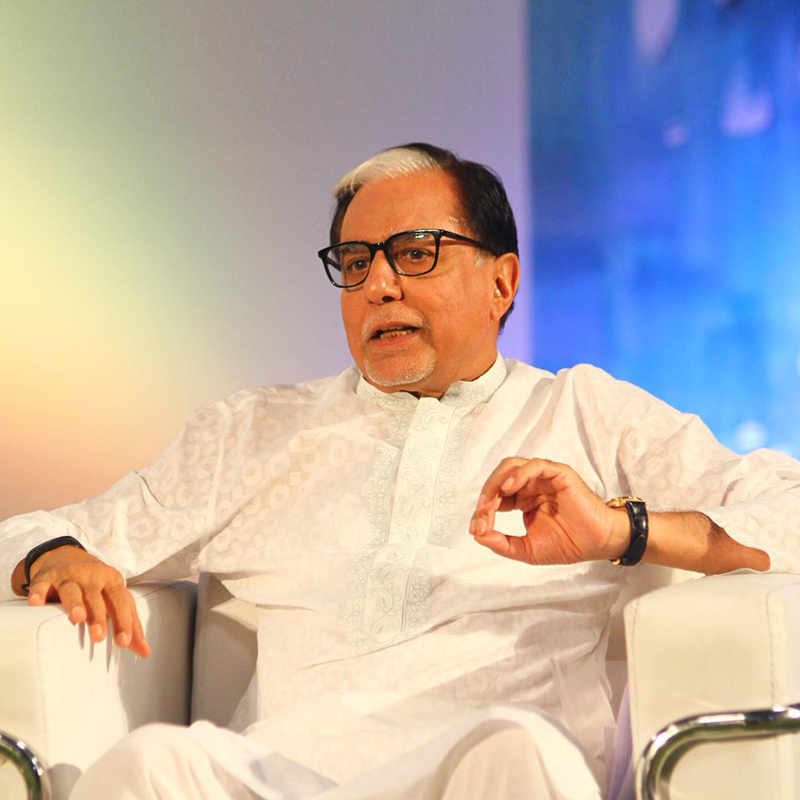
    NEW DELHI: Urging all the stakeholders of the Indian broadcast and cable segments to sink their differences and “come together” for the overall benefit  of the industry, Zee group chairman Subhash Chandra supported regulator TRAI’s draft inter-connect guidelines that, amongst other such broadcast regulations, have been put on hold owing to them legally challenged in courts.  

    “I am a strong supporter of (TRAI’s draft) inter-connect regulations,” Chandra, a Rajya Sabha Member of Parliament from Haryana state, said, adding that in order to reduce litigations amongst stakeholders in the industry it was paramount to “support” such regulations.

    However, Chandra made it clear that though broadcast and cable industry should back TRAI draft guidelines at present — “at least temporarily” — such guidelines should be relaxed over a period of time and jocularly added that rampant litigations financially enriched lawyers only. He was responding to a question from the audience on growing division between broadcasters and distribution platforms, especially the MSOs and LCOs.

    Earlier, delivering the keynote address at the SATCAB meet organized by the All-India Dish Antennae Aavishkaar Sangh, the Zee/Essel Group founder said that there was no reason why the estimated 230,000 (his estimates) local cable operators in the country should not shed allegiance to multiple industry bodies and “unite under one umbrella” to become a force to reckon with so that their voice could be heard more forcefully in the corridors of power.

    Pointing out that not only the MSOs and LCOs should unite, but “all stakeholders” like broadcasters too, Chandra sounded a word of caution, “As an industry we need to be alert to technological evolution.” He added that unless that happens, others, like telcos, “will take a lead over consumer experience”, which will be “our weakness.”

    Chandra said the cable industry had to prepare itself “to catch up with the future” as at present the industry was at “ground level with basic set top boxes”, for example, when technology (like 3D printing) could soon make it possible for viewers to get a different experience in, say, a TV cookery show.

    Referring to various concerns of the LCOs, he said he had ensured that the issue of entertainment tax got subsumed in the Goods and Services Tax (GST), but for him to take up issues relating to the sector stakeholders needed to unite.

    Going back in time to 1992, he dwelt on how the idea of Zee had been drawn up and how when he had given this information to a senior official in the Ministry of Information and Broadcasting (MIB), he had been strongly criticized for the whole idea and was told it would never succeed. “But in just three months of launch”, he said, “Zee had 300,000 television homes subscribing to it.”  

    ALSO READ:

    Top M&E industry honchos see no major benefit from Budget ’17

    MSOs join issues with TRAI tariff plea at Madras HC

    Tariff order: Don’t notify without SC nod, TRAI told; Madras HC case to continue


  • SC to MIB: Get mechanism to deal with complaints on TV, radio shows

    SC to MIB: Get mechanism to deal with complaints on TV, radio shows

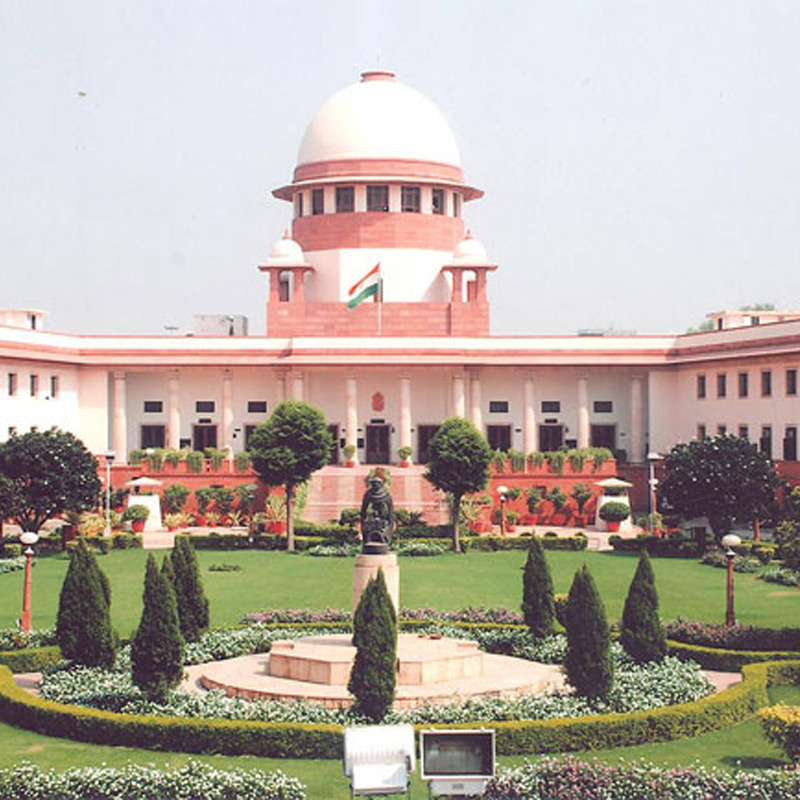
    NEW DELHI: The Supreme Court on Thursday asked the Central Government to set up a statutory mechanism to deal with citizens’ complaints against TV and radio programmes.

    A bench comprising Chief Justice J S Khehar and Justice D Y Chandrachud asked the Ministry of Information and Broadcasting (MIB) to use the power under section 22 of the Cable Television Networks (Regulation) Act and set up a body to deal with complaints against television and radio channels, PTI reported.

    The court considered the submission of the Centre that there was a mechanism to deal with such cases. “The Union of India said that there is a mechanism. We, however, feel that it needs adequate publicity so as to enable common public to seek redressal of grievance,” the court was quoted in the PTI report.

    Advocate Prashant Bhushan, appearing for NGO Common Cause, said that “this business of self regulation business doesn’t work”.

    At present while the News Broadcasters’ Association of India (NBA) has a self-regulatory mechanism to look into complaints received from citizens and viewers relating to its member-TV channels, there is no such set-up for the non-news TV channels in the country.

    Broadcast and telecoms regulator TRAI oversees the carriage and tariff related issues pertaining to broadcast and cable. The content side of the industry is still regulated by MIB, which issues show-cause notices to various TV channels on content-related issues after receiving complaints or suggestions from viewers in general. The government also has a state-of-the-art on-air content monitoring facility in Delhi.

    Most recently, MIB had asked NDTV India news channels to shutter for a day as a penalty for breaching content code as envisaged in various government rules and regulations and amended from time to time. NDTV India issue related to airing of programmes and information allegedly considered to compromise the nation’s security. However, under media and public pressure, the government kept the order in abeyance late last year.

    ALSO READ : MIB puts NDTV India ban on hold until further notice

    Govt hands NDTV India 24-hr ban for breach of content code

    Content Regulation on Private TV Channels


  • SC to MIB: Get mechanism to deal with complaints on TV, radio shows

    SC to MIB: Get mechanism to deal with complaints on TV, radio shows

    NEW DELHI: The Supreme Court on Thursday asked the Central Government to set up a statutory mechanism to deal with citizens’ complaints against TV and radio programmes.

    A bench comprising Chief Justice J S Khehar and Justice D Y Chandrachud asked the Ministry of Information and Broadcasting (MIB) to use the power under section 22 of the Cable Television Networks (Regulation) Act and set up a body to deal with complaints against television and radio channels, PTI reported.

    The court considered the submission of the Centre that there was a mechanism to deal with such cases. “The Union of India said that there is a mechanism. We, however, feel that it needs adequate publicity so as to enable common public to seek redressal of grievance,” the court was quoted in the PTI report.

    Advocate Prashant Bhushan, appearing for NGO Common Cause, said that “this business of self regulation business doesn’t work”.

    At present while the News Broadcasters’ Association of India (NBA) has a self-regulatory mechanism to look into complaints received from citizens and viewers relating to its member-TV channels, there is no such set-up for the non-news TV channels in the country.

    Broadcast and telecoms regulator TRAI oversees the carriage and tariff related issues pertaining to broadcast and cable. The content side of the industry is still regulated by MIB, which issues show-cause notices to various TV channels on content-related issues after receiving complaints or suggestions from viewers in general. The government also has a state-of-the-art on-air content monitoring facility in Delhi.

    Most recently, MIB had asked NDTV India news channels to shutter for a day as a penalty for breaching content code as envisaged in various government rules and regulations and amended from time to time. NDTV India issue related to airing of programmes and information allegedly considered to compromise the nation’s security. However, under media and public pressure, the government kept the order in abeyance late last year.

    ALSO READ : MIB puts NDTV India ban on hold until further notice

    Govt hands NDTV India 24-hr ban for breach of content code

    Content Regulation on Private TV Channels


  • Regulations 2016: Of DeMon challenges, changing goalposts & rampant litigation

    Regulations 2016: Of DeMon challenges, changing goalposts & rampant litigation

    The regulatory regime in 2016 not only continued to struggle keeping pace with fast-marching technology (4G is passé, 5G is being talked in some countries), but lack of consensus amongst stakeholders on major issues meant that litigation was rampant, thus leading to changing milestones. It was also about the government trying to enforce censorship via the backdoor and, hence, despite the best of intentions, only average dividends accrued to the media and entertainment sector in India, which is still described as a market with huge potential, but also a challenging place to do business.

    The biggest policy (that ultimately turned into a regulatory challenge) initiative of 2016 — some would say the biggest hiccup — was PM Modi’s demonetisation bomb aimed at unleashing a surgical strike on black money and parallel economy in the country that, according to an earlier government narrative, made the poor poorer and gave a fillip to corruption. Debatable long term gains of such a move, notwithstanding, the media industry immediately felt the heat of cash crunch.

    As collections from the ground dropped for LCOs, it affected the MSOs too, though many big MSOs insisted that making high-value currency notes illegal from November 9, 2016 could act as a catalyst for LCOs to make their business more transparent.

    From an earlier estimate of Rs. 600 crore or Rs. 6 billion loss to the media and advertising segments owing to demonetisation, loss estimates ballooned to almost Rs 300 billion towards the end of the year when most corporate adspends were slashed owing to low on-ground collections. FMCG companies led this trend and are likely to do so the in the last quarter of the 2016-17 financial year too. The cascading effects on all segments made them yelp with pain.

    Demonetisation also made the telecoms and broadcast carriage regulator the Telecom Regulatory Authority of India (TRAI) scurry to issue guidelines to facilitate the government push towards a cashless economy. For example, reduction of the ceiling tariff for the use of unstructured supplementary service data (USSD)-based mobile banking services from Rs 1.50 to Rs.0.50 and amendment to the mobile banking (quality of service) regulations to increase the number of stages from 5 to 8 per USSD session.

    Though the government’s reluctance to interact with the media directly continued throughout the year as government representatives, led by PM Modi, relied more on social media to communicate with the country at large, like many regimes in the past this government too attempted to curb media freedom. The Ministry of Information and Broadcasting (MIB) directive to NDTV India, on suggestions from an inter-ministerial committee, to shutter for a day as a penalty for breaching content code on issues related to national security was one such example.

    The government initially tried to justify the move saying national security was compromised by NDTV India, a Hindi news channel, but ultimately MIB buckled under pressure from a large section of the media frat and populace in general to go in for a face saver and the directive was kept in abeyance. However, the message couldn’t have been louder and clearer to not only the media, but also the critics: don’t underestimate the government’s resolve to crack the whip even though the Constitution grants Indians certain freedom of expression and free media be damned.

    However, it would be unfair to criticise the government for doing nothing except increasingly crack the whip. As part of overall reforms, the government did liberalise FDI norms for several sectors, including the media, in June. Foreign direct investment limits in broadcast carriage services like DTH, cable distribution, teleports, HITS, mobile TV, etc were allowed up till 100 per cent with certain caveats. Norms for FM radio broadcasts too were liberalised.

    Still, foreign or global media players didn’t start pouring money immediately in ops in India. Government data on FDI till September 2016 makes it clear that the media and entertainment sector was not amongst the top 10 sectors where foreign investment flowed in and its share was comparatively small despite liberalised norms and New Delhi’s attempts to further work on ease of doing business in India.

    The MIB did manage to shave off to an extent the time period taken to obtain a licence for uplink or downlink for TV channels and teleports, but failed on many counts to be proactive on developing issues (like controversial appointments in several MIB-controlled media institutions and attempted content regulation by non-authorised organisations), for example. Its reactionary approach complicated matters further.

    Widely criticised for over regulating the telecoms and broadcast & cable sectors, the TRAI stuck to its avowed and stated aim of attempting to create a regulatory regime that would reduce ambiguities and create a level playing field for all stakeholders.

    From trying to deal with issues in a piecemeal fashion (Net Neutrality being one) to smoothening the road ahead for the players via various guidelines and recommendations, TRAI, under chairman RS Sharma, has not shied away from confronting any bull (like Facebook) — some players, however, say it acted like a bull in a China shop.

    Whether it was the issue of Net Neutrality or zero tariffs offered by telcos for certain services or tariffs, interconnect and quality of services in the broadcast carriage sector or pushing MSOs on digital rollout or suggesting free limited data to rural India to give a fillip to the digital economy or cracking the whip on mobile phone call drops, or interoperable boxes for DTH and cable TV services, the TRAI has been trying to walk the tight rope between regulations and industry and political lobbying.

    But it must be agreed that TRAI has done less of flip-flops compared to organisations like the MIB or ministry of telecommunications and stuck on its stated route to regulation. It also has been talking straight. For example, TRAI could not have been more apt when Chairman RS Sharma told indiantelevision.com in a year-end interview that the regulator has to step in only when industry stakeholders fail to resolve issues amongst themselves. Because the industry has consitently been disastrous on managing this and thrives on ambiguities and rampant litigations, the regulator has had to time and again had to step in to remove doubts, even if that means minimalistic regulations, Sharma opined.

    On cue, it seems, towards the fag end of the 2016, Star TV and Vijay TV moved the courts against draft TRAI regulations on tariff, interconnect and quality of services, pleading the regulator could not hold sway in areas where already established domestic and international laws are there. Till further hearing later this month, the Madras High Court directed TRAI to maintain the status quo.

    With the digitisation goalpost shifted to March 2017 it is to be seen whether MIB can push through some ongoing reforms and withstand pressures arising out of demonetisation and from political allies.
  • Regulations 2016: Of DeMon challenges, changing goalposts & rampant litigation

    Regulations 2016: Of DeMon challenges, changing goalposts & rampant litigation

    The regulatory regime in 2016 not only continued to struggle keeping pace with fast-marching technology (4G is passé, 5G is being talked in some countries), but lack of consensus amongst stakeholders on major issues meant that litigation was rampant, thus leading to changing milestones. It was also about the government trying to enforce censorship via the backdoor and, hence, despite the best of intentions, only average dividends accrued to the media and entertainment sector in India, which is still described as a market with huge potential, but also a challenging place to do business.

    The biggest policy (that ultimately turned into a regulatory challenge) initiative of 2016 — some would say the biggest hiccup — was PM Modi’s demonetisation bomb aimed at unleashing a surgical strike on black money and parallel economy in the country that, according to an earlier government narrative, made the poor poorer and gave a fillip to corruption. Debatable long term gains of such a move, notwithstanding, the media industry immediately felt the heat of cash crunch.

    As collections from the ground dropped for LCOs, it affected the MSOs too, though many big MSOs insisted that making high-value currency notes illegal from November 9, 2016 could act as a catalyst for LCOs to make their business more transparent.

    From an earlier estimate of Rs. 600 crore or Rs. 6 billion loss to the media and advertising segments owing to demonetisation, loss estimates ballooned to almost Rs 300 billion towards the end of the year when most corporate adspends were slashed owing to low on-ground collections. FMCG companies led this trend and are likely to do so the in the last quarter of the 2016-17 financial year too. The cascading effects on all segments made them yelp with pain.

    Demonetisation also made the telecoms and broadcast carriage regulator the Telecom Regulatory Authority of India (TRAI) scurry to issue guidelines to facilitate the government push towards a cashless economy. For example, reduction of the ceiling tariff for the use of unstructured supplementary service data (USSD)-based mobile banking services from Rs 1.50 to Rs.0.50 and amendment to the mobile banking (quality of service) regulations to increase the number of stages from 5 to 8 per USSD session.

    Though the government’s reluctance to interact with the media directly continued throughout the year as government representatives, led by PM Modi, relied more on social media to communicate with the country at large, like many regimes in the past this government too attempted to curb media freedom. The Ministry of Information and Broadcasting (MIB) directive to NDTV India, on suggestions from an inter-ministerial committee, to shutter for a day as a penalty for breaching content code on issues related to national security was one such example.

    The government initially tried to justify the move saying national security was compromised by NDTV India, a Hindi news channel, but ultimately MIB buckled under pressure from a large section of the media frat and populace in general to go in for a face saver and the directive was kept in abeyance. However, the message couldn’t have been louder and clearer to not only the media, but also the critics: don’t underestimate the government’s resolve to crack the whip even though the Constitution grants Indians certain freedom of expression and free media be damned.

    However, it would be unfair to criticise the government for doing nothing except increasingly crack the whip. As part of overall reforms, the government did liberalise FDI norms for several sectors, including the media, in June. Foreign direct investment limits in broadcast carriage services like DTH, cable distribution, teleports, HITS, mobile TV, etc were allowed up till 100 per cent with certain caveats. Norms for FM radio broadcasts too were liberalised.

    Still, foreign or global media players didn’t start pouring money immediately in ops in India. Government data on FDI till September 2016 makes it clear that the media and entertainment sector was not amongst the top 10 sectors where foreign investment flowed in and its share was comparatively small despite liberalised norms and New Delhi’s attempts to further work on ease of doing business in India.

    The MIB did manage to shave off to an extent the time period taken to obtain a licence for uplink or downlink for TV channels and teleports, but failed on many counts to be proactive on developing issues (like controversial appointments in several MIB-controlled media institutions and attempted content regulation by non-authorised organisations), for example. Its reactionary approach complicated matters further.

    Widely criticised for over regulating the telecoms and broadcast & cable sectors, the TRAI stuck to its avowed and stated aim of attempting to create a regulatory regime that would reduce ambiguities and create a level playing field for all stakeholders.

    From trying to deal with issues in a piecemeal fashion (Net Neutrality being one) to smoothening the road ahead for the players via various guidelines and recommendations, TRAI, under chairman RS Sharma, has not shied away from confronting any bull (like Facebook) — some players, however, say it acted like a bull in a China shop.

    Whether it was the issue of Net Neutrality or zero tariffs offered by telcos for certain services or tariffs, interconnect and quality of services in the broadcast carriage sector or pushing MSOs on digital rollout or suggesting free limited data to rural India to give a fillip to the digital economy or cracking the whip on mobile phone call drops, or interoperable boxes for DTH and cable TV services, the TRAI has been trying to walk the tight rope between regulations and industry and political lobbying.

    But it must be agreed that TRAI has done less of flip-flops compared to organisations like the MIB or ministry of telecommunications and stuck on its stated route to regulation. It also has been talking straight. For example, TRAI could not have been more apt when Chairman RS Sharma told indiantelevision.com in a year-end interview that the regulator has to step in only when industry stakeholders fail to resolve issues amongst themselves. Because the industry has consitently been disastrous on managing this and thrives on ambiguities and rampant litigations, the regulator has had to time and again had to step in to remove doubts, even if that means minimalistic regulations, Sharma opined.

    On cue, it seems, towards the fag end of the 2016, Star TV and Vijay TV moved the courts against draft TRAI regulations on tariff, interconnect and quality of services, pleading the regulator could not hold sway in areas where already established domestic and international laws are there. Till further hearing later this month, the Madras High Court directed TRAI to maintain the status quo.

    With the digitisation goalpost shifted to March 2017 it is to be seen whether MIB can push through some ongoing reforms and withstand pressures arising out of demonetisation and from political allies.
  • Highlight women’s rights, broadcasters told

    Highlight women’s rights, broadcasters told

    NEW DELHI: In the wake of rampant cases of molestations of women, even in public places like in Bengaluru recently on New Year’s Eve, the government has issued a directive to TV broadcasters and FM radio stations to highlight the importance of treating women with respect and equality.

    The Ministry of Information and Broadcasting (MIB) on Wednesday sent out an advisory to FM radio and television broadcasters, which have signed the licence conditions and other government regulations, to air programmes on TV and radio to convey the message that women need to be “treated with respect and equality”.

    Both TV and radio broadcasters, the MIB said as per stipulations, need to broadcast public interest announcements for maximum of one hour per day suitable/proportional time slots interspersed during that day to highlight the women’s issue.

    For FM radio broadcasters, MIB advised two jingles of 60 seconds and 57 seconds duration should be aired. The private FM Radio stations were advised to broadcast the jingles at least twice a day during peak hours.

  • Highlight women’s rights, broadcasters told

    Highlight women’s rights, broadcasters told

    NEW DELHI: In the wake of rampant cases of molestations of women, even in public places like in Bengaluru recently on New Year’s Eve, the government has issued a directive to TV broadcasters and FM radio stations to highlight the importance of treating women with respect and equality.

    The Ministry of Information and Broadcasting (MIB) on Wednesday sent out an advisory to FM radio and television broadcasters, which have signed the licence conditions and other government regulations, to air programmes on TV and radio to convey the message that women need to be “treated with respect and equality”.

    Both TV and radio broadcasters, the MIB said as per stipulations, need to broadcast public interest announcements for maximum of one hour per day suitable/proportional time slots interspersed during that day to highlight the women’s issue.

    For FM radio broadcasters, MIB advised two jingles of 60 seconds and 57 seconds duration should be aired. The private FM Radio stations were advised to broadcast the jingles at least twice a day during peak hours.