Tag: Ministry of Information and Broadcasting

  • VTV & DY365 to go off air for violating programming act

    VTV & DY365 to go off air for violating programming act

    MUMBAI: In two separate cases, the ministry of information and broadcasting (MIB) has asked channels VTV and DY 365 to be taken off air. 

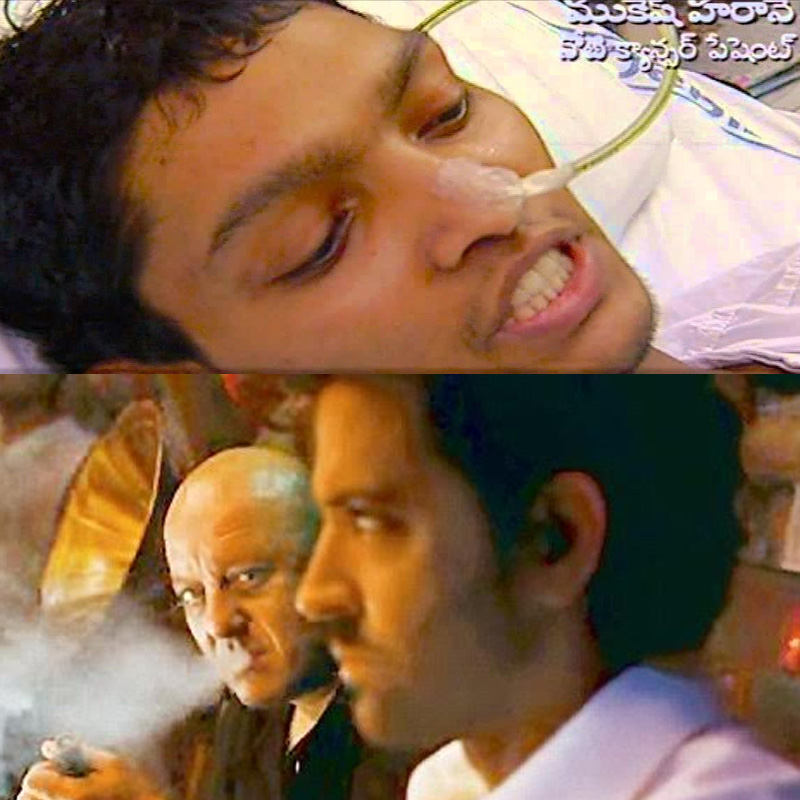
    In the first case, VTV has been asked to go off air for a day on 16 December, for violating the provisions of the programme code under Cable TV Networks Regulation Act of 1995. The channel telecast a news programme namely, ‘viral truth’ on 20 March 2017 at 7 pm in which a man could be seen brutally beating up children in an orphanage and the video started trending on social media alleging that this incident occurred in RMVM school of Valsad Gujarat. However, when the channel conducted its own investigation about this video, it found that the video was of an incident in an orphanage in Egypt. While reporting the news, the channel showed disturbing visuals of the orphan kids who were beaten up and thrashed brutally by the manager.

    The inter-ministerial committee believes the channel tried to sensationalise the issue to grab the attention of its viewers and such visuals not only offend good taste/decency but also denigrate children by showing them being brutally tortured.

    In the second case, an Assamese channel DY 365 has been asked to go off air for three days from  15-18 December 2017. It telecast a news report on 6 June 2017 at 12.59 pm in which a man could be seen tossing a new-born baby up and down in the air. He hurls and slings the baby in every possible manner and direction without a shred of care and concern. The video meant to expose an extremely dangerous superstition allegedly prevalent in some parts of Assam where people believe that undergoing this ritual will keep the child safe. 

    The ministry believes the visuals are extremely disturbing, and not suitable for unrestricted public exhibition and has recommended that the channel may be handed Three days off-air penalty for violation of the provisions of programme & advertising codes.

    The channel was in violation of Rule 6 (1) (a), (l) & (o) of the Cable Television Networks Rules, 1994 under the Cable Television Networks Regulation Act, 1995.

    Also Read:

    I&B tightens up on condom ads on TV

    MIB takes note of banned Zakir Naik content on Kashmir TV channels

  • Govt assures ease in licensing norms to TV channels, satellite operators

    Govt assures ease in licensing norms to TV channels, satellite operators

    NEW DELHI: The Ministry of Communications (MoC) yesterday, while allaying concerns of the broadcast and satcom industries, assured that the government would further ease norms for doing business in India and that processes were underway for implementation soon to do away with multiple permissions for communications frequencies.

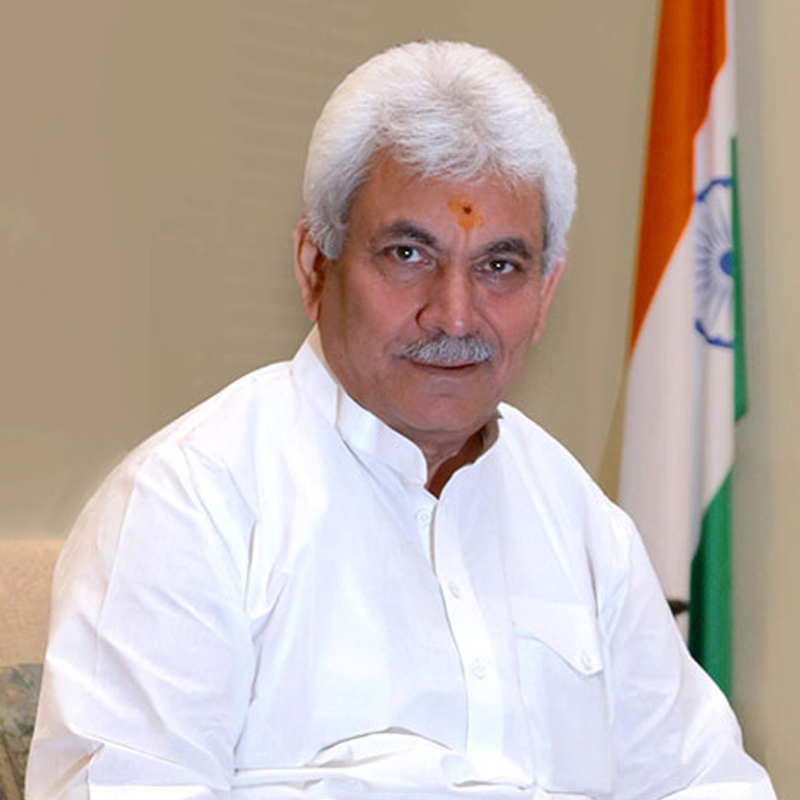
    While communications minister Manoj Sinha said that it was “time to take a fresh approach” to satcom policies, in conjunction with the department of space, the senior most official, secretary Aruna Sundararajan, stressed that soon the government would unveil a single window for frequency-related permissions.

    Speaking at an event organised by Broadband India Forum, called Satcom 2017 and themed ‘Accelerating Satellite Broadband for Inclusive Growth’, Sinha said that the role of satellites in “making available affordable broadband” had been witnessed in various parts of the world. He added it was time that the department of space takes a “fresh approach” to making use of technologies like satellites and cable-delivered broadband — which complement India’s multi-million rupees’ fibre optics network project or Bharat Net— to realse the dream of a digital India championed by PM Modi.

    Pointing out that India was on the threshold of becoming the “largest broadband economy in the world”, Sinha said, “Satellite communications has a special role to play.”

    Speaking earlier, Suderarajan echoed minister Sinha’s vision in making India truly digital and said that MoC was working with Ministry of Information and Broadcasting (MIB) and other related government organisations to create software, akin to a single-window, for various frequency-related approvals and permissions.

    “There are anomalies in frequency allocations (for TV channels and satellite ops),” MoC secretary said, adding that the ministry is in dialogue with other government agencies to remove such irritants so that the “extra burden of cost (on part of the industry players) could be done away with”.

    Both minister Sinha and Sunderarajan promised to take up with the the department of space, various concerns raised by TV channels and satellite operators, mostly foreign, relating to lengthy clearance processes, which were in sharp contrast to the PM Modi-led government’s claim of continuously easing norms for doing business.  

    “I understand that broadcasting has a problem as many agencies are involved. I can tell those present here that we are working with MIB to create a single software for approvals and permissions,” joint wireless advisor RB Prasad reiterated at another conference session, clarifying that an issue about ownership and management of the said portal is being presently discussed to close the matter.

    While stressing that proliferation of affordable broadband will empower Indians in general, which was the government’s target, the top MoC official informed that by the end of the year 100,000 gram panchayats or local village administrations will be broadband-enabled under the Bharat Net project. For the remaining of the targeted 650,000 villages, Sunderarajan said, “Satellite component will be important.”

    Meanwhile, TRAI chairman RS Sharma, speaking to reporters on the sidelines of the Satcom 2107 conference, said that while the open sky policy mandated that the service provider or anyone that wants to provide broadband will be able to contact satellite operators, there were still some “deficiencies” in the system. “That, we will need to work out,” he was quoted by PTI as saying. He, however, ruled out a separate consultation paper on the same. The new telecom policy, scheduled to be unveiled in the first quarter of 2018, will exemplify all those issues, Sharma noted.

    Also Read:

    MIB, TRAI allay industry fears on sat capacity leasing & content regulations

    TRAI sees merit in using satcom for broadband delivery

  • MIB, TRAI allay industry fears on sat capacity leasing & content regulations

    MIB, TRAI allay industry fears on sat capacity leasing & content regulations

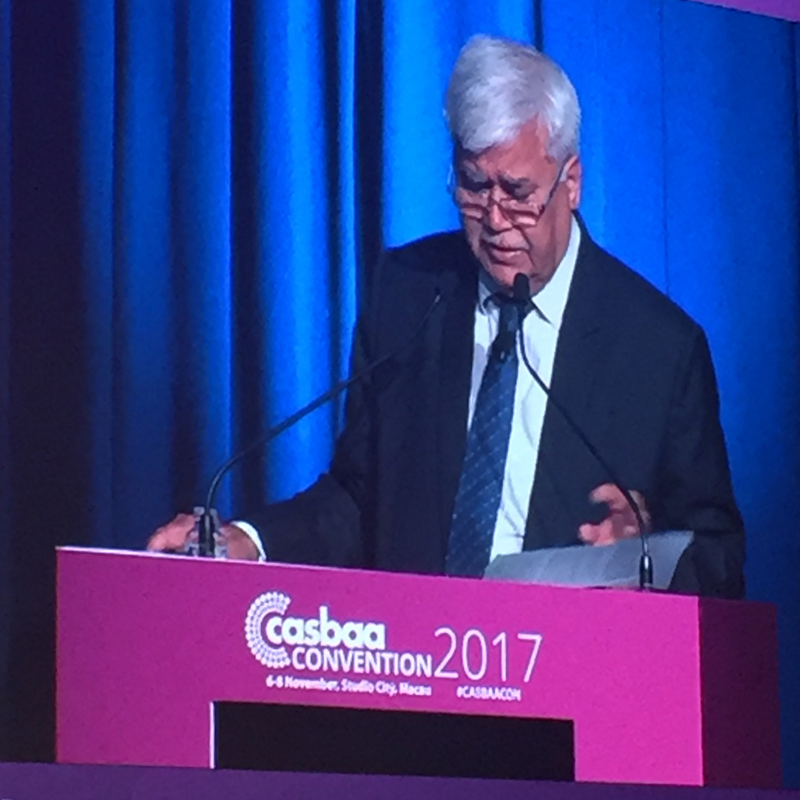
    MACAU: Indian government officials on Tuesday used an international platform of CASBAA Convention 2017 here to allay some of the industry fears on regulatory challenges involving satellite capacity leasing on foreign satellites and possible content regulations, while stating the country strives to be vibrant, living up to PM Modi’s stated policy of ease of doing business.

    “The improvement in India’s ease of doing business global ranking to 100 is not just eyewash. It represents real changes,” Ministry of Information and Broadcasting (MIB) secretary NK Sinha said here, adding that though general talks with the department of space and Indian space agency ISRO were continuing to ease policy restrictions for Indian customers to lease capacity on foreign satellites, a meeting on some specific issues were yet to take place.

    “Prime Minister Narendra Modi’s mantra is perform, reform, transform,” Sinha said stressing on the message that efforts were on to remove bottlenecks to doing business in India’s thriving broadcast and cable sectors and that technology was critical for both communications and content.

    Telecom Regulatory Authority of India (TRAI) chairman RS Sharma chipped in to state the regulatory body had recommended to the government to adopt an open sky policy. “These (ISRO issues) are not issues of principle, but of operation,” he added.

    “The issue also affects broadband provision. To ensure affordable broadband in rural areas, India will need to use satellites to provide this (service),” Sharma elaborated, adding that TRAI was presently studying stakeholders’ comments on its consultation paper on ease of doing business in the broadcast sector “to resolve the matters raised” by the industry.

    The two top Indian regulatory officials involved in matters of broadcast and media were responding to a question from the audience on whether they were aware that it was increasingly becoming challenging for Indian customers (like broadcasters, Vsat and teleport operators, for example) to lease capacity on foreign satellites in the wake of a maze of clearances and paperwork sought by ISRO.

    It must be clarified here that though TRAI has been repeatedly suggesting an open sky policy related to satellite capacities (both C and KU bands), the nodal ministry governing ISRO was yet to take an official stand on the regulatory body’s recommendations.

    public://CASBAA-RS_Sharma.jpg

    In what would — or could — bring smiles on the faces of many in the Indian broadcast and content business, the top MIB official also batted for self-regulation as a way forward, hinting that irresponsible behavior from stakeholders, however, would not be tolerated.

    “Happy with (present) self /co-regulation. Future will be self-regulation. The volume of content is going to explode exponentially. It will not be possible to pre-check each bit of data (but) citizens must be responsive and responsible,” Sinha said responding to another audience query on whether the government proposed to bring in a content regulatory body.

    At present, both the News Broadcasters Association and Indian Broadcasting Foundation have frameworks for self-regulation governing their member-companies. However, there are many out of the 800+ licensed TV channels that are not members of these industry organisations.

    He further pointed out that there needs to be a mechanism to ensure self-regulation comes back on track if it “strays”, though “pre-certification” didn’t look to be the future.

    Earlier speaking at a session themed `View From India’ on Tuesday, both Sinha and Sharma gave a snapshot of the Indian broadcast and media industry to a primarily international and Indian audience at the ongoing three-day CASBAA Convention 2017 here. They highlighted that India thrives as the second largest TV market with  183 million TVHH, 900 TV channels, 310 FM radio stations, 60,000 LCOs, 1,500 MSOs, 360 broadcasters, expanding reach of Doordarshan’s FTA DTH service, multiple DTH platforms, one HITS and several IPTV platforms, apart from OTT services.

    The chief of TRAI, which regulates the carriage and tariff segments of the broadcast sector and delivery platforms, in his address said the industry had grown at the rate of 15 per cent CAGR for the last five years and is projected to grow a shade less at 14 per cent for the next five years.

    While skirting a direct reference to TRAI’s new tariff regime for the broadcast and cable sectors being legally challenged by some industry players and presently being debated in Indian courts, Sharma mentioned the regulatory body had announced a framework that was “fair, transparent and non-discriminatory”.

    “Centralised distribution audits will ensure all broadcasters get audit information. This will reduce the burden on distributors and broadcasters,” he highlighted as an example of its regulatory fairness vis-a-vis multiple audits of customers being presently done draining human and financial resources of stakeholders.

    Dwelling on the ambitious multi-million Indian rupee national fibre optic network project or Bharat Net, Sharma said it was now a public-private venture not only for broadband, but also for delivering TV services. “Come, analyse and invest in the Indian broadcast sector,” he exhorted the global investment and media community.

    ALSO READ:

    MIB reverts to earlier norms of seeking nod from ISRO on uplink/downlink of TV channels

    MIB secy Sinha, Viacom18 CEO Vats to speak at CASBAA convention in Nov
  • Smriti Irani: Need to reduce gap between regional & national news & democratize viewership

    Smriti Irani: Need to reduce gap between regional & national news & democratize viewership

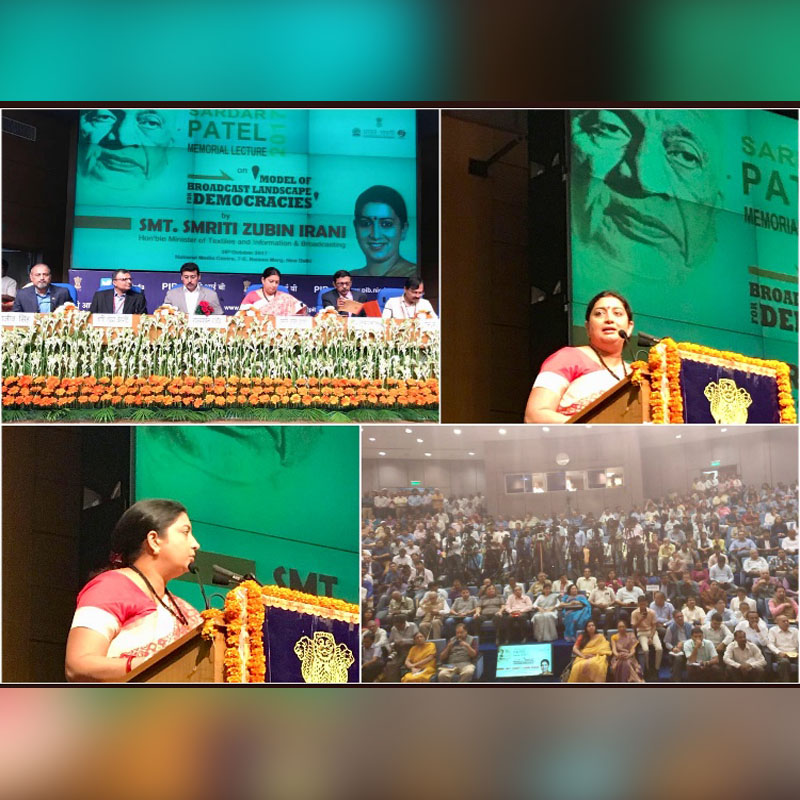
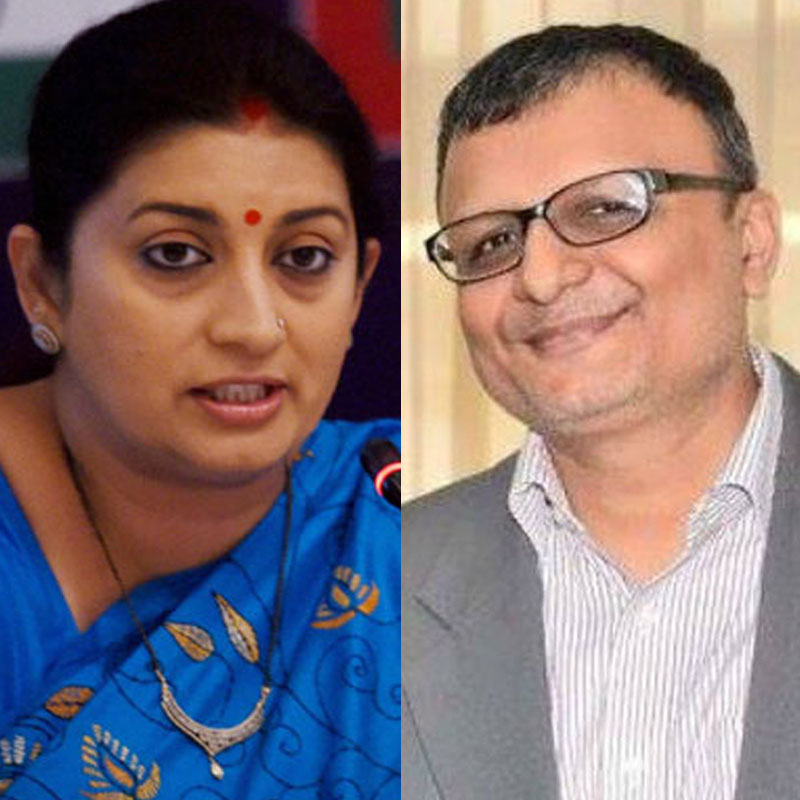
    NEW DELHI: Stressing on the need for a model structure of broadcasting, which can strengthen the Indian democracy, Minister for Information and Broadcasting Smriti Irani yesterday exhorted the media to reduce the gap between regional and national news, thus democratizing viewership, and the need for meeting objectives of public good and entertainment.

    “If we want the broadcasting landscape to be strong, the first and the foremost requirement is to give as much importance to the regional content as the national content…(and) reduce the gap between the regional news and  national content,” Irani said yesterday while delivering the Sardar Patel Memorial Lecture 2017 themed ‘Model of Broadcast: Landscape for Democracies’.
     
    Describing the broadcast news landscape as a “spectator sport”, the minister said the rush for audience ratings has reduced everything to “headlines competing with hashtags” in the wake of social media explosion taking place in the country that has provided a new pathway for information dissemination.

    Coming down heavily on a certain section of the media for being driven by TRPs, forsaking codes, ethics and conduct rules, unlike another section, Irani said, ”There is a need to democratize the (audience) measurement system in the country.”

    According to the feisty minister, who also holds the portfolio for Textiles Ministry, a model structure of broadcasting should focus on “democratized viewership” based on an accurate measurement system that reflects the strength of regional languages, varied tastes of viewers/consumers and bridges the divide on issues related to agenda setting, creative content and revenue between the mainstream and regional platforms.

    Stressing the importance of the sector keeping abreast with trends in the social media, which she described as a “disruptive” force, Irani said though the broadcasting sector is based on business propositions and technological upgradation, the ‘Mann ki Baat’ programme of Prime Minister Narendra Modi aired on AIR was an ideal example of how a technology platform blended his message with citizen understanding and awareness of the issues highlighted in each episode.

    Highlighting the difference in the way pubcasters — Doordarshan and All India Radio — functioned vis-a-vis a large section of the private sector media, Irani added: ”If you look at the broadcasting sector, the overriding focus of the public broadcaster has been on serving the public good. In today’s times, however, when news has become a spectator sport, there is a need to bridge the gap between serving the public good and providing entertainment.”

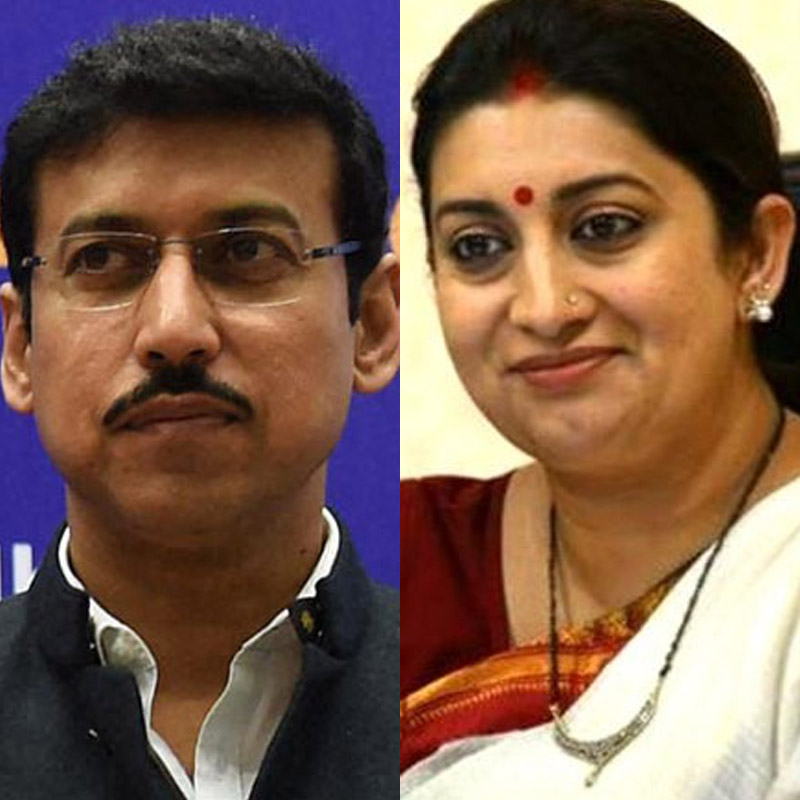
    The annual lecture held at the National Media Centre in the Capital, started by All India Radio way back in the 1950s, was attended by Minister of State for MIB Rajyavardhan Rathore, pubcaster Prasar Bharati chairman A. Surya Prakash and Prasar Bharati CEO Shashi S. Vempati, apart from other senior government officials.

    Even as Irani lauded the public broadcaster’s endeavour to focus on public good, she said it was the “duty of the public broadcaster to speak fairly and freely, as it is doing now”. She also called upon the pubcaster to weave stories on the lives of ordinary people, which could have an impact both within India and abroad.

    The minister said it would be the endeavour of MIB to promote the concept of “design thinkers” for content generation in the digital space in the light of growing use of technology by the young generation in areas of internet, mobile content and animation & gaming. This would also incorporate the elements of the New India vision envisaged by the Prime Minister by 2022.

    Highlighting the fulcrum strength of her ministry, Irani said that the Information Service officers’ profile would be strengthened in the future by giving them skill sets along with an integrated administrative exposure so as to enable them to serve policy and programmes of the people through the medium of information. This would be along the lines of Sardar Patel’s vision of creating a steel frame to serve the people through the channel of information dissemination, she added.

    The first Patel memorial lecture was delivered by C. Rajagopalachari, while the other distinguished speakers in the series have included stalwarts like Dr. Zakir Hussain, Dr. A.P.J. Abdul Kalam and Morarji Desai.

    Also Read: Smriti Irani tweets industry body advisory urging restraint by TV news channels

    MIB minister Smriti Irani orders review of DD prime time auction process

    Smriti Irani gets additional charge as MIB minister

    BARC India to TRAI and MIB: Tweak legislation to make data tamper-proof

  • MIB, Prasar Bharati mulling B-school help on DD & FreeDish biz models

    MIB, Prasar Bharati mulling B-school help on DD & FreeDish biz models

    MUMBAI: The government is exploring seeking help of an Indian Institute of Management to suggest ways on revitalising Doordarshan, including studying the existing business model of national broadcaster’s FTA DTH service DD FreeDish and whether further suggested improvements could be implemented.

    According to government sources, the move is part of ministry of information and broadcasting (MIB)’s efforts to shore up the bottomlines of Prasar Bharati, an autonomous body that manages India’s two pubcasters, Doordarshan and All India Radio.

    A B-school may be roped in to study the business model of DD FreeDish — that at present auctions slots on the platform to private broadcasters too — and explore whether if private sector TV channels are bumped off DD can generate revenue on the strength of its own channels, many of them also distributed terrestrially.

    As per some media reports, DD not only put on hold the latest round of e-auctions for slots on FreeDish in August 2017 on an advisory from MIB, but has also stopped renewing agreements of TV channels, which are presently on the DTH platform but are faced with a blackout once their annual contract comes to an end.

    A top Prasar Bharati official is said to have made a presentation to MIB minister Smriti Irani recently on how the DD set-up could be revitalised, including rejigging the business model for DD FreeDish, amongst other things.

    Though most big private sector broadcasters like Star India, Zee, Viacom18 and Sony, all having their channels on FreeDish, have not yet officially reacted to DD FreeDish keeping in abeyance the e-auctions for administrative reasons, smaller TV channels may feel the pinch. One of them, Cinema 24×7, has moved the telecoms and broadcast disputes tribunal TDSAT seeking interim relief as its contract expired in September 2017 and, according to its petition, it failed to get clarifications from DD on future auctions.

    The magic of DD’s FTA platform was discovered by TV channels a couple of years back with the battle for a slot intensifying in the last one year or so, egged on by BARC India starting to measure non-urban and rural audience. On DD FreeDish, it’s not pubcaster’s channels that top the list in terms of audience ratings, but mostly those belonging to the private broadcasters.

    A TV executive, on the condition of anonymity, explained that while Doordarshan, as a statutory body, survives on annual grants from the government, in 2016-17, DD FreeDish recorded revenues of about Rs 2641.7 million, a 47 per cent increase from a year ago. Hence efforts to revamp the current business model for DD FreeDish, having almost 52 per cent rural viewership that attracts private TV channels willing to pay hefty carriage fee, could prove detrimental for the pubcaster’s revenue, the exec added.

    Former MIB minister Manish Tiwari, while criticising DD’s reported moves to change the existing revenue models for DD FreeDish by putting on hold a transparent mechanism like e-auctions, told Indiantelevision.com, “DD FreeDish benefits from the presence of private TV channels on its platforms as it provides diversity of content to non-paying rural audiences.”

    ALSO READ ;

    WOW Cinema petitions TDSAT on delayed auctions for DD FreeDish slots

    Govt to help revitalise DD under ‘autonomous Prasar’, dubs censors as ‘facilitators’ within law

  • MIB reverts to earlier norms of seeking nod from ISRO on uplink/downlink of TV channels

    MIB reverts to earlier norms of seeking nod from ISRO on uplink/downlink of TV channels

    NEW DELHI: At a time when one arm of the government is said to be exploring review of usage norms for satellite frequencies for users of satellite services, Ministry of Information and Broadcasting has cancelled an earlier order — which simplified clearances for uplinking and downlinking of TV channels on permitted teleports and satellites — and reverted to an older tradition of also getting an okay from Department of Space (DOS), which could make the process lengthy.

    In a recent official communiqué, MIB stated DOS observed that by not referring TV channels’ applications relating to uplink/downlink to it, certain “key aspects” provided by the applicant were “not getting examined” and which could “create interference issues and difficulties in coordination with Indian satellites” at a later stage.

    Pointing out that a policy decision taken earlier by it has been reviewed

    in the light of DOS observations, MIB added, “It has been decided to revert to the erstwhile practice of referring all applications, seeking uplinking permission/change of teleport and/or satellite in respect of TV channels, to DOS for its no-objection with reference to proposed satellite’s coordination with Indian satellites.”

    A prior nod from DOS for uplink/downlink of TV channels on teleports and satellites, already permitted by MIB, was considered “duplication” of the clearance process and, thus, done away with by MIB in February 2017 as part of PM Modi-led government’s bid to ease norms of doing business in India. DOS, managed directly by the Prime Minister’s Office, oversees activities of Indian Space and Research Organisation (ISRO), an organization responsible for Indian satellites.

    MIB, while withdrawing its early-2017 order, said its decision comes into effect immediately.

    Interestingly, according to government sources, Wireless, Planning and Co-ordination (WPC) division, under Ministry of Telecoms, is exploring a review of clearance norms for users of satellite services in India and also optimizing value of satellite frequencies.

    At present, for a customer of satellite services, whether on Indian or foreign satellite, getting clearance for satellite capacity is a lengthy and time consuming process involving green signal from multiple government organizations, including DOS/ISRO and WPC.

    Telecoms and broadcast regulator TRAI has suggested a couple of times, in lengthy set of recommendations, that with an explosion in communications services, it was time India ought to explore an Open Sky Policy relating to satellite services; especially in KU-band category.

    ALSO READ:

    ISRO stresses on indigenization; TRAI for Open Sky policy

    Prasar Bharati, Dish TV, Star, Zee and BES bat for KU-band open-sky policy

    Will foreigners buy into easing of FDI in cable TV, DTH?

  • OTT players claim voluntary compliance as TRAI petitioned on anti-tobacco norms breach

    OTT players claim voluntary compliance as TRAI petitioned on anti-tobacco norms breach

    MUMBAI / NEW DELHI: Even though the Indian government has asked the broadcast carriage and telecoms regulator TRAI to rein in OTT platforms for alleged flouting of norms relating to tobacco and alcohol advisories in programmes, a majority of digital players claim to be voluntarily adhering to government directives meant primarily for TV shows despite absence of regulations for the sector.

    “As we belong to the traditional medium of television, it comes from within to carry Indian government-advised disclaimer (relating to scenes in TV shows and films involving tobacco and alcohol consumption),” Alt Balaji CMO Manav Sethi told Indiantelevision.com, adding, it is “not mandatory” for OTT platforms to do so, though.

    According to Arre co-founder and CEO Ajay Chacko, “OTT platforms are regulated under the Information Technology Act, but carrying a disclaimer relating to tobacco and alcohol consumption in shows depends upon the online content creators. We certainly carry a disclaimer highlighting the negative effects of alcohol and tobacco on health in our shows as done in films.”

    In a controversial and much-debated move, which some critics dubbed as killing creative freedom, the ministry of health and family welfare, some years ago, had come out with a directive stating that all films and TV shows had to carry a disclaimer regarding the negative effects of tobacco and alcohol consumption during scenes where artistes were shown doing the same.

    But why a hue and cry now relating to shows on OTT platforms?

    The ministry of health, according to a report in Millennium Post yesterday, has written to TRAI to ensure that OTT players such as Amazon Prime, Netflix, Hotstar, Reliance Jio and Voot adhere to the ministry’s directive relating to anti-tobacco and alcohol norms. The ministry felt that OTT and digital platforms were not running health-related disclaimers as done by movies and traditional TV shows. 

    But, why lobby with TRAI, which doesn’t regulate or govern content-related issues? In the opinion of the ministry of health, as enunciated by the newspaper report, internet-based services fell within the purview of the Telecoms Ministry and Telecom Regulatory Authority of India and the issue was flagged with TRAI since anti-alcohol and anti-tobacco agencies were finding it difficult to enforce the rule on errant OTT players.

    Though a source in Voot said it voluntarily runs during shows a health warning ticker — like “Smoking is injurious to health” — as part of “best practices”, the health ministry’s letter to TRAI highlights the conundrum of content regulation relating to OTT platforms.

    Indian films and TV programmes started carrying disclaimers on the negative effects of alcohol and tobacco consumption to adhere to the health ministry directive, indirectly enforced by the ministry of information and broadcasting (MIB), but at present there are no regulations relating to OTT platforms in India.

    TRAI has been debating the issue of OTT regulations, as part of net neutrality, with the stakeholders for over a year now but is still in the process of finalising its recommendations, which are expected to be unveiled some time soon.

    However, it is pertinent to point out that TRAI’s jurisdiction doesn’t extend to content regulation and is limited to content distribution and distribution platforms. As there’s no official content regulator like the Ofcom or the FCC, Indian TV channels broadly follow industry-formulated self-regulation norms, guided by pointers enumerated in the Cable TV Networks Regulation Act that’s enforced by MIB.

    ALSO READ :

    TRAI’s final recommendations on net neutrality likely by September

    Net neutrality: TRAI recommendations likely to keep Indian context in mind

    Surrogate liquor advertising: Time for change?


  • Republic TV seeks more involvement in NBA India ahead of AGM

    Republic TV seeks more involvement in NBA India ahead of AGM

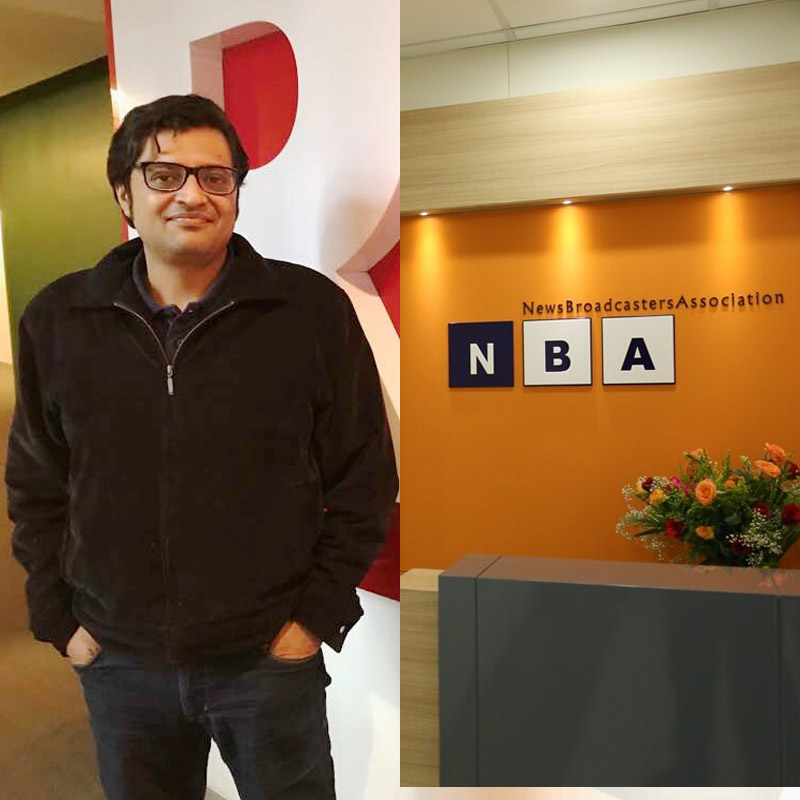
    MUMBAI: It has shaken up the Indian news broadcasting space within just a few months of its existence. Now, Republic TV, co-promoted by Arnab Goswami, is seeking to sweep clean the functioning of an industry body— the News Broadcasters’ Association of India or NBA, which, incidentally, is holding its tenth annual general meeting next week.

    Though recently it was inducted into the NBA India as a member, Republic’s Arnab, earlier in May, had dubbed the news outfit as a “cabal” and a “toothless body used for lobbying” by a chosen few people. Republic TV has now urged its concerns on  the alleged “undemocratic” ways of NBA India to be discussed in the next meeting of the industry organization.

    In a letter signed by its CEO Vikas Khanchandani and addressed to NBA India secretary general Annie Thomas, Republic TV has expressed that it would like to be an active participant in the process of addressing and finding solutions for the news broadcasters’ collective concerns.

    However, it has pointed out that a couple of governance practices in NBA India’s charter are preventing it being an active participant, labelling them as quite “undemocratic.”

    Amongst these is the provision that allows for seven “permanent” members.  Republic TV’s  assertions — “this may have been necessary in the early stages of the association, but maintaining a continued preferential even today is unjustified” — could very well set the cat amongst the pigeons if the note to NBA India is discussed at next week’s AGM and an amicable solution is not arrived at.

    The second objection of Republic TV is a provision that the NBA India board has been given powers to “induct up to two permanent directors with the affirmative vote of all the permanent directors voting in that meeting.” The letter, reviewed by Indiantelevision.com, states, “This is an arbitrary power and needs to change with the new realities.”

    Another rule, which it believes is restrictive, is the requirement of a six-month membership (before an ordinary general meeting), if a member wants to elect a representative to the association’s board. “This effectively keeps a new member like us outside the election process,” Khanchandani’s note points out, making it clear that Republic TV wants to be an office-bearer of NBA India.

    Additionally, it has alleged that the election of the NBA India office bearers, including the president, happens more by consensus rather than by an open electoral process, a system that needs an “immediate change.”

    Republic TV has stated that it would like these “permanent” practices and rules to be updated and made more relevant for today in its letter that has also been marked to the minister for information & broadcasting (MIB), secretary MIB and all NBA India members. Why the letter has been also copied to the government is not clear.

    Indiantelevision.com on Friday evening reached out to Joseph to get the NBA viewpoint and she stated that she was not authorized to speak to the media “on these matters.” The association’s vice-president and CEO & MD of Times TV Network/Times Global Broadcasting  MK Anand said he was clueless about the Republic TV letter.

    Well, this was the news bulletin for today, but keep tuned in as we keep tracking this developing story.

    Also Read: “The NBA is a toothless group,” says Republic TV’s Arnab Goswami

    NBA urges BARC not to release Republic TV viewership data until LCN issue is resolved

    New NBA member Republic TV wants regional & web players in

    Republic TV files contempt petition against Times Group

    India Today Group CEO Ashish Bagga resigns

  • BARC India to TRAI and MIB: Tweak legislation to make data tamper-proof

    BARC India to TRAI and MIB: Tweak legislation to make data tamper-proof

    NEW DELHI: India’s audience measurement company BARC India has urged broadcast regulator TRAI and Ministry of Information and Broadcasting (MIB) to bring in legislations making TV viewership data tamper-proof and stipulate stringent penalties for offenders.

    “Provisions need to be added in relevant regulations to not only dis-incentivize `viewership malpractices’ but also allow for punitive action against those indulging in such activities,” Broadcast Audience Research Council of India (BARC India) has said.

    In addition, it has also suggested the government and regulator to explore whether digital set-top-boxes and smart TV sets could be mandated by law to be made return path data (RPD)-enabled, moves that could enhance data robustness.

    BARC India is of the opinion that guidelines for uplinking and downlinking of TV channels, issued by MIB, could be “suitably amended to recognize and codify” efforts by TV channels to infiltrate or tamper with data collection processes.

    “A limited number of unscrupulous elements exist in the sector (a carryover from the past) who seek to infiltrate security of BARC India’s sample (panel homes), and unfairly influence their viewership habits. Their goal (and business) is to skew final viewership data in favour of some channels, using unfair means that BARC India defines as `viewership malpractice’,” the measurement body, a joint venture amongst IBF, AAAI and AISA, has said, highlighting it was grappling with legacy issues.

    Over the last 12 months several instances have come to light where TV channels were found to be allegedly attempting to tamper and influence audience data and indulging in other malpractices to boost viewership or TV ratings points, as it’s popularly described in India. In some cases, BARC India undertook counter-measures resulting in alleged offenders taking legal recourse. In some other instances, the regulator had to issue warnings in an effort to do damage control.

    “In terms of specifics, MIB’s channel licensing norms can stipulate that any broadcaster found to be indulging in unfair means to influence its viewership through acts of viewership malpractice can face… actions,” BARC India has suggested in its submission to TRAI’s consultation paper on `Ease of Doing Business in Broadcasting Sector’, adding a “fair system that evaluates complaints and adjudicates on them may also be included” in the regulations.

    Amongst the moves that the government and sector regulator could take, as suggested by BARC India, include measures like errant company facing viewership data blackout for a limited period, telecast ban for a limited period and revoking of license depending on the seriousness of the offense. “A regulatory framework that helps prevent distortions and fraudulent activities in the eco-system would be highly desirable, and valuable to all sections of the industry,” it has said in its submission.

    Why is BARC India pushing for legislative protection?  Pointing out that “incorrect, false and misleading audience ratings can lead to incorrect content decisions”, the measurement organization said, “There are no sections in IPC with reference to which BARC India can file police complaint and this emboldens those involved in such (fraudulent) activities.”

    In addition to seeking legal protection for data generation process, BARC India has also highlighted to TRAI the technological steps that can be taken — and is being explored by it.

    Use of return path data to complement the present TV currency is one such option. RPD involves capturing TV viewing data of homes with addressable set-top-boxes (DTH and digital cable) by enabling “return path” flow of data. “Once enabled, this would allow capture of TV viewership data from several lakh homes, as opposed to the 50,000 sample mandated at present. Additionally, this larger sample would allow more accurate capture of viewership of niche audiences and genres/channels with small viewing base (such as regional language channels and genres like infotainment, etc.),” BARC India has said.

    However, there’s a slight hitch. In the absence of technical standards presently, a large number of STBs in India is not enabled for RPD owing to inadequacies in hardware and software systems.

    BARC India, which is presently in discussions with some DTH and digital cable service providers for return path data collation, has submitted that mandating manufacture and sale of RPD-enabled STBs in India would go a long way in further improving TV viewership measurement system in the country.

    In this context, the organization has also urged TRAI to examine whether RPD-enabled smart TV sets could be mandated in India considering their rising sales as such a move could further add to the robustness in data collection.

    ALSO READ :

    BARC India suspends three errant channels’ review

    HC stays India News ratings suspension; BARC hints at continuing crusade

    News channel controversy: BARC India fires riposte to NBA

    BARC India in talks with DTH ops, MSOs for RPD to boost robustness

  • MIB directs states to ensure TV digitisation & action against defaulters

    MIB directs states to ensure TV digitisation & action against defaulters

    NEW DELHI: Noting that it has been receiving a number of complaints alleging analogue signals were still being transmitted by some cable operators, the ministry of information and broadcasting (MIB) has directed local administrations in the country to crack down on such errant LCOs and report back on the actions taken.

    This move comes within days of a notice to around 180 multi-system operators — granted provisional licenses — who had failed to comply with requirements of the government regarding digitisation, including updating information on the number of digital boxes seeded in their areas of operation.

    In a letter to all state chief secretaries, MIB additional secretary Jayashree Mukherjee reiterated the government had mandated only digital encrypted signals can be carried on the cable TV networks in the country from 1 April 2017 and carriage of analogue signals and/or unencrypted signals after that date was a violation of the Cable Television Network (Regulation) Act 1995 for which authorised local level officers had powers under the law to seize the equipment of the defaulting cable operators.

    The letter also pointed out that no reports were being received from the authorised local officials on action taken on complaints forwarded by the MIB, which had also prepared a check list for inspection of MSOs and sent it to officials of various local administrations on 25 April 2017. The directive was simple: plan regular inspection and take prompt action against the defaulters.

    “Very poor response on carrying out of inspection by the authorised officers has been received,” the MIB letter rued, requesting various state chief secretaries to direct their colleagues to be more active on this front against defaulters.

    ALSO READ:

    MIB show-causes MSOs on incomplete digitization info

    MIB seeks all new MSO applications online