Tag: Ministry of Information and Broadcasting

  • DD Free Dish looks at  advertising for monetisation

    DD Free Dish looks at advertising for monetisation

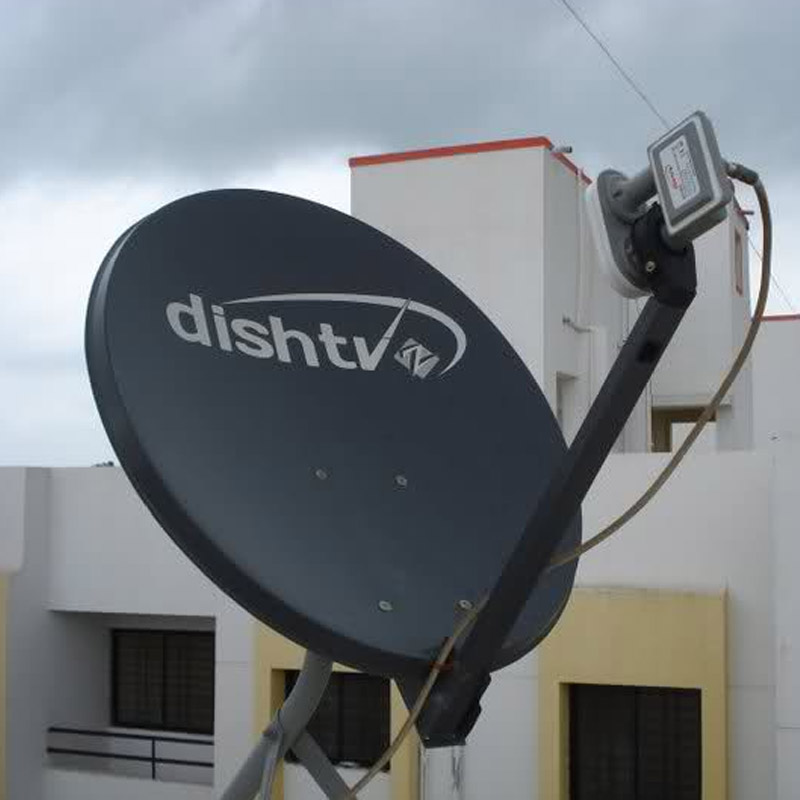
    MUMBAI: The government’s own direct-to-home (DTH) platform DD Free Dish has had a good run since launch because of its wide acceptance, especially in the rural areas where the reach of cable is limited and pay TV is expensive. Now, the government is drawing up plans to make money from the platform.

    Last year, the government sanctioned a scheme to extend the number of channels to up to 250. In a reply in the Lok Sabha recently, Minister of State in the Ministry of Information and Broadcasting (MIB) Rajyavardhan Rathore said that this would enable Free Dish to generate revenue via advertisements. Quoting a private newspaper, the response mentions that private channels easily garner Rs 500-700 crore as revenue a year while a channel slot on Free Dish is as low as Rs 6-8 crore. He admitted that there were limitations to the revenue models that could be adapted into the free service if it wanted to ensure quality and reach.

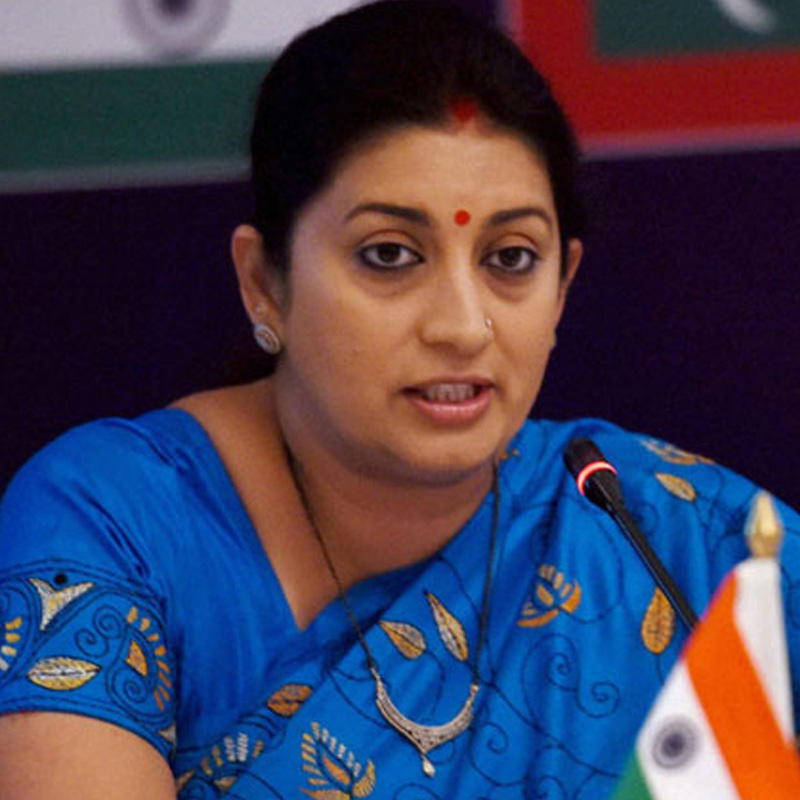
    Another means of making money is via auction of channel slots on the DTH platform, which turned into a legal case when the auctions were arbitrarily called off mid last year by Smriti Irani, the information and broadcasting minister. Auctions have been kept in abeyance till a settlement is reached between Prasar Bharati and the networks that have reached out to the Telecom Disputes Settlement Appellate Tribunal. The tribunal has asked the government to conduct a comprehensive review on the auctioning policy for Free Dish before any stand is taken.

    At present, there are 72 free channels and 39 radio stations available on Free Dish.

    Updating the parliament on its growth, Rathore added that about 66,000 DTH set-top boxes have been given out in tribal, remote and border areas. According to estimates, Free Dish’s total subscriber base is 22 million.

    Also Read :

    TDSAT interim order ensures continuity for private channels on FreeDish

    TDSAT gives Prasar Bharati 2 days to respond to FreeDish auction suspension

    FreeDish auction on 4 July, different reserve prices for GEC and news


  • Dish TV bemoans govt’s neglect of DTH sector

    Dish TV bemoans govt’s neglect of DTH sector

    MUMBAI: Dish TV, while lamenting neglect and step-motherly treatment of the whole DTH sector by the government, has exhorted policy-makers to remove various discriminations in the licencing conditions of various distribution platforms as it has resulted in taxing times for DTH operators.

    Furthermore, Dish TV has also pointed out that video distribution on OTT platforms should be brought under government regulations, similar to those governing other distribution platforms (DPs) to remove anomalies and creation of a level playing field for every stakeholder.

    “The present [regulatory] regime for the licence fee is discriminatory against the DTH operators and is designed to provide the leveraged position to cable operator, HITS, IPTV and MSO, etc in the market place as they are not required to pay any annual licence fee,” Dish TV has said in its submission to regulator TRAI’s consultation paper on issues related to uplink/downlink of TV channels and whether they could be auctioned in a way similar to FM radio licences.

    One of the largest satellite TV operators in India has added that because of discriminatory licencing regimes, the additional financial burden in terms of monthly subscription fee is put on a subscriber of DTH service when compared to subscribers of cable TV or HITS services.

    “It is a matter of record that in the month of March 2008, the Ministry of Information and Broadcasting (MIB) had taken a decision to fix the [DTH operator’s] licence fee @ 6 per cent of the gross revenue, which had the concurrence of the TRAI also. However, for reasons best known to the government, the decision is yet to be put into effect,” Dish TV has said.

    Pointing out that the DTH sector (India has six DTH licencees at present, according to MIB) has played a critical role in making the digitisation dream a success even while providing a world class experience to consumers, Dish TV has urged the government/regulator to “remove anomalies” by creating a level playing field for the DTH operators and rationalising the licence fee.

    Dish TV is also hopeful that TRAI’s new tariff structure and inter-connect regulations—which are in suspended animation owing to being legally challenged in Madras and Delhi High Courts by Star TV and Tata Sky and Airtel Digital combine, respectively—would go a long way in easing the pains of DTH ops. “Though the tariff order and the regulation are under challenge, however, it is just a matter of time that when the new regulation will sail through these minor hiccups and become a reality,” it added.

    Incidentally, as reported by Indiantelevision.com earlier, MIB is contemplating referring the issue of DTH policy guidelines review to its sister organisation, Ministry of Law, for an opinion.

    Meanwhile, Dish TV in its submission to TRAI has made a strong financial case for rationalisation of DTH licencing regime, while highlighting how owners of TV channels continue to play favourites with various DPs, has also urged a regulatory regime for video distributed on OTT platforms.

    In a section that dwells on OTT platforms, Dish TV has accused broadcasters or owners of TV channels of circumventing regulatory framework by distributing video on the internet or OTT platforms.

    Arguing that by starting OTT platforms broadcasters don’t just remain ‘broadcasters’, but also become ‘distributors’ of TV channels, Dish TV has said that such an arrangement breaches various existing regulations, including cross-media and cross-services restrictions.

    “It is important to note that the content being provided by the broadcasters [on OTT platforms] are free of cost with an intention to create a captive subscriber base and create a monopolistic situation. Because of ‘free of cost’ provision of the content by the broadcasters through OTT services, other distributor[s] of TV channels are heavily prejudiced… threatening the existence of other distribution platforms,” Dish TV has stated, adding such an arrangement could also create a monopoly where the broadcaster, being the distributor, would also control the end mile solution.

    It may be pertinent to note here that Dish TV’s sibling Zee group too has an OTT platform whereby it distributes TV programming to subscribers. Zee unveiled on Valentine’s Day a new avatar of its video streaming service called ZEE5.

    Though TRAI had initially left video streaming services out of a regulatory framework when it announced guidelines pertaining to Net Neutrality late last year, a section of the media has reported that the regulator is now thinking afresh and could bring in regulations for video content distributed via the internet (read video OTT platforms).

    Also Read :

    Law ministry likely to give opinion on DTH guidelines review

    Broadcasters, DPOs oppose TV channel auction proposal

    Dish TV-Videocon d2h deal on course

  • Law ministry likely to give opinion on DTH guidelines review

    Law ministry likely to give opinion on DTH guidelines review

    MUMBAI: Even as the government admitted in Parliament yesterday that it has granted six companies licences to operate DTH services in India, the Ministry of Information and Broadcasting (MIB) has, reportedly, referred to the Law Ministry a long-pending proposal to review DTH guidelines in the country.

    Replying to a question in Lok Sabha or Lower House on the DTH sector, Minister of Information and Broadcasting Smriti Irani, in written statement, said Dish TV, Tata Sky, Sun Direct, Reliance BIG TV, Bharti Telemedia and Videocon d2h are licenced to provide services in India under the DTH guidelines issued on 15 March 2001, which is amended from time to time.

    She said that in addition to the private players, pubcaster Doordarshan too operated a free to air DTH services in the country and there was no restriction on the total number of DTH licences.

    According to the minister, a licencee, in addition to an initial non-refundable entry fee of Rs 10 crore (Rs 100 million), is required to pay an annual licence fee that amounts to 10 per cent of its gross revenue.

    In the meanwhile, the DTH players who had been lobbying for the last 24 months or so for another review of the DTH guidelines, aimed at bringing down the annual revenue sharing percentage to between 6-8 per cent amongst other things, may have to wait for relief.

    MIB, which was studying a proposal to review the DTH guidelines based also on some past recommendations of the Telecom Regulatory Authority of India, has already referred or is in the process of referring the matter to the Law Ministry for an opinion, if government sources are to be believed.

    Amongst the six DTH licencees, a few are operating on the basis of temporary extension of their licences as the DTH guidelines do not spell out clearly the modalities for licence renewal once the initial 10-year period is over, DTH industry sources explained.

    MIB’s indecision on the regulatory review process hasn’t helped the industry much as the sector is witnessing consolidation — for example, the ongoing Dish TV-Videocon d2h merger and the sale of Reliance’s DTH business to a set of new investors — apart from the expiry of the 10-year licence period.

    Also Read:

    DTH’s year of consolidation

    Recalibrating India’s DTH sector after Airtel DTH-Warburg Pincus deal

    Dish TV-Videocon d2h deal on course

  • MIB says fewer TV channels violating ad, prog norms

    MIB says fewer TV channels violating ad, prog norms

    NEW DELHI: Indian channels seem to be finally toeing the line. The number of TV channels violating codes has been on a decline over the years. As many as 54 private television channels have violated the programme and advertising codes since 2014, though the number has been dipping, the Lok Sabha (Lower House of Parliament) was informed.

    17 channels each violated the code in 2014 and 2015, while 16 channels in 2016, Minister for Information and Broadcasting Smriti Irani said in a written reply on Thursday to question from a fellow parliamentarian.

    However, there was a sharp dip in 2017 with only four channels found to have violated the code. No violations have been reported yet this year.

    The minister said that all the programmes and advertisements telecast on private satellite TV channels were required to adhere to the Programme and Advertising Codes prescribed under the Cable Television Networks (Regulation) Act, 1995, and Cable Television Network Rules, 1994.

    The minister added that the regulations do not provide for pre-censorship of any programme or advertisement telecast on the channels. However, all programmes and advertisements were required to be in conformity with the relevant codes, which contain a whole range of parameters to regulate programmes and advertisements on TV channels.

    Irani said that action is taken against TV channels as per uplinking and downlinking guidelines whenever any violation of the codes is established.

    Also Read :

    Govt warned 55 violators of programme & ad codes in 3 yrs, says Rathore

    Prog & Advt Code violation: 30 channels faced action in 2015 & 2016

    No proposal to ban junk food ads on TV: Smriti Irani 

    MIB recants, says only explicit condom ads banned during the day

  • Doordarshan’s R-Day broadcast notches up record TV viewership

    Doordarshan’s R-Day broadcast notches up record TV viewership

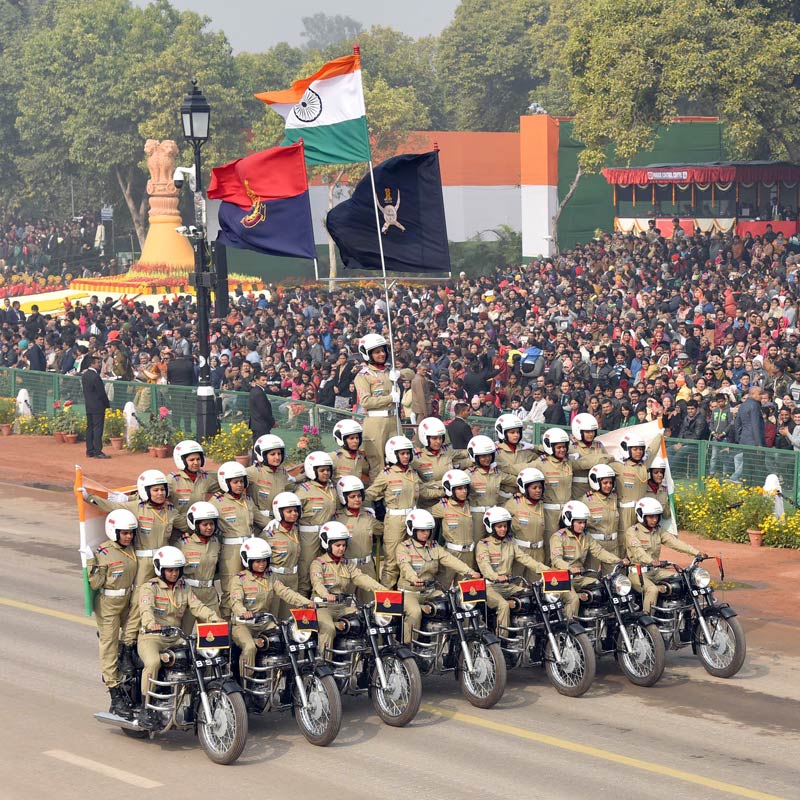
    NEW DELHI: Pubcaster Doordarshan notched up record viewership of 38.3 million for the live telecast of India’s Republic Day celebrations, including the impressive parade by armed forces and civilian organisations, in the presence of special guests from 10 Asean countries, apart from bigwigs of the country’s political system.

    Not only did DD record high audience data for the R-Day telecast shown simultaneously across its 22 terrestrial and satellite TV channels, but the gross figure, too, stood at 45.4 million. The 90-minute odd show, conceptualised to celebrate the Indian republic and its evolution through the years since 1950, was captured via 38 cameras this year.

    According to DD’s parent Prasar Bharati Chairman A Surya Prakash, six cameras were deployed beyond central Delhi’s India Gate (the parade passes through some of the arterial roads from the India Gate roundabout) to capture a panoramic view for the telecast that was also beamed in HD format apart from the regular SD broadcast.

    After BARC India released its weekly audience data last week highlighting the pubcaster’s R-Day broadcast, DD Director-General Supriya Sahu in a series of tweets said: “India trusts Doordarshan, the Public Service Broadcaster with events of national importance. Undeniable proof of people’s faith and confidence. Thanks to all our viewers. Million thanks dear viewers for watching and appreciating DD coverage of the Republic Day parade. It’s your love and affection which drives our team to do their best. We are nothing without you.”

    Republic Day telecasts not only helped DD viewership soar, but also shored up audience data of English and Hindi-language TV news channels as many private channels re-telecast DD-generated feeds from various locations of the official celebrations.

    The impressive show by DD, which pulled out all the stops for the coverage and telecast of the R-Day 2018 celebrations beamed live on digital platforms, including YouTube, too, once again highlighting the pubcaster’s massive reach that continues to remain under-exploited and is reflected in the annual revenues generated by the national network.

    Over the last 24 months, however, under chief executive Shashi S Vempati, and Sahu, DD has been attempting a series of initiatives to not only modernise itself, but also infuse fresh programming ideas for the network channels to up generation of revenue too, apart from living up to its objectives as a pubcaster. 

    Also Read :

    TV channels ready Republic Day programming line-up

    Celebrate Republic Day special with ‘Beats of India’ only on MTV Beats

    Ensure full use of funds for schemes, house panel tells MIB


  • MIB to collect data on satellite capacity needs, digital chatter

    MIB to collect data on satellite capacity needs, digital chatter

    NEW DELHI: The Indian government has not only embarked upon data collation of the satellite capacity needs of TV channels in India but is also preparing to get real-time insights on digital chatter.

    In a letter sent earlier in January to Broadcast Engineering Consultants India Ltd or BECIL, the Ministry of Information and Broadcasting (MIB) has asked the sister government organisation to collect data on capacity requirements by TV channels on Indian satellites as also the life of foreign satellites catering to Indian customers.

    Pointing out that the data was needed on an urgent basis, the MIB has directed the BECIL to consult industry associations such as the IBF and the News Broadcasters Association, apart from DTH and HITS players, on information relating to “total estimated requirement” of the broadcasting sector on Indian satellites and “end of life period of foreign satellites”.

    Though MIB hasn’t spelt out the need to collate such data, nudged by the Department of Space and ISRO, the ministry, in the recent past, has been obliquely hinting TV channels to shift to Indian satellites before various government permissions being sought could be given.

    Most foreign satellite companies operating in India, however, have been conveying to the government and regulator TRAI (one such meeting happened in New Delhi about a week back when TRAI called for feedback on NTP 2018) that ISRO has been doing a great job in flying high India’s flag in the space but the dream of Digital India, as envisaged by PM Modi, could get a major fillip if foreign satellites, too, could be used to provide broadband and other related services to Indians.

    Meanwhile, the BECIL has also floated a tender seeking vendors to set up a ‘Social Media Communication Hub’ that would help the MIB keep a tab on trending news and act as the eyes and ears to get insights into digital chatter mostly involving the federal government’s flagship schemes.

    “The tool should have the capability to crawl [the] worldwide web and social media to monitor and analyze various trends emerging, as well as to gauge the sentiments amongst netizens. The tool should be comprehensive with the capability to generate reports and do customizations as per the requirements of [the] Ministry of Information and Broadcasting,” the tender floated by the BECIL stated.

    The platform or the hub sought to be set up should facilitate creating a 360-degree view of the people who were creating the buzz across various topics with an ability to analyse as well as visualise large volumes of data across diverse digital platforms in real time.

    The broad features that are required for this social media monitoring tool, as enumerated by the BECIL, are following:

    — Listening and responding capabilities: The platform is expected to not only listen to the standard digital channels listed below but also enable easy extension to integrate proprietary data sources such as the mobile insights platform.

    — The tool should be able to interface with Facebook, Twitter, YouTube, Google+, Instagram, LinkedIn, Play Store, emails, news blogs, forums and complaint websites for the purposes of monitoring.

    — Real-time integration for Facebook and Twitter needs to be demonstrated. Also, the platform will need to demonstrate the ability to configure data collection, insights and response for the platform.

    — The platform should have support for Indian languages such as Hindi, Urdu, Telegu, Malayalam, Kannada, Bengali, Punjabi, Tamil, along with English.

    “This software tool should be able to perform like [a] search engine, which will work both as web crawler and social media crawler, and would be able to search various hash-tags [and] keywords across the social media platforms,” the tender document stated, adding that the tool/software should be able to identify fake news with particular focus on such conversations on social media and specialised websites.

    For this hub, MIB is looking at a 20-member strong team (scalable later) of SM analytics and domain experts in social media analysis with experience in handling tools such as Oracle CRM and Brandwatch to be stationed on the premises of the ministry.

    Also Read :

    MIB, DoS nudge TV channel to use Indian satellites

    MIB reverts to earlier norms of seeking nod from ISRO on uplink/downlink of TV channels

    MIB bumps up TV channel processing fee

    MIB categorises all non-Hindi and non-Eng TV channels as regional

  • Zee, Star, NBA oppose converged regulator for broadcast and telecoms

    Zee, Star, NBA oppose converged regulator for broadcast and telecoms

    MUMBAI: Two of India’s biggest broadcasters Star India and Zee Network and industry association News Broadcasters Association (NBA) have opposed the TRAI’s proposal to have a converged regulator, a concept being debated as part of a consultation paper floated by the regulatory body. 

    In its lengthy submission to the TRAI’s paper on formulation of National Telecoms Policy 2018, Star, while suggesting a “separate regulator” for broadcasting sector was unfeasible, has said, “With a converged regulator for ICT and broadcasting there is always the risk of ‘false equivalence’ being drawn between the two sectors.”

    Pointing out that convergence was an aid to make content available to consumers and increasing the opportunities for content producers/rights holders to maximise monetisation opportunities involving intellectual property rights over content, Star highlighted, “Creative eco-system being an entirely separate unique value chain from ICT, should always be treated with a view to uphold and protect IPs.”

    Echoing similar sentiments, Zee said the Ministry of Information and Broadcasting (MIB) was the nodal ministry for all broadcasting related issues and it would be “inappropriate” for the Department of Telecommunications (DoT) to propose a converged regulator in its policy document without making the MIB a part of the process.

    “It may also be pointed out that setting up a convergent regulator would also require a convergence bill (to be okayed by Parliament) outlining the very scope of convergent regulations and various issues associated with it,” Zee explained its stance.

    Subhash Chandra-controlled Zee network has gone ahead and questioned the TRAI’s various consultation papers on broadcasting industry-related issues that include the one on NTP 2018 and another one on uplinking and downlinking.
    “It is astounding that there is no correlation between the two consultation papers,” Zee has submitted, “If the comments (from the industry) provided against one consultation paper are accepted, these would be counter to the comments/ recommendations against the other consultation paper.”

    Both Star and Zee in their submissions have cited in the defence of their stance views of Parliament’s Standing Committee on Information Technology on broadcast regulation articulated in its latest report tabled few weeks back.
    In its report, the parliamentary panel observed that the broadcast sector has developed so much that it would be advisable for the government to explore a separate regulator and till that happens, powers of TRAI could be explored to be expanded as an interim measure.

    By trying to bring in the “convergence issue”, wherein broadcasting and telecom were “treated under the same umbrella” in a converged manner, the TRAI “would be acting contrary” to the views articulated by the parliamentary panel that had pushed for separate regulators for telecoms and broadcast sectors, both Star and Zee pointed out.

    NBA, which is an apex industry body comprising most of the TV (and digital) news ventures as its members, also joined in the issue with Star and Zee to observe the regulatory authority dealing with content issues must be different from the body dealing with other issues in the broadcasting sector.

    The TRAI regulates the carriage side of the broadcast industry that includes issues such as tariff, inter-connect and quality of service. It also holds sway over matters like OTT, broadband and net neutrality that straddle both segments of broadcast and telecoms services.

    Also Read :

    MIB reverts to earlier norms of seeking nod from ISRO on uplink/downlink of TV channels

    Government toying easing downlink norms

    The Communication Convergence Bill, 2001

  • MIB, DoS nudge TV channel to use Indian satellites

    MIB, DoS nudge TV channel to use Indian satellites

    MUMBAI: In what could be interpreted as unease of doing business instead of ease of it, the Indian government is nudging TV channels to deal with Indian entities if they employ the services of foreign satellites. And, till that happens, permissions are being withheld or delayed.

    A letter, dated mid January 2018, from the Ministry of Information and Broadcasting (MIB) to a Madhya Pradesh-based company owning and operating a TV channel suggested that as the Department of Space (DoS) was refusing to entertain the company’s application for a name change since it was uplinking to a foreign satellite, a strategy review could be considered.

    Pointing out that DoS was “not considering” the application for changes as the broadcaster stated in its application it would be using a foreign satellite—in this case, an ITU co-ordinated IS-17—MIB’s letter stated that DoS had also asked it to advise the applicant to “make effort to use” either an Indian satellite or teleports operating on domestic satellites.

    The applicant broadcaster has been given 15 days’ time by the MIB to respond with an update on plans for usage of an Indian satellite instead of a foreign satellite.

    The company in question had made an application for a name and logo change of the TV channel twice in November and December last year. In its present avatar, the channel is uplinked to IS-17 satellite and its license, according to the MIB letter, is valid till June 2018.

    These developments are taking place even as broadcast carriage regulator TRAI is in the process of holding consultations with stakeholders on the issue of ease of doing business in the broadcasting sector and its final recommendations are awaited. Towards the fag end of 2017, the regulator also separately floated a consultation paper on the various issues related to uplink and downlink of TV channels in India and industry submissions are still to flow in as the deadline was extended by the TRAI.

    Over the last 10 days, TRAI has had two separate meetings—one a closed-door meeting with broadcast, cable and radio sectors’ senior representatives and the other an open house discussion on National Telecom Policy 2018 in New Delhi—with the industry, wherein various regulatory irritants were, reportedly, highlighted, including the fact that use of foreign satellites could very well give an additional fillip to PM Modi’s dream of taking broadband services to every nook and corner of India.    

    The regulator, in its recent recommendations on providing broadband and voice call services aboard airplanes in Indian airspace, had suggested that domestic and foreign satellites both be allowed to provide in-flight connectivity subject to certain security concerns being addressed. It is still to be seen whether the telecom ministry and the DoS-ISRO combine give their assent to the usage of non-Indian satellites, too.

    Also Read :

    2017 was a regulatory roller coaster and the ride continues

    MIB reverts to earlier norms of seeking nod from ISRO on uplink/downlink of TV channels

    ISRO stresses on indigenization; TRAI for Open Sky policy

    MIB, TRAI allay industry fears on sat capacity leasing & content regulations
     

  • 2017 was a regulatory roller coaster and the ride continues

    2017 was a regulatory roller coaster and the ride continues

    NEW DELHI: The year 2017 for the media industry certainly couldn’t be called easy from the point of doing business despite efforts and claims by the federal government that significant progress had been made in the regard.

    The downside of demonetisation of high-value currency notes not only continued to be felt well into 2017, but the introduction of the GST (goods and services tax) in July and its compliance added to the woes as it increased paperwork and investment in human resources for the entire media sector. The cascading effect of the tax and monetary policies on the general economy of the country had a telling effect on the media and entertainment industry as companies, big and small, struggled to keep up with compliance (and sliding revenue) and changing guidelines owing to teething problems.

    2017 began with broadcast and telecoms regulator TRAI’s new set of guidelines relating to tariff, QoS and inter-connection, issued in the second half of 2016, being challenged by one of the biggest broadcasting companies (in terms of reach and revenue), Star India, and its ally Vijay TV in a Chennai court. Separately, two other DTH companies filed a similar challenge in a Delhi court.

    Over a year later, the regulator’s guidelines-touted to be an effort in creating fair ground rules for all stakeholders leaving them free to take commercial decisions-remain in suspended animation as the Chennai court is yet to deliver its final verdict till the time of writing this piece though the arguments and other legal processes have been completed.

    And, then Ministry of Information and Broadcasting (MIB) got in Smriti Irani as minister, a person with a background in the media and TV industry and as someone with strong views on issues. The sudden cancellation of a programming contract to Balaji Telefilms, awarded by pubcaster Doordarshan after a tendering process, could be cited as Irani’s aggressive stand on matters relating to her ministry and the media sector. Ditto for Doordarshan’s parent company Prasar Bharati deciding suddenly during the year not to renew contracts of some private sector TV channels that rode piggyback on DD’s free-to-air DTH platform Free Dish. The latter case is now being debated at the disputes tribunal.

    Over the 12 months in 2017, the MIB came out with a series of regulations, ranging from advisories on condom ads (the flip-flop was surprising) to a sharp hike in processing fees for clearances without clear definitions on some matters to the dos and don’ts of covering sensitive developments, all of which have left most industry players uneasy.

    A section of the industry also feels that the government has cleverly fired the gun, at times, keeping it on the shoulder of TRAI. Even while the regulator is in the process of wrapping up a consultation on various points of ease of doing business in the broadcast and cable sector, towards the fag end of the year, the MIB requested the regulator to examine whether TV channel permissions to beam into the 183-odd million TV homes in the country could be auctioned and the entry-level threshold increased-all aimed at arresting the spiralling number of applications seeking permissions to start a new channel. If legislated, it would be a sort of first where TV channel permissions, and not spectrum, would be auctioned.

    Another directive causing concerns for broadcasters is an MIB order making provision for processing fees on account of change of satellite, channel name/logo, language of channel, category of channel, mode of transmission, teleport, teleport location and change in the category of a channel from a GEC to a news channel for temporary uplink of a live event. The regulation stipulates that a processing fee of Rs 100,000 would have to be paid by a TV channel if seeking temporary uplink permission for, say, a cricket match. Nothing wrong in putting an amount to undertake processing.

    But what is troubling the TV channels is that the fee of Rs 100,000 is for each channel. So, for example, if a broadcaster having four sports channels proposes to telecast live a test cricket match for five days, then the amount for processing of temporary uplink permission by MIB would be Rs 100,000 each for five days for each of the four sports channels (100,000x5x4). That, stakeholders point out, is quite a large sum of money for a five-day match telecast in different languages over several TV channels.

    The MIB also, for the first time, introduced new categories of channels, namely regional and national. As per the extant uplinking and downlinking guidelines of 2011, however, all the licences, whether it is an Assamese or a Tamil language channel, are for pan-India channels and can be distributed throughout India. In fact, many broadcasters obtain multi-language permission for their channels to be able to run in multiple language feeds. The ministry later had to come out with clarifications defining what constitutes a national channel and what is a regional channel, which makes things a bit more complicated in sharp contrast to the federal government’s claim of having created a more conducive business environment in India, a senior executive of a broadcast company opined. What’s more, some experts pointed out, it was surprising that the MIB took the decision on re-classification of TV channels because such policy decisions would ideally need to be ratified by the federal cabinet of ministers.

    The TRAI, however, was banking on its ground rules for the broadcast and cable sectors to herald a new era that is not to be–not at least in 2017. But the regulator’s earnestness to hold a dialogue with stakeholders cannot be faulted despite questions being raised on some of its consultation papers; the one on STB inter-operability, for example. The TRAI should be lauded for upholding principles of net neutrality, in general, and giving thumbs down to content availability in a walled-garden environment, while in the US the FCC is preparing ground to dismantle net neutrality regulations that claimed to be protecting consumer interest.

    What comes out quite clearly in the year of disruptions and a clear change in the ways media, especially TV news, functions is that the thin line blurred between ethics and the dance-on-the-unethical-side-while-remaining- technically-correct.

    The all’s-fair-in-love-and-war thinking was written all over the audience measurement controversy that broke out involving a new news channel that debuted with a bang and the incumbents of the news genre in 2017. Accused by a section of news channels of using dual LCN or frequency strategy to increase sampling and snacking to up audience ratings, the new news channel hit back saying all other players too had sometime used the same strategy. Subesequently, the regulator had to step in directing stakeholders to desist from using practices that were not allowed in the TRAI’s books.

    Such instances-apart from the now-contested TRAI directive barring use of the `landing page’ by TV channels-highlight one thing: if the industry craves for a light-touch regulatory regime, restraint and maturity is needed from the industry, too. For example, despite the TRAI cracking the whip on dual LCNs, many TV channels, including the not-so-new-news-channel-on-the-block, were repeatedly accused by competition of continuing to use the dual LCN strategy throughout 2017.

    If the TRAI-and the government-hoped its guidelines and advisories would reduce litigation in the broadcast and cable sectors, the dream is yet to be fulfilled. The website of broadcast and telecoms disputes tribunal TDSAT states there are approximately 800 cases (in both sectors) still pending till 22 December 2017 if statistics from January 2017 were considered. The high pendency was despite the fact that TDSAT disposed of hundreds of other cases in 2017.

    The broadcast and cable industry would hope that 2018 would be less challenging, at least from the point of view of regulations. Some issues (like the consultation paper on uplink/downlink of TV channels, online video piracy and lack of any guideline for M&As for the media sector), however, continue to rankle even as we all enter 2018, not to mention that a proposal to review DTH guidelines, involving issues like rationalising revenue sharing with the government and renewing of licenses have been seemingly put in the cold storage by the government.
  • MIB recants, says only explicit condom ads banned during the day

    MIB recants, says only explicit condom ads banned during the day

    MUMBAI: After stirring the hornet’s nest on the contentious issue of restricting condom ads to only water-shedding hours, the Ministry of Information and Broadcasting (MIB) has clarified that such ads can be aired on TV during daytime. 

    In an advisory earlier this month, the MIB had asked all TV channels to air condom advertisements only between 10pm to 6am to avoid exposure of such material to children.

    But in a clarification dated 21 December 2017, the ministry said the ban on condom advertisements during daytime applies only to commercials that have sexually explicit content.

    In a release, the ministry quoted that “advertisements that do not sexually objectify women and are aimed at informing citizens regarding devices/products/medical interventions to ensure safe sex are not covered under the said advisory.”

    The ministry had earlier stated that it had taken note of objections regarding condom ads that are “targeted at a particular age group” being aired on some channels that are considered as ‘indecent especially for children.’ It used Rule 7 (7) and Rule 7 (8) of the Cable TV Networks Rules, 1994 to tell broadcasters to refrain from telecasting ads of condoms that could be considered inappropriate/indecent for viewing by children. 

    The relaxation on the issue came after the Rajasthan high court issued a notice to the Centre challenging an advisory of the MIB barring TV channels from showing condom ads during prime time.

    The petition underlined the fact that condom ads don’t violate Rule 7 of the Cable Television Network Rules, 1994 which apply to anything which endangers the safety of children or create in them any interest in unhealthy practices or shows them begging or in an undignified or indecent manner. 

    The Advertising Standards Council of India (ASCI) had approached the ministry earlier this month for guidance after several people complained regarding the inappropriate nature of the condom ads being telecast during primetime viewing on most channels. 

    Also Read:

    I&B tightens up on condom ads on TV

    ‘Sanskari’ India wants condom ads off primetime

    MIB categorises all non-Hindi and non-Eng TV channels as regional