Tag: Ministry of Information and Broadcasting

  • Barkha Dutt to launch her own English news channel?

    Barkha Dutt to launch her own English news channel?

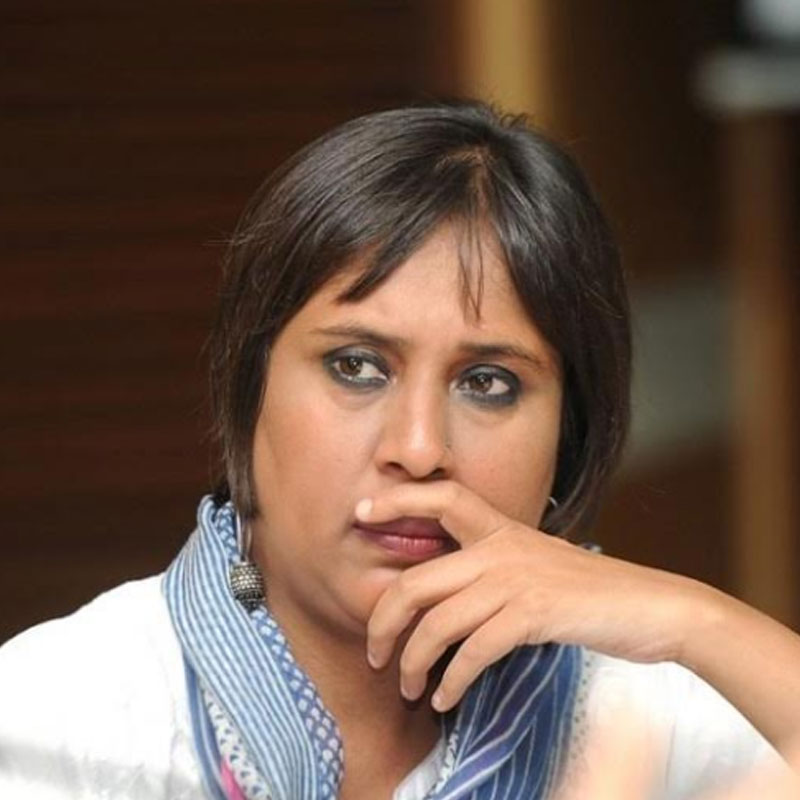
    MUMBAI: Another one bites the bullet. The buzz has been gathering pace that celebrity journalist-editor Barkha Dutt is gradually ammo-ing up to launch her own English-language TV news channel. In doing so, the former face of NDTV’s prime time shows will follow in the footsteps of some of her other famous colleagues like Rajdeep Sardesai (now re-christened CNN-IBN) and Arnab Goswami (Republic TV).

    Apparently, she has found a bunch of backers in New Delhi and Haryana who are willing to fund her foray into a full-fledged TV news channel.  

    While its name and launch date is still in the works, Dutt’s star power is guaranteed to generate plenty of excitement and curiosity in the news industry and among audiences in the days to come. 

    Indiantelevision.com tried reaching out to Dutt for confirmation of the same, but she didn’t respond to queries. 

    It’s interesting that she is taking the news channel plunge at a time when the fortunes are on the way down for her former boss, NDTV’s Prannoy Roy, who has been facing a barrage of intimidating requests from the income tax and other government departments. In recent times, NDTV has had to cut down on manpower too and Dutt was amongst the first ones to let go. 

    This isn’t the first time Dutt – who shot to fame during her Kargil reportage with NDTV in the late 1990s – has been linked with the launch of an English news channel. In 2017, the Financial Express had carried a report about her joining hands with Network18’s founder and former owner Raghav Bahl to set up a news channel.

    Dutt, who continues to draw sharp reactions from TV audiences, has taken quite a diverse set of projects on her plate after her 21-year association with NDTV.

    After the rather abrupt end of her collaboration with former Indian Express editor-in-chief-turned-entrepreneur Shekhar Gupta at the digital venture The Print, Dutt went on to establish a company called MoJo, which some say also has links to mobile journalism.

    Under the MoJo banner, the 46-year-old interviews major newsmakers in her inimitable style. She also writes columns for the Hindustan Times, Washington Post and The Week.

    Known as a frequent baiter of Republic TV boss Arnab Goswami on Twitter, it would be interesting to observe the tone and tenor of the TV news channel helmed by her.

    Other details of the news venture, including the applicant-company’s name, are still a bit sketchy as it is not clear yet whether an application to start a full-fledged TV news channel has already been made by Dutt and her partners at the Ministry of Information and Broadcasting, which has started clearing channel proposals after a nine-month hiatus.

    With over six million Twitter followers, Dutt remains one of media’s most important voices despite severe trolling on social media for her known viewpoints — dubbed controversial by a section of India — on issues linked to Kashmir and Pakistan.

    It now remains to be seen whether she still has it in her to shape the political and social narrative in her second coming.  

    Also Read:

    Barkha Dutt bids adieu to NDTV; hints at new venture

    Arnab-Barkha face-off amplifies disturbing trends

    The rise and fall of English news’ TV viewership

    English TV news channels to return to BARC fold from midnight 26 May

  • MIB social media monitoring cell tender deadline extended

    MIB social media monitoring cell tender deadline extended

    NEW DELHI: The Big Brother has arrived? Well the Indian government, being accused of proposing to unleash a surveillance of citizens, has gone in for another extension of the deadline seeking vendors for technical and logistics help to set up such a center.

    The new date for submitting proposals for Ministry of Information and Broadcasting (MIB)’s Social Media Communications Hub is now 18 June 2018, which is the third revision of the deadline since tender was floated earlier this year inviting proposals, enumerating wide-ranging deliverables.

    Under criticism from a section of the civil society and online journalists and activists for this proposed over Rs. 400 million surveillance project, both MIB and BECIL (a unit under the ministry) have maintained a stoic silence.

    The project, first reported by Indiantelevision.com in January 2018 and being undertaken under a seemingly harmless name of Social Media Communications Hub, however, has aims to monitor in real times not only the social media and online activities of Indian citizens, but also seeks to deploy technology to predict behavior and possible future actions of people. This, at a time when India doesn’t have strong data protection laws.

    Amongst the many listed objectives of the media hub is this: “What would be the headlines and breaking news of various channels and newspapers across the globe— could be done with knowledge about their leanings, business deals, investors, their country policies, sentiment of their population, past trends etc. NYT, Economist, Time etc. are good examples, what would be the global public perception due to such headlines and breaking news, how could the public perception be moulded in positive manner for the country, how could nationalistic feelings be inculcated in the masses, how can the perception management of India be improved at the world for a how could the media blitzkrieg of India’s adversaries be predicted and replied/neutralized, how could the social media and internet news/discussions be given a positive slant for India.”

    One of the many critics of this project is the Internet Freedom Foundation (IFF), which has sent a notice to the MIB to stop the project, failing which the organization would take legal action. Its concerns? “Social Media Communication Hub will also have the ability to broadcast content without any legal authority or guidance through 20 central and 716 district level social media executives. In sum, this is a system of control through surveillance and a capacity to spread propaganda,” the Foundation said in an online campaign.

    The Foundation’s letter to MIB minister Rajyavardhan Rathore, sent last week, criticizes the government move on the ground that“the wider project to surveil social media is illegal and unconstitutional, being contrary to the right to privacy and freedom of speech and expression”.

    Urging the ministry to withdraw the requests for proposal invited by BECIL, the IFF said, “The RFP document clearly indicates that the proposed Social Media Communication Hub seeks to create a technology architecture that merges mass surveillance with a capacity for disinformation. It is a perilous expense on the exchequer, given that an exorbitant amount of [Rs] 42.4833 crores (approximately Rs. 42 million) is being earmarked for a project that will undermine our fundamental rights.”

    Meanwhile, MIB is also seized of the fate of a committee set up by former minister Smriti Irani to propose regulations for online media. Though Rathore in recent times has spoken of self-regulation of media, in general, he hasn’t yet articulated the government view on the committee, which critics say was beyond the remit of the MIB.

    Indiantelevision.com learns from government sources that the online regulation committee has already held few informal meetings, though non-governmental organisations, seeking to be part of it, were not invited.

    While some media industry organisations were named by the government to be part of this online regulation committee, many others like the internet and mobile association of India, Broadband Forum India and Asian media body CASBAA have, reportedly, sent in formal requests to be made part of this government committee, which, interestingly, doesn’t include a single online venture or body.

    Also Read :

     MIB to collect data on satellite capacity needs, digital chatter

  • Did govt pressure nudge ABS-2 to shutter Indian TV channels on FTA DTH service?

    Did govt pressure nudge ABS-2 to shutter Indian TV channels on FTA DTH service?

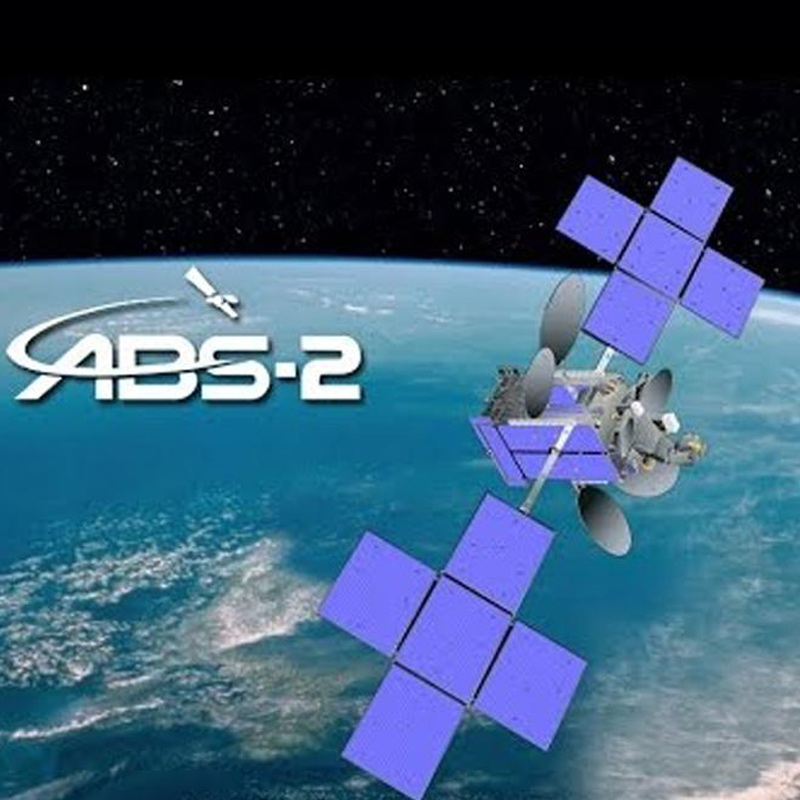
    NEW DELHI: ABS has closed the doors from 1 May 2018 on Indian TV channels that were using the ABS-2 satellite-beamed FTA Ku-band platform. Apparent reason: Indian government pressure on local TV channels to stop using the ‘unlicenced’ platform that discouraged payment of carriage fee to the satellite operator, which was the origin of the business.

    The Bermuda-registered satellite operator’s ABS-2 signals — hosting on its South Asian beam a Nepalese and a Bangladeshi DTH services licenced in their respective countries — have been spilling over into India and a mix of Indian, Nepalese and Bangladeshi TV channels were available to Indians as a FTA service that was accessed via some plain vanilla hardware (read set-top boxes and antennae) at a nominal cost.

    On being petitioned by Indian distribution platforms, Ministry of Information and Broadcasting (MIB) in 2017 had asked Department of Space (DoS) to block the “unauthorised” DTH or KU-band ABS-2 service on the grounds of possible threat to national security — an allegation that was refuted by ABS citing international laws of ITU.

    Finally, when ABS took the decision to shut the doors on the Indian TV channels, there were 90 of them, mostly beaming content in non-Hindi Indian languages. These channels were using the FTA Ku-band platform to reach not only Indian audiences in southern and eastern parts of India but, probably, also those in Nepal and Bangladesh for additional eyeballs. Eyeballs meant advertising revenue for these TV channels.

    ABS last year had refuted Indian government charges saying “natural spillover” of satellite signals into neighbouring countries, outside the service area of the countries offering licensed DTH services, but falling within the coverage area of the satellite, was in “full compliance” of ITU provisions.

    With ABS discontinuing the Indian TV channels, Reliance Big TV (sold by Anil Ambani’s Reliance Communications to new investors) FTA DTH service yet to fully bloom and Doordarshan’s FreeDish platform locked in a policy logjam, free to air platforms and low-cost television viewing for people in the Indian hinterland seem to have run into air turbulence.

    According to industry experts, Indian hardware companies had devised a way to have two LNBs (low-noise box) in one single DTH antenna that was capable of receiving both ABS-2 and DD FreeDish services, resulting in sizable popularity of these two platforms that were accessed via a low-cost hardware. This was unlike the full-fledged subscription-based DTH services made available by the likes of Tata Sky, Dish TV, Videocon d2h and Sun TV.

    Also Read :

    Block illegal DTH FTA, space dept told

    Could India blocking ABS’ FTA TV signals lead to breach of ITU norms?

    Boeing delivers ABS-2A to optimise video services, DTH

  • MIB clears TV channel applications; Rathore calls for stakeholder meets

    MIB clears TV channel applications; Rathore calls for stakeholder meets

    NEW DELHI: Within days of Rajyavardhan Rathore given independent charge of the Ministry of Information and Broadcasting (MIB) by the PM Modi-led government after removal of his senior Smriti Irani, the organisation has been galvanised into action. What’s more, important issues are being discussed, including clearances of three new TV channel applications and meetings being called with broadcast industry stakeholders to debate matters like use of foreign satellites versus Indian ones.

    The three TV channels that have been reportedly given initial government go-ahead — further processes like bank guarantees, etc need to be completed — include Aastha Kannad, Aastha Tamil and Aastha Telugu. All these channels are Indian language off-shoots of the religious product Aastha network that at present broadcasts in Hindi.

    Though critics may say the government has given the nod to three TV channels in South Indian languages belonging to Vedic Broadcasting Ltd (VBL), which is controlled by Yoga guru`Patanjali’ Ramdev’s close associate Acharya Balkrishna and considered close to the present BJP-led government in New Delhi, independent observers feel at least MIB has started taking a stand on applications, a process that was halted for the last nine months or so for various reasons.

    Media industry sources indicated that over 100 applications for TV channels are pending at MIB. And, such applications include ones from big and small broadcast companies.

    VBL is controlled by majority shareholder Balkrishna, who, along with Ramdev, bought it in 2011 from the people who had started a religious TV channel few years back airing yoga shows, religious sermons and some cultural programmes.

    When VBL is searched on Google, one is taken to www.acharyabalkrishna.com where it is indirectly stated that Balkrishna is the managing director. It is further stated: “Vedic Broadcasting Limited is also part of his vision. It [’s a] pioneer & leading socio-cultural network in India. Astha & Astha Bhajan Channel is propagating Indian culture and heritage, Health, Ayurveda, Education, Yoga, Values and Morals, Devotional songs, Spiritual meetings, talks, etc. The channels are available globally covering the continents of Asia, Africa, Australia, Europe and North America (USA & Canada), thus, enabling global organisations an opportunity to reach followers and other viewers worldwide.”

    Meanwhile, both government and industry sources indicated that MIB, under Rathore, is attempting to be a breath of fresh air, if not completely turn over decisions taken earlier under Irani. One such step in that direction was to start convening meetings with TV channels and their holding companies in an attempt to try to address some of the concerns.

    In one such meeting held this week, the representatives from the broadcasting company owning and operating over 30 TV channels in India were asked about their concerns. Also present were government officials from Department of Space and Indian space agency ISRO.

    When the issue of migration to an Indian satellite from foreign ones was brought up by the TV channel reps in the meeting, it was conveyed to them politely that it would be in the national interest to do so, though those having existing contracts could be allowed, in all probability, to go through with contractual obligations.

    One of the concerns relating to leasing space on foreign satellites is that ISRO, according to industry sources, was unwilling to come forth with data on disaster and backup management in case an Indian satellite, through which a TV channel is beaming, for example, sputtered or developed some snag.

    The sources said that more such meetings are in the pipeline with other broadcasting companies.

  • MIB nudge to TV channels on content monitoring

    MIB nudge to TV channels on content monitoring

    NEW DELHI: Ministry of Information and Broadcasting (MIB) has cautioned 121 TV channels for not faciliatiing monitoring of content by government agencies as per existing regulations.

    Pointing out that as technical parameters were not being made available to the Electronic Media Monitoring Centre (EMMC), an organisation under MIB umbrella, government has reminded the errant TV channels regulations clearly state the company/channel shall “provide for the necessary monitoring facility at its own cost” for monitoring of programmes or content by a government agency.

    The list, which has been put out on the MIB website, includes TV channels from big and small broadcasting companies and they have been given time till 30 May 2018 to comply with existing government guidelines.

    Broadcaster names include 9X, TV9 AP, UTV Movies International, Mahua channels, Sony Pix 2, several SAB regional channels, Star Gold South East Asia, Star Plus Middle East, VH1, Colors Tamil, Living Travelz, Living Rootz, Z Living, Shop CJ Tamil, Zee Kannada, Zee Telugu, History TV18 HD, etc. A total of 121 channels have been named. 

    Also Read :

    MIB urgently seeks pending 78 channels’ equipment details

    MIB taking up EMMC contractual workers issues on top priority

    MIB to collect data on satellite capacity needs, digital chatter

  • Smriti Irani moved out of MIB as Rajyavardhan Singh Rathore gets independent charge

    Smriti Irani moved out of MIB as Rajyavardhan Singh Rathore gets independent charge

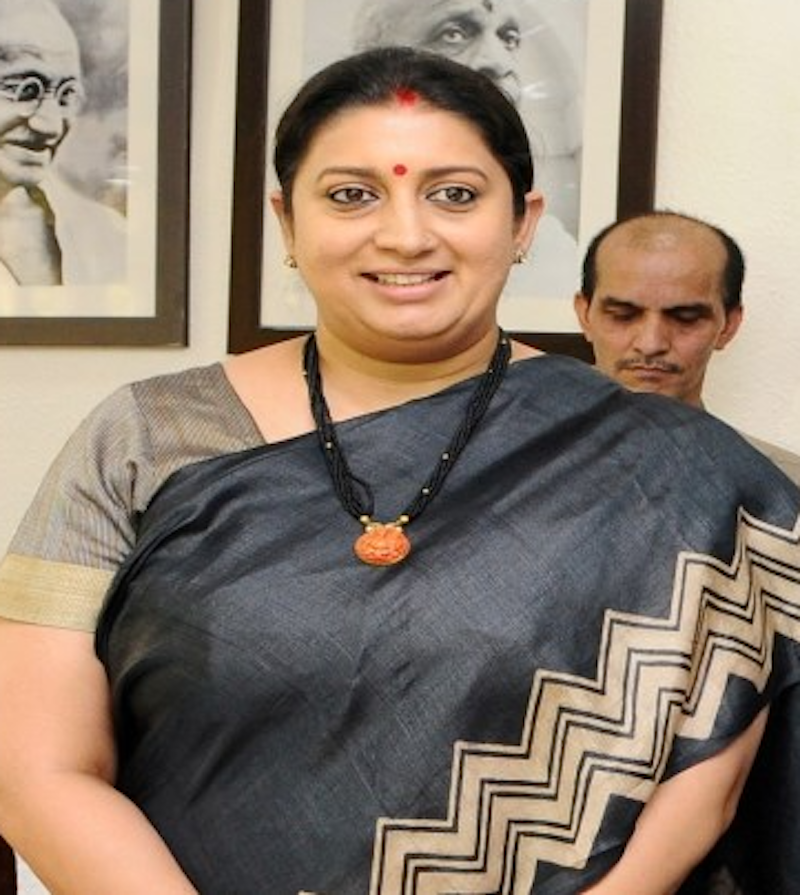
    MUMBAI: There’s change at the top at the ministry of information and broadcasting (MIB).  Smriti Irani has been moved out of her post as mininster and kept solely in charge of the textiles ministry. Replacing her is Rajyavardhan Singh Rathore – her minister of state – who has now been given independent charge of the MIB.

    That things were afoot in the ministry was sounded out earlier this week.  Irani cancelled her trip to Cannes where a strong Indian delegation is attending the film festival. Earlier it was announced that she would be leading an eight member panel to the famed French Riviera cinema confab.

    Rathore – a former sportsman and army man – has been a permanent fixture in the ministry for the past four years as a state minister. He has patiently waited on the sidelines over that period and has finally earned his stripes getting independent charge of the MIB as the government gears up for the coming national elections in 2019.

    Irani had, a couple of days ago, delivered the Sardar Patel Memorial Lecture 2017 themed ‘Model of Broadcast: Landscape for Democracies’ during the course of which she had called the broadcast news landscape as a “spectator sport” in which the rush for audience ratings has reduced everything to “headlines competing with hashtags” in the wake of social media explosion taking place in the country that has provided a new pathway for information dissemination.

    The media has been speculating about the reasons for her departure. Among them: the recent National Film Awards run in with president’s office about his presenting the citations to winners; and her views on fake news and journalists, and wanting to bring in curbs on online media. Sources close to the government rubbish these allegations as canards, stating that Irani has been a loyal party person and she steps into – and out of any – role that the high command asks her get into.

    The Narendra Modi led government also announced other changes last evening. Finance minister Arun Jaitley- who has been ailing and was successfully operated for his kidney ailment on Monday – has been replaced by railway minister Piyush Goyal, who has been given its additional charge. That is until Jaitley gets back into action.


    Also read:

    Smriti Irani gets additional charge as MIB minister

    MIB minister Smriti Irani orders review of DD prime time auction process

    MIB moves to regulate online media: various organisations join issue   

    Online media professionals write to Smriti Irani expressing regulation concerns


  • Star to share select IPL matches with DD with an hour’s delay

    Star to share select IPL matches with DD with an hour’s delay

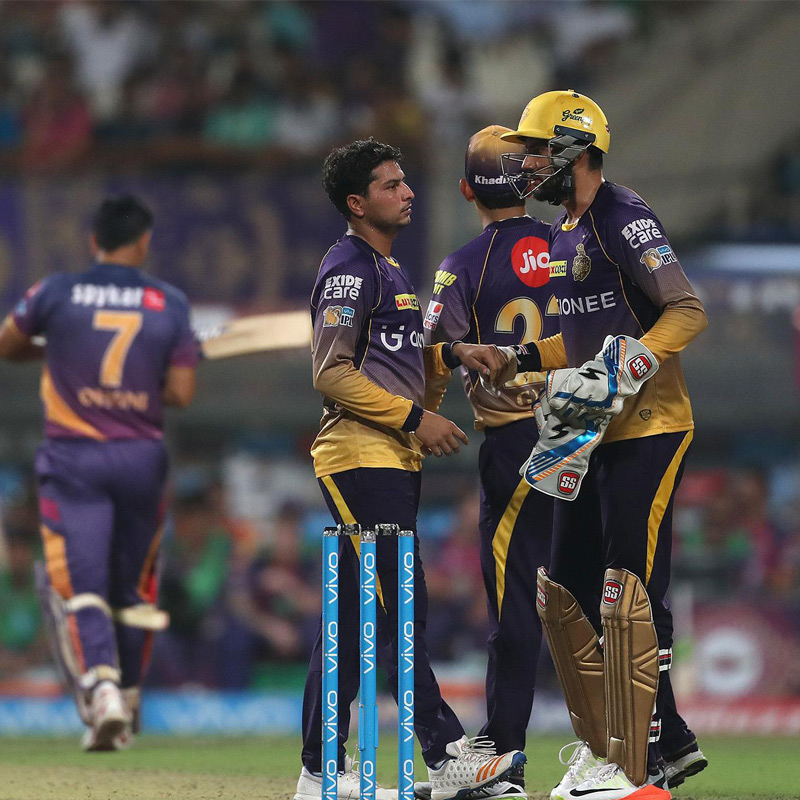
    MUMBAI: For the first time in the Indian Premier League’s (IPL) history, one of the biggest cricketing bonanzas in the world will be aired by India’s public broadcaster Doordarshan too. But there’s a catch. Rightful broadcast rights holder Star India and DD have mutually agreed that select matches out of the 60-odd ones to be played this season will get aired on the pubcaster’s channel with an hour’s delay.

    Asked specifically by Indiantelevision.com on the sidelines of an event here on Thursday, Star India chairman and CEO Uday Shankar said, “We will share with DD some highlights and one match every Sunday, apart from select other ones. It’s good for IPL that new audiences (not subscribing to pay TV) will get to sample it.”

    According to Shankar, who’s riding a wave of cricket broadcast rights and other successes, Star India will share with DD select matches of the 11th edition of the IPL in 2018 that the pubcaster will air with a delay of 60 minutes. What does it mean? If an IPL match starts at 8 pm, for instance, DD will start airing it 9 pm onwards.

    Asked as to why Star, which won the IPL global broadcast rights last year for a period of five years, is willing to share matches with the pubcaster that can probably have advertising revenue implications, Shankar said, “Its more in the nature of providing sampling opportunities to people who don’t have access to pay TV. It’s a mutual agreement [and] if we were not comfortable, we wouldn’t have shared the delayed feed also.”

    Though Prasar Bharati CEO Shashi Shekhar Vempati and Minister of Information and Broadcasting Smriti Irani tweeted about the IPL matches to be aired on DD sometime early evening Thursday quoting a media report, Prasar Bharati’s Twitter handle later expanded on the actual deal to say, “To bring Vivo IPL 2018 to a wider audience, Star TV has agreed to share with Prasar Bharati select matches on a one hour deferred live basis with 50-50 revenue sharing.”

    Indiantelevision.com also learns from industry and government sources that the as per the Star-Prasar Bharati deal, the matches to be aired on DD will also include the opener, the play-offs and the final. The 2018 edition of the cash-rich league will feature 12 matches that will be played at 4 pm and 48 matches that will start at 8 pm. According to details available, the matches will be played at nine venues over 51 days starting 7 April 2018.

    Though Star was not forthcoming on the issue, Indiantelevision.com also learns from industry sources that DD will do the ad-sales and marketing of the matches to be aired on pubcaster’s TV channel and share the revenue with the rights holder in the ratio of 50:50. Star, while quoting government norms on mandatory sharing of sporting events with DD, earlier had pushed for a revenue share in the ratio of 75:25 in its favour.

    For several months, officials of the MIB and Prasar Bharati and executives of Star India were locked in a series of hard bargaining over the finer details of match sharing with the pubcaster. Even as the finer points of sharing were being negotiated, the Indian cricket board wrote a letter to the MIB two days back expressing concerns over various government nods not forthcoming needed to telecast IPL matches live. The MIB has given its nod for temporary live uplinking of the IPL’s 11th edition, whose inaugural ceremony will be held on 6 April 2018.

    In September last year, Star India had won the global television and digital rights to IPL for the next five seasons for approximately $ 2.5 billion or Rs 16,347.50 crore. Until 2017, Sony Pictures Networks India had held the television broadcasting rights of IPL for 10 years (since 2008).

    Also Read :

    Star India beats Sony, Jio to win media rights for BCCI’s home matches

    IPL 2018 gets a makeover with Star India

    Comment: Does Star stand to gain or lose by sharing IPL with DD?

    Star’s Uday Shankar on distribution challenges, IPL, FTA vs. pay TV, innovations, Made in India content…and much more

  • Comment: MIB’s botched whip on fake news akin to testing waters

    Comment: MIB’s botched whip on fake news akin to testing waters

    With the scourge of fake news rampant globally, any attempt to counter it is always a welcome move. And just for that India’s Minister of Information and Broadcasting Smriti Irani cannot be faulted even if such a view is radical and would be open to severe criticism-as it was in India over the last few days with a large section of civil society coming down like a ton of bricks on the minister’s assertions on guidelines for TV and print media journalists that proposed punitive penalties for breaching some undefined norms.

    However, the wording of the press statement put out by the government’s PR arm, Press Information Bureau, on behalf of MIB is what raises questions.

    First, the government statements were aimed at “regulating” fake news and not look at avenues to arrest their spread or, as the homoeopathy strand of medicine would do, go to the root cause of the ailment. The intent becomes clear: the aim was not really to find a solution to fake news in the true sense.

    Second, the timing of the guidelines, which were aimed at handing out harsh penalties to government accredited journalists from the print and electronic media, rings some more alarm bells. Though the present BJP-led government’s official five-year tenure ends mid-2019, it is widely expected that the general elections would be held before the tenure comes to an end officially—as is mostly done, but then this government has been known to break many times tested norms-if not as early as late 2018.

    On both these counts, the honourable MIB minister was found wanting and her move was widely dubbed as nothing but an initiative to gag the news media critical of the present government. That the prime minister himself had to step in to order a rollback of the MIB diktat a day later, as officially being stated, is a story in itself.

    Let’s forget for once what some of the journalistic organisations had to say in criticism of the MIB move to cancel accreditation of journalists found peddling fake news, though the definition of fake news was not elaborated, nor was the fact as to why just on a complaint from practically anybody a journalist, whose antecedents are verified by the government annually for security reasons, will be put in the hall of shame even if it’s for varied period of time.

    Two organisations, the Press Council of India (PCI) and the News Broadcasters Association of India (NBA), made responsible to decide whether the complaint on fake news was genuine or not (according to the government statement) have not much legal standing or bandwidth to do so. While the PCI is a (toothless) watchdog for the print medium, the NBA’s self-regulatory mechanism for member-TV news channels hasn’t always worked.

    Now let’s try analysing what could have prompted such a move by MIB-a move that was unveiled seemingly without taking into confidence the PM and his office.

    It’s a known fact in India, in sharp contrast to other global markets, that a TV news channel here is started, more often than not, to flaunt one’s status symbol and increase the owner’s powers (both politically and financially) rather than being a pure journalistic means. That is not saying there are no exceptions to the rule and India has some very fine and professional news channels, which daily go through the grind of living up to the high standards of journalism. But, what explains the fact that 25-30 per cent of the total 900-odd permitted TV channels in India would fall in the news and current affairs genre? And they come in all shapes, sizes and languages. If the big guns of the news and current affairs genre mostly have scarlet bottom lines, it goes without saying that the smaller news channels are barely churning out revenue. No other country in the world has so many TV news channels.

    In a year that will lead to general elections-a period after the elections are announced is when cacophony on TV news channels start peaking-clamping down on news outlets cannot be considered a bad strategy; especially when one is not used to hear criticism. Artificial barriers become natural armours. Putting on hold future permission to TV channels by the MIB till a new policy on uplink/downlink is put in place after regulator TRAI’s recommendations is one such clampdown. But then trying to gag the news media as a whole need to be thought out and well orchestrated instead of merely announcing one evening some guidelines under the garb of attempting to regulate fake news.

    And why regulate fake news? Does that mean some fake news could have been allowed, while filtering out the more damaging ones? More importantly, why target those journalists for fake news who are accredited by the government? Did that mean that non-accredited journalists, which are in huge numbers, would have been allowed to dabble in fake news? Considering most news websites and many online ventures that pretend to deal in news but hand out mostly tainted views are not accredited with the government, either at the federal or State level, the question arises whether they would have been allowed to peddle fake news? In India, fake news is more rampant on social media platforms and little known online ventures than in mainstream media.

    But Ms. Irani and her set of advisors again cannot be faulted to try regulating the news media. From the days of the infamous Emergency unleashed by then Prime Minister Indira Gandhi in the mid-70s to her son Rajiv Gandhi in the late 1980s and few other successive governments of post-independent, India has tried to muzzle at some time or other the not-so-perfect-yet-a-vibrant media of the country. Not only such moves have backfired, including the dark days of the Emergency, but in many cases the then governments had to beat a retreat in the face of stiff opposition to any such move. So much so, folklore in the complex realm of Indian politics says that all governments that tried to regulate media in any form bit the dust and were booted out of power.

    In the mid to late 1990s, just before the first NDA government came to power under Prime Minister A B Vajpayee, the then government had tried to bring in Parliament a Broadcasting Bill, envisaging wide-ranging limits to media businesses, including cross-media restrictions of ownerships. That government didn’t remain in power to see through the proposed legislation. However, that didn’t stop other governments, including the Congress-led coalitions that ruled for 10 years after 2004, to attempt limiting media independence. Manish Tiwari, a former MIB minister in 2013, had famously proposed a common examination for journalists as the minister thought media personnel were not qualified enough.

    Cut to 2018. The storm may have blown over for the time being, but for the media to sit back and relax could be dangerous. Simply because the present government is unlike any those in the past. To take satisfaction from an explanation that the PM was totally unaware of one of his minister’s moves to gag the media could be a bad strategy for the media industry. The government was just testing the waters.

    Also Read :

    PMO directs MIB to withdraw guidelines on fake news

    MIB nod to TV channels on hold till TRAI uplink, downlink suggestions

    Smriti Irani tweets industry body advisory urging restraint by TV news channels
  • MIB issues stringent norms on fake news in TV & print media

    MIB issues stringent norms on fake news in TV & print media

    NEW DELHI: Even as the government announced amendments in the guidelines for accreditation of print and electronic or TV journalists outlining punishments for breaches on account of fake news, the intention is being termed by stakeholders as debatably honourable but an indirect way to muzzle media freedom.

    On Monday, the Ministry of Information and Broadcasting (MIB) issued a statement stating that noticing increasing instances of fake news in various mediums, including print and electronic, the guidelines for accreditation of journalists have been amended with penalties and punishment factored in.

    “On receiving any complaints of instances of fake news, the same would get referred to the Press Council of India (PCI) if it pertains to print media and to News Broadcasters Association (NBA) of India if it relates to electronic media for determination of the news item being fake or not,” the MIB statement said, adding the process would be completed within 15 days.

    Once the complaint is registered for determination of fake news, the correspondent/journalist who created and/or propagated the fake news will, if accredited with the government, have the accreditation suspended till such time the determination regarding the fake news is made by the regulating agencies.

    The Accreditation Committee of the Press Information Bureau (PIB, the government’s PR arm), which consists of representatives of both PCI and NBA, shall be consulted for validation of any accreditation request of any news media agency. The punishment for peddling fake news ranges from suspension of accreditation for a period of six months in the case of first violation to permanent cancellation on third violation.

    While examining the requests seeking accreditation, the regulatory agencies will examine whether the ‘Norms of Journalistic Conduct’ and ‘Code of Ethics and Broadcasting Standards’ prescribed by the PCI and NBA, respectively are adhered to by journalists as part of their functioning. It would be obligatory for journalists to abide by these guidelines, the government statement said.

    However, a section of the news media dubbed the government move as an indirect way to muzzle media freedom in the run-up to the general elections in the country either in late 2018 or early 2019. A meeting of various journalists’ organisations is likely to be held on Tuesday in the capital to take stock of the situation.

    The present BJP-led government in New Delhi completes its five-year term mid-2019.  

    ALSO READ:

    MIB nod to TV channels on hold till TRAI uplink, downlink suggestions

  • MIB nod to TV channels on hold till TRAI uplink, downlink suggestions

    MIB nod to TV channels on hold till TRAI uplink, downlink suggestions

    MUMBAI: It’s official now. The Indian government has put on hold, since January 2018, clearances of new applications for TV channels till the Telecom Regulatory Authority of India (TRAI) comes out with recommendations on issues relating to uplinking and downlinking of TV channels.

    According to government sources, in a note circulated mid-January 2018 by the Ministry of Information and Broadcasting (MIB) it was proposed to keep in “abeyance” permissions to all new TV channels till a “new policy” was put in place after studying recommendations from broadcast and telecoms regulator TRAI.

    TRAI had floated a consultation paper on issues relating to uplink and downlink of TV channels in India mid-December 2017 on receiving a reference from the MIB to study the particular aspect and come out with suggestions. This consultation was initiated even as the regulator had been discussing various other issues with stakeholders of the broadcast and cable sectors on ease of doing business and inputs for the National Telecom Policy 2018. Subsequently, it submitted its recommendations to the government on ease of doing business and the NTP.

    Even as the TRAI is yet to formulate its recommendations on uplink and downlink of TV channels, as an indirect fallout of the MIB proposal—as also certain other feedback from agencies like the Ministry of Corporate Affairs (MCA)—the government has also put on hold processing any change being sought by existing TV channels.

    The sources indicated that out of the 97-odd applications from TV channels under-process, 30 are fresh applications. Show-cause notices have also been issued by the MIB to some 100 companies on the advice of the MCA for various irregularities. Out of the companies asked to explain, three had applied for clearances for additional TV channels.

    Meanwhile, in its consultation paper on uplink and downlink of TV channels, amongst various other points, the TRAI had raised the following issues also:

    ·        Should net-worth requirement of the applicant company for granting uplinking permission, and/or downlinking permission be increased?

    ·        Should there be different net-worth requirements for uplinking of news and non-news channels?

    ·        Whether auction of satellite TV channels as a complete package, similar to FM radio channels, is feasible?

    ·        Is it technically feasible to auction individual legs of satellite TV broadcasting, that is uplinking space spectrum, satellite transponder capacity, and downlinking space spectrum?

    ·        Is it feasible to auction satellite TV channels without restricting the use of foreign satellites, and uplinking of signals of TV channels from foreign soil?

    ·        If it is decided to continue granting of licenses for satellite TV channels on administrative basis, as is the case presently, what should be the entry fee for grant of license for uplinking of TV channels from India, downlinking of TV channels uplinked from India, and downlinking of foreign TV channels?

    ·        What should be the license fees structure, that is fixed, variable, or semi-variable, for uplinking and downlinking of satellite TV channels? Please elaborate if any other license fee structure is proposed, with appropriate justification.

    ·        If the variable license fee structure is proposed, then what should be rate of license fee for TV channels uplinked from India and TV channels uplinked from abroad, and what should be the definition of AGR (annual gross revenue)?

    ·        If the semi-variable license fee structure is proposed, then what should be the minimum amount of license fee per annum for domestic channels (uplinked and downlinked in India), uplink only channels, and downlinking of foreign channels (uplinked from abroad)?

    ·        If the fixed license fee structure is proposed, then what should be the license fee per annum for domestic channels, uplink only channels, and downlinking of foreign channels?

    ·        What should be the periodicity for payment of the license fee to the government? Please support your answer with justification.

    ·        What should be the periodicity for review of the entry fee and license fee rates?

    .        Should all TV channels, i.e, pay as well as FTA satellite TV channels, be broadcasted through satellite in encrypted mode?

    Also Read :

    Regulatory hurdles prompt Star to telecast IPL’s Kannada feed on Star Suvarna Plus

    Broadcasters, DPOs oppose TV channel auction proposal

    No new channels added in December 2017

    MIB, DoS nudge TV channel to use Indian satellites

    MIB reverts to earlier norms of seeking nod from ISRO on uplink/downlink of TV channels