Tag: Ministry of Information and Broadcasting

  • MIB adds DD Yadagiri in must-carry list for broadcasters

    MIB adds DD Yadagiri in must-carry list for broadcasters

    MUMBAI: The Ministry of Information and Broadcasting (MIB) has mandated all distribution platform operators to carry DD Yadagiri as a must-carry Doordarshan channel.

    In its recent notification, MIB stated that DD Yadagiri is the 27th mandatory Doordarshan channel and according to section 8 of the Cable Television Networks (Regulation) Act 1995, all channels notified by the Central Government by notification in the Official Gazette have to be mandatorily carried by the cable operators.

    This year in May, MIB included DD Arun Prabha in the mandatory DD channels list.

    DD Yadagiri is a state-owned Telugu language television channel operated by India's national broadcaster Doordarshan. It is one of the 11 Indian regional language channels operated by Doordarshan and is telecast from Doordarshan Kendra Hyderabad, Telangana and caters to the state of Telangana.

  • IBF saddened by the untimely demise of Arun Jaitley

    IBF saddened by the untimely demise of Arun Jaitley

    New Delhi: IBF (Indian Broadcasting Foundation), India’s apex body of television broadcasters is shocked and saddened by the untimely demise of Shri Arun Jaitley, former Finance Minister and MP. IBF President, NP Singh has expressed profound grief and sorrow on his death and called the loss to the country 'irreparable'. NP Singh adds that, "He will be remembered as a statesman and parliamentarian par excellence and a champion of free speech. We are deeply saddened by his sudden demise".

    IBF salutes the statesmanship of Shri Arun Jaitley and acknowledges his immense contribution to the industry when he held the Ministry of Information and Broadcasting portfolio in the Modi government.

    IBF believes that the vacuum caused by Shri Jaitley's death will be hard to fill and expresses its deepest condolences to the bereaved family
     

  • MIB hikes ad rates for private TV channels

    MIB hikes ad rates for private TV channels

    MUMBAI: Just a few weeks ahead of election date announcements, the Ministry of Information and Broadcasting has taken a decision to revise the advertisement rates offered by the Bureau of Outreach and Communication (BOC) to private TV channels.

    The ministry noted in a statement, “The revised rates have been announced on the basis of a review committee constituted by the ministry which submitted its report on 1 January 2019.”

    “The revision would lead to an increase in rates of around 11 per cent over the rates of 2017 in respect of most of the private TV channels while it could be of a higher percentage for some others, as per their reach and TV ratings.”

    The ministry also announced that differential rate structures for news and non-news channels will be offered, depending upon their overall reach in the country. “The decision will also make it easier for TV channels to be empanelled with BOC in order to take advantage of the higher rates,” it noted.

  • MIB directs TV channels to run scroller against objectionable ads

    MIB directs TV channels to run scroller against objectionable ads

    MUMBAI: The Ministry of Information and Broadcasting has directed all TV channels to support self-regulation for grievance against objectionable ads. In a recently released advisory, the ministry has asked channels to run a scroller against offensive content to create mass awareness.

    The scroller will ask the viewers to complain against objectionable advertisements to the Advertising Standards Council of lndia (ASCI) via a dedicated WhatsApp number and email id.

    The advisory reads, “Attention of TV channels is invited to Rule 7(9) of the Cable Television Networks Rules, 1994 which states that ‘No advertisement which violates the code for self-regulation in advertising, as adopted by the Advertising Standards Council of lndia (ASCI), Mumbai for public exhibition in lndia, from time to time shall be carried in the cable service.’”

    The ministry has also directed all broadcasters to ensure that all programmes and advertisements being telecast on TV channels and being transmitted/ retransmitted through the cable TV network adhere to the Programme and Advertising Codes prescribed under the Cable Television Networks (Regulation) Act.

  • Indian M&E saw mix of regulations change the game in 2018

    Indian M&E saw mix of regulations change the game in 2018

    MUMBAI: If TRAI’s tariff regime for the Indian broadcast and cable sectors did not occupy top mind space of the industry in 2018, the year just gone by could also boast of some other major regulatory exploratory moves that could have deep impact on the sector in the near future; especially those relating to data protection, digital communication policy and online content that, according to some critics, is on a freeway with no checks and balances.

    Though many would say that the Indian media sector continues to be a challenging market (a polite euphuism for high level of regulation) offering tantalising opportunities because of sheer numbers on offer, Indian policy-makers have always had to counter such perceptions and, like their peers in many other parts of the globe, have at times found themselves outpaced by technology.

    Increasing protectionism aka economic nationalism around the world, led by the likes of US, the UK and China, resonates very well with Indian politicians and policy-makers too. And, such a trend is led more by regulations.

    Year 2018 has seen an interesting mix of regulations (some are still in the formative stages) for the Indian media and entertainment sector. Here we try to capture some of the annual highlights.

    Telecom Regulatory Authority of India

    Broadcast carriage regulator Telecom Regulatory Authority of India (TRAI)’s new tariff regime that had been embroiled in legal tangles hogged the limelight throughout 2018 with judicial directions clearing some hurdles. The last part relating to the 15 per cent discount cap was also dismissed as withdrawn in the Supreme Court.

    Issued early 2017, tariff regime aims to do away with bundling of TV channels and offering them on a la carte basis to consumers, apart from other directions like caps on discounts to consumers and distributors of content. The regulation’s main aim was to empower further a consumer who has primarily grown up on a diet comprising free meals. I-should-have-access-to-200-TV-channels-and-best-content-but-will-pay-a-nominal-monthly-fee attitude has over the years definitely spoilt the Indian consumer and part of the blame does lie with the industry that has been subsidising costs in a mad race for numbers.

    Now that TRAI wants to break those shackles of the consumer, industry stakeholders also have been pushing back against changes in the status quo. If content aggregators or broadcasters are to be blamed for subsidising costs, distributors, especially LCOs, too should be blamed for refusing to change with time and technology that have now brought them to the precipice where saying no to technological changes and upgradation could only hurl them towards closure. Lack of proper awareness and education of consumer too has created a vote bank of sorts that wants to consume global dishes at Indian rates.

    TRAI could be blamed for many things, but certainly not for lack of transparency. One of the most transparent regulators in the country, not only does it hold wide ranging discussions with stakeholders and industry, but has made some good recommendations too. For example, the regulator’s suggestions on ease of doing broadcast business, a new DTH policy and even use of foreign satellites or Open Sky Policy are not only radical but progressive and industry-friendly.

    However, many such nuggets are not implemented by nodal ministries like the Ministry of Information and Broadcasting, Department of Telecoms and Department of Space.

    In 2019 it is to be seen the stand TRAI takes on issues like proposed changes in audience measurement, OTT platforms (excluding video content) and the fast disappearing boundaries between telecom and traditional media companies as business interests converge.

    Ministry of Information and Broadcasting

    For MIB the year 2018 has been a roller-coaster ride with a former minister making more news than policies it has framed and rolled back. Whether it was a purported crackdown on social media and online journalists or handing out diktats to Indian TV channels to shift to Indian transponders or face the music or planning a social media hub within the ministry to track Indians’ digital footprints, TV-actress-turned-politician Smriti Irani has been in the limelight too often… till a Cabinet reshuffle saw her relinquish her MIB responsibilities to her junior minister Rajyavardhan Rathore in the first quarter of the year.  

    Irani waded into controversies because of her largely perceived unpopular move to create a panel in April 2018 to explore regulations for online media/news portals and online content. It did not help her or the government’s cause as this announcement, though being hinted at for several months, came close on the heels of a widely protested move to cancel accreditation of journalists if found peddling fake news, while the government did not define clearly what constituted fake news.

    Though the order was rescinded at the behest of the PM’s Office, the move had antagonised not just online journalists, but also social media players (many of whom are backed and funded by government’s sympathisers) and video-on- demand portals. That the responsibilities have been now passed on to Ministry of Electronics and Information Technology (Meity) tells how hot a potato it had been — and still continues to be with the latter being able to only partially address some of the issues.

    It would be an understatement to say that the past two years have been a difficult period for the Indian media and entertainment (M&E) sector what with after-effects of demonetisation of high value currency notes late 2016 and a new tax regime of GST rolled out last year. The story remains the same for ease of doing business in the sector as well.

    MIB is still to focus on the recommendations made by TRAI on 'Ease of Doing Business in Broadcasting Sector’ and implement them in letter and spirit. A unilateral decision by the previous leadership of MIB to impose a processing fee of Rs 100,000 per day/channel on temporary live uplinking of events (such as sports) and the same amount for seeking minor amendments (like change in name, logo, etc) is still causing heart burns.

    What was the rationale behind such moves to review processing fees? Allegedly non-revision for several years and that such a move could bring in some revenue for the government. But, should a government use licensing/permission fee as means of revenue maximisation? Probably, no.

    Towards the end of 2018, a proposal to amend the mandatory sports sharing rules to allow all distributing platforms to re-transmit sports programmes on Doordarshan’s terrestrial network where the rights lie with a private sector TV channel is unlikely to please those broadcasters who have invested billions of dollars in getting premium content for the Indian region. Giving up exclusivity would hurt the business, the sports broadcasters have chorused. It is to be seen how the MIB reacts to criticism of such a proposal.

    A revision of the DTH policy too is hanging fire as is an overhaul of the film certification processes as suggested by the Shyam Benegal committee. Interestingly, clearances for new TV channels too slowed down in 2018.

    Ministry of Electronics and Information Technology (Meity)

    For the Indian M&E sector, Meity gained importance in 2018 as proposals to regulate OTT platforms like WhatsApp, Facebook, YouTube, etc fell in its lap as has the proposal to frame content guidelines for the country’s burgeoning digital sector.

    If online video distribution is growing in India, so has the demand for content regulation. Even as Indian policy-makers struggle to understand the business model(s) for digital players, the cry for regulation to suit Indian sensibilities (or lack of it) too has increased. Netflix Indian original Sacred Games is still fighting out a legal case, while informal warnings have gone to other Indian OTT platforms too to tone down edgy programming being streamed.

    Bouncing amongst several government organisations (MIB, TRAI and Meity), the issue of online content regulation was a hotly debated topic in India with a large section of the industry pushing for self-regulation like those prevailing for TV content.

    If not in 2018, some sort of content regulation for online video will definitely come. With general elections round the corner in Q1 of 2019, Meity has preferred to sit over the issue of online content regulations.

    In response to a question asked by Congress Party’s Dr AM Singhvi few days back, the government informed Rajya Sabha or Upper House  that it has no proposal to introduce a legislation to codify web media and news portals or to introduce legislation for mandatory registration of web news portals. So, it’s truce for the time being.

    Department of Space

    Indian Space Research Organisation (ISRO) over the years has done some incredible work, including making the country an important player in the realm of global space industry. But in its zeal it has also ended up with several conflicts of interest — most importantly being a player and a gatekeeper or a regulator too.

    Thus, despite PM Modi’s government claiming it has eased norms for doing business in India, the foreign players in the space sector will always say otherwise. Year 2018 was no change from previous years as DoS and ISRO continued to push for increased reliance on Indian satellites for delivering broadcast and telecoms services while having inadequate capacities to match ballooning domestic demand.

    That satellites can play a critical role in deployment of broadband in remote places in India makes it imperative that a collaborative outlook on Indian and foreign satellites is taken. However, a new space policy, drafted in 2018 and likely to be brought in Parliament sometime in 2019, has left most foreign players and investors with an uneasy feeling as early readings suggest restrictive norms.  

    Department of Telecoms

    One of the biggest telecoms market in the world, India’s total subscriber numbers are a shade over 1191.40 million, while the wireless segment clocked a subs base of 1,169.29 million end of September 2018 as per data collated by TRAI. And, this humungous growth in mobile tele density has been fuelled by cheap feature phones and data packages at throwaway prices, though the internet infrastructure continues to be patchy.

    And, one of the biggest policy decisions of 2018 has been the formulation of the National Digital Communications Policy (NDCP), 2018 that seeks to unlock the transformative power of digital communications networks to achieve the goal of digital empowerment by attracting investments of about $ 100 million over the next few years.

    The NDCP 2018 aims to accomplish the strategic objectives by 2022 of broadband for all, creating four million additional jobs in the digital communications sector, enhancing the contribution of the digital communications sector to 8 per cent of India’s GDP from 6 per cent in 2017 apart from several other aims.

    The NDCP will aim to have more synergies amongst various government organisations, stopping just short of creating an over-arching communications regulatory body for broadcast, telecoms and digital realms.

    In some ways every new beginning comes with a mix of hope and fear, but India’s telecoms, broadcast, cable and digital sectors do have many upsides to look out for in 2019. That is, if policy-makers do uphold their part of the bargain of easing norms for doing businesses even while empowering the consumer and making the country an investor-friendly destination.

  • Doordarshan now wants all matches of men’s hockey WC

    Doordarshan now wants all matches of men’s hockey WC

    NEW DELHI: Even as TV sports channels are wracking their brains as part of a public consultation to justify why proposed tweaking of rules relating to mandatory sharing of signals of sporting events is not a good idea, the Indian government has gone ahead to notify hockey World Cup for sharing with the pubcaster.

    Star India holds the broadcast rights of the men’s hockey World Cup 2018 to be held in the Indian state of Orissa from 28 November to 16 December 2018. The matches are scheduled to be aired on Star Sports channels and streamed live on the media company’s digital platform, Hotstar.

    In a notification dated 13 November 2018, Ministry of Information and Broadcasting has stated that all the matches of the men’s hockey WC were “sporting events of national importance”. Meaning? The matches would have to be shared by Star with pubcaster Doordarshan, which will telecast them on its terrestrial network and FTA DTH platform, DD FreeDish.

    If hockey is a notified sport, any rights holder in India would be compelled to share it with the national broadcaster. So, what’s new in the latest notification?

    As per the 2007-legislated sports rules, only the semi-final and final matches are to be shared with DD at a mutually decided financial arrangement. DD suddenly realised it needs all the matches for DD Sports as the tournament was being held in India and, hence, the fresh directive from the MIB that used a technicality in the official rules to include the whole hockey tournament.

    Industry watchers feel that such arbitrary actions by the government not only harm India’s image, but can also impact the business models of sports channels in the long run that acquire content at high prices. For example, Star bagged the broadcast rights for cricket IPL last year, beating original holders Sony and other tough bidders, at a mind-boggling price of $2.55 billion.

    Meanwhile, the public consultation that has been initiated by the MIB takes the mandatory sharing of sports signals of notified sports a step further. The amendments seek to make legal re-distribution of DD signals by other distribution platforms of TV signals (like LCOs, MSOs and may be OTT platforms) — something that’s unlawful presently.

  • Does govt propose to regulate kids’ channels? MIB says ‘no’

    Does govt propose to regulate kids’ channels? MIB says ‘no’

    NEW DELHI: Do watching cartoons have lasting effects on the children? Has the government made any assessment regarding the impact of cartoon channels on kids? Does the government propose to regulate/limit the telecast of cartoon programmes by private channels and Doordarshan in accordance with the examination schedule of children?

    Well, these were some of queries raised by an Indian parliamentarian in the Lok Sabha or Lower House yesterday. The government, while admitting kids’ programming could affect children, however, clarified there were no proposal at present to regulate such shows or limiting their broadcast schedules.

    Pointing out research does indicate that watching cartoon has both “negative and positive effects” on children, Minister of Information and Broadcasting Rajyavardhan Rathore said the government is not aware of any study or research that conclusively proves watching cartoons or any such other programme has “lasting effect on children”.

    Rathore further said, “Presently there is no such policy [to regulate or limit the telecast of cartoon programmes by private channels and Doordarshan].”

    According to Rathore, the government grants permission to TV channels under two categories of news & current affairs and non-news & current affairs and there was no separate categorisation (like cartoon channels) for granting of permission by the government to start a TV channel.

    “Non-news and current affairs channels are permitted to air programmes of any nature, including cartoon[s], provided the content of the programme adheres to [the] programme code stipulated under the Cable Television Networks (Regulation) Act, 1995,” the Minister added.

    Replying to another question on whether the Government proposes to introduce a legislation to regulate web media and news portals for their mandatory registration, Rathore said presently there was “no such proposal” in this regard.

    “The government is committed to freedom of speech and expression and privacy of its citizens as enshrined in the Constitution of India. Government does not regulate content appearing on web media. Law enforcement agencies take action on posting of malicious content on specific case to case basis,” the Minister told his fellow parliamentarian.

    The MIB, meanwhile, recently told the Supreme Court that it was withdrawing a proposal to set up a social media hub, which was criticized by the civil society and online activists on the ground that the government was trying to prepare a surveillance center to track live the digital footprints of its citizens.

  • Comment: Why it’s important for Rathore at MIB to walk the (sports) talk

    Comment: Why it’s important for Rathore at MIB to walk the (sports) talk

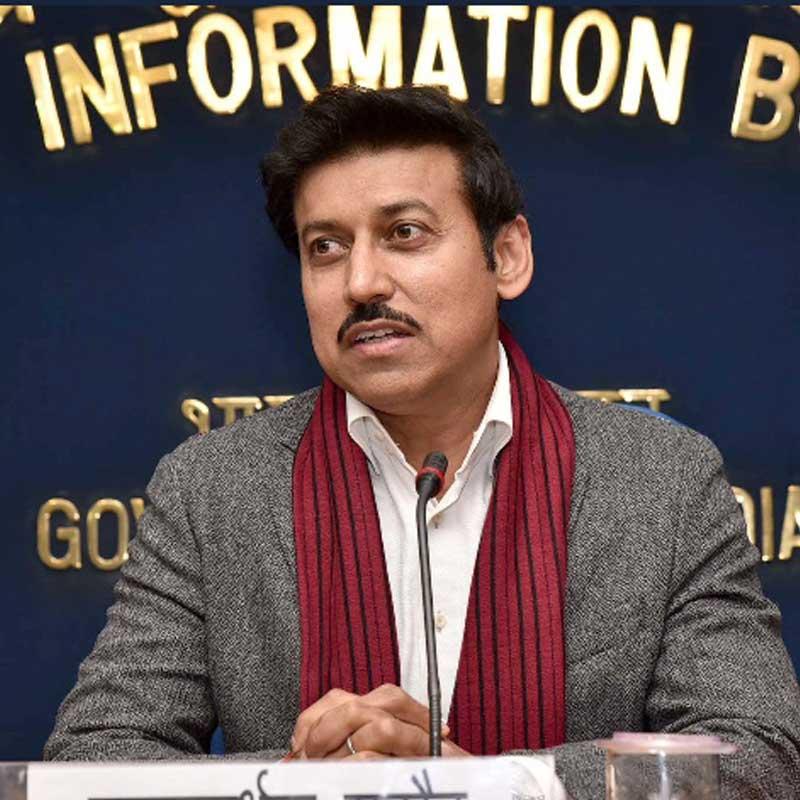
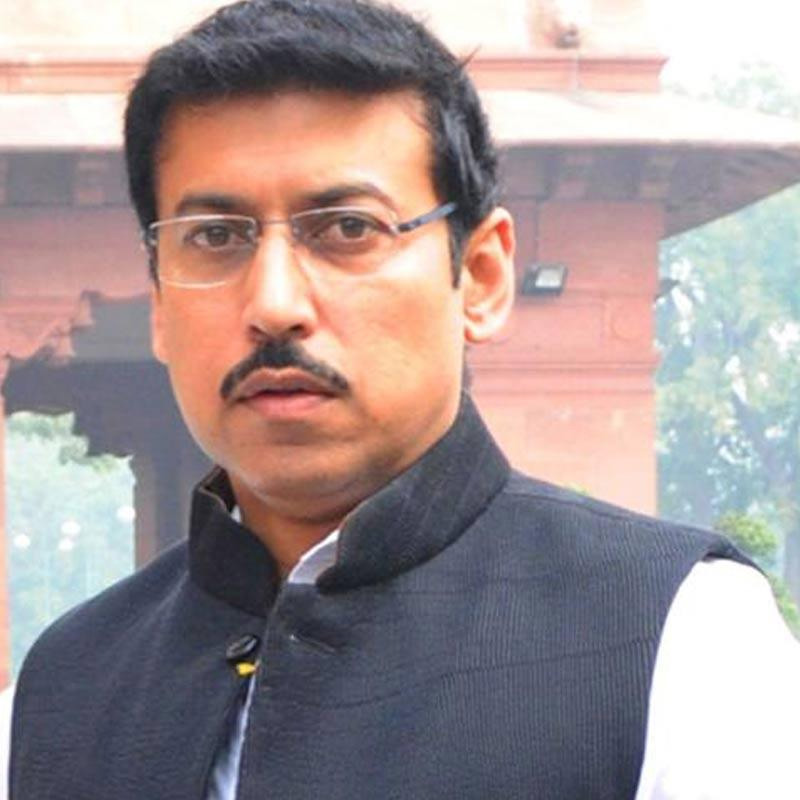
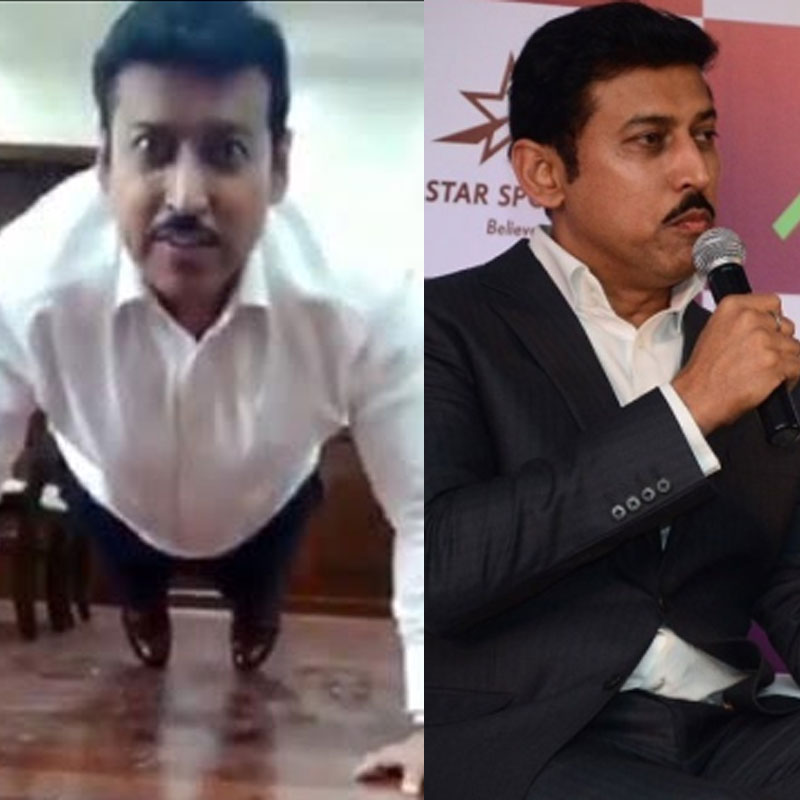
    He may have started the #HumFitToh IndiaFit campaign that went viral on social media last month and had celebs and plebs posting images of their health routine. He may also be a comparatively low-profile minister in the PM Modi cabinet who has delivered on various fronts, including being proactive on issues relating to sports. But Minister of Information & Broadcasting and Youth Affairs & Sports Rajyavardhan Rathore now needs to bring his Olympian attitude-to-succeed and political astuteness to marry the various causes his two ministries espouse.

    Though he has been around at MIB for some years now, acting as a junior to more high-profile ministers like Arun Jaitley and Smriti Irani, Rathore’s rise at MIB has lot to do with his success as minister of Youth Affairs and Sports. And, India’s broadcast and entertainment industry, still reeling under the after-effects of a slow economy and some economic policy decisions taken by the federal government, believed they may have found a messiah in Rathore when he was given independent charge of MIB a couple of months back. The arrival in the ministry of a new Secretary (Amit Khare) raised hopes further of removal of many artificial roadblocks created by the previous regime.

    Many of the earlier and controversial moves by the Ministry, headed by former TV actress-turned-politician Smriti Irani had the broadcast industry, especially, in a bind and hindered unencumbered growth and expansion. Policy decisions like introduction of hiked processing fees, new classification of `regional’ channels, unofficially nudging TV channels and teleport operators to move operations from foreign to Indian satellites, centralization of regular approval processes, etc. sent the industry into a tailspin.

    What was intriguing that though justified by the former minister and some bureaucrats, such moves in the MIB flew in the face of the present BJP-led government and PM Modi’s repeated assertions that India was taking policy steps to improve the country’s global ranking in the `Ease of Doing Business’ index. So much so that the Prime Minister’s Office  had to intervene and order a rollback of a MIB decision under Irani on online content and fake news.

    Col. (retd.) Rathore as both the Sports and MIB Minister has all the powers at his command to take right steps for the development of sports culture in the country that has produced only a handful of Olympian medalists in individual sports — he himself shot at a silver medal successfully. He has proved his determination in revamping school games with the successful conduct of `Khelo India’ (Play India), which is a holistic approach to prepare athletes from schools to Olympics.  It is aimed at achieving the twin objectives of mass participation and promotion of excellence in sports through competition on ground and slick packaging through TV sports channels to give the much needed exposure to emerging Indian talents in the sporting arena.

    However, some critics have questioned his commitment to promote sports through media as despite being the Sports Minister, he didn’t protest when his senior at MIB  introduced in December 2017 a whopping Rs.100,000 as processing fee for channels telecasting live sporting events.

    Given the fact that for the first time he has freedom and a free run to integrate promotion of sports with industry-friendly media policies, it is hoped that he uses the time wisely and work to fulfil the Prime Minister’s ambitious goal of making India both a global media and entertainment hub, and a sporting power.

    The lifeline of a sports channel is to have at least three or four live sports properties in a day and channels like Star Sports and Sony-ESPN excel in such a lineup. But a high processing fee per channel per day for live telecasting sporting events could soon make such business decisions unviable for sports channels; especially when they not only invest in telecast rights, but also building up properties from the scratch — Pro Kabaddi League, Pro Wrestling League and Ultimate Table Tennis are prime examples of this model. High fees, which also include temporary uplinking costs incurred on government permissions and technologies, not only put heavy burden on sports channels but also act as a dis-incentive to invest in other non-cricket and emerging sports like badminton, table tennis, weightlifting, boxing, basketball, gymnastics, football and athletics.

    Unlike in developed countries, the governing bodies in India that are running these non-cricket sports mostly survive on government grants and fail to attract major sponsors or TV channels as partners for promotional activities. Some of the recent policy decisions of MIB (in the form of high processing fee and creation of artificial barriers) have further disincentivized TV sports channels in joining hands with sports federations to showcase sporting competitions with a view to give a platform to emerging talents and bring more audience to the television screens and also on the ground.  

    If the government — and the MIB —believes that those managing and telecasting games like cricket can afford to pay the high processing fees and, thus, should be taxed is an argument that’s flawed. It is like in aiming to punish a high performer — also admittedly a bit controversial —for its success, the government has, in reality, managed to end up pushing those low-profile but potential target-sports further down. Controversies and opaqueness notwithstanding, it cannot be wished away that India’s cricket administrative body BCCI has successfully managed to promote the game in India and abroad with resounding success — and in turn making the country a global force to reckon with.

    Even the sector regulator, TRAI, had opposed formally introduction by MIB of processing fee for live telecast by non-news and current affairs TV channels and questioned the government as why such a step was taken without due consultation process. Now that the regulator has come out with some progressive recommendations relating to Ease of Doing Business in the Broadcast sector and issues relating to uplink and downlink of TV channels, instead of acting on those suggestions, another move has upset the industry — a recent MIB reference to the regulator to study the matter of temporary uplinking has not gone down too well with the industry that was hoping some respite under Rathore at MIB.

    The Sports Minister, who is also the MIB Minister, has a rare opportunity to showcase his talent — to promote sports in India through mass media by easing regulations and lessening the burden on the broadcast sector through administrative reforms, which will very well be in line with PM Modi’s vision. Khelega nahin India, toh champion kaise banega India (If India doesn’t play and gets a chance to showcase talent, how would champs be created)?

  • TRAI: Make STBs, content & telecom services disabled- friendly

    TRAI: Make STBs, content & telecom services disabled- friendly

    MUMBAI: With an aim to make communications and TV services more accessible to people with disabilities (PWDs), the Telecom Regulatory Authority of India has come out with a series of recommendations, including a confusing one suggesting that 50 per cent TV channels to be developed in PWD-friendly and accessible format over the next five years.

    In its recommendations, the TRAI suggests that manufacturers maintain accessibility standards for set top boxes (STBs), mobile phones and landlines. Box makers have till 2020 to make or import at least one model in different variants in an accessible format.

    Telecom service providers (TSPs), MSOs and DTH operators have been exhorted to have special desks in their call centres/customer support to assist PWDs using assistive technologies. The call centre executives must also undergo sensitivity training to deal with their issues.

    Broadcasters, too, could well have to invest in content modification. According to TRAI, “The Authority is of the view that there should be phase-wise, time bound plans to develop percentage[s] of channels with the aim to have 50 per cent channels in accessible format in five years’ time frame. To start with, there can be five per cent [of TV] channels in accessible format in one year, 10 per cent in two years and 50 per cent in five years.”

    When Indiantelevision.com got in touch with some TV channels on the issue, most of them said this particular TRAI suggestion on percentages of the TV channels in accessible format was not clear.

    “Does TRAI mean that half of all the government-permitted TV channels would have to have closed captioning of content for PWDs, for example? Or, does it mean that a percentage of the content in a TV channel would have to be in a prescribed format? Or, does it mean that newer accessible channels or separate feeds would have to be started? As it’s difficult to have closed captioned content for news channels, for example, no matter how much a TV channel may like to be PWD-friendly, this suggestion would need further clarifications as it would mean increasing costs on making content,” a TV channel executive opined, adding, though TRAI’s intentions were laudable, an industry reeling under a slow economy would need financial incentives from the government to implement such a suggestion.

    Meanwhile, continuing with TRAI recommendations, the regulator has suggested that Department of Telecom (DoT) and Ministry of Information and Broadcasting (MIB) instruct TSPs DTH operators and MSOs to conduct awareness campaigns regarding accessibility issues, design, affordability, availability of assistive tools and products, and about various government policies and schemes pertaining to accessible ICT (information, communications and telecoms) services that can be availed by PWDs.

    The government has been exhorted to take several major steps. The most important one is that all government websites need to be PWD-accessibility compliant. ICT products (computer hardware, mobile phones, STBs, etc.) procured by government agencies should be accessible to PWDs and should have associated support documentation and services inaccessible format.

    The government has been suggested to mandate the device manufacturers/importers not to curtail the accessibility features available in popular operating systems in any manner from their devices whether manufactured locally or imported.

    Suggestions by the International Telecommunication Union (ITU) such as products and tariff plan specific to PWDs, appropriate customer care service, adding closed captioning, audio description, etc. should be taken up in India as well, TRAI has observed.

    As mobile phones have become an integrated part of modern lifestyle, accessible handset for PWD citizens is also a necessity. According to TRAI, mobile handset manufacturers, who produce five or more than five different models, should produce at least one mobile handset satisfying accessibility criteria for PWDs at least by the end of 2020.

    The regulatory body has recommended a steering committee, comprising various government agencies and ministries, for a timely review of accessibility of ICT services to PWDs. The committee will look into other areas, including fund requirements and collaboration with state governments, the regulator has suggested.

    However, there’s a catch to this set of recommendations. As the issue was taken up suo-moto by TRAI, it needs to be seen whether MIB and DoT, for example, accept these recommendations of the regulator in any format at all as the two government organisations themselves are part of another panel looking into issues relating to PWDs vis-à-vis ICT services.

  • ISRO/DoS relent on use of foreign satellites; MIB starts processing applications

    ISRO/DoS relent on use of foreign satellites; MIB starts processing applications

    MUMBAI: India’s Department of Space, overseeing the Indian Space Research Organisation (ISRO), has eased up on its hitherto hard stance on Indian TV channels and teleports using foreign satellites’ capacity — if the Indian customer has a long-term contract.

    In a communication to Ministry of Information and Broadcasting (MIB), DoS/ISRO combine has advised that applications may be processed — for the time being — without insistence on migration to an Indian satellite or asking the time frame for doing it. 

    According to government sources, it has been suggested to MIB that it could start granting permissions to TV channels proposing to use foreign satellites for uplinking purpose if they are going in for a contract of three years or more. If an applicant company, having existing government permissions, has long-term capacity contract on foreign satellites, it too should be allowed to continue with its services.

    However, there’s a caveat to ISRO/DoS’ latest softening of stance. Any company that has existing permission from MIB to start a TV channel or communications service (like teleports) and is using foreign satellites should give the Indian space agency at least three-month notice for space on an Indian satellite when its contract with a foreign satco is ending. Same holds true for all fresh permissions for TV channels given by the government.

    The DoS/ISRO communication referred to over 35 applications that were kept pending by MIB as Department of Space had been insisting on migration to Indians satellites. MIB had also issued letters earlier this year asking companies seeking name change, for example, as to when they proposed to shift to an Indian satellite. Out of these cases highlighted by ISRO/DoS, at least 10 have long-term contracts for capacity on foreign satellites.

    Last month MIB cleared applications of three new TV channels in Indian languages under Aastha brand name. The Aastha channels are owned by a company controlled by Balkrishna, a close associate of yoga-guru-turned-entrepreneur Ramdev who’s Patanjali FMCG venture is giving even multinational companies sleepless nights, if revenues and sales growth are to be believed.

    Government nods recently were also given for name and logo change to some big broadcasting companies. Incidentally, some of the Aastha TV channels use foreign satellites for uplinking activity.

    In recent times, ISRO has been facing minor setbacks regarding launch of communications satellites, including Gsat-11, which returned to India just few days before launch from a European launchpad. 

    Still, it needs to be seen how long the government continues allowing Indian customers facilities of foreign satellites.

    MIB Expands Areas for Online Applications

    In a new advisory put out yesterday, MIB has expanded the services for which applications could be made online, something that the government has been insisting on in an effort to reduce processing time.

    The online module for submitting applications on www.broadcastseva.gov.in extends to cases relating to change in details of a company, annual permission fee for teleport companies and company-specific changes being sought to be made by teleports.

    The government has also reiterated an earlier stand of accepting online payments for various processing and annual permission fee, adding such payments should be made on time failing which action could be taken against companies concerned under existing regulations.

    Also Read :

    MIB clears TV channel applications; Rathore calls for stakeholder meets

    MIB, DoS nudge TV channel to use Indian satellites

    MIB says ISRO upping capacity to facilitate migration from foreign satellites

    Comment: 3 areas that new MIB minister Rathore needs to target