Tag: Ministry of Information and Broadcasting

  • India steps up fight against digital piracy

    India steps up fight against digital piracy

    MUMBAI: The Ministry of Information and Broadcasting has opened the floor to industry voices as it plans a major revamp of India’s digital anti-piracy armour.

    A public notice issued on 7 November invites inputs from film producers, broadcasters, OTT platforms and telecom players on tackling the fast-spreading menace of online content theft. With billions lost each year to pirated movies and shows, the government is keen to tighten its grip on digital delinquents.

    Stakeholders have been asked to share their experiences on identifying and removing pirated content, plugging technological gaps, improving coordination with enforcement agencies and adopting global best practices that fit India’s media landscape.

    Suggestions can be emailed to digital-mediamib@gov.in within 20 days of the notice. The move signals a renewed push to build a stronger, smarter defence for India’s creative economy, before the pirates sail any further.

  • MIB reboots TV ratings policy with tougher rules and wider audience lens

    MIB reboots TV ratings policy with tougher rules and wider audience lens

    MUMBAI: The Ministry of Information and Broadcasting (MIB) has turned the spotlight back on television ratings and this time, it’s rewriting the rulebook. In a move that could reshape the country’s broadcast measurement landscape, the government has released a new draft of its Policy Guidelines for Television Rating Agencies in India, introducing the sharpest set of reforms since the framework was first notified in 2014.

    In a notice dated 6 November 2025, the ministry invited public comments on the proposed amendments until 5 December 2025. Eleven years after the original guidelines and a year after a limited 2024 revision,, the latest draft signals a decisive shift towards greater transparency, accountability, and inclusivity in how India measures what its 800-million-plus television audience watches.

    The 2025 draft makes it clear that the government wants to raise the bar on both credibility and fairness. At the top of the list is a tightened eligibility criteria only companies registered under the Companies Act, 2013 can apply for registration as a rating agency. This ensures stricter oversight and legal accountability, closing loopholes that allowed loosely structured entities to operate in the past.

    The draft also raises the minimum net worth requirement from Rs 3 crore to Rs 5 crore, to be verified by a statutory auditor. The higher capital threshold aims to bring financial discipline and deter smaller, unstable firms from entering the highly sensitive ratings ecosystem, where even minor discrepancies can have major commercial implications.

    Perhaps the most impactful change is in the area of ownership and cross-holdings long seen as the Achilles heel of India’s TV measurement structure. The new draft enforces a 20 per cent cap on equity holding between broadcasters and rating agencies, extending the restriction to individuals, promoters, and associated entities. In simpler terms, no one player can own significant stakes on both sides of the table.

    This is a substantial tightening compared to earlier versions, which allowed partial overlaps subject to disclosure. The ministry’s reasoning is straightforward measurement credibility can’t coexist with commercial entanglement. In a crucial clarification, the 2025 draft exempts self-regulatory industry bodies such as BARC, recognising that such collective models function under different governance mechanisms.

    Another standout update is the focus on panel expansion. To make television measurement more representative of India’s diverse demographic and linguistic spread, the MIB has mandated a minimum panel size of 80,000 homes within six months of notification, with an increment of 10,000 homes annually until the sample reaches 1.2 lakh households. Agencies may exceed this number if their operational or business needs demand.

    This is a major leap from the 2024 proposal, which had suggested a modest 50,000–70,000 range. The expansion aims to reduce sampling bias, especially in smaller towns and rural areas where television habits differ significantly from metros.

    The policy also explicitly prohibits the inclusion of any employee, officer, or affiliate of the rating agency in the viewership panel, a new compliance safeguard designed to eliminate even the faintest hint of internal manipulation.

    In a nod to the shifting patterns of media consumption, the 2025 draft directs that all audience measurement systems must now be technology-neutral. That means ratings must include data from connected TVs, smart devices, and other digital viewing platforms, reflecting the hybrid nature of modern Indian households where linear and OTT viewing coexist seamlessly.

    The guidelines acknowledge that audience measurement today is no longer about a single screen in a living room but about a dynamic, multi-device reality, a clear move to keep pace with how India actually consumes content.

    In what could be a major relief for advertisers and rival broadcasters, the MIB has finally closed the landing page loophole. For years, channels have been accused of artificially boosting ratings by auto-playing content on viewers’ TV sets through default landing page placements.

    The new clause explicitly states that viewership from landing pages shall not be counted in official ratings, although broadcasters may continue to use such pages for marketing or promotional purposes. This measure brings India’s practices in line with international rating standards and reinforces the ministry’s commitment to clean, authentic data.

    The 2025 draft also lays down retrospective applicability, meaning that even existing agencies will have to align with the new norms once the policy is finalised. This is a departure from the 2024 version, which had proposed a transition period. The message is clear: compliance cannot wait.

    The government has also stressed that while the policy sets minimum conditions, industry bodies can adopt higher self-regulatory standards. The intention is not to micromanage, but to create a robust baseline that ensures fairness, accuracy, and accountability across all stakeholders.

    According to ministry officials, the reforms aim to make the Indian television rating system credible enough to withstand both global scrutiny and domestic scepticism. With advertising spends on TV and digital now exceeding ₹90,000 crore annually, the stakes are higher than ever.

    While the final policy is still under review, early responses from industry watchers suggest cautious optimism. Broadcasters and advertisers have welcomed the technology-neutral approach and expanded panel mandate, noting that these changes will help restore faith in ratings data after years of contention. However, smaller agencies have raised concerns about the steep jump in capital requirements, arguing that it could limit competition.

    In essence, the 2025 draft represents India’s effort to future-proof its audience measurement infrastructure. From traditional broadcast homes to connected screens, the government’s focus is on fairness, transparency, and scalability.

    When the final policy is notified, it will not only determine how ratings are gathered and reported, it will also influence how advertising money flows, how content is valued, and how credibility is built in a market where every rating point can swing millions of rupees.

    Because in today’s media economy, where screens may have multiplied but attention has shrunk, one truth remains constant: numbers tell stories and the story is only as strong as the trust behind it.

  • India congregates at Mipcom as TV industry grapples with streaming wars

    India congregates at Mipcom as TV industry grapples with streaming wars

    CANNES: Mipcom 2025 opens its doors on 13 October in Cannes, and India is making serious noise. Whilst the global television and streaming industries thrash about in existential angst—wondering what they are, where they’re going, and whether anyone still watches television—over 10,500 participants and 330-plus exhibitors from more than 100 countries are cramming into the Palais des Festivals. Identity crisis? Not on India’s watch.

    RX management, which runs this annual gathering, expects the gloom to lift the moment delegates start talking deals. And nowhere is the optimism more palpable than in the Indian contingent, which has arrived in force with more than 70 companies ready to do business.

    Centre stage sits the Indian Pavilion—a sprawling 100 sq m affair rebranded as the Bharat Pavilion/Waves Bazaar. It’s a joint initiative between the Indian consulate in Marseilles, the ministry of information and broadcasting, and the Services Export Promotion Council. More than 40 Indian companies have piled in under its banner: animation studios, video service outfits, content distributors, post-production houses—the full ecosystem.

    But the real heavyweights are flying solo. Eschewing the shared space, a formidable lineup of Indian firms have planted their own flags with independent exhibition stands: Animation Xpress, Amagi Media, Enterr10 Television (which runs the Dangal channel), GoQuest Media, JioStar India, One Life Studios, One Take Media, PowerKids Entertainment, Rajshri Entertainment, Rusk Media, Shemaroo Entertainment, and Zee Entertainment Enterprises. It’s a show of strength that reflects India’s growing clout in the global content economy.

    Indian delegates hunting for content—whether licensing hit formats or acquiring finished programming—number more than 120 this year, a figure that underscores the country’s voracious appetite for fresh material and its ambitions as both buyer and seller.

    Hiren Gada, chief executive of Shemaroo Entertainment, said he was returning to Mipcom after many years away and was “looking forward to some exciting meetings with international clients.” The veteran executive’s presence signals that even established players see renewed opportunity in the current market turbulence.

    Siddharth Kumar Tewary, founder of One Life Studios, called the atmosphere “electric,” adding that his company was now positioning itself as a global multiplatform content and production services partner—not merely an Indian supplier, but a genuine international player capable of creating content for any screen, anywhere.

    The Indian surge comes at a curious moment. Traditional broadcasters are bleeding viewers to streaming platforms – which are themselves struggling against the vertical and micro drama platforms and Fast services -trying to figure out sustainable business models. Studios are consolidating, mergers are multiplying, and nobody quite knows whether “peak TV” was last year or five years ago. Yet Cannes remains Cannes—a place where hope springs eternal and every conversation might be the one that spawns the next global hit.

    As deals snap shut and pitches fly across the sun-drenched Riviera, sleepy Cannes has morphed once more into the pulsing nerve centre of the global content trade. Champagne corks pop, business cards change hands at dizzying speed, and somewhere in the Palais a Hindi-language crime thriller is being sold to a Scandinavian broadcaster who’s convinced it’s the next Squid Game.

    Streaming uncertainty be damned. The curtain rises, the cameras roll, and India’s moment in the spotlight has arrived—louder, brighter and more confident than ever.

  • India opens Waves Bazaar pavilion at Busan film market

    India opens Waves Bazaar pavilion at Busan film market

    BUSAN:  India unveiled the Waves Bazaar – Bharat Pavilion at the Asian Contents & Film Market, held alongside the Busan International Film Festival, to pitch its fast-growing media and entertainment sector to global buyers and partners.

    Set up by the ministry of information and broadcasting with the Indian embassy in Seoul, the pavilion will run until 23 September, promoting co-productions and partnerships across film, television, gaming and emerging creative technologies.

    The launch drew industry figures including Kang Sungkyu of the Busan Film Commission, Agnieszka Moody of the British Film Institute and Ferdinando Gueli of the Italian Trade Agency. Indian filmmakers Arfi Lamba, Pradip Kurbah and Tannishtha Chatterjee joined officials Prithul Kumar, joint secretary at the ministry, and Nishi Kant Singh, chargé d’affaires at the embassy.

    Speakers highlighted India’s rising weight in the global content economy and the pavilion’s role as a bridge for collaboration. The space hosts screenings, B2B meetings and showcases in animation, VFX, gaming and immersive storytelling, underscoring New Delhi’s ambition to position India as a global content hub.

  • IAMAI hails piracy task force as shot in the arm for creative economy

    IAMAI hails piracy task force as shot in the arm for creative economy

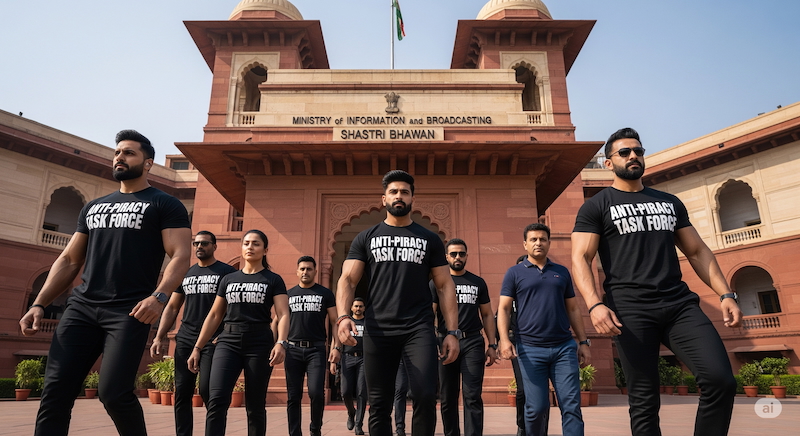
    MUMBAI: The Internet and Mobile Association of India (IAMAI) has cheered the ministry of information and broadcasting’s (MIB’s) decision to set up a dedicated task force to tackle the scourge of online piracy, calling it a long-overdue step to protect the country’s creative economy.

    IAMAI’s digital entertainment committee said the initiative would help turn the tough provisions of the Cinematograph Amendment Act 2023 into action on the ground. The law introduced steep penalties for piracy and empowered authorities to crack down on illegal recordings and transmissions.

    A 2024 “Rob Report”, published by EY and IAMAI, estimated that India’s entertainment sector—spanning OTT platforms and cinemas—loses Rs 224 bn annually to piracy, with 51 per cent of consumers admitting to watching pirated content. It urged stronger enforcement, fairer pricing and more innovative distribution models.

    JioStar chief executive and chair of the digital entertainment committe Kiran Mani said IAMAI’s role in the task force would channel industry expertise into “decisive measures that safeguard our creative economy and fuel long-term growth.”

    Inshorts a co-founder & chief executive and co-chair of the committee  Deepit Purkayastha called piracy “one of the biggest hurdles” for the industry, adding that the task force was a chance to “set the stage for a stronger and more trusted entertainment industry.”

    With a task force in place, the law tightened and industry voices aligned, India’s media and entertainment sector is finally poised to fight piracy with more than words.

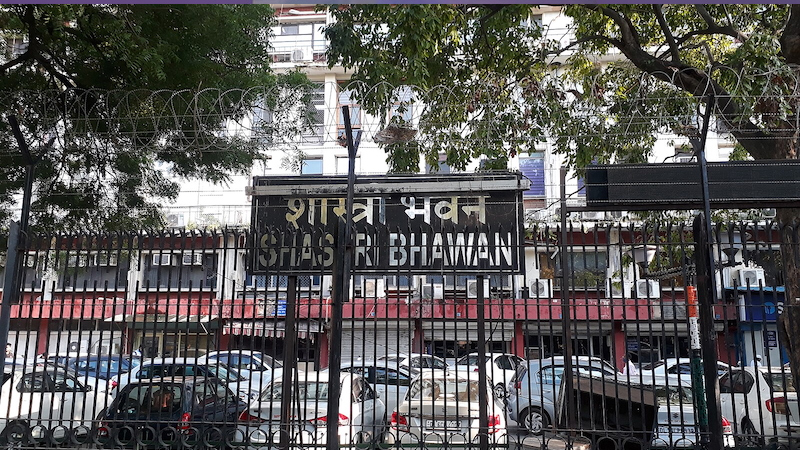
    (The picture shown above is just a representation of the task force and does not purport to depict either Shastri Bhawan or the industry executives who are part of the task force)

  • Information and broadcasting minister Ashwini Vaishnaw highlights growth of creator economy

    Information and broadcasting minister Ashwini Vaishnaw highlights growth of creator economy

    MUMBAI: Union minister of information & broadcasting Ashwini Vaishnaw stated that the media landscape is undergoing a significant shift due to the exponential growth of the creator economy. Speaking to representatives from approximately 20 national and regional media outlets on Saturday, he emphasised the fundamental changes occurring in content creation and its associated economy.

    “The world of creators and their economy is going through a fundamental change. With the advent of technology, the old model is giving way to the new model, creating opportunities as well as challenges,” said Vaishnaw.

    He highlighted how technology has enabled broader participation in content creation, noting, “Gone are the days when a large studio was necessary for producing content. Today, a creator from a remote village in Jharkhand or Kerala can produce high-quality content and garner millions of views.”

    Vaishnaw mentioned the World Audio Visual & Entertainment Summit (Waves), scheduled to take place in Mumbai from 1-4 May, which has already received over 100,000 registrations. He explained that Waves aims to establish itself as a global platform for media and entertainment, similar to the role of Davos for economic policies. The summit will also recognize top innovators with awards for their contributions to the evolving global media and entertainment sector.

    Leaders from various media organisations expressed their appreciation for the government’s initiative in conceptualizing Waves as a platform to connect policymakers, creators, industry leaders, technology companies, and start-ups.

    Information and broadcasting secretary Sanjay Jaju welcomed the participants and emphasised the importance of collaborative dialogue in shaping the future of the media landscape. He underscored the ministry’s commitment to engaging with stakeholders across different platforms and acknowledged the active participation of media organizations in the lead-up to Waves 2025.

    Vaishnaw reiterated that the creator economy is experiencing rapid growth and that prime minister Narendra Modi has acknowledged the contributions of creators to the economy and in promoting India’s soft power globally. He stated that Waves is intended to become a global connector for creators, buyers, and markets, facilitating scalable creative solutions.

    Secretary Sanjay Jaju emphasized the significance of collective discussion in determining the future direction of the media industry and the ministry’s commitment to engaging with stakeholders.

  • GTPL Hathway signs grant of permission agreement with MIB for HITS

    GTPL Hathway signs grant of permission agreement with MIB for HITS

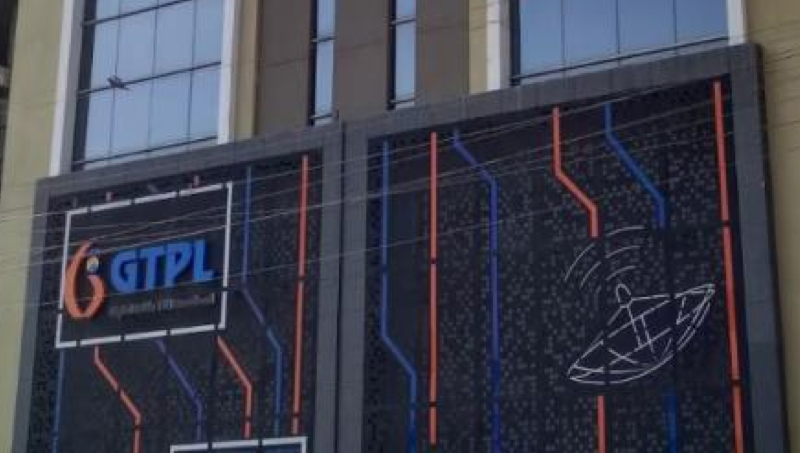
    MUMBAI: In a bold move, GTPL Hathway is preparing to colonise India’s broadcast wilderness. The Reliance Industries-owned cable TV and broadband maverick secured ministry of information & broadcasting (MIB)  approval in July 2024 to launch its Headend-In-The-Sky (HITS) project, with Rs 100 crore earmarked to execute it, subject to it being able to fulfill the laid-down guidelines.

    Having met them successfully, the company inked a grant of permission agreement (GOPA) with the ministry  on 27 March, securing a decade-long broadcast channel distribution mandate. The nerve centre? Ahmedabad for what could be a nationwide entertainment revolution. The company informed the Bombay stock exchange about the development through a regulatory filing. 

    Piyush Pankaj, the company’s chief strategy officer, had revealed during an analysts’ call in January 2025 that the project was 80 per cent complete. The idea was  to target satellite-dark regions, particularly the infrastructure-starved northern territories through the HITS service..

    The strategic thrust: by marrying cable TV and DTH technologies, GTPL aims to beam entertainment into the digital hinterlands where traditional infrastructure fears to lay its cables. It is believed that GTPL has leased twelve Telkomsat C-band transponders to broadcast the company’s digital dreams.

  • Japanese watchmaker Seiko partners with RCB for T20 cricket season 2025

    Japanese watchmaker Seiko partners with RCB for T20 cricket season 2025

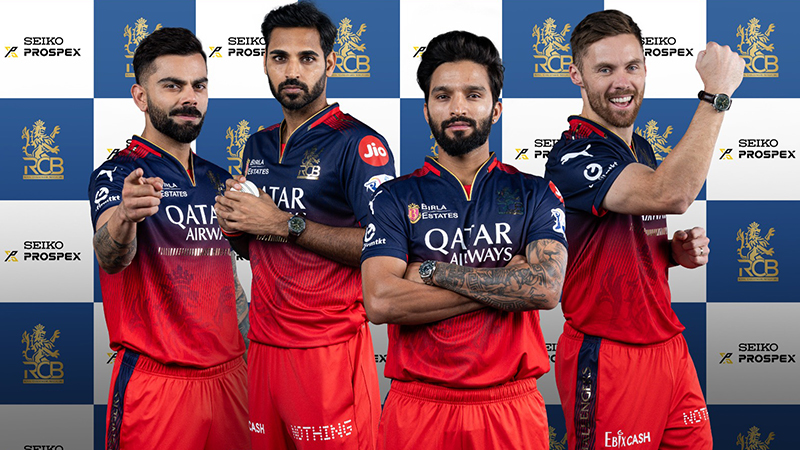
    MUMBAI: Cricket matches and watches—both share an obsession with perfect timing. Seiko, the Japanese maestro with 140 years of ticking expertise, knows this game all too well. Partnering with Royal Challengers Bengaluru (RCB) for the 2025 T20 cricket season, Seiko proves once again that it doesn’t just watch the clock—it masters it. This isn’t merely a brand deal; it’s cricketing elegance meeting horological precision, a classic pairing like a Virat Kohli cover drive—beautiful, timeless, and precise.

    Announced on 20 March in Bengaluru, Seiko’s alliance with RCB brings together over 200 years of combined heritage in sports and craftsmanship. With RCB’s fiery gameplay and Seiko’s meticulous craftsmanship, this collaboration promises to redefine ‘match timing’—literally.

    Speaking about the partnership, Seiko India president & COO Niladri Mazumder stated, “Seiko has a longstanding legacy in sports, built on precision, innovation, and performance—qualities that mirror the ethos of Royal Challengers Bengaluru. Our partnership with them is a natural extension of our commitment to excellence, and we are proud to be associated with a team that exemplifies resilience and performance. This collaboration allows us to engage with cricket enthusiasts in a meaningful way, reinforcing Seiko’s presence in the world of sports.”

    Echoing the sentiment, Royal Challengers Bengaluru COO Rajesh V Menon said, “RCB is renowned for pushing boundaries and delivering unforgettable experiences for our fans. We are thrilled to partner with Seiko to mark the celebration of cricket, forever etched in time.”

    With co-branded campaigns and exclusive fan experiences planned, Seiko aims to capture every nail-biting, cheer-inducing second of the T20 season 2025. Fans can look forward to a season where precision isn’t just expected—it’s guaranteed. Miss a moment? Not with Seiko around. After all, every second counts when you’re chasing victory on the pitch or checking if it’s finally lunch break yet.

  • Parliament panel turns up the heat; asks MIB to give timeline for broadcast bill

    Parliament panel turns up the heat; asks MIB to give timeline for broadcast bill

    MUMBAI: In a  rebuke, the Standing Committee on Communications and Information Technology has demanded that the ministry of information and broadcasting stop dithering and set a firm deadline for the long-delayed Broadcasting Services Regulation Bill, The Economic Times has reported.

    The parliamentary panel, clearly miffed at the glacial pace of progress, wants the controversial legislation tabled in Parliament “at the earliest” – governmental code for “you’ve been dragging your feet for too long.”

    The ministry’s second draft of the broadcast bill had a spectacularly brief public life last year – introduced with fanfare in July only to be hastily withdrawn in August after media stakeholders threw a collective wobbly over the secretive consultation process.

    Industry insiders were particularly hot under the collar about vague terminology that could potentially hand sweeping powers to bureaucrats – a prospect about as popular in newsrooms as a pay cut.

    In its response to the parliamentary committee’s prodding, the ministry promised a fresh draft would emerge after “detailed consultations.” It outlined a tortuous path ahead: consultations will be followed by a draft cabinet note, inter-ministerial ruminations, and eventual submission for the cabinet’s consideration.

    The committee’s action taken report makes it crystal clear that lawmakers’ patience is wearing thinner than a politician’s promises during election season.

    Having previously recommended that the government “expedite” formulation of the law while ensuring adequate consultations, the committee has now upped the ante by demanding a concrete timeline.

    The original draft bill had been available for public commentary from 10 November to 9 December 2023, with the deadline later extended to  15 January 2024 – but more than a year later, a revised version remains elusive .
    Industry observers note that the regulatory vacuum continues to leave India’s vibrant broadcasting sector in limbo, with outdated rules struggling to address the challenges posed by streaming platforms and social media content.

    “At this rate, we’ll have holographic television before we get a broadcasting law,” remarked one cynical media veteran.

  • Indian govt presents Waves 2025 to 100 ambassadors and high commissioners

    Indian govt presents Waves 2025 to 100 ambassadors and high commissioners

    MUMBAI: In a glitzy push to make India the hotbed of global media action, the government rolled out the red carpet for its ambitious World Audio Visual & Entertainment Summit (Waves) 2025  today at Sushma Swaraj Bhawan in New Delhi in the presence of 100 ambassadors and high commissioners. MIB officials made a  hard sales pitch  to prod them and make them realise that the Indian government is extremely serious about Waves 2025 and they in turn should carry this message back to their national governments and ensure robust participation from their respective countries. 

    Waves 2025—set to make a splash in Mumbai from 1 to 4  May 2025—promises to be a star-studded affair that will see the worlds of tech, media and entertainment collide in spectacular fashion.

    Union minister for external affairs S. Jaishankar didn’t mince words about the summit’s significance: “Economic and political rebalancing is moving towards cultural balancing. We are not truly global if we are not truly local. Waves 2025 captures the spirit of this endeavour.”  

    He urged the ambassadors and high commissioners to familiarise their governments regarding the opportunities of global collaborations courtesy the Waves 2025 initiative.

    Meanwhile, information & broadcasting minister Ashwini Vaishnaw turned up the heat, declaring that “the intersection of creativity, media and technology is transforming the media landscape of the world and reaching a new level of convergence.” He teased that “some of the biggest names” in the industry would be gracing the Mumbai bash.

    Not to be outdone, Maharashtra chief minister Devendra Fadnavis jumped into the fray, drumming up Mumbai’s credentials as the “financial and entertainment capital of India” that serves as the “perfect backdrop” for the summit.

    “Waves 2025 is a movement,” Fadnavis proclaimed, while welcoming the establishment of the Indian Institute of Creative Technology which the government has committed to set up in Mumbai with Rs 391 crore being allocated for it. He expressed hope that “media will continue to be a force for good,” in a world where technology and creativity are increasingly getting into bed together.

    Minister of state for information & broadcasting, L. Murugan effusively stepped up to say that Waves  2025 will open  the door  “to joint ventures, co-productions, and business expansion, enabling global media companies to engage with India’s creative sector.  We remain steadfast in creating a conducive environment for the M&E industry, supporting ease of doing business, content localisation, and infrastructure development.”

    Information & broadcasting secretary Sanjay Jaju revealed that the four-day extravaganza will feature multiple tracks designed to make waves across the industry:
    * A global media dialogue featuring ministers and policymakers
    * Thought leaders Track with knowledge-sharing sessions
    * Waves exhibition showcasing storytelling innovations
    * Bharat pavilion highlighting India’s media heritage
    * Waves  Bazaar to facilitate business networking
    * WaveXcelerator to back media startups with mentorship and moolah
    * Waves Culturals featuring performances that blend Indian and international talent

    Also present was  Maharashtra government chief secretary Sujata Sauni who exchanged a memorandum of understanding relating to Waves 2025 with Jaju. 

    The organisers are also playing up Waves 2025’s integration with the orange economy, positioning the summit as a catalyst for economic growth and job creation through creative industries.

    With Mumbai ready to throw open its doors to thought leaders grappling with issues from AI to streaming revolutions, intellectual property rights, misinformation, and media sustainability, Waves 2025 is gearing up to be the first summit of its kind to tackle these hot-button issues by promoting cultural diversity, innovation, and equitable access to media platforms.

    As the countdown begins, all eyes are now on whether this media matrimony can truly deliver on its lofty promise of becoming “the biggest unifying factor between country to country, people to people and culture to culture in the digital age.”