Tag: MINISTRY OF INFORMATION

  • News channels want longer security clearance period: Tewari

    News channels want longer security clearance period: Tewari

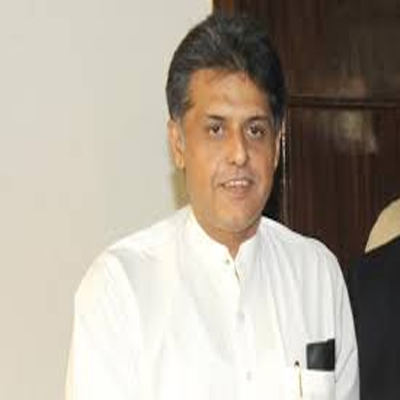
    Mumbai: News broadcasters have approached the ministry of information and broadcasting to increase the number of years they get security clearance for the channels they run. This was revealed by I&B minister Manish Tewari today in the Lok Sabha in reply to a question, says a Press Trust of India report.


    Current regulations put the security clearance given to a company and its directors validity period at three years, and the News Broadcasters Association has made a representation to the I&B ministry to extend it as it makes things difficult for them, disclosed Tewari.


    Adding to the news broadcasters woes is the Ministry of Home Affairs’ (MHA) decision that a media company should apply for fresh clearances for a new channel even if the firm has got security permissions earlier. Permissions for uplinking and downlinking of channels are issued for 10 years, and hence this has created an anomalous situation.

  • CBFC gets CEO in Railways’ Rakesh Kumar

    CBFC gets CEO in Railways’ Rakesh Kumar

    MUMBAI: The Censor Board of Film Certification (CBFC) has finally found its CEO.  Rakesh Kumar, who is currently a senior Divisional Personnel Officer in the Indian Railways Personnel Service (IRPS) in Vadodara has been chosen as the new CEO for three years. He steps into the shoes of former CEO Pankaja Thakur, who completed her three year term on 20 September 2013.


    Press Information Bureau (PIB) Mumbai director Manish Desai had been given additional responsibility as CEO following Thakur’s departure. The CBFC had been CEO-less for almost a decade and had been run by its chairpersons until Thakur joined in 2010.


    Kumar was selected after a long process for which the CBFC received many applications. About five to seven officials were shortlisted to be interviewed by the Ministry of Information and Broadcasting and CBFC chairperson Leela Samson.


    Kumar is on a Central Stopping Deputation, which means he will be on deputation to the CBFC for three years, and after that he may resume his current job. According to official sources, the appointment order came in yesterday and Kumar is set to join within a fortnight.

  • TRAI gives DTH players more time

    TRAI gives DTH players more time

    MUMBAI: The DTH players now have time until 5 December to furnish their views on the supplementary consultation paper on ‘Issues related to new DTH licences.’ The earlier deadline set by the Telecom Regulatory Authority of India (TRAI) for submitting views and comments was 25 November.


    It was on 14 November that the consultation paper was released by the TRAI.  The date  extension  has been given in keeping with the request of the stakeholders.  The regulator though has made it clear that no further extensions will be entertained.


    It is to be noted that the supplementary consultation paper was released as a follow up to the consultation paper it had issued on 1 October on issue/extension of DTH licences at the behest of the Ministry of Information and Broadcasting (I&B).


    The points raised in the supplementary consultation paper were:   Cross-holdings and control between a DTH licencee, broadcasting entities and TV channel distribution entities; Interoperability of DTH STBs; Licence fee and Migration fee.


    Stakeholders can send the comments in electronic form to TRAI advisor Wasi Ahmad.

  • PEMRA fines channels for excessive Indian content

    PEMRA fines channels for excessive Indian content

    MUMBAI: 10 Pakistani entertainment channels have been imposed with a fine of PKR 1 million each by Pakistan Electronic Media Regulatory Authority (Pemra) for violating the code of conduct by airing excessive foreign content.


    According to a document issued by the Ministry of Information, Broadcasting and National Heritage, the local channels have been caught with airing excessive Indian content from the prescribed Pemra limits, thus violating the code of conduct and code of advertising.


    The channels that have been held include: Hum TV, Oxygen TV, Play TV, Kohinoor Entertainment, TV One Entertainment, NTV Entertainment, GXM Entertainment, Jalwa Entertainment. While private TV channels of the country have been authorised to air only 10 per cent foreign content and 60 per cent of that 10 per cent should be Indian or other content and 40 per cent of the 10 per cent may be English content, the channels in Pakistan have been found to flout that rule.
    Apart from the Rs 1 million fine, the TV channels have also been issued warning letters to desist from such practice in future.

  • Niche channels to dominate TV in future

    Niche channels to dominate TV in future

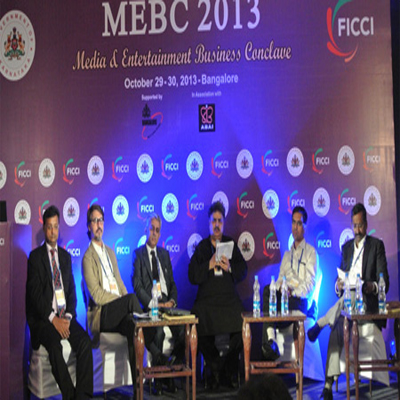
    BENGALURU: At the opening ceremony of the FICCI MEBC (Media and Entertainment Business Conclave) – South, which was held on 29 and 30 October, Ministry of Information and Broadcasting Secretary, Bimal Julka highlighted the fact that digitisation is at a growing trajectory in the country and by the end of the next year we shall all be living in digital homes.


    According to data provided by a FICCI Deloitte report on media and entertainment in south India, television constitutes 56 per cent of the market share with Rs 13,470 crore out of the total of Rs 23,900 crore. Digitisation is going to help the segment grow at a CAGR of 20 per cent in the next four years.


    While the digital world is changing phenomenally, we wonder how the broadcasting industry is adapting to the change. This, and various other points were discussed in a session on “the broadcasting ecosystem in the digital era” which included BECIL chairman K Subramanian, IBM global services head (media and entertainment) and ED Raman Kalra, Deloitte Coimbatore partner-audit C R Rajagopal, Amagi Media Labs co founder Srinivasan K A and Whats on India COO Sugato Banerjee formed the panelists, while MXM India CEO and editor in chief Pradyuman Maheshwari moderated the session.


    The session kick started with Subramaniam highlighting the humongous task that was undertaken in DAS (Digital Addressable System) phase I to install about 75 lakh STBs and led to nearly 95 per cent digitisation in 38 cities. Five out of 38 are in South India, according to the report. He added that in all this DTH had taken a backseat except for Chennai where the DTH penetration is about 40 per cent and digitisation is lagging due to political turmoil.


    Banerjee also supported it by saying that phase I and II saw DTH take a step back and digital penetrate strongly in Mumbai, Delhi and Kolkata.


    Banerjee also highlighted certain issues that popped up during the process of digitisation. “In a city like Mumbai where people live in buildings, having a cable run through the building is easy. With DTH, the dish needs to be facing the satellite. In places where houses are far away from each other, cost of running the cable from home to home is higher and more efforts are needed. If some of these places don’t even get electricity for hours why would they want to pay for STBs?” he remarked.


    There was a time when there was a scarcity of channels but now they are in abundance. According to Banerjee, there are about 700 working channels in the country but it is unrealistic to have so many channels in the digital arena. The rising number of channels has led to narrowing down of viewership. “Five years ago there was no food channel in the country and now there are five. The long tail will give more choice to viewers and fringe channels have benefitted due to digitisation especially in the urban cities,” said Banerjee.


    At the same time, the growing number of channels will put pressure on its visibility. “Now, the issue would be to bring one’s channel to viewers notice,” said Srinivasan.
    Viewership will be segmented leading to an increase in the number of niche channels.  “Broadcast is a term that doesn’t seem to suit the current scenario. Now it is time to ‘narrow-cast’,” said Srinivasan.


    According to Kalra, their IBM global survey on consumer insight has shown that people don’t want to be categorised in demographics. “Consumers want content tailor-made for them. The biggest challenge in the future will be to get direct content for people and then make them spend for it,” he said.


    At the inaugural session of the event, Film Federation of India president Ravi Kottarakara raised the issue of service tax being a big hindrance on the industry. The same was also brought up by Rajagopal at the session. “Not having enough capital is a challenge for the industry to create things. Taxation needs to be looked into as well as interesting financial modules need to open up,” he said.


    At the same time, there is also the issue of paying for individual channels in future as consumers are used to paying a small amount for a big pack of channels. But Kalra pointed out that a person who could pay Rs 300 for a movie now, as compared to Rs 25 a few years ago, will definitely have the capacity to pay more for TV.


    However, Banerjee chose to disagree and said, “There is a difference between making them pay and the willingness to pay.”


    Although carriage fees will disappear in the digitised world, Banerjee said it will reappear in another form of placement fees as to which channel will appear first. According to industry sources, carriage fees range from Rs 3-5 lakhs. The industry also lacks advertising funding as compared to print. “Print has about 2 lakh advertisers but TV has just 12,000,” said Subramaniam.


    TV consumption on multiple screens is also set to grow. As on March 2013, 143 million users in India were mobile internet users (according to the FICCI Deloitte report). Its analysis report also showed that video consumption had increased from two hours to three hours from 2010 to 2012. “There will be monetisation of content as more connected devices emerge. Only then we will know which genre is being seen and its statistics,” said Subramaniam.

  • Bharti Sihag to be AS and FA in I&B Ministry

    Bharti Sihag to be AS and FA in I&B Ministry

    NEW DELHI: Senior Indian Administrative Service Officer Bharti S. Sihag has been appointed as Additional Secretary and Financial Adviser, Ministry of Information and Broadcasting.


    An officer from Himachal Pradesh cadre of the 1983 batch, she is presently posted in the state.


    The Appointments Committee of the Cabinet also cancelled orders issued earlier for appointment of Annie Moracs, IP & TA & FS (1979) for this post.

  • Movies OK says it did not go off air

    Movies OK says it did not go off air

    NEW DELHI: As the Delhi high court ordered a stay on the order of the inter-ministerial committee relating to suspending telecast for 24 hours from midnight of 2 May, Movies OK has clarified that the channel was never taken off the air as reported earlier by indiantelevision.com (based on the ministry of information and broadcasting’s website).


    The ministry had directed the punitive action on the channel for allegedly showing a film ‘Dil Jale’ on 18 June last year with an ‘Adult’ certificate at 6.12 pm, refusing to accept the argument that the certificate was shown by human error as the version shown had been issued a U/V certificate.


    However, the channel got the order stayed on the ground that it was issued the ministry directive only at 5.30 pm on 1 May. The court also heard counsel for the government had listed the case for further hearing on 26 July. Justice Rajiv Shakhder said “I am of the view that since enough time was not available to the petitioner to collect the relevant material in order to challenge the findings to which I have made a reference to above, I am inclined to stay the impinged order till the next date of hearing. It is ordered accordingly.”
    In a statement following a story by this website, the channel said: “Star India would like to clarify that it is factually incorrect to state that the channel faced closure for 24-hours as no such action was taken. Contrary to what the article suggests, the channel wasn’t taken off air at all.”