Tag: Ministry of Electronics and Information Technology

  • Proposed Digital India Bill expands online offence laws to safeguard users

    Proposed Digital India Bill expands online offence laws to safeguard users

    Mumbai: The Digital India Bill is soon to be define and encode in law various online offences such as cryptojacking, astroturfing, dogpiling or cyber-mob attacks, dogwhistling, swatting, gaslighting and catfishing according to media reports

    The bill is also likely to moot the establishment of a Digital India Authority and a National Data Management Office under the Ministry of Electronics and Information Technology, according to one official. The new bill will replace the 23-year-old Information Technology Act of 2000.

    In this bill, the IT ministry is also likely to define the contours of misinformation and the various ways it is propagated.

    According to close sources, it said that the bill is likely to be tabled in parliament during the later part of the winter session.

  • Prasar Bharati appoints Gaurav Dwivedi as CEO

    Prasar Bharati appoints Gaurav Dwivedi as CEO

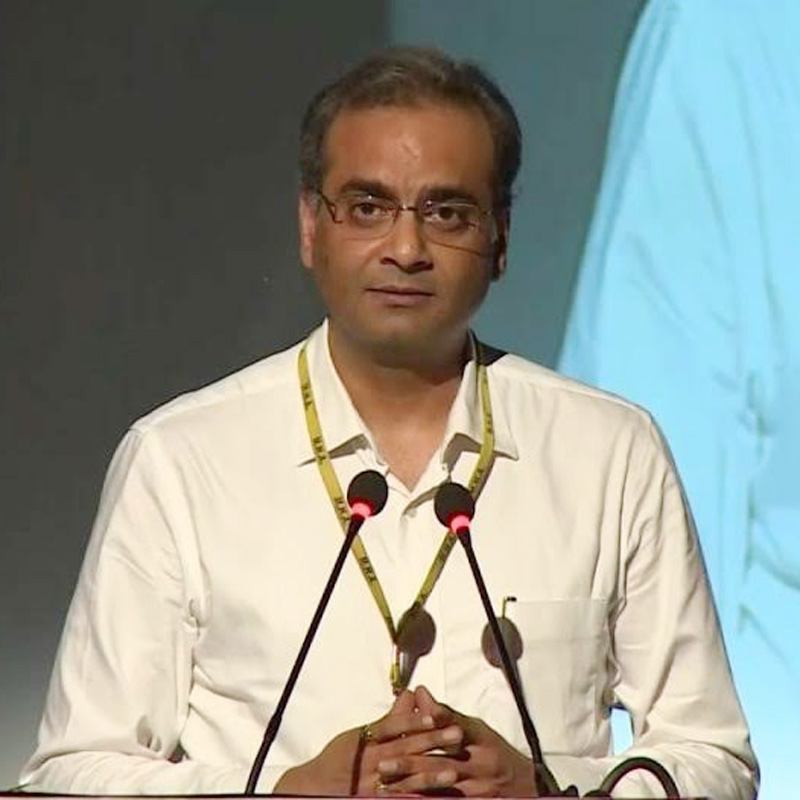
    Mumbai: Prasar Bharati on Monday announced the appointment of Gaurav Dwivedi as chief executive officer (CEO). The appointment will be effective on the date he takes over the office and will last for five years.

    Presently, Dwivedi is in charge of MyGov, the ministry of electronics and information technology (MeitY). Additionally, he handles the government’s citizen engagement platform.

    “In exercise of the powers conferred by sub-section (1) of Section 4 of the Prasar Bharati (Broadcasting Corporation of India) Act, 1990, read with sub- section (4) of Section 4 and sub-section (2A) of Section 6 of that Act, the president, on the recommendation of the selection committee, is pleased to appoint Gaurav Dwivedi, IAS (CH:95) as the executive member (chief executive officer) in Prasar Bharati with effect from the date he assumes charge of the office, for a term of five years,” the MIB said in a statement.

    “The terms and conditions of his appointment shall be governed by the provisions of the Prasar Bharati (Broadcasting Corporation of India) Act, 1990, and the rules made thereunder, as amended from time to time,” the statement added.

    Dwivedi is a Chhattisgarh cadre IAS officer from the 1995 batch. He has worked in Kerala, Madhya Pradesh, and Chhattisgarh in various capacities.

    He has also taught at the IAS Training Academy, LBSNAA, Mussoorie.

    He has received the prime minister’s award for administrative excellence.

  • MIB prohibited transmission of 15 TV channels since 2019: Anurag Thakur

    MIB prohibited transmission of 15 TV channels since 2019: Anurag Thakur

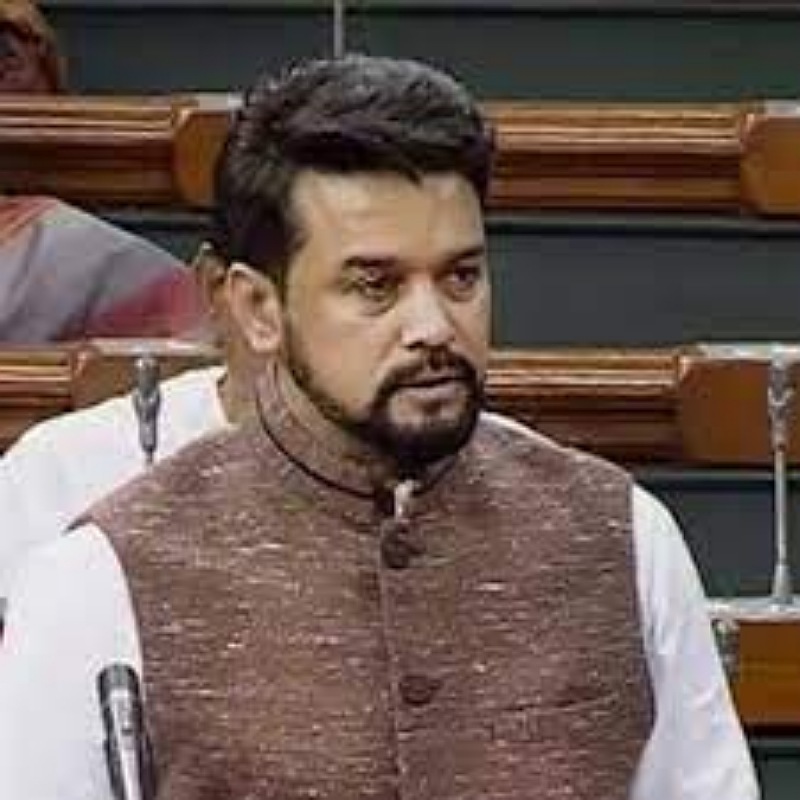
    Mumbai: The ministry of information and broadcasting (MIB) has prohibited the transmission of 15 channels for violations under the uplinking/downlinking and of the programme code since 2019, minister of information and broadcasting Anurag Thakur informed the Lok Sabha on Tuesday.

    Thakur also said that the ministry has issued directions for blocking 56 YouTube-based news channels and their social media accounts for public access during 2021-22 under Information Technology (Intermediary Guidelines and Digital Media Ethics) Rules 2021.

    Between 2014-2021, the ministry of electronics and information technology also exercised its powers under Section 69 A of the Information Technology Act, 2000 to block 25,369 URLs, consisting of web pages, websites, pages on social media accounts etc.

    The Lok Sabha questioned the minister whether the government is authorised to impose broadcast bans on TV channels and if it has outlined any policy for the same. It also asked if the government has put a redressal mechanism in place to hear the grievances of the channels.

    The minister informed the Lok Sabha that all private satellite TV channels are granted permission by the ministry under the uplinking and downlinking guidelines, 2011 and are required to adhere to the terms and conditions of such permission including adherence to the programme code and advertisement code and other provisions laid down under the Cable Television Networks (Regulation) Act 1995.

    He further noted that the grant of permission to a satellite TV channel under the guidelines is subject to security clearance by the ministry of home affairs as per the procedure laid down by it.

    To address the grievances of TV channels, the government follows the due process of law and laid down the process before taking a decision to suspend/prohibit a channel. “Grievances related to the uplinking/downlinking guidelines are addressed by the ministry,” said Thakur.

    The Lok Sabha also asked if the government had conveyed a detailed explanation of why MediaOne was not allowed to continue their broadcasting to the channel management. To which the I&B minister replied, “The government has followed due process of law and the laid down procedure before taking a decision regarding the cancellation of permission to TV news channel ‘Media One’. The matter is sub-judice before the Supreme Court.”

    He further informed the Lok Sabha that details of channels whose permission has been cancelled for violation of the uplinking and downlinking guidelines are available on the I&B ministry’s Broadcast Seva portal.

  • K Rajaraman gets additional charge as MeitY secretary

    K Rajaraman gets additional charge as MeitY secretary

    Mumbai: Telecom secretary K Rajaraman has been given additional responsibility as secretary of the ministry of electronics and information technology (MeitY) following the retirement of Ajay Prakash Sawhney.

    The department of personnel and training on Monday notified of several new appointments on account of retirement of several bureaucrats in various government departments.

    Rajaraman is a 1989 batch IAS officer from Tamil Nadu and will take charge with immediate effect “till the appointment of a regular incumbent or until further order, whichever is earlier,” said the ministry of personnel and training.

    Rajaraman took over as telecom secretary after Anshu Prakash retired last year. Earlier, he had worked as additional secretary in the department of economic affairs.

  • MeitY releases FAQs to address queries on IT rules 2021

    MeitY releases FAQs to address queries on IT rules 2021

    Mumbai: The minister of state for electronics and information technology Rajeev Chandrasekhar has released a document clarifying the doubts and explaining the nuances of the due diligence to be followed by intermediaries as part of Information Technology (Intermediary Guidelines and Digital Media Ethics Code) Rules, 2021 (IT rules 2021).

    The FAQs are limited to part II of these rules to be administered by MeitY.

    “The government is committed to providing open, safe and trusted, and accountable internet to all users whose number is increasing both in urban and rural areas,” said Chandrasekhar.

    The FAQ consists of four sections, namely – Section I: Basic Information; Section II: Basic Terminology and Scope of the Rules; Section III: Due Diligence by an Intermediary; Section IV: Additional Due Diligence by Significant Social Media Intermediaries (SSMI); Section V: Non-Compliance to Intermediary Rules.

    Section I comprises of the basic information like- the objective of these rules; effective date; process followed in evolving these rules; major changes over the erstwhile Intermediary Guidelines Rules 2011; how these rules can be leveraged for enhancing the safety of women and children from potential harms; how these rules are also consistent with the requirement of safeguard against user’s privacy, freedom of speech and expression being fundamental rights; how a user can be benefitted, etc.

    Section II comprises the basic terminology and scope of the rules like – which entities can qualify as ‘intermediary,’ which intermediaries qualify as a ‘social media intermediary,’ and ‘significant social media intermediaries’ (SSMI), etc.

    Section III comprises the nuances of the due diligence to be followed by intermediaries like- information to be provided by the appropriate government, what and how much user information to be retained by an intermediary, prominently publishing of grievance officer details, adherence to various prescribed timeframes by an intermediary, etc.

    Section IV comprises the nuances of the additional due diligence to be followed by SSMI like- modalities in appointing designated manpower resources based in India, details of monthly compliance reports and their level of granularity, etc.

    Section V comprises the grounds of non-compliance to intermediary rules.

  • Google, Facebook updating website as per new IT rules

    Google, Facebook updating website as per new IT rules

    New Delhi: Tech giants Google and Facebook have started updating their websites to reflect the appointment of the grievance officers as per the new IT rules that came into effect on 26 May.

    The companies have shared the details with the ministry of electronics and information and technology, reported PTI citing government sources. However, Twitter is yet to inform the Centre if it is complying with the norms. Google’s ‘Contact Us’ page shows details of Joe Grier as a contact person with an address from Mountain View, US. It also contains details on the grievance redressal mechanism for YouTube.

    The new IT (guidelines for intermediaries and digital media ethics code) rules, 2021 notified by the Centre on 25 February recommend a three-tier mechanism for regulation of all online media, which confers blocking powers to an inter-ministerial committee. As per the rules, each significant social media intermediary is required to appoint a chief compliance officer, a nodal contact person for 24×7 coordination with law enforcement agencies and a resident grievance officer. All three should be resident Indians. They will also have to publish a monthly compliance report mentioning the details of complaints received and action taken.

    The intermediaries are also required to prominently publish on their website, app or both, the name of the grievance officer and his/her contact details as well as the mechanism by which a user or a victim may make a complaint. The grievance officer would be required to acknowledge the complaint within 24 hours and resolve it within 15 days from its receipt.

    The platforms would also be required to ensure online safety of users, especially women and remove/disable access of any such morphed content, within 24 hours of the complaint, which can be filed either by the individual or by any other person on his/her behalf. The government has also asked the significant social media intermediaries providing services primarily in the nature of messaging “to enable identification of the first originator of the information.”

  • Sops offered to promote indigenous electronics industry

    Sops offered to promote indigenous electronics industry

    NEW DELHI: In a move to give incentive to the electronics sector, the Government has taken steps to expedite investments into the Electronics System Design and Manufacturing (ESDM) sector in India to achieve the goal of ‘Net Zero imports’ in electronics by 2020.

    The Modified Special Incentive Package Scheme (M-SIPS) is expected to create employment opportunities and reduce dependence on imports. The projects already received under the scheme have the potential to generate employment to the extent of up to one million persons (direct and indirect).

    Under the amendments, applications will be received under the scheme upto 31 December 2018 or till such time that an incentive commitment of Rs 100,000 million is reached, whichever is earlier. In case the incentive commitment of Rs 100,000 million is reached, a review will be held to decide further financial commitments.

    A separate Committee headed by Cabinet Secretary and comprising of Niti Aayog CEO, Expenditure Secretary, and Ministry of Electronics and Information Technology (MeitY) will be set up in respect of mega projects, envisaging more than Rs 68,500 million (approximately US$ 1 billion) investments.

    The Policy covers all States and Districts and provides them an opportunity to attract investments in electronics manufacturing.

    So far, 243 applications have been received under the scheme, out of which 75 applications have been approved involving investment proposals of Rs 179,970 million.

    In the cabinet meeting held under the chairmanship of the prime minister Narendra Modi, the amendments that were approved say that for new approvals, the incentive under the scheme will be available from the date of approval of a project and not from the date of receipt of application.

    The incentives will be available for investments made within five years from the date of approval of the project.

    Approvals will normally be accorded to eligible applications within 120 days of submission of the complete application.

    A unit receiving incentives under the scheme, will provide an undertaking to remain in commercial production for a period of at least three years.

    The Appraisal Committee recommending approval of project will be chaired by Secretary, Ministry of Electronics and IT.

    The Cabinet had in July 2012 approved the M-SIPS to provide a special incentive package to promote large scale manufacturing in the Electronic System Design and Manufacturing (ESDM) sector. The scheme provides subsidy for capital expenditure – 20% for investments in Special Economic Zones (SEZs) and 25% in non-SEZs.

    The Scheme was amended in August, 2015 for scope enhancement and simplification of procedure. The Scheme has attracted investments in the ESDM sector to the tune of Rs 1,268,380 million, of which investments of around Rs 179,970 million have been approved by the MeitY. The M-SIPS has been able to create positive impact on investment in electronics sector.

  • Sops offered to promote indigenous electronics industry

    Sops offered to promote indigenous electronics industry

    NEW DELHI: In a move to give incentive to the electronics sector, the Government has taken steps to expedite investments into the Electronics System Design and Manufacturing (ESDM) sector in India to achieve the goal of ‘Net Zero imports’ in electronics by 2020.

    The Modified Special Incentive Package Scheme (M-SIPS) is expected to create employment opportunities and reduce dependence on imports. The projects already received under the scheme have the potential to generate employment to the extent of up to one million persons (direct and indirect).

    Under the amendments, applications will be received under the scheme upto 31 December 2018 or till such time that an incentive commitment of Rs 100,000 million is reached, whichever is earlier. In case the incentive commitment of Rs 100,000 million is reached, a review will be held to decide further financial commitments.

    A separate Committee headed by Cabinet Secretary and comprising of Niti Aayog CEO, Expenditure Secretary, and Ministry of Electronics and Information Technology (MeitY) will be set up in respect of mega projects, envisaging more than Rs 68,500 million (approximately US$ 1 billion) investments.

    The Policy covers all States and Districts and provides them an opportunity to attract investments in electronics manufacturing.

    So far, 243 applications have been received under the scheme, out of which 75 applications have been approved involving investment proposals of Rs 179,970 million.

    In the cabinet meeting held under the chairmanship of the prime minister Narendra Modi, the amendments that were approved say that for new approvals, the incentive under the scheme will be available from the date of approval of a project and not from the date of receipt of application.

    The incentives will be available for investments made within five years from the date of approval of the project.

    Approvals will normally be accorded to eligible applications within 120 days of submission of the complete application.

    A unit receiving incentives under the scheme, will provide an undertaking to remain in commercial production for a period of at least three years.

    The Appraisal Committee recommending approval of project will be chaired by Secretary, Ministry of Electronics and IT.

    The Cabinet had in July 2012 approved the M-SIPS to provide a special incentive package to promote large scale manufacturing in the Electronic System Design and Manufacturing (ESDM) sector. The scheme provides subsidy for capital expenditure – 20% for investments in Special Economic Zones (SEZs) and 25% in non-SEZs.

    The Scheme was amended in August, 2015 for scope enhancement and simplification of procedure. The Scheme has attracted investments in the ESDM sector to the tune of Rs 1,268,380 million, of which investments of around Rs 179,970 million have been approved by the MeitY. The M-SIPS has been able to create positive impact on investment in electronics sector.

  • Broadband Forum report links incentives under GST to Digital India success

    Broadband Forum report links incentives under GST to Digital India success

    NEW DELHI: As online media consumption in India has shown growth over the past few years with mobile devices having taken over as the preferred medium of consuming online media, the government needs to incentivise further mobile handset manufacturing under the proposed Goods and Services Tax (GST), according to a new study.

    The Broadband India Forum (BIF), in association with knowledge partner Ernst & Young (EY), in a research paper unveiled yesterday said that it becomes important to grant incentives to domestic manufacturing in order to set off the “local disabilities” in manufacturing, including the booming mobile handset manufacturing.

    Wider deployment of 4G networks along with affordability and indigenisation, smartphones are going to drive mobile broadband to the next level of penetration, the BFI-EY report stated, adding that mobile handset manufacturing in India has gained fresh momentum in the past two years with a number of OEMs and third-party contract manufacturers setting up facilities in the country. The number of mobile handset manufacturing facilities reached 40 in August 2016 from just three in 2014 driven by the increase in duty differential in Union Budget 2015 to 11.5 per cent from five per cent, the report highlighted.

    According to Partner EY Bipin Sapra, “(Mobile) Handset manufacturing industry has seen a tremendous growth in past few years driven by government’s ‘Make in India’ initiative and policy changes such as duty reduction on domestically manufactured handsets. It is expected that the adoption of smartphones in India will go up to 688 million by 2020 as compared to 238 million in 2015. With the introduction of GST, most of the current central and state taxes/duties will be subsumed under GST. Thus, it is expected that the incentives available to domestic manufacturers under the current regime would decrease and there is need to continue the incentives under the GST regime to meet the increasing demand through domestic production.”

    The report, which notes the country has embarked on one of the world’s most ambitious broadband project with the `Digital India’ programme seeking to transform India into a digitally empowered society and knowledge economy, suggested the government may walk the extra mile to extend similar benefits to the component manufacturers that would encourage more investment in India and give a boost to the handset manufacturing eco-system.

    Pointing out that once the eco-system is created, the prices of parts and components may also become more competitive that in turn will reduce the cost of mobile handsets and make Indian handset manufacturers more competitive globally, BIF president T.V. Ramachandran said, “The broadband device today is a smartphone. We need to increase smartphone penetration as India today has less than 30 per cent smartphone penetration. This can only happen through local manufacturing and by further increasing local value addition.”

    The GST alone will by itself not be the driver for incentivising manufacturing in a country and some of the essential factors for a sustained manufacturing environment in the country are infrastructure, a robust manufacturing ecosystem, skilled manpower, technology, R&D facilities, etc., the report said.

    The report has also come out with a formula that may be adopted to hand out incentives to domestic manufacturing under GST.

    Electronics and Information Technology secretary Aruna Sundararajan, who was present during unveiling of the report, said, “This complementary study by EY-BIF, providing how incentives can be continued under GST to the domestic handset industry, will be helpful for the government to frame a better policy and boost local handset manufacturing.”

  • Broadband Forum report links incentives under GST to Digital India success

    Broadband Forum report links incentives under GST to Digital India success

    NEW DELHI: As online media consumption in India has shown growth over the past few years with mobile devices having taken over as the preferred medium of consuming online media, the government needs to incentivise further mobile handset manufacturing under the proposed Goods and Services Tax (GST), according to a new study.

    The Broadband India Forum (BIF), in association with knowledge partner Ernst & Young (EY), in a research paper unveiled yesterday said that it becomes important to grant incentives to domestic manufacturing in order to set off the “local disabilities” in manufacturing, including the booming mobile handset manufacturing.

    Wider deployment of 4G networks along with affordability and indigenisation, smartphones are going to drive mobile broadband to the next level of penetration, the BFI-EY report stated, adding that mobile handset manufacturing in India has gained fresh momentum in the past two years with a number of OEMs and third-party contract manufacturers setting up facilities in the country. The number of mobile handset manufacturing facilities reached 40 in August 2016 from just three in 2014 driven by the increase in duty differential in Union Budget 2015 to 11.5 per cent from five per cent, the report highlighted.

    According to Partner EY Bipin Sapra, “(Mobile) Handset manufacturing industry has seen a tremendous growth in past few years driven by government’s ‘Make in India’ initiative and policy changes such as duty reduction on domestically manufactured handsets. It is expected that the adoption of smartphones in India will go up to 688 million by 2020 as compared to 238 million in 2015. With the introduction of GST, most of the current central and state taxes/duties will be subsumed under GST. Thus, it is expected that the incentives available to domestic manufacturers under the current regime would decrease and there is need to continue the incentives under the GST regime to meet the increasing demand through domestic production.”

    The report, which notes the country has embarked on one of the world’s most ambitious broadband project with the `Digital India’ programme seeking to transform India into a digitally empowered society and knowledge economy, suggested the government may walk the extra mile to extend similar benefits to the component manufacturers that would encourage more investment in India and give a boost to the handset manufacturing eco-system.

    Pointing out that once the eco-system is created, the prices of parts and components may also become more competitive that in turn will reduce the cost of mobile handsets and make Indian handset manufacturers more competitive globally, BIF president T.V. Ramachandran said, “The broadband device today is a smartphone. We need to increase smartphone penetration as India today has less than 30 per cent smartphone penetration. This can only happen through local manufacturing and by further increasing local value addition.”

    The GST alone will by itself not be the driver for incentivising manufacturing in a country and some of the essential factors for a sustained manufacturing environment in the country are infrastructure, a robust manufacturing ecosystem, skilled manpower, technology, R&D facilities, etc., the report said.

    The report has also come out with a formula that may be adopted to hand out incentives to domestic manufacturing under GST.

    Electronics and Information Technology secretary Aruna Sundararajan, who was present during unveiling of the report, said, “This complementary study by EY-BIF, providing how incentives can be continued under GST to the domestic handset industry, will be helpful for the government to frame a better policy and boost local handset manufacturing.”