Tag: Ministry of Communications

  • Indian government to take nearly half of Vodafone Idea as debt converts to equity

    Indian government to take nearly half of Vodafone Idea as debt converts to equity

    MUMBAI: India’s beleaguered mobile operator Vodafone Idea is about to get a new sugar daddy—the government itself. The ministry of communications has decided to convert the firm’s towering spectrum auction dues of Rs 36,950 crore into equity shares, catapulting the state’s ownership from 22.6 per cent to a whopping 48.99 per cent, according to a company regulatory filing with the BSE.

    The move, communicated via an order dated 29 March and received by the company on Sunday, follows the Modi government’s 2021 telecom sector bailout package. Vodafone Idea, which has been gasping for financial breath against rivals Reliance Jio and Bharti Airtel, will issue 3,695 crore equity shares at Rs 10 each within 30 days after securing regulatory approvals.

    Despite the government now holding the largest slice of the pie, the existing promoters will remain at the controls—suggesting New Delhi prefers to play sleeping partner rather than backseat driver in this marriage of convenience.

    The pricing methodology wasn’t plucked from thin air but follows regulatory guidelines—taking the higher of the volume-weighted price over either 90 or 10 trading days preceding 26 February 2025.

    This fiscal lifeline throws Vodafone Idea a much-needed oxygen tank as it struggles to keep up in India’s brutally competitive telecom market, where rock-bottom tariffs have made profitability as rare as an uncapped data plan.

  • NDCP2018 may get Cabinet nod by July-end: Minister

    NDCP2018 may get Cabinet nod by July-end: Minister

    NEW DELHI: The India government is hopeful that the New Telcom Policy 2018, which has been rechristened as National Digital Communication Policy 2018 incorporating TRAI’s suggestions to make regulations contemporary, will get the Cabinet approval by July end this year.

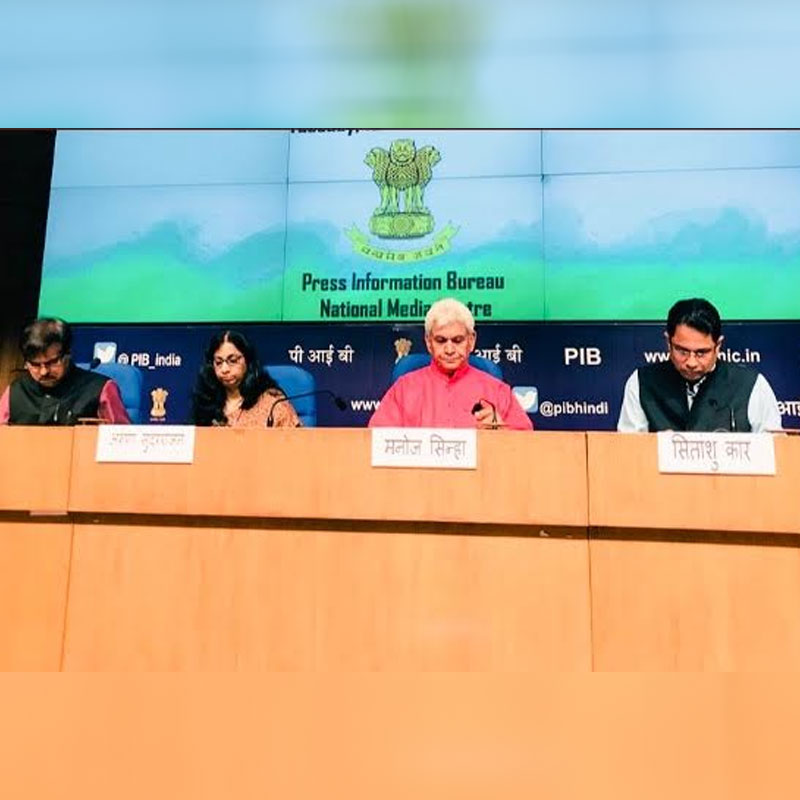
    “We are hopeful that the Cabinet approval for the National Digital Communication Policy 2018 (NDCP 2018) would come through by July-end,” Communications Minister Manoj Sinha said today while briefing the media on the government’s and his ministry’s achievements over the last four years. He added that the NDCP has some “ambitious goals”.

    The NDCP 2018 broadly envisages having more synergies amongst various ministries and other government organisations at a policy level so better coordinated moves could be made to make India’s regulations not only more contemporary, but also help in creating a business-friendly environment in an era when communications and entertainment services are showing high degree of convergence.

    The Department of Telecoms, however, in the draft NDCP 2018 put out for public comments, discarded TRAI’s suggestions to make it the converged regulator on the lines of FCC and Ofcom. The process of getting public and stakeholders’ comments on the NDCP 2018 was completed some time back and the Department of Telecoms is in the process of finalizing a draft policy for Cabinet’s direction.

    Sinha lauded his ministry’s achievements in bridging the digital divide and to a question from the media said that one of the foremost unfinished programmes is to see the full implementation of PM Modi’s dream project of Digital India.

    “Our biggest achievements in the area of telecommunications have been overcoming the pervasive trust deficit through transparent auctions of spectrum and bridging the digital divide in the country by undertaking digital infrastructure projects such as BharatNet on an unprecedented scale,” the minister tweeted after the media briefing.

    Dwelling on in-flight connectivity (IFC) and providing communications services aboard aircrafts over Indian space, Sinha said over the next one year the government could be in a position to provide IFC services. 

    Asked about government plans to rollout 5G services, the Minister informed that a panel set up in the ministry is looking into the issue and assured that India will “not miss the 5G bus” even if it had missed the 3G and 4G gravy-train.

    Also Read:

    DoT addresses broadband issues in policy out for public consultation

    Comment: India’s NTP 2018 gets digital makeover but needs complimentary policies

    TRAI stands up to DoT on use of foreign satellites for comms services on aircrafts

  • Govt assures ease in licensing norms to TV channels, satellite operators

    Govt assures ease in licensing norms to TV channels, satellite operators

    NEW DELHI: The Ministry of Communications (MoC) yesterday, while allaying concerns of the broadcast and satcom industries, assured that the government would further ease norms for doing business in India and that processes were underway for implementation soon to do away with multiple permissions for communications frequencies.

    While communications minister Manoj Sinha said that it was “time to take a fresh approach” to satcom policies, in conjunction with the department of space, the senior most official, secretary Aruna Sundararajan, stressed that soon the government would unveil a single window for frequency-related permissions.

    Speaking at an event organised by Broadband India Forum, called Satcom 2017 and themed ‘Accelerating Satellite Broadband for Inclusive Growth’, Sinha said that the role of satellites in “making available affordable broadband” had been witnessed in various parts of the world. He added it was time that the department of space takes a “fresh approach” to making use of technologies like satellites and cable-delivered broadband — which complement India’s multi-million rupees’ fibre optics network project or Bharat Net— to realse the dream of a digital India championed by PM Modi.

    Pointing out that India was on the threshold of becoming the “largest broadband economy in the world”, Sinha said, “Satellite communications has a special role to play.”

    Speaking earlier, Suderarajan echoed minister Sinha’s vision in making India truly digital and said that MoC was working with Ministry of Information and Broadcasting (MIB) and other related government organisations to create software, akin to a single-window, for various frequency-related approvals and permissions.

    “There are anomalies in frequency allocations (for TV channels and satellite ops),” MoC secretary said, adding that the ministry is in dialogue with other government agencies to remove such irritants so that the “extra burden of cost (on part of the industry players) could be done away with”.

    Both minister Sinha and Sunderarajan promised to take up with the the department of space, various concerns raised by TV channels and satellite operators, mostly foreign, relating to lengthy clearance processes, which were in sharp contrast to the PM Modi-led government’s claim of continuously easing norms for doing business.  

    “I understand that broadcasting has a problem as many agencies are involved. I can tell those present here that we are working with MIB to create a single software for approvals and permissions,” joint wireless advisor RB Prasad reiterated at another conference session, clarifying that an issue about ownership and management of the said portal is being presently discussed to close the matter.

    While stressing that proliferation of affordable broadband will empower Indians in general, which was the government’s target, the top MoC official informed that by the end of the year 100,000 gram panchayats or local village administrations will be broadband-enabled under the Bharat Net project. For the remaining of the targeted 650,000 villages, Sunderarajan said, “Satellite component will be important.”

    Meanwhile, TRAI chairman RS Sharma, speaking to reporters on the sidelines of the Satcom 2107 conference, said that while the open sky policy mandated that the service provider or anyone that wants to provide broadband will be able to contact satellite operators, there were still some “deficiencies” in the system. “That, we will need to work out,” he was quoted by PTI as saying. He, however, ruled out a separate consultation paper on the same. The new telecom policy, scheduled to be unveiled in the first quarter of 2018, will exemplify all those issues, Sharma noted.

    Also Read:

    MIB, TRAI allay industry fears on sat capacity leasing & content regulations

    TRAI sees merit in using satcom for broadband delivery

  • Communications Minister launches Twitter service for complaints

    Communications Minister launches Twitter service for complaints

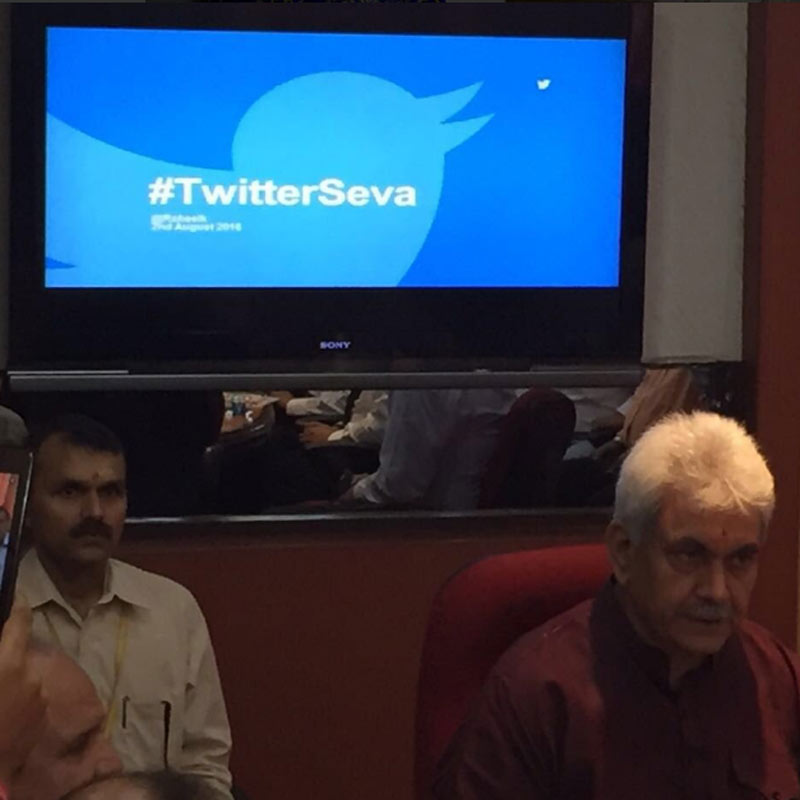
    NEW DELHI: Trying to digitally enable the common man, Ministry of Communications (MoC) today launched a “Twitter Sewa” or a Twitter-based service for addressing complaints and grievances of the common man and other stakeholders in the telecoms and postal sectors.

    The Twitter handle for this service will be Minister of Communications Manoj Sinha’s personal handle, @manojsinhabjp.

    Launching the service, Sinha said that this is in tune with Prime Minister Narendra Modi’s vision of “minimum government, maximum governance” as various ministries are connecting with Indian citizens through live communications platform to provide a transparent, responsive and accountable administration.

    The Minister said that the Telecoms Ministry and Department of Post will compile a list of complaints based on the Twitter Sewa to categorize them into immediate, mid-term and long-term complaints for redressal.

    Sinha said that the challenge is gigantic as India has the biggest postal network in the world and the number of mobile-phone subscribers had already crossed one billion in January this year. “Therefore, we are aware that complaints are going to pour in from across the country and in great numbers. But I would like to assure you that my Ministry will rise to this challenge,” he added.

    A graduate of an Indian Institute of Technology, the Minister cautioned there are chances that this Twitter service may be “misused by rogue elements” but expressed the hope that Twitter authorities will take care of such transgressions.

    Communications Secretary J.S.Deepak, Secretary Posts B.V.Sudhakar and other senior government officials were present on the occasion.

  • Communications Minister launches Twitter service for complaints

    Communications Minister launches Twitter service for complaints

    NEW DELHI: Trying to digitally enable the common man, Ministry of Communications (MoC) today launched a “Twitter Sewa” or a Twitter-based service for addressing complaints and grievances of the common man and other stakeholders in the telecoms and postal sectors.

    The Twitter handle for this service will be Minister of Communications Manoj Sinha’s personal handle, @manojsinhabjp.

    Launching the service, Sinha said that this is in tune with Prime Minister Narendra Modi’s vision of “minimum government, maximum governance” as various ministries are connecting with Indian citizens through live communications platform to provide a transparent, responsive and accountable administration.

    The Minister said that the Telecoms Ministry and Department of Post will compile a list of complaints based on the Twitter Sewa to categorize them into immediate, mid-term and long-term complaints for redressal.

    Sinha said that the challenge is gigantic as India has the biggest postal network in the world and the number of mobile-phone subscribers had already crossed one billion in January this year. “Therefore, we are aware that complaints are going to pour in from across the country and in great numbers. But I would like to assure you that my Ministry will rise to this challenge,” he added.

    A graduate of an Indian Institute of Technology, the Minister cautioned there are chances that this Twitter service may be “misused by rogue elements” but expressed the hope that Twitter authorities will take care of such transgressions.

    Communications Secretary J.S.Deepak, Secretary Posts B.V.Sudhakar and other senior government officials were present on the occasion.

  • 9 Indian companies to manufacture STBs; iCAS cost less than $0.5: Govt

    9 Indian companies to manufacture STBs; iCAS cost less than $0.5: Govt

    NEW DELHI: A total of nine private companies have been identified by India’s Department of Electronics and Information Technology (DeitY) for manufacturing indigenous set top boxes equipped with Indian Conditional Access System (iCAS).

    However, the government department could not give a time-frame as to when indigenously-manufactured STBs would be ready to address the growing demands for boxes as digital rollout inches towards the finishing line.

    Sources in DeitY said STBs with iCAS is a techno-commercial decision of the operators, but indicated it could coincide with the Phase IV deadline of Digital Addressable System in December this year.

    In the third and fourth phase of ongoing digitisation of TV services in India, industry experts estimate need for approximately 70-80 million boxes.

    DeitY, till recently part of the Communications Ministry but since then sliced away under the charge of minister Ravi Shankar Prasad, had been set up to promote e-Governance for empowering citizens, promoting inclusive and sustainable growth of the electronics, IT & ITeS industries, enhancing India’s role in Internet governance, promoting R&D and innovation and ensuring a secure cyber space.

    The companies identified so far for manufacturing iCAS STBs and with whom ByDesign India Pvt. Ltd. of Bangalore had signed Memorandums of Understanding included New Delhi-based Melbon-Millenium Technologies, Solid-KMTS Engineering Pvt. Ltd, MyBox Technologies Pvt. Ltd and C-Net Communications India Pvt. Ltd.

    The Bangalore-based companies include Smasher Communications Pvt. Ltd and Velankani Electronics Pvt. Ltd, while the others are Exza Info system from Pune, ABS Productions Pvt. Ltd. of Mumbai and Aurangabad-based Videocon.

    ByDesign India Pvt. Ltd. had been shortlisted after a tendering process for the development and implementation of iCAS in association with a government organisation, Centre for Development of Advanced Computing (C-DAC).

    The development stage of iCAS had been successfully completed as on November 14, 2015.

    As per the agreement with STB manufacturers, ByDesign will make available the developed iCAS to all domestic manufacturers or to the operators at not more than $ 0.5/license (including smart card, if required) for a period of three years.

    Government sources indicated more than 25,000 STBs with iCAS have already been deployed across the country between December 2015 and January 2016.

    DeitY has recently informed a parliamentary committee on information technology that during five months till March 2016, iCAS was presented in various national and regional level conferences/forums. The product received encouraging response both from cable and DTH operators.

    iCAS had been test deployed by 13 operators by March-end at Sandur, Challekere and Ranebennur in Karanataka; Chalisgaon and Wai in Maharashtra; Yeraguntala and Tadapatri in Andhra Pradesh; Madurai in Tamil Nadu; Durgapur in West Bengal; Hamirpur in Himachal Pradesh; Neemuch in Madhya Pradesh; Bikaner in Rajasthan

    and Haldwani in Uttarakhand.

    The Department said operators in these towns had confirmed successful deployment of iCAS.

    The installation of the system is in progress at seven more operator locations of Nevada in Bihar; Narayanpur and Leilunga in Chhattisgarh; Ganjam and Bhingarpur in Odisha; Pachora and Daund in Maharashtra.

  • 9 Indian companies to manufacture STBs; iCAS cost less than $0.5: Govt

    9 Indian companies to manufacture STBs; iCAS cost less than $0.5: Govt

    NEW DELHI: A total of nine private companies have been identified by India’s Department of Electronics and Information Technology (DeitY) for manufacturing indigenous set top boxes equipped with Indian Conditional Access System (iCAS).

    However, the government department could not give a time-frame as to when indigenously-manufactured STBs would be ready to address the growing demands for boxes as digital rollout inches towards the finishing line.

    Sources in DeitY said STBs with iCAS is a techno-commercial decision of the operators, but indicated it could coincide with the Phase IV deadline of Digital Addressable System in December this year.

    In the third and fourth phase of ongoing digitisation of TV services in India, industry experts estimate need for approximately 70-80 million boxes.

    DeitY, till recently part of the Communications Ministry but since then sliced away under the charge of minister Ravi Shankar Prasad, had been set up to promote e-Governance for empowering citizens, promoting inclusive and sustainable growth of the electronics, IT & ITeS industries, enhancing India’s role in Internet governance, promoting R&D and innovation and ensuring a secure cyber space.

    The companies identified so far for manufacturing iCAS STBs and with whom ByDesign India Pvt. Ltd. of Bangalore had signed Memorandums of Understanding included New Delhi-based Melbon-Millenium Technologies, Solid-KMTS Engineering Pvt. Ltd, MyBox Technologies Pvt. Ltd and C-Net Communications India Pvt. Ltd.

    The Bangalore-based companies include Smasher Communications Pvt. Ltd and Velankani Electronics Pvt. Ltd, while the others are Exza Info system from Pune, ABS Productions Pvt. Ltd. of Mumbai and Aurangabad-based Videocon.

    ByDesign India Pvt. Ltd. had been shortlisted after a tendering process for the development and implementation of iCAS in association with a government organisation, Centre for Development of Advanced Computing (C-DAC).

    The development stage of iCAS had been successfully completed as on November 14, 2015.

    As per the agreement with STB manufacturers, ByDesign will make available the developed iCAS to all domestic manufacturers or to the operators at not more than $ 0.5/license (including smart card, if required) for a period of three years.

    Government sources indicated more than 25,000 STBs with iCAS have already been deployed across the country between December 2015 and January 2016.

    DeitY has recently informed a parliamentary committee on information technology that during five months till March 2016, iCAS was presented in various national and regional level conferences/forums. The product received encouraging response both from cable and DTH operators.

    iCAS had been test deployed by 13 operators by March-end at Sandur, Challekere and Ranebennur in Karanataka; Chalisgaon and Wai in Maharashtra; Yeraguntala and Tadapatri in Andhra Pradesh; Madurai in Tamil Nadu; Durgapur in West Bengal; Hamirpur in Himachal Pradesh; Neemuch in Madhya Pradesh; Bikaner in Rajasthan

    and Haldwani in Uttarakhand.

    The Department said operators in these towns had confirmed successful deployment of iCAS.

    The installation of the system is in progress at seven more operator locations of Nevada in Bihar; Narayanpur and Leilunga in Chhattisgarh; Ganjam and Bhingarpur in Odisha; Pachora and Daund in Maharashtra.

  • Venkaiah Naidu gets additional charge of MIB; Manoj Sinha bags Communications portfolio

    Venkaiah Naidu gets additional charge of MIB; Manoj Sinha bags Communications portfolio

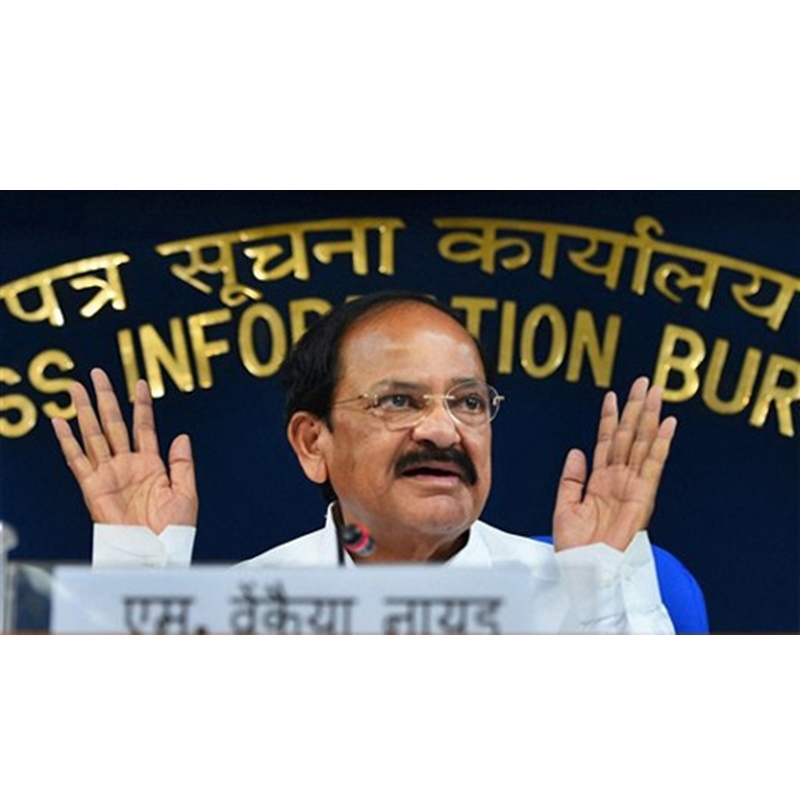
    NEW DELHI: M. Venkaiah Naidu is the new boss for India’s media and entertainment sector at Ministry of Information & Broadcasting (MIB) as the senior minister replacing Arun Jaitley who continues to be country’s finance minister.

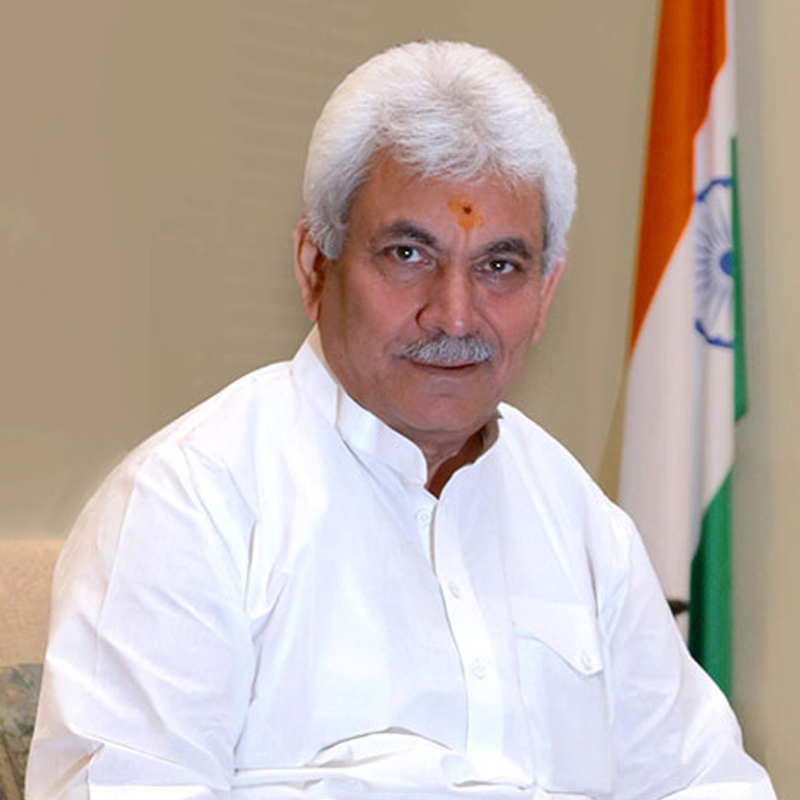
    Similarly, there’s a new Communications boss at the Capital’s Sanchar Bhawan that houses one part of the Ministry of Communications & Information Technology (MoCIT). Manoj Sinha will hold independent charge of Communications portfolio in the bifurcated MoCIT.

    Earlier MoCIT minister Ravi Shankar Prasad retains control over IT & Electronics departments in MoCIT, while being given additional charge of Ministry of Law.

    Prime Minister Narendra Modi affected a reshuffle of his Cabinet on July 5, 2016, bringing in new people as senior and junior ministers and re-jigging portfolios of some existing ministers. With the induction of the newcomers, the council of ministers has been expanded to 78 members.

    Both Naidu and Sharma, at the helm of crucial ministries, have additional responsibilities too.

    While Naidu also holds charge at Ministry of Urban Development Housing and Urban Poverty Alleviation, Sharma too is a junior minister at Ministry of Railways.

    Naidu will be accompanied at MIB by Olympics medallist-turned-politician Rajyavardhan Singh RathoreRajyavardhan Singh Rathore, who continues as the junior minister.

    It remains to be seen how quickly the new ministers grasp complex issues such as digitisation, broadcast licences, content regulations, Net Neutrality, spectrum auctioning, while keeping pace with newer technologies being embraced by India’s media & entertainment and communications sectors.

    Political observers of India’s complicated polity were divided in their opinion on whether the Cabinet reshuffle reflected talents been rewarded or people given ministerial berths with an eye on some up and coming State-level elections that are crucial for the nationalist BJP, which leads the government in New Delhi.

  • Venkaiah Naidu gets additional charge of MIB; Manoj Sinha bags Communications portfolio

    Venkaiah Naidu gets additional charge of MIB; Manoj Sinha bags Communications portfolio

    NEW DELHI: M. Venkaiah Naidu is the new boss for India’s media and entertainment sector at Ministry of Information & Broadcasting (MIB) as the senior minister replacing Arun Jaitley who continues to be country’s finance minister.

    Similarly, there’s a new Communications boss at the Capital’s Sanchar Bhawan that houses one part of the Ministry of Communications & Information Technology (MoCIT). Manoj Sinha will hold independent charge of Communications portfolio in the bifurcated MoCIT.

    Earlier MoCIT minister Ravi Shankar Prasad retains control over IT & Electronics departments in MoCIT, while being given additional charge of Ministry of Law.

    Prime Minister Narendra Modi affected a reshuffle of his Cabinet on July 5, 2016, bringing in new people as senior and junior ministers and re-jigging portfolios of some existing ministers. With the induction of the newcomers, the council of ministers has been expanded to 78 members.

    Both Naidu and Sharma, at the helm of crucial ministries, have additional responsibilities too.

    While Naidu also holds charge at Ministry of Urban Development Housing and Urban Poverty Alleviation, Sharma too is a junior minister at Ministry of Railways.

    Naidu will be accompanied at MIB by Olympics medallist-turned-politician Rajyavardhan Singh RathoreRajyavardhan Singh Rathore, who continues as the junior minister.

    It remains to be seen how quickly the new ministers grasp complex issues such as digitisation, broadcast licences, content regulations, Net Neutrality, spectrum auctioning, while keeping pace with newer technologies being embraced by India’s media & entertainment and communications sectors.

    Political observers of India’s complicated polity were divided in their opinion on whether the Cabinet reshuffle reflected talents been rewarded or people given ministerial berths with an eye on some up and coming State-level elections that are crucial for the nationalist BJP, which leads the government in New Delhi.