Tag: Ministry for Information and Broadcasting

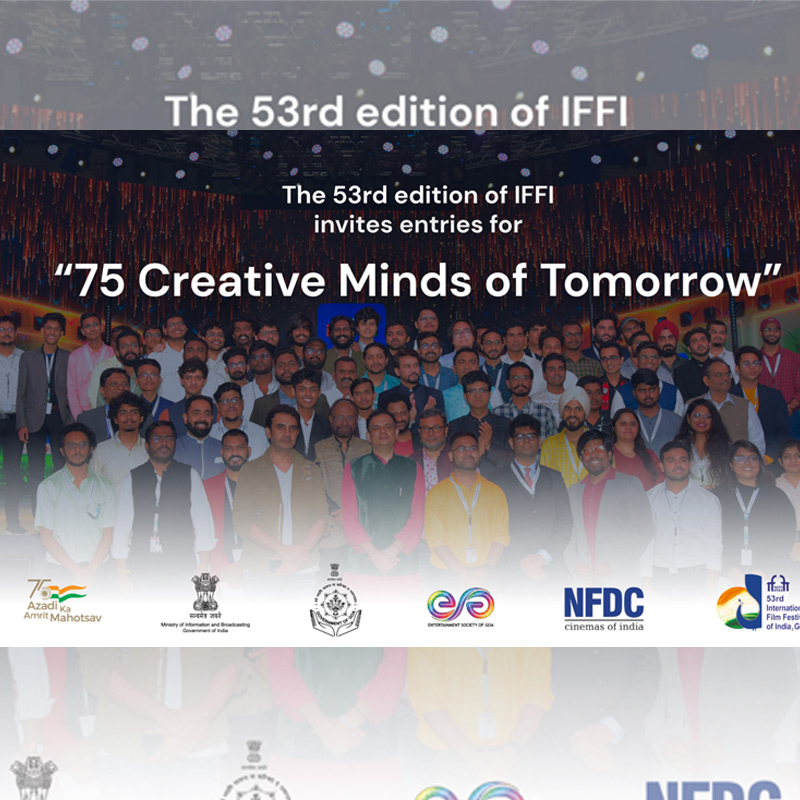
  • MIB invites entries for ‘75 Creative Minds of Tomorrow’

    MIB invites entries for ‘75 Creative Minds of Tomorrow’

    Mumbai: The ministry of information and broadcasting (MIB) has opened applications for the ’75 Creative Minds of Tomorrow’ competition. The segment is an annual platform at the International Film Festival of India in Goa for identifying, encouraging, and nurturing young creative talents from various aspects of filmmaking.

    The initiative is in its second year, having begun in 2021 to commemorate India’s 75th anniversary of independence as part of the ‘Azadi Ka Amrit Mahotsav’ celebrations.

    The number of filmmakers recognised represents the years of Indian independence. It is expected that the number of youths participating in ‘creative minds’ will increase by one in the coming years in order to keep the spirit of the endeavour alive.

    An eminent jury will shortlist and select the 75 creative minds under the auspices of the National Film Development Corporation ahead of the 53rd edition of the International Film Festival of India.

    This programme identifies young budding film makers and provides them a platform to interact and learn from national as well as international film makers during the period of IFFI Goa.

    This is a one-of-a-kind platform, with the largest gathering of young creative minds chosen through a competition at any premier film festival around the world. It was conceived in 2021 by union minister for information and broadcasting, youth affairs, and sports Anurag Singh Thakur to provide a platform and connect young talent with industry masters from the media and entertainment sectors.

    The selected ’75 Creative Minds of Tomorrow’ will also attend workshops and sessions specially curated by the masters of cinema during the festival event in Goa. Furthermore, each team will take part in a group competition to make a short film in 53 hours. The themes of the short film will be inspired by the spirit of Azadi Ka Amrit Mahotsav, in which the teams will present their vision of India@100.

    The selected creative minds will be divided into seven teams in collaboration with Shorts TV, the initiative’s programming partner. The films created by the seven teams will be screened theatrically at IFFI on 24 November followed by an award ceremony to recognise the winning film. Everyone who takes part in the competition challenge will be recognised.

    The initiative is also another step toward making India a global content and post-production hub by identifying, nurturing, and up-skilling young talent and preparing them for industry connections and readiness. The initiative is nurturing and developing an ecosystem of young filmmakers, allowing them to network and collaborate from the start.

    The ministry intends to implement productive interventions so that participants can take advantage of this opportunity for gainful employment in the media and entertainment sectors.

    The entries will be accepted from 5 September 2022 till 23 September at: https://www.iffigoa.org/creativeminds.

  • MIB admits no DTH infra sharing permission sought

    MIB admits no DTH infra sharing permission sought

    NEW DELHI: Despite the initial hype and enthusiasm over infrastructure sharing by broadcast, cable and satellite-delivered service players (such as DTH operators) and lengthy suggestions on the subject by the Telecom Regulatory Authority of India (TRAI), the government has admitted no stakeholder has evinced interest so far.

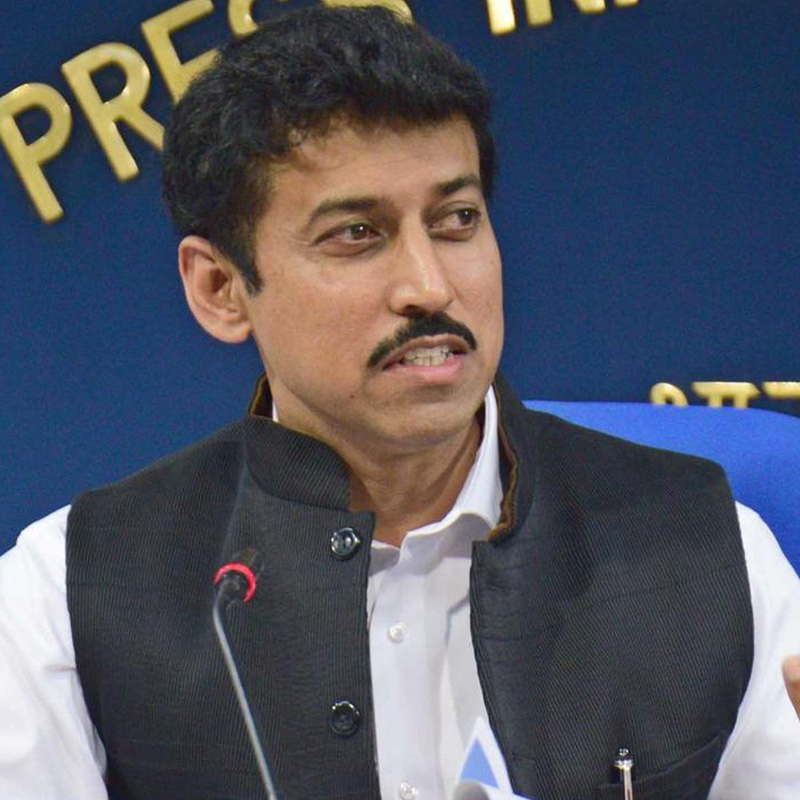
    “Ministry of Information and Broadcasting has not received any proposal from DTH operators for sharing of satellite transponders and earth station facilities with other DTH players and distribution platforms,” junior MIB minister Rajyavardhan Rathore told the Indian Parliament last week.

    Pointing out that sector regulator TRAI had made recommendations in March 2017 on infrastructure sharing by broadcast and cable sector players, the minister admitted that enabling sharing could address the issue of the demand-supply mismatch. Such a sharing could also “reduce capital and operating expenditure” of a service provider to an appreciable extent, Rathore added.

    TRAI had made suggestions on the hows and whys of infrastructure sharing, especially by DTH players, and had also exhorted the government to tweak policy guidelines to enable such sharing.

    “To enable [the] sharing of the DTH platform and transport streams transmitted on the DTH platform, the authority recommends that the guidelines for providing DTH services should be suitably amended,” TRAI had noted while making recommendations on infrastructure sharing.

    A decision to review the DTH policy guidelines is pending with the MIB with no firm decision on it being taken yet, if industry sources are to be believed, who also pointed out that the ministry may be readying files to refer the issue to the Ministry of Law and Justice for an opinion—a move that could be time consuming. The lack of a policy review has resulted in several glitches hitting DTH operators in India.

    TRAI had suggested that to ensure efficient use of scarce satellite resources, DTH operators—which have already set up earth stations and hired satellite transponder capacities, and willing to share the platform and transport stream of TV channels—should be allowed to do so with prior written intimation to the government.

    Amongst other recommendations of TRAI on sharing of infrastructure by DTH and distribution platforms, the following are noteworthy:

    — The central government should encourage sharing of infrastructure, wherever technically feasible, in TV broadcasting distribution network services on a voluntary basis.

    — To allow a new DTH operator to use the existing DTH platform and transport streams of TV channels transmitted on that platform, the conditions relating to hiring of satellite capacity and setting up of an earth station should be amended suitably.

    — A DTH operator, providing DTH services using the shared infrastructure with another DTH operator, should be allowed to establish, maintain and operate its own platform at a later date within the licence validity period if it decides so after following the due procedure.

    — An easier process should be put in place to ensure continuity of services to subscribers in the event of any disaster. One of the way in which it could be ensured is sharing of the main and the disaster recovery site in hot standby mode with the prior approval of the licensor.

    — The DTH operator, willing to share its transport stream of TV channels with another DTH operator, should ensure that the other DTH operator has valid written interconnection agreements with broadcasters concerned for distribution of pay TV channels to the subscribers.

    — On a voluntary basis, sharing of head-end used for cable TV services and transport streams transmitting signals of TV channels, among MSOs, should be permitted.

    Also Read :

    Law ministry likely to give opinion on DTH guidelines review 

    DTH’s year of consolidation