Tag: Ministry

  • MIB advises digital publishers, private channels against broadcast of online betting ads

    MIB advises digital publishers, private channels against broadcast of online betting ads

    Mumbai : The Ministry of Information and Broadcasting ( MIB) has advised digital media publishers, OTT platforms and private TV channels to refrain from broadcasting advertisements of online betting platforms and/or their surrogate news websites or any such product/service depicting these platforms in a surrogate manner. 

    The Ministry has observed that promotional content and advertisements of betting platforms are still visible on certain news platforms and OTT platforms. 

    The online advertisement intermediaries have also been advised not to target such advertisements towards the Indian audience. 

    The circular said ,”The advisory had been issued for the reason that betting and gambling is prohibited in most parts of the country, and pose significant financial and socio-economic risk for the consumers, especially youth and children. Accordingly, the promotion of offline or online betting/gambling through advertisements is not advised in larger public interest.”

    The ministry also observed that some online offshore betting platforms have started using news websites as a surrogate product to advertise betting platforms on digital media.

    “Betting and gambling is an illegal activity in most parts of India. In accordance with the Paragraph 9 of the Guidelines for Prevention of Misleading Advertisements and Endorsements for Misleading Advertisements 2022 under the Consumer Protection Act, 2019, it has been 
    observed that since betting and gambling is illegal, advertisements of online offshore betting and gambling platforms are prohibited,” the note said.

    The ministry reminded that according to the Information Technology (Intermediary Guidelines and Digital Media Ethics Code) Rules 2021,  advertisements of betting platforms, being an illegal activity, can not be shown on digital media.

    “In respect of the advertisements of the surrogate news websites operated by the online betting platforms, it may be mentioned that the logos of the concerned news websites are strikingly similar to the betting platform”, the note said.

    The concerned betting platforms and the corresponding news websites are also not registered with any legal authority under Indian laws. “Accordingly. the online offshore betting platforms appear to be promoting betting and gambling under the garb of news as surrogate advertising.”

    The Department of Consumer Affairs has also informed that online betting platforms have been advertising themselves as professional sports blogs, sports news websites, etc. while providing an indicative list of online betting platforms which are using news for surrogate advertising. 

    “The provisions of the Guidelines for Prevention of Misleading  Advertisements and Endorsements for Misleading Advertisements 2022 under the Consumer Protection Act, 2019 read with the Information Technology (Intermediary Guidelines and Digital Media Ethics Code) Rules 2021, it is informed that advertisements of concerned news websites, which are infact surrogate advertisements for online offshore betting platforms, do not appear to 
    be in strict conformity with these laws,” the ministry said.

  • Big Cabinet Reshuffle: Prakash Javadekar steps down as I&B minister

    Big Cabinet Reshuffle: Prakash Javadekar steps down as I&B minister

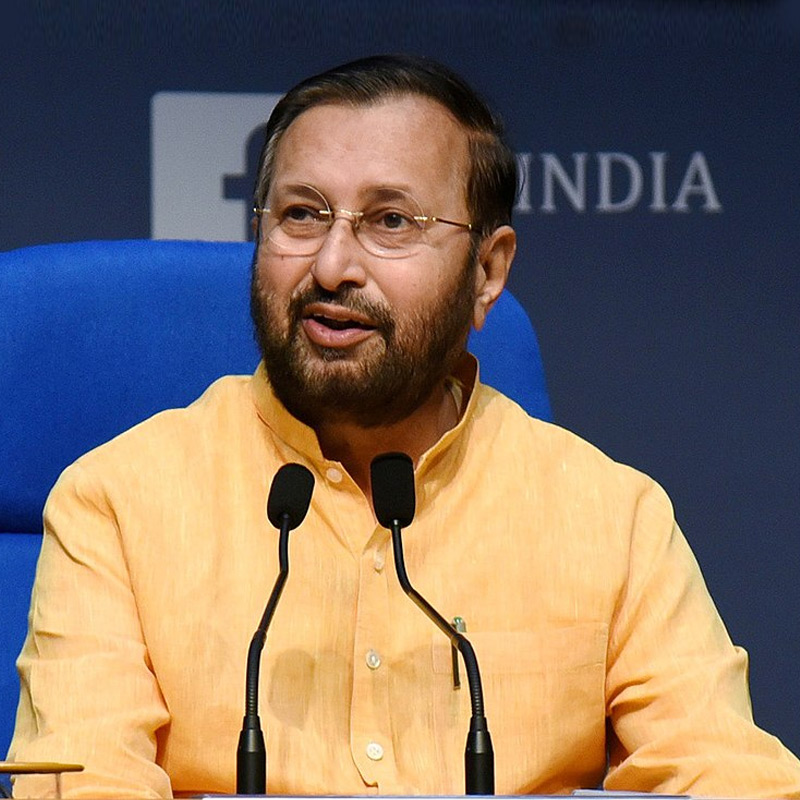
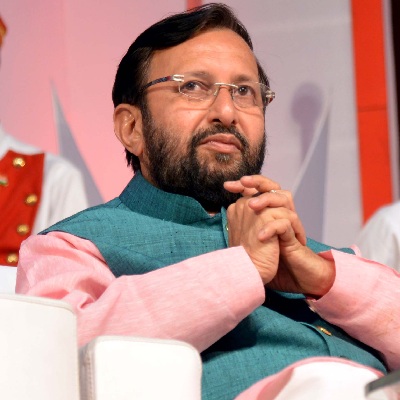
    New Delhi: Prakash Javadekar has stepped down as the union minister of information and broadcasting, here on Wednesday. The decision is part of one of the biggest cabinet reshuffles during the second term of PM Narendra Modi-led government.

    Apart from Javadekar, Ravi Shankar Prasad who held the portfolio of the ministry of electronics and information technology (meity) also submitted his resignation along with ten other ministers. The list also included the union minister of health and family welfare Harsh Vardhan. Javadekar also held charge for the ministry of environment, forest, and climate change.

    Later in the evening, as many as 43 new ministers took oath at Rashtrapati Bhawan, however, the new portfolios are yet to be announced. A total of 15 individuals were sworn in as ministers in the Union Cabinet and another 28 as ministers of state (MoS). The cabinet has now grown in strength from 54 to 78 ministers which include several new names, and representation from states like Karnataka, Rajasthan, and north-eastern states.

    There are 11 women in the new cabinet. Nisith Pramanik (35), the Lok Sabha MP from West Bengal’s Cooch Behar, is the youngest minister to be sworn in, while the oldest member in the council of ministers is 72-year-old Som Parkash. There are 78 members in the council of ministers now.

  • Comment: Is there light at the end of the tunnel for broadcasters?

    Comment: Is there light at the end of the tunnel for broadcasters?

    The period between August 2017 and September 2018 will be remembered by the Indian broadcasting sector for more reasons than one. Interestingly, the main protagonists seem to be common – Star India and the Supreme Court of India – and this combination has worked well to lay down a roadmap for the sector. Only time will tell whether it is for the good or bad!

    Before we go further, let’s fact check the status of the Indian broadcasting sector.  According to Ministry of Information & Broadcasting that as on 31 October 2018 there are 866 permitted TV channels in India.

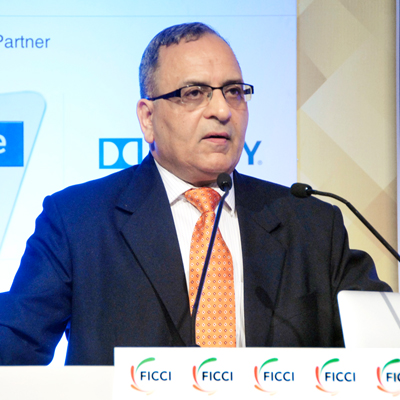
    As per FICCI-EY Report, “Re-Imagining India’s M&E Sector” the broadcasting industry “grew from Rs 594 billion to Rs 660 billion in 2017, a growth of 11.2 per cent”. This includes the advertising revenue of Rs 267 billion comprising 40 per cent of revenues and the distribution revenue of Rs 393 billion comprising 60 per cent of total revenues. The broadcasting sector generates millions of jobs directly and indirectly, contributes to economic growth with a rate almost twice the GDP and provides an immeasurable ancillary contribution by serving a platform for the growth of several other industries.

    This proves that television in India – even in the age of digital media explosion – remains a mass medium and plethora of stakeholders from content creators, broadcasters, teleport operators, satellite operators, advertisers, distributors and a larger television audience viewing audience are involved in one way or other.

    Is it time to nationalise sports?

    Let’s now examine some of the stunning reverses suffered by the broadcasters before the judiciary in this period.

    First amongst them is the judgement delivered by the Supreme Court in 2017 in the Sports Broadcasting Signals (Mandatory Sharing with Prasar Bharati) Act, 2007 which involved Star India and Prasar Bharati.

    In a long-drawn battle of more than ten years, the Supreme Court finally confirmed the Delhi High Court’s finding when it adjudicated that the original intent of the act was to achieve twin purposes of making available a live feed of a sporting event of national importance to economically weaker section of the society and consequently, the same should be made available on a free or no cost basis. 

    The Supreme Court whilst allowing the sporting events of national events to be shared mandatorily with Prasar Bharati ruled that the public broadcaster cannot utilise it on a notified channel which has to be compulsorily carried by private distribution platforms. Although the ruling of the Supreme Court was not followed by letter and spirit by Prasar Bharati, it put the onus on sports broadcasters to take legal action against erring private commercial platforms carried “live” sports feeds. Rather than encrypt Doordarshan’s feed, the Ministry ordered the distribution platform operators to run a ticker stating that “the match/game can be viewed in free-to-air mode on DD Sports Channel, on DD Free Dish and DD’s terrestrial network”. 

    Whilst the Supreme Court put away any confusion on the Sports Act and a private commercial sporting event like IPL anyway ought not to be considered as sporting events of national importance, Smriti Irani who was piloting the I&B Ministry in April 2018 had other ideas.

    During her time in Shastri Bhawan it seemed Star India was wrong when it fiercely bid to acquire long-term exclusive media rights for the Indian Premier League along with BCCI international and domestic matches for an approximate value of Rs 16,350 crore and Rs 6,150 crore respectively.

    2017 was the first year for Star India after it acquired rights for the IPL and the Ministry inexplicably made them sweat out before granting temporary live uplinking permission for live broadcast of the IPL matches on their channels till the very last moment. This was nothing else but to arm-twist Star India to share all the live matches of Indian Premier League with Doordarshan for free, even though IPL, which is a privately-owned club cricket league and can no way be considered as a sporting event of national importance.  In the end, Star India had no other option but to give something to the power that be and they gave in to share with Prasar Bharati the inaugural, the playoffs held on weekends and the last four matches of IPL, with a deferred live feed of at least 60 minutes. No surprise, Smriti Irani claimed victory for bringing IPL for the first time ever on Doordarshan.

    Not getting the “live” feed of IPL matches and unable to make legislative moves to amend the judgement of the Supreme Court as she did not find support amongst her ministerial colleagues the Irani-led Ministry issued a notice mandating all sports channels broadcasting live sports of “national importance” to display a ticker stating the same match was also available on DD’s free-to-air platform squirming sports broadcasters. Not only are the rights holders required to give live sports content free to DD as per the Sports Act, but they are also required to run a marketing campaign for Doordarshan to drive audiences away from themselves to go somewhere else to watch it!

    Now, if the broadcasters believed that the Supreme Court’s decision on the Sports Act in August 2017 had finally settled the issue, unfortunately, it was not to be. On 24 October the Ministry released a notice seeking feedback/comments on draft Sports Broadcasting Signals (Mandatory) sharing with Prasar Bharati (Amendment) Bill, 2018.  The ministry wants to amend Section 3(1) of the Sports Act to ensure mandatory sharing of the signals of such sporting events with “other networks, where it is mandatory to show the Doordarshan channels as per the Cable Television Networks (Regulation) Act, 1995”. 

    Here's a suggestion : rather than doing it in a piecemeal manner in forcing sports broadcasters to share more sporting events why doesn’t the government nationalise at one go so there is clarity on sports broadcasting?  This will also make Doordarshan the only sports broadcaster in the country and thus can ring-fence them from competition from private sports broadcasters!

    Changing landscape?

    However, the biggest one of all is the Supreme Court judgement on 30 October dismissing the plea of Star India challenging the jurisdiction of TRAI in regulating the broadcasting sector through Tariff Orders.

    The Supreme Court judgement has far-reaching consequences for the broadcast industry since it settled the long pending debate of who is the regulator of the Indian broadcasting sector.  Star India had challenged TRAI’s jurisdiction to frame the tariff order arguing that the exploitation of intellectual property (IP) rights are covered under Copyright Act.  The Supreme Court whilst refusing to entertain Star India’s challenge by 2:1 majority held that (1) the Copyright Act had nothing to do with the inter se relationship between the broadcaster and the distributor in the activity of broadcast and (2) it also does not deal with the price of a channel that an end consumer pays to the broadcaster.

    Whilst the Supreme Court empowered the end-consumer through its order but the implementation is not going to be smooth.  Although TRAI proposed to bring DTH, cable TV, HITS, IPTV operators under unified quality of service framework way back in 2015, poor implementation at the ground level means, the cable operators have still not put in place any consumer redressal mechanisms nor will they issue any bill or invoice.  Worse still, many distribution platform operators (DPOs) have not even fulfilled technical requirements under the DAS mandate or installed subscriber management systems to inform the authorities how many subscribers they service in their areas of operation even though the new tariff order is going to become effective from 1 January 2019.

    According to industry experts, although the new Tariff Order is expected to benefit the consumer as he can now pick and choose his channels rather than being saddled with hundreds of them but the cost of monthly cable bill may go up.  In other words, a new concept of ‘pay less for less, pay more for more’ is going to be a reality for Indian broadcast consumers.

    The moot question is after the Supreme Court empowering the consumer vis-à-vis broadcasters, has TRAI empowered the consumer vis-à-vis DPOs?  The quality of service (QoS) by the DPOs has always been a bone of contention because of its implementation on the ground by the licensor, MIB or its authorised officers at the district level or by the regulator, TRAI.

    Even after the implementation of the Digital Addressable System (DAS), the analogue transmission is still transmitted in many parts of the country and the cable operators have not yet fulfilled the technical requirements to meet the DAS mandates.  Even today in many parts of the country kutcha bill is the norm and no sign of any kind of customer care.  When it is brought to the notice of the policymakers they don’t want to see the reality.

    Although TRAI notified the Telecommunication (Broadcasting and Cable) Services Standards of Quality of Service and Consumer Protection (Addressable Systems) Regulations, 2017 the experience so far shows it will be a tall order to implement on the ground on issues such as establishment of customer care centre, website, consumer care channel and publication of manual of practice, etc.

    As a result, there will never be an end to the disputes amongst stakeholders which is the bane of the Indian broadcasting sector and where is the possibility of changing landscape?

  • Jaipal Reddy calls for doing away with MIB

    Jaipal Reddy calls for doing away with MIB

    MUMBAI: Junk the ministry of information and broadcasting (MIB). That’s the call that once MIB minister Jaipal Reddy – who held the portfolio during the Congress I regime in the previous decade – is giving these days. Writing a column in The Hindu last week, he said “It is important to note that no advanced democracy, be it in western Europe or in North America, has a ministry called I&B. Those democracies instead have independent commissions. In the US, for example, the Federal Communications Commission has been effective in regulating the functions of television companies for more than a half a century.”

    Reddy points out in the column that “Sardar Vallabhbhai Patel briefly handled the home ministry after India attained independence, and he also handled the MIB. He used the MIB portfolio to reach out to the people with urgent messages during the country’s formative and most difficult period.”

    He highlights that the “the political demand for conferring autonomy of DD gained volume only in the 1970s, because of which the BG Verghese Committee went into the question and submitted its recommendations. But it assumed the shape of a specific statute only in 1990 when leaders from all parties, including Rajiv Gandhi as the opposition leader, reached a consensus. It fell on me as the I&B minister in 1997 to notify the Act — the Prasar Bharati (Broadcasting Corporation of India) Act, 1990. At that time, I made a public statement that the time had come for abolishing the I&B Ministry.”

    According to Reddy, Prasar Bharati can truly enjoy independence when it is given financial independence. Says he in the column: “The BBC enjoys financial autonomy as the citizens pay fees compulsorily and directly to it. As a consequence of this freedom, the BBC sometimes takes on the British Prime Minister as well, not to speak of the government.”

    So why garbage the ministry? Reddy has his reasoning. Says he: If a minister is there for the portfolio, he/she cannot sit idle; they poke their nose into the functioning of such institutions by way of self-employment. Hence, the urgency to abolish this portfolio.”

    There’s nothing really new about his yelling about this from the rooftops – he’s done it in the past too – as he mentions in his column. He was instrumental in the drafting of the Broadcasting Regulatory Authority of India Bill in 1998. Nothing came of it then. Will someone in the Modi government listen to him this time?

  • U Sports aims to launch Indian e-sports federation

    U Sports aims to launch Indian e-sports federation

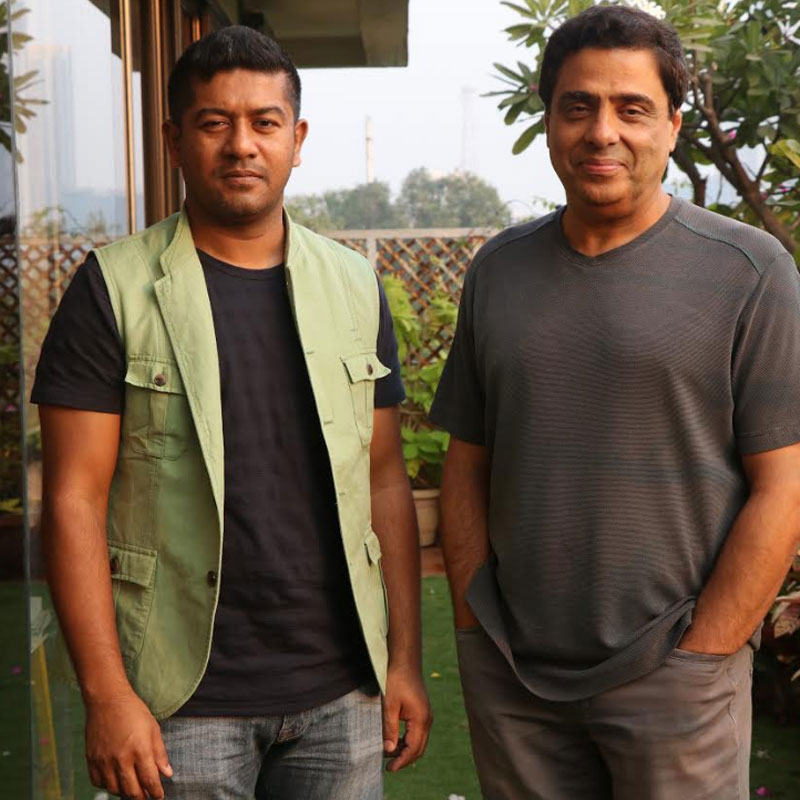
    MUMBAI: With an aim to make India a serious player globally, U Sports founder Ronnie Screwvala and its co-founder and CEO Supratik Sen are discussing with the Ministry of State, Youth Affairs and Sports India to form the official e-sports federation of the country.

    Screwvala is likely to be the president of the association. It will be the governing body for all Indian e-sports events and interact with partner nations. The aim is to encourage, organise, educate and train e-sport athletes. He says, “We believe there is tremendous talent in India. By forming an official Federation, we want to provide e-sports athletes the ratified government support they need to compete at global or international levels and to also evolve a structured and fair e-sports competition. Now international markets like the US formally  distinguishing e-sports as an official sport and granting visas for professional e-sports players, and  universities announcing athletic scholarships to e-sports players, India is not far away from recognising this sport and its players as a career option.”

    This body will represent India and promote e-sports for 206 million gamers, 10 million serious gamers and 300 million e-sports fans across the world. The ultimate aim is to create bodies at state levels to get the ambition going at the grassroot level.

    Sen added, “This sport is a global phenomenon and India is not far behind. We have the talent, and the passion and with an official body, these athletes will only get encouraged to showcase their talent. This Federation will help widen the player base and allow people to see the bigger picture of the sport.”

    E-sports is officially announced as an exhibition sport in the 2018 Asian Games and is listed in the 2022 Asian Games in China.

    Also Read:

    U Sports launches India’s first ever Multi-Platform Multi-Game E-Sports Championship – U Cypher with MTV

    U Cypher begins new innings for e-sports in India

  • MIB categorises all non-Hindi and non-Eng TV channels as regional

    MIB categorises all non-Hindi and non-Eng TV channels as regional

    MUMBAI: In its latest order, the Ministry of Information and Broadcasting (MIB) has sought to clear some of the confusion around its recent order on processing fees that broadcasters will have to bear in the event of a change in satellite or channel name, among other things.

    In an order released today, the ministry has sought to define what a regional channel is. According to it, any channel which is not in Hindi or English will be considered as being regional in nature. Moreover, spiritual and yoga channels will fall under the purview of this definition when it comes to calculating fees that they have to pay the MIB.

    On 13th December, the MIB had issued an order that sharply increased the processing fee for TV channels in supersession of an order dated 1 January 2009. Under the revision, national channels will now have to cough up Rs 100,000 while regional ones will shell out Rs 50,000 as processing fee for any change, including change of satellite, channel name/logo, language of channel, category of channel, mode of transmission, teleport, teleport location, and category of channel from general entertainment channel to news channel for temporary uplinking of a live event.

    The order had introduced two new categories for channels—regional and national—which had caused confusion in broadcasters’ minds. According to the television uplinking and downlinking guidelines, there are only two categories of channels—news and current affairs and non-news and current affairs channels.

    While the order has clarified what a regional channel is, the definition of a national channel remains to be seen. Until today, there was no clarification on which channels will be treated as regional.

    Also Read: Trai paper seeks to streamline uplinking, downlinking norms

    MIB bumps up TV channel processing fee

  • MIB bumps up TV channel processing fee

    MIB bumps up TV channel processing fee

    MUMBAI: The ministry of information and broadcasting (MIB) has sharply increased the processing fee for TV channels in supersession of an order dated 1 January 2009. Now, national channels will have to cough up Rs 100,000, while regional ones will shell out Rs 50,000.

    This fee will apply to broadcaster companies for any alteration, including change of satellite, channel name/logo, language of channel, category of channel, mode of transmission, teleport, teleport location and category change from general entertainment channel to news channel for temporary uplinking of a live event.

    Additionally, the same amount will be levied on a per-day basis in case of temporary uplinking of a live event. This order will come in force with immediate effect.

    The move is in sharp contrast to the government’s stated objective of improving the ease of doing business in the country bereft of complicated documentation.

    Also Read:

    Govt assures ease in licensing norms to TV channels, satellite operators

  • I&B tightens up on condom ads on TV

    I&B tightens up on condom ads on TV

    MUMBAI: Condom ads are off prime time television. The latest advisory from the information and broadcasting (I&B) ministry has asked broadcasters to keep them out of the purview of children and only telecast them between 10 pm and 6 am.

    The ministry said that it had taken note of objections regarding condom ads – which are “targeted at a particular age group” – being aired on some channels that are considered as ‘indecent especially for children.’ It used Rule 7 (7) and Rule 7 (8) of the Cable TV Networks Rules, 1994 to tell broadcasters to refrain from telecasting ads of condoms that could be considered inappropriate/indecent for viewing by children.

    Channels may air the ads at night from 10 pm to 6 am—a time when Indian kids are possibly asleep—and abide by the rules.

    Rule 7 (7) says that ‘no advertisement that endangers the safety of children or create in them any interest in unhealthy practices or shows them begging or in an undignified or indecent manner shall not be carried in the cable service.’ Rule 7 (8) says ‘indecent, vulgar, suggestive, repulsive or offensive themes or treatment shall be avoided in all advertisements.’

    The Advertising Standards Council of India (ASCI) had approached the ministry for guidance after several people complained regarding the inappropriate nature of condom ads being telecast during primetime viewing on most television channels.

    Recently, Mankind Pharma had been pushing the creative boundaries and had featured former porn-turned-Bollywood star Sunny Leone in a series of TVCs in which she cavorted around in a sensual and alluring way that could be argued as being in the zone of titillation. The company had earlier run into a spot when one of its ads had offended local groups in the western Indian state of Gujarat and it had to pull the hoardings off.

  • Govt wants all ministry ads in Hindi too

    MUMBAI: Advertisements released by ministries/ departments/ offices and enterprises in English/ regional Languages shall be released compulsorily in Hindi.

    Replying to a question in the Parliament, the minister of information and broadcasting Smriti Zubin Irani said it was the view of the government of India, ministry of home affairs, department of official languages OM No. 20012/1/2017- dated 30.6.2017 which conveys the order of the president of India about the advertisements.

    She was replying to B. Vinod Kumar as to whether the government has asked all ministries and departments to have a Hindi version of every advertisement that they release.

    An earlier separate report stated that a video contest for consumer awareness of the ‘Jaago Grahak Jaago’ multimedia campaign has been announced by the department of consumer affairs to create awareness amongst consumers about their rights and redressal mechanisms available to them as well as their duties. The participants are required to upload video clips of not more than two minutes duration on the theme “Consumer Awareness.” The language of the video clip would be either Hindi or English.

    Also, another unrelated report stated that the rate of ten-second advertisements on All India Radio for the prime minister Narendra Modi’s ‘Mann ki Baat’ was Rs 2,00,000, the Parliament has been told. This rate is for advertisement booking of AIR consisting of 200 primary channels/local radio stations, 41 Vividh Bharati stations and 30 FM Rainbow and gold channels.

  • Ministry using TV & social media for updating farmers

    NEW DELHI: The ministry of agriculture is using modern technology in a major way through its mass media scheme to educate farmers through use of print, electronic media such as radio, TV and social media platforms apart from display of exhibits for know-how on new tools and technology, creating awareness about schemes, programmes activities being implemented for benefiting and helping farmers.

    Minister of state for agriculture & farmers welfare Parshottam Rupala told the Parliament that the department of agriculture, cooperation and farmers’ welfare (DAC&FW) has taken up several initiatives in the field of agricultural extension which includes ‘Support to State Extension Programmes for Extension Reforms’ which is popularly known as ATMA Scheme, Mass Media Support to Agricultural Extension and Kisan Call Centres.

    The key objectives of ATMA scheme include setting up of autonomous institutions at the State/District/Block level, encouraging multi-agency and broad-based extension strategies adopting group approach to extension and facilitating convergence of programmes in planning, executing and implementation.

    The Kisan Suvidha Mobile App has been launched by the Government to provide information to the farmers on Weather report, Plant Protection, Input Dealers, Agro-Advisory and Marketing.

    Besides this, the Pusa Krishi Mobile App, Agri-Market App and Crop Insurance Mobile App have also been launched for the benefit of farmers.