Tag: Minister

  • Co-production Treaty to take India-Italy cooperation to a new level: Minister, MIB

    Co-production Treaty to take India-Italy cooperation to a new level: Minister, MIB

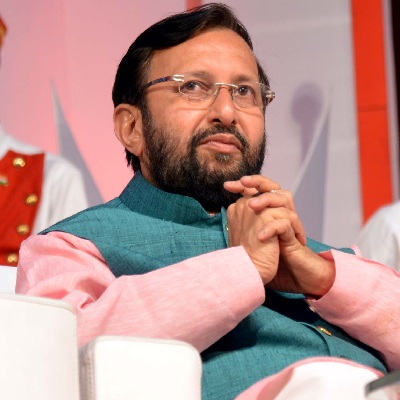
    Mr Prakash Javadekar, Minister for Information and Broadcasting, Government of India, on Monday said that the Venice Film festival has stood as a symbol of recognition of cinematic excellence at an international platform. “Participation of India in Venice Film Festival 2020 as a focus country has brought India and Italy closer by opening immense possibilities of co-production in film making and further bolstering the historical ties the two cultural superpowers have enjoyed for centuries,” he said. 

    In his address at the Venice Film Festival 2020, where India is the focus country this year, Mr Javadekar said, “It is with great pleasure, I announce that India and Italy have agreed on the Rules of Procedure for Co-production Treaty and it is hoped that it will take our joint collaboration to a new level.”  

    The Minister stressed that “Cinema not only showcases cultural mores but also brings countries closer.” Mr Javadekar said that cinema is a soft power that helps to forge international ties. Inviting Italian filmmakers for filming in India, he said, “Filming in India is an experience by itself and I invite everybody to come and shoot and to do pre-production as we have experienced crew members and facilities and very scenic spots. This year we are participating in the Venice Film market to showcase what India has to offer.” 

    This year two Indian feature films and one short film are being screened at the Venice Film Festival. India is also screening a film as market screening in Venice Production Bridge named ‘In the land of Poisoned Woman’ by Manu Bohra.   

    Speaking at the event, Mr Manlio Di Stefano, Undersecretary of State for Foreign Affairs and International Cooperation, Italian Government, said, “The relationship of India and Italy in film production is in line with the great work the two countries are doing to strengthen the bilateral collaboration, which is very advantageous for Italy given that India is a cultural giant, which is a great resource for other countries that can go beyond commercial exchanges.” 

    Acknowledging the growing Indian film market with one of the largest cinema industries in the world, Mr Di Stefano said, “India will be one of the most important global powers in 10 years from now despite the difficulties posed by COVID.” He added that India and Italy share a strong bilateral relationship marked by several meetings that have “widened our collaboration in many fields”, including culture and cinema. 

    “We have two major pillars on which we would like to develop our collaboration- Co-productions and shooting locations” to develop products for both Indian and Italian people as “it is not easy to define identity in cinema,” Mr Di Stefano said. He also added that “we should aim at productions that can tell about a territory through a story and not through documentaries that how good we are here in Italy”. 

    Italy, Mr Di Stefano said, has “included India among our target countries both for productions and to attract tourists. So, India is at the centre of our campaign one of which is ‘Living in Italian Style’”.  He also added that Italy has an integrated package for coproduction, and funds (more than 60 million Euros) are made available by Italy’s Ministry of Foreign Affairs to its embassies across the world in order to promote sectors like cinema.  

    Addressing the film festival via video conferencing, H.E. Vincenzo De Luca, the Ambassador of Italy to India said Italy participated at FIICI Frames 2020 as a virtual partner and “we presented the possibilities of co-productions in Italy and India”. He added that “today we can take a further step forward by creating a partnership that is not limited to isolated events, but which creates a permanent collaboration between Italian and Indian cinema”. 

    Citing historical relationships when noted filmmaker Satyajit Ray won a Golden Lion award in 1957 and the movie ‘Monsoon Wedding’ in 2001, he said that we should let the new Indian cinema be known in Italy. “Starting with FICCI Frames in June this year, we have to build a common partnership, a long-lasting partnership to exchange productions,” the Ambassador added.  

    Ms TCA Kalyani, Joint Secretary (Films), Ministry of Information & Broadcasting, Government of India & MD, NFDC, said, "The rules of procedures that we were to announce at FICCI Frames have finally been made," which will give incentives to filmmakers choosing to shoot in India, she said. She also added that India will soon be announcing the rules of procedures for champion sectors and "we have also announced the SOPs and guidelines for filming in India". 

    Ms Kalyani also said that Media and Entertainment is a sunrise sector in India. She invited the overseas filmmakers to come and shoot in India "once the aviation restrictions are lifted".

    Mr Dilip Chenoy, Secretary General, FICCI, said, "Italy participated in the 21st edition of the FICCI Frames this year as a partner country and I was truly amazed by their content and production capabilities, which I am sure enabled many Indian filmmakers and people in India to realize and see at first hand the opportunity that Italy presents and the possibilities of collaboration between India and Italy.”

    He further added that FICCI is delighted to partner with ANICA and the Embassy of Italy in India to organize a session focusing on India at Venice Film Festival. "This is the first time that such a platform has been set at the prestigious Venice Film Festival to discuss and promote relations between India and Italy in the area of filmmaking which needs to be continued in the future. This platform has provided an opportunity for India to connect with a global audience and reach out for further film production partnerships." 

    A session on ‘Challenges and Opportunities between India and Italy in Fi­lm Making was moderated by Mr Bobby Bedy, Filmmaker and Managing Director, Kaleidoscope Entertainment. The participants in this session included Ms TCA Kalyani, Joint Secretary (Films), Ministry of Information & Broadcasting, Government of India & MD, NFDC (TBC); Mr Ritesh Batra, Indian Filmmaker; Mr Goutam Ghose, Indian Filmmaker; Sergio Scapagnini, Italian Filmmaker; and Mr Ashish Pherwani, Partner, Media & Entertainment, EY. 

    The panel discussed various emerging trends in the Indian Media and Entertainment sector and the opportunities and challenges for cinema in the post-COVID-19 world, including SOPs that have been put in place to start film productions after a gap of several months.   

  • Union Budget 2018:  Populist budget fails to excite industry at large

    Union Budget 2018: Populist budget fails to excite industry at large

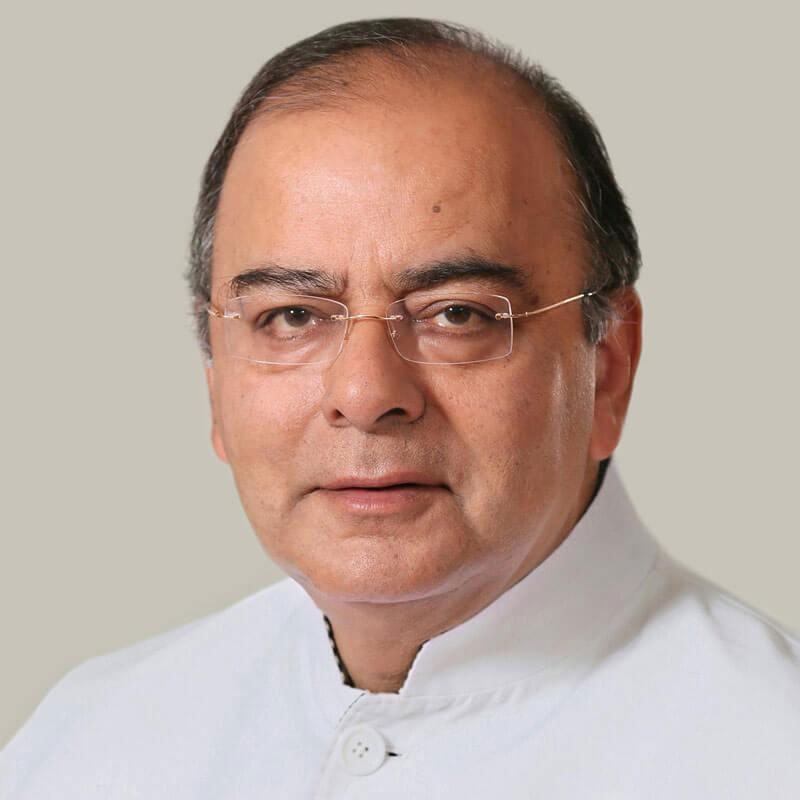
    MUMBAI: The Union Budget finally arrived today with all eyes fixated on Finance Minister Arun Jaitley. He presented his fifth Union Budget, which was also the last one for the Modi government before India sets out to choose its new prime minister next year. Riding on optimism, different research firms, news broadcasters and media companies kept speculating for about a month on what exactly should this year’s budget hold for India.

    While the Union Budget 2018 was essentially a populist budget as Lok Sabha elections are due next year, it turned out to be a rather disappointing one for the advertising and media industry but it was a big thumbs up for Digital India and digitisation. The budget focused on the middle class and rural population, guided by the mission to strengthen India’s agriculture, rural development, health, education, employment, MSME and infrastructure sectors.

    With a view to promote digitisation, the government is set to make the necessary investment in robotics, internet of things (IoT), artificial intelligence (AI), digital manufacturing and big data analysis with the NITI Aayog to establish a national programme to direct efforts in artificial intelligence. The government has committed itself to the development of technology along with concentrating on AI and its applications, a revolutionary move for the digital industry. The ministry has decided to double its Digital India budget to around Rs 3000 crore.

    The ministry has also proposed to set up 5 lakh Wi-Fi hotspots to give access to 5 crore rural citizens, which means digital and internet penetration into smaller pockets of the country will result in increased data consumption across India. The move will help brands, agencies and OTT players to create target content for such markets.

    In a move to regulate the cryptocurrency market in India, Jaitley said that the government would take essential measures to eliminate the use of crypto assets in financing illegitimate activities. He, however, maintained that the Indian government will explore the use of block chain technology proactively to usher in the digital ecosystem.

    Jaitley also announced the allocation of Rs 10,000 crore for creation and augmentation of telecom infrastructure. He also noted that micro, small and medium enterprises (MSME) are a major element for growth and mass formalisation of the MSME sector is slated to happen after demonetisation and GST, which took place in 2016-17.

    In what turned out to be the world’s largest government-funded healthcare programme, Indian ministry will launch health scheme to cover 10 crore poor families. The flagship national healthcare protection scheme of the government will provide upto Rs 5 lakh per family per year for secondary and tertiary care hospitalisation of members.

    The television and handset companies did receive a blow as mobile phones are now set to become costlier as the custom duty on them has been increased to 20 per cent. The move comes with an aim to promote the government’s ‘Make in India’ initiative.

    Customs duty on crude edible vegetable oils such as groundnut oil, safflower seed oil has been hiked from 12.5 per cent to 30 per cent while on refined edible vegetable oil it has been hiked from 20 per cent to 35 per cent. Customs duty on imitation jewellery’s been increased from 5 per cent to 15 per cent in 2016 to 20 per cent now with duty on sunglasses, cigarette lighter, toys, bus and truck tyres, select furniture also seeing a similar hike. The import duty on smart watches, wearable devices, footwear has now been doubled to 20 per cent whereas the duty on LCD/LED/OLED panels has been hiked to 15 per cent. The import of solar-tempered glass for manufacture of solar cells will be exempted from customs duty.

    While the health and education cess has been increased to 4 per cent, the aam aadmi who was positive about having to pay less tax will be disappointed as the government did not propose any change in the tax slabs for the salaried class this year.

    Also Read:

    Industry holds bright outlook for budget 2018

    Union Budget 2018: Industry expects govt to favour consumption

    Is India ready for the impact of AI on marketing?

    A year after demonetisation: E-payment services emerged winners 

  • DTH-aiding GSAT-19 launch plan under way

    DTH-aiding GSAT-19 launch plan under way

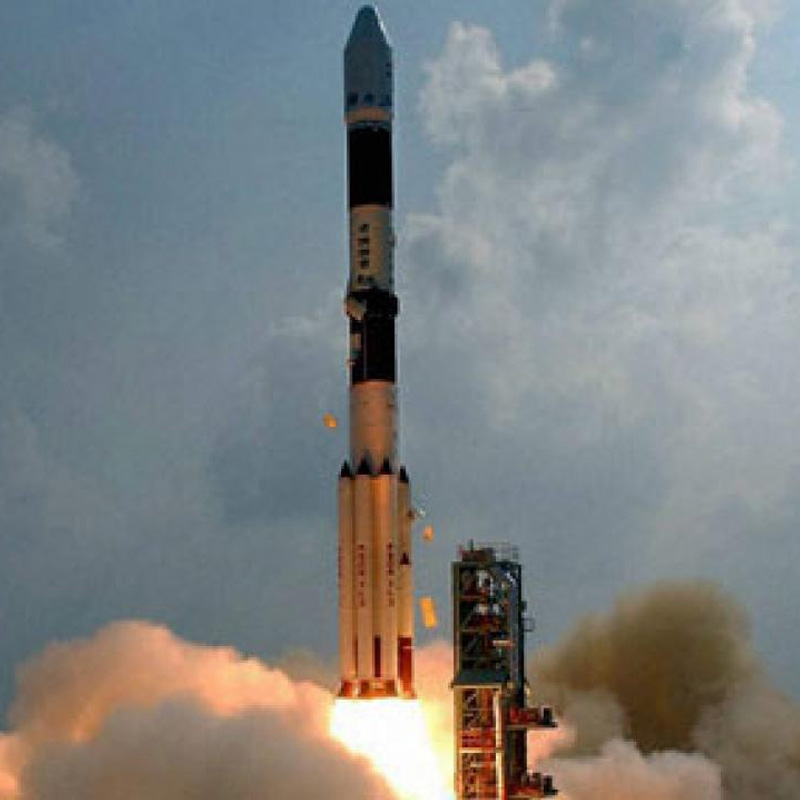
    NEW DELHI: The Indian Space Research Organisation is working towards putting into orbit an indigenous communication satellite GSAT-19, weighing 3.3 tonne and carrying Ka/Ku band payloads. Ku Band is suitable for direct-to-home platforms.

    The satellite assembly is in an advanced stage, the space minister Jitendra Singh told the Rajya Sabha yesterday.

    Meanwhile, the launch campaign for the first developmental flight of GSLV Mk-III commenced on 29 September 2016 at Satish Dhawan Space Centre (SDSC), Sriharikota.

    ISRO is working towards increasing the payload capacity of GSLV Mk-III beyond four tonnes in the coming years. The strategies identified to achieve the increased payload capacity include performance improvement of propulsion systems, inert mass optimisation and miniaturisation of avionics system.

    The Chandrayaan-2, comprising Orbiter, Lander and Rover, with a total payload mass of 3250 kg is planned to be launched on board GSLV Mk-II during the first quarter of 2018.

    Also read:

    http://www.indiantelevision.com/satellites/satellite-launches/isro-to-launch-83-satellites-on-single-rocket-create-world-record-161029

    http://www.indiantelevision.com/satellites/satellite-launches/gsat-18-successfully-launches-new-capacity-for-dth-operators-tv-channels-161006

  • DTH-aiding GSAT-19 launch plan under way

    DTH-aiding GSAT-19 launch plan under way

    NEW DELHI: The Indian Space Research Organisation is working towards putting into orbit an indigenous communication satellite GSAT-19, weighing 3.3 tonne and carrying Ka/Ku band payloads. Ku Band is suitable for direct-to-home platforms.

    The satellite assembly is in an advanced stage, the space minister Jitendra Singh told the Rajya Sabha yesterday.

    Meanwhile, the launch campaign for the first developmental flight of GSLV Mk-III commenced on 29 September 2016 at Satish Dhawan Space Centre (SDSC), Sriharikota.

    ISRO is working towards increasing the payload capacity of GSLV Mk-III beyond four tonnes in the coming years. The strategies identified to achieve the increased payload capacity include performance improvement of propulsion systems, inert mass optimisation and miniaturisation of avionics system.

    The Chandrayaan-2, comprising Orbiter, Lander and Rover, with a total payload mass of 3250 kg is planned to be launched on board GSLV Mk-II during the first quarter of 2018.

    Also read:

    http://www.indiantelevision.com/satellites/satellite-launches/isro-to-launch-83-satellites-on-single-rocket-create-world-record-161029

    http://www.indiantelevision.com/satellites/satellite-launches/gsat-18-successfully-launches-new-capacity-for-dth-operators-tv-channels-161006

  • Swachh Bharat Week: Sachin, Amitabh lead promotional videos

    Swachh Bharat Week: Sachin, Amitabh lead promotional videos

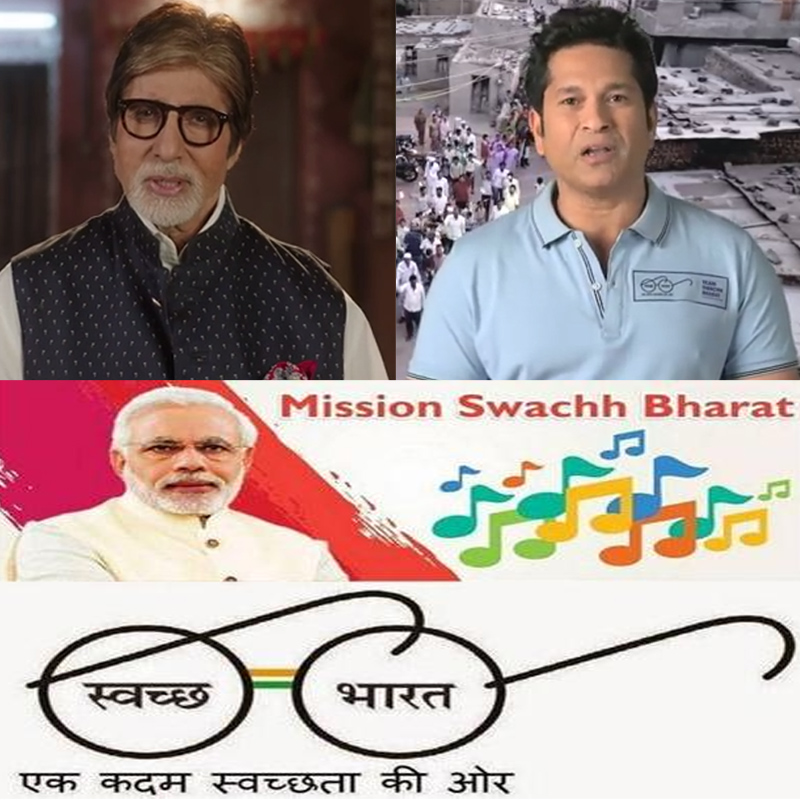
    NEW DELHI: A series of promotional videos promoting the idea of constructing toilets in every household in the country was released by the prime minister Narendra Modi. The government is celebrating the Swachh Bharat Week, from September 25- October 2.

    While the movement through promotions is led by the renowned cricketer Sachin Tendulkar, the first message on video has been given by the megastar Amitabh Bachchan. The advertisement campaign has been launched by the ministry of drinking water and sanitation.

    The Big B points out that over 70,000 households have already adopted the idea of constructing a toilet in their homes, and thereafter he encourages all villages to follow suit.

    There are more than one video with Sachin Tendulkar, and various social workers who are actively involved in this task. In fact, Modi, in a tweet, lauded Tendulkar for his involvement in this task to make India defecation-free and for his ‘wise words’.

    Narendra Singh Tomar, minister of rural development, drinking water & sanitation and panchayati raj, said that the ministry has galvanised its BCC (Behaviour Change Communication) and IEC (Information Education Communication) mechanisms to make the advertisements more people-centric. He stressed that it was necessary because IEC/BCC were core interventions for behaviour change and citizen engagement.

    Swachh Bharat Mission – Amitabh Bachchan

  • Swachh Bharat Week: Sachin, Amitabh lead promotional videos

    Swachh Bharat Week: Sachin, Amitabh lead promotional videos

    NEW DELHI: A series of promotional videos promoting the idea of constructing toilets in every household in the country was released by the prime minister Narendra Modi. The government is celebrating the Swachh Bharat Week, from September 25- October 2.

    While the movement through promotions is led by the renowned cricketer Sachin Tendulkar, the first message on video has been given by the megastar Amitabh Bachchan. The advertisement campaign has been launched by the ministry of drinking water and sanitation.

    The Big B points out that over 70,000 households have already adopted the idea of constructing a toilet in their homes, and thereafter he encourages all villages to follow suit.

    There are more than one video with Sachin Tendulkar, and various social workers who are actively involved in this task. In fact, Modi, in a tweet, lauded Tendulkar for his involvement in this task to make India defecation-free and for his ‘wise words’.

    Narendra Singh Tomar, minister of rural development, drinking water & sanitation and panchayati raj, said that the ministry has galvanised its BCC (Behaviour Change Communication) and IEC (Information Education Communication) mechanisms to make the advertisements more people-centric. He stressed that it was necessary because IEC/BCC were core interventions for behaviour change and citizen engagement.

    Swachh Bharat Mission – Amitabh Bachchan

  • Eleven categories of Prasar Bharati employees in employment in February 1999 got upgraded payscales: Rathore

    Eleven categories of Prasar Bharati employees in employment in February 1999 got upgraded payscales: Rathore

    NEW DELHI: The Government had granted upgraded pay scales to 11 categories of the then existing employees of Prasar Bharati pertaining to Engineering and Programme Cadres on 25 February 1999.

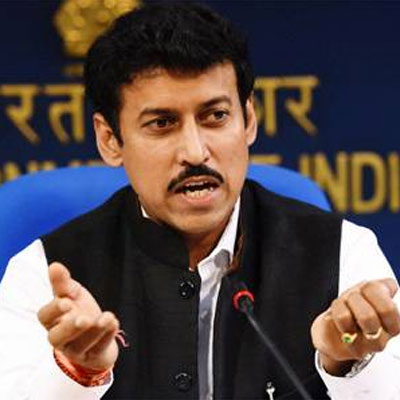
    Minister of State for Information and Broadcastng Rajyavardhan Rathore told Parliament that Prasar Bharati has granted upgraded pay scales to 484 employees of subordinate Engineering and Programme cadres who had joined Prasar Bharati after 25 February 1999 following Court orders.

    Answerng a question, he said the decision on the proposal received from Directorate General of All India Radio has been linked to the Speaking Order dated 9 December 2014, issued by the Ministry towards implementation of an Order dated 10 November 2014 of the Central Administrative Tribunal (CAT), Ernakulam Bench, in a Contempt Petition filed by Federation of Doordarshan Core Professionals (FDCP) who were seeking upgraded pay scales as were granted to 11 categories of employees vide order dated 25 February1999.

    But he said the matter was sub judice as the order of 9 December 2014 had been challenged by the employees associated with FDCP in a fresh OA before the Central Administrative Tribunal, Ernakulam Bench.

  • Eleven categories of Prasar Bharati employees in employment in February 1999 got upgraded payscales: Rathore

    Eleven categories of Prasar Bharati employees in employment in February 1999 got upgraded payscales: Rathore

    NEW DELHI: The Government had granted upgraded pay scales to 11 categories of the then existing employees of Prasar Bharati pertaining to Engineering and Programme Cadres on 25 February 1999.

    Minister of State for Information and Broadcastng Rajyavardhan Rathore told Parliament that Prasar Bharati has granted upgraded pay scales to 484 employees of subordinate Engineering and Programme cadres who had joined Prasar Bharati after 25 February 1999 following Court orders.

    Answerng a question, he said the decision on the proposal received from Directorate General of All India Radio has been linked to the Speaking Order dated 9 December 2014, issued by the Ministry towards implementation of an Order dated 10 November 2014 of the Central Administrative Tribunal (CAT), Ernakulam Bench, in a Contempt Petition filed by Federation of Doordarshan Core Professionals (FDCP) who were seeking upgraded pay scales as were granted to 11 categories of employees vide order dated 25 February1999.

    But he said the matter was sub judice as the order of 9 December 2014 had been challenged by the employees associated with FDCP in a fresh OA before the Central Administrative Tribunal, Ernakulam Bench.

  • Government plans to increase funds for M&E industry: CII

    Government plans to increase funds for M&E industry: CII

    MUMBAI: Minister of State for Information & Broadcasting (I&B) Rajyavardhan Singh Rathore assured the media and entertainment (M&E) industry that the government policies would be supportive and calibrated to enhance the modernisation and monetisation of the sector.


    Addressing the fourth edition of the CII Big Picture Summit 2015 in New Delhi, Rathore said, “In phase II of the auction of the frequencies for the radio, there was no provision for broadcasting news. This was changed during the phase III auction, when private radio was allowed to broadcast the news of the All India Radio (AIR) for a specified time.”


    Rathore mentioned that a lot of initiatives were being taken by the government to support the M&E industry in the country, such as channelising more advertisements to the digital media like YouTube, outsourcing some of the creative works of Doordarshan and AIR to the industry. More such steps would be taken in due course.


    In this regard, plans are underway to revamp the terrestrial broadcast of DD to couple it with internet and DTH so that there would be opportunities for making local programs based on events happening in smaller towns and rural areas. This would also give a boost to creation of contents, which have local flavour and relevance. 


    Acknowledging the industry demand that the monetisation of the M&E segment had not kept pace with the requirements, Rathore disclosed that the government had proposed to set up a university to develop soft skills needed for the industry.


    This university would specialise in providing skills to students in areas like gaming, animation and other avenues of creative pursuits relevant to the industry. He wanted industry to take a lead in this endeavour and create centers of excellence, which would enable the M&E industry to reach $100 billion by 2025. He also said that industry support was imperative to improve the content and appeal of the programs and for training media professionals.


    Responding to a suggestion made by the industry to bring down high incidence of tax levied on the M&E industry, the Minister said that the Good and Services Tax (GST), which the Government wanted to enact would have subsumed various taxes incidental on the industry. He hoped that the bill would be passed soon in the interest of the nation.


    Rathore observed that the Government was keen to create a single window clearance for shooting films in India, which could enhance the monetisation and profitability of the industry. He wanted CII to come out with a plan for creating a dynamic eco system for the film industry to flourish. At the same time, he said that inadequate number of cinema halls in India as compared to countries like the US and China could be more to do with real estate prices.


    Ministry of I&B special secretary J S Mathur said, “The process of digitisation in the M&E sector was at a higher pace and would show results in the coming years. He was of the opinion that smart phones, which could carry large quantum of data including films, news bulletins etc. would redefine the digital space in India.”


    He also mentioned that the Government was in the process of finalising the draft of the Intellectual Property Rights (IPR), which would enable more and more people to invest in India in various segments like content creation, production, animation, and gaming. 


    Prasar Bharati CEO Jawhar Sircar opined that a consortium approach should be followed by the industry and the Government to promote the convergence in the M&E industry to realise its potentials. He suggested that a shared approach should be there among the players to make use of the vast infrastructure of the government through innovative schemes that would put to use smart phones as carriers of innovative contents.


    CII National Committee on Media and Entertainment and Group CEO, Viacom 18 Group CEO and CII National Committee on Media and Entertainment chairman Sudhanshu Vats pitched for easing of doing business and greater application of convergence of technology to tap the potentials of the industry. Monetisation of the industry can be enhanced through proper government support to the industry.


    Narrating the problems being faced by the M&E sector, Star India COO Sanjay Gupta said that bandwidth problems, high cost, high taxes etc were adversely affecting the growth of M&E industry. He wanted a supportive policy regime to help the industry reach $100 billion mark by 2025.

  • STBs considered as telecom equipment to encourage indigenous production: Javadekar

    STBs considered as telecom equipment to encourage indigenous production: Javadekar

    NEW DELHI: The Department of Telecommunications (DoT) has issued orders confirming that set top boxes (STBs) are part of telecommunication equipments. This has been done to promote indigenous production of STBs.

    Information and Broadcasting Minister Prakash Javadekar today informed the Lok Sabha that this was done after his ministry along with other ministries took up the constraints of Indian manufacturers in the production of indigenous STBs, in view of the fact that an estimated 110 million STBs would be required for the third and fourth phase of digital access system (DAS).


    While the earlier government had introduced digitisation in the country, it failed to chalk out a clear path for it, especially for boosting indigenous production of STBs. The new government had assured all the players that it would look at every sector’s problems and work on them. This thrust to indigenous STB makers seems to be a step forward in that direction.


    Javadekar also said that a task force has been set up to finalise the modalities and study the implementation of the last two phases of DAS which need to be completed by 31 December 2014. A Deloitte report prepared for ASSOCHAM recently said about 12 million STBs have been seeded and 80 per cent consumer application forms received as of December 2013. The Telecom Regulatory Authority of India (TRAI) claims 100 per cent digitisation has taken place in the second phase of DAS.

    TRAI has also said that recommendations on the new direct to home (DTH) licences would be brought out very soon. HITS licences have been issued to two players and are expected to enable digitisation in Phase III and Phase IV markets.

    Meanwhile, the report notes ‘complaints have poured in against STBs. People in the city are complaining about digital STBs installed in their residences and commercial organisations. Visual and sound disturbances coupled with channels going off air from time to time have left viewers unhappy.’


    It also noted that ‘in the haste to install STBs in the city, cable operators have overlooked a crucial step – that of filling in the conditional access form (CAF) before installation of the device. The purpose behind mandating DAS was to identify the actual number of cable viewers in the country. But with most customers not filling in the form, the purpose still remains defeated.’


    ‘With penetration of TV in India standing at approximately 65 per cent, at present, the country has close to 80 million non-TV households, which present a key opportunity for the television distribution players. This low level of penetration holds a great potential for players to increase their subscribers and revenues. Drivers such as rising incomes, decreasing household size, multi TV phenomenon and rising urbanisation would only provide a further fillip.’