Tag: Millennials

  • Pandemic Effect: 70% millennials open to trying lesser-known brands – dentsu India report

    Pandemic Effect: 70% millennials open to trying lesser-known brands – dentsu India report

    MUMBAI: The Covid-19 pandemic has overwhelmed the lives and livelihoods of people around the globe and put unprecedented pressure on the economy. Businesses and individuals are struggling to mitigate the crisis, which has not only impacted consumer sentiments, but altered their purchase habits, and demand for products and services.

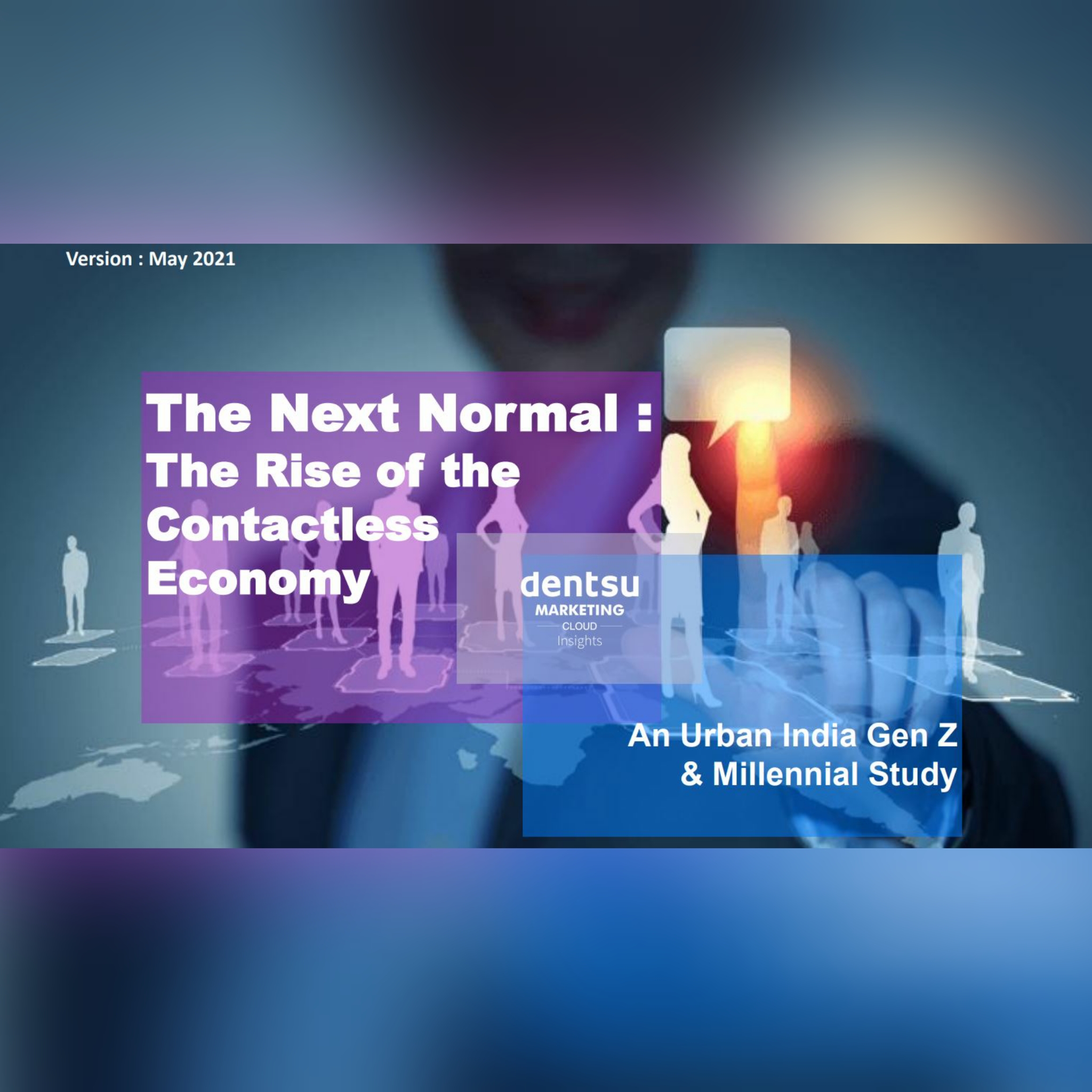
    According to a new report released by the Data Sciences Division of dentsu India, over 70 per cent of millennials and Gen Z consumers in Urban India are now willing to purchase products from a lesser-known brand. It also found that close to 60 per cent of transactions of its surveyed audience claim was fulfilled via virtual wallets- 23 per cent via credit and debit cards and the remaining through cash. Google Pay continues to enjoy a lion’s share followed by Paytm.

    The latest Insights report titled ‘The Next Normal: The Rise of the Contactless Economy’ was released under the agency’s specialist consumer insights wing dentsu Marketing Cloud (DMC) Insights. It covered deep findings of the impact of a zero-touch world on consumer behavior and sentiments with a focus on millennials and Gen Z consumers in Urban India.

    The findings of the report also showed a boom in online certificates. As many as 59 per cent of people claimed to have done an online certification- a trend which is likely to continue post the pandemic, according to the agency. There was a growing preference for Ayurvedic products, as 49 per cent of the surveyed pool said they relied on Ayurveda to meet their immunity needs. 

    “There is widespread uncertainty as the world grapples with the impact of the pandemic. But, in case of ‘at home’ economy, the only assurance is that a ‘next normal’ is being created with the help of a hyper-connected world,” said dentsu Programmatic chief data officer (Asia Pacific) & CEO Gautam Mehra, highlighting that ‘at home’ consumption economy is pegged to reach a $3trillion size globally by 2025. “This will be fuelled by the need for consumers to look at digital channels to maintain normalcy in their lives whether it is to connect with friends and family virtually, purchase necessities, subscribe to content, or discover and learn new skills. Millennials and Gen Z consumers, being digital natives, have been better equipped in adapting to a virtual world by demonstrating a greater adoption of cashless payments and an openness to discover and try new brands.”

    According to dentsu International VP (Asia Pacific) and head of DMC Insights Abhinay Bhasin, Gen Z and millennials will form a cornerstone of new-age marketing and brand engagement given their growing spending power and digital literacy.  “A virtual world has given rise to human experience platforms. With the virus hitting home, there has been a hyper-awareness of health and safety amongst Millennials and Gen Z audiences. This report builds on our commitment to deliver industry leading insights on this demographic covering their impact on various aspects of consumption and growth,” said Bhasin.

  • ‘What is love’: OkCupid may have the answer for Indian millennials

    ‘What is love’: OkCupid may have the answer for Indian millennials

    New Delhi: ‘What is love?’ Haddaway had plaintively demanded years ago, and it's a question that still rankles in peoples' minds. With a hope to solve this conundrum to a great extent, international dating app OkCupid has launched its latest digital campaign titled ‘Love is…’ that reclaims love for Indian millennials. The campaign is a conceptual take on love that is unique to your individual personality, values and aspirations. It recognises and celebrates that every person is seeking a different kind of love – from romantic dates to sharing memes, and that uniqueness is valid, accepted and deserves to be celebrated. 

    The campaign draws insight from user responses to over 3,000 questions on the app, breaking stereotypes about what relationships mean for dating Indian millennials. A large majority are in fact hopeful romantics with 88 per cent men and 87 per cent women wanting to find love, or have love find them. They are open to finding serendipity of love on a dating app like OkCupid with 61 per cent men and 57 per cent women saying yes to falling in love with someone they meet online. Surprisingly, 68 per cent don’t even believe marriage is mandatory for people in love. When it comes to the kind of relationship they want, 72 per cent believe traditional gender roles, such as men being default heads and not househusbands, or women taking care of chores and children or changing names, have no place in their lives. While, they might believe in love and its serendipity, the kind of love each Indian millennial wants is completely unique. OkCupid’s ‘Love Is…’ takes these insights and brings them to life to showcase how every person is seeking a different kind of love, one that they deserve to have. 

    Developed by Taproot Dentsu-Mumbai, the ‘Love is…’ campaign includes four short films as well as a VoxPop. The VoxPop is a fun dipstick video of single Indian millennials as they express their honest views of what love means to each of them. In true millennial style, the answers vary from drawing similarities to food, farts and fairytales. This experiment is an attempt to reflect the diversity of love and what it means for different people spotlighting what essentially makes love and relationships so special and bespoke. The four campaign films also use these insights along with user responses to questions on the app to articulate what love is to different people. 

    The first film “Love Is… Working Overtime Together” tells the story of a couple who are career driven but won’t make a compromise on love. It draws from the insight that 88 per cent millennials are looking forward to both love and professional growth, refusing the long held notion that you can only have one. 

    “Love Is… all About The Little Things” is inspired by the 87 per cent users on OkCupid who have expressed the importance of everyday romance in their lives. It reminds those looking for a relationship built on the little expressions of love that will find what they’re looking for even if everybody else is telling them otherwise. 

    “Love Is… Living In The Moment Together” was born from well-meaning but untrue advice that giving up spontaneity is the road to adulthood and thus a meaningful relationship. This film encourages you to be unapologetically you and find a partner who loves that about you. 

    The final film “Love Is… A Partnership” was born from the shifting gender roles in Indian relationships where men and women both play equal roles as homemakers and breadwinners, building a relationship of equality and partnership. This will go live by later today. 

    OkCupid India marketing director Anukool Kumar says, “Love is not one size fits all and that’s exactly what OkCupid India’s campaign ‘Love is…’ celebrates. The very fact that most singles are being told that they have to choose between a career and love or romance and practicality is archaic to us at OkCupid! This campaign celebrates love in the way that an Indian millennial craves it, breaking away from the cringey unattainable version that has been fed to us for generations.” 

    Taproot Dentsu Mumbai ECD Pallavi Chakravarti says, “What is love? Now if we knew the right answer to that one, we’d be Gods not mortals. So together with team OkCupid, we agreed to do the next best thing for our new campaign – acknowledge that there is no one right answer. But no matter how one defines love, chances are they’ll find what they’re looking for on this app.”

    The campaign was featured on OkCupid’s YouTube, Instagram and Facebook pages. The first film went live on 27 November 2020 and has received an overwhelmingly positive response, with over five million views in just a week.

  • Nielsen: Millennials big-time streamers, watch 27% less TV than over 35s

    MUMBAI: It’s hard enough to hold one person’s attention, let alone an entire generation’s. Millennials—now the largest generational group in the U.S.—have grown alongside advancements in technology and media platforms, placing them in intriguing territory with regard to media habits. When it comes to television, their eyes are glued to the screen. With commercials, they’re still tuned in—but their eyes are on their cell phones.

    Nielsen’s inaugural Millennials on Millennials report is unique in two ways: It offers critical insight into the evolving media habits of this highly digital demographic, and it was produced by a team of Nielsen Millennial associates keen to help clients engage and reach a generation that every modern marketer is seeking a connection with.

    As marketers and advertisers look for the best opportunities to reach this demographic, they need precise insight into the evolving viewing and consumption habits of Millennials, which are closely watched and coveted.  

    Here are three things you might not have known about Millennials that the report uncovered.

    MILLENNIALS LOVE TV-CONNECTED DEVICES

    TV still constitutes the majority of video consumption, but every other screen is much more valuable to Millennials. TV-connected devices (DVD players, VCRs, game consoles and digital streaming devices) compose four times the percentage of Millennials’ total video minutes than adults 35 and older: TV-connected devices account for 23% of Millennials’ total time with video, compared with just 6% for consumers 35 and older. And as a result, Millennials spend about 27% less time watching traditional TV (89% among 35+ vs. 66% among Millennials).

    public://11111_0.jpg

    MILLENNIALS ARE A DISTRACTED AUDIENCE

    The report looked at a handful of popular, primetime programs to understand the dynamics of multi-tasking and attention among Millennials compared with other generations. During premiere episodes of various primetime programs in the fall of 2015, Millennials were least likely to change the channel during commercial breaks.

    Less than 2% of 18-34 year olds changed the channel during commercials, compared with 5.5% of 35-54 year olds and more than 8% of viewers 55 and older. Given their engagement with other devices, however, Millennials had the lowest program engagement and lowest ad memorability scores during the studied shows.

    Knowing that audiences, including Millennials, may opt to skip advertising if given the choice, content providers often disable ad-skipping features in their VOD content. In terms of openness to advertising, however, Millennials are quite open to viewing ads as long as the content they are viewing is free on their mobile devices. As a result, marketers and advertisers have a notable opportunity to present their value propositions to young viewers who are tapping into the realm of content available via their connected devices.

    Upon further review of Millennial habits during commercials, these viewers report that they’re most likely to use their phones—a prime outlet to engage with social media. Smartphones provide a plethora of ways users can engage with other forms of content and social media serves as a notable slice of that pie.

    Given their engagement with social media during commercial breaks, it’s not surprising that Millennials score lower than older generations when it comes to ad memorability. Nielsen’s recent Millennial Media Advisors Report notes that TV ads have an average memorability of 38% among Millennials, 10 percentage points lower than among Gen X’ers 35 and over (48%).

    The low memorability rates, however, don’t stem from a dislike of advertisements.

    Rather, Millennials understand the necessity of ads in order for brands to inform the public of their products and services (79%) and many say that overall, ads don’t bother them (46%)—especially if the content they’re viewing is free (75%).

    public://222222_0.jpg

    SOCIAL MEDIA STARS ARE “CELEBRITIES”

    Among Millennials, social media stars are becoming synonymous with the word “celebrity.” In a write-in section of our custom survey, numerous respondents named several social media stars multiple times when asked: “Please list your current top five favorite celebrities.” When tested against mainstream stars, social media stars hold their own in terms of celebrity status. For example, according to Nielsen’s N-Score, a measure of a celebrity’s marketability, male Millennials have a higher opinion of trending social media stars than they do for sports stars, pop stars, actors and actresses.

    public://Untitled-4_2.jpg

    METHODOLOGY

    The Millennials on Millennials Report is led by Nielsen Millennial associates and analyzes the unique nature of this demographic group by leveraging Nielsen data-sets and fielding a custom survey to understand the “why’s” behind the data trends. The report includes data from The Nielsen Connected Device Report, Nielsen Custom Survey, Nielsen TV Brand Effect, Nielsen Total Media Fusion, Nielsen N-Score/Talent Analytics, Nielsen National TV Toolbox, Nielsen Social, and The Q1 2016 Comparable Metrics Report. Eight TV programs analyzed for this report were from all premiere episodes of 2015. They include a variety of genres including comedies and dramas from an assortment of different networks and episode lengths.

    public://555555.jpg

  • Advertisers target rural north & south zone on serials & film-based content: BARC

    Advertisers target rural north & south zone on serials & film-based content: BARC

    MUMBAI: None realised the importance of rural market until BARC India started monitoring viewing habits in the countryside. After the TV audience measurement system gave its ratings, the industry woke up to the potential of this market.

    A recent newsletter released by BARC India emphasises on the viewing habits of the viewers on different fronts.

    From one front,  this research explores the advertisers and marketers targeting north and south zone on serials and film-based content to reach their respective audience.

    On an overall level for rural India, serial-based programmes secure the highest share, followed by film-based programmes. This pattern is consistent across zones with the exception of south India. Viewership for serials is driven majorly by the north zone while film-based programmes have maximum viewership in the south zone, which does not come as a surprise.

    public://barc6_0.jpg

    Most of the programme themes are driven by south zone. The only exception is music which is driven almost entirely by the north zone. For broadcasters in the serials and music genre, north rural market is the key.

    For advertisers and marketers targeting north and south zone, serials and film-based content will be the ‘Holy Grail’ to reach their audience respectively as over 30 per cent of the viewership is attributed to each of these content types across zones.

    For marketers targeting west or east zone, frequency-based plans yield results easily. On the other hand, for those targeting north, reach-based plans may be more achievable.

    On an overall level, the south zone registers the highest reach and ATS ( Average Time Spent) among the four zones in rural market. Looking at the west zone, ATS is the second highest after south zone. However, it has relatively lower reach. This shows that audience in the western rural market has lower reach but they spend a high amount of time consuming television content. Conversely, the north zone has the lowest ATS but has a comparatively better reach. One can infer that audience in the north zone does not stick to television viewing for as long as those in other zones.

    The rural viewership pattern

    Urban and rural India follow distinctly different viewing patterns across the day. Rural India starts its day much earlier than urban India around 5am, and continues to have higher viewership until 9am.

    Post 9am, urban India’s viewership catches up and has higher viewership than the rural India throughout the afternoon and evening. Both, urban and rural India see a marginal peak during 2-230pm. However, rural India sees an early spike for prime time as compared to urban India. The highest viewership in rural India is generated during the time-band 830-9pm followed by the time-band 8-830pm.

    Viewership starts declining around 1030pm hinting at an early wrap-up for the day for the rural audience.

    If one compares all the four zones in the rural market, it seems like the viewership is driven by southern rural market followed by the west zone. The lowest viewership in rural market can be observed in the north zone which has the lowest average rating percentage for the entire day.

    public://barc10_0.jpg

    public://barc9_0.jpg

    If one looks at the zone-wise viewership, both weekdays and weekends are driven by the south zone followed by west zone. Overall viewership for weekends is marginally higher than weekdays for rural India. At the zone level, this increase for weekend viewership is the maximum for the west zone and the least for the east zone.

    public://barc8_0.jpg

    public://barc7.jpg

    Viewership differs during prime time

    Millennials in rural India could be the next big target for broadcasters and advertisers to hold on to.

    Viewership in India during prime time is equally divided among both the genders. However, if compared by the four zones, north and west zone have a higher percentage of male viewers (51 per cent  and 52 per cent, respectively) and Millennials (age-group 15-30) form the largest percentage of audience in rural India. The pattern is the same among all the four zones with the exception of south where Gen X (age group 31-50) forms the largest percentage of the audience.

    NCCS C (New Consumer Classification System) has the highest share of viewership among all zones in rural India. While the west zone and the east zone display a composition similar to rural India, the north zone and south zone have some variations. The north zone has a substantially higher composition of NCCS A & NCCS B, while the contribution of NCCS C is lower than the rural India average. Conversely, in the south zone, the contribution of NCCS A is low.

    public://barc5_0.jpg

    Surprisingly, film-based programmes, which have the maximum reach during prime time, have one of the lowest stickiness across rural India for all the four zones. Game/talk/quiz and lifestyle-based programmes can hold the audience for long as they have a healthy ratio for reach to fidelity. In rural India, stickiness for serial-based programs is the highest across programme themes.

    Surprisingly, it is driven mostly by south zone, which had the lowest reach among all zones for this content. Interestingly, if one compares this to the audience composition analysed above, north zone and west zone, which have a higher percentage of male audience, also see higher stickiness for sports programmes. Lifestyle-based content in terms of stickiness has much better ratio of reach to fidelity across zones.

    public://barc4_0.jpg

    public://barc3_0.jpg

    Ad sector popularity

    The top ad sectors by viewership during prime time in rural India are personal care/hygiene, food & beverages, hair care and services etc.

    Personal care/hygiene and hair care sector have a higher share in the north zone. This can also be seen while comparing all the zones for the ‘personal healthcare’ category, where again the north zone takes the lead.

    On the other hand, the south zone is more inclined towards categories such as food and beverages, auto, durables and personal accessories.

    public://barc2_1.jpg

    Switching pattern for GEC & movie genre

    Since most of the TV viewership is generated by GEC and the movie genre, it would be interesting to understand the switching pattern of rural India on a day-part level.

    public://barc1_1.jpg

    As observed in the paragraphs above, throughout the day, most of the switching to or from a channel genre happens due to audience switching the TV on or not. However, it declines during the later time-bands. The only exception is 6pm to 12 midnight where switching between movies and GEC is higher than viewers switching TV on during that time-band (with movies as reference). On comparing switching from movies to GEC genre, switching percentage remains almost comparable throughout the day.

    On the other hand, switching from GEC to movies declines during later time-bands. On an overall level, switching from GEC to movies is seen more often that the switching from movies to GEC.

  • Advertisers target rural north & south zone on serials & film-based content: BARC

    Advertisers target rural north & south zone on serials & film-based content: BARC

    MUMBAI: None realised the importance of rural market until BARC India started monitoring viewing habits in the countryside. After the TV audience measurement system gave its ratings, the industry woke up to the potential of this market.

    A recent newsletter released by BARC India emphasises on the viewing habits of the viewers on different fronts.

    From one front,  this research explores the advertisers and marketers targeting north and south zone on serials and film-based content to reach their respective audience.

    On an overall level for rural India, serial-based programmes secure the highest share, followed by film-based programmes. This pattern is consistent across zones with the exception of south India. Viewership for serials is driven majorly by the north zone while film-based programmes have maximum viewership in the south zone, which does not come as a surprise.

    public://barc6_0.jpg

    Most of the programme themes are driven by south zone. The only exception is music which is driven almost entirely by the north zone. For broadcasters in the serials and music genre, north rural market is the key.

    For advertisers and marketers targeting north and south zone, serials and film-based content will be the ‘Holy Grail’ to reach their audience respectively as over 30 per cent of the viewership is attributed to each of these content types across zones.

    For marketers targeting west or east zone, frequency-based plans yield results easily. On the other hand, for those targeting north, reach-based plans may be more achievable.

    On an overall level, the south zone registers the highest reach and ATS ( Average Time Spent) among the four zones in rural market. Looking at the west zone, ATS is the second highest after south zone. However, it has relatively lower reach. This shows that audience in the western rural market has lower reach but they spend a high amount of time consuming television content. Conversely, the north zone has the lowest ATS but has a comparatively better reach. One can infer that audience in the north zone does not stick to television viewing for as long as those in other zones.

    The rural viewership pattern

    Urban and rural India follow distinctly different viewing patterns across the day. Rural India starts its day much earlier than urban India around 5am, and continues to have higher viewership until 9am.

    Post 9am, urban India’s viewership catches up and has higher viewership than the rural India throughout the afternoon and evening. Both, urban and rural India see a marginal peak during 2-230pm. However, rural India sees an early spike for prime time as compared to urban India. The highest viewership in rural India is generated during the time-band 830-9pm followed by the time-band 8-830pm.

    Viewership starts declining around 1030pm hinting at an early wrap-up for the day for the rural audience.

    If one compares all the four zones in the rural market, it seems like the viewership is driven by southern rural market followed by the west zone. The lowest viewership in rural market can be observed in the north zone which has the lowest average rating percentage for the entire day.

    public://barc10_0.jpg

    public://barc9_0.jpg

    If one looks at the zone-wise viewership, both weekdays and weekends are driven by the south zone followed by west zone. Overall viewership for weekends is marginally higher than weekdays for rural India. At the zone level, this increase for weekend viewership is the maximum for the west zone and the least for the east zone.

    public://barc8_0.jpg

    public://barc7.jpg

    Viewership differs during prime time

    Millennials in rural India could be the next big target for broadcasters and advertisers to hold on to.

    Viewership in India during prime time is equally divided among both the genders. However, if compared by the four zones, north and west zone have a higher percentage of male viewers (51 per cent  and 52 per cent, respectively) and Millennials (age-group 15-30) form the largest percentage of audience in rural India. The pattern is the same among all the four zones with the exception of south where Gen X (age group 31-50) forms the largest percentage of the audience.

    NCCS C (New Consumer Classification System) has the highest share of viewership among all zones in rural India. While the west zone and the east zone display a composition similar to rural India, the north zone and south zone have some variations. The north zone has a substantially higher composition of NCCS A & NCCS B, while the contribution of NCCS C is lower than the rural India average. Conversely, in the south zone, the contribution of NCCS A is low.

    public://barc5_0.jpg

    Surprisingly, film-based programmes, which have the maximum reach during prime time, have one of the lowest stickiness across rural India for all the four zones. Game/talk/quiz and lifestyle-based programmes can hold the audience for long as they have a healthy ratio for reach to fidelity. In rural India, stickiness for serial-based programs is the highest across programme themes.

    Surprisingly, it is driven mostly by south zone, which had the lowest reach among all zones for this content. Interestingly, if one compares this to the audience composition analysed above, north zone and west zone, which have a higher percentage of male audience, also see higher stickiness for sports programmes. Lifestyle-based content in terms of stickiness has much better ratio of reach to fidelity across zones.

    public://barc4_0.jpg

    public://barc3_0.jpg

    Ad sector popularity

    The top ad sectors by viewership during prime time in rural India are personal care/hygiene, food & beverages, hair care and services etc.

    Personal care/hygiene and hair care sector have a higher share in the north zone. This can also be seen while comparing all the zones for the ‘personal healthcare’ category, where again the north zone takes the lead.

    On the other hand, the south zone is more inclined towards categories such as food and beverages, auto, durables and personal accessories.

    public://barc2_1.jpg

    Switching pattern for GEC & movie genre

    Since most of the TV viewership is generated by GEC and the movie genre, it would be interesting to understand the switching pattern of rural India on a day-part level.

    public://barc1_1.jpg

    As observed in the paragraphs above, throughout the day, most of the switching to or from a channel genre happens due to audience switching the TV on or not. However, it declines during the later time-bands. The only exception is 6pm to 12 midnight where switching between movies and GEC is higher than viewers switching TV on during that time-band (with movies as reference). On comparing switching from movies to GEC genre, switching percentage remains almost comparable throughout the day.

    On the other hand, switching from GEC to movies declines during later time-bands. On an overall level, switching from GEC to movies is seen more often that the switching from movies to GEC.

  • World TV Day: From ‘we’ to ‘me’

    World TV Day: From ‘we’ to ‘me’

    In today’s fast-paced world where everything is available at the click of a button, does one remember the good old days when wanting and waiting went hand-in-hand?

    The longing to watch Chitrahaar or Mahabharat is something the millennials will never know. With umpteen number of music channels and general entertainment channels (GECs), where shows go on for eons even if the storyline died its natural death hundreds of episodes before, showing whatever the viewer wants to watch 24/7.

    Want to watch a drama, choose from the GECs. If music, click on one of the music channels; animation, there are enough and more channels kids can choose from. Unlike the ones who saw the rise of the Indian television.

    For the ones who were born and grew up with television, shows like Hum log, Nukad,  Shaktiman, Rangoli and many others still holds a special place. And the clumsily-dressed characters made summer holidays even more special.

    The characters were simple yet with a progressive mindset. Today it is quite the opposite; heavy makeup and regressive thinking. The connection build over the years made Lalitaji a household name and owning a TV set was really a ‘Neighbour’s Envy, Owner’s Pride’ and Mile sur mera tumhara was not less than the national anthem. The half-an-hour news capsules covered many stories as there was less noise and more news. Although, there are certain anchors, which make primetime news more entertaining than the melodrama, today.

    Not only this, in the 80s and 90s, before the private television boomed, the entire family finished their chores before the favourite show or movie started.  Children finished their homework without being reminded, mothers prepared the meal and fathers left early from offices. The ‘we’ time was cherished.

    With the onset of DD Metro, Zee and Star Plus, the audiences got the first taste of life beyond the international shows as well as shows with high production value. Sa Re Ga Ma Pa, Hip Hip Hurray and Tara brought with them the modern touch to family television viewing.  

    And then came many more channels showcasing different genres from national to international markets giving a preference to one over the other.

    Today, it’s all about me, me and me. Children watch what they want to watch while parents are busy with their favourite channels. Segmentation is the need of the hour is what the broadcasters say, giving birth to 813 channels (as per the 15 September 2014 list on MIB), but in filling the 24 hours in the day, the quantity has taken over the quality.

    Today, how many of us eagerly wait for a show to begin or even alter our plans? Thanks to the long and sometimes dragging storylines as well as digital medium where on the command of a mouse everything will replay at our convenience, TV viewing has surely changed.

    Nonetheless, till entertainment is there the mundane and monotonous lifestyle will be saved by the flipping of numerous channels. LOL!


  • Most Millennials still pay for TV

    Most Millennials still pay for TV

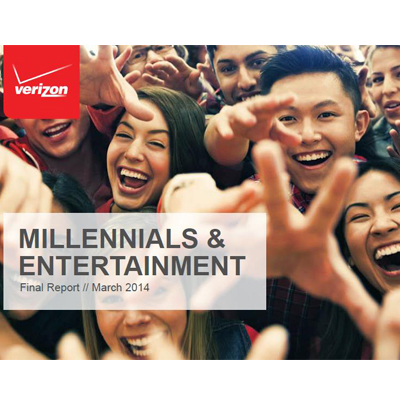
    MUMBAI: While it’s not startling that Millennials (consumers in the 16-24 year-old age group) watch a lot of TV online, it might be more unexpected that the vast majority of them haven’t cut the cord, according to a new study (PDF) from Verizon Digital Media Services (VDMS), the company’s cloud video unit.


    As a group that translates to multiple screens and represents about 21 per cent of total consumer spending, Millennials spend three times as much of their TV time watching online – 34 per cent versus 12 per cent among non-Millennials, VDMS found in a study that surveyed 1,000 consumers (800 Millennials and 200 non-Millennials) and based its findings in part to in-home interviews with eight selected Millennials.


    But 75 per cent of the Millennials surveyed haven’t cut the cord and still pay for TV through a traditional MVPD, the study revealed.  And most (64 per cent) also pay for an online streaming subscription, versus 33 per cent of surveyed non-Millennials. Only 14 per cent of the Millennials surveyed said they had never watched TV from an online source, versus 44 per cent among non-Millennials.


    Here is a look at how the Millennials surveyed broke down their total TV distribution time, 41 per cent was for live TV, 34 per cent online, 15 per cent on the DVR, and 10 per cent using VOD.


    But broadcasters could have some reason for concern. While Millennials are generally brand loyal, not a single broadcast network made the top ten list of brand loyalties among the Millennials surveyed, VDMS said.


    According to the survey, the top 10 brands among Millennials were: Amazon, YouTube, Facebook, Google, Walmart, Netflix, Apple, Microsoft, McDonald’s, and Samsung. Verizon was 16th.


    Among other findings:  40 per cent of Millennials want access to live TV online, 40 per cent want 4K/Ultra HD video, 25 per cent want device and session shifting, and 19 per cent want interactive TV.