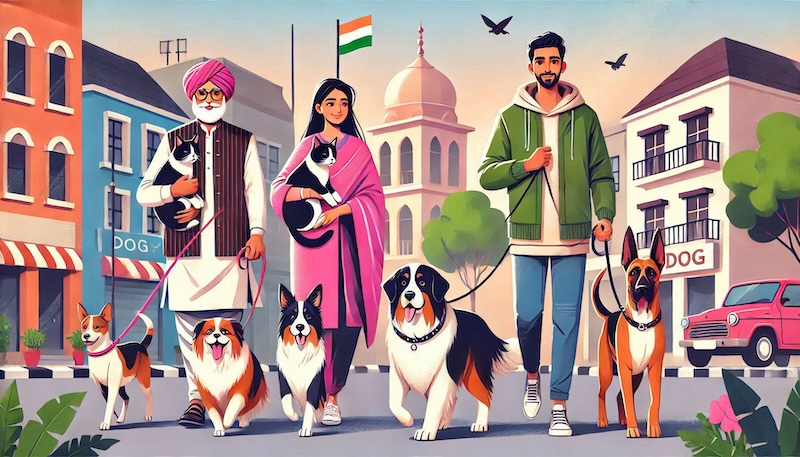
MUMBAI: Indians are increasingly welcoming animals into their home. That’s something which is more than reflected in major metros and urban areas where you find pet owners walking their furry friends on the sidewalk at dusk or at dawn.
A global pet parent survey by pet care and nutrition company Mars Petcare totally reaffirmed this. 20,000 pet (cats and dogs) parents were contacted – 1,000 of them from India – and two thirds of them expressed that their feline or canine companions are the most important thing in their lives.
For Gen Zs and millennials, pets are companions who provide unconditional love, alleviate stress, and make great companions to bond with. More than 64 per cent of young dog owners and 60 per cent of young cat owners in India reported that their pets helped reduce stress and anxiety. These numbers reveal that pets are an integral part of their life. Pet adoption starts at least three months or younger, with 67 per cent of them being puppies and 70 per cent, kittens.
The survey reveals that there’s still a journey ahead in raising awareness about adoption. Only six per cent of puppies and four per cent of kittens are adopted from shelters, with 17 per cent of puppies and 10 per cent of kittens being acquired through breeders and, maximum, through pet shops, with 23 per cent of puppies and 19 per cent of kittens. This indicates a significant opportunity to promote adoption and responsible pet ownership, potentially leading to a more compassionate pet care culture in India.
Mars Petcare India managing director Salil Murthy acknowledged that a new generation of Indian pet parents- especially young Indians- are adopting pets in record numbers and are also prioritising the emotional and mental benefits these relationships bring. “At Mars Petcare, we are obsessed with pet parents and are always listening and learning from them. The Mars Global Pet Parent Study reflects our commitment to learn and share awareness about how pet ownership is evolving worldwide. It’s no longer ownership; it’s become a lifelong relationship. India is no different. Just as they care about their own health, Gen Z is equally committed to the health and nutrition of their pets,” he added. “We ensure every product in our portfolio provides 100 per cent complete and balanced nutrition wherever pets are. Beyond nutrition, we aim to ease pet parents’ challenges and build a better world for pets. Our initiatives like building better cities for pets, organising national adoption weekends, deploying mobile shelters across key metros, and partnering with animal welfare organisations in multiple cities are a testament to our commitment to this purpose.”

Globally, Mars Petcare’s survey revealed similar trends in pet ownership, with 56 per cent of people worldwide identifying as pet parents, and nearly half of them being first-time owners. Around 37 per cent of global pet parents view their pets as the most important thing in their life, showing that this deep bond between people and pets extends beyond borders. With insights like these, Mars Petcare continues to innovate and evolve its offerings to meet the needs of pet parents around the world.
Conducted over 30 days in early 2024, Mars Petcare’s study surveyed 20,000 pet parents across 21 countries, including Canada, USA, Mexico, Brazil, Spain, UK, France, Germany, Italy, Poland, Turkey, South Africa, China, Thailand, Indonesia, Philippines, Japan, Australia, New Zealand, and India. This study—the largest of its kind—reveals how pets profoundly impact lives worldwide and the evolving priorities of today’s pet parents.
Following are some of the highlights of the survey”
Pet Ownership is Expanding and Evolving
* Growing pet ownership globally: Over half (56 per cent) of respondents globally are pet parents; 47 per cent being first-time owners. In India, first-time pet parents rise to 69 per cent
* Pet prioritisation: Gen Z and millennials lead a more emotional approach to pet ownership, with 47 per cent of global Gen Z dog owners and 43 per cent of cat owners saying their pets are “the most important part of their lives.” In India, this number is a remarkable 66 per cent for dog and cat owners.
* Younger pets for younger generations: Globally, 70 per cent of puppy owners and 72 per cent of kitten owners are Gen Z or millennials, reflecting their desire to start early bonds.
Pet Parents’ Satisfaction and Challenges
* High satisfaction with pets’ impact: Globally, 37 per cent of pet parents feel their pets are central to their lives, with India showing an even stronger bond at 68 per cent. Dog owners value unconditional love (42 per cent in India) and family completeness (40 per cent), while cat owners highlight entertainment (43 per cent) and stress relief (41 per cent).
* Guilt around leaving pets alone: One-third of global dog owners (33 per cent) and 32 per cent of Indian dog owners feel guilty about leaving pets alone. For cat owners, this rises to 38 per cent in India.
Barriers to Pet Ownership and Pet Friendliness
* Key barriers: Globally, challenges include unsuitable living conditions and the commitment level. In India, emotional pain from pet loss (23 per cent) is a top reason for not owning a dog, while living conditions and furniture concerns impact cat ownership.
* Pet-friendliness of neighborhoods: While 42 per cent globally find their neighborhoods pet-friendly, India ranks higher, with 56 per cent viewing it positively. However, nine per cent of Indian respondents still hold negative sentiments about having pets in their neighborhood.
* Pet adoption: Most pets are acquired through friends, family, or breeders, with minimal adoption rates. In India, 23 per cent of dogs and 19 per cent of cats come from pet shops, while adoption rates remain low at six per cent for dogs and four per cent for cats.