Tag: Milind Karnik

  • Digicable files police complaint against Hathway in Mumbai

    Digicable files police complaint against Hathway in Mumbai

    MUMBAI: Jagjit Singh Kohli is furious. The cable TV industry veteran and promoter of Digicable  has  reportedly filed a police complaint against Hathway Cable and a distributor Santosh Ankolekar.  The police complaint – a copy of which is with indiantelevision.com – names Hathway promoter Viren Raheja,  western region in charge and President finance Milind Karnik, an executive Rajendra Rane and Ankolekar as the guilty parties.


    JSK – as he is known in the industry – is seeking justice. The reason for him taking such a drastic step is because the latter – who was a distributor of Digicable – did a deal with India’s leading cable TV MSO  as part of which he allegedly sold his  network to it. Ankolekar,  according to Digicable sources – was a small local cable operator  with a network of around 1,500 subscribers in the Andheri east area of Mumbai. Ankolekar grew rapidly  after his appointment as a distributor by Digicable in 2007. According to the MSO, he was given about 50,000 STBs to seed to local cable operators in the area and convert them to Digicable subscribers, which he did.


    “But the network was not really his,” says Kohli. “It was owned by Digicable, and we offered to show the documents to the Hathway management but they were not bothered about facts and continued using our network.”


    According to Kohli, Hathway swapped the Digicable boxes  for its own and when his team asked them to return them to him, it was not done. “The point is they may have inadvertently made a mistake but then they have to make amends which they are refusing to do,” says  Kohli.


    Hathway officials deny any wrongdoing. They state that it was Ankolekar who came to the MSO seeking help.


    “Digicable had not been able to make payments to broadcasters for quite sometime and his signals were consistently getting switched off,” says a senior Hathway executive. “When he came to us we offered to give him Hathway boxes as we were getting a large territory in the heart of Mumbai. And we would be in a position to provide consistent services to subscribers as our deals with broadcasters are in place.”


    The executive states that there was no swapping of boxes or anything of that sort. “Digicable had given the boxes to local cable operators,” says he. “We did too. But we did not take the Digicable boxes back  from the LCOs. If the boxes are with the LCOs, then Digicable should take them back from them.”


    The MSO stated – at the time of writing – that the company was unaware of Karnik or Viren Raheja being named in the FIR. “We would have got a call from the police station,” says a senior executive. “To the best of our knowledge only Rane and Santosh are named in the FIR and no one else. “


    Digicable had earlier had a run-in with Hathway last year when it had alleged that its former CEO Amit Nag had colluded with the latter  in “hijacking” its network in Kolkata.

  • Hathway promotes Milind Karnik

    Hathway promotes Milind Karnik

    MUMBAI: For long, Hathway Cable & Datacom old-timer Milind Karnik has been mandated with running the cable TV MSO’s secretarial operations as company secretary. Now he has been given a new role: as the head of commercial – all India and also the western India head. Karnik has been with Hathway since 1998 and he has resigned from his earlier position to take up the post, Hathway informed the BSE on 6 December. Replacing him is Ajay Singh, who has been appointed as company secretary and compliance officer.


    Singh has an experience of 17 years. He has moved to Hathway from Real Networks India. Prior to this, Singh has worked with Drishtee Dot Com, Rangs Technologies and PACL India.


    While Karnik was already handling the commercial business in the western region, in his new role, he will be handling the all India commercial business for Hathway.


    “With digitisation, one needs to get the consumer billing and consumer application form in place for phase I and II respectively. This is a huge task. Also, in my new role, I will be working towards successfully completing phase III and phase IV of digitisation in western India,” informs Karnik, who plans to focus more on DAS phase III and IV now.


    Karnik will work with Hathway subsidiaries including Hathway Bhawani and Hathway Rajesh as well. He will serve on the GTPL Hathway board.


    Karnik will also handle commercial business in hotels which has a different tariff structure. “Hotels are still not digitised and so I will be concentrating on that as well.  We need to explain to the 3-Star and 5-Star properties where room base is 50 and above that digital feed is better than analogue,” he says.


    “In the case of hotels, we also aim to focus on pay per view, which is a niche segment. That apart, I will be dealing with internet bandwidth in the commercial segment,” he concludes.

  • The final word on cable TV digitisation

    The final word on cable TV digitisation

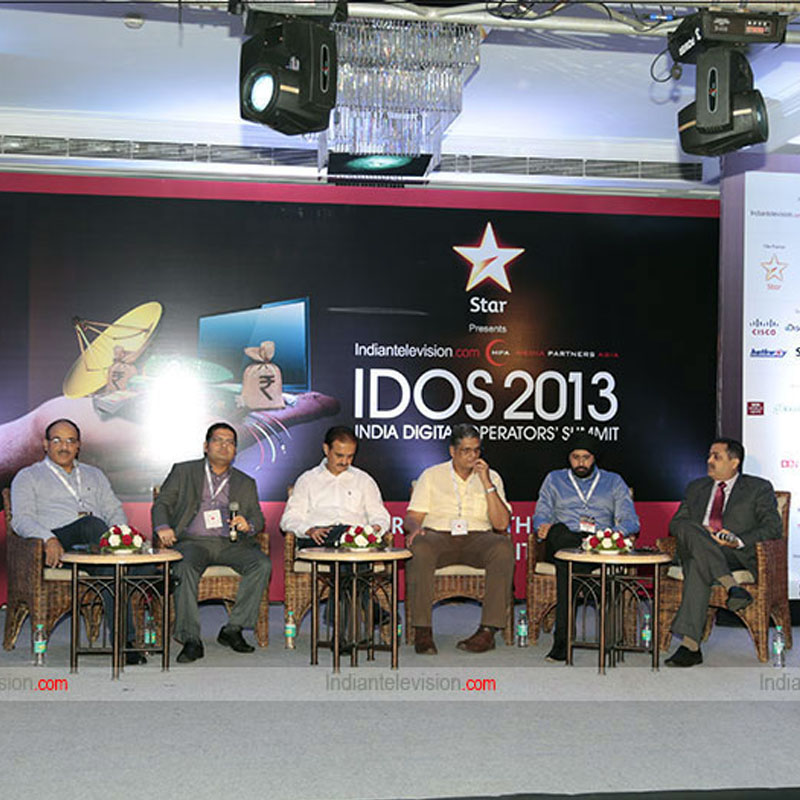
    GOA: With phase I and phase II on the cusp of completion, what are the lessons the digitising cable TV ecosystem has learned from their efforts? And how can this be put to use when industry moves into phase III and phase IV? This was the focus of the last session of the well-attended (it was houseful even on day two) IDOS 2013 in Goa.

    DEN Networks CEO SN Sharma said that his cable TV network was willing to take the punt and had enough investment to push into the territories it was targeting. “It won’t be easy but we are totally committed to doing it. Additionally, a lot of phase II was also done by local MSOs.  We see consolidation. In UK it happened. Five MSOs consolidated and are feeding around 90 per cent of the population there.”

    Hathway president Milind Karnik said that the last mile owner in many parts of phase III and phase IV has already upgraded and has awareness of and has already done some upgradation of infrastructure. “They will form cooperatives and consolidate and do what is needed. We too are going to move ahead forging relationships with local cable operators there, apart from serving some communities with our own headends.”

    Telecom Regulatory Authority of India (TRAI) principal advisor N Parameswaran said: “We expect like the telecom sector there will be some sharing of infrastructure.  We have learnt from phase I and phase II and there are many things we could have done better and will put those learnings in practice. There has to be some hygiene brought in terms of transparency and every other part of the process. Bill has to be generated to the subscriber. Service has to be provided. There will not be any looking back after that.”

    He urged MSOs and other players to understand that the dividends from phase I and phase II will start coming in with the addition of broadband delivery to subscribers. He further said a model has to be worked out between the MSOs and LCOs and TRAI would facilitate that.

    Also, in the wake of the continued depreciation of the Indian rupee against the dollar, the MSOs and LCOs feel that the government should give some subsidy to local manufacturers who are interested in setting up local units in the county to give a fillip to the industry.

    “We have got to come together. It has to be done together to resolve all the issues,” said Indian Broadcasting Foundation secretary general Shailesh Shah.

    Shah further added that the stakeholders would have to think how they can go deeper while addressing infrastructure problems. Carriage issue would also get resolved in a phased manner.

    Magnaquest CMO Ramakrishna Mashetty felt the landscape for the next phase of digitisation is different as compared to phase I and II as the cities are fragmented and low markets are there in the chart. “Most of the LCOs and market are unorganised,” he said.

    Telecom and Media lead analyst Rajiv Sharma said if the digitised headends start delivering incremental revenues in terms of services and ARPUs go up, return on investment (ROI) will improve. “Lot of external foreign investors are watching the space carefully,” he stated, adding that this imperative that some element of broadband be built in to the set top box so that the incremental revenues start accruing very quickly.

    Chrome Data Analytics & Media founder and MD Pankaj Krishna said the campaign in phase III and IV would be different. “The first two phases communicated and played on the principle of fear of blackout for consumers. The communications to the consumer during the third and fourth phase should focus on the benefits that a box can provide to users.”

    Parameswaran also addressed the issue of entertainment tax. “We have been working on understanding taxation levels which are a state subject versus a federal TDS or income tax,” he said. “But we are not averse to once again address this issue.”

    But what added spark to the panel discussion was the disclosure that the ministry of information and broadcasting was working with the department of telecommunications and MSOs to enable them to use already existing government and other infrastructure to help them as things start moving into phase III.

    The other good news is that bills – especially in Delhi – are slated to go out to subscribers in October, and online bills will follow later but interests of the LMO will be kept in mind.

    Parameswaran had the final word. Said he: “Digitisation will go ahead as planned. We are totally committed to it.”