Tag: Milestone Brandcom

  • ‘Stop looking at me,’ says HP Spectre’s OOH campaign

    ‘Stop looking at me,’ says HP Spectre’s OOH campaign

    MUMBAI: Fresh ways herald new products. To inform and educate the customers about HP’s new laptop range Spectre that boasts of being the thinnest laptop, the brand has executed an OOH Campaign in three key cities — Delhi-NCR, Mumbai and Bangalore. Milestone Brandcom is its OOH partner in the initiative. In line with the product proposition, out of home space has also been reinvented by taking large and impactful media in the three metros.

    Milestone Brandcom senior VP Ravi Ambrose commented saying, “The core idea behind the campaign was not just to be visible or convey the message to the core TG (target group) but also to be visible with an impact. That was the starting point. We put some serious energy in terms of identifying the sites. Plus, the messaging is also not the same all across. We have contextually changed the message to be able to engage the TG more meaningfully and not just strike a one-way conversation with a mere product messaging. e.g. “Stop Looking at me or you will miss your plane’ at the airport and ‘Stop looking at me or you will be late’ on the road”.

    In Gurgaon, the Rapid Metro train has been wrapped with HP Spectre branding which looks ravishing. Cluster hoardings have been put up to make it an impactful campaign. High Impact Airport media has also been taken to cater to the affluent.

    The powerful creative on all the impact media taken across the board is grabbing more and more eyeballs each day. The campaign has got great feedback. The HP campaign has taken OOH to a new standard of execution.

  • Digital transformation of OOH in India

    Digital transformation of OOH in India

    MUMBAI: Digital billboards, synchronized messaging across hoardings, real time trading, interactive digital displays, mobile convergence, geo-tagged tracking of impressions and measurement — digital is rapidly evolving how out-of-home advertising is perceived.

    A good look around and you will be amazed to see to what extent we are surrounded by advertisements–  on moving buses, at  public places like railways, bus stops, airports, malls and theatres and of course the billboards and hoardings beside every major building and driveway. Out of Home or ‘OOH’ is a ‘traditional’ as well as one of the oldest formats of advertising.

    Though the medium has only ever evolved gradually with time in the last few decades, currently it is at the cusp of a major overhaul that is riding the digital wave.

    http://www.indiantelevision.com/sites/drupal7.indiantelevision.co.in/files/styles/large/public/ooh%20%282%29.jpg?itok=yX7kDlRF

    OOH: The late entrant to digital

    Unlike other advertising mediums, OOH was the latest to feel the impact of the digital disruption here, be it in terms of innovation or revenue loss in ad spends. Where serious concerns were being raised on how digital’s advent will split the ad revenue pie of the market, and cannibalize other media, OOH to the most part was oblivious.

    Sharing his perspective on this transition, Kinetic India CEO South Asia and Middle East Suresh Balakrishnan informs indiantelevision, “The advent of digital in our country in all its form, whether it’s digital, or display or social, mobile has eaten away the budgets of most media.  Having said that, it has happened to India at a good time, for as a market India is growing. We are probably one of the only few markets that are growing at an average of 15 to 18 per cent. Therefore we have made space for digital.”

    “As far as OOH is concerned there has been some revenue loss to digital, but I don’t think it has been significant. I don’t remember a time when OOH was growing at 20 to 30 per cent year on year. It has always lingered around 10 to 13 percent year on year, which again is moderately good growth for OOH,” he adds.

    But that doesn’t mean that ‘change’ isn’t chasing OOH.  

    “OOH can’t sit on its haunches and think that digital will not affect it. Unless, OOH marries digital and adapts what digital has to offer to enhance its services and experience for the consumer, we won’t be able to fight the battle in the long run,” Balakrishnan explains.  

    And that battle is more than about mere survival. It is the way forward for the medium to be more relevant to the consumers, more useful to the clients and more creatively enriching for the agencies.

    Digital, the perfect partner

    To say that digital will aid OOH is an understatement.

    Digital innovation in OOH has enabled the medium to achieve what it was earlier unable to attempt.

    While the idea of a dynamic digital billboard in itself is attractive and engaging for consumers, agencies are now able to explore technology that helps target and track consumers in a better manner and even give a push to point of sale campaigns in malls and other retail outlets.

    http://www.indiantelevision.com/sites/drupal7.indiantelevision.co.in/files/styles/large/public/ooh%20%284%29.jpg?itok=ExgOdzkb

    “There are a lot of innovations that are happening in this area. For example, now digital technology allows users and consumers to scan bar codes from hoardings which directly lead to any product website through their devices,” points out Havas Media Group, India and South Asia CEO Anita Nayyar.

    “Whether it is in the way of ‘blipping’ the product from the hoardings, or digitally connecting an LED screen with some data source, there are various innovations that go hand in hand with billboards that are digitally enabled,” she adds.

    Balakrishnan on the other hand takes delight from the classier messaging that is made possible with digital. He cites an example of a campaign that Kinetic had earlier done for Mondelez’s popular chocolate brand Cadbury Bubbly.

    The crowd at Palladium Mumbai witnessed the experiential and innovative activation where in a digital screen was placed at all these places with a new motion sensor technology that transformed the normal Cadbury Silk chocolate into Cadbury Silk Bubbly with each and every movement around the screen. At metro stations in Mumbai, the screen was placed in such a way that the chocolate bubbled up with the movement of the train.

    http://www.indiantelevision.com/sites/drupal7.indiantelevision.co.in/files/styles/large/public/ooh.JPG?itok=jpwP5Ri8

    The number game: Measurability

    OOH as a medium had long struggled to measure the reach of campaigns. Therefore, very less accountability was placed on the medium and most of the money spent on the medium goes into brand building.

    “With the lack of a streamlined synchronised measurement system, there has been constant pressure from client to prove the effectiveness of the campaign,” Balakrishnan reveals.  But, to many creatives in OOH, digital is a great way to achieve that sense of measurability.

    Nayyar, having seen the Indian advertising scenario evolve, admits that while one medium (digital) is accountable, the other is almost immeasurable.

    “Apart from a couple of researches done, it is very hard to measure this medium. Thus, by clubbing the two medium, outdoor as a medium can gain huge credibility and measurability from digital,” asserts Nayyar.

    http://www.indiantelevision.com/sites/drupal7.indiantelevision.co.in/files/styles/large/public/ooh%20%283%29.jpg?itok=yH00fYXz

    Kinetic has, in fact, launched a tool called SAS or Social Amplification Score worldwide that can add some numbers to even an OOH campaign. The tool has so far been released globally by the Kinetic team and is expected to hit India in the next three months.  

    “The moment an OOH campaign is released, the tool tracks the buzz it creates by using 37 or more keywords like OOH, malls, bus shelter, etc. Basically wherever it is seen and spoken about, to tool automatically puts a score to that. It gathers the information by using geo-tagging technology that most social media platforms have enabled. With this tool therefore, we can put certain reachable numbers to an OOH campaign,” Balakrishnan informs about the effectiveness of the tool.

    Milestone Brandcom founder MD and a pioneer in the OOH business Nabendu Bhattacharyya however sheds a different light on the matter.

    “It is true that all mediums have their own struggle with measurements. Amongst all of them, OOH is the least measurable and most unorganised, Bhattacharyya opines.

    Pointing out that individual agencies have their own measurement systems that help provide clients with numbers, the veteran OOH man says, “If digital billboards become more mainstream, it will help us approach clients on a better ground as digital can incorporate those numbers.”

    Digital OOH: International VS Local

    In spite of some very obvious perks of the digital transformation, India has a lot of catching up to do when it comes to innovating OOH using technology.  Travel to any western country and one can easily spot the vast gap in the digital revolution of OOH.

    http://www.indiantelevision.com/sites/drupal7.indiantelevision.co.in/files/styles/large/public/ooh%20%281%29.jpg?itok=hxnGGHXB

    “If you look at the western markets, OOH is far more advanced and digitised than in our country. It’s also a question of infrastructure as installing these billboards needs a certain aesthetic upgradation as well. Broadband and connectivity also become an issue and do not allow the proposition to be completely seamless and workable,” Nayyar explains.

    Balakrishnan concurs with Nayyar and says, “The more mature markets have gone and beautifully adapted digital with OOH. In fact, I would say the west has shown us that one of the mediums that integrate with digital is OOH.”

    However, Bhattacharyya feels that aesthetically India isn’t far behind western markets in exploiting digital options.

    “In the last few years we have seen some major infrastructural changes in India like the airports have been modernised, fantastic looking metro rails have come up in different places, the malls that are coming up are engineered to look aesthetically good. Therefore these places have immense potential to support a digitally charged OOH campaign. Within the controlled environment, the look and feel of the architectures and the interior designs are at par with what we see internationally,” Bhattacharyya says.

    Challenges: what’s holding OOH back?

    Though each industry player has its own take where Indian OOH stands from a global perspective, most agree that the primary reason that holds them back to optimise the medium’s digital potential is the slow bureaucracy of the country.

    According to the industry, less than 10 per cent of the overall OOH inventory is digital. The reason for that is two-fold: firstly agencies have a hard time securing permissions to go digital in full throttle.

    “The government is slow and the municipal authorities take time to give us those permissions and update themselves,” Balakrishnan explains while highlighting the bureaucratic hurdles.

    The initial cost of setting up digital installations for a campaign is pretty high, and hence media owners who invest in it, think ten times before putting up money.  

    “The setup costs are high when it comes to digital, so naturally the clients also look to quickly amortise it within a year or two. That pushes up the cost of the entire campaign and sometimes clients back out in the end. Balakrishnan puts it bluntly, adding high immeasurability also puts a question mark on big budgets being sanctioned.

    Bhattacharrya goes a step further explaining that ‘real problems’ start beyond the controlled environment spaces.

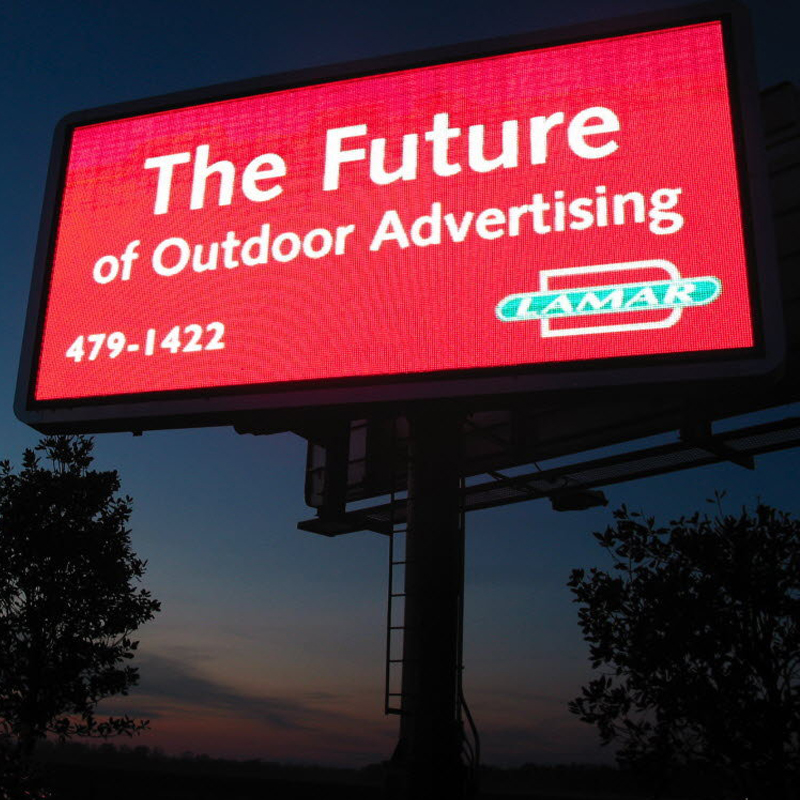
    “As per government laws, for the most part, digital displays are not allowed in this country. Except for one or two places like Bangalore and Kolkata, it is hard to find legitimate space for putting up an LED display. But those too are in a slideshow format and not really as big as you see in other countries,” Bhattacharrya adds.

    Industry experts point out that if Mumbai and Delhi are taken as example, one has more than ten authorities to deal with before one can even think of a draft design of a campaign. “MMRDA, Mumbai Municipal Corporation, the railway authorities, PWDs –the complications are endless, and way more compared to other countries,” Bhattacharya complains.

    Even if permissions to innovate in the controlled environment space become more lenient budget becomes a hindering factor.

    http://www.indiantelevision.com/sites/drupal7.indiantelevision.co.in/files/styles/large/public/ooh8.jpg?itok=DpHb99t5

    “Out of overall spends in the industry, the budget allotted for controlled environment advertising is close to 20 percent only while the bulk of the budget goes to the uncontrolled environment.  And that 20 percent is further split into the different mediums with digital being one. It’s a small percentage that goes into digital,” Balakrishnan shares.

    International advertisers have another advantage over their Indian counterparts, though.

    Elaborating on what Balakrishnan opined, Bhattacharya says, “In other countries the tenders are done for a 10 to 15 year contract, whereas in India it is two to three years at the maximum. From a business perspective, this dissuades media owners from actively investing in the business, as it lacks the guarantee of a prolonged period. Add to that the fact that the initial investment to digitise the OOH infrastructure is high. Thus a short term contract is disadvantageous for a media owner.”

    Nayyar, however, feels if the technology works and gets the clients the desired results, advertisers are willing to pay and go that extra mile for  really effective storytelling.

    Indian OOH’s digital ‘jugaad’

    (Jugaad (alternatively Juggaar) is a colloquial Hindi-Urdu word that can mean an innovative fix or a simple work-around, used for solutions that bend rules, or a resource that can be used as such, or a person who can solve a complicated issue).

    Creatives here are trying to work around their limitations and adopt digital tools and services in their own way.

    From putting up digital billboards for a short period of three days to digitally enable a normal billboard, the ‘jugaads’ are many.

    Balakrishnan highlights the Indian mindset.

    “For example, creatives can use a CEE app that can be embedded into anything and works on an image recognition technology. If embedded in a brand’s app, every single static piece of communication would become interactive sans the use of barcodes, QR code. Just let your phone that has the CEE enabled app of a particular brand register its visual or logo, and it will take you to a large billboard or a small screen for that matter.”

    http://www.indiantelevision.com/sites/drupal7.indiantelevision.co.in/files/styles/large/public/ooh%209.jpg?itok=5l456I4p

    As always, when presented with adversity, the Indian ‘jugaad’ mindset easily kicks in and it seems to be working wonders for the industry so far.

    But that may not sustain it for too long if the country wants to compete and be at par with other mature markets and make the most of the double digit ad spend growth it’s currently experiencing with dollops of digital help from the government, of course.
  • Digital transformation of OOH in India

    Digital transformation of OOH in India

    MUMBAI: Digital billboards, synchronized messaging across hoardings, real time trading, interactive digital displays, mobile convergence, geo-tagged tracking of impressions and measurement — digital is rapidly evolving how out-of-home advertising is perceived.

    A good look around and you will be amazed to see to what extent we are surrounded by advertisements–  on moving buses, at  public places like railways, bus stops, airports, malls and theatres and of course the billboards and hoardings beside every major building and driveway. Out of Home or ‘OOH’ is a ‘traditional’ as well as one of the oldest formats of advertising.

    Though the medium has only ever evolved gradually with time in the last few decades, currently it is at the cusp of a major overhaul that is riding the digital wave.

    http://www.indiantelevision.com/sites/drupal7.indiantelevision.co.in/files/styles/large/public/ooh%20%282%29.jpg?itok=yX7kDlRF

    OOH: The late entrant to digital

    Unlike other advertising mediums, OOH was the latest to feel the impact of the digital disruption here, be it in terms of innovation or revenue loss in ad spends. Where serious concerns were being raised on how digital’s advent will split the ad revenue pie of the market, and cannibalize other media, OOH to the most part was oblivious.

    Sharing his perspective on this transition, Kinetic India CEO South Asia and Middle East Suresh Balakrishnan informs indiantelevision, “The advent of digital in our country in all its form, whether it’s digital, or display or social, mobile has eaten away the budgets of most media.  Having said that, it has happened to India at a good time, for as a market India is growing. We are probably one of the only few markets that are growing at an average of 15 to 18 per cent. Therefore we have made space for digital.”

    “As far as OOH is concerned there has been some revenue loss to digital, but I don’t think it has been significant. I don’t remember a time when OOH was growing at 20 to 30 per cent year on year. It has always lingered around 10 to 13 percent year on year, which again is moderately good growth for OOH,” he adds.

    But that doesn’t mean that ‘change’ isn’t chasing OOH.  

    “OOH can’t sit on its haunches and think that digital will not affect it. Unless, OOH marries digital and adapts what digital has to offer to enhance its services and experience for the consumer, we won’t be able to fight the battle in the long run,” Balakrishnan explains.  

    And that battle is more than about mere survival. It is the way forward for the medium to be more relevant to the consumers, more useful to the clients and more creatively enriching for the agencies.

    Digital, the perfect partner

    To say that digital will aid OOH is an understatement.

    Digital innovation in OOH has enabled the medium to achieve what it was earlier unable to attempt.

    While the idea of a dynamic digital billboard in itself is attractive and engaging for consumers, agencies are now able to explore technology that helps target and track consumers in a better manner and even give a push to point of sale campaigns in malls and other retail outlets.

    http://www.indiantelevision.com/sites/drupal7.indiantelevision.co.in/files/styles/large/public/ooh%20%284%29.jpg?itok=ExgOdzkb

    “There are a lot of innovations that are happening in this area. For example, now digital technology allows users and consumers to scan bar codes from hoardings which directly lead to any product website through their devices,” points out Havas Media Group, India and South Asia CEO Anita Nayyar.

    “Whether it is in the way of ‘blipping’ the product from the hoardings, or digitally connecting an LED screen with some data source, there are various innovations that go hand in hand with billboards that are digitally enabled,” she adds.

    Balakrishnan on the other hand takes delight from the classier messaging that is made possible with digital. He cites an example of a campaign that Kinetic had earlier done for Mondelez’s popular chocolate brand Cadbury Bubbly.

    The crowd at Palladium Mumbai witnessed the experiential and innovative activation where in a digital screen was placed at all these places with a new motion sensor technology that transformed the normal Cadbury Silk chocolate into Cadbury Silk Bubbly with each and every movement around the screen. At metro stations in Mumbai, the screen was placed in such a way that the chocolate bubbled up with the movement of the train.

    http://www.indiantelevision.com/sites/drupal7.indiantelevision.co.in/files/styles/large/public/ooh.JPG?itok=jpwP5Ri8

    The number game: Measurability

    OOH as a medium had long struggled to measure the reach of campaigns. Therefore, very less accountability was placed on the medium and most of the money spent on the medium goes into brand building.

    “With the lack of a streamlined synchronised measurement system, there has been constant pressure from client to prove the effectiveness of the campaign,” Balakrishnan reveals.  But, to many creatives in OOH, digital is a great way to achieve that sense of measurability.

    Nayyar, having seen the Indian advertising scenario evolve, admits that while one medium (digital) is accountable, the other is almost immeasurable.

    “Apart from a couple of researches done, it is very hard to measure this medium. Thus, by clubbing the two medium, outdoor as a medium can gain huge credibility and measurability from digital,” asserts Nayyar.

    http://www.indiantelevision.com/sites/drupal7.indiantelevision.co.in/files/styles/large/public/ooh%20%283%29.jpg?itok=yH00fYXz

    Kinetic has, in fact, launched a tool called SAS or Social Amplification Score worldwide that can add some numbers to even an OOH campaign. The tool has so far been released globally by the Kinetic team and is expected to hit India in the next three months.  

    “The moment an OOH campaign is released, the tool tracks the buzz it creates by using 37 or more keywords like OOH, malls, bus shelter, etc. Basically wherever it is seen and spoken about, to tool automatically puts a score to that. It gathers the information by using geo-tagging technology that most social media platforms have enabled. With this tool therefore, we can put certain reachable numbers to an OOH campaign,” Balakrishnan informs about the effectiveness of the tool.

    Milestone Brandcom founder MD and a pioneer in the OOH business Nabendu Bhattacharyya however sheds a different light on the matter.

    “It is true that all mediums have their own struggle with measurements. Amongst all of them, OOH is the least measurable and most unorganised, Bhattacharyya opines.

    Pointing out that individual agencies have their own measurement systems that help provide clients with numbers, the veteran OOH man says, “If digital billboards become more mainstream, it will help us approach clients on a better ground as digital can incorporate those numbers.”

    Digital OOH: International VS Local

    In spite of some very obvious perks of the digital transformation, India has a lot of catching up to do when it comes to innovating OOH using technology.  Travel to any western country and one can easily spot the vast gap in the digital revolution of OOH.

    http://www.indiantelevision.com/sites/drupal7.indiantelevision.co.in/files/styles/large/public/ooh%20%281%29.jpg?itok=hxnGGHXB

    “If you look at the western markets, OOH is far more advanced and digitised than in our country. It’s also a question of infrastructure as installing these billboards needs a certain aesthetic upgradation as well. Broadband and connectivity also become an issue and do not allow the proposition to be completely seamless and workable,” Nayyar explains.

    Balakrishnan concurs with Nayyar and says, “The more mature markets have gone and beautifully adapted digital with OOH. In fact, I would say the west has shown us that one of the mediums that integrate with digital is OOH.”

    However, Bhattacharyya feels that aesthetically India isn’t far behind western markets in exploiting digital options.

    “In the last few years we have seen some major infrastructural changes in India like the airports have been modernised, fantastic looking metro rails have come up in different places, the malls that are coming up are engineered to look aesthetically good. Therefore these places have immense potential to support a digitally charged OOH campaign. Within the controlled environment, the look and feel of the architectures and the interior designs are at par with what we see internationally,” Bhattacharyya says.

    Challenges: what’s holding OOH back?

    Though each industry player has its own take where Indian OOH stands from a global perspective, most agree that the primary reason that holds them back to optimise the medium’s digital potential is the slow bureaucracy of the country.

    According to the industry, less than 10 per cent of the overall OOH inventory is digital. The reason for that is two-fold: firstly agencies have a hard time securing permissions to go digital in full throttle.

    “The government is slow and the municipal authorities take time to give us those permissions and update themselves,” Balakrishnan explains while highlighting the bureaucratic hurdles.

    The initial cost of setting up digital installations for a campaign is pretty high, and hence media owners who invest in it, think ten times before putting up money.  

    “The setup costs are high when it comes to digital, so naturally the clients also look to quickly amortise it within a year or two. That pushes up the cost of the entire campaign and sometimes clients back out in the end. Balakrishnan puts it bluntly, adding high immeasurability also puts a question mark on big budgets being sanctioned.

    Bhattacharrya goes a step further explaining that ‘real problems’ start beyond the controlled environment spaces.

    “As per government laws, for the most part, digital displays are not allowed in this country. Except for one or two places like Bangalore and Kolkata, it is hard to find legitimate space for putting up an LED display. But those too are in a slideshow format and not really as big as you see in other countries,” Bhattacharrya adds.

    Industry experts point out that if Mumbai and Delhi are taken as example, one has more than ten authorities to deal with before one can even think of a draft design of a campaign. “MMRDA, Mumbai Municipal Corporation, the railway authorities, PWDs –the complications are endless, and way more compared to other countries,” Bhattacharya complains.

    Even if permissions to innovate in the controlled environment space become more lenient budget becomes a hindering factor.

    http://www.indiantelevision.com/sites/drupal7.indiantelevision.co.in/files/styles/large/public/ooh8.jpg?itok=DpHb99t5

    “Out of overall spends in the industry, the budget allotted for controlled environment advertising is close to 20 percent only while the bulk of the budget goes to the uncontrolled environment.  And that 20 percent is further split into the different mediums with digital being one. It’s a small percentage that goes into digital,” Balakrishnan shares.

    International advertisers have another advantage over their Indian counterparts, though.

    Elaborating on what Balakrishnan opined, Bhattacharya says, “In other countries the tenders are done for a 10 to 15 year contract, whereas in India it is two to three years at the maximum. From a business perspective, this dissuades media owners from actively investing in the business, as it lacks the guarantee of a prolonged period. Add to that the fact that the initial investment to digitise the OOH infrastructure is high. Thus a short term contract is disadvantageous for a media owner.”

    Nayyar, however, feels if the technology works and gets the clients the desired results, advertisers are willing to pay and go that extra mile for  really effective storytelling.

    Indian OOH’s digital ‘jugaad’

    (Jugaad (alternatively Juggaar) is a colloquial Hindi-Urdu word that can mean an innovative fix or a simple work-around, used for solutions that bend rules, or a resource that can be used as such, or a person who can solve a complicated issue).

    Creatives here are trying to work around their limitations and adopt digital tools and services in their own way.

    From putting up digital billboards for a short period of three days to digitally enable a normal billboard, the ‘jugaads’ are many.

    Balakrishnan highlights the Indian mindset.

    “For example, creatives can use a CEE app that can be embedded into anything and works on an image recognition technology. If embedded in a brand’s app, every single static piece of communication would become interactive sans the use of barcodes, QR code. Just let your phone that has the CEE enabled app of a particular brand register its visual or logo, and it will take you to a large billboard or a small screen for that matter.”

    http://www.indiantelevision.com/sites/drupal7.indiantelevision.co.in/files/styles/large/public/ooh%209.jpg?itok=5l456I4p

    As always, when presented with adversity, the Indian ‘jugaad’ mindset easily kicks in and it seems to be working wonders for the industry so far.

    But that may not sustain it for too long if the country wants to compete and be at par with other mature markets and make the most of the double digit ad spend growth it’s currently experiencing with dollops of digital help from the government, of course.

  • Northpoint Centre of Learning & Dentsu Aegis launch OOH Advertising programme

    Northpoint Centre of Learning & Dentsu Aegis launch OOH Advertising programme

    MUMBAI: Given the technological metamorphosis that out-of-home (OOH) is currently witnessing, it has emerged as one of the fastest growing segments in the Marketing Communications industry.


    For the young job seeking community, the sector has opened up lucrative career opportunities. Consequently, with much room to maneuver for ambitious youngsters, Dentsu Aegis Network and Northpoint have announced the launch of the ‘Post Graduate Program in Out Of Home Advertising (The PGP-OOHA) programme. 


    The PGP-OOHA programme is being conducted by Northpoint Centre of Learning, a Management Resource Development Centre, located in Khandala, in collaboration with the leading out-of-home agencies – Posterscope India and Milestone Brandcom.


    Designed to develop future managers, the course is a six-month fast-track post graduate career programme.  It is designed to give a thorough working knowledge of OOH advertising and communications including retail, rural and experiential and how they are all inter-related. 


    The course comprises modules, research projects and workshops followed by an internship with Posterscope and Milestone Brandcom.


    A strong emphasis will be laid on student performance evaluation through projects and practical assignments and research done by the students. While the entire semester will provide a comprehensive perspective of OOH advertising and communications, the latter part will be project-based with hands-on production and execution experiences.


    Northpoint Centre of Learning chairman Prem Mehta said, “The launch of this program is another step in keeping with Northpoint’s mission to prepare young graduates for careers in specialised areas of business.  Once again, Northpoint has tied up with the leaders in the OOH industry to ensure relevance of training content, training by industry professionals and substantial field and on-job internships to prepare job-ready managers.”


    Dentsu Aegis Network chairman and CEO South Asia and Posterscope and psLive – Asia Pacific chairman Ashish Bhasin stated, “Today, Dentsu Aegis Network is amongst the fastest growing communications groups in India and understand the need of trained talent that the industry currently needs. Therefore, we are committed to developing professional talent for the industry as a partner on this programme.”


    Dentsu Aegis Network will consider all successful candidates for final placement.


    Milestone Brandcom MD and CEO Nabendu Bhattacharyya opined, “Our objective is to create and attract talent to the OOH Industry where no such formal program existed prior to this, we believe this OOH program will benefit many new entrants as well as the existing trade practitioners in this dynamic Industry. Our, overall objective is to bring in fresh minds into the OOH Communications business for the exponential growth of the Industry. As a Leading OOH Group, “OOH Program” is our contribution to the Industry.”


    Posterscope Asia Pacific regional director and Posterscope Group India managing director Haresh Nayak added, “Posterscope has always prided itself in being innovators, be it in terms of team construct, offerings, services or thought leadership for the last 7 years. This initiative is an extension of that belief, of ‘innovating the way brands are built’ and talented people are the nucleus of innovation. This platform will attract and nurture these talents who will be the future minds and leaders in the Out of Home space.”

  • Tata Docomo retains Milestone Brandcom as its OOH agency

    Tata Docomo retains Milestone Brandcom as its OOH agency

    MUMBAI: Tata Docomo has retained Milestone Brandcom as its OOH agency following a recent pitch.


    Milestone has been the incumbent agency on board for over four years and this time the agency bagged the outdoor media mandate for two additional regions, namely Delhi and Rajasthan.


    Building on their incredible portfolio, this is another feather in the cap for Milestone Brandcom as they continue to deliver the best creative services in the industry.


    Milestone Brandcom managing director and CEO Nabendu Bhattacharyya said, “Tata Docomo is one of the most trusted and successful brands in the country and their faith in us past four years and further mandate and our capabilities encourages us to set the bar higher. We are extremely thrilled to continue this relationship with the Tata’s and hope to achieve more milestones and set the industry benchmark even higher with our deliveries.”

  • We want to professionalise the  Indian OOH industry: Ashish Bhasin

    We want to professionalise the Indian OOH industry: Ashish Bhasin

    MUMBAI: While many Indian outdoor agencies are still struggling to get their due recognition, there are a few that have changed the game. One name that is worth mentioning is Milestone Brandcom. According to sources, the five year old agency has annual revenues over Rs 320 crore and is a leading outdoor company based on billings.


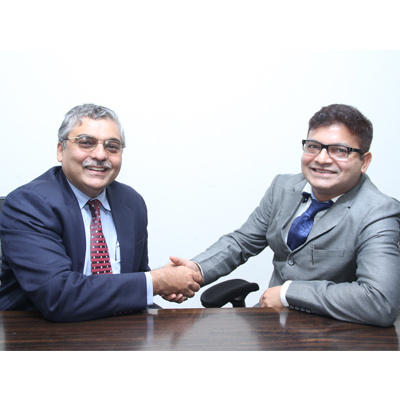
    Things are going to get even better for the agency from now on. Dentsu Aegis Network has acquired majority share in Milestone Brandcom. With the acquisition of OOH agency, combined with Posterscope, a Dentsu Aegis Network’s global outdoor media agency, the network has strengthened its roots in this space.  


    Nabendu Bhattacharyya will continue as CEO and managing director of Milestone Brandcom and will report to Dentsu Aegis Network south Asia chairman and CEO Ashish Bhasin.


    Speaking to indiantelevision.com Dentsu Aegis Network South Asia chairman and CEO Ashish Bhasin mentions, “With rapid retail expansion and ever evolving transmit media there is a lot that can be done in the outdoor industry. We added Milestone Brandcom in our family because there is a fit. Nabendu and his team are extremely passionate about this space. We hope that the move will help professionalise the Indian OOH industry.”


    “This investment now establishes clear leadership for us in the medium, making us the leader in the OOH and OOH Retail space in India. We believe that OOH will play an increasingly important role for clients in years to come so we are delighted to be able to offer clients a market leading service,” adds Bhasin.


    Bhattacharyya is extremely thrilled to join hands with Dentsu Aegis Network. “The main idea behind this development is to understand global practices better and execute them here. Our philosophy is very similar to Dentsu Aegis Network’s and we are confident that as market leaders we will continue to be at the forefront in the business,” he says.


    With a 175 strong team of specialists, Milestone Brandcom is the most awarded OOH agency in India with clients like Colors, McDonalds, Axis Bank, L’oreal etc. The agency also has many other verticals such as event promotion, activation division, rural OOH activation, retail and digital OOH division.


    It was recently when Milestone Brandcom had launched ‘Milestone Optimizer’, a powerful tool which optimises OOH media plans by tracking 25,000 sites across India and providing Gross Impression Points of an OOH campaign, which is one of its kinds in the country. The company will retain its identity, branding and culture and share its knowledge in creative and OOH planning with the group.

  • DSP BlackRock bets high on outdoor

    DSP BlackRock bets high on outdoor

    MUMBAI: DSP BlackRock mutual fund for its scheme ‘India TIGER’ recently created a pan-India, high intensity outdoor campaign. The 15 days outdoor campaign was executed by Milestone Brandcom.


    The campaign’s tagline ‘The tiger is ready to roar’ encapsulates the essence of this aggressive sectoral fund that invests in companies that benefit from infrastructure growth and economic reforms. The outdoor campaign had a total of 500 touch points in cities such as Mumbai, Delhi, Bangalore, Pune, Ahmedabad, Surat, Rajkot and Baroda; spreading awareness about this product amongst the investing population.


    DSP BlackRock head of marketing Aditi Kothari said, “We have been working with Milestone since a number of years and they have never fallen short of delivering upon our expectations. When we spoke to them about an outdoor campaign for our product, they worked tirelessly to help us launch our campaign. This campaign really helped us showcase this product and our brand in the market and the feedback has been very encouraging. I feel that this has been one of our strongest and most appreciated campaigns till date and business results are now showing.” 


    The campaign brief was to reach out to both existing investors as well as potential ones, who believe in the idea of development and growth, and highlight this 10 year old offering from DSP BlackRock.


    “Creating visibility for the TIGER Fund was very challenging as there are many mutual fund companies in the market with multiple products. We had to create a niche for DSP BlackRock Mutual Fund as it is one of the premier financial brands in the country to leave a lasting impression on the target audience. We were able to create and deliver upon a comprehensive high intensity campaign across 8 cities while breaking away from the clutter and retaining brand essence for the product and so far the results have been very positive,” added, Milestone Brandcom founding member & managing partner Imtiyaz Vilatra.

  • Milestone Brandcom introduces measurement matrix for outdoor

    Milestone Brandcom introduces measurement matrix for outdoor

    MUMBAI: While marketers are still looking out for a measurement mechanism to understand RoI for the out of home segment, Milestone Brandcom has gone ahead to create one. The outdoor agency has come up with an audience measurement eco-system called ‘Milestone Optimizer’ that will make planning, buying and evolution processes transparent. 


    The agency has invested over Rs 5 crore in developing this apparatus and has covered top 10 cities in India which they believe accounts for 75 per cent of outdoor advertising spends. The cities include Delhi, Mumbai, Bangalore, Hyderabad, Kolkata, Pune, Ahmedabad, Lucknow and Ludhiana. The agency will cover additional 25 cities in the next 18-20 months. The system has registered 25000 site details of these 10 cities. The tool right now will be used by the agency for its own clients. In the long run, the agency is looking at gaining confidence of the industry to make ‘Optimizer’ as a standard mechanism. 


    “We wanted to move away from site level discussions,” says Milestone Brandcom MD and founder Nabendu Bhattacharya. The Optimizer introduces a new measurement matrix Gross Impression Points (GIP) which will help measure the reach and frequency of an outdoor campaign.  Bhattacharya believes that the outdoor business is expected to grow to 12 per cent this year and he thinks this will happen because of the stability of new government in power and positive economic growth that is expected in the coming months. 


    “In the world of hyper local targeting it has become difficult to customise campaigns at the micro level especially in outdoor. With Optimizer we are sure to develop outdoor campaigns even with very specific briefs,” adds Bhattacharya.


    Milestone Optimizer was developed with the support of industry veterans, media owners, marketing and brand managers across categories and brands. IRS iLAP (Hansa Research); TGI (IMRB Research), Traffic Study (Gfk Mode); Technology Partner (Unikov Technologies) are a few credible databases used in developing a robust scientific planning OOH tool.


    Through GIP, outdoor campaigns can also be compared with the more conventional forms of advertising such as print, TV and radio. It will also allow brands to evaluate category benchmarking and market threshold level of activity giving a whole new dimension to media planning. The agency will soon focus on developing digital out of home campaigns.

  • Milestone Brandcom Takes GoaFest by Storm as it Picks up 9 Awards!

    Milestone Brandcom Takes GoaFest by Storm as it Picks up 9 Awards!

    It is myth that in GoaFest it is only the glamorous agencies which participate. Over the last two years, it can be noted that many new specialised agencies have taken home Abbys for impressive pieces of advertising. Milestone is among this set of newbie winners.

    Milestone kept up with its winning streak and has swept up 9 major awards against a staggering 17 nominations at the prestigiousGoaFest ’14 Abby’s& took home3 Gold, 2 Silver and 4 Bronze awards for its landmark campaigns for ABP News, McDonalds and Viacom 18. Continuing to defy the status quo in industry with their inventive and challenging media campaigns, Milestone placed 3rd overall at the GoaFest which saw over 3000 entries from industry stalwarts.  

    Within 4 years of existence, Milestone Brandcom has creatively altered the conventional face of the OOH Industry whilst challenging the largest of advertising networks with their creativity and delivery. For the second year in a row, Milestone Brandcom created a benchmark in the industry by showcasing some of its finest snippets of authentic work, built purely to benefit the brands.

    The AapkoRakheAage campaign for ABP News won a Silver in Best use of Special Events & Stunts/Live Advertising, two Bronze awards for Best use of Ambient Media – including in theatre {Cinema} and Special Build – Bronze, Media & Publications categories. Bhaag Milkha Bhaag campaign for Viacom 18 picked up a Gold for Experimental Advertising and Bronze for Use of promotional stunts. Milestone Brandcom’s much appreciated McDonalds Double Burger campaign won two Golds for Best Use of Outdoor and Best Use of Ambient Media – including in theatre {Cinema}  and Silver for Best use of Special Events & Stunts/Live Advertising

    Nabendu Bhatacharyya, Founder & MD Milestone Brandcom said on the awards, “This is our second year at the GoaFest and we are happy that our efforts have been recognised in 9 major categories and we had a total shortlist of 17 entries. It is a huge moment for us and we hope to keep up the winning streak. We would like to thank our colleagues, clients, media partners, stake holders & well-wishers for all their support! In less than 4 years, we have gone from strength to strength and there is no stopping us now. When we started out, we aspired to raise industry standards with creative output and maximise industry possibilities irrespective of bottom line restraints. I am proud to say that we at Milestone Brandcom have lived upto that and our achievements are testament to it. We are thirsty for more and hope to raise industry standards further!”

    At a time when the Outdoor Advertising industry is growing at rate of 7% and its size being pegged at 1900 cr, Milestone Brandcom’s success is a noteworthy one where a single entity has managed to prove that strategic and innovative outdoor advertising can deliver much more than conventional streams.
     

    Click here for full report

  • A ‘Milestone’ Journey…

    A ‘Milestone’ Journey…

    GOA: It is myth that in GoaFest it is only the glamorous agencies which participate. Over the last two years, it can be noted that many new specialised agencies have taken home Abbys for impressive pieces of advertising. Among this set of newbie winners is Milestone Brandcom.


    Indiantelevision.com asked Milestone Brandcom MD Nabendu Bhattacharyya how it feels to sweep away Abbys amongst many other mainline agencies.


    Take a look at what he had to say… 


    “Looking back at our four year journey in the dynamic industry that we call advertising, I am filled with pride at Milestone Brandcom’s journey and success. Yesterday at the GoaFest, we won five out of the seven awards that we were shortlisted for and placed third on the table, competing with industry stalwarts. It is a very big moment for us at Milestone Brandcom and we hope to accomplish much more.


    I grew up in Kolkata, surrounded by art, football and culture but my first love was always advertising. Two of my brothers were creative directors in advertising agencies so naturally I set the bar high for myself. In 1993, I kick started my career as a summer trainee at Ulka when advertising was just coming into its own. It was obvious that the possibilities in Indian advertising were endless and largely unexplored. I went on to leave my family and girlfriend who later became my wife behind in Kolkata to work at Selvel’s Delhi office where I had my first brush with the OOH industry. After five years at the company, I decided to move on to Emirates Neon in Dubai, hoping to learn more. As I never really fell in love with Dubai, I returned to join Mudra’s JV with Vertigo and a year later I joined Ogilvy in 1999 where the idea of Milestone Brandcom was conceived.


    Starting as a senior consultant, my journey at Ogilvy has made me who I am today and has had a considerable effect on Milestone Brandcom’s journey as well. After 10 eventful years at Ogilvy and over 16 years in the industry, I decided to start Milestone Brandcom with four colleagues after the bottom line started to restrain our creativity. Today, we at Milestone Brandcom put creativity and delivery above everything else and the success of our campaigns stand testament to that.


    We started with just 25 passionate employees in six offices, our head quarters being a tiny space in Andheri. We had a few clients and many skeptics. We wanted to change industry standards, we wanted to weed out the hurdles that came along with corporate culture and we wanted to deliver. Due to our persistence and knowledge, we quickly went on to win some of the biggest OOH accounts such as Colors, McDonalds, Binani Cement, Axis Bank, Dish TV, Tanishq and Tata Docomo within six months. Through strategic planning, innovative technology and creative solutions, Milestone Brandcom has completely transformed the outdoor landscape to bring about a forward looking, healthy and positive outlook towards the industry.


    As I write this, Milestone Brandcom is a game-changer in the industry that employs over 200 employees with offices/representatives in 42 cities in the country and over 100 active brands. The story of the underdog doesn’t end there. We are also the largest OOH agency in India.


    I hope we add many more ‘milestones’ in our journey ahead…”


    (These are purely personal views of Milestone Brandcom MD Nabendu Bhattacharyya and indiantelevision.com does not subscribe to these views)