Tag: Micromax

  • HMD promotes Abhishek Ranjan to CMO for India, APAC

    HMD promotes Abhishek Ranjan to CMO for India, APAC

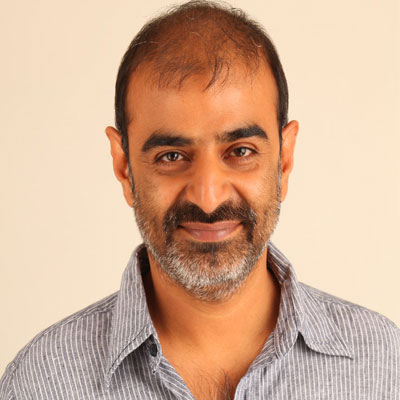
    MUMBAI: HMD is ringing in a new chapter of marketing leadership with the elevation of Abhishek Ranjan to chief marketing officer for India and the APAC region.

    A seasoned brand strategist with over 17 years of experience, Abhishek has helped shape the narrative for some of the biggest names in tech, including Samsung, Micromax, Logitech, Philips Mobiles, Celkon, and Tecno Mobile India.

    Since joining HMD in 2022 as head of brand marketing, he has played a pivotal role in transforming the brand’s identity, leading product campaigns, and spearheading launches that have resonated strongly with Gen Z and millennial consumers. His work on unveiling HMD as an independent phone brand and introducing innovative products like Crest and Fusion has further cemented his reputation as a creative powerhouse.

    In his new role, Abhishek will lead marketing, communications, and brand strategy across India and APAC. His focus will be on innovation-led growth, digital-first engagement, and strengthening HMD’s human-centric promise in an increasingly connected world.

    With his track record of marrying creativity and strategy, Abhishek’s promotion signals HMD’s intent to build a future-ready brand that speaks to the new-age consumer, one innovation at a time.

  • Cloud TV tunes into India’s Cultural Waves

    Cloud TV tunes into India’s Cultural Waves

    MUMBAI: Looks like Cloud TV just found its frequency for nostalgia. In a landmark partnership, India’s first homegrown Smart TV operating system has teamed up with Prasar Bharati’s OTT platform, Waves, to bring the nation’s cultural heartbeat and entertainment heritage straight to connected TVs across the country.

    The collaboration ensures that Cloud TV’s 12 plus million users, spanning popular TV brands like Lloyd, Micromax, and Croma, can now tune into Waves’ vast digital library. From Doordarshan and Akashvani’s iconic archives to new-age shows, music, and live events, the platform offers content in over 20 languages, uniting India’s timeless stories with today’s digital rhythm.

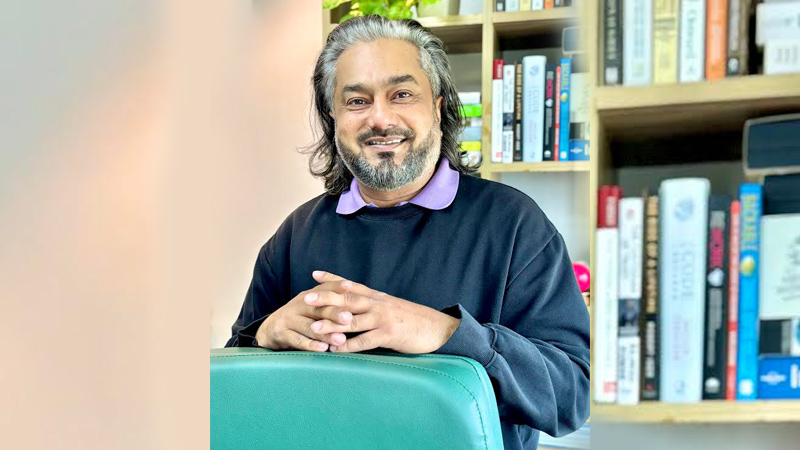
    Cloud TV COO & co-founder Abhijeet Rajpurohit called the alliance “a digital bridge connecting nostalgia with innovation, heritage with technology.” The goal, he said, is to let viewers experience India’s cultural narrative in a modern, accessible way.

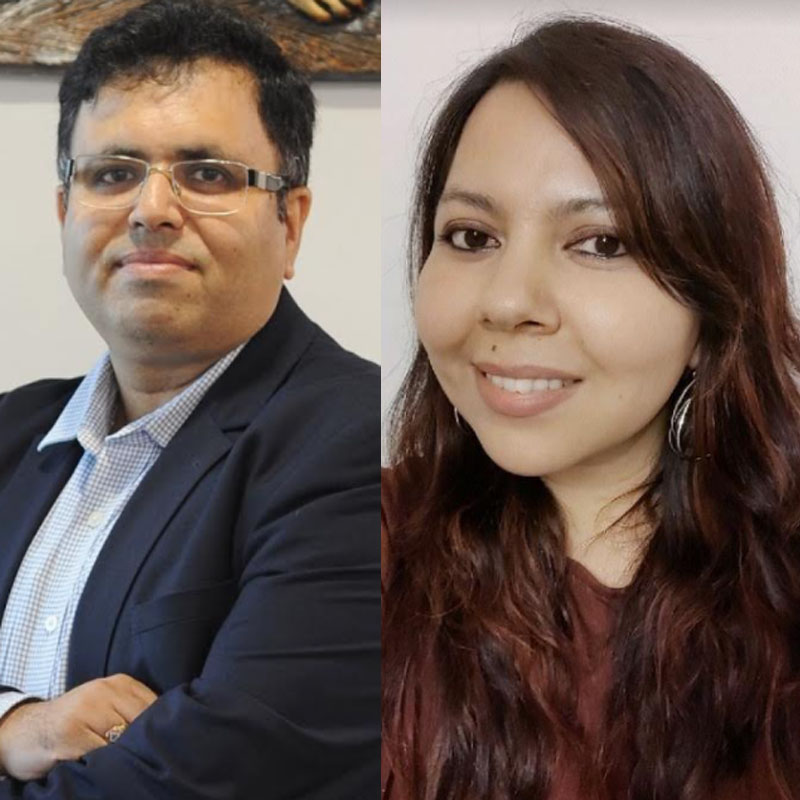
    Echoing this sentiment, Prasar Bharati CEO Gaurav Dwivedi noted that Waves embodies India’s self-reliant digital vision, giving audiences a seamless way to engage with the nation’s rich cultural and creative ecosystem.

    With Cloud TV OS already powering millions of Smart TVs across brands, the move amplifies Waves’ reach into homes nationwide. Viewers can simply spot the Waves logo on their Cloud TV-powered sets and dive into a treasure trove of shows, radio, podcasts, and archives, where the old meets the new in perfect harmony.

    After all, with desh ka apna OTT meeting desh ka apna OS, India’s story just found its clearest signal yet.

  • Amazon expands Anish’s empire across Middle East and Africa

    Amazon expands Anish’s empire across Middle East and Africa

    DUBAI: Amazon has promoted a veteran marketing executive to oversee both deal-making across the Middle East and North Africa and marketing operations in South Africa, as the American e-commerce giant doubles down on emerging markets.

    Anish  Rajan, who previously orchestrated Amazon India’s flagship sale events generating over $2 billion in revenue, has been handed the expanded role effective September 2025. His promotion adds south African marketing responsibilities to his existing mandate as head of deals and events across the United Arab Emirates, Saudi Arabia and Egypt.

    The appointment reflects Amazon’s growing ambitions in regions where it sees significant untapped potential. Rajan’s west Asian operation already contributes 23 per cent of the region’s annual revenue, whilst launching Amazon-first innovations that have since been rolled out globally.

    His track record spans 15 years across e-commerce, consumer electronics and logistics. Before joining Amazon in 2020, he held senior marketing roles at Samsung Electronics and led marketing communications for fashion platform Jabong during its high-growth phase.

    At Amazon India, Anish spearheaded the deals programme that accounted for 39 per cent of store revenue, building scalable systems and customer experience improvements that were subsequently adopted across Amazon’s global marketplaces.

    His earlier career included stints at Micromax, where he led brand strategy and product launches, and DHL Express, where he managed global partnerships including Formula 1 and Manchester United, overseeing a $30 million retail portfolio.

    The dual-region role positions Anish at the centre of Amazon’s emerging markets strategy, where the company is competing fiercely with local players and other global platforms for market share.

  • Shubhodip Pal named CEO of ITW Universe’s integrated marketing division

    Shubhodip Pal named CEO of ITW Universe’s integrated marketing division

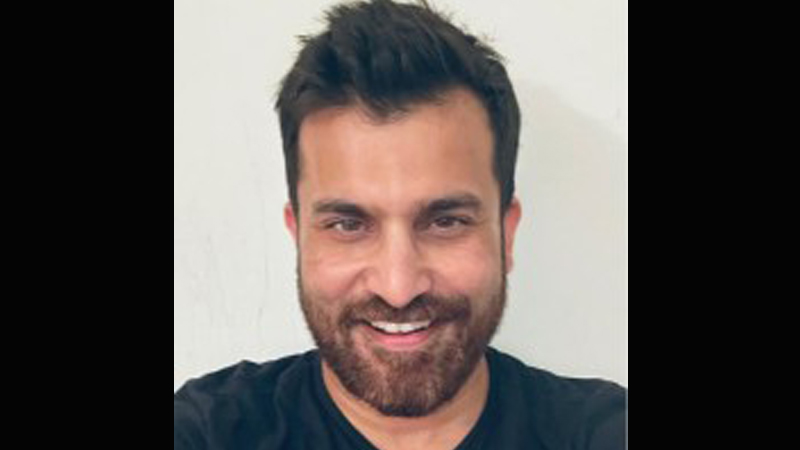
    MUMBAI: ITW Universe just made a power move in the marketing world. The company has brought in Shubhodip Pal as the CEO of ITW’s Integrated Marketing Services (ITW IMS) division. With 27 years of experience and a reputation for turning brands into household names, Pal is set to supercharge ITW’s game plan across sports, media, and entertainment.

    Pal isn’t just a marketing pro—he’s a brand magician. He has led Samsung, ABN Amro Bank, Hewlett Packard, Micromax, Balaji Motion Pictures, and Revolt Motors to new heights. From launching Samsung’s legendary sports campaigns to transforming Micromax into a billion-dollar empire (yes, with Hugh Jackman in tow), his career is basically a masterclass in marketing wizardry.

    ITW Universe co-founder Bhairav Shanth welcomed Pal with enthusiasm, “We’re thrilled to welcome Shubhodip Pal to the ITW family. At ITW, we’ve always been at the forefront of innovation, and I have complete confidence that Shubhodip, with his groundbreaking ideas, will drive our vision even further. ITW IMS is a transformative division, and I can’t think of anyone better suited to lead it. Over the course of his career, Shubhodip has consistently demonstrated a unique ability to transform brands and leverage cutting-edge marketing strategies, which aligns perfectly with our commitment to delivering exceptional value to our clients.”

    Pal’s portfolio includes some of the biggest marketing campaigns in India:

    .  Samsung Cup – Spearheaded the brand’s cricket initiatives, including India’s tour of Pakistan after 13 years.

    .  Hewlett Packard’s Rebrand – Led HP’s transition from a B2B brand to a lifestyle powerhouse, introducing fashion-inspired laptops and the first digital cricket trophy with BCCI.

    . Micromax Boom – Took the brand from $350 million to $1.3 billion in 3.5 years, launched industry-first campaigns, and brought Hugh Jackman onboard.

    .  Googly Media – As CEO, built a Singapore-based gaming platform from concept to launch, securing major partnerships in less than a year.

    .  Balaji Motion Pictures – Oversaw blockbuster hits like Ek Villain, Udta Punjab, Veere Di Wedding, and Half Girlfriend.

    Pal is stepping into ITW IMS with a crystal-clear goal—giving brands a single-window solution for maximising media, sponsorships, and creative strategies. Sharing his excitement, he said, “I am very excited to be a part of ITW’s growing vision as one of the largest sports and entertainment agencies in the country. ITW has helped brands create a niche in sports and beyond, the need of the hour is a single window solution for brands to leverage which combines media, creative, maximising the Sponsorships which they invest in and actionable strategy across mediums and diverse platforms available today. With ITW working with 39 brands last year during the IPL was landmark on its own showing trust in us delivering solutions and activating rights be it Offline or online. I am looking forward to leading our dynamic team and spearheading our transformative approach across the BU’s in ITW and giving our clients bang for their buck. Customisation solutions for brands, understanding their needs and delivering is key to our success – we will always be part of the Brands CMO’s team for the brands we work with.”

    With Pal at the helm, ITW IMS is gearing up for major brand collaborations, data-driven marketing strategies, and deeper engagement in sports and entertainment sponsorships. The division has already bagged several high-profile mandates, with more announcements on the way.

  • Micromax announces comeback

    Micromax announces comeback

    NEW DELHI: Popular Indian mobile manufacturer Micromax is poised to make a comeback with its "In" range of smartphones.

    Micromax founder Rahul Sharma made the announcement, saying the homegrown company is once again looking to re-enter the smartphone market. In a video posted on Twitter, Sharma narrated Micromax’s journey – the brand’s growth to the top as well as the mistakes which were made on the way – and that it’s now ready for a fresh start.


    Sharma stated that he does not condone the recent events playing out on the Indo-Sino border. At one point the number 2 smartphone maker in India, Micromax faced tough competition from Chinese brands, and was eventually forced to call it quits.

    “The Chinese mobile manufacturers wiped me out in my own country. This time, whatever I do, will be for the sake of India," he said in the video, adding that he has taken PM Narendra Modi’s call of Atmanirbhar Bharat to heart.

    Micromax, along with 15 other smartphone manufacturing companies, was approved for incentives under the government's Production-linked incentive (PLI) scheme.

    Earlier this year, the Centre had amended the rules to the PLI scheme to make it more market-friendly by removing caps and other contentious clauses. The incentives range from 4 per cent to 6 per cent over a five-year period, provided the manufacturer makes smartphones valued at around $200.

    According to a Reuters report, the approved companies are expected to make Rs 10,50,000 crores worth of smartphones in India.

    A few years ago, brand Micromax was shining and thriving in the sub-Rs 10,000 and sub-Rs 5,000 segment phones. It also launched several premium smartphones and did an interesting campaign with Hollywood superstar Hugh Jackman.

  • Micromax aims to make a comeback: Reports

    Micromax aims to make a comeback: Reports

    NEW DELHI: Homegrown smartphone brand Micromax is reportedly planning to make a comeback to the Indian market. This time, the company is banking on the government support, with its Production Linked Incentive (PLI) scheme which was announced recently. The company said that it would invest Rs 500 crore towards manufacturing and research and development, as per an online report. The brand also plans to launch 20 new phones by the end of the next fiscal.

    The PLI scheme will help boost local manufacturing as part of government’s initiative to make India self-reliant (Aatmanirbhar). The PLI scheme was announced on April 1, 2020, under the National Policy on Electronics 2019 shall extend an incentive of 4% to 6% on incremental sales (over the base year) of goods manufactured in India and covered under target segments, to eligible companies, for a period of five (5) years subsequent to the base year as defined.

    Micromax co-founder Rahul Sharma in an interaction with a leading daily said that the company was looking to regain its spot in the smartphone market through the multiple handsets it has planned to launch in the future. He also mentioned that the phone would look to disrupt the market.

    On 15 August, the smartphone brand had also uploaded a teaser across its social media handles captioned “73 years of independence or being in dependence? On our 74th independence day, let’s stop being doosron pe nirbhar and become truly Atmanirbhar. Are you ready to join the revolution with us?”

    Due to the influx of Chinese brands including Xiaomi, Oppo, the homegrown smartphone brands got wiped out of the smartphone market. Reportedly, Xiaomi is currently leading the smartphone market with a 30 per cent market share.

  • Micromax looks to encash anti-China sentiments on return

    Micromax looks to encash anti-China sentiments on return

    NEW DELHI: The recent ongoing border tension between Indian and China has prompted a major backlash against Chinese products in India. In a bid to encash this anti-China sentiment, homegrown smartphone brand Micromax is making a comeback in the Indian smartphone market. 

    The company announced on its official Twitter handle that it will launch three new smartphones this year with premium features, affordable pricing and modern looks. The brand is also using hashtags such as #MadeinIndia and #MadebyIndian on its social media channels to promote its offerings.

    The Indian smartphone market is dominated by Chinese brands like Xiaomi, OnePlus, Vivo, Realme and others with no Indian brand in the top five. Micromax had its legacy in the market till 2015, before the entry of Chinese giants. According to Canalys, Micromax overtook Samsung in Q4 2015, grabbing 22 per cent of smartphone sales in India, ahead of Samsung’s 20 per cent.

    The brand enjoyed massive success once and was known for its power-packed battery with affordable pricing, which made it popular in rural India. In 2015, the company was ranked as the second-largest smartphone seller in India, after Samsung. But soon after the entry of Chinese makers, the tables turned and Micromax was wiped out. 

    Xiaomi, Oppo and Vivo focused heavily on retail distribution, marketing channels, new technologies and other key areas. Micromax also faced stiff competition due to the changing regulatory policies and the onset of 4G technology.

    Micromax isn’t the only brand which had faced the brunt. Other Indian companies like Karbonn, Lava, Xolo and Intel have also vanished from the market. Some of them tried focussing on entry-level smartphones, but soon Chinese brands captured that market too.

    It’s not going to be an easy task for Micromax to regain the lost market after a gap for several years. Can the growing anti-China sentiments be a boon for Indian smartphone manufacturers or is it a short-term phenomenon?

    Independent Communications and Marketing consultant Karthik Srinivasan says, “Features like battery life, camera, screen quality, speed of operation, etc., are graded and compared by a lot of people before making their purchase decision. So, either Micromax or any other Indian brand needs to get their quality right (or at last comparably good) to win over Indian consumers. They cannot depend on anti-China sentiments alone.”

    TRA founder and CEO N Chandramouli differs. He says, "It will be a big boon for all non-Chinese manufacturers as the current border tension mounts. Even though Chinese products sell very well in phones, the sentiment of Chinese products, in general, has never been too good. In their price segments, Micromax, Lava, and other such Indian brands will definitely find a greater buying propensity among consumers at a time when they are also in a strong comeback gear. Consumers choose products based on their emotions, values, and beliefs and when it comes to the sovereignty of India being attacked, even the most rational consumers will tend to avoid Chinese brands."

    When the #MadeinIndia campaign was launched, the company saw a hope of revival as the brand had an efficient assembling product in India. But soon after, Chinese players started manufacturing their products in India too.

    There are speculations that Lava also plans to make a comeback. However, there are no details yet.

    Micromax was the first-ever smartphone brand to announced Hugh Jackman as its brand ambassador when the company was at its peak. It also had associations with Akshay Kumar and Twinkle Khanna. However, Chinese smartphones adopted the same proposition. Brands like Oppo, Vivo, Xiaomi, and Realme have been riding high on brand ambassadors like Ayushmann Khurrana, Alia Bhatt, Aamir Khan, Ranbir Kapoor, Salman Khan, Ranveer Singh, etc.

    This time Micromax not only needs to strengthen its product portfolio but has to boost awareness and change brand perception in the minds of Indian consumers. So, how crucial does the marketing channel become whenever a brand tries to make a comeback, that too riding on national interest? 

    “The entire marketing narrative is likely to be one of capturing consumer emotions. Depending on how an Indian brand positions its comeback, it can have a lasting impact. I can foresee Indian phone brands seeking an emotional connect creating ads using actors in military uniform, possibly in treacherous terrain, talking on an Indian phone with his child/wife/mother, with ‘Bharat Ke Saath’ type of messaging,” says Chandramouli.

    However, Srinivasan explains that the claims made via marketing need to be believable and credible. "It would be silly to assume that consumers are gullible to go just with a 'Made in India' label in marketing,” he says.

    It is pertinent to note that OnePlus launched its new model OnePlus 8 Pro a few days back which was sold out within minutes despite the boycott of Chinese products sentiment on social media platforms. 

  • The rising trend of coopetition among brands

    The rising trend of coopetition among brands

    MUMBAI: Who would have thought that companies would overcome their ego and actually collaborate with other brands to come up with joint advertisements? That is the new trend in the market-coopetition (a combination of cooperative and competition).

    Companies are willing to do anything today, including riding along with other brands just because it will benefit them. Coopetition essentially involves one company advertising through another company, so that each can benefit from the brand loyalty and reputation of the other. It is also called brand partnership and the term is relatively new to the business vocabulary and is used to encompass a wide range of marketing activities involving the use of two or more brands.

    An early instance of co-branding occurred in 1956 when Renault tied up with French jeweller Jacques Arpels to turn the dashboard of one of its newly introduced Renault Dauphines into a work of art. A unique case of coopetition was when Burger King made a proposal to archrival McDonald’s to create a unique burger McWhopper but Ronald McDonald frowned on it.

    public://Screen Shot 2018-01-14 at 7.03.43 PM.png

    The most infamous case was the success story of Samsung and Sony partnership back in 2004. Two competitors who operate in the same television manufacturing business decided to come together in a joint venture to develop and produce LCD panels for flat screen TV sets. Teaming with a rival produced two innovations, knocking down other competitors from their positions and more than doubled the combined market share of these two companies. The companies ended their partnership of liquid-crystal displays for televisions in 2011.

    Although a common practice internationally, the phenomenon is fairly new in India. The most acknowledged has been Ariel washing powder and LG washing machine coming together for a brand alliance. The partnership was strengthened by a TVC that showcased LG as the best washing machine to wash your clothes using Ariel washing powder.

    Indian two-wheeler motorcycle company Hero Group and Japanese Honda Motor Company entered a joint venture to set up Hero Honda Motors Limited in 1984. The joint venture not only created the world’s single largest two-wheeler company but also one of the most successful joint ventures worldwide. But, on 16 December 2010, the companies signed an agreement to dissolve their partnership.

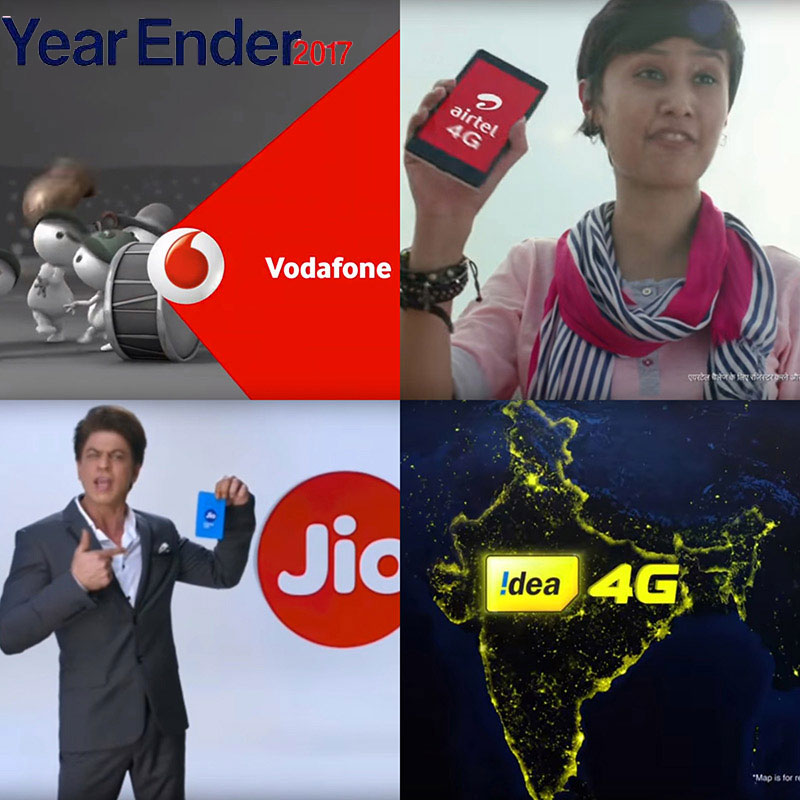
    We have also witnessed telecom companies partnering with handset manufacturers to strengthen their position jointly in the market. This results in an increased sale of handsets and mobile network subscribers. In 2017, Sunil Bharti Mittal-led Airtel launched Android-powered 4G smartphones in partnership with Karbonn Mobiles. Domestic handset maker Micromax and Vodafone also came together to offer a smartphone at an affordable price hence increasing the mobile and network penetration in smaller markets.

    The latest addition to the list is sanitaryware Parryware joining hands with toilet cleaner Harpic to educate and promote imperative lifestyle habits. Emphasising the need for hygienic and clean toilets, the duo has even jointly launched a television commercial which revolves around the need to keep toilets sparkling clean and germ free for maintaining hygiene as well as longevity, while showcasing bathrooms as an important factor that drives health and well-being of consumers in their living spaces.

    Additionally, various food delivery apps have also been tying up with cab hailing services and e-commerce websites tie-up with mobile handsets as an exclusive seller such as OnePlus with Amazon. Although the trend is fairly new, it is an interesting space to see two brands coming together to achieve marketing and revenue goals together.

    Also Read:

    Indian TVCs that rapped with consumers

    The attention grabbing gimmick of comparative advertising

    Why do we lack animated ads despite their popularity

  • The year the telecom sector quaked

    The year the telecom sector quaked

    An interplay of myriad factors contributed to India’s telecom industry witnessing both turmoil and revolution in 2017. Consolidation was the buzzword as some of the largest telecom operators merged even as Reliance Jio Infocomm Ltd (RJio) emerged as a frontrunner for Reliance Communications’ (RCom) assets according to reports. RJio can also take credit for ushering in a data revolution in the country.

    Moreover, smartphone penetration during the year increased three-fold with the aggregate number of users at more than 300 million. With smartphones still accounting for less than 50 per cent of handset users (650 million) in the country, another surge in data consumption is on the anvil.

    The price war

    Indian tycoon Mukesh Ambani sparked a price war in 2016 with the launch of Reliance Jio. As a consequence, the country’s large telcos have been burning through cash this year to hold on to their market share. Vodafone and Airtel tried luring customers through cheap data and unlimited calling offers. Reliance Jio, however, clearly won that battle. Within the first month of commercial operations, Jio announced that it had acquired 16 million subscribers. This was the fastest scaling up by any mobile network operator anywhere in the world. The operator crossed the 50 million subscriber mark 83 days from its launch, crossing 100 million subscribers on 22 February 2017. By October 2017, it had around 130 million subscribers. 

    With telcos looking to push for higher data pack purchases, 4G became cheaper than 3G. Today, 4G data costs are as low as 1 paisa per MB.

    Sectoral consolidation 

    From as many as 13 players at one point in time, we are now left with just five major contenders even as RCom sits on the brink of leaving the fray. Earlier this year, Vodafone India and Idea Cellular decided to merge operations to create India’s largest telecom operator worth more than $23 billion beating Sunil Bharti Mittal-led Airtel. With this deal, Vodafone India’s valuation stood at Rs 82,800 crore and Idea’s at Rs 72,200 crore. 

    RCom, reeling under a debt of around Rs 46,000 crore, shut down its voice services from 1 December 2017 after it failed to close its wireless business merger deal with Aircel. The Telecom Regulatory Authority of India (TRAI) has issued a directive to RCom’s customers to move to other networks by the end of this year. Vodafone, Airtel, and Jio created special packs for RCom customers to lure them to their networks. 

    Telcos and handsets 

    In July 2017, Jio introduced JioPhone–the company’s first affordable 4G feature phone powered by KaiOS. The phone was made available for a security deposit of Rs 1500, which could be reimbursed on returning the phone after three years. This phone was released for beta users on 15 August 2017 and pre-booking for regular users started on 24 August 2017. 

    To strengthen its presence amidst the battle for market share, Airtel launched Android-powered 4G smartphones in partnership with Indian cellphone manufacturer Karbonn Mobiles. Airtel also partnered various other mobile handset manufacturers, including Intex, to create an ‘open ecosystem’ of affordable 4G smartphones.

    Not one to be left out of the party, Vodafone and domestic handset maker Micromax came together to offer a smartphone priced a shade under Rs 1000 with a three-year rider.

    Internet of Things

    Despite posing privacy risks, Internet of Things, or IoT, remained one of the buzzwords in tech circles this year. According to Vodafone Plc’s annual IoT barometer report 2017-18, the percentage of companies with more than 50,000 connected devices active has doubled in the last 12 months with over 84 per cent of IoT adopters saying that their use of IoT has grown in the last year. From the Indian organisations that were a part of the study, 81% felt that IoT was key to digital transformation.

    In India, Vodafone marked itself as the first brand to undergo this evolution. The telco repositioned itself as a contemporary and future-fit brand. It is a significant metamorphosis for one of India’s most iconic and loved brands since the ‘Power to you’ tagline was introduced in 2009. This new positioning, a part of Vodafone’s rebranding exercise across 36 countries, is designed to underpin its belief in new technologies and digital services playing a positive role in transforming society.

    Net neutrality  

    In what was seen as a sign of things to come, the US Federal Communications Commission voted in December to scrap net neutrality, which requires internet service providers to treat all internet traffic equally. The TRAI, not too long after, came out in strong support of net neutrality in a series of recommendations following a long process of consultations on the issue. The regulator believes that the licensing terms should be amplified to provide explicit restrictions on any sort of discrimination in internet access based on the content being accessed, the protocols being used or the user equipment being deployed. 

    With IoT being the talk of the town, networks fighting to grab RCom’s assets and customers, and an ongoing telco war between Airtel, Vodafone, and Jio to become the country’s numero uno operator, it will be interesting to watch how the industry shapes up in 2018.