Tag: microdramas

  • Dentsu cracks the code: three human truths that will define marketing in 2026

    Dentsu cracks the code: three human truths that will define marketing in 2026

    MUMBAI: In an era where artificial intelligence orchestrates our every click, the most valuable marketing insights remain decidedly human. Dentsu’s latest media trends report strips away the algorithmic complexity to reveal three enduring behaviours that will separate winners from also-rans in 2026: our craving for simplicity, our need to connect, and our dwindling attention spans.

    The sixteenth edition of Human Truths in the Algorithmic Era arrives as brands grapple with seismic shifts—conversational search engines that blur the line between query and oracle, agentic AI that promises to shop on our behalf, and cultural formats from Japanese anime to Chinese microdramas rewrite entertainment rule books.

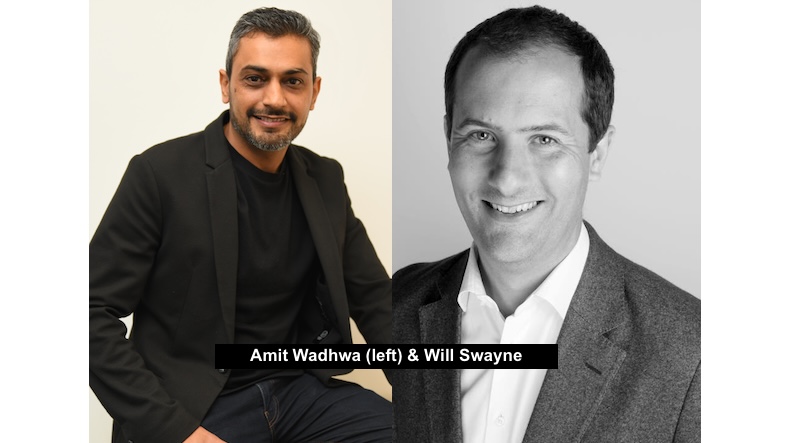
    “Just a few years ago, the media landscape seemed dominated by a handful of platforms,” said dentsu global practice president of media and integrated solutions  Will Swayne. “By 2026, the foundations may crack even further. Brands must focus on what remains stable over time by rooting their strategic thinking in core, invariable human behaviours.”

    The first truth—we are simple until we are complex—captures how consumers chase convenience but rebel against algorithmic predictability. Nobody enjoys searching for parking spots or wading through bloated recipe blogs. Yet the Labubu plush toy frenzy proves the thrill of the chase still matters.

    Dentsu identifies search experience optimisation as the new battleground, encompassing everything from large language model optimisation to retail search. As zero-click searches proliferate, brands must ensure content appears everywhere consumers look—whether that’s ChatGPT, TikTok or Amazon.

    The report warns against “agent inflation”—rushing to deploy AI agents without strategy. With 80 per cent of chief marketing officers citing generative AI as a priority investment, dentsu urges building context-aware systems with governance safeguards, not chatbots slapped together for boardroom optics.

    Then there’s the friction paradox. Whilst Amazon rolls out instant-scan shopping and same-day perishable delivery, cult brands like Knitwrth announce collection drops weeks in advance with strict no-returns policies. Trader Joe’s refuses online ordering entirely. Strategic friction, dentsu argues, can spark desire and build community—if wielded deliberately.

    The second truth—we are social animals—explores how influence has decentralised. Nearly half of American adults regularly spend time with friends, and 83 per cent of consumers believe brands should facilitate human connections, not just transactions.

    Reddit threads now rival mainstream media for product reviews. Substack recently surpassed The Wall Street Journal in traffic. Dentsu’s research shows promotional content from creators holds attention longer and drives greater consideration than brand ads—but only when creators retain control.

    The report urges brands to invest in diverse smaller creators with authentic ties rather than chasing mega-influencers. Twice as many people engage most with influencers under one million followers than with mega-influencers. Gen Z favour Twitch and Discord; boomers prefer LinkedIn and Facebook.

    Live experiences remain unmatched for forging shared memories. Streaming platforms are acquiring sports rights and launching original live programming—WWE’s Raw has ranked in Netflix’s global top 10 every week in 2025. Meanwhile, Millennial nostalgia is peaking: Oasis tours, Buffy reboots, and The Devil Wears Prada sequels are minting money in 2026.

    Business messaging is finally monetising at scale. WhatsApp, WeChat and Messenger each boast over one billion monthly users, with WhatsApp reportedly opened 891 times monthly versus TikTok’s 359. New ad placements are emerging, but the real opportunity lies in unified commerce and customer experience through persistent conversations.

    The third truth—we don’t read advertising—acknowledges that nobody ever has. Howard Luck Gossage nailed it decades ago: “People read what interests them; and sometimes it’s an ad.”

    With exploding screen time and AI slop drowning feeds, advertisers are collectively spending more to reach fewer people. Dentsu’s answer: play the quality game, not the saturation game.

    AI-generated audiences offer a way forward. These synthetic consumer profiles simulate real-world attitudes and behaviours, providing immediate creative feedback and reducing research costs. Dentsu’s Generative Audiences capability combines ID-based precision with AI-driven scale, enabling brands to engage known customers accurately whilst connecting with new audiences as interests shift.

    Carat’s Brand Reset research—the world’s largest attention study on video’s long-term impact, spanning 40,000 people and ten NextGen video platforms—reveals that connected television now delivers outcomes comparable to broadcast. A single CTV exposure lifts long-term sales by 3.16 per cent over three years, approaching broadcast television’s 3.61 per cent. Even short-form vertical video in fast-scroll environments can lift sales by 6.62 per cent with proper attention.

    Entertainment presents untapped white space. Sports docuseries reach 40 per cent of global consumers monthly, capturing women, Gen Z and emerging markets where traditional sports lag. Gaming still captures less than five per cent of global media investment despite massive user bases. And 50 per cent of Gen Z watch anime at least weekly—more than any major sports league in the United States.

    dentsu creative and media brands in South Asia chief executive Amit Wadhwa frames the challenge starkly: “In a world ruled by algorithms, human truths remain our compass. Technology opens doors, but empathy, creativity and understanding people will determine who truly wins.”

    The report, developed by 30 global media experts, positions media not as a channel but as a growth engine connecting creativity, commerce and culture. Brands that anchor strategy in enduring human truths whilst embracing new formats—from agentic AI to microdramas—can move beyond mere survival.

    Because in 2026, as algorithms reshape everything from search to shopping to storytelling, the brands that win won’t be those with the most agents or the biggest ad budgets. They’ll be the ones that remember we’re still human—simple when we can be, social when we need to be, and utterly unmoved by advertising that forgets what interests us.

  • Bite-sized drama is eating the internet: Ampere Analysis

    Bite-sized drama is eating the internet: Ampere Analysis

    MUMBAI: The attention span may be shrinking, but the audience for micro-drama is exploding. More than one in ten internet users worldwide now regularly watch drama episodes lasting ten minutes or less on social media—a format that’s turning Hollywood’s traditional playbook on its head and forcing commissioners to rethink everything from episode length to distribution strategy.

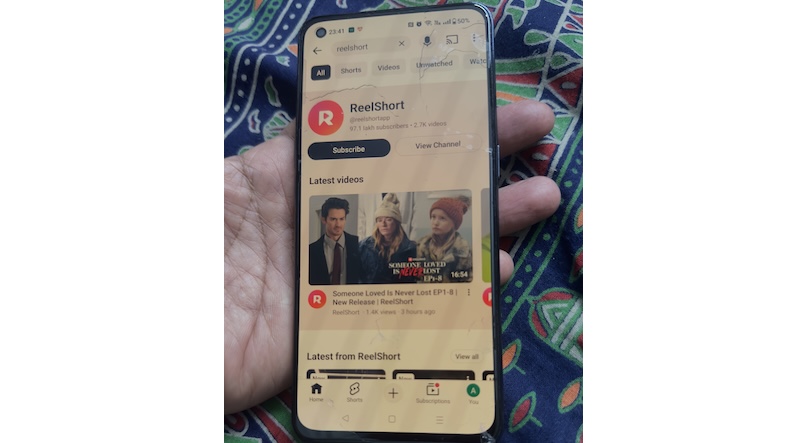
    Ampere Analysis surveyed over 100,000 consumers in two separate waves across 30 global markets, polling 56,000 internet users aged 18–64. The findings reveal that these “mini-dramas” and “micro-dramas”—the shortest clocking in at under two minutes—are thriving on YouTube and TikTok. The platforms have become both primary distribution channels and discovery engines for premium subscription apps like DramaBox and ReelShorts, which are betting big on vertical video optimised for phone viewing.

    The numbers tell a compelling story about changing consumption habits. Average internet users now spend nearly 50 minutes a day watching videos on social media. For younger audiences, that figure jumps dramatically: 18- to 34-year-olds are clocking over an hour daily, creating a captive audience for bite-sized content that fits neatly between scrolls.

    The demographic split is predictable but stark. Viewers aged 18–34 are 21 per cent more likely than average to have watched a mini-drama in the past month. Nearly half of internet users in that age bracket—46 per cent—are already hooked, consuming short-form scripted content as readily as they consume traditional social media posts.

    But the format isn’t exclusively a young person’s game. Among 35- to 44-year-olds, 23 per cent have watched a micro-drama in the past month—the highest proportion of any age group surveyed. Some 19 per cent of 18- to 24-year-olds reported the same, with the 45-to-54 cohort close behind at 18 per cent. Even the 55-to-64 demographic is getting involved, with 13 per cent tuning in. The data suggests mini-dramas are breaking out of their youth-oriented niche and moving into the mainstream.

    AGE OF VIEWERS

    Geography tells an equally revealing story. Engagement is strongest in Thailand, Malaysia and the Philippines, where mobile-first viewing habits dominate and vertical video has become the default mode of content consumption. The Asia-Pacific region leads consumption overall—hardly surprising given that nearly all existing micro-drama platforms hail from China, where the format has already matured into a lucrative industry. The market is soon to be flooded with Western competitors trying to replicate that success. European audiences, by contrast, remain largely unmoved by the format, suggesting cultural preferences or viewing habits that haven’t yet shifted to accommodate ultra-short storytelling.

    YouTube commands 44 per cent of mini-drama viewership, with TikTok capturing 38 per cent. Together, the two platforms account for a commanding 82 per cent of all short-form drama consumption on social media—Instagram picks up the scraps. YouTube’s sheer scale gives it the edge: in September, it accounted for 12.6 per cent of all television usage, according to Nielsen, compared with Netflix’s 8.3 per cent. No other service claimed even five per cent. While vertical video may feel like TikTok’s natural domain, YouTube’s reach makes it nearly impossible to overcome.

    Romance, anime and fantasy are the genres pulling the biggest crowds—commissioners would be wise to treat these as priority areas for future productions. The preference for escapist, emotionally-driven content suggests audiences are using mini-dramas for quick hits of entertainment rather than deep narrative engagement.
    Minal Modha, research director and head of sports media, sponsorship and consumer research at Ampere Analysis, says shorter scripted drama platforms are “capitalising on the increasing use of vertical videos customised for phone viewing, particularly among younger audiences”. The format’s success, she notes, stems from its perfect alignment with existing social media behaviour patterns.

    The industry is pursuing two distinct strategies, both designed to maximise the format’s commercial potential. The first: dump entire series on YouTube and monetise through advertising revenue, treating the platform like traditional broadcast television but with shorter episodes and higher frequency. The second: seed clips and teasers on TikTok or Instagram to build buzz and audience interest, then drive viewers into subscription apps such as DramaBox or ReelShorts for the full experience. It’s a funnel approach that transforms social platforms into massive marketing engines.

    The format may be miniature, but the business model is anything but. Short attention spans, it turns out, can generate long revenue streams—and potentially more reliable ones than traditional hour-long dramas. Production costs are lower, turnaround times are faster, and audiences can consume entire story arcs in a single lunch break. As Hollywood scrambles to jump into mini-drama production, the question is no longer whether bite-sized content works—it’s who can scale it fastest, and whether Western producers can crack the code that’s already minting money in Asia.

  • Bite-sized dramas are about to swallow the streaming world whole

    Bite-sized dramas are about to swallow the streaming world whole

    CANNES: Forget your boxsets. Forget your hour-long dramas. Audiences are ditching long-form television for something far more intoxicating: episodes that fit in your pocket and demand your full attention in under ten minutes.

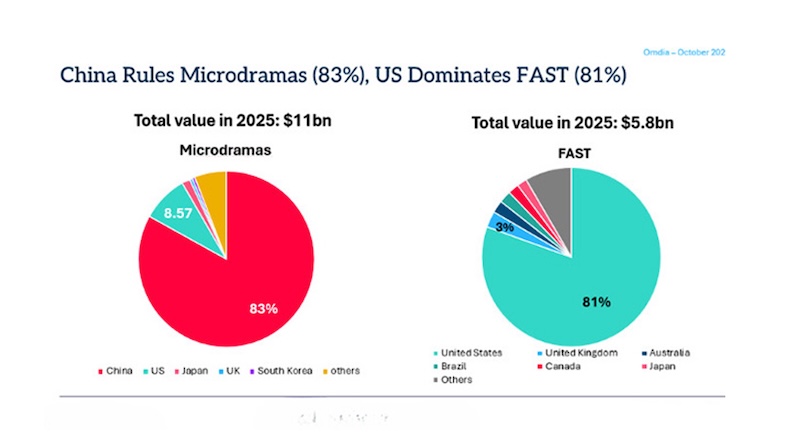
    Microdramas—those addictive mini-narratives designed for mobile consumption—are redefining entertainment. And the numbers are staggering. According to Omdia, the consultancy that presented its findings at Mipcom, Cannes, this genre will nearly double the revenue of Fast channels, which are projected to pull in just $5.8bn next year.

    “Viewers are willing to pay for content that captures them emotionally in seconds,” said María Rua Aguete, head of media and entertainment at Omdia. “Microdramas demonstrate that attention spans may be shorter, but engagement is deeper and more valuable.”

    The monetisation model is brutally simple: hook viewers with free episodes, then charge them through subscription or pay-per-episode channels. This approach accounts for more than 60 per cent of total revenue. The payoff is formidable. Average revenue per user can reach $20 per week—or up to $80 per month—making microdramas extraordinarily profitable.

    China dominates the space, generating 83 per cent of global revenue, fuelled by a colossal audience and a mobile-first culture. Beyond China, the US claims half of international revenue, with Japan, South Korea, the UK and Thailand emerging as hungry new markets.

    “Microdramas are redefining what it means to tell premium stories in the digital age,” Aguete said. “They combine the immediacy of social media with the emotional depth of dramatic television. They are short, addictive, and irresistible.”

    This isn’t a fad. As consumer habits shift inexorably towards mobile and short-form content, microdramas are poised to become the centrepiece of digital entertainment—a seismic fusion of social video and traditional storytelling that will reshape how the world consumes drama. The wave is here. And it’s only just begun to crest.

  • Z5 zips open micro-drama app, Bullet

    Z5 zips open micro-drama app, Bullet

    MUMBAI: Zee Entertainment Enterprises (Z) has gone all-in on short-form content, announcing a strategic partnership with content start-up Bullet.

    The aim?

    To launch India’s inaugural micro-drama app, delivering high-intensity, bite-sized entertainment straight to your mobile, no faffing about. 

    This new venture sees Z, a bona fide content and technology powerhouse, team up with serial entrepreneurs Azim Lalani and Saurabh Kushwah, the brains behind Bullet.  Their creation promises fast-paced, creator-driven content, served up in snappy, vertical episodes – perfect for the TikTok generation with attention spans shorter than a Mumbai rickshaw driver’s temper. 

    Bullet, cunningly nestled within the Z5 ecosystem, plans to leverage its massive user base to pump out “masala-paced plots and emotional punch”4. Think binge-watching, but quicker than a bullet.  And because variety is the spice of life, it’ll be available across languages, drawing on Z’s rich content vault. 

    “As the digital ecosystem grows exponentially, we are constantly identifying several value-accretive opportunities to drive scale,” purred a company spokesperson for Z.  “Our strategic partnership with Bullet aims to build a competitive advantage for the future by identifying innovative formats and scaling them through our platforms to drive stronger monetization.”  Sounds like they’re ready to make a packet.

    Azim Lalani, co-founder & chief business officer at Bullet, waxed lyrical about the “next big shift” in content consumption, noting the influx of short-form content. “With snacky content increasingly capturing the audiences’ short attention span and keeping them engaged, the next wave of content consumption will encompass creators that nurture the ability to deliver intrigue and emotions in bite-sized formats,” he quipped.
     
    Meanwhile, Saurabh Kushwah, Bullet’s co-founder and chief technology & product officer, promised an app that not only “entertains but also enables,” boasting “gamified layers, AI-backed content ops, and a creator-first ecosystem.” 

    Sounds like they’re not just playing games, but building a whole new playground.

    This isn’t just about micro-dramas; it’s about Z cementing its place as a “content and technology company,” adapting to evolving trends faster than a politician changes their mind.  With Z5’s cutting-edge tech and consumer insights, Bullet is primed to hit the bullseye.

  • Azim Lalani co-founds Bullet, hopes to fire up the two-minute microdrama revolution

    Azim Lalani co-founds Bullet, hopes to fire up the two-minute microdrama revolution

    MUMBAI — Azim Lalani, the digital maverick who’s seen it all from India Today to Fanory, (a career of more than a score years) has now strapped on a new role — co-founder and chief business officer at Bullet, a mobile-first microdrama OTT platform that promises to shoot cinematic stories straight to your phone in under two minutes.

    With a sharp eye on Gen Z and a regional-first, multilingual content play, Bullet isn’t just banking on binge culture — it’s reinventing it. Backed by tokenomics and built on blockchain, the platform wants to do more than stream — it aims to spark a creator economy explosion.

    “As CBO, I’ll be driving business strategy, growth partnerships, content, and monetisation,” Lalani said. “We’re not just building a platform — we’re architecting a storytelling ecosystem that’s sustainable, scalable and rooted in innovation.”

    He gave a shoutout to co-founder and CTPO Saurabh Kushwah for leading the tech charge, and thanked the leadership at Zee Entertainment Enterprises for supporting new-age innovation.

    Lalani’s previous innings include launching Fanory to help creators go direct-to-fan with coin-based monetisation, leading Money9 at TV9, and steering convergence and brand solutions at Network18. Prior to that he did time at India Today, Rediff and Indian Express. 

    Now with Bullet, he’s loading the chamber with big ambitions — where every story is sharp, short, and shot with purpose. Creators, got a drama to drop? The stage is yours — but make it snappy.