Tag: Microblogging

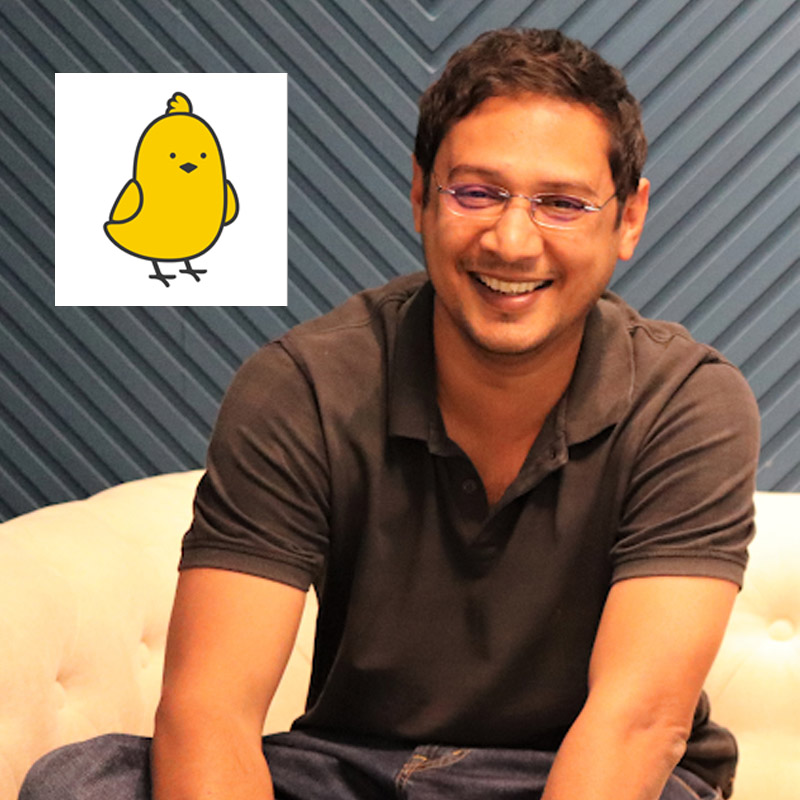
  • Koo co-founder Mayank Bidawatka on breaking the language barrier for social media users

    Koo co-founder Mayank Bidawatka on breaking the language barrier for social media users

    Mumbai: Having launched at the outset of the pandemic, home-grown multi-lingual micro-blogging platform, Koo has already garnered over fifteen million users in a short span of twenty months. Pitched as India’s alternative to the US microblogging platform Twitter, the app allows its users to express themselves in their mother tongue, providing its offerings across regional languages.

    “We looked at the existing products and saw there was no platform to openly express oneself in Indian languages,” said co-founder Mayank Bidawatka, an alumnus from the Asian Institute of Management. “That’s when we realised that there’s a very large market out there waiting to be unleashed.”

    The brainchild of founders Mayank Bidawatka and Aprameya Radhakrishna, the home-grown app has added five million users in the last quarter. The Bengaluru-based app currently supports nine Indian languages, namely, Hindi, Kannada, Tamil, Telugu, Assamese, Marathi, Bangla, Gujarati and English, and is in the process of adding three more.

    But, before Koo, the duo had co-founded Vokal- an expert-based Q & A platform in regional languages, an Indian version of Quora. “That time we got a lot of feedback from experts who felt that they were just answering questions that people asked. But, they also wanted to use an open expression platform where they could also share their thoughts freely,” said Bidawatka in an exclusive interview with Indiatelevision.com.

    It is this thought that also forms the core of its first-ever Television campaign Koo Kiya Kya?’ launched during the recently concluded T20 World Cup 2021. Conceptualised by Ogilvy India, the campaign consisted of a series of short-format twenty-second advertisements that delve on the comfort of expressing oneself in one’s native tongue.

    Talking about the objective behind the brand’s latest campaign, Bidawatka said, “To get all the people who are passive creators to become active creators, it was important for them to know what Koo’s about. With this campaign we are trying to drive the thought that ‘if you have anything on your mind, come and say it on Koo’. Hence the line ‘Dil mein jo bhi ho, Koo pe kaho’. Coupled with the slogan ‘Koo kiya kya’ that’s the broad concept behind the campaign.”

    The brand also made a conscious decision not to have a celebrity endorse the campaign. “It needs to cater to the masses. Hence we used common people in the ads to show that anyone could be creating- You don’t need to be a celeb or big guy to create,” said the co-founder.

    The start-up largely depended on online penetration in its initial phase of outreach, but going ahead it plans to make use of both mainstream media as well as digital media in equal measures. “Both of these are important for different reasons. Digital helps us to drive downloads, and mass media aids in creating brand awareness,” he added.

    Building awareness was also top-of-the-mind when the brand decided to use Cricket as a launch-pad for its maiden campaign. “The T20 tournament is one of the most viewed properties of the country, plus if you want mass awareness, it’s one f the best properties to advertise in,” he said.

    When asked about the consumer demographic the platform currently caters to Bidawatka said, “We have people across genders, age-groups, across cities and tier two towns. This product is made for the country at large where people find their topics of interest, their people of interest. Also it’s relatively simple to use.”

    With the growing menace of hate speech on social media becoming a challenge for social media platforms, Bidwatka said, Koo is working on a feature that allows users to self-verify. “This way we’ll know we aren’t dealing with a fake account or someone who’s masked,” he signed off.

  • Twitter Blue: A subscription-led future of Twitter?

    Twitter Blue: A subscription-led future of Twitter?

    KOLKATA: Is Twitter gearing up to launch a subscription service? Yes, say reports. The microblogging site is considering the launch of Twitter Blue priced at $2.99 per month, according to an independent researcher.

    One of its most interesting features is “undo tweet” which could allow users to prevent a tweet from being sent. Users can even customise time intervals for undoing tweets. The subscription model also includes planned features that would help users to save and organise tweets into collections.

    The company has been gradually taking multiple steps in recent times to explore other revenue streams as its advertising-led model is facing several new challenges. For example, Apple’s recently launched App Tracking Transparency for all iPhones with iOS 14 forcing developers to ask users for permission before they can track them. Twitter is now asking users to give consent for tracking to ‘keep ads relevant’.

    Earlier this month, it acquired Scroll, a subscription service that removes ads from participating news sites. It “will become a meaningful addition to our subscription work as we build and shape a future subscription service on Twitter,” Twitter product vice president Mike Park wrote in a blog post after the acquisition.

    Twitter reported $1.04 billion in revenue for the first quarter of 2021, up 28 per cent year-on-year. It also posted a profit of $68 million, turning back its business from $8.4 million in losses a year ago. Advertising revenue totalled $899 million, an increase of 32 per cent and total ad engagements increased 11 per cent year-over-year. However, monetizable daily active users (mDAU) grew about 20 per cent to 199 million, falling slightly below the analysts’ expectation of 200 million

  • Koo’s ‘Talk to Type’ eases the way for regional language creators

    Koo’s ‘Talk to Type’ eases the way for regional language creators

    KOLKATA: Twitter’s Indian alternative Koo has rolled out the Talk to Type feature so anybody who wants to share their thoughts can now do so easily without having to type. They can speak their thoughts out loud and the words will show up on the screen. This feature will be supported in all the Indian languages Koo is currently available in.

    The Talk to Type feature will enable regional language creation in the easiest way possible for millions of Koo users. Many users who are uncomfortable using the keyboard will be enabled and empowered with such a feature, the company believes.

    “This “Talk to Type” feature takes creation for regional language creators to the next level. Users don’t have to use the keyboard anymore and type out lengthy thoughts. India language speakers can now speak their mind and the words will show up on the screen magically. For those who found it difficult to type in local languages, this feature removes all that pain. We will keep adding value to Indians by enabling the easiest localised forms of expression and present their thoughts to India in a seamless way,” Koo co-founder Aprameya Radhakrishna said.

    Co-founder Mayank Bidawatka claimed that Koo is the first social platform in the world to launch such a feature. “We are very excited to launch the “Talk to Type” feature that enables people to create without typing. All they have to do is hit a button and speak into their phone and the words will magically show up on the screen. It can’t get easier than this! You won’t find this on Facebook, Twitter or any other global platform.”

    Koo was founded in March 2020 as a micro-blogging platform in Indian languages. Available in multiple Indian languages, people from across different regions in India can express themselves in their mother tongue.

  • “Something is technically wrong” with Twitter, yet again

    “Something is technically wrong” with Twitter, yet again

    MUMBAI: One of the most visited and used social media websites – Twitter, has faced a technical issue yet again this week. Similar issues have been noted over the last few days too.

    Some users have been facing problems with the portal both on mobile and the web.

    On visiting the website from the desktop, some users were greeted with the message, “Something is technically wrong. Thanks for noticing – we’re going to fix it up and have things back to normal soon.”

    This interruption from the popular microblogging site is expected to affect people across the globe who rely on Twitter for both business and pleasure.

    Officials from Twitter India have confirmed about the global technical outage.

    Due to these technical difficulties, platforms such as tweetdeck have also been affected. However, official quote or confirmation about the same has not been received.

    The technical issue went around for a span of almost 2 hours starting from 2:15 pm and was finally resolved at 4:05 pm.

  • Twitter: Strong IPO, followed by even stronger opening

    Twitter: Strong IPO, followed by even stronger opening

    MUMBAI: It began with a tweet on its twitter handle which stated: “We just priced our IPO.” Attached with the tweet was a screen shot of the offering announcement.


    And by the time Wednesday 6 November ended, the social networking site that has become a phenomenon across the globe had managed to raise $2.09 billion from its IPO, making it the seventh-largest US tech IPO ever, just ahead of Google, which raised $1.92 billion in its 2004 stock market debut, according to some estimates.


    But there was more in store for stockmarket observers and investors as trading began on Thursday morning. The Twitter share – under the TWTR ticker – spurted 90 plus per cent in value as it soared to $45 per share during early trades and then to a high of $50. This took up the valuation of the firm to $25 billion or 32 billion or so, at the time of writing.


    Yesterday’s $26 price valued the microblogging service at $18.34 billion, on a fully diluted basis. That is 16 to 17 times forecast 2014 sales, a premium to rivals including Facebook, LinkedIn and Yelp, according to some analysts.


    Twitter set an early price range of $17 to $20 for its IPO, which was considered cautious. But there was strong interest from investors, and the company was selling just 70 million of its 545 million shares, leaving an imbalance between supply and demand. That allowed the company and its bankers, led by Goldman Sachs’ Anthony Noto, to raise the range to $23 to $25 and then pick a final price above that.


    Analysts felt that the price should have been in the $21 range but the final pricing zipped past that. Other analyst and stock watchers had predicted that the share would go past the $40 market during day one’s trading. The IPO was as much as 30 times over-subscribed.


    While Twitter has a broad and powerful influence, its service is sometimes tricky to understand and use, which has reportedly limited the company’s growth. Twitter has about 230 million users, including heads of state and celebrities, while Facebook has more than one billion.


    However, Twitter lost $65 million in the latest quarter.


    Twitter is expected to generate $1.24 billion in sales in 2015, according to some projections. Its adjusted EBITDA (earnings before interest, tax, depreciation and amortisation) margins will be roughly 6.5 per cent this year and 8.4 per cent in 2014, according to IPO underwriter forecasts that were shared with investors. In 2015, margins may jump to about 16 per cent, the estimates suggest.


    During an interview given to CNBC, Twitter CEO Dick Costolo is believed to have said that investors should not be concerned about the company’s current lack of profits, since its part of a plan to invest for the long term.


    It looks like the investment community and public is buying his story for now – at least.