Tag: Micro dramas

  • Meta maps India’s digital evolution from creators to AI and micro dramas

    Meta maps India’s digital evolution from creators to AI and micro dramas

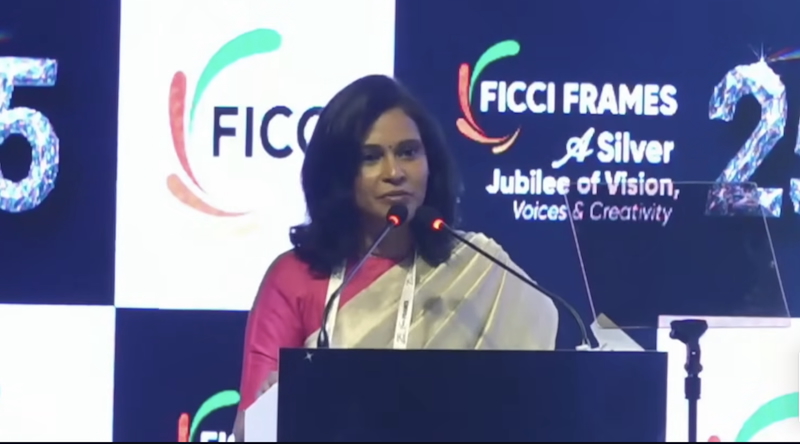
    MUMBAI: At the 25th edition of Ficci Frames, Meta’s top leadership: Sandhya Devanathan, vice president, Meta India, and Meta India managing director and country head Arun Srinivas, laid out a comprehensive view of how India’s digital, entertainment, and creator ecosystems are evolving at breakneck speed. 

    From the rise of Gen Z as the dominant consumer force to the explosion of short-form video, AI-driven content, and micro-dramas, both leaders stressed on how India is not just adapting to global digital trends, it is carving them. 

    “India’s growth is unique and inevitable,” Devanathan said, opening her session on New Age Tech Platforms: Redefining Access, Innovation and Scale. “One trillion dollars of our future economy will be driven by digital.”  

    With over four billion reels shared globally every day, she noted, India stands out as both the largest creator market and a leader in the innovation of content. 
    That digital drive, she explained, rests on India’s growing online base of over 650 million social media users and 270 million online shoppers. Yet, she noted that to make prosperity more inclusive, more small businesses need to come online. Only about five million of India’s 65 million SMEs are currently digitally enabled.
    “The Indian creator economy is among the most vibrant in the world,” Devanathan noted. “Creators here aren’t just entertainers, they are entrepreneurs, cultural catalysts, and small businesses rolled into one.”

    Meta, she explained, continues to invest heavily in tools that empower creators to monetise their craft: from performance insights and AI-powered production aids to immersive advertising formats that help brands connect authentically with their digital-native audiences. 

    Devanathan also highlighted the versatility of “many Indias”: the digitally savvy India, the vernacular-first India, and the emerging India Each requires its own approach to content, access and engagement. “Winning in India,” she said, “means understanding these layers of India and building for all.”
    Meta, she noted, sits at the heart of this digital revolution. India is now home to the largest community of Instagram creators and the biggest user base for Meta AI worldwide. The country also boasts one of the world’s largest Whatsapp communities, with over 200,000 small businesses using “Click to Whatsapp” to drive sales every month.
    Beyond platforms, Meta is investing in digital infrastructure, from the Project Waterworth subsea cable (a subsea cable network that will span 50,000 kilometres and will reach depths of up to 7000 metres) to supporting data centres that fuel AI innovation. Devanathan also spoke about Meta’s work with the Nudge Institute and Pragati AI for Impact, which harnesses artificial intelligence for social good. 

    Building on that foundation, Arun Srinivas focused on the behavioural shifts defining media and entertainment consumption in India today, particularly among Gen Z and gen Alpha audiences.

    “Gen Z isn’t the future; they’re the present,” he exclaimed. “They are already shaping how content is discovered, processed, and shared.”

    According to Srinivas, the average Gen Z consumer processes information three times faster than previous generations and takes less than 1.5 seconds to decide whether to engage with a piece of content. “They need less attention, but more repetition,” he noted, explaining how frequency, rather than single exposure, now drives brand recall and conversions.

    He also pointed to India’s massive short-form video boom, with 97 per cent of Indians watching short videos daily, surpassing television viewership. “Linear TV time is declining month on month,” he said, adding that this isn’t limited to urban India, “rural and small-town audiences are consuming just as much, if not more.”

    Among the new frontiers Srinivas spotlighted was the rise of micro dramas: serialised short videos running between one and five minutes per episode.

    “This is storytelling redesigned for the mobile-first world,” he said. “India’s short-form drama market could touch 10 billion dollars by 2030, driven by vernacular content and tier-II and tier-III audiences.”

    Startups and creators are already experimenting with dubbed Korean and Chinese mini-series adapted for Indian viewers, marking a new phase in the fusion of entertainment and digital innovation.

    Both Devanathan and Srinivas emphasised the transformative role of artificial intelligence across Meta’s platforms, from content creation and personalisation to ad optimisation and discovery.

    “AI isn’t replacing creativity; it’s amplifying it,” Devanathan said. “It’s enabling creators to produce higher-quality work faster, and helping brands find the right audiences with precision.”

    Srinivas added that more than four million advertisers globally used AI-generated creatives last quarter, producing over 15 million ad assets  and achieving double-digit ROI improvements compared to campaigns created by humans. 

    Outlining Meta’s larger ambition, he noted that the company aims to make Meta AI the world’s most widely used personal assistant. “With more than 100 billion dollars invested in AI in just four years, we’re building systems that make digital creativity more accessible and intelligent for everyone,” he said.
    Bringing that vision to life, Devanathan closed her session with an AI-generated video: a vivid cascade of colours that unfolded into the words, “Change is the canvas from which opportunity paints its masterpiece.” 

    Both leaders saw eye to eye on one message, that India’s digital future will be built at the intersection of creators, commerce, and connection.

    Srinivas highlighted how Meta’s latest tools, such as the Edits app for easy video production and new AI-powered creative platforms, are enabling India’s vast creator base to thrive. Meanwhile, Devanathan emphasised Meta’s partnerships with brands, small businesses, and policymakers to foster a sustainable, inclusive digital ecosystem.

    “Our goal,” she said, “is to ensure that India’s creative economy doesn’t just grow in size, it grows in diversity, opportunity, and global influence.”

    Concluding the session, Srinivas offered a peek into Meta’s newest innovation, the Ray-Ban Meta smart glasses, designed to merge content, communication, and AI assistance in one device.

    “These glasses are a glimpse of a future where connection becomes truly immersive,” he said.

    As both Devanathan and Srinivas made clear, India’s digital landscape is entering a new chapter, one driven by speed, creativity, and intelligence. With the next generation of consumers redefining how content is created and consumed, Meta’s vision is not just to keep pace, but to help build the infrastructure of tomorrow’s digital culture. 


  • Balaji Telefilms and Story TV forge alliance for micro-dramas

    Balaji Telefilms and Story TV forge alliance for micro-dramas

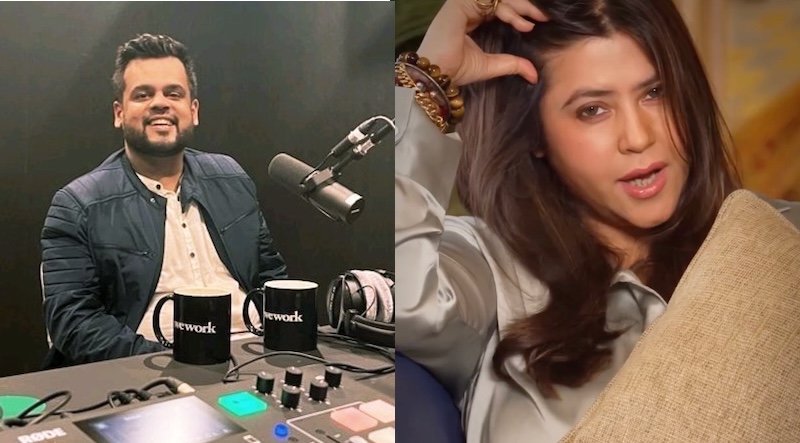
    MUMBAI: India’s Balaji Telefilms, the production house behind two decades of television hits, has teamed up with Story TV, a fledgling micro-drama platform, to flood smartphones with bite-sized narratives tailored for impatient viewers.

    The collaboration promises original content spanning multiple genres and languages, designed for vertical screens and short attention spans. Story TV, launched earlier this year by the Eloelo group, claims 10 million users already—a rapid ascent for a platform banking on one-minute episodes.

    “Micro dramas will be more than a $5 billion market in the next three years,” predicts Story TV founder & chief executive Saurabh Pandey. “Together with Balaji, our exclusive partnership will make micro dramas a staple across India.”

    Balaji Telefilms  jt managing director Ekta Kapoor calls the alliance “a game-changer, setting the stage for powerful, fresh storytelling that’s fearless and fast-paced.”

    Balaji brings decades of audience trust and a catalogue of iconic serials to a format that strips storytelling down to its essentials.

    Balaji Telefilms chief executive Sanjay Dwivedi frames it as evolution. “Micro dramas represent an exciting frontier—short, impactful, and designed for today’s mobile-first viewers,” he says. “This collaboration allows us to take our storytelling legacy into a new format.”

    Story TV has already amassed over 300 original micro-dramas with titles like Mafia Don, Secret Soldier and Hacker King. The platform’s vertical-video approach aligns with consumption habits shaped by social media, where brevity trumps depth and swipes outnumber sits.

    The partnership marks a significant bet on India’s appetite for culturally rooted stories delivered at breakneck speed—entertainment reimagined for thumbs, not remotes.

  • Micro-dramas set to race to $9.5 b global market as China leads the charge

    Micro-dramas set to race to $9.5 b global market as China leads the charge

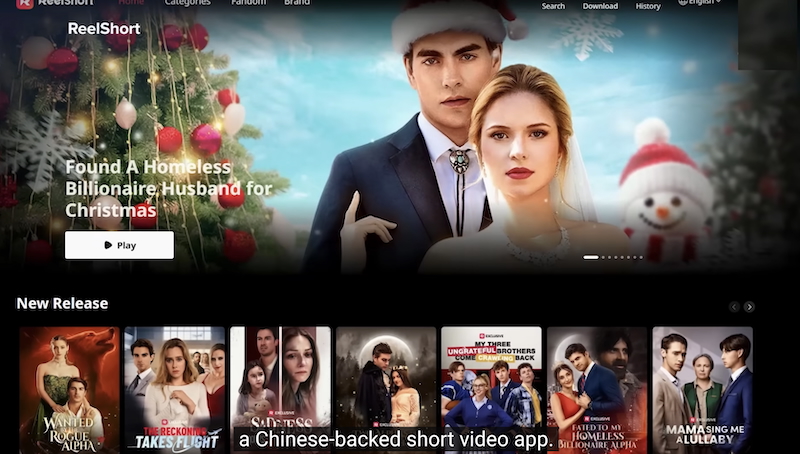
    SINGAPORE: Micro-dramas, once a fringe curiosity, are now a juggernaut. China’s revenues rocketed from $0.5 billion in 2021 to $7 billion in 2024 and will overtake the domestic box office this year, according to Media Partners Asia’s latest study, The Micro Drama Economy 2025.

    More than 830 million Chinese viewers are tuning in, nearly 60 per cent paying or transacting. Profitability is no longer theoretical: DramaBox booked $323 million in revenue and a $10 million net profit last year, while ReelShort (Crazy Maple Studio) has scaled fast despite heavy costs.

    Outside China the market hit $1.4 billion in 2024 and is on track for $9.5 billion by 2030. Affluent women aged 30–60 drive demand in the United States, while younger mobile-first audiences dominate Asia.

    Artificial intelligence is accelerating the boom, from content personalisation and rapid creative iteration in China to dubbing and localisation worldwide.

    “There are too many players with limited differentiation and too much churn, but winners are emerging,” said MPA executive director Vivek Couto. “Production is cheap but distribution is costly. Success depends on speed, scale and repeatable IP. China shows what’s possible when content is tied to social and payments rails, while the US proves the global opportunity. Japan, Korea, India, Southeast Asia and Latin America are next.”

    The report maps viewership patterns, key demographics and profitability benchmarks, charting how micro-dramas leapt from niche experiment to multi-billion-dollar global category.

  • Zee Entertainment bets big on micro-dramas and streaming distribution

    Zee Entertainment bets big on micro-dramas and streaming distribution

    MUMBAI: Zee Entertainment Enterprises is placing a Rs 90 crore wager on the future of India’s fragmented media landscape, betting that micro-dramas and consolidated distribution will unlock new revenue streams as audiences scatter across platforms.

    The company’s board approved investments in optionally convertible debentures of two recently incorporated subsidiaries on 14 August. The bigger bet—Rs 50 crore—goes to ZBullet Enterprises, launched just two months ago to develop “Bullet,” a micro-drama application targeting younger viewers with bite-sized series. The remaining Rs 40 crore will flow to Advance Media Distribution Ltd (AMDL), a wholly owned subsidiary designed to consolidate Zee’s entire content distribution empire.

    AMDL represents the more strategic play. The new entity will handle distribution for all Zee Entertainment and Zee Media channels, plus the company’s streaming platform Zee5. It will also take over distribution of Watcho, an over-the-top platform owned by DTH operator Dish TV that Zee currently distributes. Beyond its parent company’s assets, AMDL plans to distribute third-party television channels and streaming services on a commission basis.

    The consolidation strategy follows a well-trodden path in Indian broadcasting. Zee previously shifted its television distribution to Taj TV before bringing it back in-house. Viacom18, now merged with Star India, operated through IndiaCast, while Sony Pictures Networks manages distribution through its own subsidiary.
    The logic is compelling: as audiences consume content across both traditional television and digital platforms simultaneously, a unified distribution approach promises to unlock subscription revenue from both streams. The move also positions Zee to serve smaller channels and streaming platforms that lack the resources and expertise to manage complex distribution arrangements themselves.

    ZBullet’s micro-drama focus, meanwhile, mirrors successful platforms in China where ultra-short episodic content has captivated mobile-first audiences. For a company built on Bollywood films and Hindi soap operas, the shift towards smartphone-friendly formats represents a significant strategic pivot.

    Neither venture has generated revenue yet, with both still preparing to commence operations. The investments will be made in tranches as business plans are finalised. But the timing suggests Zee recognises that India’s entertainment future belongs to companies that can master both content creation and distribution across every conceivable platform.

  • Bharath C.S. takes the helm as content director at Kuku TV

    Bharath C.S. takes the helm as content director at Kuku TV

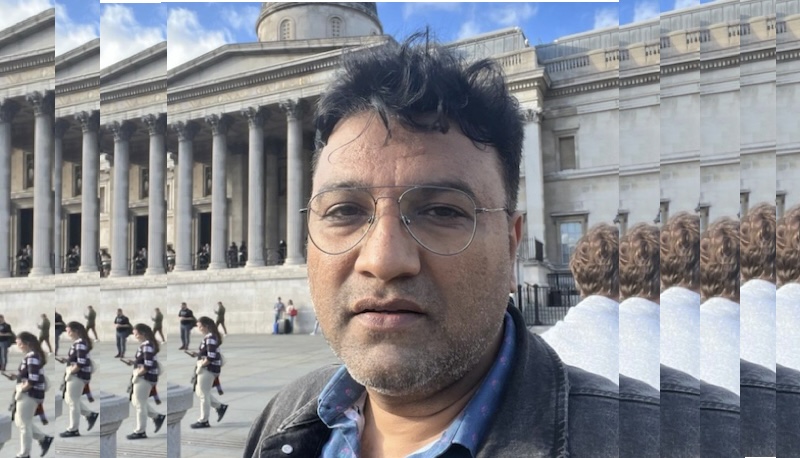
    BENGALURU: Bharath C.S.., a seasoned creative director with over two decades of experience in content creation and digital production, has been appointed as the new content director for micro drama at Kuku TV. The move, effective June 2025, sees Bharath bringing his extensive background from industry giants like Amazon and various top television networks to the burgeoning micro-drama segment.

    With a career spanning leadership roles at Amazon, Culture Machine, Udaya TV, Zee TV, ETV, and UTV, Bharath has consistently delivered high-impact content across television, digital, and over-the-top (OTT) platforms.

    During his tenure at Amazon, he was instrumental in spearheading the MPAM automation tool, which significantly enhanced content delivery speed and precision. His impressive portfolio includes producing over 500 television shows (both fiction and non-fiction), more than 1,000 television commercials, and over 100,000 digital assets.

    At Culture Machine, he successfully established regional digital channels, tapping into the unique cultural landscape of south India and boosting engagement for Tamil and Telugu audiences.

    Bharath’s appointment is expected to bolster Kuku TV’s strategic and creative output in the rapidly evolving digital content space, particularly in the creation of concise, impactful narratives

  • Kuku TV transforms India’s OTT space with vertical microdrama boom

    Kuku TV transforms India’s OTT space with vertical microdrama boom

    MUMBAI: India’s digital entertainment landscape just got a bold new entrant—Kuku TV. The country’s first vertical OTT platform has officially launched, redefining storytelling with serialised microdramas tailored for today’s mobile-first audience. Designed to be fast, engaging, and binge-worthy, Kuku TV is here to disrupt the streaming game with high-intensity, cliffhanger-driven episodes.

    With over five million downloads during its beta phase, Kuku TV is scaling rapidly, proving that Indian audiences are ready for a new era of content consumption. The platform delivers short episodic stories in a vertical format, optimised for smartphones—each episode lasting under two minutes, with series spanning over 50+ episodes.

    If you thought long-form drama was the only way to hook audiences, Kuku TV is here to prove otherwise.

    mini seires

    According to an Ericsson study, 57 per cent of global video plays come from mobile devices, with 94 per cent of users holding their phones vertically. Meanwhile, 90 per cent of Indian users consume short-form vertical videos daily, yet the OTT space had no dedicated premium platform to cater to this demand—until now.

    Kuku co-founder & COO Vinod Kumar Meena shared, “Traditional OTTs are stuck in an era where TV-sized screens were the norm. India’s audience has moved on—they’re watching content on their smartphones, in vertical mode, and in short bursts. With Kuku TV, we’re not just launching a streaming platform; we’re pioneering an entirely new way of storytelling. Given our experience with Kuku FM, where we scaled to 4.5 million paying subscribers, we understand what works for personalised content consumption, and we’re applying those learnings to video streaming.”

    Nearly 95 per cent of India’s creative talent remains undiscovered due to outdated distribution models. Kuku TV is bridging this gap by offering a direct-to-consumer channel for independent filmmakers, writers, and production houses to monetise their work and connect with millions of viewers. The platform is already collaborating with directors and producers to develop original microdramas and acquire rights to underrepresented films.

    Unlike traditional OTT platforms that rely on ad-based models, Kuku TV operates on a pure subscription model:

    . Annual subscription: Rs 899

    . Quarterly subscription: Rs 399

    Make Scrolling

    India already has 500 million plus OTT users and 100 million plus active paid subscriptions (Ormax Report). With over 900 million internet users in the country and 150 million already paying for content, the next digital shift is inevitable. As India surpasses the one billion internet user mark, the number of paid content subscribers is expected to reach 500 million, with 300 million potential users for vertical microdramas.

    Say hello to the future of vertical entertainment. By merging short-form content with compelling storytelling, it creates an immersive, binge-worthy experience designed for the new-age mobile viewer. With fresh content dropping every day, including one regional Indian microdrama daily, Kuku TV ensures a dynamic library spanning genres like Action, Bollywood, Sci-Fi, and Mythology.

    For filmmakers, investors, and creators looking to be part of this storytelling revolution, Kuku TV is now accepting applications for collaborations.

    Download Now:

    . Android: Google Play Store

    iOS: Apple App Store