Tag: MIB

  • OTT regulation: SC stays all petitions in high courts

    OTT regulation: SC stays all petitions in high courts

    KOLKATA: The Supreme Court has stayed all proceedings dealing with petitions filed on the matter of content regulation on OTT platforms. The court will hear the matter in two weeks after Holi. 

    A bench headed by justice DY Chandrachud passed the order while hearing a plea by advocate Shashank Shekhar Jha, appearing for Justice for Rights Foundation, that has sought the establishment of an autonomous body for monitoring of content on online video streaming services.

    Earlier, the central government filed a petition seeking transfer of OTT related petitions pending before various high courts to the Supreme Court. The apex court had issued a notice in this regard. However, the Punjab and Haryana high court continued hearing the case on merits, solicitor general Tushar Mehta submitted.

    Now, the court has clearly mentioned that all the proceedings of such petitions in lower courts across India would be stayed for now.

    Meanwhile, the government has informed apex court in an affidavit that the Information Technology (Intermediary Guidelines and Digital Media Ethics Code) Rules, 2021 were framed upon receiving several complaints from the public as well as lawmakers regarding content streaming OTT platforms.

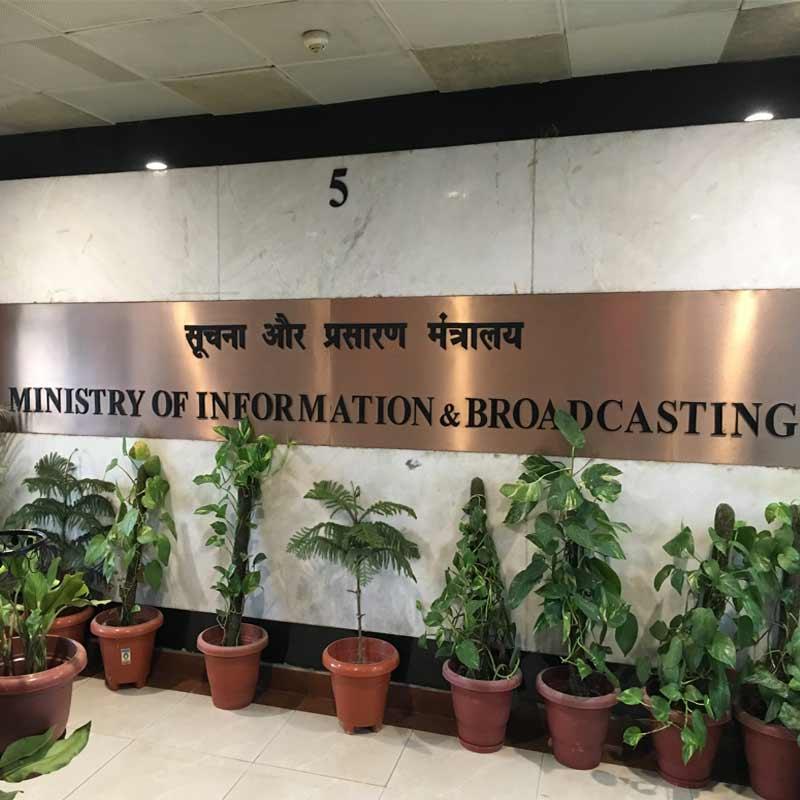
    The affidavit also mentioned that digital or online media, films and audio-visual programmes made available by online content providers, news and current affairs content on online platforms have been brought under the purview of the ministry of information and broadcasting (MIB) last year.

  • New DTH guidelines will make the sector competitive: Javadekar

    New DTH guidelines will make the sector competitive: Javadekar

    KOLKATA: At the end of last year, the ministry of information and broadcasting (MIB) announced revised guidelines for direct-to-home (DTH) operators in India. The new DTH policy will make the sector competitive and will have a positive impact on consumers, I&B minister Prakash Javadekar informed the Rajya Sabha on Monday.

    The minister mentioned that the guidelines with enhanced period of license with provisions of renewal beyond the initial licence period will ensure continuity and a rationalised licence fee regime. Moreover, the rules will have a positive impact on qualitative and competitive services being extended to the consumers in the long term.

    “The changes will facilitate ease of doing business, offer employment opportunities, make the sector competitive with likelihood of new players coming forward to provide DTH services and also provide a rationalised licensing fee regime and enhanced period of licence,” he detailed.

    After resolving the long standing impasse on the DTH licence policy, the government announced DTH licences will now be issued for a period of 20 years. Under the new rules, licence fee will be collected quarterly instead of annually.

    Changes had been approved for 100 per cent foreign direct investment (FDI) in the DTH sector which was earlier limited to 49 per cent. The decision had already been taken by the ministry of commerce and industry but the sector could not avail the benefits due to past MIB guidelines.

    The cabinet also approved the sharing of infrastructure between DTH operators. Distributors of TV channels will be permitted to share common hardware for their subscriber management system (SMS) and conditional access system (CAS) applications. Javadekar said at the time of announcement that the decision had been taken to create a level playing field.

  • Parliamentary panel questions legality of new digital media rules

    Parliamentary panel questions legality of new digital media rules

    KOLKATA: The parliamentary standing committee on information and technology grilled officials from the ministry of information and broadcasting (MIB) and the ministry of electronics and information technology (MEITY) on the new rules for monitoring over-the-top (OTT) platforms, digital media and social media intermediaries.

    The parliamentary panel headed by Congress MP Shashi Tharoor questioned the legality of the new regulatory framework, according to media reports.

    Several questions on framing the guidelines were raised – whether industry stakeholders were consulted before framing the guidelines, if opinions were taken from intellectual people, civic society, and the judiciary. Another key point flagged was whether the rules are in conformity with the existing framework. 

    In their deposition, ministry officials have assured the panel that due process was followed before the new rules were introduced. They justified the need for such rules in changing times and also explained the rationale behind them.

    Earlier in a meeting, the panel told MIB officials that it hoped the ministry would implement the rules with due regard to the importance of promoting creativity and protecting freedom of expression while maintaining a robust oversight mechanism.

    On 25 February, the Centre notified an expansive framework to govern online content, titled Information Technology (Guidelines for intermediaries and digital media ethics code) Rules 2021. It gave online content providers between 30 to 90 days to comply with the same. Under the new guidelines, a three-tier oversight mechanism for online content has been put in place.

  • New digital media rules to bring level playing field: Parliamentary panel

    New digital media rules to bring level playing field: Parliamentary panel

    KOLKATA: The parliamentary standing committee on IT has said that the new digital media rules under the IT Act will bring a level playing field for all media categories. However, the panel headed by Shashi Tharoor also mentioned that more initiatives are required, according to media reports.

    The parliamentary panel also asked the ministry of information and broadcasting (MIB) to launch an awareness campaign about its new rules for social media intermediaries, OTT and digital news platforms.

    While maintaining a robust oversight mechanism, the panel hoped that the ministry would implement the rules with due regard to the importance of promoting creativity and protecting freedom of expression.

    The government laid down new rules for social media platforms, digital media, OTT platforms on 25 February. In a gazette notification, it spoke of a three-tier oversight mechanism for online content.

    In light of this, a PIL has been moved before the Delhi high court challenging the new rules under the Information Technology Act to regulate internet intermediaries, over-the-top (OTT) platforms and digital news media. The petition has been filed by the Foundation of Independent Journalism which publishes The Wire. A similar plea by another petitioner was filed in the Kerala high court. The courts have issued notices to the Centre in this regard. 

  • Prakash Javadekar meets with Digital News Publishers Association

    Prakash Javadekar meets with Digital News Publishers Association

    KOLKATA: Information and broadcasting minister Prakash Javadekar on Thursday held a meeting with the Digital News Publishers Association (DNPA) to discuss new rules for digital media.

    “In a follow up to meeting with OTT platforms, held an interaction with Digital News Publishers Association today. Discussed new rules for digital media. They welcomed the new rules and offered few suggestions which I have noted (sic),” the minister tweeted.

    According to an official statement released post the interaction, Javadekar informed the association that the new rules placed certain responsibilities on digital news publishers. These include adherence to Code of Ethics such as the norms of journalistic conduct framed by the Press Council of India and the Programme Code under the Cable Television Network Act. Further, to redress grievances of citizens the rules have provided for a three-tier grievance redressal mechanism of which the first and second tier would be of the digital news publishers and self-regulatory bodies constituted by them. 

    Digital news publishers would also be required to furnish some basic information to the ministry of information and broadcasting in a simple form which is being finalised and periodically they would be required to place in public domain the grievance redressal undertaken by them, the statement added.

    Javadekar said that print media and TV channels have digital versions whose content is almost the same as that on the traditional platforms. However, there are contents which appear exclusively on the digital platform. Apart from this, there are several entities which are only on the digital platform. Accordingly, the rules seek to cover the news on digital media so as to bring them at par with the traditional media.

    The participants, while welcoming the new rules, stated that TV and news print media have been following the laid down norms of the Cable Television Network Act and the Press Council Act for a very long time. Moreover, for publishing the digital versions of their publications, the publishers do follow the existing norms of the traditional platforms. They felt that they should be treated differently than those news publishers who are only on the digital platform.

    Javadekar thanked the participants for expressing their views and stated that the government will take note of the same and continue with this consultative process for overall growth of the media industry.

  • Rules focus on self-classification, not censorship: Javadekar tells OTTs

    Rules focus on self-classification, not censorship: Javadekar tells OTTs

    KOLKATA: Minister of information and broadcasting Prakash Javadekar on Thursday held an interaction with representatives of various OTT platforms including from Disney+ Hotstar, Amazon Prime, Netflix, Jio, Zee5, Viacom18, Shemaroo, Mx Player, ALTBalaji.

    The Union minister mentioned that the government had engaged in several rounds of consultation with OTT players in the past and stressed the need for self-regulation.

    Javadekar stated that he had received representations from cinema and TV industries that while there were regulations for them, none existed for the video streaming industry. Thus, it was decided that the government would come out with a progressive institutional mechanism for OTT players and develop a level playing field with the idea of self-regulation. The minister appreciated that many OTT platforms had welcomed the rules.

    Informing the industry representatives about the provisions of the rules, the minister said it merely requires them to disclose information and that there is no requirement of registration of any kind with the ministry. He added that a form for this will be ready soon. Quelling fears over curtailment of creative freedom, he stated that the new digital media rules focus on self-classification of content instead of any form of censorship. Further, OTT platforms are expected to develop an effective grievance redressal mechanism.

    Previously, the Centre had proposed a three-tier mechanism for these platforms for content-related issues. The first tier would be officials appointed by these companies. As a second-tier, there would be a self-regulatory body that would address complaints. The third tier would be a government-appointed panel.

    Dispelling rumours, the minister clarified that in the self-regulatory body, no member will be appointed by the government, and that an inter-departmental committee will be formed to look into complaints that remain unresolved at the self-regulatory level.

    The industry representatives welcomed the rules and thanked the minister for addressing most of their concerns. Finally, the minister added that the ministry is open to any clarification or queries from the industry.

  • Guest column: Implications of the new digital media code for online content platforms

    Guest column: Implications of the new digital media code for online content platforms

    NEW DELHI: The Information Technology (Intermediary Guidelines and Digital Media Ethics Code) Rules 2021, framed under the Information Technology Act 2000, were notified on 25 February 2021. The Rules apply to publishers of online curated content (OCC), intermediaries, including social media intermediaries and significant social media intermediaries (ie those with 5,00,000 or more users), and publishers of digital news and current affairs.

    The rules have been issued amidst the backdrop of, and perhaps in response to, various public interest litigation matters that remain pending across the country, alleging that content published on significant OCC platforms is seditious, defamatory, contemptuous, infringing, obscene, offensive, and, or, is otherwise illegal.

    Regulation of OCC platforms

    The rules prescribe a Code of Ethics and guidelines for OCC platforms and publishers of digital news and current affairs content. These entities and their compliance with the rules will be overseen by the ministry of information and broadcasting (MIB).

    The rules prescribe a three-tier regulatory mechanism to ensure publishers (including OCC platforms) comply with the code. Further, the factors to be considered before publication of content on an OCC platform include the effect of the content on the sovereignty of India;  whether it could affect friendly relations with another state, incite violence or disturb public order; whether it could affect India’s multi-religious and multi-racial fabric; and, whether its publication would otherwise be prohibited under any law for the time being in force.

    The rating categories are to be assigned to the content after considering the depiction of themes and messages, violence, nudity, sex, language, drug and substance abuse, horror within the content and the target audience of the content.

    Implications of the rules on OCC platforms in India

    Under the Rules, ‘online curated content’ includes content which is owned, licensed, or contracted to be transmitted, and is made available on demand, including through subscription. The definition of ‘publisher of online curated content’ specifically excludes individuals who are not transmitting content in the course of a systematic business, professional or commercial activity.

    The Rules apply only to persons engaged in the distribution of content for commercial purposes, and clearly are not intended to regulate user-generated content uploaded on social media platforms. On a plain reading, it appears that the Rules may also regulate channels of social media influencers and celebrities on significant social media platforms such as YouTube, as these channels may be considered publishers of OCC. However, the rules do not make any specific reference to individuals generating content or social media influencers, and the position with respect to social media influencers is unclear. For instance, in the absence of a clarification, content on YouTube channels such as IISuperwomanII would pass the test of being ‘curated catalogues’ as these channels usually contain a mix of comedy sketches, podcasts, interviews, short films and news critiques, addressing an identified audience.

    The rules do not expressly address situations where news may be disseminated through non-traditional channels or could be considered to have been disseminated through an OCC platform (for example, Last Week Tonight on Disney+ Hotstar and the ScoopWhoop Unscripted YouTube channel). In theory, such OCC publishers may be required to comply with the entirety of the code, ie part I which addresses publishers of digital news and current affairs and part II which addresses OCC.

    The three-tier regulatory mechanism is similar to the self-regulation model that is already in place for non-news and news television broadcasters, and the rules have, therefore, been promulgated as an attempt to provide a level playing field to digital content platforms as opposed to the traditional forms of television and cinema broadcasting.

    The rules prescribe sanctions in the form of warning, requiring an apology, reclassification, editing, modification, deletion, and even blocking of access to the publisher of content violative of the rules. The new regulations do not suggest content censorship, and only prescribe matters to be considered before classifying and publishing content. Given that television content in India is quite conservative in comparison to the content currently available on OCC platforms, there is apprehension amongst the stakeholders that OCCs may be subjected to a similar level of ‘excessive’ censorship. However, OCC platforms have a distinct advantage over television – sophisticated software that enables age-gating of content and creation of buckets of content for different age groups. The interdepartmental committee of the MIB should bear this advantage in mind when issuing directions, orders or penalties under the rules.

    The rules may encourage OCC platforms to err on the side of caution and restrict the publication of content where apprehensions may arise regarding that content’s rating. This approach may adversely affect content creators’ constitutional right to freedom of speech and expression. In this context, it will be interesting to see whether the rules do, in fact, level the playing field not only in terms of regulation of various media but also result in availability of similar kinds of content across all modes of distribution. In any event, the rules may provide a much-needed structure to the OCC space.

    (The note has been authored by Kaushik Moitra, partner and Karnika Vallabh, associate at Bharucha & Partners. The views expressed in this article are their own and indiantelevision.com need not subscribe to them.)

  • NBP draft ready for consultation with Prasar Bharati CEO

    NBP draft ready for consultation with Prasar Bharati CEO

    KOLKATA: A fresh broadcasting policy in India, that’s up to speed on the dynamic industry developments, has been on the cards for a long time now. Last month, the ministry of information and broadcasting (MIB) intimated that work on the National Broadcast Policy (NBP) was in full swing. Now, the draft NBP is ready to be shared with Prasar Bharati CEO Shashi Shekhar Vempati for further consultation.

    The draft is also ready for consultation with scientific ministries like the department of telecommunication, ministry of electronics and information technology, ministry of science and technology on the lines of the utilisation of spectrum, emerging technologies, trends in the broadcasting sector, increasing outreach of TV and radio households, fall-back arrangement for broadcasting during emergencies like disasters and wars.

    According to the draft accessed by Indiantelevision.com, the policy is guided by the vision of a “functional, vibrant, resilient broadcasting sector in the country.”  To keep with the vision, it provides “specific goals, strategies and policy stipulations.” Broader goals as described in the draft include the universal reach of broadcasting, enabling environment for sectoral growth and level playing field, as well as enhanced global outreach.

    Back in December, MIB additional secretary Neerja Sekhar said that the ministry would soon come up with a draft for the much-discussed policy. “Though the consultations on the National Broadcasting Policy were held with the stakeholders and industry some time back, we have been putting together various parts… and (addressing) the emerging issues. I feel that we are getting pretty close to coming up with a draft version,” she had said.

    It was in 2019 that the MIB initiated talks with members of the Indian broadcasting and media industry about formulating a National Broadcast Policy. Although no timeframe was given, the ministry had said that the aim of the policy would be to address issues that are challenging the sector, with the aim of promoting more self-regulation.

    At present, the broadcast industry is regulated by the Cable TV Act, which many stakeholders consider outdated and inadequate to govern the newer challenges in this rapidly growing sector.

  • New DTH guidelines to have potential effect on top operators

    New DTH guidelines to have potential effect on top operators

    KOLKATA: The new DTH guidelines issued by the ministry of information and broadcasting (MIB) can have far-reaching impact on the sector, such as increasing the potential liabilities of incumbents when renewing their licenses. The top four DTH operators are liable to pay Rs 7,700-8,000 crore, credit rating agency Crisil said. Their Ebitda for the current fiscal is estimated at Rs 7,000-7,500 crore.

    Few days after releasing the amended guidelines, the ministry said that the issue of fresh license to the existing licensees will be subject to their clearing all dues. “New licensing guidelines issued by the MIB on 30 December 2020, for providing direct-to-home (DTH) broadcasting service could significantly increase the potential liabilities of incumbents when renewing their licenses,” Crisil said.

    It also added the matter has been discussed at various legal fora over the past decade and continues to be sub judice. Clarity with respect to the final dues, timelines for payment and the debt-equity funding mix to pay up the liability will be crucial to ascertain the cash-flow impact on the DTH operators.

    “DTH operators supported by strong sponsors will be able to sustain their credit profiles notwithstanding the expected potential liability. Their credit profiles are also supported by healthy cash accrual, strong balance sheets and high financial flexibility,” the credit rating agency added.

    Crisil said it would continue to monitor the developments on this and take appropriate action as and when required.

  • MHA asks TN government to revoke its order allowing cinema halls to operate with 100% capacity

    MHA asks TN government to revoke its order allowing cinema halls to operate with 100% capacity

    New Delhi: The union ministry of home affairs (MHA) has asked the TN government to withdraw its order allowing the theatre and cinema halls to operate at 100 per cent capacity. MHA has clearly stated that it is a dilution of its order around theatre and multiplex capacities. The TN government issued the order two days.

    According to the letter from union home secretary Ajay Bhalla to chief secretary of Tamil Nadu Shanmugam, capacities in theatres and multiplexes outside containment zones is set at 50 per cent. “The government of Tamil Nadu, however, has permitted to increase the seating capacity of cinemas theatres multiplexes from existing 50 per cent capacity to 100 per cent by following the Standard Operating Procedure (SOP).”

    “This amounts to dilution of MHA order dated December 28, 2020 issued under the DM Act, 2005,” the letter states.

    The union home secretary tells the Tamil Nadu government to immediately issue an order to bring the state’s order in line with the MHA guidelines. 

    The union government also instructed the state and union territories to strictly enforce the guidelines without diluting them: “strict compliance of Covid2019 -appropriate behaviour such as wearing masks, keeping social distancing, stern action against those who are violating guidelines SOPs regulation of gatherings,” he said.

    As per an order in October 2020, MHA permitted the theatres to partially reopen as part of the Unlock guidelines with clear SOPs. Theatres were only permitted to reopen with 50 per cent seating capacity outside containment zones. 

    Tamil Nadu chief minister Edappadi K Palaniswami gave the nod to permit 100 per cent seating capacity in theaters after actor Vijay met the leader at his residence. Actor Silambarasan also requested the chief minister to allow 100 per cent seating capacity in theaters across the state ahead of the Pongal season. Actor Vijay’s film Master and actor Silambarasan’s movie Eeswaran are both slated for release during Pongal.