Tag: MIB

  • No exemption for mainstream media from new IT rules, says MIB

    New Delhi: The ministry of information and broadcasting has refused to grant an exemption to the digital news content of mainstream television channels and print media from the ambit of the new IT Rules, 2021 and asked all the digital news publishers and the OTT platforms to comply with the new rules without any misapprehensions.

    Asserting that the rationale for bringing the websites of the organisations under the ambit of the law is well-reasoned, the ministry said, making an exception of the nature proposed “will be discriminatory to the digital news publishers who do not have a traditional TV/print platform.”

    The order dated 10 June provides clarification to digital news publishers, publishers of online curated content or OTT platforms, and associations of digital media publishers who had requested the government for an exemption under the new rules, highlighting that they are already “sufficiently regulated.”

    “Since the code of ethics requires such digital platforms to follow the existing norms/content regulations, which are in vogue for the traditional print and TV media, there is no additional regulatory burden for such entities,” the ministry stated, “Accordingly, the request for exempting the digital news content of such organisations from the ambit of digital media rules 2021 cannot be acceded to.”

    The ministry also took note of the fact that traditional TV and print media are already registered with the government either under the Press and Registration Books Act or the Uplinking and Downlinking Guidelines of 2011, and added, that they can request the same self-regulatory bodies to serve as the Level II of the self-regulatory mechanism. But, before that, they need to ensure consistency with the Digital Media Rules, 2021, it added.

    The Information Technology (Intermediary Guidelines and Digital Media Ethics Code) Rules 2021 that into effect on 26 May recommend a three-tier mechanism for the regulation of all online media. Under the rules, the digital publishers are required to take urgent steps for appointing a grievance officer, if not done, and place all relevant details in the public domain. “They also need to constitute self-regulatory bodies through mutual consultation so that the grievances are addressed at the level of publishers or the self-regulating bodies themselves,” the ministry said. More than 500 publishers have already submitted their details in the requisite format, it added. 

    The News Broadcasters Association (NBA) which had earlier sought exemption from the new IT rules, issued a statement on Friday stating that all current and prospective members have fully complied with the requirements of new rules.
     

  • MIB appoints former journalist Kanchan Gupta as senior adviser

    New Delhi : The union ministry of information and broadcasting has appointed former journalist Kanchan Gupta as a senior advisor for a period of one year.

    Prasar Bharati CEO Shashi Shekhar shared the announcement on Twitter, congratulating Gupta.

    Earlier this year, Gupta was made a member of the Netaji Subhas Chandra Bose 125th Birth Anniversary Commemoration High Level Committee, which is headed by prime minister Narendra Modi. He has also been the chairperson of the Kolkata based Raja Rammohun Roy Library Foundation.

    A senior journalist with over three decades of experience, Gupta started his career with The Telegraph in 1982 and went on to work with The Statesman and The Pioneer. He mostly wrote on national and regional politics, international affairs and security issues.

  • NBF members comply with new IT rules

    Kolkata : The News Broadcasters Federation has stated that all its current members duly complied with requirements of the 25 Feb issued Information Technology (Intermediary Guidelines and Digital Media Ethics Code) Rules, 2021 (“IT Rules, 2021”) by providing required information of their entities. Even actively prospective members have complied with the new rules before the due date, it said.

    The ministry of electronics and information  technology (MeitY) and ministry of information and broadcasting (MIB) had asked for compliance status data of the new IT rules on 26 May from digital platforms of traditional news media companies, even allowing 15 days for due compliance.

    NBF affiliate news broadcasters,  both national and regional networks, provided information sought under IT Rules, 2021 even before the 10 June deadline. 

    With this, NBF has assumed the status of first industry organisation to quickly adopt the code, aimed at a “strong and robust self-regulatory mechanism” facing more accountability and transparency in audiovisual news streaming. 

    It has also endorsed the responsibility of accountable journalism expected from its member broadcasting companies,  and their digital outlets, who enjoy their all-pervading presence across languages, states and, through the length and breadth of India.

    The NBF self-regulatory authority is established as a unique content regulatory mechanism notwithstanding the platform delivering the information, to significantly large audiences in the country.

  • Make in India push for set-top boxes face challenges

    Make in India push for set-top boxes face challenges

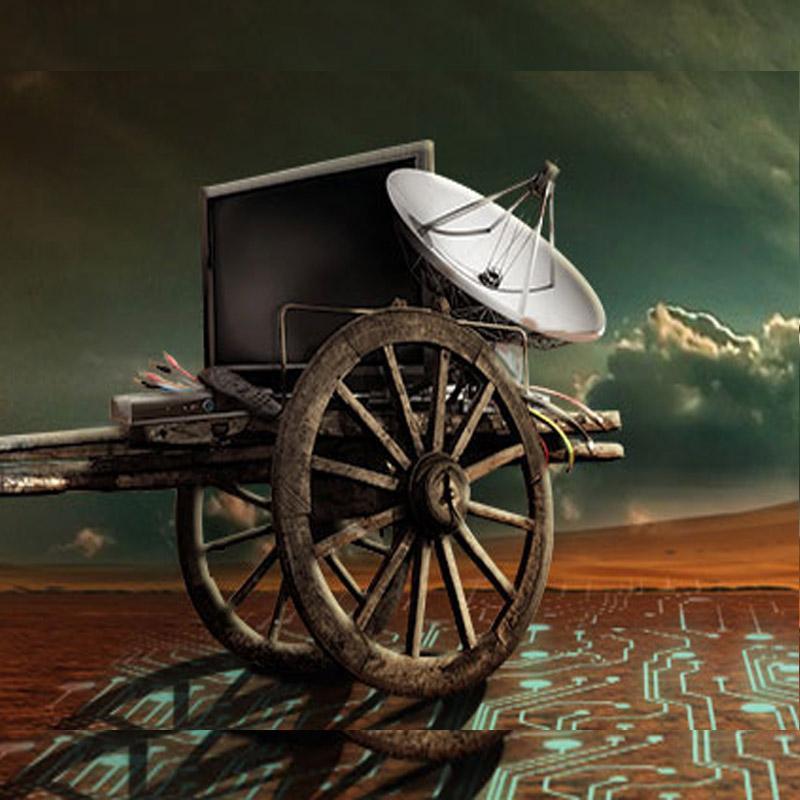
    KOLKATA: Last year it made headlines when large DTH players including Tata Sky, Dish TV announced their decision to move manufacturing of a significant portion of set-top boxes (STBs) in India. The announcements were in line with the government’s renewed push for Make in India. But with complexities looming over the initiative, manufacturers remained worried about the impact of the initiative, if it remained limited to just ‘assembling the products in India’.

    There have been talks around different aspects of the Make in India push for STBs since the last two years. “In 2020, the department for the promotion of industry and internal trade (DPIIT) formed a committee. It asked the ministry of information and broadcasting (MIB) to be a part of it and a meeting was held with operators and STB manufacturers to gauge the overall situation,” said MyBox Technologies MD and CEO Amit Kharbanda. “STB as an electronic product falls under the purview of the ministry of electronics and information technology (MeitY)Meity, but buyers are regulated by MIB, an ‘unusual situation’.”

    According to MIB, Make in India is not just about assembling the product in India but also about promoting Indian designs.

    “Our entire HITS business was premised on furthering the mission of ‘Digital India’ – taking signals to remote semi-rural and rural areas across our pan-India satellite footprint; facilitating a digital transition. As regards local sourcing, our Cable Operator Premise Equipment or COPEs bear testimony to our ‘Make In India’ approach; with a significant percentage of locally sourced components. With Set-Top Boxes, we have already moved whatever inventory production was possible, to India. This includes not just India-based manufacturers but also Indian companies. But, the challenge is that several components of the STBs still need to be procured from overseas manufacturers,” said NXTDigital MD & CEO Vynsley Fernandes.

    The draft National Broadcasting Policy (NBP) finalised early this year also focused on policies to indigenise the production of consumer premises equipment including the set-top boxes, which are heavily import-dependent. This will be done by setting up a self-reliant local manufacturing ecosystem and roping in the Bureau of Indian Standards (BIS) and other agencies to publish the quality benchmark. The policy also called for setting up measures to rationalise the import tariffs and provide preference to domestically manufactured electronic products and mandate increasing deployment of indigenous equipment.

    GTPL Hathway cable TV head and chief strategy officer Piyush Pankaj said, “MIB has been promoting the initiative for the last two-three years, focusing on Indian manufacturers. But, the problem is many components like chipsets still come from a foreign country and are being assembled here. However, the MSO is also buying boxes from Indian vendors.”

    While domestic manufactures are trying to make way for Indian designing, it takes more than a year to develop designing. “Indian design companies have competence but the business is not in good shape, so the domestic manufacturers are requesting the operators to cooperate with them. The operators can be worried about the quality of boxes but they can opt for trial orders,” said MyBox Technologies MD and CEO Amit Kharbanda.

    On the other hand, some operators have distanced themselves from the matter.

    “We support the Make in India initiative. But, we have also clarified that it applies to any product manufactured in India by an entity here, whether it’s an Indian company or a foreign one. As a service provider, I can’t go checking on the antecedents of the company and whether it has ‘designed’ or ‘assembled’ in India, or whether there was a technology transfer or indigenous technology used. It is very complicated for us. We are buying from a company registered in India, paying Indian taxes, not importing. As long as we are doing that, we believe we are buying from India. Now it is up to the government to find out this nitty-gritty and it wants to take a policy initiative,” a senior executive with a large MSO said on conditions of anonymity.

  • MIB has eyes on digital media publishers too

    MIB has eyes on digital media publishers too

    KOLKATA: The social media-Indian government tussle regarding compliance of new IT rules has hogged all the limelight lately. Along with these platforms, digital media, OTT platforms were also given a three-month window to comply with a new set of rules.

    The digital media division of the ministry of information and broadcasting (MIB) has sent a notice to digital media publishers seeking information under Rule 18 of the Information Technology (Intermediary Guidelines and Digital Media Ethics Codes) Rules, 2021.

    The ministry has asked publishers to furnish information in the applicable format within 15 days of the notice as different formats were devised for traditional media publishing news and current affairs on digital media, pure-play digital publishers, and OTT platforms.

    A total of around 60 publishers, and their associations, have also informed the ministry that they have already initiated the process of formation of self-regulatory bodies under the new rules. Some publishers have also written to the ministry regarding registration with the ministry under the rules, MIB noted in its missive.

    The notice highlighted that the ministry held interactions with the publishers of online curated content, as well as the publishers of news on digital media duly after notifying the new rules.

    Meanwhile, the News Broadcasters Association (NBA) has written to MIB requesting exclusion of traditional television news media and its extended presence on digital news platforms from the aforementioned rules, as per reports.

    “While NBA appreciates the need for regulations, the traditional news media need not be subjected to and/ or covered under the scope of the IT Rules 2021, since it is already sufficiently regulated by various statutes, laws, guidelines and codes, regulations, and judgments set,” NBA said in a letter.

    The electronic news media is no different from print media and majority of content hosted on their digital platforms is nothing but a replica of content which is already a part of the broadcast, the body argued.

  • HC notice to Karnataka govt, MIB over obscene content in media

    HC notice to Karnataka govt, MIB over obscene content in media

    New Delhi: The Karnataka high court has sought the state government’s response in a public interest litigation (PIL) to issue directions to frame statutory rules to prevent publication of indecent and obscene content as part of the news programme in electronic and print media.

    The court also issued notice to the ministry of Information and broadcasting (MIB) and state police in this regard.

    According to the petitioner, various media houses publish obscene videos and partially blurred nude photographs and videos of several incidents as part of news programmes. Some TV anchors also repeat the vulgar language used in the video clips to make it loud and clear so that the public can understand the language that is used by the compromised individuals, he stated in his plea, as reported by Bar and Bench.

    Though Section 5 of Cable TV (Regulation) Act-1995 provides that no person shall transmit or re-transmit through a cable service or any programme unless such programme is in conformity with the prescribed programme code, there is no definition for programme code, he submitted before the court.

    The petitioner prayed that publication of such content should be made a cognisable offence, which will have a reasonably deterrent punishment. Apart from framing guidelines, he also sought directions to prevent the electronic media from analysing the sub-judice matters before the court and direct the state police not to leak information collected during the course of investigation regarding any case to the press, public or media.

    The matter will be next heard on 7 June.

  • MIB directs private TV channels to spread Covid awareness

    MIB directs private TV channels to spread Covid awareness

    NEW DELHI: After showing strong signs of flattening the curve, India is again struggling to bring Covid2019 to heel. On 6 April, the country recorded more than 1,15,000 positive cases; a strong indication that the pandemic has returned with a vengeance. 

    Amid the second wave of Covid cases, the ministry of information and broadcasting (MIB) has written a letter to all private channels, the News Broadcasters Association (NBA), and the Indian Broadcasting Foundation (IBF) urging them to disseminate messages for Covid-appropriate behaviour and vaccination of the eligible age groups to generate greater awareness among people. 

    The ministry's advisory sent to private channels cited a meeting under the leadership of prime minister Narendra Modi on 4 April taking stock of the current pandemic situation in India. During the meeting, it was also decided to focus on a five-fold strategy of testing, tracing, treatment, Covid-appropriate behaviour and vaccine roll-out to curb the spread of coronavirus. 

    "It is, therefore, imperative that all stakeholders take forward the communication strategy with a renewed emphasis on Dawai Bhi, Kadai Bhi (medicines and preventive measures)," said the MIB in its letter. 

    The ministry also lauded the leadership role played by private media houses in spreading messages in the public interesinterest.

    ​​​​"Private TV channels have always been at the forefront of spreading important messages in the larger public interest. It is, therefore, requested that private channels may appropriately disseminate messages for Covid-appropriate behaviour and vaccination of the eligible age group so as to create greater awareness among the citizens of the country," stated the advisory. 

  • Dish TV granted in-principle approval for 20-year DTH licence

    Dish TV granted in-principle approval for 20-year DTH licence

    KOLKATA: Popular direct-to-home (DTH) operator Dish TV has renewed its DTH license for 20 years, subject to completion of necessary formalities.

    Dish TV informed the stock exchange in a regulatory filing that it has received in-principle approval from the ministry of information and broadcasting (MIB) for grant of provisional licence to provide DTH broadcasting service in India with effect from 1 April 2021.

    The DTH operator has to enter into an agreement with MIB, containing terms and conditions of the amended DTH guidelines, obtain and provide to the ministry other necessary clearances as envisaged under the guidelines, and provide the bank guarantee.

    Dish TV had first received DTH licence in October 2003.

    After resolving the long standing impasse on the DTH license policy, the government announced in December 2020 that DTH licences will now be issued for a period of 20 years. Under the new rules, licence fee will be collected quarterly instead of annually.

    Changes had been approved for 100 per cent foreign direct investment (FDI) in the DTH sector which was limited to 49 per cent.

    According to the new guidelines, the licensee will need to pay an annual fee equivalent to eight per cent of its adjusted gross revenue, calculated by excluding GST from gross revenue (GR) as reflected in the audited accounts of the company for that particular financial. 

  • NCPCR asks Centre to order removal of scenes from Netflix’s ‘Bombay Begums’

    NCPCR asks Centre to order removal of scenes from Netflix’s ‘Bombay Begums’

    KOLKATA: The National Commission for Protection of Child Rights (NCPCR) asked the ministry of information and broadcasting (MIB) to direct Netflix to remove certain scenes from its recently launched show Bombay Begums.

    According to a PTI report, NCPCR chairperson Priyank Kanoongo wrote in a letter that the streaming service is continuing to violate law impacting the interest of children. It has asked the Centre to direct Netflix to immediately remove the scenes.

    “You are further requested to furnish an ATR [action-taken report] in this regard within seven days of issue of this letter, failing which the commission will be constrained to initiate proceedings under Section 14 of CPCR [Commissions for Protection of Child Rights] Act, 2005,” the letter read.

    Earlier this month, the NCPCR issued a notice to the streaming giant to stop streaming Bombay Begums. The commission said it received complaints from two Twitter handles regarding the Netflix original. The objection had been raised in regards to the scene where a 13-year-old girl is seen “snorting cocaine” at a party.

    The NCPCR further stated that a series with this type of content will pollute young minds and may result in abuse and exploitation of children at the hands of perpetrators and offenders.

    "Netflix should take extra precaution while streaming any content in respect of the children or for the children and shall also refrain themselves from getting into such things," the commission said in the notice.

    Bombay Begums, written and directed by Alankrita Shrivastava, started streaming on Netflix on 8 March and revolves around five women whose lives are interconnected.