Tag: MIB

  • Close Kolkata LCOs appeal to MIB for 10 year license

    Close Kolkata LCOs appeal to MIB for 10 year license

    KOLKATA: Since the time the process of cable TV digitisation started, if any faction has been really troubled, it’s the local cable operators (LCOs). To make their future secure, they have raised their voice time and again.

    In an attempt to form a united front and take up the common issues troubling them, around 8,000 Kolkata LCOs, who claim that mandatory digitisation has adversely affected their livelihood, are requesting the Parliamentary Standing Committee of Information Technology for 10-year license from the Ministry of Information and Broadcasting (MIB).

    One of the reasons that worry the LCOs the most is that they are registered with the post office and get only a year’s license at a time.

    “But the Multi System Operators (MSOs) get a 10-year license from the MIB,” says Cable & Broadband Operators Welfare Association (CBOWA) general secretary Swapan Chowdhury, who thinks that the present condition of licensing is unfair and is making LCOs uncertain about their future.

    “We have requested the authority to recommend the licensing provisions made in the ‘Recommendations on Restructuring of Cable TV Services’ dated 25 July, 2008 to be implemented for LCOs and MSOs,” he adds.

    The body has also appealed to Member of Parliament and Member of Parliamentary Standing Committee of IT, Tapas Paul to review the arbitrary rule and act of Digital Addressable System (DAS) in order to protect the cable operator’s fundamental rights of livelihood.

    Chowdhury thinks that the current revenue sharing model between the MSOs and LCOs is not viable for the cable operators and in due course of time it may even compel the LCOs to quit the business. In the current scenario, as defined by the regulator, the ratio of revenue sharing between MSOs and LCOs is 55:45 for free-to-air (FTA) channels and 65:35 for the pay channels. “The business model should be reconsidered to protect the livelihood of lakhs of people,” says Chowdhury and adds that CBOWA believes that the model is discriminatory and thus they have put in a request for that as well.

    Another thing that is bothering the LCOs is that the MSOs are not executing the terms in the agreement even though DAS has been implemented since February this year. CBOWA has also put in a request about this so that these issues can be addressed in the winter session.

    A cable TV analyst, Namit Dave thinks that the digitisation process is a massive exercise and requires all stakeholders – broadcasters, MSO and LCOs to work in collaboration. “It would be difficult to execute the herculean task if any of these parties don’t cooperate,” he concludes.

  • Licensed Indian channels drop to 784

    Licensed Indian channels drop to 784

    MUMBAI: It has come under flak in the past for being rather liberal in issuing licences to TV broadcasters. But the Ministry of Information and Broadcasting (MIB) has been cracking down on this front over the past year or so.


    And this is evident from the list of permitted private satellite TV channels which the MIB released on 2 December 2013. According to the list, there are 784 channels which have been allowed to beam over India.


    The MIB’s 2012 official list had 848 channels when it was released on 20 December 2012. That means around 64 licences have been revoked in the past year.


    After the Sarada Group scam last year, the MIB had sent notices to various companies asking for details about their shareholdings and structure. It then started the process of cancelling licences based on their response.


    Among the reasons that it gave for the revocation figured: companies had not started broadcasting even a year after being issued a licence and shareholding patterns and directors were changed without the ministry being informed.


    The MIB has also gone easy on issuing new licences to potential broadcasters. Some 50 applications are pending with it, according to industry officials.


    The files for licence clearances have piled up because several representative meetings between the MIB and the Ministry of Home Affairs have been postponed over the past two months, point out industry executives.


    A highly-placed industry source reveals: “A meeting was supposed to happen last week and this week as well, but it failed to take place.”


    Among some of the channels which are awaiting MIB’s nod include: Epic TV, Al Arabiya News, Maha Movie, Blue TV etc.


    Another source adds: “State elections and general elections have been a priority for the government. We, as an industry, are worried and feel that licenses are not on its priority list.”

  • TRAI seeks industry comments on FM Phase III migration

    TRAI seeks industry comments on FM Phase III migration

    MUMBAI: The Telecom Regulatory Authority of India (TRAI) has released the consultation paper on the migration of FM radio broadcasters from Phase-II to Phase-III. As part of the consultative process, the stake holders have been requested to offer their comments and views by 17 December 2013.


    Accordingly, this Consultation Paper (CP) has been prepared to seek the comments/views of the stakeholders on the date of migration from Phase-II to Phase-III; duration of permission after migration from Phase-II to Phase-III; and the amount of migration fee to be charged from existing operators on their migration from Phase-II to Phase-III.


    It also states that in case of counter-comments it may be submitted by 24 December 2013. The Ministry of Information and Broadcasting (MIB) sent a reference dated 9 April 2013, to TRAI seeking recommendations. The clarifications sought by TRAI were provided by MIB by 22 November, 2013.


    The highlights of the Phase-III policy for FM Radio broadcast will be the validity of license is 15 years from the date of operationalisation of the Channel (10 years in Phase II); FDI limit have been raised to 26 percent in a private FM radio broadcasting company (from 20 per cent in Phase II); and it also allows the permission holder to carry the news bulletins of All India Radio in exactly the same format (unaltered) on such terms and conditions as may be mutually agreed with Prasar Bharati, no other news and current affairs programs will be permitted under the Policy.


    The other salient features of the policy are

    – Permission for the channels shall be granted on the basis of Non-Refundable One Time Entry Fee (NOTEF).


    – NOTEF shall be arrived at through an ascending e-auction process, on the lines followed by DoT in the auction of 3G and BWA spectrum in the year 2010.


    – Reserve Price for new channels in existing FM Phase-II cities, the highest bid price received for that city in Phase-II (Click here for more details); and for new cities, the highest bid price received during FM Phase-II for that category of cities in that region.


    – In case the benchmark from Phase-II for a particular region is not available, the lowest of the highest bid received in other regions for that category of cities.


    – For new cities in border areas with a population less than one lakh, the reserve price shall be Rs 5 lakh.

    – Annual licence fee will be four per cent of gross revenue of its FM radio channel for the financial year or 2.5 per cent of NOTEF for the concerned city, whichever is higher. For the permission holders in the States of North East, J&K and island territories (i.e. Andaman and Nicobar islands and Lakshadweep) – at 2 per cent of gross revenue for each year or 1.25 per cent of NOTEF for the concerned city, whichever is higher, for an initial period of three years from the date from which the annual license fee becomes payable and the permission period of 15 years begins.


    -Each applicant will be allowed to own more than one channel but not more than 40 per cent of the total channels in a city subject to a minimum of three different operators in the city.


    -No entity will be permitted to hold more than 15 per cent of all channels allotted in the country excluding channels located in Jammu and Kashmir, North Eastern States and island territories.


    -Networking of channels will be permissible within a private FM broadcaster’s own network across the country subject to 20 per cent of the total broadcast in a day is in the local language of the city and promotes local content.


    – The permission holder is required to follow the Programme and Advertisement Code as followed by All India Radio as amended from time to time or any other applicable code, which the Central Government may prescribe from time to time.


    In this phase, about 839 additional channels in about 294 cities across the country are being offered for the auction.

  • Cabinet set to deliberate on TV ratings guidelines

    Cabinet set to deliberate on TV ratings guidelines

    MUMBAI: The Telecom Regulatory Authority of India’s (TRAI’s) recommendations are seeing movement to enable them to serve as the gold standard for television ratings. Currently with the law ministry, the file relating to TV rating guidelines is expected to be presented to the Cabinet very soon.

    The TRAI had come up with its own analysis and recommendations around how TV ratings should be done in India following  discussions with the various stakeholders in September 2013; with the Union Cabinet expected to deliberate and give it sanction soon it could well be en route to become law.

     “The recommendations are fair and are neither pro nor against any measuring body. However, it is very clear that it will be passed by the cabinet,” says the highly placed source from the Indian Broadcasting Foundation (IBF).

    As reported by indiantelevison.com in September, the regulatory body had sent out the recommendations on what should serve as guidelines to put in place a transparent, credible and reliable television ratings process in the country.  

    Amongst the recommendations is that any agency wanting to offer TV viewership monitoring or rating services has to perforce get itself registered with the ministry of Information & Broadcasting (MIB) if it fulfills the following guidelines: “The rating agency shall be set up and registered as a company under the Companies Act, 1956; any member of the board of directors of the television rating agency should not be in the business of broadcasting/ advertising/advertising agency; the rating agency should have a minimum net worth of Rs 20 crore; the rating agency should also meet the prescribed cross-holdings requirements.”

    TRAI had also stated that to keep the ratings process credible, there should be a minimum of 20,000 panel homes which have to be set up within six months of the guidelines being implemented. Thereafter the number of panel homes has to be increased by 10,000 every year until it reaches 50,000.

    To meet and fulfill the last criteria, TAM, the current measuring body, will have to invest a large sum of moolah ( Rs 100 crore plus) every year. This could well be a major challenge for it, if sources are to be believed. For the Indian broadcast industry, has pretty much been chary of funding any of its expansion plans, in the past.

    “Its very existence will be under tremendous threat over the next year or so,” says a media observer. “If it manages to raise the money despite all the cross media equity holding restrictions, then it should be all right. But it will have to contend with BARC which will be getting the industry’s support and should start by mid to late next year.  I would not like to be in TAM’s shoes.”

    However, the source adds that most stakeholders involved in it hope that TAM will be able to participate in the working of BARC as well.

    Another industry source comments, “We don’t care about what happens to TAM. The industry has opted for a new measuring system, then why should we think about TAM’s fate?”

    Watever be the case, one thing is clear BARC is no more suffering teething problems and will sooner than later  bring about a paradigm shift in the audience measuring game in India. And as far as TAM goes, it needs come up to scratch and follow the TRAI guidelines.

    The ratings race may have only just begun.

  • TDSAT-TRAI ad cap: NBA finishes rejoinder

    TDSAT-TRAI ad cap: NBA finishes rejoinder

    MUMBAI: It was day two of the News Broadcasters Association (NBA) submission of its rejoinders in the hearings on the proposed Telecom Regulatory Authority of India (TRAI) ad cap regulation. NBA counsel Anup Bhambhani clarified that it was untrue that channels had tried to suppress documents, as everything related to teleport licence is in the public domain and hence easily accessible to the regulator. Channels had individual teleport licences while others were uplinking through Bharti Airtel or Essel Shyam which made them the licensees and not the channels.


    The counsel also pointed out that the TRAI had not informed the TDSAT that ads are of three types- commercial, social and programme promos. Not every ad is a paid ad and DAVP ad rates are also low.And the number of minutes of advertising does not take into consideration any of these facts; and hence is not reflected in these categories. He stated that the TRAI had gone overboard in describing the type, length and look of the adverts, in a consultation paper issued in 2012. And even though it was later dropped, it never had any mention of section 7 (11 )of the Cable TV Networks Regulation (CTN) act. Also, the proposed 10+2 regulation finally did not mention that TRAI was using section 11 of the TRAI act in order to enforce section 7 (11) of the CTN act.


    According to the NBA counsel, the 7 (11) argument was very ingenious in order to defend the TRAI regulation which was previously never mentioned. Assuming TRAI can regulate, the intention while framing was not keeping in mind this regulation. He pointed out that the ministry of information and broadcasting (MIB) is the authority for the news channels and not the TRAI.


    The NBA lawyer also clarified that the Bengal Cricket Association vs MIB and Doordarshan judgement does not apply to private broadcasters as is stated in para 79 of the case. Although the case was read against the channels, it claims that the argument that ‘airways are public property’ only applies when you are seeking a teleport licence for setting up a TV station. While thinking of granting a licence, Article 19 (1) of the Constitution that speaks about freedom of speech and expression, can be thought of but not after it has been granted.


    Mentioning the Sakaal papers case, the NBA counsel said that that case was contended because page numbers were restricted and similarly in the case of TV channels also ad duration is being controlled. It also stated that there is no need to prove a loss because even if there is a prospect that there may be a shutdown due to the restriction then it is a violation of Article 19.


    Another point argued was that when TRAI says it is laying down standards of quality under section 11 of the TRAI act, as per precedents it had itself set, it can only include technical aspects such as tariff regulation and never content. According to the NBA, duration is content.


    Addressing the point that the amicus curiae had made, the NBA counsel presented data supporting the fact that channels’ ad rates would need nearly 50 to 100 per cent increases, if losses due to lower air time are to be covered. To support the contention that TRAI only has recommendatory authority, the NBA lawyers pulled up SO 44 and 45 from the TRAI notifications which said “Broadcasting and cable services to be telecommunication services and showed that it is mentioned in it by the central government that TRAI only has a recommendatory function regarding duration of commercials.”


    SO 45E 1 b states “Without prejudice to the provisions contained in clause (a) of sub-section (1) of section 11 of the Act, to make recommendation regarding (b) the parameters for regulating maximum time for advertisements in pay channels as well as other channels”.


    Even though broadcasting has no correct definition, the NBA read from the TRAI explanatory memorandum 2012 where it mentioned broadcasting services to be ‘dissemination of signals.’


    Another argument was that TRAI couldn’t change a statutory law by changing ‘per hour’ to ‘clock hour’ and reporting authority as TRAI. Before coming up with the regulation TRAI didn’t even bother to serve a notice to broadcasters.


    TRAI’s argument that it was for the benefit of consumers that the regulation is being framed was countered by the NBA saying that viewers need choice. If they wanted channels free of ads they should be ready to pay more for the service or else they have an option to switch channels. The channels said they are happy to consider it post DAS is implemented which according to a KMPG report will make subscription and advertisements a 50:50 affair.


    A major point raised was the discrimination towards pay channels and bias towards the pubcaster Doordarshan which according to the NBA was also violating the regulation.


    Tomorrow the music channels are expected to give their rejoinders.

  • “We are hoping for a fair share of revenue in a digitised ecosystem” :The One Alliance president Rajesh Kaul

    “We are hoping for a fair share of revenue in a digitised ecosystem” :The One Alliance president Rajesh Kaul

    Cable TV digitisation has forced the entire television ecosystem to come face to face with some gut-wrenching changes. Each one of the players has come under the scathing gaze of either the ministry of information and broadcasting or the telecom regulator, the Telecom Regulatory Authority of India (TRAI). Some have even got a rap on their knuckles as the powers that be continue to work overtime on evolving a rickety old cable TV landscape into one capable of delivering top of the line world class digital services.

    Earlier this month, it was the aggregators that came under the scanner of TRAI which sent out a consultation paper which tries to reduce their importance in a digitised cable TV India. TRAI has said that aggregators tend to misuse the clout they have and need to have their wings clipped.

    The One Alliance, a  Discovery India-MSM joint venture which distributes 28 channels to the 30,000 or so cable operators nationally is one of the aggregators whose future and existence many are questioning.  But its president Rajesh Kaul, a scarred veteran of many a cable TV battle,  is hopeful things will get sorted out and work out well for him and others of his ilk such as MediaPro and IndiaCast.

    Even as The One Alliance has been celebrating the completion of 11 years of being in business, Kaul was busy preparing his responses to be presented to the regulator before the scheduled 27 August deadline. He still found some time to speak to Indiantelevision.com’s Seema Singh on trends in carriage and placement fees, the TRAI consultation paper and all things cable TV. 

    Excerpts:

    Do you see the aggregators become more relevant or less in the coming years? Why or why not?

    We will be as relevant as we are right now. We are a very important link in the chain of the entire television ecosystem. We just hope that with digitisation we will get a fair share of revenue which we haven’t got for so many years.

    What is your take on the TRAI consultation paper, which if implemented will cut down on the aggregator’s clout?

    We are evaluating the entire paper for which we need to file replies.

    TRAI in all its open houses and interaction with stakeholders has maintained that the era of regulation should go now and that they want to deregulate. So the consultation paper came as a surprise. On one hand they talk of deregulation, while on the other they put us under more regulations.

    May be the regulators need some clarification on the same and we are working on it. I am unsure of the intensity of the complaints put by the MSOs. 

    All through we have been following the TRAI and Information & Broadcasting Ministry (MIB) guidelines, with not a single case of deviation.

    There are close to 700 channels today and this has led to huge competition. The situation is such that no one channel can behave unreasonably with an MSO or with consumers. We all need eyeballs from our consumers. The competition ensures that the channels’ content and rate is good. We have to ensure that everything is as per market dynamics so that they are more liked and watched. This is the age we should be talking of forbearance rather than regulation.

    As per the TRAI regulation we are supposed to offer our channels on a la carte rate as well and this is available to the MSOs. In this country, there is a ‘must provide’ for all broadcasters, according to which not a single channel can say “No”  to an MSO for providing the channel to them.  But the MSO has the option to not subscribe to our channels. Since all the channels are on a la carte rate as well, there is no question of forcing them to subscribe to our bouquet.

    Another point that needs mentioning is that the broadcasters have not been getting a fair share of revenue in subscription. We thought with digitisation things will change. We have been a very good stakeholder in this entire process and done all that the regulator wanted us to do, be it doing quick deals to help MSOs sell the set top boxes or curbing our ambitions to make profits.  We hope that we will bear the fruit of being responsible stakeholders in this entire stretch one day.

    TRAI had even in the past come up with such consultation papers, but always heard us and I am hopeful they will listen to us even in this case. We are going to them to present our thought process. May be some wrong impression and feedback has gone to them, our duty is to explain to the regulator.

    The second phase of DAS will conclude soon. Any problems that you faced in this switch? What is the percentage growth in revenue in phase two as compared to phase one?

    We are still waiting for a transparent system. With digitisation the consumer can chose what they want, and pay for it. This transparency has not come out so far. We are still not getting reports from the MSOs and do not know who is watching what. These are the bottlenecks that we face.

    We were looking at ambitious numbers when digitisation kicked off. We didn’t get that in the first phase. Also as responsible stakeholders we curbed our ambitions then because we knew it would be difficult to expect a huge jump in the beginning. We supported the MSOs, which is what the regulator wanted us to do.

    But with the completion of phase II, we should be inching towards that fair share, which should be around 35 to 40 per cent of the on-ground subscription revenue collected. This should happen by April 2014. Channels cannot survive only on ad sales, subscription money is a very important revenue stream for broadcasters, but unfortunately it hasn’t so far happened in India.

    Another problem that the broadcasters face is the high carriage fees. In an analogue system, due to capacity constraint, broadcasters had to pay huge carriage fees. But now with digitisation there is no question of any capacity constraint, so why have carriage fees?

    How are you playing out the carriage fee market? Will the carriage fees come down? How much has this come down, pre- and post-DAS?

     In the next three years there should be no carriage fees. Though carriage fees  have come down post DAS, we still have been paying some placement fees to support the MSOs as they make their transition. But, with the completion of digitisation, even this should go down.  I expect carriage and placement fees to disappear over the next two to three years. While these were expected to go down further by phase II of digitisation, it has only been to the extent of about 25 per cent.

    Earlier the subscription revenue share we (read: broadcasters) were getting from the cable TV ecosystem was about 10-15 per cent. Now it has gone up to maybe to 20 per cent on the overall. Some broadcasters may have got 25 per cent but others may have got lower amounts of the digital dividend.  Many of the channels don’t get any subscription revenues because in the analogue environment they could not afford to have that as a part of their business model. With digitisation all this could change.

    Do you plan to add more channels in the bouquet? What was your strategy to ensure that you had Times Network in your bouquet, when other news channels were walking out of the bouquet?

    We are not market shopping for channels and we are not desperate. Only if tomorrow we come across something good, we will think of adding it to our bouquet.

    We added Times Television Network to our bouquet this year. It was a mutual decision between the two of us. They fitted in our profile and also they wanted to be a part of our network. They are a premium channel and they deserve suitable revenues considering their performance and we at The One Alliance are working to get them those revenues.

    We are in the process of concluding deals for Times with other MSOs. We have finished with Hathway, GTPL, and some other MSOs. And more are coming.

    You had a dispute with Hathway going on for some time? How is that progressing?

    There were many issues like are bound to happen in the cable TV business and yes one of these issues was the one we had with Hathway. And one of the issues – amongst the many issues – we had with Hathway was The Times network, which we have been distributing. But we amicably resolved all the issues with Hathway this evening. And the One Alliance bouquet of channels should have come back on all of Hathway networks by this evening. (26 August).

    It’s been 11 years in the business, how has the journey been so far?

    The journey has been fantastic. While we started with three or four channels now we have a bouquet of 28 channels, with extremely powerful and premium channels. We have various genres, we have a solid name and repututation. It has a journey which has had  more ups than downs.


    Unfortunately, even with the IPL being the biggest sporting property in this country, we have not been able to monetise it well due to under declaration. But, now we have aggressive plans to monetise it for the next season..

    What are the key pointers that set The One Alliance apart from other aggregators? As compared to others aggregators you have less channels, is that a limitation. How do you see things going ahead?

    We are the most stable joint venture (JV) in the industry. All the other aggregators are just a couple of years old. Our partners are very much involved and keen to ensure that the stability continues. For us the quality of the channel is important. We have never been in the race of having 50-60 channels in our bouquet. 

    We have channels from different genres in our bouquet and most of them are amongst the top two or three ranking in their respective genres. There are many more who want to be a part of One Alliance, because they trust the JV. Also our dealings are very transparent. We can add two to three channels at any given time, but our policy doesn’t allow us to do that. We have always believed in quality and so want to have premium channels in our bouquet.

    Today we are the strongest, despite having 28 channels. Also we are the only one having a sports channel in our bouquet unlike the others. Considering we have most genres covered in the bouquet, I don’t see any limitation. Our revenue is far higher than the others.

    Are you selective about the channels you take in the bouquet? What are the criteria that a channel needs to fulfill to be a part of The One Alliance bouquet?

    The channel and the company backing the channel should have similar kind of values and ambitions like ours. We also look at the channels’ performance, which we understand on the basis of the weekly television viewership ratings.

    What is the reach of the bouquet and which is the largest channel in the bouquet?  

    We currently have 28 channels from different genres in our bouquet. Sony Entertainment has the largest reach and, during IPL, Sony Max gets the largest reach.
    IPL is the biggest sporting property that we have. What is interesting is that though most sporting properties are a simulcast with Doordarshan, IPL is the one property which is exclusive on Max. This makes it the most important property in the sporting channel world and we have it.

    We are present almost across the country. We would be there in around 90 per cent of the towns, which have cable and satellite, but through DTH our reach is 100 per cent. Close to some 6,000 cable networks across the country carry our channels. 

    What is the current strength of the organisation?

    One Alliance employs 125 people with offices in Delhi, Bengaluru, Kolkata, Indore and Mumbai. Apart from this, we also have a strong distribution network with distributors in Rajkot,  Pune, Ahmedabad, Guwahati, Patna, Ranchi and Lucknow among others. Like this we have offices in 60 cities. The distributors have their own employees. So, if we take a cumulative strength, we have around 350 people working for us.

    The major revenue for The One Alliance is dependent on IPL. So till how long will IPL be with Sony Max? How do you maintain subscription post IPL and also with so many controversies surrounding IPL, how will you deal with it?

     Unfortunately, even with IPL being the biggest sporting property in this country, we have not been able to monetise it well due to under declaration. But, now we have aggressive plans to monetise it for the next season.

    What are the future plans for The One Alliance?

    We have to lead the change and ensure that everybody gets their fair share.
  • TRAI agrees to raise FDI limits as demanded by News Channels & FM Radio

    TRAI agrees to raise FDI limits as demanded by News Channels & FM Radio

    NEW DELHI: In the recommendation issued by the Telecom Regulatory Authority of India today, the foreign direct investment for FM Radio should be increased to 49 per cent, and for teleports, DTH, HITS, mobile and cable television networks to 100 per cent.

    In the recommendations issued just a day after it was asked by the government to speed-up its views, TRAI also conceded a long-standing demand of news and current affairs television channels by recommending that they should be permitted 49 per cent FDI.

    The TRAI recommendations in essence stuck to its earlier Consultation Paper on the subject issued on 30 July.

    The final recommendations have been issued after an open house and the responses of 24 stakeholders on the Consultation Paper.

    However, TRAI said that in the cases of both FM Radio and news channels where the existing limit is 26 per cent, the clearance would be through the Foreign Investments Promotion Board.

    In the case of teleports, DTH, HITS, mobile and cable television networks where the limit was 74 per cent, TRAI said that it can be raised to 100 per cent of which 49 per cent would be automatic and the rest would be through FIPB.

    No change had been recommended in the case of downlinking of TV Channels and uplinking of general entertainment (non-news) channels where the upper limit is 100 per cent through FIPB.

    The Authority recommended that with the enhancement of FDI limits in respective segments of broadcasting sector, the other security/terms in the foreign investment policy and other license/permission conditions in the respective segments of the broadcasting sector should continue to apply.

    TRAI said the government should ensure that the process of FIPB approval is streamlined and the requests for FDI are processed in a time bound manner.

    The Information and Broadcasting Ministry had on 11 December 2007 sought a comprehensive set of recommendations from the Authority on FDI in the different segments of the broadcasting sector. The Authority gave its recommendations on 26
    April 2008.

    In 2009, the Department of Industrial Policy and Promotion (DIPP) modified the methodology of assessment of foreign investment in Indian companies. In view of this, the MIB on 30 September 2009 once again made a reference to TRAI to revisit the recommendations on FDI in the broadcasting sector.

    The Authority gave its recommendations on 30 June 2010. Based on the views expressed by the government, these recommendations were partially revised on 3 June 2011. In line with the last recommendations of TRAI, the FDI limits and approval route for various segments of the broadcasting sector were revised by the government on 20 September 2012.

    MIB sent a reference to the Authority on 12 July 2013, indicating that the government is re-examining the current FDI policy with a view to easing FDI inflow and liberalising the limits/caps. In this context, MIB requested the Authority to examine the FDI limits of various segments in the broadcasting sector and to furnish its recommendations.

    In its recommendations, the Authority said it recognised the growing convergence between the broadcasting and telecom sectors and has been broadly guided by the principles of ensuring a level-playing field between competing technologies and maintaining consistency in policy across both sectors.

    TRAI says that in its reference, the Ministry had indicated it was re-examining the current FDI policy and liberalising the limits/caps with a view to easing FDI inflow. In this context MIB has requested the Authority to examine the FDI limits of various segments in the broadcasting sector and to furnish its recommendations.

    The government is contemplating enhancement in the FDI limit for telecom services to 100 per cent with FDI up to 49 per cent through the automatic route and FDI beyond 49 per cent through FIPB. Carrying the same logic forward, and keeping in mind the fact that the ongoing digitisation of the cable TV services in the country would give a big impetus to the convergence of the broadcasting and telecom infrastructures, the same limits and route ought to be made applicable to the carriage services in the broadcasting sector.

    For downlinking of TV channels, no distinction has been made between the two categories while prescribing the FDI limits. This is because the ingredients of content can only be controlled at the uplinking end. Hence, 100 per cent FDI is allowed in downlinking of channels in India. However, FIPB approval is required. Further, in case of channels uplinked from a foreign land, additional conditions have been mandated for permitting downlinking in the Policy Guidelines for downlinking of Television Channels dated 11 November 2005.

    While granting permissions for uplinking of channels from within the country as well as for downlinking of all channels uplinked from within the country or abroad, the I&B Ministry takes security clearance from the Home Ministry. Since content can be sensitive in nature, it is appropriate to have checks and balances at different stages viz. to screen for any potential hazard from a national perspective. In view of these considerations, the status quo ought to be maintained regarding the route for approval of any FDI.

    For uplinking of TV channels of the non-news and current affairs category, 100 per cent FDI is permitted through the FIPB route. The status quo may continue.

    For uplinking of TV channels of news and current affairs category, the existing FDI limit is 26 per cent through the FIPB route. An increase in the FDI limit for news & current affairs channels will enable access to more resources for these channels at competitive rates. These resources can be applied for upgrading news gathering infrastructure and quality of presentation. It could also reduce the dependence of TV channels on advertisement revenue. Therefore, the FDI limit for news & current affairs channels in the uplinking guidelines may be increased from 26 per cent to 49 per cent through the FIPB route.

    There are existing provisions in the uplinking guidelines to safeguard management and editorial control in news creation. These include: i) requirement to employ resident Indians in key positions (CEO of the applicant company, 3/4th of the Directors on the Board of Directors, all key executives and editorial staff), ii) the largest Indian shareholder should hold at least 51 per cent of the total equity, iii) reporting requirements when any person who is not a resident Indian is employed/ engaged etc. If the FDI limit in uplinking of TV channels of the news and current affairs category is enhanced to 49 per cent, then as per provision at ii) above the remaining Indian shareholding (51 per cent) would have to be with a single Indian shareholder. The more general issue, on which stakeholders may wish to make suggestions, is whether or not any changes are at all required in these conditions. In fact, a better way to ensure that content deemed undesirable or subversive in nature is not broadcast through TV channels is by having proper content monitoring and regulation through a content code, instead of using FDI limits as the tool for this purpose.

    The government has announced the Phase III of expansion of FM radio. In this phase it is envisaged that 839 new private FM radio stations will come up, expanding the coverage of private FM radio stations from 87 cities to 313 cities. The auction of frequencies for FM radio is likely to be taken up by the government shortly. Easy availability of capital to operators through multiple sources at competitive rates would ensure better participation in the auction by the operators.

    The phase III policy also expands the sphere of activities that can be taken up by the FM radio operators. These include carriage of information pertaining to sporting events, live commentaries of sporting events of a local nature, traffic and weather, cultural events and festivals, examinations, results, admissions, career counselling and employment opportunities, public announcements pertaining to civic amenities like electricity, water supply, natural calamities, health alerts as provided by the local administration etc. For building up of infrastructure for such services, additional investments will be required. Keeping in view all these aspects, the FDI limits may be enhanced from 26 per cent to 49 per cent through FIPB route for the FM radio sector.

    In the past, FDI limits for FM radio have been fixed on the same lines as that for TV news channels, on the rationale that FM radio and news and current affairs channels are of a similar nature from the sensitivity point of view. Enhancing the limit to 49 per cent through the FIPB route will also ensure that the FDI policy for FM radio will remain aligned to the FDI policy for uplinking of the news and current affairs channels, which is also being considered for enhancement to 49 per cent through the FIPB route.

    The Phase III policy of the government for FM Radio also prescribes a similar condition for safeguard of managerial control of radio channels as in the guidelines for uplinking of news and current affairs channels. If the FDI limit for FM radio is enhanced to 49 per cent, then, as in the case of news and current affairs channels, the remaining Indian shareholding (51 per cent) has to be with a single Indian shareholder.

    Click here for TRAI-FDI-Recommendation

  • Hathway EBITDA more than triples in Q1-2014 as compared to Q1-2013

    Hathway EBITDA more than triples in Q1-2014 as compared to Q1-2013

    BENGALURU: Indian Multi Systems Operator (MSO) Hathway Cable & Datacom Limited (Hathway) reported EBITDA (including other income) of Rs 77.04 crore for Q1-2014, more than three times (3.23 times) the Rs 23.84 crore for Q1-2013, but 14 per cent lower than the EBITDA of Rs 88.47 crore for Q4-2013.


    NOTE: As per Hathway management’s estimates, EBITDA inclusive of Hathway’s economic interest in the EBITDA of its several subsidiaries/JVs/associate companies would aggregate to about Rs 96.0 crore for Q1-2014.


    Let us look at Hathway’s other figures for Q1-2014


    Hathway reported a total income from operations of Rs 232.65 crore in Q1-2014 which was 70.74 per cent higher than the Rs 132.26 crore in Q1-2013 and almost flat (just 0.64 per cent more) income as compared to the Rs 231.18 crore for Q4-2013.


    Hathway’s expense for Q1-2014 at Rs 156.56 crore was 39.14 per cent more than the Rs 112.42 crore for Q1-2013 and 9.7 per cent more than the Rs 142.71 crore for Q4-2013. Hathway’s purchase of stock in trade in Q1-2014 at Rs 0.67 crore was one fifth (5.075 times less) the Rs 3.4 crore in Q1-2013 and only about 41 per cent of the Rs 1.63 crore for Q4-2013.


    Staff cost of Rs 13.77 crore for Q1-2014 was 35.53 per cent higher than the Rs 10.16 crore in Q1-2013 and 31.02 per cent higher than the Rs 10.51 crore for Q4-2013.


    Paycost of Rs 58.45 crore for Q1-2014 was 50.22 per cent more than the Rs 38.91 crore for Q1-2013 and 18.08 per cent more than the Rs 49.5 crore for Q4-2013.


    Other expense at Rs 83.67 crore for Q1-2014 was 39.57 per cent more than the Rs 59.95 crore for the corresponding quarter of the previous year (Q1-2013) and 3.2 per cent more than the Rs 81.06 crore for the immediate preceding quarter (Q4-2013).


    PAT for Q1-2014 at Rs 5.32 crore was however less than one fifth the PAT of Rs 28.27 crore for Q4-2013. In Q4-2013, Hathway had a foreign exchange gain of Rs 5.73 crore, while in Q1-2014; it had incurred a foreign exchange loss of Rs 8.32 crore. Finance cost at Rs 21.61 crore for Q1-2014 was 53.6 per cent more than the Rs 14.07 crore in Q4-2013 and 62 per cent more than the Rs 13.32 crore for Q1-2013.


    For Q1-2013, Hathway had reported a loss of Rs (-15.87) crore. The foreign exchange loss incurred by Hathway in Q1-2013 was Rs 4.56 crore.


    Hathway’s income from operations mainly consists of subscription income from cable TV and broadband business, carriage and placement income, advertisement income, activation income from STB’s and other operating income.


    Hathway says that it continued to deploy STBs in Q1-2014 and as of June, 2013 along with its JV partners had cumulatively deployed over 0.7 crore STBs all over India and approximately 0.18 crore STBs in Q1-2014. The company says that it has deployed approximately 0.25 crore STBs in Phase I and approximately 0.41 crore STBs in Phase II areas till June 2013, which it says, makes it the biggest MSO in Phase I and II areas.


    Hathway informs that it has adequate STBs in hand and continues to roll out its services in major Phase III and IV towns.


    Hathway further says that as per MIB (Ministry of Information and Broadcasting, Government of India) reports cable television is clearly the preferred choice in Phase II cities also with a near 90 per cent share of digital STBs seeded after 15 February 2013 being seeded by cable MSOs.


    In its broadband update Hathway states that the gross additions to its broadband subscriber base was around 27,000 for the Q1-2014. Hathway’s cumulative subscriber base stood at approximately 4,24,000. As on end June 2013, the company says that it has tested its DOCSIS 3 technology for its broadband subscribers in certain cities. With DAS being successfully implemented Hathway expects to increase its broadband customer base with bundled schemes that it plans to offer shortly at competitive rates.


    Hathway says that it is in the process of raising funds to the tune of Rs 149.8 crore from its promoters and new shareholders through preferential allotment. The shares of face value Rs10 each are to be issued at a premium of Rs 274 per share (adding up to Rs 284 per share).

  • MIB cancels licences of 20 MSOs

    MIB cancels licences of 20 MSOs

    MUMBAI: The Information and Broadcasting Ministry (MIB) has cancelled the licences of 20 Multi System Operators (MSOs) for not meeting the conditions for providing digitised cable services.

    The ministry is working towards a switchover of the cable services from analogue to digital by 2014-end across the country.

    The deadline for phase II of the digitisation in 38 cities ended on 1 April and the disqualified MSOs were not providing services under the new digital regime.

    An official said that setting up a digital head-end was one of the conditions for MSOs to comply and the MSOs whose licenses were cancelled did not meet these conditions.

    MSOs in broadcasting are entities which receive the signal from broadcasters and then pass it on to local cable operators.

    Here is the complete list of the 20 MSOs

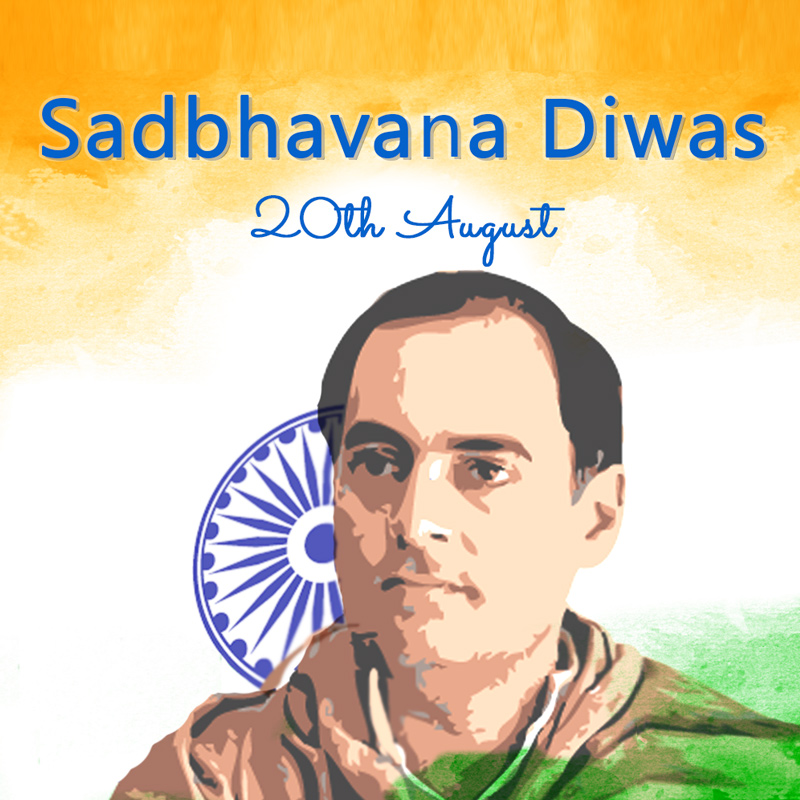
  • Special spot on ‘Sadbhavana Divas’ on MIB’s YouTube site to remember Rajiv Gandhi

    Special spot on ‘Sadbhavana Divas’ on MIB’s YouTube site to remember Rajiv Gandhi

    NEW DELHI: A special TV spot to promote the message of communal harmony on the occasion of ‘Sadbhavna Diwas‘, the death anniversary of former prime minister Rajiv Gandhi, has already got thousands of views on the information and broadcasting ministry‘s YouTube site www.youtube.com/user/INBMINISTRY?.

    Officials said the 1.38 minute spot, directed by noted film maker Pradeep Sarkar, would beam across the media space spreading the message that ‘sadbhav‘ (communal harmony) is the idea of India.

    Sarkar, who has created the clip, had also directed the multimedia campaign ‘Glimpses of India Story‘, which was launched by I&B minister Manish Tewari earlier.
     
    Officials said the digital volunteers of the ministry who spread the government‘s policies and views on the social media would actively spread the message.

    The video has also been put on the ministry‘s blogspot and got over a thousand views till last evening.