Tag: MIB

  • MIB issues order on guidelines for TV rating agencies

    MIB issues order on guidelines for TV rating agencies

    MUMBAI: The clock has started ticking as of yesterday, 16 January, when the Ministry of Information and Broadcasting (MIB) passed its order regarding TV rating guidelines. The ‘policy guidelines for television rating agencies in India’ have been issued by the Ministry after the cabinet approved it on 9 January.


    The guidelines will come into effect thirty days from the date of issuance of the order. Current rating agency TAM now has 29 days left to bring the guidelines into effect and comply with it.


    Attached below is the full annexure of the guidelines.


    Click here to read the annexure


    Await detailed report…


    Click here to read the earlier report

  • BARC updates the I&B ministry on its progress

    BARC updates the I&B ministry on its progress

    MUMBAI: The media industry went into a tizzy last week when the union cabinet accepted the Ministry of Information and Broadcasting (MIB)’s proposed regulatory framework for television rating agencies in India. 


    The most affected from this entire episode is the Broadcast Audience Research Council (BARC) as the pressure is building up on them to speed up the process and bring the new system for TV ratings in to place. 


    Hence, BARC board members met the MIB to present an update on the progress made so far. As per a highly placed source, the council members told the Ministry that the pilot testing has already begun. “There will be three-four phases of these testing sessions before the work officially starts.” 


    Elaborating the phases, the source remarks: “Firstly, the entire ratings system has to be tested how well the equipments work with the Indian technology and ecosystem. Secondly, we will have to see if all the elements are aligned properly. Thirdly, how accurate is the data collected; and lastly, the overall panel design.” 


    Another source reveals that the Ministry has been informed that the council will start signing contracts soon. “BARC is partnering with around six to seven tech organisations to complete the process,” the source claims.


    When asked about the Ministry’s reaction on the update, the council’s chairman of the technical committee Shashi Sinha says, “The Ministry is happy with the progress we are making and even we are happy with the way things are shaping up.”


    BARC has organised a press conference on 20 January in Mumbai to discuss further progress.

  • I&B minister  Manish Tewari inaugurates BES Expo 2014

    I&B minister Manish Tewari inaugurates BES Expo 2014

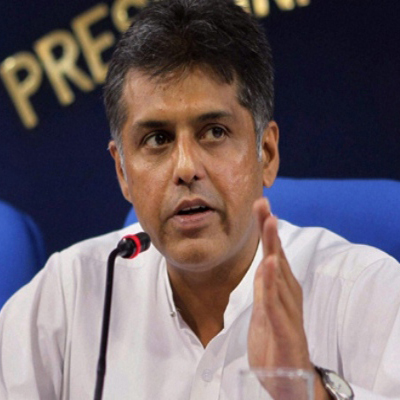
    NEW DELHI: The Information and Broadcasting minister Manish Tewari inaugurated the 20th International Conference and Exhibition on Terrestrial and Satellite Broadcasting – BES Expo 2014, today at New Delhi. Speaking on the occasion he said, “The last two decades have witnessed exponential growth in both the broadcasting and telecom sectors, giving rise to 800 plus television channels.”

    Commenting on the problems and challenges faced by the broadcasting sector due to competition for market share, he said the union cabinet has recently approved the proposal of the Ministry of Information & Broadcasting for a comprehensive regulatory framework in the form of guidelines for Television Rating Agencies in India. These guidelines cover detailed procedures for registration of rating agencies, eligibility norms, terms and conditions of registration, cross-holdings, methodology for audience measurement, a complaint redressal mechanism, sale and use of ratings, audit, disclosure, reporting requirements and action on non-compliance of guidelines. 

    Also speaking at the function, Ministry of Information & Broadcasting secretary Bimal Julka, said the ministry is planning to strengthen community radio movement in India, which would help in giving voice to the voiceless. 

    The BES expo is being attended by over 300 eminent broadcasters, media industry professionals and experts from India and abroad. The three day long expo will have deliberations on issues such as terrestrial broadcasting, future of TV, digitization, disaster broadcast systems for information dissemination, regulatory framework in broadcasting and other important issues related to the broadcasting industry. 

  • Tata Sky to reply to MIB’s showcause notice

    Tata Sky to reply to MIB’s showcause notice

    MUMBAI: A month after the ministry of information and broadcasting (MIB) came out with its mandate that 24 Doordarshan channels have to be carried on all DTH platforms; the ministry has cracked the whip on three DTH players in the country for not obeying the notification. Showcause notices have reportedly been sent to Reliance Digital TV, Sun Direct and Tata Sky as to why action shouldn’t be taken against them for not complying with this requirement.


    Now, one of the big players is all set to give a fitting reply to the ministry – Tata Sky, which has unsuccessfully been chasing the MIB for transponders on ISRO’s GSAT-10 satellite. “Our licence with Doordarshan was to carry eight channels but we were carrying 15 since our customers wanted them. We have been running pillar to post to get capacity but no one has been helping us,” says and agitated Tata Sky CEO Harit Nagpal.


    The DTH operator has signed long term contracts with all its channels and has no more capacity left for any more channels. “I am ready to carry the 24 channels that the government says I should but I need time to figure out how to do it. Capacity creation takes time. There are only two ways to create capacity- either get more transponders or remove channels. If I remove channels, customers may not be too happy with it,” adds Nagpal. “And also my contracts with other broadcasters for carriage of their channels have to be kept in mind.”


    The notice was sent to Tata Sky yesterday and it has a deadline of 15 days to submit its reply. However, going by the looks of it, it won’t be too long before the ministry gets Nagpal’s reply. “We had written even when the notification was passed requesting them to reconsider since we could not do it since it had failed to help us get capacity. We got no response from the MIB for that letter,” he reveals.


    According to the rule, all DTH operators have to provide 24 DD channels irrespective of whether they provide them a-la-carte or in packages to their subscribers.


    The channels which cable operators must show are DD National, DD News, DD Bharati, DD Urdu, DD Sports, DD India, DD Kashir, DD Punjabi, DD Girnar, DD Sahyadri, DD Saptagiri, DD Malayalam, DD Podhigai, DD Chandana, DD Bangla, DD North East, DD Bihar, DD Uttar Pradesh, DD Rajasthan, DD Madhya Pradesh, DD Oriya, Gyan Darshan, Lok Sabha TV and Rajya Sabha TV. 

  • TV ratings issue listed for cabinet discussion on 9 Jan

    TV ratings issue listed for cabinet discussion on 9 Jan

    MUMBAI: The year 2013 saw quite a ruckus being raised about the ratings process being followed in the country. The Telecom Regulatory Authority of India (TRAI) in September 2013 came out with a recommendation paper after receiving suggestions from stakeholders on its consultation paper regarding the same.


    The paper got the ministry of information and broadcasting’s (MIB) nod in mid-November. Now it has been listed for consideration and approval by the cabinet committee on economic affairs on 9 January.


    Complaints about TV ratings in India have been aired for several years now. However, the TRAI released its recommendations only late last year on the way forward. In its paper it gave several suggestions to improve the quality of the ratings, one suggestion was that ratings agencies should register themselves with the MIB  and no one from its board of directors  should be involved in the business of broadcasting or advertising. They will have to give Rs 10 lakh as registration fee and produce a bank guarantee of Rs 1 crore.


    The minimum number of houses was recommended to be doubled to 20,000, to be increased by 10,000 till it reaches 50,000. 25 per cent of the viewership panel being monitored should be rotated every year. 


    If the ratings agencies failed to follow the guidelines they would be penalised, the severest being cancellation of the registration. 


    If the new ratings guidelines do get the cabinet’s nod, it means that the existing ratings agency TAM Media will have to invest anywhere between Rs 200-250 crore to scale up its panel and get itself registered with the MIB. The Broadcast Audience Research Council – which currently has the full backing of the broadcast, advertising and marketing industries and is racing to start its services by mid-2014 – will also have to follow the same course of MIB registration.

  • The year of the great tossing

    The year of the great tossing

    The year Indian news television channels got a sneak peek at what Pi Patel must have experienced while battling the raging storm in mid-seas in Ang Lee’s Life award winning Life Of Pi. Like Pi, news channels were tossed around, heaved up and down, had spear sharp rain and high waves buffeting them, got scalded by the hot sun, went through bouts of starvation and dying thirst – and they lived – at least most of them did – to tell the tale. It was a tough, tough year for them no doubt.

    Rising inflation, a tough economic environment which saw advertising spends being slashed, rising costs for carriage on cable TV and DTH, further fragmentation and evaporation of viewership – all led to their top lines and even bottomlines being beaten black and blue. Net result: layoffs, restructuring, reorganisation, was the name of the game. To top it all, the regulators – the Information & Broadcast (I&B) ministry and Telecom Regulatory Authority of India (TRAI) – too got into the act. The I&B pushed ahead with its digitisation drive even as it cracked down on them for paid content, and the TRAI ordered a reduction in advertising time permitted on air on channels.

    The news television industry has always had problems of plenty. More than 100 TV channels battle for a piffling Rs 2000 crore in ad spends. And more jumped onto the bandwagon during 2013 -an estimate is that around 25 new news channels made their debut. As though there wasn’t enough competition for the small morsels of advertising available in the various states and languages all over the country. But what kept the whole industry gloomy was the heartbeat aka advertising revenue which stayed flat for the whole year; and for some it even dipped. The big players were the ones who got to taste a little blood while the others struggled to make money out of inventory.

    The alarm bells started ringing out earlier in the year when TAM Media the viewership ratings agency did a rejig with its panels and started reporting on LC1 towns and also a new set of data reflecting the digitisation that was spreading across phase 1 towns. As an outcome, some of the channels ended up showing near zero viewership. TAM said this was because real viewership patterns were cropping up with deeper penetration of people meters.

    NDTV India, one of the older news broadcast networks, tried in vain to prosecute TAM’s parent AC Nielsen in the US on charges of fraud, but the NY court shooed it away, saying it should fight the legal battle on Indian turf. Allegations of TAM being rigged started rising to a cacophony and unanimously several channels decided to unsubscribe from TAM including NDTV, Times, CNN and Zee. A fierce battle issued between channels, advertisers and TAM that also saw support grow for the Broadcast Audience Research Council (BARC).Angry advertisers threatened to pull out advertisements from channels that had unsubscribed from TAM- including the seven big networks. After weeks of an impasse, resolution finally came about with rolling ratings of four weeks and silver, gold and platinum packs for clients. The major change coming about was the conversion of TRPs to TVTs. Satisfied channels finally went back to TAM but are still clinging on to the new lifeline-BARC.

    It was in the second quarter of the year that a bunch of channels in Kolkata under the Saradha group went belly up with the financial and real estate group going bust. Questions were raised about the MIB’s laxity in issuing broadcasting licences. In a bid to tighten its procedures, it wrote to all channels, asking them to provide them with details about their operations and to see if they were still complying with the licence terms. Some 67 channels did not; and had their licences revoked. The MIB also became stricter about norms relating to directorial appointments on news channels’ boards.

    But the big big fight of the year was the one that blew up when the TRAI introduced a quality of service regulation that restricted advertising air time to just 12 minutes per hour. Broadcasters who were accustomed to showing 20 to 25 minutes of ads experienced a jolt when this came out. They all collectively revolted, specially the news channels claiming that their revenue would be affected in an industry that is already suffering much losses. The News Broadcasters Association (NBA) also met the I&B ministry to ask TRAI to go easy on this regulation.The industry seems to have pacified the ministry on the content front at least, with the NBA, the Broadcast Editors Association, and the Indian Broadcasting Foundation (IBF)’s Broadcast Complaints Content Council (BCCC) in place. This despite, 2013 saw paid news being discussed very aggressively. Suggestions to set up a body to monitor broadcast – just like how the Press Council of India (PCI) does for the print media – were made. But the NBA opposed this strongly, saying that the self-regulatory mechanisms that are in place are enough to ensure that the news channels stay in line.

    The news channels yelped that they feared a shut down if the ad cap were to be implemented right away. They suggested that the ad cap, if necessary to be implemented, should be concurrent with the completion of digitisation in the country as then there would be more revenue flowing in. I&B minister Manish Tewari seemed to concur and even came out in their support on this approach.

    The interim order got smiles on some of their phases. The year 2013 was choppy to say the least for most of the news industry. High carriage fees, a slowdown in advertising growth, and extremely thin subscription revenues had forced even the older and long established news networks to look for solutions to keep their businesses viable. Almost all of them reorganized, consolidated their news operations which led to lopping off of bloated employee payrolls. The big buzzword during the year was the integrated newsroom – wherein a centralized bureau of journos and news crew helps service web, TV, and other online properties for a news network having several news channels.Finally the regulator decided to give the news channels some more time. A new advertising limit per hour was set. 20 minutes of ad time for news channels and 16 minutes for GECs till 30 September and after that everyone would have to together switch to 12 minutes and would have to submit compliance reports. But this formula did not go down well with the NBA even as the TRAI announced that it would rap violators on their knuckles. Some NBA members– along with some other niche channels – decided to take steps to protect themselves. They challenged TRAI’s mandate in the Telecom Disputes Settlement Appellate Tribunal (TDSAT) which heard arguments from all the affected parties for nearly 20 days. The NBA’s appeal to the tribunal got them an interim order preventing the regulator from taking any action against erring channels, allowing them to heave a collective sigh of relief. Even as the TDSAT was about to deliver its judgment, a coincidental verdict was given by the Supreme Court which stated that the tribunal had no power to hear or adjudicate on challenges to TRAI regulations. Swiftly, the TDSAT dismissed the case and the NBA immediately moved the Delhi Court to hear its plea. The Delhi High Court after listening to the initial appeal decided to get into its details later, giving the next hearing date as 13 March 2014. It however gave an interim order disallowing the TRAI from taking any coercive actions against channels not following the 12 minute ad cap.

    At the time of writing, Zee Media Corp was slated to take the same route following the announcement of the merger of DMCL – the company that produces the Times of India-challenger newspaper DNA – with it. It had prepared for the merger by donning a new moniker, dropping Zee News and naming itself as Zee Media Corp. The year saw it running a skeleton Telugu news channel, even as it launched Zee Rajasthan Plus.Network18, NDTV, UTV Bloomberg, BAG Network, among many others shed staff. Network 18 bid adieu to nearly 350 people, NDTV shut down its Mumbai bureau itself and Bloomberg handed over the much dreaded pink slip to 30 staffers. Roles of those retained were redefined and they were given additional responsibilities.

    Several other new offerings are lined up for 2014 including an English news channel, English business channel and two regional channels for Odisha and Bihar-Jharkhand . The company also repackaged itself and came up with a new positioning which seeks to attract India’s youth to watch its news channels.

    The year 2014 looks set to be an exciting one with national elections on the anvil. Even international channels have taken note of this with Al Jazeera, France 24 and BBC World News sprucing up their presence in the country. But there are challenges that the broadcast news sector will have to face: the ad cap situation needs resolution, carriage fees need further reduction, and the struggle to make money continues. But what’s keeping the sector hopeful is the scheduled completion of digitisation by end 2014. The hope is that the dark clouds will part to reveal a silver lining. And then clear skies.With controversy surrounding the Sahara group and its consistent clashes with the Securities Exchange Board of India, it decided to drop the Sahara name from all the channels, retaining the Samay as a brand. India TV too changed its complete look while it has also brought on board several news professionals including veteran Q W Naqvi. Bag Films hired former Star group president Ravina Raj Kohli on its advisory board while IBN7 CEO Dilip Venkatraman left the organisation after giving it a new look. The ABP group announced that it would launch new services but was stalled on account of the MIB’s tough stance on licensing norms and procedures. Even then a rumour that persisted through the year was the rumour that its former partner Star India would re-enter the news channel business.

    The year 2014 looks set to be an exciting one with national elections on the anvil. Even international channels have taken note of this with Al Jazeera, France 24 and BBC World News sprucing up their presence in the country. But there are challenges that the broadcast news sector will have to face: the ad cap situation needs resolution, carriage fees need further reduction, and the struggle to make money continues. But what’s keeping the sector hopeful is the scheduled completion of digitisation by end 2014. The hope is that the dark clouds will part to reveal a silver lining. And then clear skies.

  • 2014: Industry hopes high

    2014: Industry hopes high

    MUMBAI: A year of risks and several speed breakers has come to an end and the horizons of the New Year are already showing a silver lining. Every member of the media and entertainment industry in the country is expecting magical spells to be cast in 2014. Let’s look at what to anticipate from the next 12 months.


    Starting with the Ministry of Information and Broadcasting (MIB) the eagerly awaited forecast is that phase I and II of Digital Addressable System (DAS) are completed without any obstructions or delays. And phases III and IV flow smooth like silk so that India can boast of a digitised environment by the next New Year (2015).


    Broadcasters are expected to follow content norms as well as invest more in creating better content. With general elections coming up, channels are set to heat up their mercury levels to prove who is the best in the genre. Prasar Bharati is getting Rs 3,500 crore funding from the MIB which should enable modernisation of the pubcaster with high quality production and better quality shows as well as yield more revenues and profit.


    The Telecom Regulatory Authority of India (TRAI) has had a tough time this year dealing with the multi-system operators (MSOs), local cable operators (LCOs), direct-to-home (DTH) players, aggregators and broadcasters. With the year seeing too many conflicts between all the players of the industry, TRAI will surely want that all the stakeholders to find solutions. The regulator will also hope for smooth role out of DAS phase III and IV and gross billing to begin for phase I and II.   


    The regulator that recently came out with a consultation paper to curb monopoly of MSOs will be looking at curtailing excessive power clout and monopolies in every sector of television – cable TV, content aggregation and broadcasting.


    Moreover, TRAI will hope that all that it started in 2013 sees light in 2014. One such initiative is the acceptance of the ad cap regulation by all broadcasters. It would also hope that the quality of service for TV viewers is consistently kept in mind by broadcasters. Last, but not the least, it would also want that the new regulations for DTH licences are passed.


     Broadcasters are the happiest of the lot as they see better revenues flowing in the next year as digitisation pans out across India. Channels will be embroiled in acquiring or producing new innovative shows that will give them an edge over their competitors. Generating better TVTs either through new shows or hit movies that will help them dislodge the leader. Broadcasters are seeing much potential in the soon to be launched new rating system Broadcast Audience Research Council (BARC) which is expected to show their performances in true light.


    However, nothing is as eagerly awaited as the fate of the ad cap that is currently hanging mid air with the Delhi High Court. Even as some broadcasters are more than happy with the 12 minute advertising air time limit, most of them feel it is a hindrance to their functioning and will hamper their revenues if put to effect before digitisation is complete. At the same time they are also looking forward to strike better deals with their advertisers as well as better syndication for their programmes in the international market providing them a global exposure.


    As digitisation sets in, distribution should also be easier and transparent. Even as channels will engage with domestic DTH and cable TV platforms for better carriage and revenue share deals, they will look forward to reaching out to more audiences through international platforms.


    Bottomlines will be managed better as broadcasters will control their costs by trimming their staff, scaling up their programming, enhancing distribution and controlled marketing. With several TV channel licenses being stuck with the MIB, new channels are waiting to see the light of the day in 2014.


    The cable TV sector which has undergone immense change in 2013, will surely expect great returns in the coming year. One thing which they will be hoping for is internet on cable TV to spread thereby generating VAS revenues.  Their long wish list will also include reduction in import duties on STBs, preferably subsidies from the government for promoting digitisation, higher ARPUs from consumers, better synchronisation with other MSOs, fair entertainment and service tax – preferably service tax holidays, fair charges for usage of public utilities for distribution, higher carriage fees from broadcasters, lower content costs from broadcasters and aggregators and longer licensing norms from I&B. The year also witnessed a few announcements by the MSOs for acquiring content for their cable channels. These MSOs will hope that the venture is successful and helps them reap benefits with better revenue flow.


    On the DTH front, operators have high hopes that the tag of having the lowest ARPUs in the world will fade away as higher ARPUs will flow in. The dream is that content costs will be lowered which will help them generate better revenue as well as invest in getting innovative technologies for the future of TV and mobile.


    Digitisation for DTH players means high net addition of subscribers and lower churn in 2014 as some subscribers will shift from cable TV to the DTH platform. Leading players want to offer better packages to their subscribers with more availability of channel which can only come with more capacity bandwidth that is in the hands of the Indian Space Research Organisation (ISRO).


    At the production front, 2013 wasn’t really big on experiments; at least as far as TV shows are concerned. Only a few like the adaptation of the international format – 24, the reality show Connected Hum Tum and Comedy Nights with Kapil made some difference in programming. As we usher in to the New Year, we obviously expect more newness in the shows produced. But for that, the production houses need to get respite from the issues that keep bothering them.


    One of the major issues that cripple the production houses is the restrictions by broadcasters on the budget per episode. And then, it is for sure that the production houses in the New Year would wish for a better budget approval from the broadcasters. Another issue is the ever-rising demands of the crew unions, including the technicians and other crew members. The crew members have not just been fighting for a raise in their salary but have demanded many other privileges that have kept the production houses on their toes. Because of this, some production houses prefer working outstation than in Mumbai in order to cut down on costs.


    The year 2013 witnessed a really interesting case — there was a huge hoopla when an actor portraying the popular character, Gutthi (from Comedy Nights with Kapil on Colors) decided to pull out of the show over few differences with the production house and the channel. While the actor said the right to the character belonged to him, the production house thought otherwise. By the end of the year, nobody got a clear picture about who really owned the character. However, we hope the New Year doesn’t just bring clarity to this particular case but the industry also works in order bring a system in place about the entire intellectual property rights (IPR).


    The wish list for the New Year would never end. But some of the other desires that the production houses perish include better following of discipline by the actors on the set, better creative people with improved ideas that grabs the eyeballs, less interference from broadcasters in the production process and of course, many more new and intriguing shows that not only brings more viewers but good business that would improve the functioning of entire industry.


    The expectations are high but they aren’t too farfetched. With time, discussions and a little bit of a push we can see much of it becoming a reality.
  • Prasar Bharati to be upgraded as MIB plans to invest Rs 3,500 crore in it

    Prasar Bharati to be upgraded as MIB plans to invest Rs 3,500 crore in it

    MUMBAI: The government broadcaster, Prasar Bharati is set to see a major advancement. Reportedly, the Ministry of Information and Broadcasting (MIB) is planning to invest close to Rs 3,500 crore on upgrading the pubcaster’s broadcast infrastructure and network development, especially in the border areas of Jammu and Kashmir and the North-Eastern states.

    According to a report by The Hindu Business Line, the proposal has been recommended by the Expenditure Finance Committee and is up for approval from the Cabinet Committee on Economic Affairs (CCEA). “The funds are expected to be used to strengthen the transmission in border areas by augmenting the broadcast infrastructure so as to counter anti-terrorist activities, among other initiatives,” reveals the daily.

    Apart from this, the fund is also expected to be used for digitisation of transmitters and studios of All India Radio (AIR) and Doordarshan, High Definition TV, expansion of DD Direct to Home and modernisation of DD and AIR. 

    Reportedly, the Ministry is already monitoring this project through inter-ministerial meetings with representatives from the Ministries of Home Affairs, External Affairs, Defence, and the Cabinet Secretariat, among others.

    Currently, 273 TV transmitters are operational in the border districts. “In J&K, five high power TV transmitter projects are under implementation, while plans are afoot to put in more transmitters in the Indo-Nepal border,” reports the daily.

  • Prasar Bharati to be upgraded as MIB plans to invest Rs 3,500 crore in it

    Prasar Bharati to be upgraded as MIB plans to invest Rs 3,500 crore in it

    MUMBAI: The government broadcaster, Prasar Bharati is set to see a major advancement. Reportedly, the Ministry of Information and Broadcasting (MIB) is planning to invest close to Rs 3,500 crore on upgrading the pubcaster’s broadcast infrastructure and network development, especially in the border areas of Jammu and Kashmir and the North-Eastern states.


    According to a report by The Hindu Business Line, the proposal has been recommended by the Expenditure Finance Committee and is up for approval from the Cabinet Committee on Economic Affairs (CCEA). “The funds are expected to be used to strengthen the transmission in border areas by augmenting the broadcast infrastructure so as to counter anti-terrorist activities, among other initiatives,” reveals the daily.


    Apart from this, the fund is also expected to be used for digitisation of transmitters and studios of All India Radio (AIR) and Doordarshan, High Definition TV, expansion of DD Direct to Home and modernisation of DD and AIR.


    Reportedly, the Ministry is already monitoring this project through inter-ministerial meetings with representatives from the Ministries of Home Affairs, External Affairs, Defence, and the Cabinet Secretariat, among others.


    Currently, 273 TV transmitters are operational in the border districts. “In J&K, five high power TV transmitter projects are under implementation, while plans are afoot to put in more transmitters in the Indo-Nepal border,” reports the daily.

  • Licensed Indian channels drop to 784

    Licensed Indian channels drop to 784

    MUMBAI: It has come under flak in the past for being rather liberal in issuing licences to TV broadcasters. But the Ministry of Information and Broadcasting (MIB) has been cracking down on this front over the past year or so.

    And this is evident from the list of permitted private satellite TV channels which the MIB released on 2 December 2013. According to the list, there are 784 channels which have been allowed to beam over India.

    The MIB’s 2012 official list had 848 channels when it was released on 20 December 2012. That means around 64 licences have been revoked in the past year.

    After the Sarada Group scam last year, the MIB had sent notices to various companies asking for details about their shareholdings and structure. It then started the process of cancelling licences based on their response.

    Among the reasons that it gave for the revocation figured: companies had not started broadcasting even a year after being issued a licence and shareholding patterns and directors were changed without the ministry being informed.

    The MIB has also gone easy on issuing new licences to potential broadcasters. Some 50 applications are pending with it, according to industry officials.

    The files for licence clearances have piled up because several representative meetings between the MIB and the Ministry of Home Affairs have been postponed over the past two months, point out industry executives.

    A highly-placed industry source reveals: “A meeting was supposed to happen last week and this week as well, but it failed to take place.”

    Among some of the channels which are awaiting MIB’s nod include: Epic TV, Al Arabiya News, Maha Movie, Blue TV etc.

    Another source adds: “State elections and general elections have been a priority for the government. We, as an industry, are worried and feel that licenses are not on its priority list.”

    Click here for List of permitted Private Satellite TV channels as on 02.12.2013

    Click here for List of permitted Private Satellite TV channels as on 20.12.2012