Tag: MIB

  • Sumangali Cable refused licence by MIB

    Sumangali Cable refused licence by MIB

    NEW DELHI: Kalanidhi Maran owned Sumangali Cable Vision has been asked to stop distributing signals in Chennai.


    The Information and Broadcasting Ministry has asked the multi system operator (MSO) which is part of Kal Media Services founded by the Maran family, to wind up its business in 15 days.


    A note on the Ministry website said Kal Media Services had been denied permission on 20 August due to denial of security clearance by the Home Ministry.


    Permanent licence had earlier been issued for 10 years on 19 June 2012 for Chennai Metropolitan area and provisional given on 7 March last year for phase II cites.


    It is learnt that the Ministry has asked Sumangali to run a scroll on its channels asking subscribers to switch to other MSOs.


    While the Ministry refused to comment on this development, a source from Sun TV which forms part of the group denied that this had anything to do with any familial dispute between the Maran brothers.


    The Ministry had last month announced that 16 MSOs which had provisional permissions had been denied permanent licences. These refused permission includes: Skynet Digital Services, Jai Maa Vaishno Entertainment, Intermedia Cable Communications, Supersonic Networks and Godfather Communications. Thus Sumangali run by Kal Media makes the seventeenth MSO denied permission.

  • Prasar Bharati’s channel of autonomy

    Prasar Bharati’s channel of autonomy

    Seldom have government ventures succeeded in democratic India for variety of beliefs and prejudices.  Inherent security has ensured complacency in government servants with invisible accountability resulting in almost every public sector unit crashing gradually but also becoming liability to the exchequer. 


    Such ailing commercial initiatives are numerous like Air India, IDPL and HMT to name a few.  As for pure government, the performance is not even measured to stem the existing rot.  The nation coughs up large sums on salaries to maintain archaic British systems founded on in fructuous and dilatory work culture. 


    Doordarshan and AIR, the once monopolistic moghuls of video and audio arms of Information & Broadcasting Ministry, with 48000 staff and huge infrastructure as part of Prasar Bharati are under siege from the commercial private channels. The staff is till date government employees on deemed deputation status with no powers to Prasar Bharati to infuse fresh blood or promote them in the last two decades of its existence resulting in a chaotic work force with rock bottom morale with no regulation of conditions of service for employees. Most programmers of Prasar Bharati have long forgotten to produce quality content, the cadre having been decimated over the years and the engineering cadre too losing sheen with administrative impediments and faulty staff pattern, with 1:10 teeth-to-tail ratio. 


    As of today, Prasar Bharati must be the only government funded organisation with 25 cutting edge vacancies of Additional Director Generals out of 33 and 148 Deputy Director Generals out of 151 in the programme cadre creating a painful vacuum of leadership that is meant for content creation leaving the reign of DD and AIR Kendras to lower officials or to broadcast engineers by default.  Though well intentioned, Prasar Bharati, the national public service broadcaster, remains a still born child even today with shadow of government continuing despite an Act of Parliament that envisaged emergence of a BBC like institution to educate, inform and entertain people of India and Indian origin abroad. 


    Successive governments could not correct the infirmity due to inflexible approach and archaic regulations providing a sure recipe for self-destruction and resulting in natural downfall in TV ratings and Doordarshan seriously lacking audience connect.  While talking of arm’s length in governing, Prasar Bharati, the successive government’s depicted its autonomy as an oxymoron which never exists in real life. 


    But for the first time ever, after taking over, Minister of Information and Broadcasting (MIB) said, “My aim was to make Doordarshan and state-run All India Radio first choice of viewers.”  Living up to the expectations, the minister has blessed Doordarshan on their maiden effort to reach Indian diaspora through Deutsche Welle, Germany’s Public Service Broadcaster, by riding DD India, the international channel on its Hotbird 13B satellite with the reciprocal arrangement of showing each other’s channel in their bouquets in DTH platform. 


    ‘Hotbird’ has a total of whopping 1117 free-to-air TV channels with 124 English language channels to include BBC, CNN, CCTV, France 24, EuroNews, Al-Jazeera to name a few.  This satellite being the most chosen one by European countries because of its polarisiation and technical reach of 120 million TV homes in Europe, North Africa and Middle East, Prasar Bharati undoubtedly could not have got a better opportunity. 


    Being a public broadcaster, Prasar Bharati cannot compare itself with other commercially driven private channels of India as far as telecasting current Indian views and heralding the cause of fine arts showcasing heritage of India and cultural diversity through vibrant content being planned for ‘DD India’. 


    Government of India was spending to the tune of Rs 24 crore-Rs 30 crore per annum since 1995 to 2011 by hiring transponder of ‘PanAmsat’ later ‘IntelSat’ without last mile connectivity and insignificant viewership. Kudos to Jawhar Sircar and team that has ensured Doordarshan reaches to 120 million viewers across the globe to witness India as it dawns through a new image Doordarshan. 


    Countries like Japan, China, Russia and France spend between Rs 4000 and Rs 8000 crore per annum to ensure global reach for their international channels. Prasar Bharati on its part strongly aims at a content strategy considering cultural and other sensitivities of countries that would receive Doordarshan transmission with closer cooperation with Ministries of External Affairs and Overseas Indian Affairs as it rides on its maiden success in recent times truly blessed by the new government. 


    For Prasar Bharati, light seems to be at the end of the tunnel with our new Minister and his practical positivity.  “Faith is the promise of tomorrow.”


    (These are purely personal views of Prasar Bharati senior advisor VAM Hussain and indiantelevision.com does not subscribe to these views.)


  • Government stops teleshopping advertisements that violate ASCI code

    Government stops teleshopping advertisements that violate ASCI code

    MUMBAI: In a recent development, the Ministry of Information and Broadcasting (MIB) through an advisory has barred broadcasters from airing advertisements that have been found in violation of the Advertising Standards Council of India’s (ASCI) code.


    MIB compiled a list of ads that made unsubstantiated claims and violated the provision of code for self-regulation as well as provisions under Drug & Magic Remedies (Objectionable Advertisements) Act, 1954 and has now asked broadcasters to ensure strict compliance of the advertising code in the Cable Television Networks Act (CTN).


    ASCI chairman Partha Rakshit said, “This is another feather in the cap of ASCI, in its efforts to make advertising more responsible. We were finding that some advertisers on TV channels, especially Tele Shopping Networks, were not complying with the ASCI decisions. We submitted the list to the Inter Ministerial Committee (IMC) of the MIB for their consideration. Based on that, IMC observed that any violation of ASCI code also violates the Advertising Code enshrined in the CTN Act and its rules. In short, IMC has directed that advertisements found to violate the ASCI code cannot be carried on TV channels.” 


    The advisory sent by MIB states that ‘non-compliance of ASCI’s code of self-regulation is a violation of rule 7 (9) of the Advertising Code contained in the CTN Rules. The CTN code and rules state that ‘no advertisement which violates the code of self-regulation in advertising, as adopted by ASCI for public exhibition in India, from time to time, shall be carried in the cable service’. Therefore, ASCI decisions are not just bound for compliance by advertisers but also by TV channels.’ 


     Some of the products in the MIB’s Advisory list  which violated the ASCI code in terms of their advertising and advertisers not complying with the ASCI’s decision to uphold the complaint are Fairpro (Telemart Shoppi Network), Ayurvedic Roopamri Fairness Cream (WWS SkYshoP P), Celebrity Lift (RTC Enterprises), GLO Intense Brightening System (B Lab), Rashi Ratan Topaz Ring (Quick Telemall Marketing), Maha Dhan Lakshmi Yantram Musli Power Xtra (Kunnath Pharmaceuticals), Brain  Smart GTM (Teleshopping), Bhairavi Sadhana- Devishree Foundation Trust, Shaktivardhan Vaccume Therapy, Sandhi Sudha Oil (Telemart Shopping Network), MadhuSanjivani (JMD Teleshopping), Addiction Killer (SK Shopping),  Easy Slim Tea , Maha Dhan Lakshmi Yantram etc.


    Earlier this week, ASCI had issued stringent guidelines on advertisements for fairness creams, barring companies from depicting dark-skinned people as inferior to their fairer counterparts and not to depict them as unhappy, unattractive or depressed.

  • MIB warns TV channels to not show ads as found ‘violative’ by ASCI

    MIB warns TV channels to not show ads as found ‘violative’ by ASCI

    MUMBAI: The Ministry of Information and Broadcasting (MIB) has come out sharply against ads that have been found ‘violative’ of the rules by Advertising Standards Council of India (ASCI). In an advisory, the MIB has warned TV channels not to carry such ads.


    It states that non-compliance of ASCI’s code of self regulation was a violation of rule 7 (9) of the Advertising Code contained in the Cable Television Network Rules (1994) which states that ‘no advertisement which violates the code of self regulation in advertising, as adopted by ASCI for public exhibition in India, from time to time, shall be carried in the cable service.’ Therefore, the ASCI decisions are not just bound for compliance by advertisers but also by TV channels. Any violation of ASCI rules implies violation of the advertising code enshrined in the CTN Act 1995 and rules 1994.


    Also, the Inter- Ministerial Committee (IMC) observed that ASCI has pointed to possible violation of the provision of drug and magic remedies (objectionable advertisements) Act 1954 and rules 1955. Therefore it has recommended that TV channels do not telecast such ads. The recommendation has already been accepted by MIB.


    Click here to read the list of violative ads

  • Kolkata HC puts stay order on Digicable Comm Service’s license cancellation till 29 August

    Kolkata HC puts stay order on Digicable Comm Service’s license cancellation till 29 August

    KOLKATA: Granting relief to Digicable Comm Services, the Calcutta High Court has put a stay order on the cancellation of the registration of Kolkata-based multi-system operator (MSOs) till 29 August.


    In the order that was passed on 12 August, it states that “The petitioners having been in business for quite some time would suffer irreparable loss and injury, unless appropriate ad-interim protection is granted to them.”


    It continues to say, “The operation of the order dated 17/18 July, 2014 shall remain stayed till 29 August 2014”.


    Last month, the Ministry of Information and Broadcasting (MIB) had cancelled the registration of Digicable.


    The Digicable counsel had argued in the court that the MIB had only stated the reason for cancellation of registration as not receiving security clearance from the Home Ministry. However, it did not give the reason for denial of security clearance. The counsel from the ministry side stated that the reason for clearance not being given cannot be disclosed to Digicable for security reasons.


    The court also observed that when the company was given the DAS licence in 2013, that was subject to the security clearance from Home Ministry and the same has been denied in the order passed last month. They were subsequently asked to stop operations within 15 days.


    Digicable Comm was hopeful that after appealing to the Home Ministry and moving the High Court, the decision would be in favour of the MSO.


    The company is a joint venture between Digicable (51 per cent) and Kolkata-headquartered Multicar Group (49 per cent) was formed in the year 2009, to gain the foothold in the West Bengal market.


    “We will follow the mandate. We are hopeful that the authorities would consider the minute details presented by us,” said Digicable Comm director Dileep Singh Mehta.


  • Over 100 additional MSOs get 10 year licences, 16 fail to get clearance

    Over 100 additional MSOs get 10 year licences, 16 fail to get clearance

    NEW DELHI: A total of 104 multi-system operators (MSOs) all over the country have been granted permanent registration for 10 years to operate the digital addressable system while the licences of 16 MSOs have been cancelled.


    The MSOs in both the approved and the cancelled list had been given provisional permission earlier.


    Those who have got permission include IndusInd Media and Communications, Hathway Cable & Datacom, Manthan Broadband, Den Network, Home Cable, Digicable Network, Delhi Distribution Company and Asianet Satellite Communications.


    Kolkata based MSO Digicable Communications has been denied permission after the break-up of the joint venture with Mumbai based Digicable Networks, which has received permission for Greater Mumbai, National Capital Territory of Delhi and Greater Kolkata.


    Digicable Network India managing director & CEO Jagjit Singh Kohli said that they would ask for a stay on MIB’s decision to cancel the licence in the court. 


    Other cancelled permissions include Skynet Digital Services, Jai Maa Vaishno Entertainment, Intermedia Cable Communications, Supersonic Networks and Godfather Communications.


    Industry sources said that the approved list was in addition to the 140 whose names had been approved in March last year.


    The Ministry website mib.nic.in has added information about the approved MSOs, listing the areas for which they have been given permission.


    The website also contains the reasons in brief for the denial of permission to those which have failed to get the licences. In most cases, it is due to failure to get clearance from the Home Ministry.


    The new list is the outcome of Open Houses held by the Ministry with various MSOs, while some have come as a result of court cases. 

  • DTH ops face jammers again

    DTH ops face jammers again

    MUMBAI: Direct to home (DTH) operators are already facing annoyed users because of signals being disconnected due to rains. Now, they have a fresh problem to tackle, that of jammers being used in the city of Mumbai to distort DTH signals.


    Bringing the issue to light, the DTH Operators Association of India president and Tata Sky CEO Harit Nagpal has written letters to the Telecom Regulatory Authority of India (TRAI), Sanchar Bhavan, Ministry of Information and Broadcasting, Department of Telecommunications, the Prime Minister’s Office, Ministry of Home Affairs and the Mumbai Police commissioner.


    The letter states that ‘these jammers are being used by anti social elements to disrupt DTH signals and are also a threat to national security as the same are capable of being used to interfere with other signals besides DTH.’


    The letter also states that several incidences of signal losses were found during the FIFA World Cup matches in areas such as Versova, Yari Road and Lokhandwala. The jammers were disturbing the signals of all DTH ops including Freedish. Five specific dates have been tracked which were key FIFA match dates- 4 July, 10 July, 11 July, 12 July and 13 July.


    While locating the area of mischief, the technical team came across destroyed DTH antennas. During the service visits, interference was found in the lower Ku band between 10.7 GHz and 11.7 GHz.


    Similar cases have happened in Noida in 2011 and in Mumbai in 2008 and 2012. While the culprits were put behind bars in Noida, the signal disruption stopped in Mumbai after a written complaint was sent to the police.


    DTH ops feel it could be cable ops that are hampering their service. “Government has made it a fair playing field for MSOs and DTH with digitisation and this has put pressure on some operators to provide quality in their offering such as HD channels, interactive service etc. Just because someone can’t cope with DTH’s offering they shouldn’t get into such low acts,” said a senior executive of a leading DTH brand.


    Nagpal states that Tata Sky has received several complaints from consumers about poor picture quality and freezing of pictures on screen and so it has tracked certain key locations.


    The letter states that according to section 20, 21 and 25A of the Indian Telegraph Act, 1885 and section 3 of Indian Wireless Telegraphy Act, 1933, possession and use of unauthorised equipment and interference with transmission of authorised signals is illegal.


    It ends by stating that the real loser is the DTH operator since there is no continual preventive measure to keep jammers away. ‘Due to such illegal activity the subscribers think that the signal interference is caused by the DTH service providers and they lose goodwill and credibility resulting in loss of subscriber base,’ states the letter.

  • Sony Pix goes big on social media and promotions

    Sony Pix goes big on social media and promotions

    MUMBAI: In the genre of English movies in India, nine players have been vying aggressively for a larger market share and online presence. One amongst these nine is Sony Pix. Read on about its efforts which include innovative micro properties on Facebook and giving out ‘money can’t buy merchandise.’


    The channel has been following a three point strategy since 2012. Sony Pix and AXN EVP and business head Saurabh Yagnik explains, “We began by investing in quality content. We then wanted to build a stronger perception and thirdly we wanted to innovate to break the clutter.” 


    Firstly, the channel invested in content by tying up with MGM. It bought the Bond franchise for three years including Sky Fall. Along the way, Pix had a makeover in late 2013 changing its previous tagline ‘Hollywood is Here’ to its current one ‘Stay Amazed’. The identity was unveiled with the world premiere of Skyfall in October 2013.


    It also premiered Men in Black 3 and The Amazing Spider Man. During the MIB3 premiere, Pix had launched an anti-alien day, where the channel said that eliminating various kinds of aliens from society was the need of the hour. Hash tags were displayed on the TV screen during the premiere, encouraging people to tweet. At that time, Yagnik had said that the initiative had trended through the day at number one and two in India and worldwide at number four. Similarly, with The Amazing Spiderman, Pix pitched the campaign around the amazing people in every person’s life, creating a web of amazing characters and stars.


    Earlier, the channel had also created ‘Premiere PIXathon’ where four back to back movies were premiered on a single day. “We chose movies that had four big stars, or spoke about Hollywood’s four big stars and what makes them click with the audience, four big cricketers and their achievements, and with this, we used the message of the ‘power of four’ for our big Premiere Pixathon,” Yagnik had said at that time.


    For 2014, the lineup includes Captain Phillips, The Hobbit: Desolation of the Smaug, The Amazing Spider Man 2 and Hercules.


    Next, to build a stronger perception, the channel started ‘Pix Premiere Nights’ on Facebook to give viewers an opportunity to watch a movie a day before it is actually released in India. Winners are chosen on the basis of a contest. In all, 2,200 winners across 10 cities will be provided passes to watch a mega movie on 11 screens. To facilitate the winner’s attendance, a special helpdesk has been set up. So far the contest has been held for Robocop, Spiderman 2 and The Hobbit.  Next in line is The Expendables 3. As reported earlier by indiantelevision.com, one such initiative could cost the channel anywhere between Rs 2-3 crore.


    Pix, which has more than two million followers on Facebook, according to Yagnik, decided to break from the clutter by creating micro properties on Facebook like: ‘Legendary Monday’ which has inspiring stories about celebrities; ‘Thoughtful Tuesday’ that is all about celebrity quotes; ‘Pixonomic Wednesday’ has box office collection facts while ‘Desi Thursday’ is a clash between Bollywood and Hollywood. ‘Superhero Friday’ includes all about action heroes while ‘Saturday Talks’ is about famous movie dialogues. The week culminates with ‘Gizmo Sunday’ which is all about gadgets.


    The channel plans to announce breaking news about Hollywood through the re-launch of its animated character ‘Notty Pixy’ on Facebook. “She is a gossip reporter who provides Hollywood news first in India,” Yagnik says. He flips a well bound book to showcase a list of Hollywood stars, reporters, movies, events and websites that are the “sources” for ‘Notty Pixy’s’ news.


    How has the three point strategy helped Pix?

    Revealing TAM data, the channel says that during the first quarter (April 14 to June 14) Star Movies stood first with 19.80 per cent market share while Pix followed closely at the number two position with 19.30 per cent share. The difference was just 0.50 per cent. However, in the same quarter during the primetime slot, Sony Pix led the charts with a market share of 23.6 per cent with Star Movies a distant second having a market share of 17.90 per cent (TAM Market: All India 1 Mn+ TG CS 15+AB).


    On Facebook, Pix has been leading the number one spot with 11.68 per cent engagement rate. Engagement includes likes, comments, shares and number of fans. In the second place is Movies Now with a 4.55 per cent engagement rate. Star Movies India and HBO India follow next with engagement rates of 3.35 per cent and 1.07 per cent respectively. Tonic Media is the digital agency that looks after these activities for Pix.


    Sharing details about future plans of the channel, Yagnik says that the channel will provide its audience with ‘money can’t buy merchandise’. For example, viewers can win the blue t-shirt worn by Tom Hanks for the film Captain Phillips, which will be premiered on 27 July. Yagnik adds that the t-shirt comes with a certificate of authenticity. Soon thereafter, the blood stained shirt and tie worn by Jamie Foxx in the movie White House Down is up for grabs.


    Yagnik revealed that Pix has been seeing revenue growth upwards of 25 per cent and is now available in HD on platforms like Dish TV, Hathway, Fastway and in Cable.


    According to Maxus managing partner north and east region Navin Khemka “the channel is trying to use innovative ways to capture audiences. By giving out exclusive merchandises it will attract audiences who will participate in a genre that is fragmented. They key objective is to build loyalty for the channel and therefore is a good strategy.”

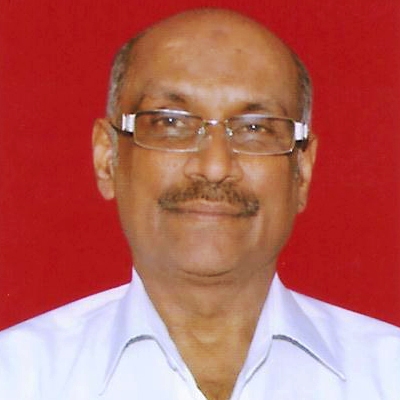
  • Tony D’silva draws up wishlist for MIB

    Tony D’silva draws up wishlist for MIB

    MUMBAI: The Information and Broadcasting Minister (I&B) Prakash Javadekar wants a happy Media and Entertainment industry. And for the same, he has been meeting the members of the industry personally to understand their concerns and devise a way forward.


    The cable TV industry, which is currently undergoing digitisation, is looking up to the Minister for a better tomorrow. While digitisation of the 120 million cable TV homes in phase III and phase IV took a backseat with the general elections, so did the launch of the Headend in the Sky (HITS) by Grant Investrade, a 100 per cent subsidiary of Hinduja Ventures.


    Now with the Ministry throwing some clarity on the next two phases of digitisation, Hinduja group on Monday paid the Rs 10 crore licence fee to the Ministry to move things forward. But, this isn’t all, with this, the expectations from the Ministry has also risen.


    In a conversation with indiantelevision.com, IMCL MD & group CEO Tony D’silva lists down his wishlist from the new government and especially the I&B Minister.


    • The I&B must demonstrate its commitment to digitisation by immediately announcing the future dates of the remaining two phases.


    • According to me, unlike phase I and phase II of digitisation, the government should consider digitising not phases, but complete states. This will also avoid the confusion of neighbouring markets like Hyderabad / Secunderabad, Mumbai and suburbs, Delhi and surrounding markets as well as prevent piracy of signals.


    The advantage of doing state-wise digitisation is that if the whole state is involved, the state government can easily estimate its revenues and join forces to ensure implementation. (Similar method was followed in some other countries).


    • Broadcaster pricing needs to be worked out more meaningfully in states that are not yet digitised. From my understanding for most broadcasters, phase I and II contribute at least 75 per cent or more of their existing revenues that is from approximately 30 million homes. This means that the rest 25 per cent or so of their business comes from the 100 million- 120 million homes that fall in the next two phases. So when you look at the ratios, then what really should be the pricing of the broadcasters? Broadcaster pricing is the key to the success of digitisation in phase III and IV.


    • The broadcaster pricing has to be different. It has to be territory wise and therefore, digitising a complete state is more feasible. The MSOs, broadcasters and the TRAI can sit and discuss in an environment which is more transparent and also come up with pricing which is more viable for phase III and IV.


    •  The Hinduja group is committed to invest over $100 million, to set up its HITS business, which is a white label backend service provider to support the smaller operators and help them retain their business and livelihood (the industry employs a few million people), hence it’s important to support the LMO. The group has already invested a couple of crores on the project, but needs a confirmed date for digitisation, before its expense meter starts ticking (transponder payments etc).


    • While we do support the government’s effort to encourage indigenisation of set top boxes (STBs), the government should also ensure that it is offered at comparative or better terms than international suppliers (price, credit facilities, repairs, servicing etc). A roadmap for future high end STBs should also be provided.


    • One of the key players in the value chain is the LMO. Enough by way of regulation and processes has not been done for them as yet. This needs a complete relook in light of the present situation in phase I and II markets.


    • I believe that one of the key objectives of digitisation is consumer choice. Government must insist on the prepaid model along with packaging of channels from day one of digitisation in phase III and IV markets, or else we will face the same problems like the ones in phases I and II.


    • The LMO has been the backbone of the C&S industry. In view of this, the government must find a way to encourage them to grow their business. The current licencing policy is completely against the interest of a small LMO. I fail to understand why an operator who has existed for years in the market is asked to get a fresh licence from the centre?  I can’t understand if he is a pan India operator, who already has a licence and has a registered business and is even paying his taxes, then why should digitisation change his status?


    If he does not comply with the guidelines, action can be taken by the regulator or the market forces will anyway drive him out of business as there are alternatives to consumers like DTH etc. This needs some immediate intervention.


    • The industry is heavily burdened with huge investments due to digitisation. Investments have been made in headends, backend services and STBs, among other things. I earnestly request that the C&S business be given an industry status. Also a relief from double tax: service tax and entertainment tax is needed. Reduction in import duties is also a necessity as it directly affects the customer. Also the entertainment tax needs to come down. It should be a percentage of the package the customer chooses, rather than have one set rule for all the households.


    • Another issue is of TRAI’s current regulation on de-aggregation. While the regulation was supposed to help the MSOs, it has had an adverse effect. So, I would like to appeal to the broadcasters and the authorities to intervene and bring about the reasonable pricing model that facilitates business. The broadcasters need to take a long term view of how they can monetise the content, because the old theory of everyone wanting to be on the basic pack cannot work anymore.
  • MIB wants you to create an ad for 15 August

    MIB wants you to create an ad for 15 August

    MUMBAI: The new government wants to give the common man an opportunity to bring out the passion for the country and creativity.


    The Information and Broadcasting Ministry’s (MIB) directorate of adverting & visual publicity (DAVP) has invited print advertisement creative designs from general public on the occasion of 68th Independence Day. The theme of the advertisement is ‘Sabke Saath Sabka Vikaas.’


    The selection committee will shortlist the 10 best advertisement designs. The best advertisement design will be published in newspapers across the country on 15 August as well as the winner will be awarded a cash prize of Rs 15000 along with a letter of appreciation from the MIB.


    The remaining nine shortlisted advertisements will be awarded a cash prize of Rs 3000 each along with a letter of appreciation from the Ministry.


    The advertisement of the size of 25×33 cms or 825 sq cms in colour has to be sent in a PDF format on davp-partnership@gmail. com.


    The last date for receipt of entries is 15 July.